

Thought Leadership for Entrepreneurs: Why Your Book Wins
Thought Leadership for Entrepreneurs
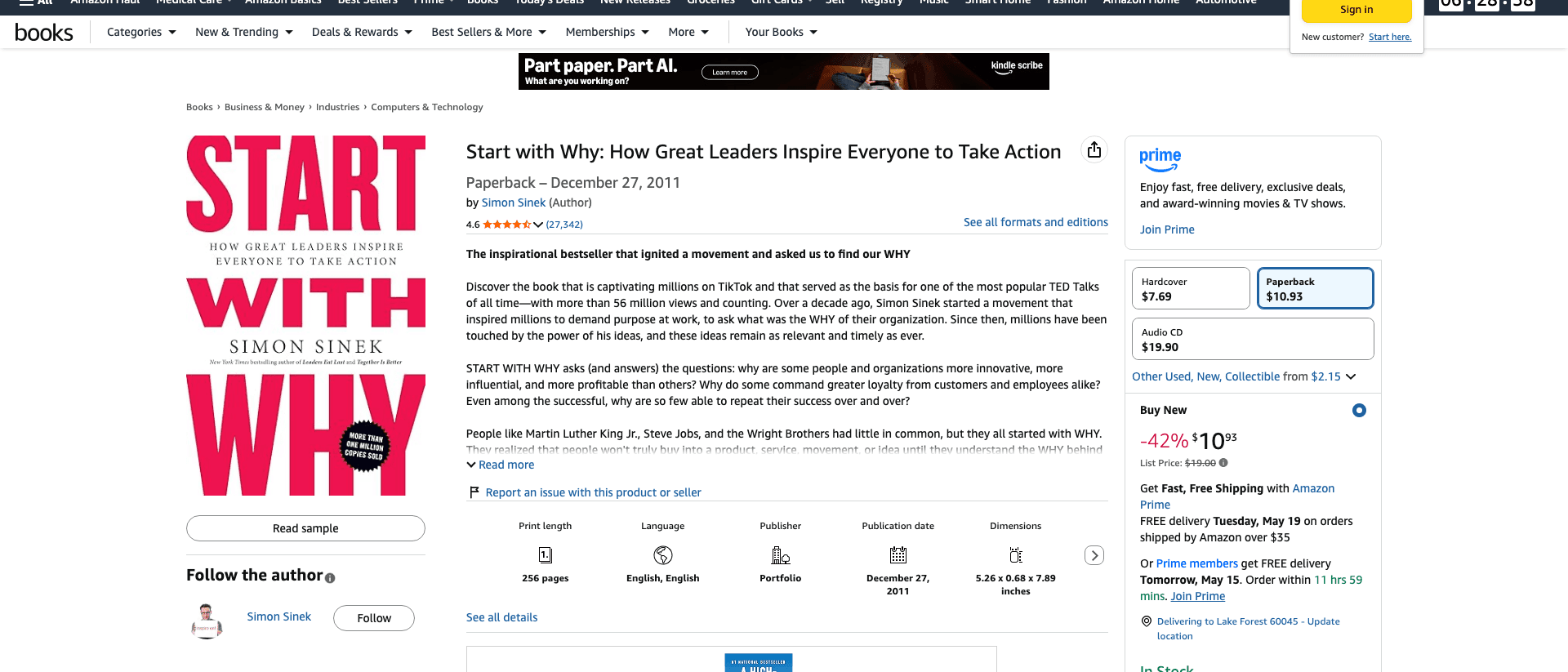
In 2018, April Dunford walked into a Toronto boardroom with a draft manuscript and a pricing problem.
She had twenty-five years of positioning scars, a steady consulting pipeline, and fees that still lagged the value she created for SaaS founders. Her talks landed. Her podcast appearances did fine. Her blog posts were respected inside a small circle.
When Obviously Awesome came out in 2019, the market recalibrated.
Conference organizers stopped asking for “a marketing talk” and started asking for “your positioning framework.” Founders arrived on sales calls pre-sold. Within a year, she was the “positioning person” in B2B SaaS, not another smart marketer. The work had not changed. The format had.
Thought leadership for entrepreneurs is rarely a knowledge problem. It is a flagship format problem. You already share ideas across LinkedIn, podcasts, and webinars, yet it feels fragmented and hard to monetize. The uncomfortable truth: for thought leadership for entrepreneurs, a book beats every other format as the core asset your business compounds around.
Thought leadership for entrepreneurs is the deliberate use of a flagship idea—often captured in a book—to shape how a market thinks and buys. A well-positioned book can increase perceived authority and close rates by 20–50% in expert services businesses. Its impact is greatest when integrated into a broader content and sales strategy, not treated as a standalone product.
Why a Book Sits at the Top of the Flagship Format Hierarchy
The Flagship Format Hierarchy is a framework for ranking your main content formats by how effectively they build and monetize authority.
In this hierarchy, books, keynote talks, podcasts, and social content are compared across four dimensions: Signal Strength, Shelf Life, Structure, and Spreadability.
Signal Strength is how strongly a format signals seriousness and expertise to buyers and gatekeepers.
Shelf Life is how long a format stays relevant, discoverable, and in circulation without constant effort.
Structure is how much a format forces you to clarify, codify, and sequence your intellectual property into a repeatable system.
Spreadability is how easily a format can be repurposed into other assets and shared across channels and stakeholders.
Books outperform other formats on three of these four dimensions.
On Signal Strength, a book is still the highest-status container for expertise. According to the National Speakers Association’s 2022 Member Survey, 74% of speakers earning over $250,000 per year have authored at least one book.
On Shelf Life, a book sits in Amazon search, corporate libraries, and personal bookshelves for years. LinkedIn posts decay in 48 hours. Podcasts vanish into back catalogs unless someone already knows to search for you.
On Structure, a book forces you to decide what your method is and how it works, chapter by chapter. In our experience working with consultants and agency owners, the act of outlining a book often surfaces frameworks they have used for years but never named.
Spreadability is the one dimension where books are not obviously superior. A tweet can travel faster in a day. A podcast clip can go viral on TikTok. Yet a book is a dense source of spreadable material. One solid manuscript can power dozens of talks, lead magnets, and nurture sequences.
April Dunford’s trajectory illustrates this. Her book did not just attract readers. It became the master document for her talks, workshops, and advisory offers. Every slide deck and sales call now rests on the same core argument and examples.
The Flagship Format Hierarchy is not about romanticizing authorship. It is a practical way to decide where your limited time goes. If you already create content, a book is usually the highest-leverage next move because it turns scattered output into a single, structured asset that everything else cascades from.
How Does a Book Compare to Podcasts, Social, and Speaking for Thought Leadership for Entrepreneurs?
Most founders juggle four core formats: a book, a podcast, social media, and keynote speaking.
Keynote speaking is delivering a structured, often paid, presentation to an audience as a featured expert at conferences or events.
LinkedIn long-form content is in-depth posts or articles on LinkedIn that go beyond quick updates and present a developed idea or argument.
Podcast guesting strategy is a deliberate plan to appear on other people’s podcasts to reach their audiences with your ideas.
Evergreen content assets are pieces of content designed to remain relevant and valuable for years with minimal updates.
Here is how the formats stack up on the Flagship Format Hierarchy dimensions.
| Format | Signal Strength | Shelf Life | Structure | Spreadability |
|---|---|---|---|---|
| Book | Very high, strong expert signal | 5–10 years+ as evergreen content asset | Forces full methodology and frameworks | High, can be atomized into many smaller pieces |
| Podcast (owned/guesting) | Medium, authority with niche audiences | Medium, back catalog discoverable if searched | Low to medium, often conversational and ad hoc | High, clips and episodes shareable |
| Social (LinkedIn etc.) | Low to medium, depends on consistency | Low, feeds decay in days | Low, ideas shared in fragments | Very high, fast feedback and reach |
| Keynote speaking | High, strong in-room credibility | Low to medium, unless recorded and reused | Medium to high, requires coherent narrative | Medium, limited by event scale and distribution |
For enterprise buyers and conference organizers, a book is a filter. According to McGraw Hill’s 2021 Professional Learning Report, 62% of corporate learning leaders rate “published author” as a top-three credibility signal when selecting external experts.
Podcasts build intimacy but not always status. A weekly show proves consistency and curiosity. It rarely proves a codified method.
Social media is unmatched for real-time feedback. You can test a contrarian line on LinkedIn tomorrow and see if anyone cares. You cannot, however, hand a VP of Product your LinkedIn archive and expect them to advocate for a $150,000 engagement.
On Shelf Life, books and well-designed evergreen content assets continue to surface in search results and recommendations long after launch. According to Amazon’s 2022 Reading Trends Report, business titles see a “long tail” of sales for 3–7 years after publication when tied to a clear problem.
Structure is where books quietly change your business. A book-sized argument forces decisions: what you stand for, what you reject, how your process works, which case studies matter. Most podcasts and LinkedIn posts never reach that level of codification.
Spreadability is the main trade-off. Social and podcasts spread faster day to day. Founders who start with a book then use social and podcasts as distribution channels see better compounding. Their content has a spine. Every clip, post, and talk points back to the same core idea.
Is writing a book actually better for entrepreneurial thought leadership than doing a podcast or YouTube channel? For most established experts, yes—if the book becomes the flagship that defines your category and the show becomes a satellite that amplifies it. The reverse, a show without a flagship artifact, usually leads to visibility without leverage.
When Is an Entrepreneur Actually Ready to Write a thought leadership book?
Timing matters more than prose.
Authority marketing is the deliberate use of perceived expertise and visibility to attract higher-value clients and opportunities.
Category design is the practice of intentionally defining and naming a market space so that your product or service becomes its natural leader.
Category creation is the act of introducing a new problem or framing that effectively births a new market or subcategory.
The right book multiplies what already works in your business. It does not rescue a weak offer, a confused ICP, or a broken sales process.
You are usually ready for a thought leadership book when:
- You have 5–15 years of domain expertise and repeatable client results.
- You serve a clear ideal client with a specific, expensive problem.
- You have a semi-consistent inbound pipeline and want to upgrade lead quality and deal size, not create demand from zero.
- Your existing content feels fragmented across LinkedIn, decks, and webinars.
- You want to move upmarket in pricing, deal size, or buyer seniority.
At this stage, a book becomes a category design tool. It either crystallizes a point of view you already live, or it forces you to sharpen one that has been implicit.
Mis-timing carries risk.
Write too early, before you have IP and proof, and you get a generic “10 tips” book that no serious buyer finishes. According to Bowker’s 2023 Self-Publishing Report, 80% of self-published titles sell fewer than 100 copies in their first year, largely because they lack a sharp problem and audience.
Write too late, after years of strong but undocumented results, and you forfeit compounding. Someone else publishes the book that names your approach, and you become a practitioner inside their category instead of the author who defined it.
Consider two anonymized founders.
One wrote a book in year two of their consulting practice. No clear ICP, no proven framework, just enthusiasm. The book sold a few hundred copies, brought in unqualified leads, and never connected to a coherent offer. It became a vanity project.
The other waited until year nine. By then, they had a clear niche, a repeatable six-step implementation process, and dozens of case studies. Their book named the process, told the stories, and became the backbone of a premium advisory offer. Within 18 months, their average project size tripled.
If you are still testing basic product–market fit, your flagship format should be fast-cycle content. Short LinkedIn posts, webinars, and podcast guesting help you discover which ideas resonate before you freeze them into a book.
At what stage of my business does it make sense to write a thought leadership book instead of focusing on other content? Once your offer works, your client results are consistent, and your content feels scattered, a book is usually the next logical move. Before that, use lower-friction formats to find the ideas worth immortalizing.
How Does a Book Translate into Premium Clients, Bigger Deals, and Demand Generation?
Demand generation funnels are structured paths that move strangers from first contact with your ideas to becoming educated, ready-to-buy prospects.
Premium clients are buyers who value expertise, purchase larger scopes, and are less price-sensitive because they perceive your approach as unique.
A book anchors the entire funnel.
At the top of the funnel, people discover you through search, referrals, or speaking. The book is the obvious next step: a low-risk, high-value deep dive into your worldview.
In the middle, the book educates and pre-frames prospects. By the time they reach a sales call, they understand your language, your frameworks, and your criteria for success. According to RAIN Group’s 2022 Top Performance in Sales Prospecting report, buyers are 52% more likely to engage with sellers who provide “valuable insights and perspectives” before a live conversation. A good book is concentrated insight.
At the bottom, the book quietly sells. You outline offers, show outcomes, and invite the right reader to take the next step.
Authority marketing then kicks in. Media, podcast hosts, and event organizers need packaged ideas to promote. A book gives them a title, a hook, and a bio line. Consultants who publish a focused book typically see a noticeable increase in unsolicited podcast and speaking invitations within 6–12 months.
Consider a consultant who specialized in pricing for agencies. Before the book, their projects hovered around $8,000–$12,000. After publishing a book that named and explained their “Value Ladder” framework, they started mailing the book to prospects before proposals and structuring discovery calls around specific chapters. Within a year, their average engagement rose above $40,000, with a higher close rate and fewer price objections.
Demand generation funnels anchored by a book might look like this:
- Free chapter or “book summary workshop” as the lead magnet.
- Email nurture sequence where each email maps to a chapter and ends with a relevant case study.
- Webinars or live sessions structured around key frameworks from the book.
- Sales conversations that reference chapters and invite the prospect into the “implementation version” of what they just read.
Book sales are not the main ROI. For B2B experts, royalties are a rounding error compared to advisory, implementation, licensing, and speaking revenue triggered by the book.
How does having a book translate into more premium clients or bigger deals for an entrepreneur? It pre-frames buyers with your worldview, turns your method into proprietary IP, and gives internal champions a tangible artifact to sell you inside their organization.
How Do I Choose and Validate a Book Concept That Positions Me as a Category Leader?
book concept validation is the process of testing and refining your proposed book topic and angle with real buyers before you commit to writing.
A category leader is the provider that buyers instinctively associate with a specific problem or approach within a market.
A contrarian point of view is a perspective that challenges the prevailing assumptions in your market in a way that benefits your positioning.
The biggest risk is not writing a bad book. It is writing an indistinguishable one. Most “thought leadership” books fail because the topic is too broad and the angle is too safe.
A simple validation process looks like this:
- Inventory your existing IP. Collect slide decks, LinkedIn posts, webinar transcripts, client deliverables, and internal training docs.
- Identify the 2–3 problems your best clients repeatedly pay you to solve. Ignore everything else.
- Articulate your differentiated or contrarian point of view on those problems. Where do you disagree with the default playbook in your industry?
Then test.
Run 3–5 short validation calls with ideal clients or buyers. Share 2–3 possible titles and one-paragraph summaries. Ask which problem feels most urgent, which framing feels most distinctive, and which they would actually read.
Use LinkedIn long-form content, webinars, and podcast guesting as low-risk experiments. Publish slices of your proposed thesis. Watch which posts trigger inbound DMs, which talks lead to follow-up calls, and which podcast episodes drive traffic to your site.
A quick pressure-test for any book concept:
- Does this book clearly name a problem my ideal clients already feel, in their words?
- Does it introduce or reframe a category in a way that advantages my offers?
- Can I see a direct line from reading this book to buying my core services?
One founder planned a broad “marketing for SaaS” book. Validation calls revealed that their strongest results and sharpest views were with post-Series A companies struggling to define a category. The book pivoted to “category design for post-Series A SaaS,” with a tighter ICP and clearer promise. The result was fewer readers, higher-ticket leads, and a reputation for owning that specific inflection point.
The Flagship Format Hierarchy clarifies the sequence. Validate your contrarian angle in lower-friction formats first. Once you see repeat engagement and revenue tied to a specific idea, promote it into a book. That is how a book becomes a category design weapon instead of another generic business title.
How do I pick a book topic that positions me as a category leader instead of just adding another generic business book? Choose the narrowest, most expensive problem you reliably solve, attach a sharp point of view to it, and validate that angle with real buyers before you commit to 200 pages.
a practical workflow: From Scattered Content to a Structured Thought Leadership Book
The Built&Written AI book-writing platform is a system that ingests your existing content and helps you structure, draft, and refine a book around your expertise.
An IP audit is a systematic review of your existing content and client work to identify reusable frameworks, stories, and insights.
Book architecture is the intentional design of your book’s structure, including its table of contents, chapter flow, and argument sequence.
Most experts do not lack material. They lack a workflow.
A realistic timeline for a busy founder to go from idea to publish-ready manuscript is 12–20 weeks. The heavy lift is structure and decision-making, not raw word count.
A practical workflow:
- Discovery and IP audit.
- Book architecture and outline.
- Drafting and refining.
- Packaging and publication.
- Launch and integration into your funnel.
In Discovery and IP audit, you mine:
- LinkedIn posts and article archives.
- Slide decks from talks, sales pitches, and internal training.
- Webinar and podcast transcripts.
- Client proposals, SOWs, and internal playbooks.
One executive had 300 pages of notes, dozens of talks, and no structure. The IP audit surfaced three core frameworks and a handful of strong case studies that became the spine of their book.
In Book architecture, you design a table of contents that mirrors your client journey:
- Problem framing.
- Worldview and what the market gets wrong.
- Framework introduction.
- Case studies and proof.
- Implementation guidance.
- Next steps and how to work with you.
In the Drafting phase, AI tools like Built&Written can accelerate the mechanical work. You feed in transcripts, decks, and notes. The system proposes chapter structures, pulls out recurring themes, and generates first-draft prose around your frameworks. You focus on nuance, stories, and strategic decisions.
AI is scaffolding, not a ghostwriter. If you outsource your thinking to it, your book will sound like everyone else’s. Used correctly, it handles synthesis so you can spend your limited time on judgment.
Packaging and publication decisions matter, but less than most founders think.
Self-publishing gives you speed, control, and higher margins. It is usually better for entrepreneurs who care more about leads than bookstore placement. Traditional publishing offers distribution and prestige but slower timelines, lower royalties, and less control over positioning. According to Penguin Random House’s 2021 Author Insights survey, traditionally published non-fiction averages 18–24 months from proposal to shelf. That is a long time to wait for a sales asset.
In Launch and integration, you refuse to treat the book as a one-off event. Day one, you:
- Turn chapters into talks and webinars.
- Extract checklists and worksheets as lead magnets.
- Map your email nurture to the book’s structure.
- Train your team to use the book’s language in sales and delivery.
What’s a practical timeline and workflow for an entrepreneur to go from idea to published thought leadership book? Plan for 12–20 weeks with a clear sequence: audit your IP, design the architecture, draft with AI-assisted scaffolding, choose a publishing path that matches your goals, and integrate the book into your funnel from day one.
Turning Your Book into a Systematic Lead Engine, Not a Shelf Ornament
Book-based lead magnets are specific, high-value resources derived from your book that require an email opt-in, such as sample chapters, worksheets, or implementation guides.
Nurture sequences are planned series of follow-up messages that educate and move leads toward a buying decision over time.
A book-centric funnel is a lead generation and sales process where the book is the primary entry point and organizing asset for follow-up.
The book’s value appears only when you operationalize it. A PDF sitting in your downloads folder does not change your pipeline.
A simple, repeatable playbook:
- Always-on acquisition. Feature the book on your website hero, LinkedIn banner, and email signature. Mention it in podcast interviews. Offer a free chapter or summary for opt-in.
- Targeted distribution. Mail physical copies to high-value accounts with a short, handwritten note pointing to the most relevant chapter.
- Event-driven campaigns. Tie book promotions to webinars, conferences, and product launches. Use “book club”–style sessions where you walk through key chapters live.
Design book-based lead magnets that bridge reading and action:
- Free chapter downloads for the most painful problem.
- Worksheets and checklists that accompany implementation chapters.
- Short implementation guides that require email opt-in and lead into a strategy call.
Map your CRM and nurture sequences to the book. Tag leads based on which chapter, problem, or resource they engaged with. Follow up with content and offers that deepen that specific thread rather than generic newsletters.
In sales conversations, send the book before discovery calls. Reference specific chapters during the discussion. Use the book’s frameworks as the structure for proposals and scopes of work so the prospect feels they are stepping into a known system, not a custom experiment.
A simple integration checklist:
- Website hero section highlights the core promise of the book.
- LinkedIn banner and Featured section link to the book or a lead magnet based on it.
- Speaker bio and podcast one-sheet mention the book and its flagship idea.
- Onboarding sequences for new clients reference chapters as pre-work.
- Internal training so your team uses the book’s language with prospects and clients.
One agency owner built a straightforward book-centric funnel: LinkedIn content pointing to a free “Chapter 1 + worksheet” download, an email sequence that expanded on the next three chapters, then an invitation to a strategy call framed as “applying the book to your situation.” Within six months, their inbound leads dropped in volume but increased in quality, and their close rate on qualified calls rose from 25% to over 45%.
How can I use my book to systematically generate leads, not just credibility? Treat it as the central asset in your acquisition, nurture, and sales systems, with every touchpoint designed to reference, extend, or implement what the reader has already seen.
The Verdict
For experienced founders, solo consultants, and agency owners, the evidence is blunt: among all formats competing for your time, a book is the only one that simultaneously maximizes Signal Strength, Shelf Life, Structure, and Spreadability. Podcasts, social feeds, and talks are valuable, but without a flagship artifact they keep you visible and interchangeable. A well-positioned book, built on already proven IP, turns thought leadership for entrepreneurs from scattered noise into a coherent market narrative that buyers can hold, share, and buy into. The entrepreneurs who compound authority in the next decade will treat their book as the master document for their business, with tools like Built&Written handling the scaffolding so their expertise can do the work. The rest will keep posting, speaking, and recording—busy and visible, but ultimately forgettable.
Key Takeaways
- A book sits at the top of the Flagship Format Hierarchy because it beats other formats on Signal Strength, Shelf Life, and Structure while remaining highly spreadable.
- Writing a thought leadership book only pays off once your offer, ICP, and results are proven, and your existing content feels fragmented.
- The primary ROI of a book for entrepreneurs is not royalties but higher-quality leads, larger deals, and easier authority marketing.
- Validate your book concept in lower-friction formats first, then promote the strongest, most differentiated idea into a tightly positioned book.
- Treat your book as the backbone of a book-centric funnel, operationalizing it across lead magnets, nurture sequences, sales calls, and delivery.
Sources & References
Frequently asked questions
For most established experts, a book is more effective if it becomes the flagship that defines your category and the show becomes a satellite that amplifies it, because the reverse—a show without a flagship artifact—usually leads to visibility without leverage.
Once your offer works, your client results are consistent, and your content feels scattered, a book is usually the next logical move, whereas if you are still testing basic product–market fit you should use fast-cycle formats like LinkedIn posts, webinars, and podcast guesting instead.
A book pre-frames buyers with your worldview, turns your method into proprietary IP, and gives internal champions a tangible artifact to sell you inside their organization, so book sales become a small part of the ROI compared to advisory, implementation, licensing, and speaking revenue it triggers.
Choose the narrowest, most expensive problem you reliably solve, attach a sharp, often contrarian point of view to it, and validate that angle with real buyers through calls and lower-friction content before you commit it to a full-length book.
A realistic timeline for a busy founder is 12–20 weeks following a clear sequence: discovery and IP audit, book architecture and outline, drafting and refining (often with AI-assisted scaffolding), packaging and publication, then launch and integration into your funnel.
You turn your book into a system by featuring it across your assets, creating book-based lead magnets, mapping nurture sequences and CRM tags to its chapters and problems, and using its frameworks to structure sales conversations, proposals, and delivery.
A book is more effective as a core asset because it maximizes Signal Strength, Shelf Life, and Structure, while LinkedIn and webinars are best used as distribution channels that test and amplify the book’s ideas rather than substitutes for a flagship artifact.
For B2B experts, the primary ROI of a book is not royalties but higher-quality leads, larger deals, easier authority marketing, and demand generation funnels where the book anchors discovery, education, and sales, often increasing perceived authority and close rates by 20–50% in expert services businesses.
Sources & References
About the author

Michael Pavlovskyi
More in pain-point
Ready to write your book?
Turn your expertise into a professional book with Built&Written.