

What Is a Business Book (And Do You Need One?)
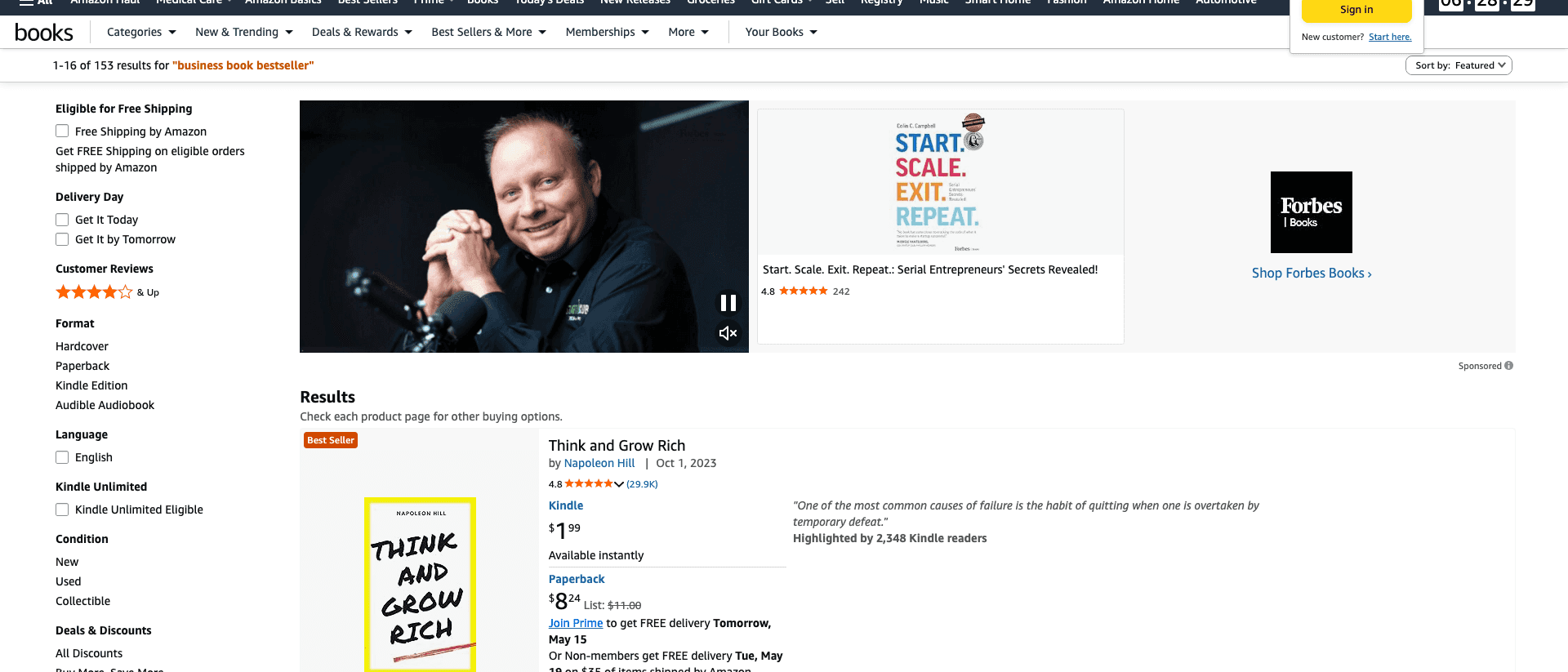
Michael Port’s Book Yourself Solid, first published by Wiley in 2006 and now in its third edition, shows what a business book is actually for. Port packaged his system for getting booked with ideal clients into a named, teachable method, and the book became the anchor asset of his training and speaking business for well over a decade. Not his LinkedIn posts. Not his networking. The book.
Most consultants who ask “what is a business book” secretly mean “is this the smartest next move for my pipeline, or an expensive ego project?”
A business book is a non-fiction book that packages your commercial expertise into a clear promise for a defined audience, built to drive business outcomes like leads, higher fees, and speaking invitations. It is only worth writing if it aligns tightly with your business model and goals.
What Is a Business Book in 2026, Really?
A business book is a published, structured asset that packages your expertise, point of view, and methods to influence how a specific market thinks and buys.
In 2026, that asset might be a 60-page Amazon KDP ebook, a 180-page print-on-demand paperback, or a tightly written PDF that sits behind a lead form on your site. The format matters less than its job: to shape demand for your offers.
- A thought-leadership manifesto argues for a new way of seeing a market or problem.
- A how-to playbook lays out a step-by-step process your ideal clients can follow, with or without you.
- A founder story uses your personal and company history to build trust, relatability, and authority.
- A niche industry guide addresses a narrow vertical or role with specific, practical guidance tied to your services.
According to Bowker’s 2023 Self-Publishing Report, more than 2 million self-published titles were released in the US, the majority as digital-first or print-on-demand books. The most effective of these are not “books on a shelf.” They are assets embedded in funnels, sales processes, and speaking ecosystems.
A business book differs from your LinkedIn posts or podcast episodes in three ways:
- It is durable, with a multi-year shelf life instead of a 48-hour feed half-life.
- It is cohesive, built around a single throughline or argument.
- It is positioned, written for a defined reader and a specific commercial outcome.
Authority marketing is the deliberate use of content, IP, and platforms to position you as the default choice in a category. Seen through that lens, a 120-page PDF that lives on your site and Amazon, drives inbound leads, and pre-qualifies buyers is more of a “real” business book than a beautifully written 300-page hardcover that never touches your funnel.
Look at the four archetypes in practice:
- Start With Why by Simon Sinek is a manifesto that created a vocabulary and justified keynote fees and enterprise advisory.
- Built to Sell by John Warrillow is a playbook that drives consulting and training around building sellable agencies.
- Shoe Dog by Phil Knight is a founder story that deepened Nike’s brand affinity and Knight’s speaking profile.
- Search Amazon for “HVAC marketing book” and you will find niche industry guides with low sales volume but high-value inbound leads for agencies that own those micro-categories.
Almost all of these books function as top-of-funnel awareness. They rarely make serious money from royalties. They make money by moving the right people into a pipeline where each closed client is worth thousands or tens of thousands of dollars.
Can you explain what actually counts as a business book today?
If it packages your commercial expertise into a structured argument, is accessible to your market, and plays a defined role in your revenue engine, it counts. Page count, binding, and whether a traditional publisher is involved are secondary. Alignment beats aesthetics.
The Four Main Types of Business Books (and What They’re Actually For)
When you strip away genre labels, there are four main types of business books that matter for a consultant or agency owner.
A thought-leadership manifesto is designed to shift beliefs at a category level and position you as the originator of a big idea. Its primary business goal is category creation and authority marketing. Blue Ocean Strategy and The Lean Startup are classic examples that unlocked high-ticket advisory, licensing, and global speaking.
A how-to playbook documents a repeatable process your best clients already pay you for. Its primary business goal is lead generation and qualification. Book Yourself Solid and Profit First show readers a system, then invite them to pay for speed, implementation, or coaching.
A founder story uses narrative to build emotional connection and trust in you or your brand. Its primary business goal is brand affinity and speaking. Phil Knight’s Shoe Dog and Ben Horowitz’s The Hard Thing About Hard Things both deepen loyalty and open doors to stages and media.
A niche industry guide targets a narrow vertical, role, or use case with focused, practical advice. Its primary business goal is inbound deal flow in a tight vertical. Think Marketing for Orthodontists or Cybersecurity for Mid-Market Law Firms, often self-published and dominating small Amazon categories.
A positioning statement is a concise description of who your book is for, what problem it solves, and how your approach is distinct. Without a sharp positioning statement, any of these archetypes will blur into generic content.
Here is how these four types compare.
| Type | Primary Business Goal | Typical Length & Complexity | Best Integrated With |
|---|---|---|---|
| Manifesto | Category leadership, keynote speaking | 50–70k words, higher research load | Speaking, high-ticket advisory, licensing |
| How-to Playbook | Lead gen, qualification, productized services | 35–60k words, process-focused | Done-for-you services, group programs, cohorts |
| Founder Story | Brand affinity, media, trust in crowded space | 50–80k words, narrative-heavy | Speaking, brand partnerships, hiring |
| Niche Industry Guide | Inbound in a vertical, ABM support | 20–35k words, fast to produce | Outbound, account-based marketing, SDR teams |
According to McGraw Hill’s 2022 Business Book Sales Review, the majority of long-tail sales in B2B categories come from tightly positioned titles, not broad “leadership” books. Solo consultants often misfire by writing a quasi-memoir founder story when their actual need is a clear playbook that shows a CFO or CMO exactly how they work.
Trade-offs are real. Manifestos can produce huge upside but demand a differentiated idea, patience, and broad distribution. Niche guides can be written in a quarter and quietly feed a pipeline for years, but they will not make you famous.
What Is a Business Book in 2026, Really? (FAQ)
Can you explain what actually counts as a business book today?
A business book today includes short-form ebooks, digital-first titles, lead-magnet-style PDFs, and traditional hardcovers, as long as it is structured, published, and aimed at influencing how a defined market thinks and buys. If it is just a collection of blog posts with no throughline, it is not yet a business book. If it shapes demand and feeds your funnel, it is.
How Do You Know If You Actually Need a Business Book?
The 3-Fit Test is a decision framework that evaluates Message Fit, Market Fit, and Model Fit to decide whether a business book is a leverage move or a distraction.
- Message Fit is the degree to which your core idea is sharp, testable, and distinct enough to sustain a book-length argument.
- Market Fit is the degree to which a defined, reachable audience already cares about the problem your book would solve.
- Model Fit is the degree to which a book naturally supports your current or planned revenue engine.
Message Fit starts with a single, strong claim. You can state your core argument in 1–2 sentences. It clarifies or contradicts something your market currently believes.
For example: “Most B2B podcasts are vanity projects; treated as sales assets, they can cut your sales cycle in half.” If your “idea” is “leadership matters” or “marketing should be strategic,” you do not have Message Fit yet. You have a topic, not a thesis.
Market Fit shows up in your existing channels. You see consistent engagement on specific themes in your LinkedIn posts, newsletter, or podcast. Prospects repeat the same problems in sales calls.
According to HubSpot’s 2023 State of Marketing Report, 59% of B2B marketers say their best leads come from content that addresses a specific pain point, not generic thought leadership. If your audience is still vague or your content attracts a grab bag of roles and industries, writing a book will amplify that fuzziness.
Model Fit connects the dots from “reader” to “revenue.” If someone finishes your book, there is a clear, realistic path for them to become a client, join a program, or book you to speak. If that path is not obvious to you, it will not be obvious to them.
Here is a simple 3-Fit checklist. Answer yes or no to each.
Message Fit
- I can state my book’s core argument in 1–2 sentences without jargon.
- That argument challenges or clarifies a common belief in my market.
- I already use a named framework, method, or process with clients.
Market Fit
- I have at least one channel (newsletter, LinkedIn, podcast) with consistent engagement from my ideal buyers.
- I can name a specific role and industry for at least 70% of my current clients.
- Prospects repeat the same 2–3 problems in sales calls or DMs.
Model Fit
- I have a clear flagship offer that would be a logical “next step” after reading my book.
- I can sketch a simple funnel from “book reader” to “qualified sales conversation.”
- I can realistically invest 100–300 hours in a book over 6–12 months without harming client delivery.
- I would still be happy I wrote this book if it sold only 500 copies but generated 5 perfect-fit clients.
If you answered yes to 8–10 questions, a book is likely a leverage move. If you are at 4–7, the answer is “not yet,” and your time is better spent tightening your offer and positioning statement. At 0–3, a book is an expensive way to avoid more urgent work.
We worked with one consultant who came to us with a generic “innovation” book idea. She had no clear ICP, a mushy offer, and weak Message Fit. She delayed the book, spent a year focusing on mid-market manufacturing clients, then wrote a 25k-word niche guide on “innovation sprints for factory teams” that now drives most of her inbound leads.
How do I know if I actually need to write a business book for my consulting or coaching business?
You need a business book when you have a sharp, tested idea, a defined audience already engaging with you, and a clear revenue path from reader to client. If any of those three are missing, a book is premature. Fix the gaps first, then revisit.
What Is a Business Book Worth Compared to Other Marketing You Could Do?
A serious business book usually costs 100–300 hours of your time plus several thousand dollars for editing, design, and production. According to Reedsy’s 2022 Freelance Rates Survey, professional editing and design for a 40–60k-word non-fiction book typically range from $3,000 to $8,000. Add ISBNs, Amazon KDP setup, and optional IngramSpark distribution, and you have a meaningful investment.
Amazon KDP is Amazon’s self-publishing platform that lets you publish ebooks and print-on-demand paperbacks to Amazon’s marketplace. IngramSpark is a print-on-demand and distribution platform that makes your book available to bookstores, libraries, and retailers beyond Amazon. A lead magnet is a free or low-cost asset offered in exchange for contact information, used to start a relationship with potential buyers.
Compare that to other plays. A focused 90-day LinkedIn sprint might take 60–90 hours of writing and engagement. Launching a simple podcast could take 40–80 hours upfront plus ongoing production. Improving your sales process or outbound sequences might take 20–40 deep-work hours with faster feedback.
According to the Rain Group’s 2022 Top Performance in Sales Prospecting report, companies that systematize their prospecting see up to 2.7 times higher win rates. A book that is not integrated into such a system is a nice trophy. A book that is integrated becomes a powerful pre-sales asset.
Well-aligned business books do three measurable things. They increase close rates because prospects arrive educated and aligned with your method. They shorten sales cycles and support higher fees because the perceived risk of hiring you drops.
We have seen consultants report 20–50% higher close rates when prospects have read their book or a mini-book version before the first call. One agency we worked with sends a 100-page niche guide to every new lead; their sales team now spends less time “explaining what we do” and more time scoping.
Book sales revenue is almost always a side benefit. According to Bowker’s 2023 Self-Publishing Report, 80% of self-published titles sell fewer than 100 copies in their first year. If your ROI model depends on royalties, you are betting against the odds.
The credibility myth is persistent. A 120-page, self-published, tightly positioned book that sits at the front of your funnel can outperform a traditionally published tome that is not connected to any offer. The asset’s value lies in its integration, not its imprint.
How do I evaluate whether writing a business book is worth the time and money compared to other marketing I could do?
If you cannot map a clear path from “book reader” to “average client value” within your existing funnel, and you have faster, cheaper ways to generate qualified conversations, the book is not your highest-leverage move right now. If the path is clear and your pipeline depends on authority and trust, the investment can be justified.
How to Choose the Right Type of Business Book for Your Niche and Offers
The 3-Fit Test does more than say “yes” or “no.” It also points to which archetype makes sense.
- If your Message Fit is big and contrarian, your Market Fit is broad, and your Model Fit leans on speaking and high-ticket advisory, a manifesto is the natural choice.
- If your Message Fit is a concrete process, your Market Fit is defined, and your Model Fit depends on selling a specific service or program, a playbook is better.
- If your niche is crowded and trust is the main barrier, a founder story can humanize you.
- If your Market Fit is narrow but valuable, and your Model Fit depends on dominating a vertical, a niche industry guide is the workhorse.
Here is a simple mapping exercise.
- Name your primary offer and price point.
- Name your ideal client in one line: role, industry, company size.
- Write the one belief or behavior you need to change for them to buy.
Then match:
- If the belief is category-level (“Branding is a cost center, not a growth driver”), think manifesto.
- If the behavior is process-level (“We jump straight into tactics without a strategy sprint”), think playbook.
- If the barrier is trust-level (“I am not sure this solo consultant can handle our complexity”), think founder story.
- If the barrier is relevance-level (“Does this apply to manufacturing SaaS with field sales?”), think niche guide.
A clear positioning statement for a book looks like this: “This book is for [role] in [industry] who struggle with [specific problem] and want [specific outcome] using [distinct approach].” If you cannot fill those brackets without hand-waving, you are not ready to choose a type.
Length, tone, and structure should follow the type and the reader. Busy B2B buyers often prefer concise, skimmable playbooks with strong case study chapters over dense theory. Senior executives may tolerate more narrative in a founder story but will still expect clear takeaways.
Distribution choices also vary. Manifestos benefit from broader reach, so adding IngramSpark to reach bookstores, libraries, and corporate buyers makes sense. Niche guides often live primarily on Amazon KDP and as gated PDFs in your own funnel, where you control the data and follow-up.
How do I choose the right type of business book for my niche and audience?
Start with your main commercial goal and the belief you must change in your ideal client. Pick the archetype whose primary business goal and typical funnel best match that shift. Do not choose based on what you feel like writing; choose based on what your pipeline needs.
Designing a Book That Actually Fits Your Funnel (Instead of Just Your Ego)
A business book should plug into an existing authority marketing ecosystem, not float above it. That ecosystem includes your website, email list, podcast, LinkedIn presence, speaking, and sales process. If those channels are weak or inconsistent, a book will not fix them.
A book funnel is a structured sequence that turns book readers into leads and clients through landing pages, email sequences, and offers aligned with the book’s promise. At its simplest, the sequence looks like this:
- Reader discovers your book via Amazon search, a podcast interview, LinkedIn, or a referral.
- Inside the book, they see a call to action for a companion resource on a dedicated landing page.
- They opt in, receive a short email sequence that deepens the book’s ideas, and are invited to a strategy call or productized offer.
A case study chapter is a chapter that tells the story of a specific client situation, problem, intervention, and result to illustrate your method in practice.
Strategic placement of CTAs matters. An early invitation to a companion resource works well in the introduction or chapter 1. A mid-book check-in can offer a diagnostic or worksheet. End-of-book next steps should map cleanly to your core offer, not a random menu.
Specific chapter types support the funnel. Case study chapters mirror your ideal clients so readers can self-identify. A diagnostic chapter can lead naturally to a paid assessment. A methodology chapter makes your done-for-you service the obvious shortcut.
One solo consultant we worked with used a 90-page Amazon KDP book as a front-end asset. The book sold for $9.99, included a link to a “Toolkit Vault,” and fed a nurture sequence that invited readers to a $3,000 strategy intensive. Royalty income was negligible; the pipeline effect was not.
How do I market a business book so it consistently generates qualified leads instead of just sales rank spikes?
Design the funnel before you write the book. Decide the companion resource, landing page, and offer, then write chapters that naturally set them up. Treat launch week as a bonus, not the goal; the goal is steady, qualified traffic from the right readers into a defined next step.
Turning Existing Content into a Cohesive Book Without Starting from Zero
Most strong business books start with existing assets. Podcast episodes, blog posts, LinkedIn threads, webinars, and internal client docs are raw material. The work is turning them into a single, coherent argument.
Here is a simple 6-step process we use with experts.
- Inventory: List your top-performing content pieces and internal docs.
- Cluster: Group them by theme or problem.
- Gap analysis: Identify missing steps or objections your current content does not address.
- Throughline: Define the book’s central argument in one sentence.
- Structure: Map clusters to chapters that support that throughline.
- Rewrite: Rewrite for cohesion instead of copy-pasting.
The “Frankenstein” effect happens when you stitch posts together without rewriting. Readers feel the seams: repeated points, shifting tone, no narrative arc. You avoid it by rewriting everything through the lens of one reader, one problem, one promise.
A strong business book often elevates scattered ideas into a named framework. You notice recurring patterns in client work, codify them into stages or pillars, and use that model as the spine of the book. That same model then anchors your offers and sales conversations.
Timelines are more realistic when you repurpose. A busy consultant who commits 3–5 focused hours per week can move from content audit to solid draft in 3–6 months. The constraint is not word count; it is decision-making about scope and structure.
Tools and services like Built&Written exist to handle that structuring work so you can stay in your zone of expertise. We have seen clients arrive with 300 pages of notes and transcripts and leave with a 9-chapter manuscript that actually fits their funnel, without pausing their client work.
How can I repurpose my podcast episodes, blog posts, or talks into a cohesive business book?
Treat your existing content as research, not chapters. Use it to identify themes, proof points, and language that resonates, then rewrite everything into a single, cohesive narrative built around a clear throughline and framework. Repurposing saves time, but only if you are willing to reorganize and rewrite.
If You Decide Not to Write a Full Business Book (Yet), What Are Your Smart Alternatives?
Saying “not yet” to a full book is often the most strategic move you can make. You can still borrow the best parts of a business book without committing to 40–60k words. You focus on assets that test Message Fit and Market Fit faster.
Smart alternatives include a 20-page niche white paper aimed at a specific vertical, a flagship lead magnet that feels like a mini-book, a deep-dive case study series that shows your method in action, or a short “executive brief” PDF that a VP can read on a flight.
These assets function as experiments. You watch download numbers, replies, and sales conversations to see which angles land. According to Content Marketing Institute’s 2023 B2B Benchmarks report, 62% of top-performing marketers use long-form content like white papers as key lead magnets before investing in larger projects.
A well-crafted white paper or executive brief can act as a “mini-book” in your funnel. It has a clear positioning statement, a strong argument, and defined next steps. Later, you can expand it into a full book once you have validated the angle and gathered richer case studies.
Built&Written often helps clients structure these smaller assets in a book-like way. Chapters become sections. Case studies stay. The difference is scope, not seriousness.
If I decide not to write a full business book, what are smarter alternatives that still give me authority and leverage?
Start with a focused white paper, executive brief, or flagship lead magnet that targets one role and one problem. Use it to test your message and market response. If it reliably generates qualified conversations, you have the raw material for a full business book later.
The Verdict
A business book is not a rite of passage or a literary hobby. It is a top-of-funnel asset that only earns its keep when Message Fit, Market Fit, and Model Fit line up with ruthless clarity. For a solo consultant or agency owner with a defined audience and a proven offer, the right type of book, integrated into a simple funnel, can compress sales cycles, raise fees, and quietly power a practice for years. For everyone else, it is an expensive way to avoid harder strategic decisions about positioning and pipeline. The honest move is to run the 3-Fit Test, choose the smallest asset that proves your thesis, and only then decide whether a full business book deserves your next 200 hours, with or without a partner like Built&Written to turn your expertise into a structure that the market will actually buy.
Key Takeaways
- A business book is any structured, published asset that packages your expertise to influence how a specific market thinks and buys, regardless of page count or format.
- The 3-Fit Test (Message Fit, Market Fit, Model Fit) is the simplest way to decide whether a business book is a leverage move, a “not yet,” or a distraction.
- Choosing the right archetype (manifesto, playbook, founder story, niche guide) depends on your primary commercial goal and the belief you must change in your ideal client.
- The real ROI of a business book comes from its role as a top-of-funnel and pre-sales asset, not from royalties or vanity metrics like Amazon rank.
- If a full book is premature, start with white papers, executive briefs, or mini-books that test your positioning and can later expand into a focused, high-performing business book.
Sources & References
Frequently asked questions
A business book today includes short-form ebooks, digital-first titles, lead-magnet-style PDFs, and traditional hardcovers, as long as it is structured, published, and aimed at influencing how a defined market thinks and buys. If it is just a collection of blog posts with no throughline, it is not yet a business book; if it shapes demand and feeds your funnel, it is.
You need a business book when you have a sharp, tested idea, a defined audience already engaging with you, and a clear revenue path from reader to client. If any of those three are missing, a book is premature and your time is better spent tightening your offer and positioning first.
If you cannot map a clear path from “book reader” to “average client value” within your existing funnel, and you have faster, cheaper ways to generate qualified conversations, the book is not your highest-leverage move right now. If the path is clear and your pipeline depends on authority and trust, the investment of 100–300 hours and several thousand dollars can be justified.
Start with your main commercial goal and the belief you must change in your ideal client, then pick the archetype whose primary business goal and typical funnel best match that shift. Do not choose based on what you feel like writing; choose based on what your pipeline needs.
Design the funnel before you write the book by deciding the companion resource, landing page, and offer, then write chapters that naturally set them up. Treat launch week as a bonus, not the goal; the goal is steady, qualified traffic from the right readers into a defined next step.
Treat your existing content as research, not chapters, and use it to identify themes, proof points, and language that resonates. Then rewrite everything into a single, cohesive narrative built around a clear throughline and framework so you avoid a stitched-together “Frankenstein” book.
Start with a focused white paper, executive brief, or flagship lead magnet that targets one role and one problem, and use it to test your message and market response. If it reliably generates qualified conversations, you have the raw material for a full business book later.
The four main types are thought-leadership manifestos, how-to playbooks, founder stories, and niche industry guides, each aligned to different business goals like category leadership, lead generation, brand affinity, or vertical dominance. Consultants usually get the best leverage from a how-to playbook or a niche industry guide that documents their process for a specific audience and ties directly to their core offers.
Sources & References
About the author

Michael Pavlovskyi
More in informational
Ready to write your book?
Turn your expertise into a professional book with Built&Written.