informational: How Book Royalties Work on Amazon KDP (Real Math)
Back to Blog

How Book Royalties Work on Amazon KDP (Real Math)

Title: How Book Royalties Work

In 2012, Hugh Howey sat in a Miami bookstore, staring at a royalty statement that broke every rule he had been taught about publishing money.

His self-published sci‑fi series Wool was earning more per month on Kindle than many midlist authors made in a year from traditional deals. The surprise was not that he was making money. It was how uneven that money was across formats, prices, and countries.

His ebook at $5.99 was spitting out far more profit per reader than the print edition. Kindle Unlimited later added a second, unpredictable income stream based on page reads, not sales. The same book, same words, three different economic realities.

Most first-time nonfiction authors on Amazon KDP are living the opposite story. They skim the help pages, pick a price that “feels right,” and assume “70% royalties” means they keep 70% of whatever the customer pays. That assumption is wrong, and it quietly wrecks forecasts.

This is where understanding how book royalties work stops being theory and starts being a financial decision.

On Amazon KDP, authors typically earn either 35% or 70% of the ebook list price (minus delivery fees) and 60% of the paperback list price (minus printing costs), with rates varying by price, region, and enrollment choices like KDP Select. Amazon pays monthly, about 60 days after the sale, and royalties differ significantly by format and price band.

You do not need to become a publishing accountant. You need a clear way to see how price, format, and design interact so you can stop guessing and start planning.

That is what the 3‑Lens Royalty Reality Check does: it turns Amazon’s rules into dollar amounts you can actually bank on.


The 3-Lens Royalty Reality Check: Price, Format, and Design

The 3‑Lens Royalty Reality Check is a framework for translating Amazon KDP’s royalty rules into concrete per‑sale earnings across price, format, and design choices.

A royalty rate is the percentage of your book’s list price that Amazon uses to calculate your gross royalty before fees and costs.
A list price is the price you set for your book in each Amazon marketplace before taxes like VAT are added for the customer.
A net royalty is the amount you actually earn per unit after Amazon applies the royalty rate and subtracts any delivery or printing costs.

Through the Price Lens, you look at how your chosen list price and royalty tier interact. KDP ebook royalties are primarily split between a 35% royalty option and a 70% royalty option, each with strict price and territory rules.

Marketplace is the term Amazon uses for each regional store, such as Amazon.com (US) or Amazon.co.uk (UK), each with its own currency and sometimes its own royalty rules.

Through the Format Lens, you compare how much you earn per reader from three different channels: paid ebook sales, print sales, and Kindle Unlimited page reads.

Through the Design Lens, you examine how file size, page count, trim size, and color choices quietly increase Amazon’s costs and reduce your net royalty.

In our experience working with nonfiction coaches and consultants, the biggest surprises come from small decisions.

Moving an ebook from $7.99 to $9.99 can push it out of the 70% band in some regions. Adding 40 pages of worksheets can cut your paperback royalty by a third.

The official tools you need are all on Amazon’s side: the KDP Royalty and Pricing help pages, the KDP Print cost calculator, the KDP Pricing Support tool, and KDP Reports Beta.

The problem is translating that data into “If I sell 300 copies at this price, in this format, I will actually take home roughly $X.”

The rest of this article walks through each lens with concrete numbers, so you can see how your current or planned book will really pay.


How do Amazon KDP ebook royalties really work in dollars?

KDP ebook royalty is the money you earn from each Kindle ebook sale after Amazon applies the chosen royalty rate and subtracts any delivery fees.

The 35% royalty option is the KDP ebook royalty tier where you earn 35% of your list price (excluding VAT where applicable), with no delivery fees and more flexible pricing ranges.

The 70% royalty option is the KDP ebook royalty tier where you earn 70% of your list price (excluding VAT where applicable), within a restricted price band, and subject to delivery fees based on file size.

For most major markets, including the US, your ebook can earn either 35% or 70% of the list price.

The 70% tier in the US requires a list price between $2.99 and $9.99, the book not being in the public domain, and availability in all territories where you hold rights. Outside that band, or in certain markets, Amazon applies 35% by default.

Delivery fee is the per‑megabyte charge Amazon subtracts from your 70% royalty on each ebook sale, based on the file size of your uploaded book. In the US, the delivery fee is currently $0.15 per MB.

A typical 40,000‑word nonfiction ebook without heavy images might be around 1.0 MB. An image‑heavy version with high‑resolution charts and photos might easily reach 6–8 MB. That difference can quietly remove $0.75 to $1.05 from every sale at the 70% tier.

Here is a simplified US example for a 1.0 MB ebook, ignoring VAT, to show how book royalties work in practice:

  • List price: $4.99
  • 70% royalty tier: 70% of $4.99 = $3.49 gross royalty
  • Delivery fee: 1.0 MB × $0.15 = $0.15
  • Net royalty: $3.49 − $0.15 = $3.34 per sale

At the 35% tier for the same book and price:

  • 35% of $4.99 = $1.75
  • No delivery fee
  • Net royalty: $1.75 per sale

You earn $1.59 more per sale at 70%, but only because you are inside the allowed price band and have a lean file.

Now compare price points for that same 40,000‑word ebook at 1.0 MB in the US:

List price 70% tier net (after $0.15 delivery) 35% tier net
$2.99 0.70 × 2.99 = $2.09 − 0.15 = $1.94 0.35 × 2.99 = $1.05
$4.99 0.70 × 4.99 = $3.49 − 0.15 = $3.34 0.35 × 4.99 = $1.75
$7.99 0.70 × 7.99 = $5.59 − 0.15 = $5.44 0.35 × 7.99 = $2.80
$9.99 0.70 × 9.99 = $6.99 − 0.15 = $6.84 0.35 × 9.99 = $3.50

Now see what happens if you price outside the 70% band.

At $12.99, you are forced into 35%:

  • 35% of $12.99 = $4.55 net

That is less than the $6.84 you would earn at $9.99 on the 70% tier. A higher list price can produce a lower per‑sale royalty.

Marketplace differences add another layer.

If you set your primary US price at $4.99, Amazon will suggest local equivalents, for example £3.99 in the UK.

At 70% in the UK, your royalty is 70% of the £3.99 list price minus VAT and delivery. If UK VAT on ebooks is 0% (as it currently is), and your delivery fee is £0.10, your per‑sale royalty would be roughly:

  • 0.70 × £3.99 = £2.79
  • £2.79 − £0.10 = £2.69

Currency conversion then happens when Amazon pays you, not at the list‑price stage. Your bank may quietly shave a few percent off your effective royalty when converting.

Taxes come after all of this. If you are a non‑US author without a tax treaty form on file, Amazon may withhold up to 30% of US‑sourced royalties for the IRS.

For now, the key is simple: your ebook royalty is not “70% of whatever the reader pays.” It is 70% of the list price, minus VAT where applicable, minus delivery fees, and only if you respect the 70% rules.

FAQ: How do Amazon KDP ebook royalties really work in dollars for a typical nonfiction book?

For a typical 40,000‑word nonfiction ebook at 1–2 MB in the US, pricing between $4.99 and $9.99 on the 70% tier usually yields $3.30 to $6.80 per sale after delivery fees. The same prices on the 35% tier yield roughly $1.75 to $3.50 per sale, with no delivery fees but far lower percentage.


How book royalties work for paperbacks and hardcovers on KDP

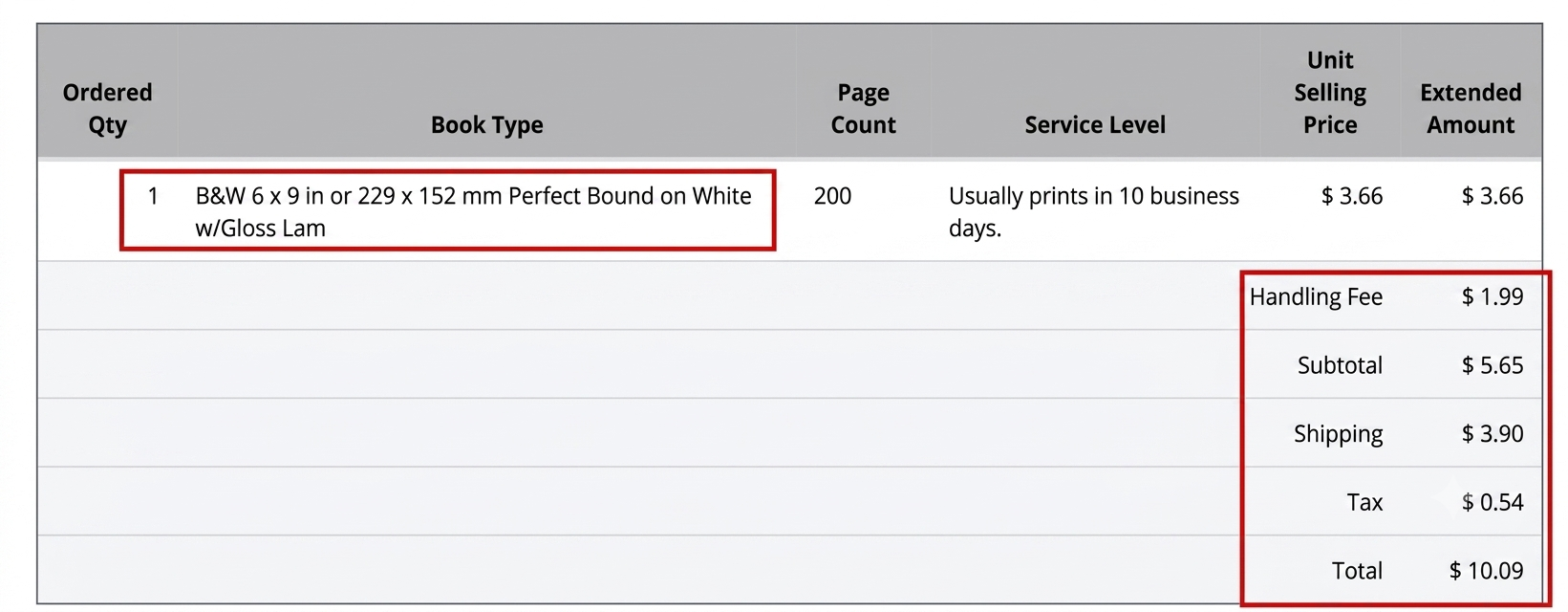
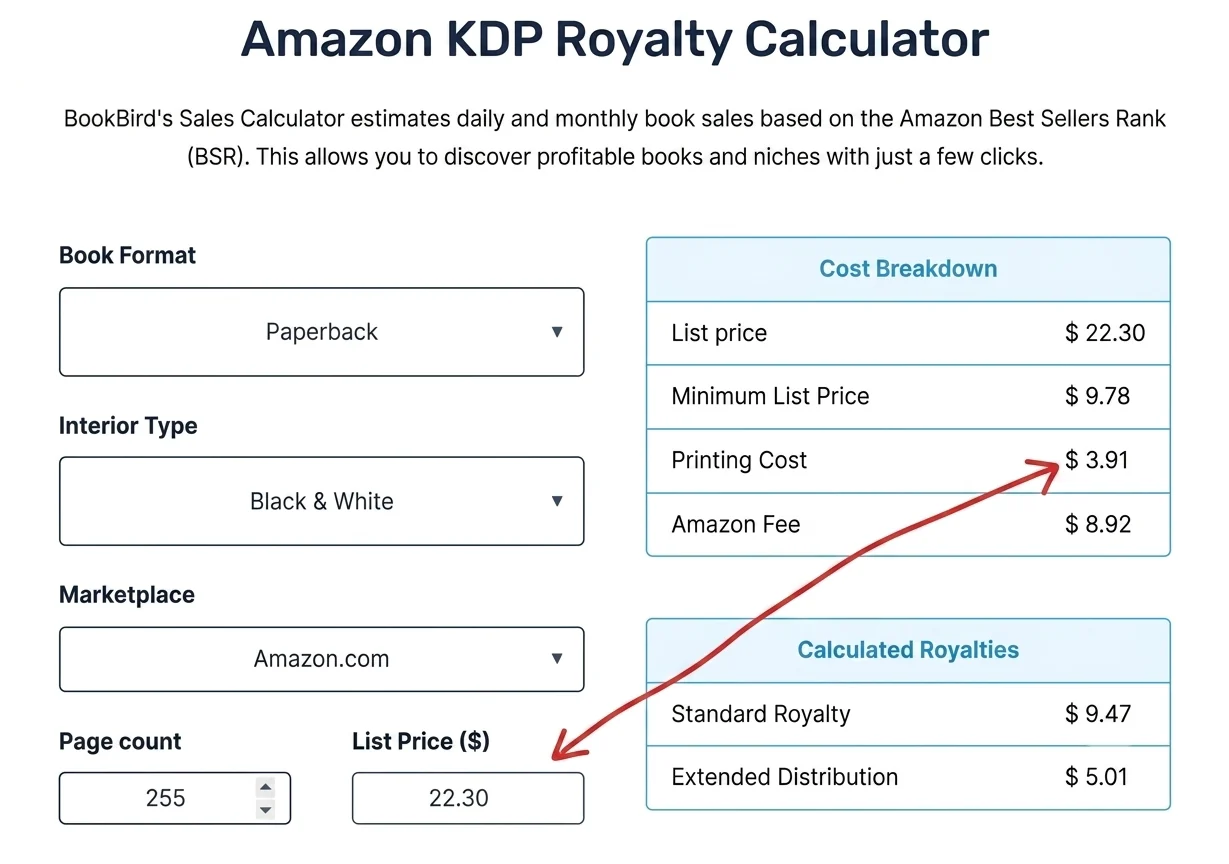
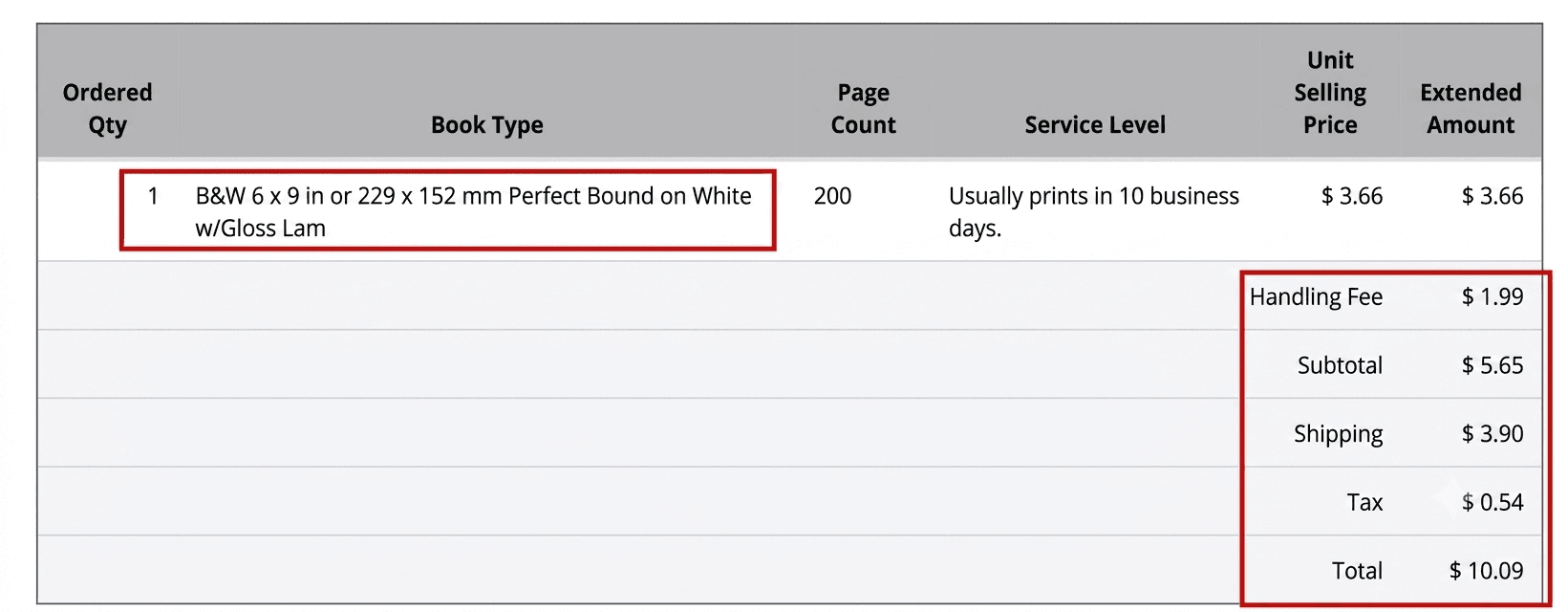
Printing cost is the amount Amazon charges you to manufacture each physical copy, based on page count, trim size, ink type, and marketplace.

Expanded Distribution is KDP’s option to make your paperback available to non‑Amazon retailers and libraries, using a lower royalty rate in exchange for wider reach.

Trim size is the physical width and height of your printed book, such as 6" × 9" or 5.5" × 8.5".

Black‑and‑white interior is a print configuration where all interior pages are printed in grayscale, which is significantly cheaper than full color. Color interior is a print configuration where interior pages can include full color, which dramatically increases printing cost.

For paperbacks sold on Amazon marketplaces, the standard royalty formula is:

  • Royalty = 60% of list price − printing cost

For paperbacks sold through Expanded Distribution:

  • Royalty = 40% of list price − printing cost

Hardcovers on KDP use a similar structure, but with higher printing costs and sometimes different base percentages depending on region. The KDP Print cost calculator is the official tool to estimate printing cost before you publish.

Take a concrete example in the US:

  • 220‑page, 6" × 9" black‑and‑white paperback
  • List price: $14.99

Assume the KDP calculator shows:

  • Fixed cost: $0.85
  • Per‑page cost: $0.012 per page
  • Printing cost: $0.85 + (220 × 0.012) = $0.85 + $2.64 = $3.49

Your royalty on Amazon.com:

  • 60% of $14.99 = $8.99
  • $8.99 − $3.49 = $5.50 per copy

On Expanded Distribution:

  • 40% of $14.99 = $6.00
  • $6.00 − $3.49 = $2.51 per copy

Same book, same list price, less than half the royalty per unit through Expanded Distribution.

Now increase page count to 280 pages, keeping everything else the same:

  • Printing cost: $0.85 + (280 × 0.012) = $0.85 + $3.36 = $4.21

Royalties:

  • Amazon: $8.99 − $4.21 = $4.78 per copy
  • Expanded: $6.00 − $4.21 = $1.79 per copy

You just lost $0.72 per Amazon sale and $0.72 per Expanded sale by adding 60 pages.

Color interiors change the economics more aggressively. Color interiors can cost several times more per page than black‑and‑white, depending on marketplace. A 220‑page color interior at $14.99 may leave you with only a few dollars per copy, or even less.

For nonfiction business books, realistic US paperback price bands often sit between $12.99 and $19.99. Using our 220‑page black‑and‑white example:

  • At $12.99: 60% = $7.79, minus $3.49 printing = $4.30 royalty
  • At $17.99: 60% = $10.79, minus $3.49 = $7.30 royalty

That is a $3.00 difference per copy, which matters once you cross a few hundred sales.

Trim size and layout decisions quietly influence page count by 10–20%. Authors who move from a cramped 5.5" × 8.5" layout to a more open 6" × 9" with sensible margins often reduce page count without hurting readability. That design choice directly improves unit economics.


What’s the real difference between 35% vs 70% royalties and KDP Select?

KDP Select is Amazon’s 90‑day exclusivity program for ebooks that unlocks Kindle Unlimited access, certain promotions, and additional royalty streams from page reads.

Kindle Unlimited is Amazon’s subscription service where readers pay a monthly fee and can read enrolled ebooks without buying them individually, while authors are paid from a monthly fund based on pages read.

KENP rate is the per‑page payout Amazon sets each month for Kindle Unlimited page reads, based on the size of the KDP Select Global Fund and total pages read.

Exclusivity is the requirement that ebooks enrolled in KDP Select must not be digitally available on other retailers or subscription services during the enrollment period.

The 35% vs 70% choice applies only to paid ebook sales, not to print or KU.

The 35% tier offers:

  • Wider price flexibility, including below $2.99 and above $9.99
  • No delivery fees
  • Lower share of list price

The 70% tier offers:

  • Higher share of list price within the allowed band
  • Delivery fees that penalize large file sizes
  • Some geographic and content restrictions

KDP Select sits on top of this. It does not change your 35% or 70% rate for paid sales. It adds a separate KU revenue stream.

The total KU fund exceeded $550 million in 2023, with monthly KENP rates typically around $0.004 to $0.005 per page.

Here is a concrete scenario for a nonfiction coach:

  • Ebook price: $6.99
  • Royalty tier: 70%
  • File size: 1.5 MB, US delivery fee: 1.5 × $0.15 = $0.23

Paid sale royalty:

  • 0.70 × $6.99 = $4.89
  • $4.89 − $0.23 = $4.66 per sale

Scenario A: “Wide” distribution, no KDP Select

  • 500 paid sales across all retailers
  • KU not available

Say 400 of those sales are on Amazon at $4.66 each = $1,864 in KDP royalties, plus whatever other retailers pay.

Scenario B: KDP Select, Amazon only

  • 500 paid sales on Amazon at $4.66 each = $2,330
  • 100,000 KU page reads at $0.0045 per page = $450

Total KDP income: $2,780

You traded away other retailers for an extra $450 from KU in this example. In KU‑heavy niches, that KU number can be much larger. In high‑ticket, B2B nonfiction where your book is a lead magnet for consulting, the value of being “wide” and available everywhere may outweigh KU income.

KDP Reports Beta lets you see exactly how much you earn from sales versus page reads over time. Authors who check those reports monthly make better decisions about staying in or leaving Select than those who treat enrollment as a one‑time choice.

FAQ: What’s the real difference between the 35% and 70% royalty options on KDP, and how does KDP Select change the equation?

The 35% and 70% options determine how much you earn from each paid ebook sale, with 70% usually paying roughly double or more within its price band but charging delivery fees. KDP Select does not change those percentages; it adds KU page‑read income in exchange for 90‑day Amazon exclusivity.


How Kindle Unlimited page reads and KENP royalties actually pay out

Kindle Edition Normalized Page is Amazon’s standardized unit for measuring ebook length for Kindle Unlimited payouts, based on a proprietary layout rather than your print page count.

KENP is the abbreviation Amazon uses for Kindle Edition Normalized Pages, the metric used to track how much of your book KU subscribers read.

When you publish an ebook and enroll it in KDP Select, Amazon assigns it a KENP page count, for example 250 KENP pages for a 45,000‑word book. You can see this number in your KDP dashboard under the book’s “Promote and Advertise” section.

Each month, Amazon announces the KENP rate after the fact. Recent years have hovered around $0.004 to $0.005 per page. Using $0.0045 as a working number:

For a 45,000‑word nonfiction book with 250 KENP pages:

  • 10,000 page reads: 10,000 × 0.0045 = $45
  • 50,000 page reads: 50,000 × 0.0045 = $225
  • 100,000 page reads: 100,000 × 0.0045 = $450

If a typical reader finishes the whole book, that is 250 pages per reader:

  • Per‑reader KU royalty: 250 × 0.0045 = $1.13

Compare that to a full‑price $6.99 sale at 70% with $0.23 delivery:

  • Net royalty per sale: $4.66

A full KU read pays about one quarter of a full paid sale in this scenario.

However, KU can generate many more “reads” than you would have sold as purchases, especially in KU‑heavy categories.

Nonfiction read‑through is often partial. Many KU readers consume 30–60% of the book. If the average KU reader only reads 125 pages (50% of 250):

  • Per‑reader KU royalty: 125 × 0.0045 = $0.56

That is closer to one eighth of a full paid sale.

KU royalties are paid in addition to any paid sales, but only while the book is enrolled in KDP Select. KU page reads from free promotions still generate royalties, which is why some authors use free days to spike visibility and then earn from the resulting reads.

KDP Reports Beta lets you drill into page‑read trends by day and title. That data can reveal which books and launches are driving meaningful KU income versus those that are mostly driven by paid sales.

FAQ: If I enroll in KDP Select, how are my Kindle Unlimited page‑read royalties calculated and paid?

Amazon assigns your ebook a KENP page count, tracks how many of those pages KU subscribers read, multiplies that by the monthly KENP rate, and pays the resulting total about 60 days after month‑end along with your other KDP royalties.


Design Lens: How page count, images, and file size quietly erode your royalties

File size is the digital size of your ebook file in megabytes, which determines delivery fees on 70% royalty ebook sales.

Page count is the total number of interior pages in your print book, which drives printing cost and therefore your net royalty.

Interior color is the classification of your print book’s interior as black‑and‑white or color, which determines which printing cost table Amazon uses. Trim size in the design context is the chosen physical dimensions of your print book that interact with fonts, margins, and layout to produce a final page count.

Design choices made in Word, InDesign, Vellum, Atticus, or Canva are not cosmetic. They are economic.

Consider a 6" × 9" paperback, mostly text, black‑and‑white interior, priced at $16.99.

Version A:

  • 180 pages
  • Printing cost (assume): $0.85 + (180 × 0.012) = $0.85 + $2.16 = $3.01
  • Royalty: 60% of $16.99 = $10.19
  • Net royalty: $10.19 − $3.01 = $7.18 per copy

Version B, redesigned with larger fonts, more white space, and added worksheets:

  • 240 pages
  • Printing cost: $0.85 + (240 × 0.012) = $0.85 + $2.88 = $3.73
  • Net royalty: $10.19 − $3.73 = $6.46 per copy

You lost $0.72 per sale. At 1,000 copies, that is $720 of margin handed to the printer.

For ebooks, file size plays a similar role.

Take a $7.99 ebook at 70% in the US:

  • Gross royalty: 0.70 × 7.99 = $5.59

Scenario 1: 1.2 MB text‑focused file

  • Delivery fee: 1.2 × $0.15 = $0.18
  • Net royalty: $5.59 − $0.18 = $5.41 per sale

Scenario 2: 7.0 MB image‑heavy file

  • Delivery fee: 7.0 × $0.15 = $1.05
  • Net royalty: $5.59 − $1.05 = $4.54 per sale

You lose $0.87 per sale purely to file size. At 2,000 sales, that is $1,740.

This is why many nonfiction business authors keep interiors black‑and‑white with selective, high‑value visuals and move heavy resources to companion downloads.

A practical Design Lens checklist before you finalize:

  • Trim size: Can you use 6" × 9" or similar to reduce page count without hurting readability?
  • Font size and leading: Are you adding pages for appearance rather than clarity?
  • Margins: Are they generous or excessive?
  • Images: Are they necessary, compressed appropriately, and in black‑and‑white where possible?
  • Color vs B&W: Does color genuinely drive value, or is it aesthetic?
  • Companion assets: Can large charts, templates, or worksheets live as downloadable PDFs instead of bloating page count and file size?

Optimizing design for royalties is not about making an ugly book. It is about aligning aesthetics with unit economics so the book can sustain itself.


How should you price your ebook and paperback to balance royalties and sales?

KDP Pricing Support is Amazon’s tool that analyzes similar books and suggests price points likely to maximize revenue based on historical data.

Effective royalty per sale is the net royalty you earn from a single sale after Amazon’s royalty rate, delivery fees, and printing costs are applied.

Optimal pricing is not “as high as possible” or “as low as possible.” It is the point where perceived value, market norms, and your target royalty intersect.

For nonfiction business ebooks, typical KDP price bands cluster between $4.99 and $9.99. Paperbacks that position you as an authority often sit between $14.99 and $24.99. Many coaches and course creators intentionally price on the higher end to signal expertise rather than bargain entertainment.

Work a concrete example:

  • Ebook prices: $4.99, $7.99, $9.99 (all at 70%, 1.5 MB file)
  • Paperback prices: $14.99, $17.99, $19.99 (220 pages, B&W, $3.49 print cost)

Ebook royalties:

  • $4.99: 0.70 × 4.99 = $3.49 − $0.23 = $3.26
  • $7.99: 0.70 × 7.99 = $5.59 − $0.23 = $5.36
  • $9.99: 0.70 × 9.99 = $6.99 − $0.23 = $6.76

Paperback royalties:

  • $14.99: 0.60 × 14.99 = $8.99 − $3.49 = $5.50
  • $17.99: 0.60 × 17.99 = $10.79 − $3.49 = $7.30
  • $19.99: 0.60 × 19.99 = $11.99 − $3.49 = $8.50

Now estimate monthly income at different volumes, assuming a 60/40 split between ebook and paperback:

Scenario: 100 units per month

  • At lower prices: $4.99 ebook, $14.99 paperback

    • 60 ebooks × $3.26 = $195.60
    • 40 paperbacks × $5.50 = $220.00
    • Total ≈ $415.60
  • At mid‑high prices: $7.99 ebook, $17.99 paperback

    • 60 ebooks × $5.36 = $321.60
    • 40 paperbacks × $7.30 = $292.00
    • Total ≈ $613.60

At the same unit volume, pricing strategy changes income by almost $200 per month.

A simple step‑by‑step process:

  1. Choose your primary business goal: lead generation, authority, or direct profit.
  2. Research 10–20 comparable books’ prices in your niche.
  3. Use KDP Pricing Support and the Print cost calculator to see recommended and break‑even points.
  4. Set an initial price that keeps your ebook in the 70% band and yields at least $4–$6 royalty on your paperback.
  5. Revisit after 60–90 days based on real KDP Reports Beta data.

Promotions like Kindle Countdown Deals temporarily reduce per‑sale earnings but can spike volume and algorithmic visibility. Amazon ads effectively reduce your net royalty per sale by adding acquisition cost. If you earn $5 royalty per sale and spend $2.50 in ads per sale, your effective royalty is $2.50. Track this in KDP Reports Beta alongside your Amazon Ads dashboard.

FAQ: How should I price my Amazon KDP ebook and paperback to balance royalties and sales for a nonfiction business book?

Most nonfiction business authors do well starting with a $6.99–$9.99 ebook at 70% and a $16.99–$19.99 paperback that yields $6–$8 per copy, then adjusting after 2–3 months based on real conversion and sales data.


From dashboard to bank account: payouts, currencies, and taxes

KDP payment threshold is the minimum royalty amount you must earn in a marketplace before Amazon issues a payment for that region.

Withholding tax is the tax Amazon may deduct from your royalties on behalf of the US Internal Revenue Service if you are a non‑US author without appropriate tax treaty documentation.

Direct deposit is Amazon’s preferred payment method where royalties are transferred electronically to your bank account, usually with the lowest fees and fastest timing.

Marketplace currency is the local currency used in each Amazon store, such as USD for Amazon.com or EUR for Amazon.de, in which your royalties are calculated and paid.

Amazon KDP pays royalties about 60 days after the end of the month in which the sale or page read occurred. January sales are typically paid at the end of March. Payments are made separately for each marketplace and currency.

If you choose direct deposit, there is usually no minimum threshold or a very low one. For checks or wire transfers, thresholds are higher and fees can be significant, which is why most authors should use direct deposit.

Currency conversion happens either at Amazon’s bank or your bank. If you are in the UK earning US and EU royalties, you might see:

  • $500 in Amazon.com (USD) royalties
  • €200 in Amazon.de (EUR) royalties

KDP Reports Beta will show those amounts in their native currencies. When paid, your bank might convert them to GBP with a 2–3% spread.

Withholding tax depends on your tax interview in KDP. US authors receive 1099 forms reporting total royalties. Non‑US authors who do not submit tax treaty information may see up to 30% of US royalties withheld.

Your KDP dashboard shows gross royalties before tax, currency, and ad spend. To understand true net income, you should mentally apply a haircut for taxes and fees. Many nonfiction authors use a conservative 20–30% reduction when forecasting.

FAQ: When and how does Amazon KDP actually pay out royalties across different countries and currencies?

KDP pays royalties monthly, about 60 days after month‑end, in the local currency of each Amazon marketplace, subject to minimum thresholds and your chosen payment method, with any applicable taxes and currency conversion fees deducted before the money reaches your bank.


Estimating realistic monthly income from Amazon KDP as a nonfiction author

Conversion rate is the percentage of your reachable audience that takes a desired action, such as buying your book during launch.

Royalty forecast is an estimate of future royalty income based on assumed prices, formats, sales volumes, and KU page reads.

Net income in the royalties context is the money you keep after Amazon’s cuts, taxes, currency fees, and marketing expenses.

Many first‑time authors estimate income by multiplying list price by an optimistic sales number. They ignore royalty tiers, print costs, KU rates, and taxes. That is how a $20,000 mental forecast becomes a $3,000 reality.

A more grounded approach starts from your existing audience. Typical email campaign open rates hover around 30%, with click‑through rates of 3–5%, which puts realistic book launch conversion in the 1–5% range of your warm list.

For a coach with a 3,000‑person email list:

  • Ebook: $7.99 at 70%, net ~$5.36 per sale
  • Paperback: $17.99, net ~$7.30 per sale

Assume a 3% launch conversion on the list and a 60/40 ebook/paperback split:

  • 3,000 × 3% = 90 buyers
  • 54 ebooks × $5.36 = $289.44
  • 36 paperbacks × $7.30 = $262.80
  • Launch email‑driven total ≈ $552

Add organic Amazon traffic, social media, and podcast appearances and you might reach 200–300 units in launch month, not 2,000.

At 250 units with the same 60/40 split:

  • 150 ebooks × $5.36 = $804
  • 100 paperbacks × $7.30 = $730
  • Total ≈ $1,534 gross royalties

If you enroll in KDP Select and estimate a KU read‑to‑sale ratio of 1:1 with 150 full reads at 250 KENP pages and $0.0045 per page:

  • 150 × 250 × 0.0045 = $168.75

New launch total ≈ $1,702.75

For steady‑state months, you might model 50–100 units plus ongoing KU reads.

A short checklist for your personal royalty forecast:

  1. Decide formats and prices for ebook, paperback, and possibly hardcover.
  2. Calculate per‑unit royalties for each format using KDP’s tools.
  3. Estimate launch and ongoing monthly sales volumes by format, based on your audience size and realistic conversion rates.
  4. Layer in KU page‑read estimates if you plan to use KDP Select.
  5. Apply a 20–30% haircut for taxes, currency, and marketing to get to net income.

Revisit your forecast after 3–6 months using actual KDP Reports Beta data. Adjust assumptions about conversion, KU behavior, and ad performance.


The verdict

How book royalties work on Amazon KDP is far more mechanical and less romantic than most first‑time authors hope. The platform rewards those who treat price, format, and design as levers, not afterthoughts. A lean, well‑designed 220‑page paperback and a 1.5 MB ebook in the 70% band will quietly outperform a bloated, mispriced version of the same content by thousands of dollars over a few years. Authors who understand the 3‑Lens Royalty Reality Check can design their books to hit clear royalty targets without compromising reader value. In publishing, the words build authority, but the royalty math decides whether that authority can fund your next project.

Key takeaways

  • Amazon KDP royalties are determined by a mix of list price, royalty tier, printing or delivery costs, and marketplace rules, not by a simple “70% of what the reader pays” shortcut.
  • Ebook, paperback, and Kindle Unlimited formats pay radically different amounts per reader, so you must model each format’s unit economics before setting expectations.
  • Design decisions like page count, trim size, color use, and ebook file size directly change your net royalty and can cost or save you dollars per copy at scale.
  • Pricing within the 70% ebook band and targeting at least $4–$6 per paperback royalty usually creates sustainable unit economics for nonfiction business authors.
  • Realistic royalty forecasts start from your audience size and conversion rates, then apply conservative assumptions for KU reads, taxes, and fees to estimate true net income.

Frequently asked questions

  • How do Amazon KDP ebook royalties actually work in dollars for a typical nonfiction book?

    KDP ebook royalty is the money you earn from each Kindle ebook sale after Amazon applies the chosen royalty rate and subtracts any delivery fees, with most major markets offering either 35% or 70% of the list price (excluding VAT where applicable). For a typical 40,000-word nonfiction ebook at 1–2 MB in the US, pricing between $4.99 and $9.99 on the 70% tier usually yields about $3.30 to $6.80 per sale after delivery fees, while the same prices on the 35% tier yield roughly $1.75 to $3.50 per sale with no delivery fees.

  • How do book royalties work for paperbacks and hardcovers on Amazon KDP?

    For paperbacks sold on Amazon marketplaces, the standard royalty formula is 60% of the list price minus printing cost, while paperbacks sold through Expanded Distribution earn 40% of the list price minus printing cost. Hardcovers on KDP use a similar structure with higher printing costs and sometimes different base percentages depending on region, and the KDP Print cost calculator is the official tool to estimate printing cost before you publish.

  • What’s the real difference between the 35% and 70% royalty options on KDP, and how does KDP Select affect them?

    The 35% tier offers wider price flexibility, including below $2.99 and above $9.99, with no delivery fees but a lower share of the list price, while the 70% tier offers a higher share within its allowed band but charges delivery fees and has geographic and content restrictions. KDP Select sits on top of this by adding a separate Kindle Unlimited page-read revenue stream in exchange for 90-day Amazon exclusivity, without changing your 35% or 70% rates for paid sales.

  • If I enroll in KDP Select, how are my Kindle Unlimited page-read royalties calculated and paid?

    Amazon assigns your ebook a KENP page count, tracks how many of those pages Kindle Unlimited subscribers read, multiplies that by the monthly KENP rate (often around $0.004 to $0.005 per page), and pays the resulting total about 60 days after month-end along with your other KDP royalties. A full read of a typical 250-KENP-page nonfiction book at a $0.0045 KENP rate would earn about $1.13 per reader.

  • How should I price my Amazon KDP ebook and paperback to balance royalties and sales for a nonfiction business book?

    Most nonfiction business authors do well starting with a $6.99–$9.99 ebook at the 70% royalty tier and a $16.99–$19.99 paperback that yields $6–$8 per copy, then adjusting after 2–3 months based on real conversion and sales data from KDP Reports Beta. Optimal pricing is the point where perceived value, market norms, and your target royalty intersect, not simply the highest or lowest possible price.

  • When and how does Amazon KDP actually pay out royalties across different countries and currencies?

    Amazon KDP pays royalties about 60 days after the end of the month in which the sale or page read occurred, with payments made separately for each marketplace and currency. If you choose direct deposit, thresholds are low or nonexistent, but currency conversion and any applicable withholding tax for non-US authors are applied before the money reaches your bank.

  • How much can a typical nonfiction author realistically expect to make per month from Amazon KDP?

    For a coach with a 3,000-person email list, a realistic launch might convert about 3% of the list into roughly 90 buyers and, with additional organic sales, reach 200–300 units in launch month, often yielding around $1,500–$1,700 in gross royalties across ebook, paperback, and Kindle Unlimited reads at the example prices used. Steady-state months are more likely to see 50–100 units plus ongoing KU reads rather than thousands of sales.

  • How do design choices like page count, images, and file size affect my Amazon KDP royalties?

    Design choices directly change your net royalty because page count drives print manufacturing cost and ebook file size drives delivery fees on the 70% tier, so adding pages or large images can quietly reduce what you earn per copy. For example, increasing a 6" × 9" paperback from 180 to 240 pages in the given scenario cuts royalty by $0.72 per sale, and bloating an ebook from 1.2 MB to 7.0 MB at $7.99 reduces net royalty by $0.87 per sale.

Sources & References

  1. Amazon KDP

Ready to write your book?

Turn your expertise into a professional book with Built&Written.

Put your book on the page