

Can You Write a Book If You're Not a Writer? (Yes, Here's How)
Most first-time authors stall at the same sentence: "I'm not a writer." It isn't a time problem. It's a belief about identity, and the facts don't support it. Industry estimates put the share of published business and self-help books that are ghostwritten or written with a collaborator at roughly 60-80%. The founders whose books line airport shelves didn't necessarily write every sentence themselves. They supplied the expertise; someone else supplied the structure.
Yes, you can write a book without being a writer. Roughly 60-80% of published business and self-help books are ghostwritten or written with a collaborator, so supplying the expertise while someone else supplies the structure is the norm, not the exception. What a business book requires from you is a method worth explaining and the material to back it up; structuring, drafting, and formatting can happen inside one workflow.
That's the real distinction, and it's worth being precise about it. Writing a novel demands sentence-level craft: voice, pacing, invented plot. Writing a business book demands something every founder, consultant, or coach already does for a living: explaining a method you use, in your own words, in an order a reader can follow. The bottleneck isn't prose. It's structure: deciding what belongs in chapter one versus chapter six, deciding which client story illustrates the point instead of just supporting it, and cutting what doesn't belong at all. Most first-time authors already have years of that raw explaining on record (sales calls, LinkedIn posts, onboarding decks) without ever having organized it into a sequence a reader can follow start to finish.
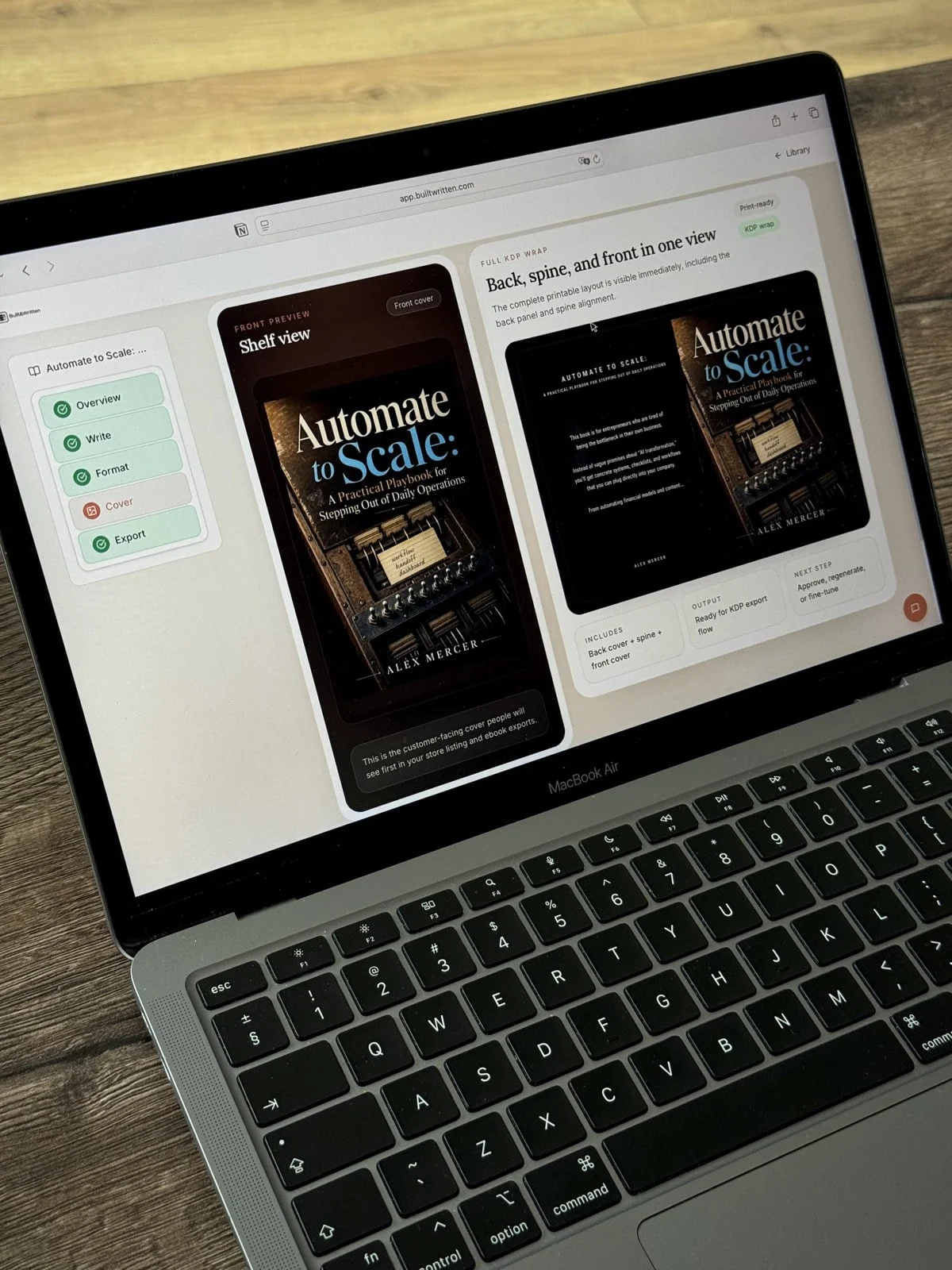
Wren, Built&Written's AI writing assistant, handles that structure using material you've already produced. It doesn't ask for a manuscript, an outline, or writing samples polished for publication. It asks for the notes, transcripts, and posts you already have sitting in a folder somewhere, and turns the organizing work into something the AI does rather than something you have to solve first.
This piece walks through how that process works from raw notes to a finished book, what it costs against the two default alternatives, and where to find more detail on ghostwriting cost, voice-matching, and the traditional model it replaces.
- Roughly 60-80% of published business and self-help books are ghostwritten or written with a collaborator. Publishing one without being a professional writer is closer to the norm than the exception.
- The real bottleneck is structure, not sentence-level prose: deciding what belongs in chapter one versus chapter six, and cutting what doesn't belong at all.
- Wren trains on your voice before drafting a single chapter, reaching 80-90% style similarity across a full manuscript.
- A traditional ghostwriter starts at $8,000 and runs past $150,000; Built&Written automates the same process inside a $19-$99 monthly subscription.
- Editing a drafted chapter (reordering it, rewriting a paragraph, regenerating a section that missed the point) is the only writing skill this process actually requires of the author.
How Built&Written turns notes into a finished book
The workflow runs in four stages, from your raw material to a formatted, publishable file.
1. Start from material you've already produced
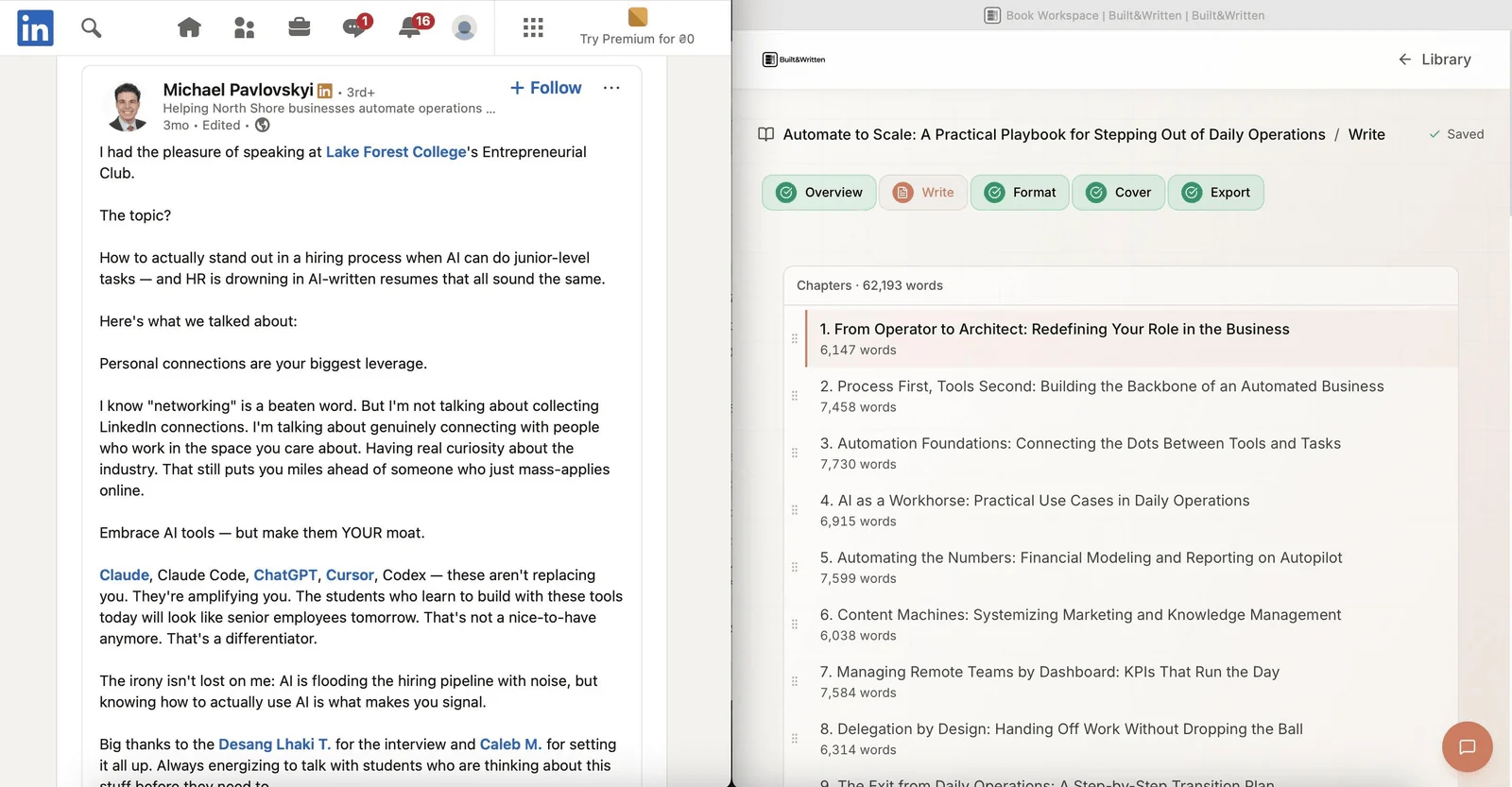
Wren's first screen asks for your raw material (LinkedIn posts, sales call transcripts, voice memos, notes) or offers a short guided conversation if you haven't collected much yet. The chapter most non-writers dread, the opening of chapter one, is never generated from a blank page. It's assembled from things you've already said or typed somewhere else. Five to fifty pages of that material is usually enough for Wren to start identifying the shape of a book inside it.
2. Wren trains on your voice before drafting anything
Before a single chapter is generated, Wren reads your submitted writing for rhythm and vocabulary and locks in a tone, length, and style reference. Voice-matching built this way reaches 80-90% style similarity across a full manuscript, which is why a chapter Wren drafts reads like you rather than like a generic AI assistant.
3. You edit chapters, you don't generate them
Wren proposes a chapter structure based on your source material, which you can reorder, rename, or delete before any chapter text exists. Chapters then draft one at a time, so a single chapter can be reviewed and regenerated without restarting the manuscript. From there, the work is editing: reorder a chapter, rewrite a paragraph, regenerate a section that missed the point. Editing an existing draft is a different skill than producing one from nothing, and it's the only writing skill this process asks of the author.
4. Export produces KDP-ready files automatically
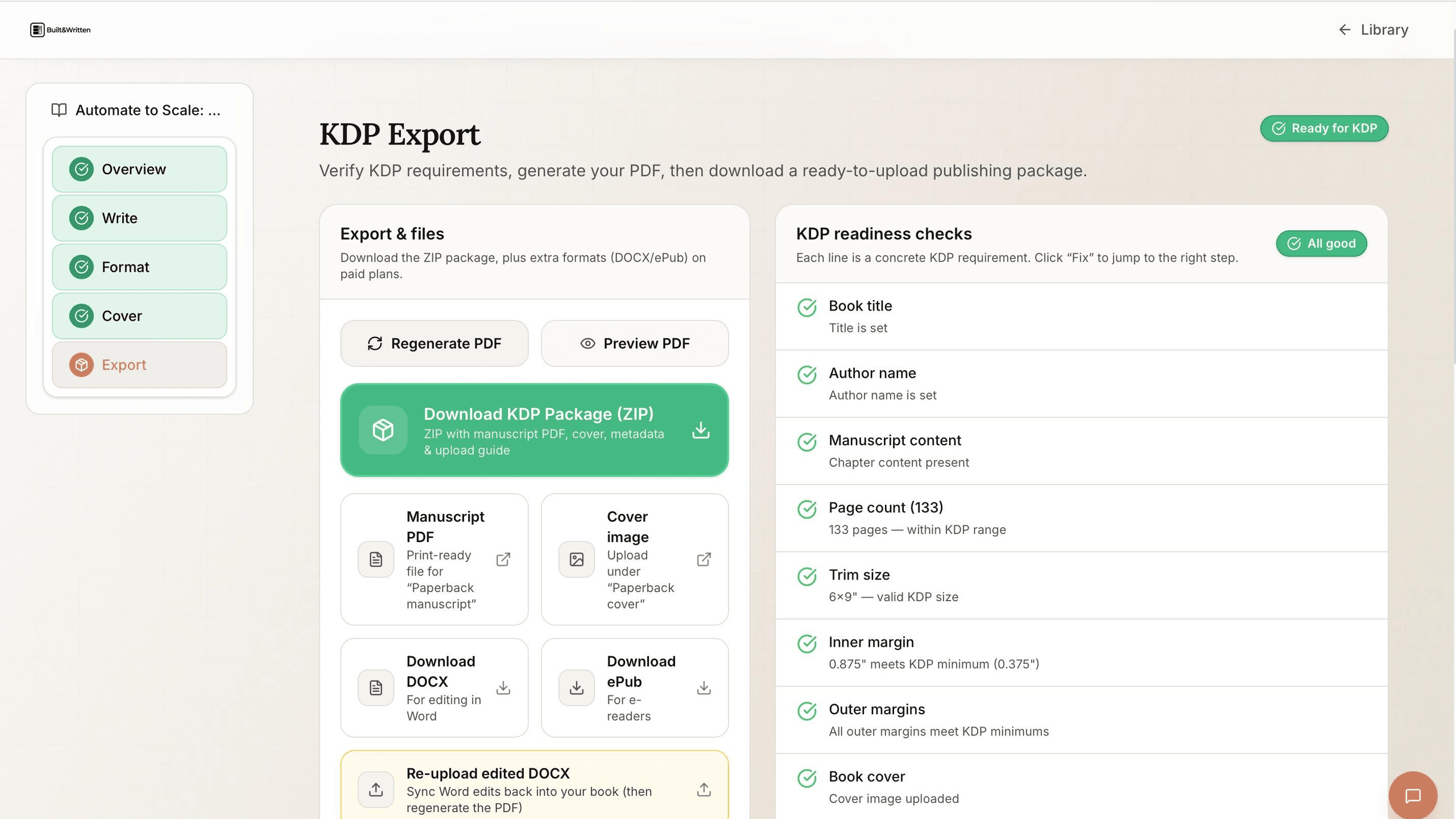
A finished manuscript isn't a finished book. Interior margins, gutters, bleed, spine width, and ePub conversion are generated at export, checked against Amazon's actual publishing requirements before anything is uploaded. None of it requires formatting skill or manual work from the author.
What each path costs
Writing a book alone requires structure and months of unpaid time, with no guarantee of a finished manuscript at the end. Hiring a traditional ghostwriter starts at $8,000 and runs past $150,000 for established names, on a timeline of six to twelve months. Built&Written automates the same drafting and formatting work inside a $19-$99 monthly subscription, with a finished book typically taking days to weeks rather than months, the full cost and process comparison is broken down here.
| DIY (write it alone) | Traditional ghostwriter | Built&Written | |
|---|---|---|---|
| Writing skill required | High | None | None |
| Keeps your expertise | Fully | Depends on the writer | Fully, from your own material |
| Typical cost | Free | $8,000-$150,000+ | $19-$99/mo |
| Typical timeline | Months to never | 6-12 months | Days to weeks |
Final thoughts
"I'm not a writer" answers a question nobody's actually asking. The real question is whether you have something worth explaining and the material to back it up: call notes, LinkedIn posts, years of explaining your method out loud. Most people who think they can't write a book already have one; it just isn't in book form yet.
Wren can't invent the framework you built or the client story that proves it works. That expertise still has to come from you. What it removes is the requirement that you also be a professional writer to get that expertise into a finished, publishable book. Structuring, drafting, and formatting happen inside one workflow, instead of a ghostwriter's timeline or a blank document and a deadline.
Start with what's already sitting in your notes app, your LinkedIn history, or one long recorded call, and turn it into a first draft with Built&Written.
Frequently asked questions
That's an editing detail, not a book-writing qualification. Wren generates clean prose from your material, and anything left to fix is a proofreading pass, not a rewrite. Editing an existing draft is a different skill than producing one from nothing, and it's the only writing skill the process asks of the author.
Yes. Five to fifty pages of your existing writing is generally enough for Wren to learn your voice, and most entrepreneurs already have that much sitting in notes, posts, and transcripts. Sales calls, LinkedIn posts, voice memos, and onboarding decks all count as raw material; none of it needs to be polished for publication.
That depends on whether voice training happens before drafting. Wren runs it as a required step, not an optional one; skipping it is the most common reason an AI-drafted book reads generically. Voice-matching built this way reaches 80-90% style similarity across a full manuscript, which is why a drafted chapter reads like you rather than a generic AI assistant.
No. Wren proposes the outline from your source material, and you edit it before any chapter text exists. You can reorder, rename, or delete chapters at that stage, so you're reacting to a structure instead of producing one from scratch. Chapters then draft one at a time and can be regenerated individually.
Readers and prospects evaluate the ideas and the credibility behind them, not your publishing pedigree. Roughly 60-80% of published business and self-help books are ghostwritten or written with a collaborator, so publishing without being a professional writer is the norm. A book converts your credibility into a shareable asset, the way a business card that never gets thrown away does.
Most authors move from raw material to a KDP-ready file in days to weeks, not months. The exact timeline depends on how much source material you start with and how many editing passes you want before export. A traditional ghostwriter runs six to twelve months by comparison.
Sources & References
About the author

Khrystyna Balushka
More in pain-point
Ready to write your book?
Turn your expertise into a professional book with Built&Written.