

How to Turn Your Expertise Into a Book Without a Ghostwriter in 2026
How to Turn Your Expertise Into a Book Without a Ghostwriter in 2026
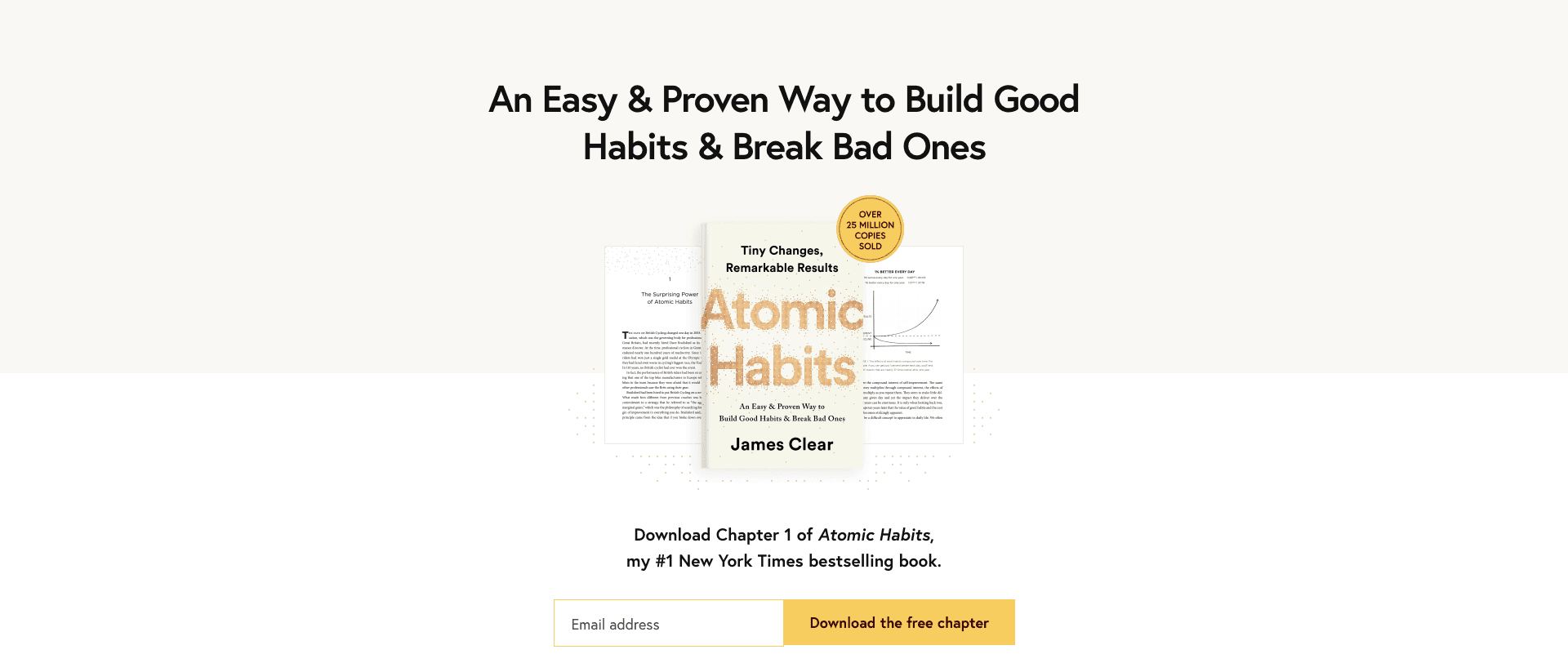
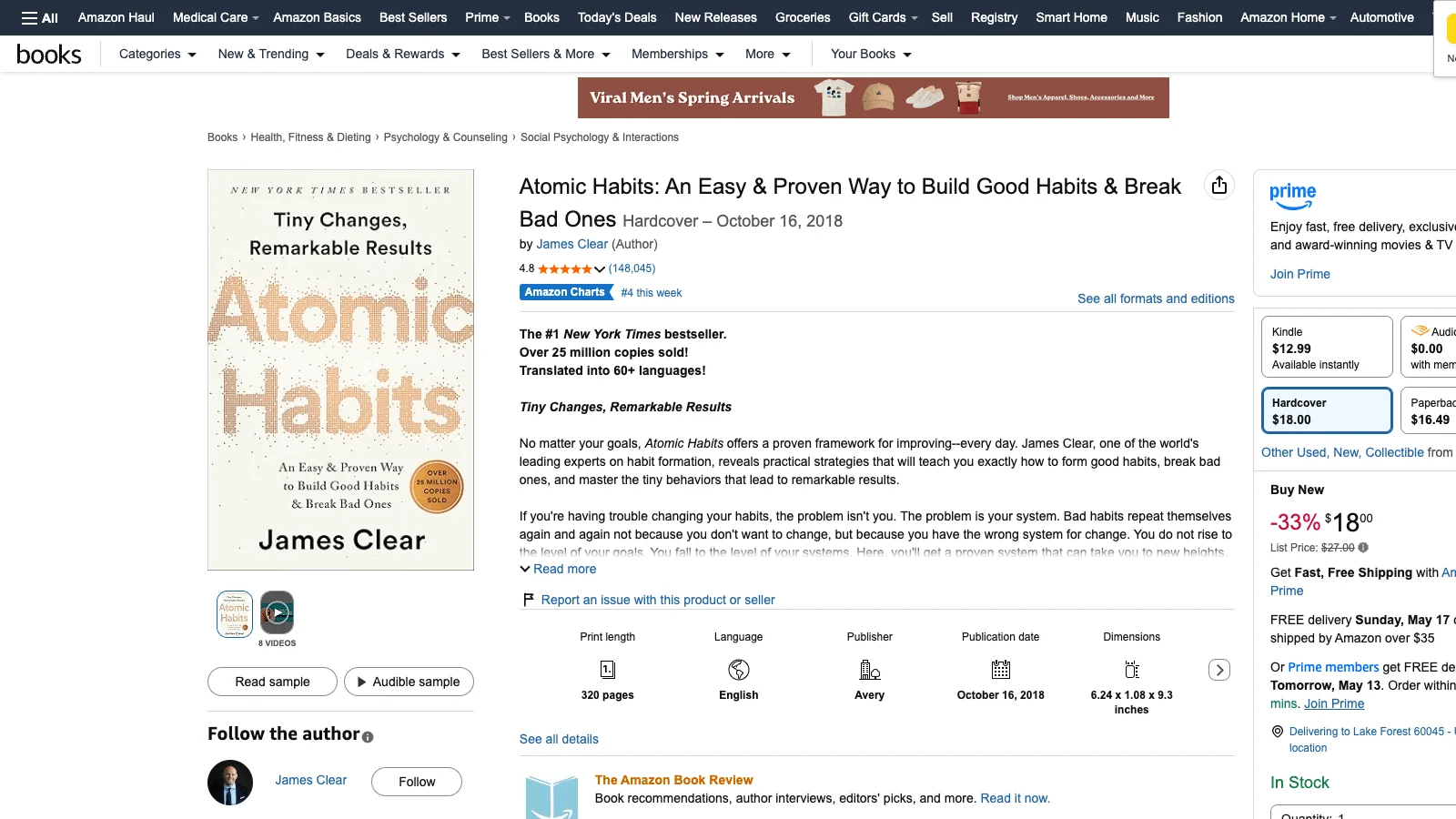
In 2012, James Clear started publishing twice-weekly essays on his personal blog. He wasn't planning to write a book. He was working through ideas: habits, identity, the gap between knowing what to do and actually doing it. He kept writing. By 2018, he had six years of essays and a framework that had been tested, refined, and argued in public. Atomic Habits was published that year. It has since sold millions of copies. He didn't write the book from scratch in 2018. He wrote himself into it, one essay at a time, and then compressed the archive.
That is the model. That is how you turn expertise into a book in 2026.
Every coach reading this article right now is sitting on a James Clear-shaped archive. LinkedIn posts, podcast transcripts, workshop scripts, client session notes, talk slides. The raw material for a 50,000-word book already exists. The question isn't whether you have enough content. The question is whether you know how to compress it.
Most coaches assume the only paths forward are: three years of weekend writing sessions, or a $30,000 check to a ghostwriter. Both of those assumptions are wrong. The correct answer is a structured compression process, and this article walks you through every stage of it.
Key takeaway:
For coaches, consultants, and founders in 2026, the fastest path to a credible book is compression, not creation. The Coach's Expertise Compression Stack runs in 5 stages: inventory, theme extraction, voice capture, compression drafting, and production. Built&Written runs stages 3 through 5 in one workspace from $19/month, with a free tier.
Why most coaches abandon the "expertise to book" project
A coach in practice has no shortage of material. Three years of LinkedIn posts on a consistent topic. Forty podcast episodes. Annual workshop scripts. Client case studies (anonymized). The intellectual raw material for a book is already there, structured around whatever framework has been at the center of their practice.
What the coach does not have is a writing pipeline. And that gap is where the project dies.
Three failure modes kill more coaching-book projects than any other cause.
Failure mode one: the 18-month manuscript. The coach decides to write the book from scratch. They block Saturday mornings. They open a Google Doc. They write 800 words, feel good about it, and open it again two weeks later. The doc says 800 words. The project stalls because writing from scratch, with no source material, no momentum, and no deadline, is a pure willpower exercise. Willpower runs out.
The math makes this worse. A full coaching methodology book runs 50,000 words. If you write 1,000 words every Saturday morning (a strong pace for someone doing it alongside a full practice), that's 50 weeks. One year, plus editing, plus formatting, plus cover design, plus the KDP upload process. Call it 18 months from "I should write a book" to "the book is live." During those 18 months, your practice is booked at 30 or more client hours a week. Every time you sit down to write, you're competing with everything else in your schedule.
By month six, most coaches have abandoned the project. Not because the book was a bad idea. Because they chose the hardest possible starting position: blank page, no source material, no workflow.
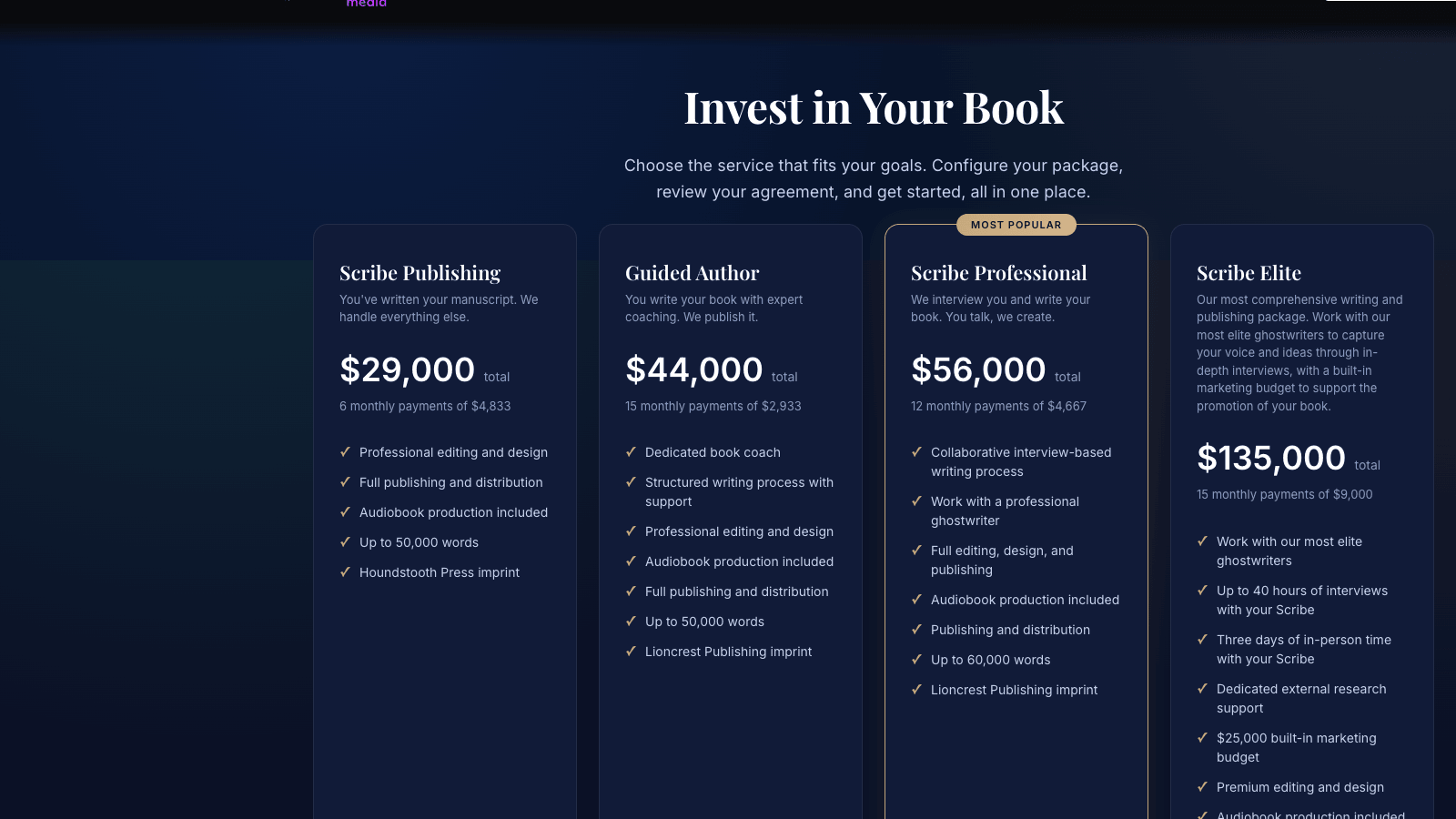
Failure mode two: the ghostwriter contract. The coach decides to hire a professional. Services like Scribe Media currently price their tiers from the low five figures for their interview-driven guided tier into the mid-five figures for full ghost service. The book gets done. It's well-structured. It reads professionally.
Then the coach reads it back and notices the problem: it doesn't sound like them. The voice is clean but generic. The sentences are complete and grammatically precise in a way the coach never is on a call. The specific turns of phrase that clients recognize from three years of LinkedIn posts are gone. What remains is a credible-sounding book that doesn't deliver the core thing a coaching book is supposed to deliver: proof that this specific person thinks in this specific way.
The ghostwriter bill also changes the calculus on what the book has to earn back. At $30,000 to $50,000 in production cost, the book needs to generate real revenue, fast. That's a different job than a $200 tool that pays back in the first client it attracts.
Failure mode three: the AI shortcut. The coach pastes a topic into ChatGPT and asks for a book about leadership coaching. Thirty thousand words arrive in about four hours. The coach reads the first chapter. It sounds like a business book written by an algorithm trained on other business books. Every sentence is correct. None of it sounds like the coach.
A generic AI book runs into a credibility problem, not a KDP problem. Amazon KDP's current content guidelines allow AI-assisted books with disclosure. The platform doesn't reject them. Readers do. Not through formal reviews, but through putting the book down on page four and not recommending it to anyone.
The answer to all three failure modes is the same. It's not faster writing. It's not cheaper ghostwriting. It's a different starting position entirely: compress what you already have, rather than create what you don't.
This is the difference between a two-year slog and a six-week sprint. And it has a name.
The Coach's Expertise Compression Stack: 5 stages from content library to KDP
The Coach's Expertise Compression Stack is a 5-stage process for turning an existing content archive (LinkedIn posts, podcast transcripts, workshop notes, talk slides, session memos) into a KDP-ready manuscript without writing from scratch and without a ghostwriter.
Here are the 5 stages.
Stage 1: Inventory. You audit your existing content and assemble it into a single corpus. LinkedIn posts exported as CSV. Podcast transcripts pulled via Otter.ai, Descript, or Rev. Workshop scripts and talk slides exported to text. Client session notes, anonymized. The goal is a single folder of everything you've already produced, typically 80,000 to 150,000 words for a coach with two to four years of consistent content creation. You are not writing anything at this stage. You are collecting.
Stage 2: Theme extraction. You read through the inventory (or have an AI assistant read it in chunks) and identify the one or two frameworks that recur across everything. Most coaches assume they have ten distinct topics. Most actually have two. The inventory reveals this. The 2 frameworks become the spine of the book. Everything else in the inventory becomes chapter material.
Stage 3: Voice DNA capture. You pull 5 to 50 pages of your most characteristic prose (typically your best LinkedIn posts plus a podcast transcript segment) and upload them as a voice sample. This sample teaches the AI how you write: sentence rhythm, paragraph length, vocabulary preferences, the specific analogies you reach for, the register you use. Voice DNA is what prevents the final manuscript from drifting into generic LinkedIn-shaped business-book prose.
Stage 4: Compression drafting. With Voice DNA active, you work chapter by chapter. The AI takes your thematically grouped source material from Stage 1 and drafts each chapter in your voice, with you reviewing and editing each section before moving to the next. The AI is not writing from scratch. It is compressing your existing content into book form, bridging material with transitions, cutting redundancy, and maintaining a consistent register. Your judgment on what stays, what goes, and how the argument develops is what makes it your book.
Stage 5: Production. KDP-compliant interior formatting (trim size, margins, gutter math, running headers, chapter openers), integrated cover design with correct spine math, and export as a KDP-ready PDF and ePub package. You download the package and upload to KDP yourself.
| Stage | What it does | With the Stack | Solo (no compression) |
|---|---|---|---|
| 1. Inventory | Audit and assemble existing content | 4-6 hours | Not done. Start from a blank document |
| 2. Theme extraction | Identify 1-2 recurring frameworks | 2-3 hours | 2-4 weeks of "what is this book about?" |
| 3. Voice DNA capture | Teach the AI your writing voice | 1 hour | Not possible without a dedicated tool |
| 4. Compression drafting | Assemble chapters from source material | 12-20 hours of review and editing | 200-400 hours of original writing |
| 5. Production | KDP-ready PDF, ePub, cover | Hours | Weeks of formatting work |
Stages 3 through 5 happen inside Built&Written's workspace. Stages 1 and 2 happen in your existing tools: LinkedIn's data export, your podcast transcript service, a Google Doc.
How does Stage 1 (Inventory) actually work in 2026?
A content inventory is the complete written and transcribed record of your expertise: LinkedIn posts, podcast transcripts, workshop notes, client session memos, and talk scripts assembled into a single corpus.
Most coaches underestimate how much they already have. A coach who has posted three times a week on LinkedIn for two years has produced roughly 300 posts. At an average of 200 words per post, that's 60,000 words. Add one podcast episode per week for two years at a 45-minute average per episode (roughly 6,500 transcribed words per episode), and you have another 104 weeks worth of material. Add workshop scripts and talk notes. The total often lands between 100,000 and 200,000 words.
That is the inventory. Here is how to assemble it, step by step.
Step 1: Export your LinkedIn content
LinkedIn's native data export is the cleanest way to pull your post archive. Go to Settings and Privacy, then the Data Privacy section, then "Get a copy of your data." Select Posts and Articles (or all data if you want everything). LinkedIn emails a download link within 24 hours. The export includes a CSV file with one row per post, plus a separate file for long-form articles.
Most coaches who have been active on LinkedIn for two to four years find 200 to 500 posts in this export, with average post lengths between 100 and 300 words. That puts the LinkedIn-only word count between 20,000 and 150,000 words depending on posting frequency and length. For more detail on this specific workflow, see our guide on turning your LinkedIn posts into a coaching book.
Step 2: Transcribe your podcast and talk recordings
If you host a podcast or have appeared as a guest, every episode is a content asset. Otter.ai starts at $8.33 per month for 1,200 minutes of automated transcription. Descript starts at $12 per month with transcription included in its editing workflow. Rev charges per minute: approximately $0.25 per minute for AI transcription and around $1.50 per minute for human-reviewed transcription. For a 45-minute podcast episode, Rev's AI option costs about $11. Human review is worth the price if your speech patterns are idiosyncratic or you use specialized vocabulary your clients would recognize.
Zoom recordings, live event recordings captured on a phone, and recorded webinars all run through the same workflow. Drop the audio file into your transcription service and collect the output. A detailed walkthrough of this specific step is in our article on converting a podcast into a KDP-ready manuscript.
Step 3: Pull workshop notes and session memos
Most coaches keep session notes and workshop scripts in Notion, Google Drive, or Evernote. These are often the most insight-dense material in the inventory because they were written for a specific client or group, not for public performance.
Before including session memos, anonymize aggressively. Replace client names with role descriptors ("a fintech CFO," "a first-time founder about to close a series A"). Strip identifying details: company names, industries, cities, any detail a third party could trace back to a real person. Coach-client confidentiality is non-negotiable, but the insight compresses cleanly once the identifying detail is removed. The story that illustrates a framework is still the story. The names don't survive the book anyway.
Step 4: Add talk slides and workshop scripts
PowerPoint and Keynote files convert to text via Export to Word (in PowerPoint) or File then Export then Send to Microsoft Word (in Keynote). The slide bodies are often thin, but the speaker notes are frequently book-grade prose: the full argument, written out for a room, before the coach edited it down to bullet points.
If you've delivered the same workshop more than once, you likely have multiple iterations of the same script, each refined by feedback. The most recent version is the one to include. Earlier versions are noise.
Step 5: Assemble the corpus
Drop all exported files into a single folder or paste everything into a single Google Doc. At this stage, do not try to organize by topic or chapter. Leave it as a pile. The Theme Extraction stage in Stage 2 is what structures it.
A coach with three years of LinkedIn posts at three per week (roughly 400 posts at 200 words average), 50 podcast episodes at 45 minutes each (transcribed), and 12 workshop scripts will have a raw corpus of 100,000 to 160,000 words. That is more than enough source material for a 50,000-word book with room to cut and tighten.
Where most coaches hit the voice-drift wall (and the Voice DNA fix)
Voice drift is the specific failure mode that breaks otherwise-competent content-to-book projects. It is worth understanding precisely, because the fix is not obvious.
When you feed 100,000 words of source material into a general-purpose AI tool (ChatGPT, Claude, or Sudowrite) and prompt it to "write a chapter from these notes," the output defaults to the model's trained register. The model has been trained on billions of words, most of which sound like a certain kind of internet prose: declarative, organized into numbered lists, hedged with transitional phrases, built around three-point structures. Your sharp, specific, idiosyncratic coaching voice gets averaged into that pattern.
The reader notices on page three, usually. Not consciously. They just feel the voice shift. They feel the gap between the coach they follow on LinkedIn and the author on the page. That gap is the credibility problem. The book exists, technically, but it no longer delivers on its core function: proof that this specific person thinks in this specific way.
What Voice DNA does. Built&Written asks for a 5 to 50 page sample of the coach's most characteristic prose, pulled from their best LinkedIn posts and a segment of podcast transcript. This sample is not fed to the AI as background context in a chat window. It is used to condition the assembly process: sentence rhythm, paragraph length, signature phrases, vocabulary preferences, and the kinds of analogies the coach reaches for. Before any chapter is drafted, the AI has a structural model of how this specific person writes.
The output reads like the coach wrote it because the assembly is constrained by that model at every step.
Compared to the alternatives. Using ChatGPT or Claude without voice conditioning produces smooth, competent, and generic output. There are coaches who can prompt their way around this with very precise system prompts referencing uploaded samples, but it requires significant prompt engineering skill and the quality drifts across a long manuscript. Sudowrite is purpose-built for fiction writers. Their Muse model was built specifically for narrative prose, which means it actively rewrites non-fiction voice in pursuit of literary flow. A blunt coaching insight becomes evocative. That is the wrong direction for a methodology book.
Hiring a ghostwriter at Scribe Media rates solves the voice problem if the ghostwriter is skilled and if you spend enough sessions articulating your voice explicitly. The pricing on their tiers reflects that voice work: it is expensive because voice capture is hard without a dedicated technical process.
One executive coach we worked with had three years of LinkedIn posts on the specific topic of radical candor in leadership. The manuscript draft produced from her Voice DNA sample read so consistently that she sent a single chapter to a former client who replied asking whether she had written the chapter during one of their sessions. That is what voice fidelity at scale looks like.
The Atomic Habits parallel is direct. James Clear sounds like James Clear in Atomic Habits because he spent six years writing the book in public, one essay at a time, before it was a book. The voice was not put on for publication. It was the voice the writing had always had. Voice DNA compresses the voice-encoding step: instead of six years of public writing to establish the voice, you do a one-hour sample upload.
Tool placement: which platforms fit each stage of the Stack
The Coach's Expertise Compression Stack runs across several tools at different stages. Understanding where each tool fits prevents the common mistake of using the wrong tool for the wrong stage, which wastes time and produces worse output.
Stage 1: Inventory tools
The inventory stage runs entirely on tools you likely already use or can access cheaply.
LinkedIn's native export is free and built into the platform. Settings and Privacy → Data Privacy → Get a copy of your data. The download arrives within 24 hours and includes your full post archive as a CSV.
Otter.ai handles podcast and meeting transcription starting at $8.33 per month for 1,200 minutes. The automated transcription is accurate enough for inventory purposes; you are not publishing the raw transcript, you are using it as source material. A month of Otter gets you through most existing archives.
Descript starts at $12 per month and adds podcast-editing functionality on top of transcription. If you are an active podcaster who records new episodes while building the book, Descript's editing tools make the workflow more efficient. For coaches who only need to transcribe an existing archive, Otter at the lower price point is sufficient.
Rev is the right choice when transcript accuracy is critical, particularly for coaches with specialized vocabulary, strong accents, or technical terminology that automated tools misread. The per-minute pricing model (roughly $0.25 per minute for AI, $1.50 per minute for human review) makes it practical for transcribing a specific high-value episode without committing to a monthly subscription.
Stage 2: Theme extraction
Theme extraction has no dedicated tool. Most coaches do it in a Google Doc: read through 20,000-word chunks of inventory, note the recurring claims and frameworks, and identify the two or three themes that show up everywhere.
For AI-assisted theme spotting, paste 20,000-word blocks into a general-purpose AI (ChatGPT or Claude) and ask "what are the two or three recurring claims across these notes?" The AI is useful here as a pattern-spotter, not as a decision-maker. The decision of which themes matter is yours, built on years of working with actual clients.
This stage costs nothing beyond the time.
Stages 3 through 5: Built&Written
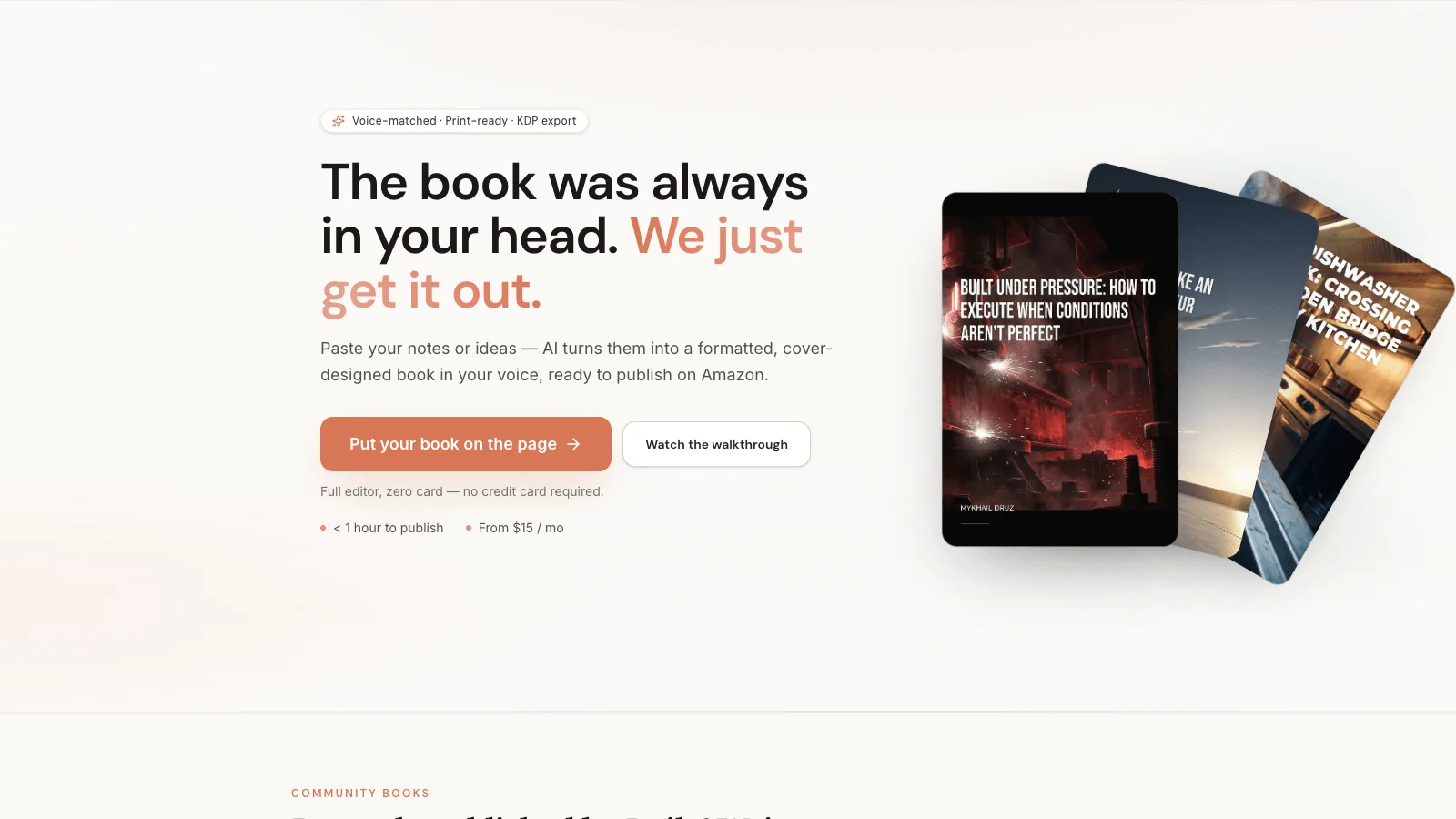
Built&Written runs Voice DNA capture (Stage 3), compression drafting (Stage 4), and KDP production (Stage 5) in one workspace. The price is from $19 per month with a free tier.
Voice DNA is set up once, at the start of Stage 3. Paste the 5 to 50 page sample. The system conditions the manuscript assembly on that sample before any chapter drafting begins.
For Stage 4, the workflow is chapter by chapter. Paste your thematically grouped source material from Stage 1. Built&Written drafts the chapter in your Voice DNA voice. You review, edit, and approve before moving to the next chapter. The total editing time for a 50,000-word manuscript, with a well-assembled inventory and a clear Voice DNA sample, typically runs 12 to 20 hours over two to three weeks.
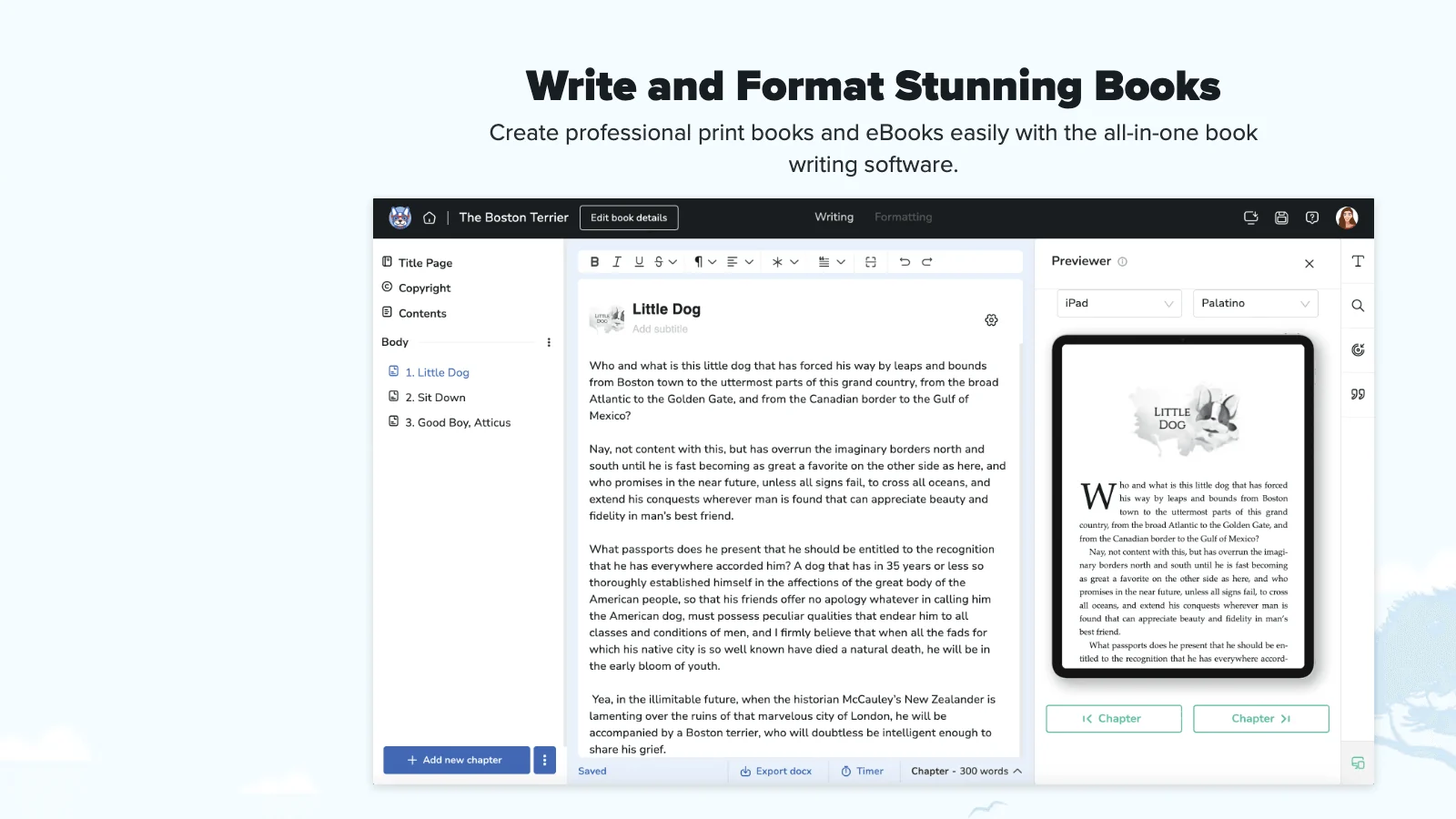
For Stage 5, Built&Written generates KDP-compliant interior formatting (correct trim sizes for 5x8, 6x9, and 8.5x11 formats), integrated cover design with spine width calculated from page count and paper type, and a KDP package export as a ZIP file containing the print PDF, ePub, and metadata. You upload to KDP yourself. The full KDP production workflow is covered in the complete coach's guide to writing and publishing with AI.
Where Atticus fits
Atticus is the established interior-formatting tool for coaches and authors who already have a finished manuscript and need KDP-compliant layout. The one-time price is $147. Atticus does not write. There is no AI content generation, no voice capture, no content ingest. It is a layout tool. For a coach who has completed Stage 4 through another route (either with Built&Written or by writing the manuscript manually) and only needs Stage 5 formatting, Atticus replaces the production stage at a one-time cost.
The trade-off: Atticus is cheaper for a single book and deeper on formatting customization. Built&Written is the better choice for coaches who still need Stages 3 and 4, which is the majority.
Where Vellum fits
Vellum is the Mac-only equivalent to Atticus, at a one-time price of $249. Same scope: formatting and export, no AI writing. Vellum's output quality is excellent, and many traditionally published authors use it as their production tool. For a coach on Mac with a finished manuscript, Vellum is a defensible choice for Stage 5 only.
Where Sudowrite fits (and doesn't)
Sudowrite is built for fiction. Their own positioning makes this explicit: "story smarts," a model built specifically for fiction prose. A coach using Sudowrite for a methodology book is using a tool designed for a fundamentally different task. The AI will rewrite coaching voice in pursuit of literary flow, which is the opposite of what a credibility-building non-fiction book needs. Sudowrite is the right tool if you are writing a coaching memoir with literary ambitions. It is the wrong tool for a methodology book, a framework guide, or a lead-generating business book.
Where Scribe Media fits
Scribe Media is the high-touch ghostwriting service. Their current tiers run from low five figures for their interview-based guided program into the mid-to-high five figures for full ghostwriting. It is the right path for coaches who:
- Have a thin content corpus (under 50,000 words of existing material) that cannot support the inventory-and-compress model.
- Are writing a memoir or biographical narrative where high-judgment storytelling is the core of the project, not framework extraction.
- Cannot find 10 to 15 hours of focused time over 2 to 3 weeks and have a five-figure budget to spend instead.
- Are working on a co-authored book requiring a coordinating voice that a single-author AI process cannot replicate.
Scribe does excellent work for the right client. The wrong client is the coach with 200 LinkedIn posts, 40 podcast episodes, and $5,000 to spend. For that coach, the inventory is already there. The book is the compression, not the creation.
The total cost comparison
For a coach with 100,000 words of existing content running the Stack: LinkedIn export is free. Three months of Otter at $8.33 per month is $25. Three months of Built&Written from $19 per month is $57. Total software cost: roughly $70, plus 10 to 15 hours of focused work over two to three weeks.
A Scribe Media engagement at their entry tier is in the low five figures. The Stack is not a cheaper version of the same thing. It is a different thing entirely.
Who should compress versus who should still hire a ghostwriter
The Coach's Expertise Compression Stack is the right path for most coaches in 2026. Not all of them. Framing this decision honestly matters more than steering everyone toward the same tool.
Compression is the right path if you have most of the following:
- 80,000 or more words of existing content across LinkedIn, podcasts, workshop notes, and talks.
- The capacity to find 10 to 15 hours of focused work over a 2 to 3 week period for Stage 4 review and editing.
- A book project that is primarily a credibility and positioning asset, not a memoir or biographical narrative.
- A preference for the final manuscript sounding like you, specifically, in your actual voice.
- A total tool budget of under $200.
This profile fits the majority of coaches who have been active for two years or more. If you have been posting on LinkedIn consistently, recording a podcast, and delivering workshops, you almost certainly have the inventory. The International Coaching Federation's research tracks the number of active coaches globally: a high percentage have some form of content library. Most of them do not know it qualifies as a book inventory.
A ghostwriter is the right path if:
- Your content corpus is thin, under 50,000 words. There is not enough inventory to compress; the book has to be created, not assembled.
- Your book is a memoir or biographical narrative. This requires high-judgment storytelling decisions (what to include, how to frame difficult moments, how to handle other people who appear in the story) that a compression process cannot make for you.
- You have a five-figure budget and cannot carve out the 10 to 15 hours of focused editing time. Time and money trade places. Ghostwriting buys back the time.
- The book is a co-authored project requiring a coordinating narrative voice across two very different writing styles.
- You are working on a traditional publisher-acquired book where the publisher has assigned a writing partner and expects you to work within their process.
Acknowledge this clearly: Scribe Media does excellent work for the right client. The right client is a coach who fits the bullets above. The wrong client is a coach with two years of LinkedIn posts and $30,000 in unnecessary spend.
There is also a hybrid path that rarely gets discussed. Some coaches run Stages 1 and 2 of the Stack themselves (inventory and theme extraction), then hand the organized corpus to a ghostwriter for Stages 3 and 4. This cuts the ghostwriter's time in half because the source material is already assembled and organized. The ghostwriter is doing voice capture and compression drafting rather than starting from an interview-based content-creation process. Some Scribe tiers price this differently. Worth asking about if you are working with a ghostwriter.
The Verdict
For a coach in 2026 with 80,000 or more words of existing content built up over two to four years of LinkedIn, podcast, and workshop activity, paying for a ghostwriter is paying to solve a problem that no longer exists. The expertise is already on the page. The book is the compression, not the creation. The Coach's Expertise Compression Stack runs that compression in five stages. Built&Written runs Stages 3 through 5 in one workspace from $19 per month, which is what it costs to solve a problem that previously had a $30,000 minimum. For coaches whose book is a credibility asset, not a revenue stream, that math changes what is possible. A book that turns a $3,000 cold-outreach client into a $30,000 inbound retainer pays back its tool cost in the first week after launch.
Key takeaways
- The Coach's Expertise Compression Stack runs in 5 stages: Inventory, Theme Extraction, Voice DNA capture, Compression Drafting, and Production. The framework applies to coaches, consultants, and founders who want to turn existing content into a published book without a ghostwriter.
- A coach with three years of LinkedIn posts at three per week, plus 50 transcribed podcast episodes and a set of workshop scripts, typically has 100,000 to 160,000 words of source material already produced. That is more than enough for a 50,000-word book.
- Voice drift is the specific failure mode that breaks AI-assisted content-to-book projects. Generic AI output reverts to model default register and loses the coach's voice. Voice DNA (a 5 to 50 page sample uploaded once) is the fix.
- Total tool cost for a coach with an existing content inventory: LinkedIn export (free) + Otter.ai for three months ($25) + Built&Written for three months ($57) = roughly $82 plus 10 to 15 hours of focused work across two to three weeks.
- Stages 1 and 2 (Inventory and Theme Extraction) happen in your existing tools. Stages 3 through 5 (Voice DNA, Compression Drafting, Production) happen inside Built&Written's workspace.
- A ghostwriter is the right path for coaches with thin content corpuses (under 50,000 words), memoir or biographical projects, or tight time constraints paired with a five-figure budget. Scribe Media's tiers run from low five to mid-to-high five figures.
- The book's job is not to earn royalties. Its job is to turn a $3,000 cold-outreach client into a $30,000 inbound retainer by positioning the coach as the author of the definitive book in their niche. That is the ROI math that justifies the work.
Frequently asked questions
How long does it take to turn my LinkedIn archive into a book?
With a complete content inventory in hand, most coaches complete Stage 3 (Voice DNA setup) in one hour, and Stage 4 (compression drafting and editing) in 12 to 20 focused hours spread across two to three weeks. Stage 5 (KDP production, cover, and export) adds another two to four hours. Total elapsed time from "inventory assembled" to "KDP package ready" runs two to four weeks for most coaches working part-time. The inventory assembly itself (Stage 1 and 2) typically takes one weekend. See our deeper breakdown in how to write a book without a ghostwriter for a full timeline walkthrough.
Will Amazon KDP reject a book I assembled with AI?
No. KDP allows AI-assisted books with disclosure (their current policy as of early 2026). The Amazon KDP content guidelines require authors to disclose when content is AI-generated but do not prohibit AI assistance. Amazon distinguishes between AI-generated (the AI did the substantive creative work) and AI-assisted (the human's expertise is the core, AI helped with assembly and editing). A coach using the Compression Stack, feeding their own content and reviewing every chapter, falls clearly into AI-assisted. Check the disclosure box during KDP upload. Books continue to sell normally after disclosure.
Can I use a podcast as the source for a coaching book?
Yes. Podcast transcripts are among the highest-quality inventory sources because podcast speech is often more natural and more representative of the coach's actual voice than LinkedIn posts, which tend toward performance-optimization. Transcribe using Otter.ai, Descript, or Rev and paste the transcripts as source material. A coach with 50 episodes at 45 minutes each has roughly 50,000 to 75,000 transcribed words before touching anything else. Full workflow in our article on converting a podcast into a KDP-ready manuscript.
What's the cheapest legitimate path from expertise to a published book?
The Coach's Expertise Compression Stack using LinkedIn export (free), Otter.ai at $8.33 per month, and Built&Written from $19 per month for two to three months puts the total software cost under $75. Add Amazon KDP paperback printing costs (print-on-demand, no upfront inventory). The print cost for a 200-page paperback at KDP's standard pricing is roughly $2.15 to $3.50 per copy depending on trim size. At a $9.99 cover price, the author royalty is approximately $3 to $4 per paperback copy sold. The cost to produce is under $100. No cheaper legitimate path to a fully published, KDP-live book exists for a coach with an existing content archive.
Will my book read like ChatGPT wrote it?
Not if you set up Voice DNA correctly. A book assembled without any voice conditioning will read generic, because the AI defaults to its training register. With a 5 to 50 page Voice DNA sample uploaded before any chapter drafting begins, the assembly is constrained by your specific prose patterns. The "AI-sounding" tells (the hedge phrases, the three-bullet structures, the transition words that flag AI output to a careful reader) get suppressed by your voice sample. The edit pass in Stage 4 catches what slips through. A coach who has spent two years developing a specific, recognizable voice on LinkedIn has more Voice DNA raw material to work with than most novelists have when they start a manuscript.
Should I hire a ghostwriter, write it myself, or use a tool like Built&Written?
It depends on your inventory and your time. If you have 80,000 or more words of existing content and can find 10 to 15 focused hours over two to three weeks: use the Compression Stack with Built&Written. If you have a thin content archive (under 50,000 words) or are writing a memoir requiring high-judgment storytelling: a ghostwriter is the right path. Writing from scratch without a compression tool is the hardest option and the one with the highest abandonment rate. For a deeper comparison of all three paths and how much each actually costs, see how much it actually costs to write a book in 2025 and the best AI book writing tools for coaches we tested in 2026.
How many words of existing content do I actually need to compress into a book?
The practical minimum for the Compression Stack is 50,000 words of existing content to produce a 30,000-word lead-magnet booklet. For a full 50,000-word methodology book, aim for 80,000 to 100,000 words of source material in the inventory. The extra material gives you room to cut: the compression process almost always produces more chapter material than the book needs, and the editing pass is about selection as much as prose polish. Coaches who try to compress a 30,000-word inventory into a 50,000-word book usually hit the wall where there is genuinely not enough source material to compress, and the AI starts padding. Padding is the tell. Thin inventory = padded output. Build the inventory first. For guidance on how many posts constitute a sufficient LinkedIn inventory specifically, see turning your LinkedIn posts into a coaching book.
Sources & References
Sources & References
- https://jamesclear.com/about
- https://www.amazon.com/Atomic-Habits-Proven-Build-Break/dp/0735211299
- https://kdp.amazon.com/en_US/help/topic/G200635650
- https://kdp.amazon.com/en_US/help/topic/G201834330
- https://coachingfederation.org/
- https://scribemedia.com/pricing/
- https://www.atticus.io/
- https://vellum.pub/
- https://www.sudowrite.com/
- https://otter.ai/
- https://www.descript.com/
- https://www.rev.com/
- https://www.builtwritten.com/
- https://www.boxofcrayons.com/the-coaching-habit-book/
- https://www.justinwelsh.me/
About the author

Michael Pavlovskyi
More in pain-point
Ready to write your book?
Turn your expertise into a professional book with Built&Written.