

How to Write a Book That Attracts High-Paying Clients
Most coaches and consultants already have the material for a book: years of frameworks, client wins, and a way of explaining their work that clients respond to. What's missing isn't expertise. It's a structure that turns that expertise into something a prospect can read before they ever book a call, and that makes the call about price and timeline instead of qualification.
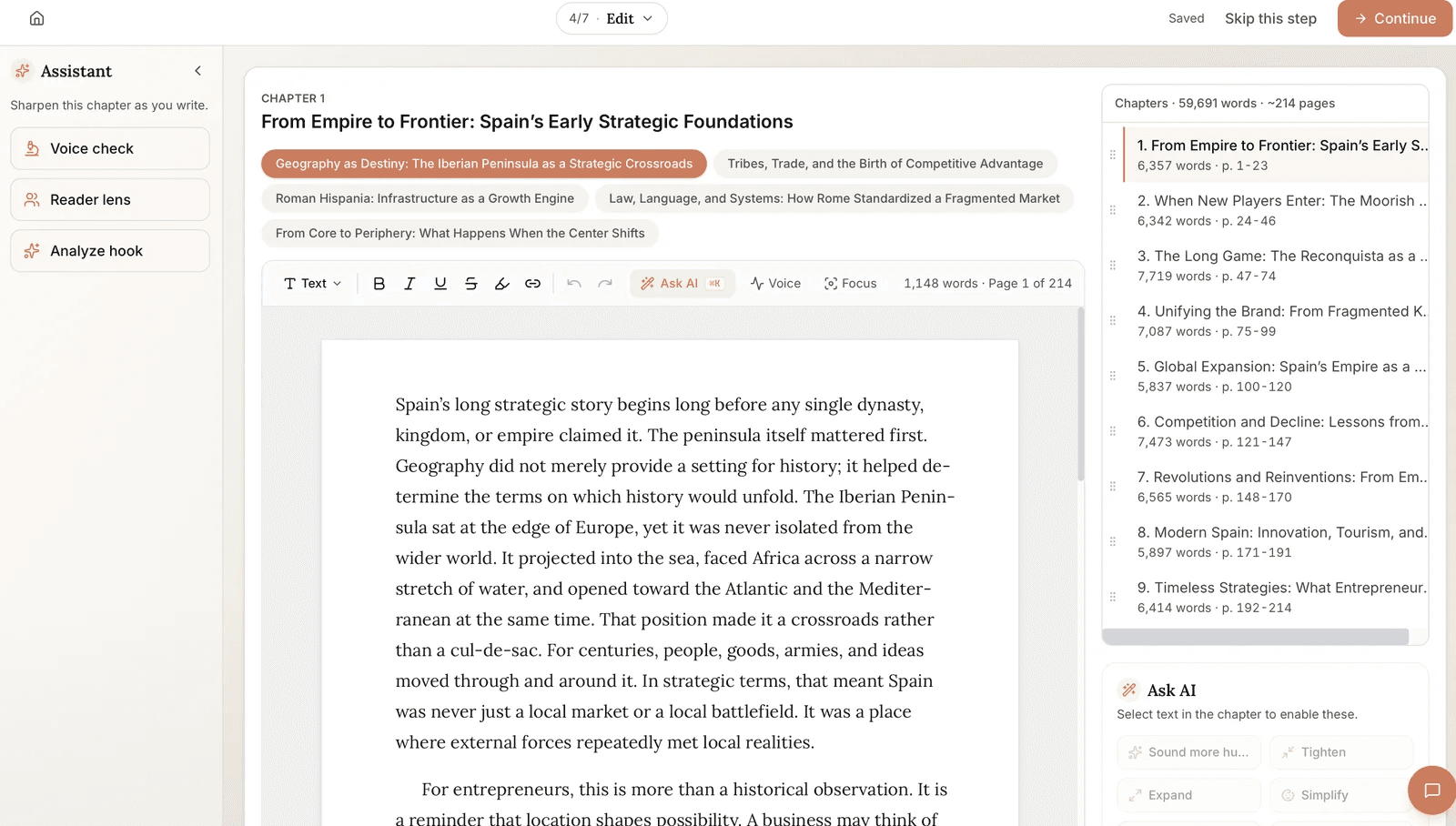
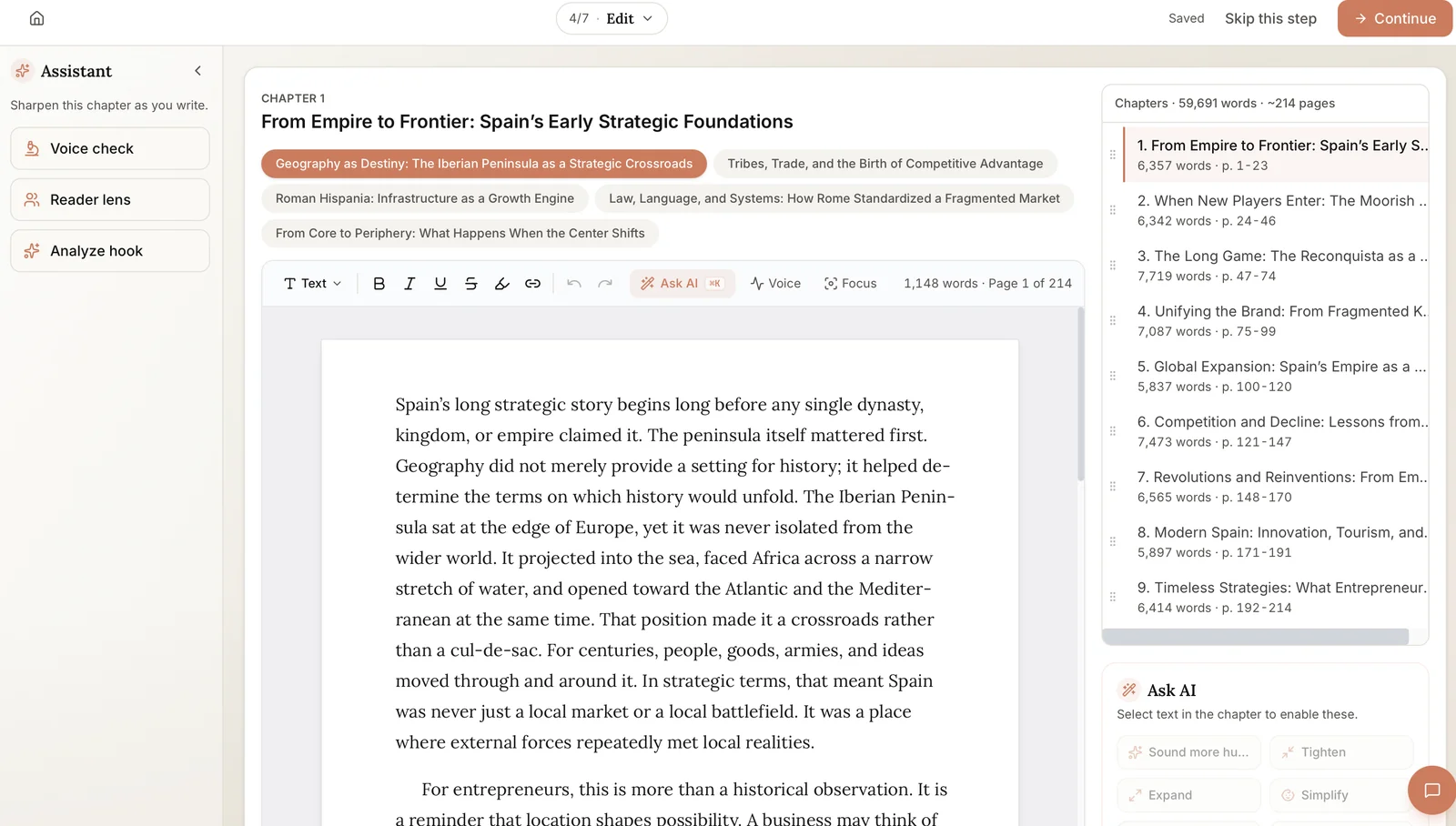
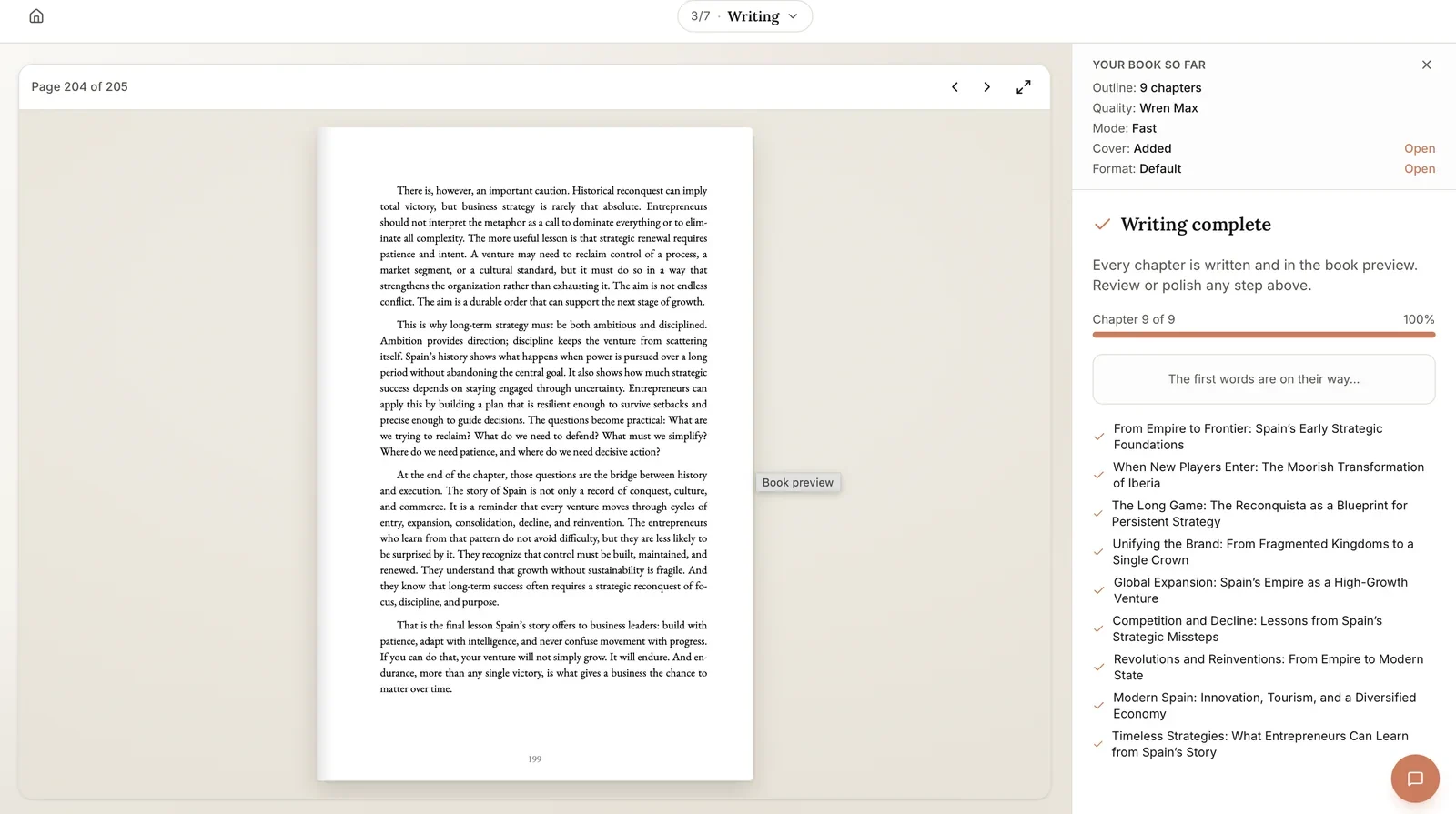
A book earns higher fees by establishing your authority before the first call. The version that lands high-paying clients is built around one named framework, a proof chapter with real numbers, an objections chapter, and a clear next step, in that order. Built&Written handles the structuring and drafting so you can build it without a ghostwriter or months of a blank page.
This guide covers what that structure actually looks like, why it changes what you can charge, and where most first-time author-experts lose the effect by writing the wrong kind of book, and how to build it without hiring an expensive ghostwriter or losing months to a blank page.
- A book earns higher fees by establishing your authority before the first call. The rate gap between equally skilled consultants tracks visibility, not skill.
- Buyers finish most of their research before they ever contact you. A book is the one asset that works on your behalf while you're not in the room.
- You don't need a ghostwriter or months of blank pages. Wren, Built&Written's AI writing assistant, automates the structuring and drafting so you can launch faster.
Why a book changes what you can charge
Your rates depend on your perceived expertise, not just your skill. Published research puts consulting and coaching fees anywhere from $150 an hour for a newer coach to $750-$1,000+ an hour for one who is visibly established. And a book is what establishes that authority before the very first discovery call.
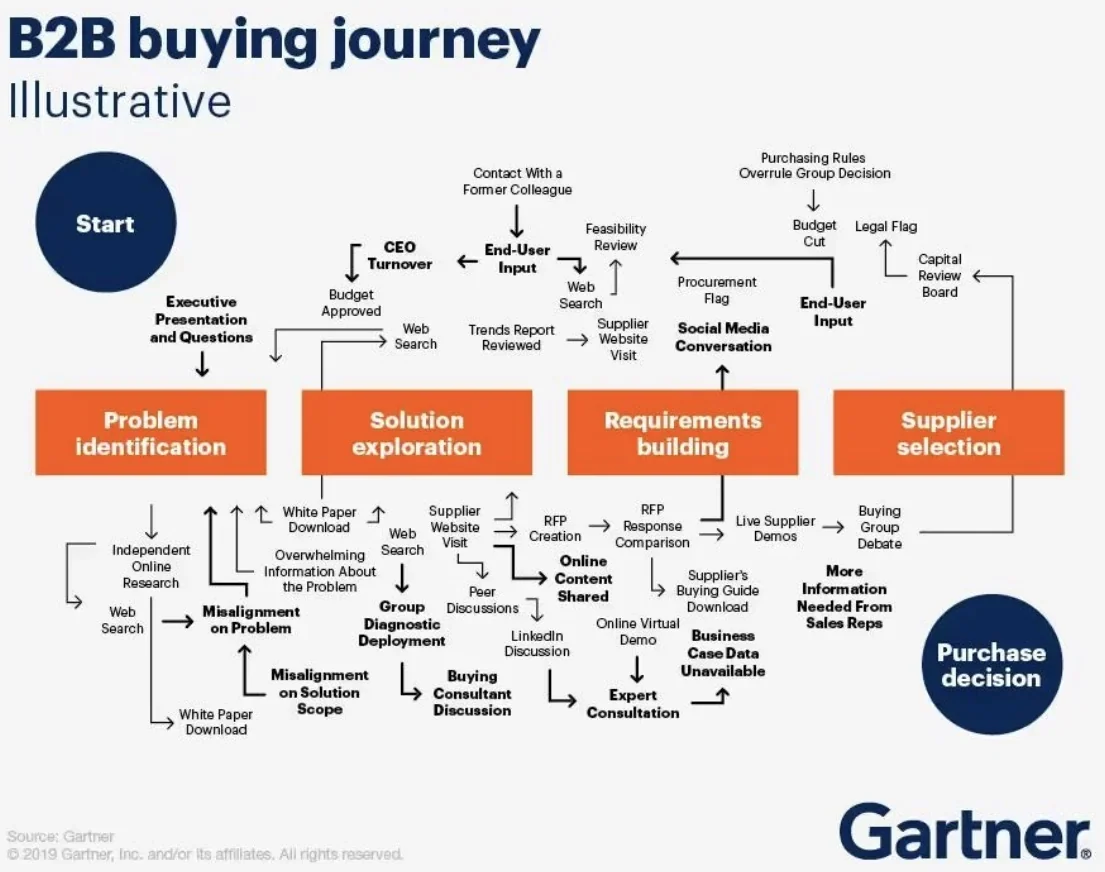
That's also why buyers behave the way they do before they ever call you. Research on B2B buying behavior puts prospects roughly 70% of the way through their decision before they contact a seller at all. A book handles the research phase for you completely unattended.
None of this means a book is a replacement for a sales conversation. It means the conversation starts differently: instead of establishing that you know what you're doing, the call starts at scope, fit, and price. That's a shorter call, and it's a call with a warmer prospect.
What the book actually needs to do that job
A memoir doesn't do this. Neither does a loosely organized collection of blog posts. The books that change a sales conversation share four specific things, and missing any one of them is usually why an otherwise well-written book doesn't move the needle on fees.
A named framework, not a topic. "Insights on leadership" is a topic. "The Three-Layer Retention System" is a framework, something a prospect can repeat back to a colleague, and something you can reference by name on a sales call six months later. If a reader can't summarize your method in one sentence after finishing the book, the framework isn't sharp enough yet. Wren, Built&Written's AI writing assistant, analyzes your existing materials (LinkedIn posts, proposals, call notes) to extract and name that framework automatically, instead of leaving you to reverse-engineer it from scratch.
A proof chapter with real numbers. This is the chapter most first-time author-experts skip or bury. It's not a testimonials page. It's a walkthrough of two or three client situations, what the starting numbers were, what changed, and roughly how long it took. Specific figures do more work here than adjectives: "reduced onboarding time from six weeks to nine days" earns more trust than "dramatically improved."
An objections chapter. The questions a skeptical prospect would ask on a call (cost, timeline, why this instead of doing it in-house, what happens if it doesn't work) answered in the book, before the call. This is the chapter that shortens the actual sales conversation the most, because it pre-answers the questions that otherwise eat the first half of every call. Instead of guessing what readers doubt, Wren analyzes your target audience's actual pain points to generate this chapter for you.
A next-step chapter. The last chapter should say, plainly, what a reader who wants help should do next, not a hard pitch, one clear action. Books that end on a summary instead of a next step leave a warm reader with nowhere to go, which is the single easiest fix in a manuscript that already exists.
Where most self-published expert books lose the effect
The most common mistake isn't bad writing. Most experts write clearly enough. It's building the book around everything they know instead of the one argument that supports a premium price. A book that tries to cover a whole career reads like a resume; a book built around one framework, proven with numbers, reads like a case for hiring you.
The second most common mistake is treating the book as the final deliverable instead of the first step in a longer relationship. A positioning book is not meant to convince a reader alone. It's meant to get the right reader to the call already convinced of the framework, with price and scope as the only open questions. For a fuller rundown, see our guide on the biggest mistakes first-time authors make on Amazon.
A rough comparison
| No book | Memoir-style expert book | Book built for positioning | |
|---|---|---|---|
| What the first call covers | Explaining your approach from scratch | Rapport, but rarely your method | Scope, timeline, and price |
| Typical fee ceiling* | Lower end of market range | Similar to no book | Upper end of market range |
| Objection handling | Happens live, on every call | Rarely addressed | Pre-answered in one chapter |
| Referral behavior | Prospect describes you loosely | Prospect remembers the story, not the method | Prospect can name your framework to someone else |
*Based on published ranges for coaching and consulting fees; individual results vary with track record, niche, and market.
Final thoughts
A book that attracts high-paying clients isn't a longer version of your About page, and it isn't your life story. It's a proof document: one framework, real proof, the objections answered, and a clear next step, in that order.
Hundreds of coaches and consultants have already used Wren, Built&Written's AI writing assistant, to publish books that generate high-paying clients, without hiring a ghostwriter or losing months to a blank page.
You don't have to spend months structuring your manuscript. Wren automates the heavy lifting, helping you launch a client-attracting book fast. Try it for free today.
Frequently asked questions
No. The book's job is to convert a warm prospect who's already found you, not to reach a mass audience. A few hundred readers who are the right readers do more for a consulting practice than ten thousand who aren't.
Short is usually right. 100-150 pages is enough to establish one framework, prove it, and hand the reader a next step: long enough to feel substantial, short enough that a busy prospect actually finishes it before the call.
Both work, for different goals. A free or low-cost book optimized for reach gets it into more hands before a call; a priced book on Amazon adds a credibility signal ('published author') that a free PDF doesn't carry. Many consultants do both: priced on Amazon, gifted directly to qualified prospects.
Usually, yes. Years of LinkedIn posts, proposal decks, and case studies from past clients are often most of a proof chapter and a framework chapter already written. They just need to be pulled into one structure with the objections and next-step chapters added around them. That's the gap Wren, Built&Written's AI writing assistant, is built to close: turning scattered client material into a structured draft without a ghostwriter's cost or a blank-page timeline.
Sources & References
About the author

Khrystyna Balushka
More in Lead Generation
Ready to write your book?
Turn your expertise into a professional book with Built&Written.