
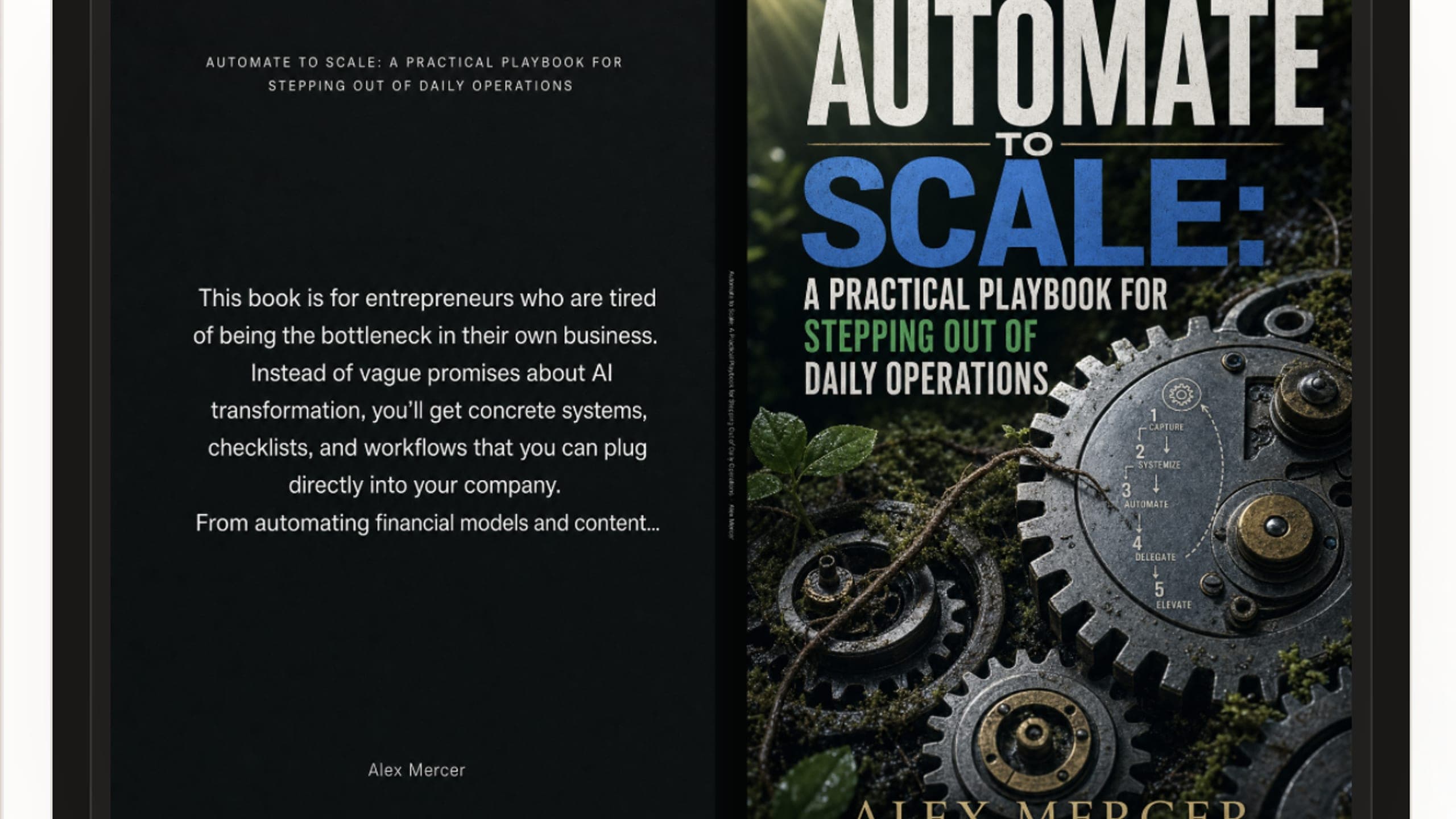

How to Write Your First Entrepreneur Book With AI
Most entrepreneurs already have the material for a book: notes, LinkedIn posts, call transcripts, sales decks. What's missing is time to structure it, and confidence that the result will sound like them rather than a generic chatbot.
Start with material you already have: notes, LinkedIn posts, call transcripts. Train the AI on your voice before a single chapter is drafted, fix the structure at the outline stage, then export a formatted interior PDF, cover wrap, and ePub. Built&Written runs all four stages in one guided workflow, at a fraction of ghostwriting cost, in days instead of months.
This guide explains how Built&Written turns that material into a finished, KDP-ready book, including how the process and cost compare to hiring a ghostwriter or prompting a general AI chatbot yourself.
- Wren, Built&Written's AI writing assistant, combines your existing notes and writing samples with a voice-matching step before drafting a single chapter.
- Skipping voice training is the leading cause of generic-sounding AI-drafted books. It's why Built&Written runs this step before any content is generated.
- The cost runs a fraction of traditional ghostwriting, and the timeline is days instead of months. See the comparison table below.
- A KDP-ready file means a formatted interior PDF, a correctly sized cover wrap, and an ePub, not just a finished manuscript. Built&Written generates all three automatically.
- Fixing structure at the outline stage is far cheaper than rewriting chapters after they're drafted, which is why Built&Written locks in the outline before any chapter text is written.
Why writing a book matters for your business
A business book earns its cost when it replaces something you're already doing manually, like repeating your framework on every sales call. One document that explains your method removes that repetition and gives prospects something concrete to evaluate before they talk to you.
The effect is measurable, if anecdotal: one seed-stage founder reported that investors started asking for the book itself, something a slide deck never produced. A book converts credibility into a shareable asset, it doesn't need bestseller status to do that job.
One pattern shows up constantly in conversations with first-time authors: they underestimate how much of the book already exists in scattered form. A few years of LinkedIn posts and call notes is often close to a full manuscript's worth of material, it just isn't organized yet. That's the gap Built&Written exists to close, without a ghostwriter's cost or a blank-page timeline. For the fuller case, see why entrepreneurs should write a book now. Cost and timeline are compared in detail further down this page.
How Built&Written turns notes into a KDP-ready book
Wren moves through four stages between your raw notes and a finished, publishable file. Unlike copying prompts into a general chatbot one chapter at a time, every stage below happens inside the same guided workflow. See the full how-it-works page for a closer look at each one.
1. Gather your source material
Before any writing happens, Wren needs raw material and a decision on workflow: a guided conversation, or a self-guided setup. That choice is the first screen you'll see.
Collect what you've already written or said: LinkedIn posts, notes, voice memos, transcripts, half-finished drafts. No file conversion or reformatting is needed; the goal here is volume, not polish.
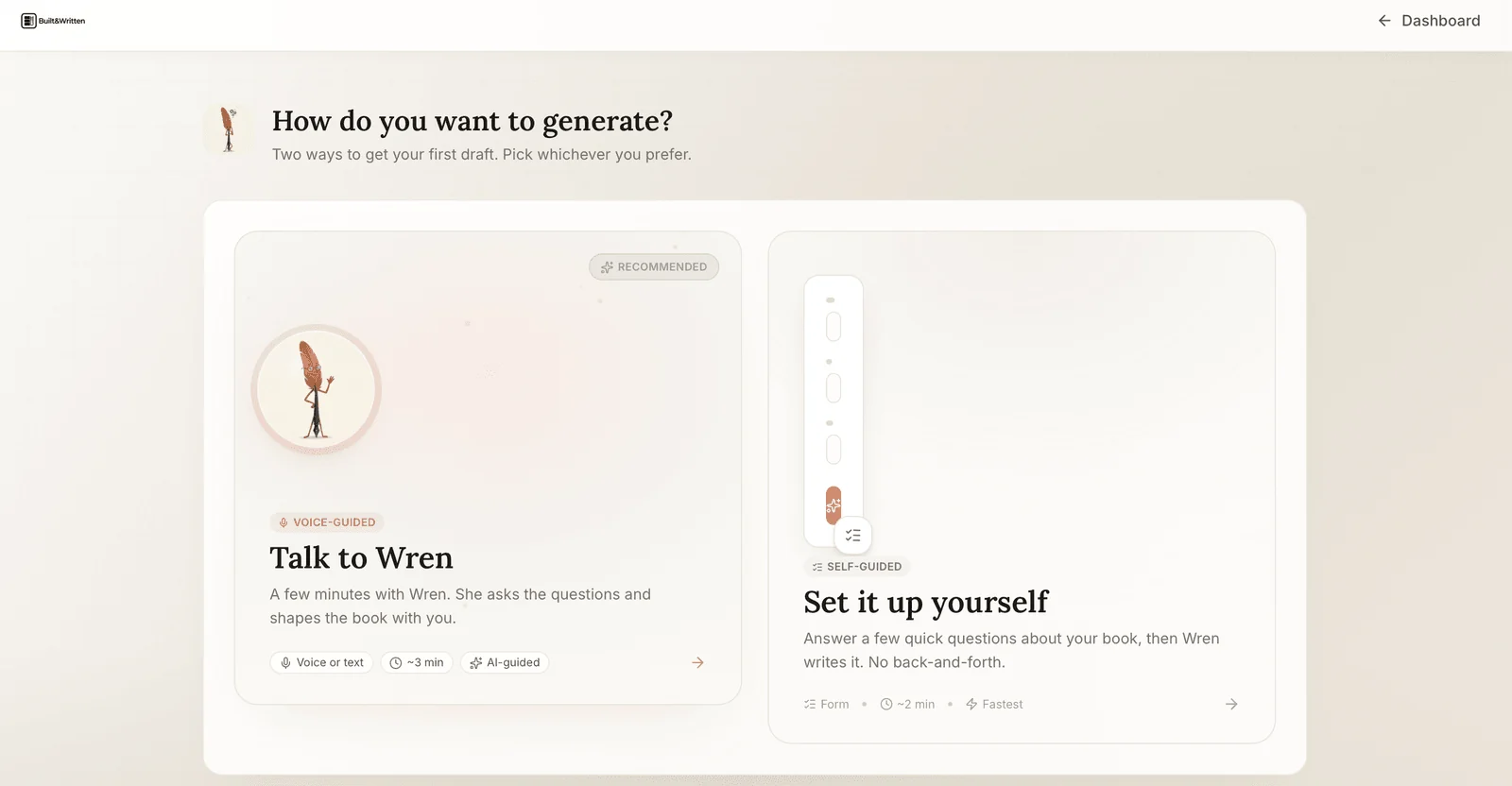
Both paths draw on the same source material; the guided option adds a short interview to fill gaps your notes don't cover. Manually organizing dozens of scattered notes into a coherent project is where most entrepreneurs stall, Built&Written handles that structuring automatically. Either way, the next stage is where Wren learns how you actually write.
2. Train Wren on your voice
Drafting can't start until Built&Written knows what "sounds like you" means: a few tone and style choices first, then an automated read of your submitted writing.
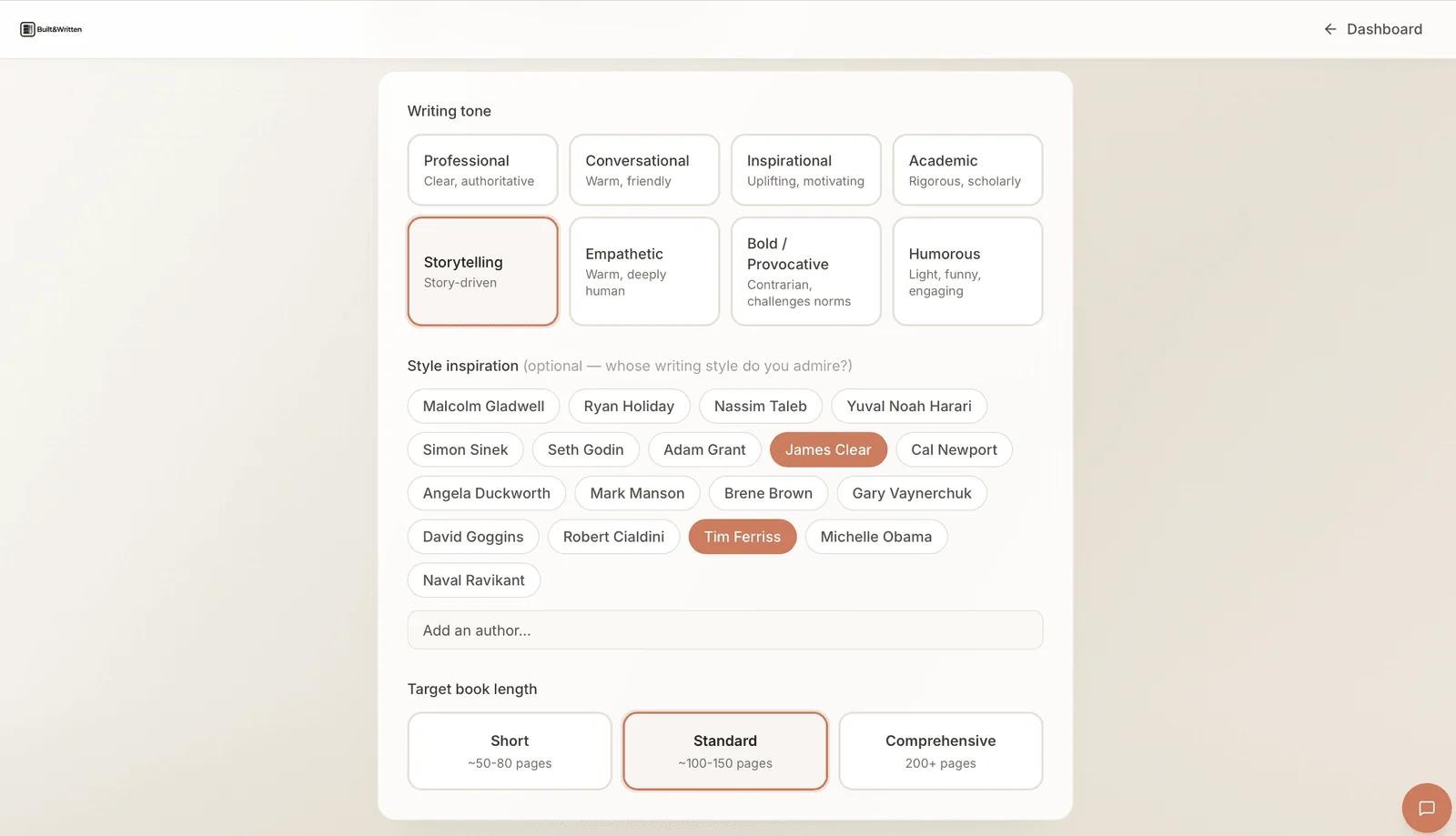
These choices set the guardrails (tone, comparable authors, target length) that keep the draft from defaulting to generic business-book prose.
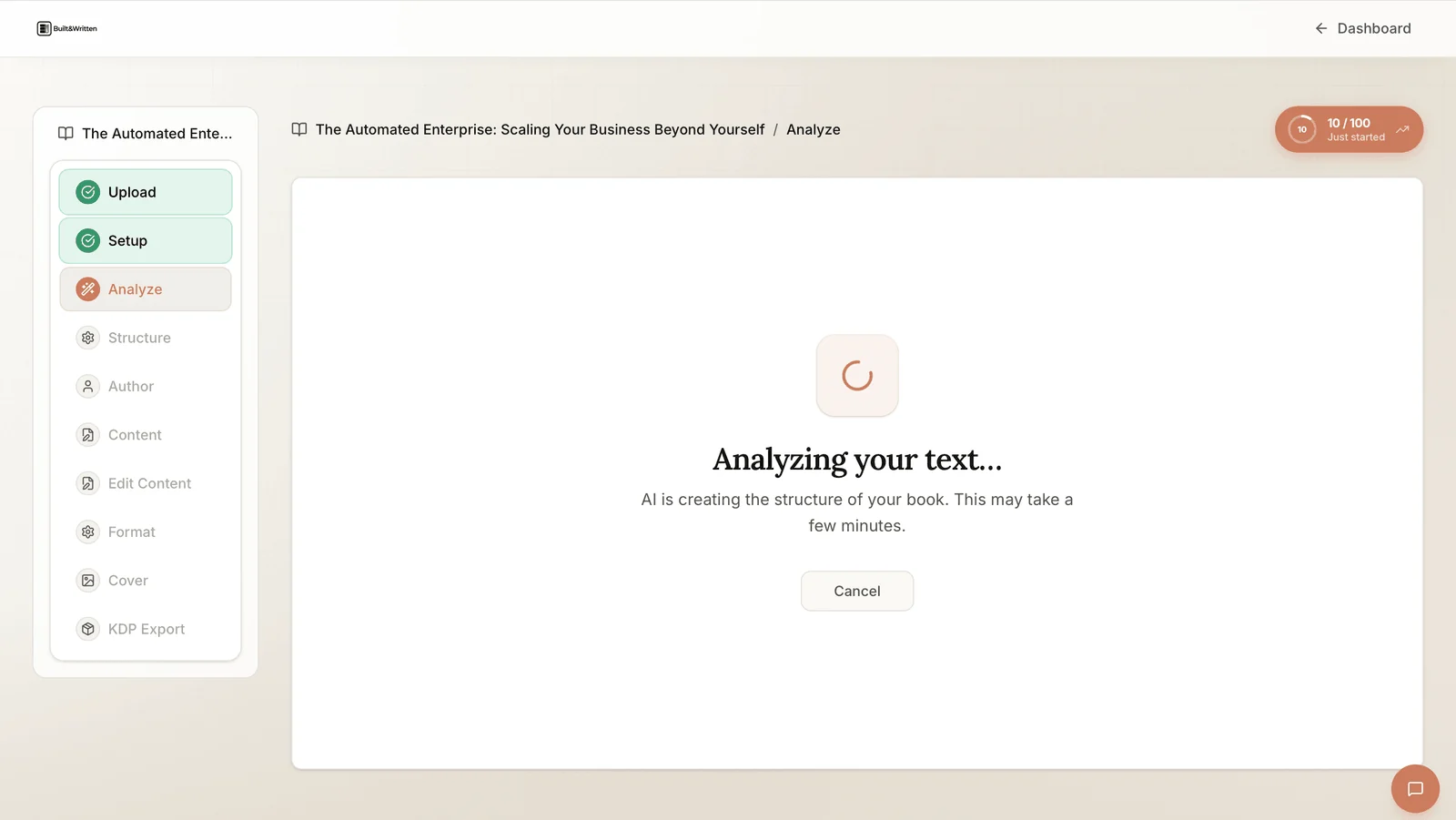
A general chatbot skips this step unless you rebuild the context yourself in every session, and skipping it is the most common reason an AI-drafted book reads generically. Five to fifty pages of source text is usually enough, with analysis finishing in under two minutes.
3. Generate and edit the outline and chapters
With your voice captured, Wren proposes a chapter structure. A proposal isn't a plan, this is the stage where you correct direction before any chapter text exists.
Wren suggests chapters based on your source material, which you can reorder, rename, or delete before drafting. Chapters then generate individually, so any one can be reviewed and regenerated without restarting the whole manuscript.
A common mistake at this stage is chasing completeness over a single throughline. The entrepreneurs who finish tend to build chapters around one core argument, not everything they know about the topic.
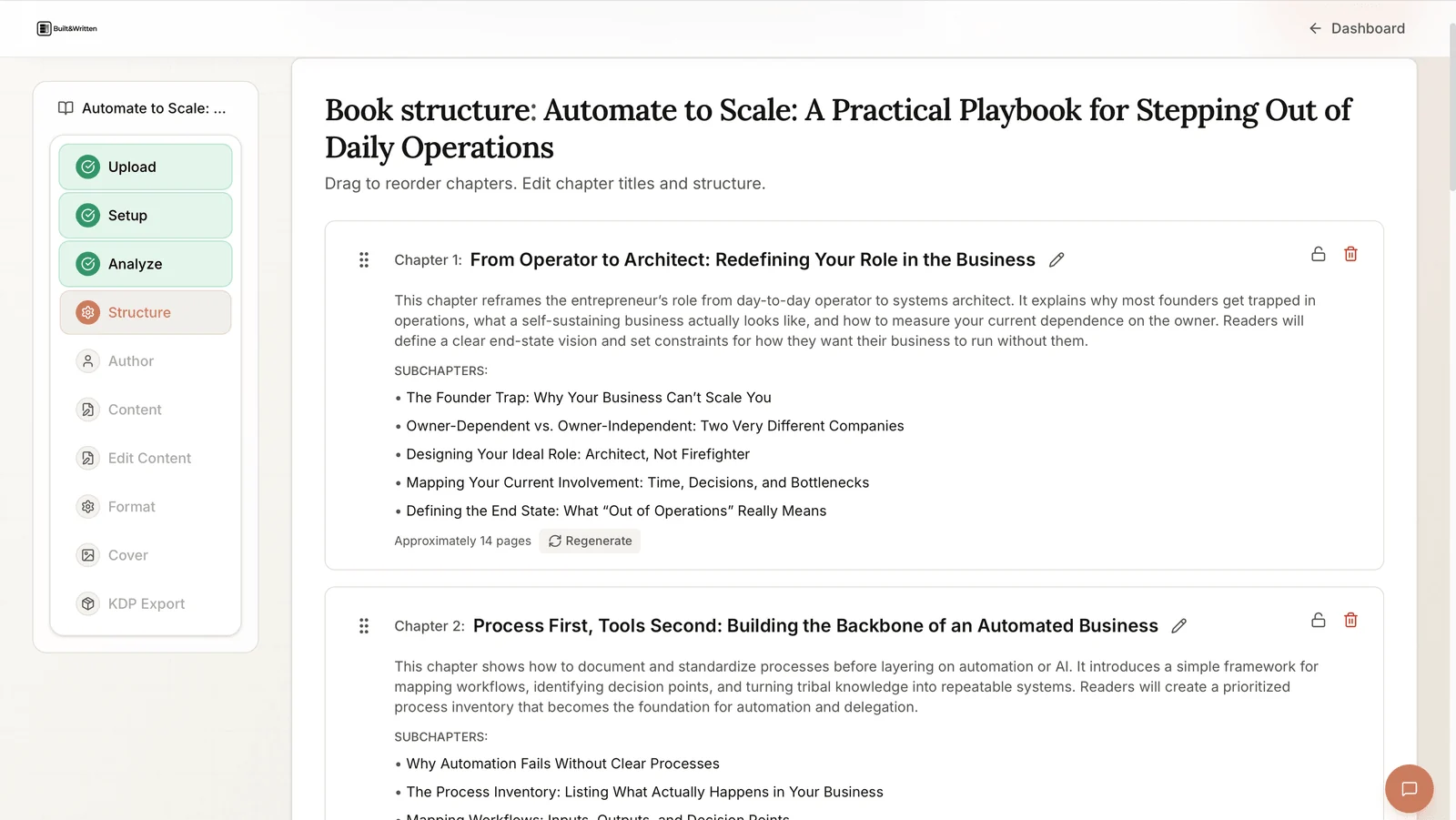
Reordering or cutting a chapter at this stage costs a drag-and-drop, not a rewrite. Planning, drafting, and editing stay inside one workflow with Wren, rather than juggling outline documents and prompts across separate tools. Once the outline holds, the process moves to its most technical stage: preparing the file for Amazon.
4. Export KDP-ready files
A finished manuscript isn't a finished book. This last stage checks the file against Amazon's actual publishing requirements before you upload anything.
The output includes an interior PDF with correct margins, gutters, bleed, and page numbers; a cover wrap with spine width calculated from page count; and an ePub for Kindle. Formatting these by hand is where most self-published manuscripts stall, Built&Written produces all three without manual work.
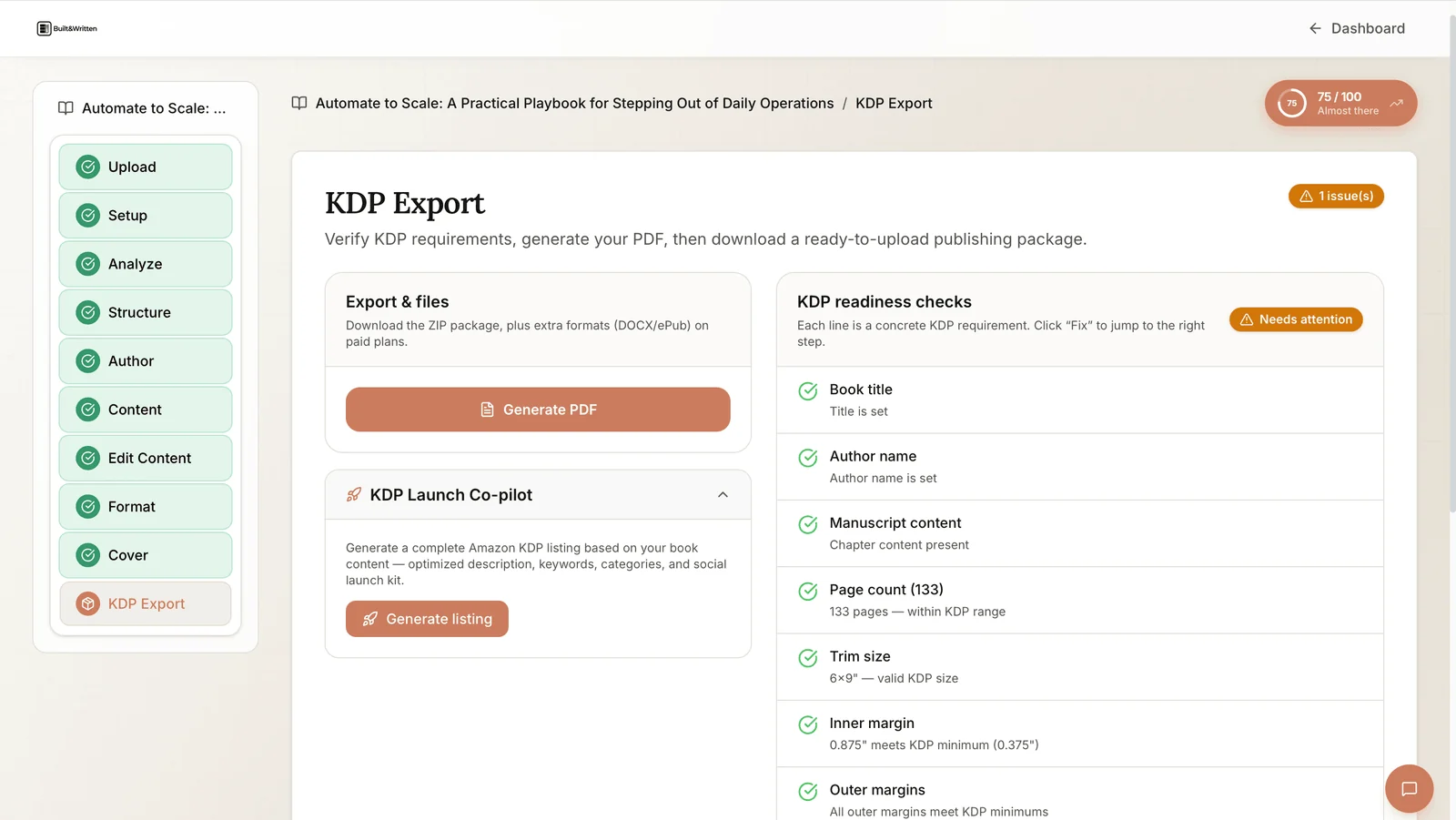
Each check on this screen maps to a real KDP requirement: clear them all before uploading, and the file should pass Amazon's review without a bounce-back. Once it's live, KDP categories and keywords determine whether readers can actually find it.
Cost and timeline comparison
The default alternatives to Built&Written are hiring a ghostwriter or assembling the process yourself in a general AI chatbot. Here's how the three compare directly.
| Traditional ghostwriter | General AI chatbot (ChatGPT, Claude, Gemini) | Built&Written | |
|---|---|---|---|
| Typical cost | $8,000-$150,000+ | Free-$20/mo | $19-$99/mo |
| Typical timeline | 6-12 months | Weeks (self-managed) | Days to weeks |
| Keeps your voice | Depends on the writer | Only with heavy manual prompting | Trained on your writing before drafting starts |
| Handles KDP formatting | Rarely included | No, manual formatting required | Generated automatically |
| Best fit | Unlimited budget, fully hands-off | Technically comfortable, DIY-inclined authors | Entrepreneurs who want speed and structure without losing their voice |
A deeper cost breakdown, including what drives ghostwriting quotes to the high end of that range, is available in AI ghostwriting vs. traditional ghostwriting compared.
Final Thoughts
Writing a business book was never really about talent. It was about time: the months a manuscript demands, and the structural work of turning years of scattered thinking into something readable start to finish. That's the part Built&Written changes.
None of this replaces the expertise that makes a book worth reading. Wren can't generate the specific client story, the contrarian take, or the framework you earned by doing the work. What Built&Written removes is the mechanical cost of assembly: gathering, structuring, drafting, and formatting a manuscript from material that, in most cases, already exists. That happens inside one workflow, instead of a ghostwriter's timeline or a handful of disconnected AI tools.
Across the entrepreneurs who've gone through this process, the ones who finish are rarely the strongest writers. They're the ones who start with material they already have instead of waiting to write something new.
The most direct way to start is with what's sitting in your notes app, your LinkedIn history, or a single recorded call. You already have the knowledge; Built&Written was built to turn it into a professionally published book faster than any other path gets you there.
Frequently asked questions
Only if it skips voice training. Drafting from a source-less prompt defaults to average, generic phrasing, which is why Wren trains on your own writing before generating a single chapter. Five to fifty pages of source text is usually enough, and the analysis finishes in under two minutes.
You need source material, not writing experience. LinkedIn posts, transcribed calls, or one long voice memo are all inputs Wren can work from. No file conversion or reformatting is needed at the start; the goal is volume, not polish, and Built&Written handles the structuring automatically.
Yes. Amazon's KDP content guidelines separate AI-generated content, which requires disclosure at upload, from AI-assisted content such as outlining, editing, and formatting support, which does not. Books drafted with Built&Written and reviewed by their author typically fall into the AI-assisted category.
Every chapter Wren drafts is fully editable before export. Wren produces the first draft; final content decisions, including reordering or rewriting sections, stay with the author. Chapters also generate individually, so any one can be reviewed and regenerated without restarting the whole manuscript.
Traditional ghostwriting typically runs $8,000 to $150,000 or more and takes 6 to 12 months. A general AI chatbot costs free to about $20 per month, but you manage structure, voice, and formatting yourself. Built&Written runs $19 to $99 per month and takes days to weeks, with voice training and KDP formatting included.
More than a manuscript. A KDP-ready package includes an interior PDF with correct margins, gutters, bleed, and page numbers; a cover wrap with spine width calculated from page count; and an ePub for Kindle. Built&Written generates all three automatically and checks them against Amazon's publishing requirements before you upload.
Sources & References
About the author

Khrystyna Balushka
More in informational
Ready to write your book?
Turn your expertise into a professional book with Built&Written.