


How to Turn Your Coaching Book Into an Audiobook in 2026
In 2017, Mel Robbins did something most self-published authors skip. She sat down in a booth and narrated her own audiobook for The 5 Second Rule. The book started outside the traditional publishing machine. The print and ebook did fine. But the audiobook is the version people quote back to her, because hearing her say "5, 4, 3, 2, 1" in her own voice, with the urgency built in, lands in a way the page never could. Listeners call her narration the secret sauce. Today that audiobook has been heard by millions.
Every coach reading this in 2026 is sitting in her pre-recording chair.
You have a book, or you're about to. Your ideal client is in the car, on the treadmill, walking the dog. They are not opening a paperback. They are pressing play. The audiobook is how your authority follows them into the parts of the day a print book can't reach. The problem is that turning a finished manuscript into an audiobook in 2026 is a maze: ACX is changing its royalty model, Amazon is rolling out AI narration through KDP, Apple and Spotify each have their own paths, and AI voice tools have gotten good enough to make the "should I even hire a narrator" question genuinely hard.
This guide is the map. We'll use one framework to cut through it: The Coaching Audiobook Decision, four choices that determine everything about your audiobook. (1) Narrator choice: you narrate, you hire a pro, or you use AI. (2) Platform: ACX/Audible, Apple Books, Spotify, or Amazon's KDP Virtual Voice. (3) Production specs: the real, unglamorous technical requirements. (4) The coach ROI: why audio is worth the trouble when your buyer listens more than they read.
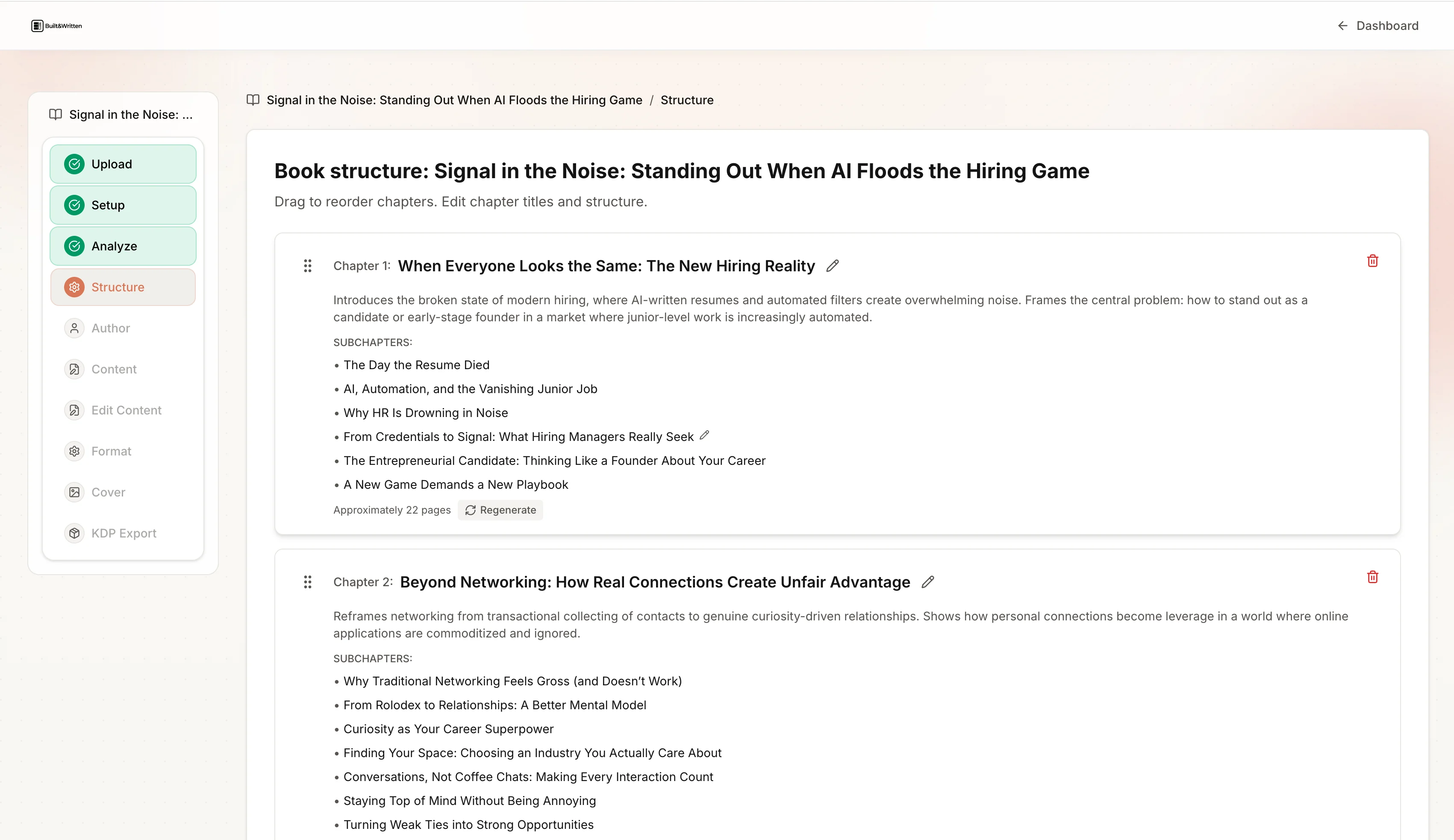
One thing up front, stated plainly. Built&Written does not make audiobooks. We help you write and assemble the manuscript, in your own voice, using Voice DNA. The audio is a separate, downstream step you take to ACX, KDP Virtual Voice, a narrator, or an AI tool. We'll be honest about that line the whole way through, because the worst thing a how-to can do is sell you a capability that isn't there.
Key takeaway: To turn a coaching book into an audiobook in 2026, finish the manuscript, then run it through The Coaching Audiobook Decision: pick a narrator (you, a pro, or AI), a platform (ACX/Audible, Apple Books, Spotify, or KDP Virtual Voice), and meet the technical specs. Your own voice usually wins for coaches.
TL;DR: the audiobook decision at a glance
If you read nothing else, this table is the spine of the whole article.
| Decision | The options | Best for a coach |
|---|---|---|
| Narrator | You / pro narrator / AI voice | You, if you can sound natural for hours. AI as a fast, cheap fallback. |
| Platform | ACX (Audible) / Apple Books / Spotify (INaudio) / KDP Virtual Voice | ACX for reach + human narration; KDP Virtual Voice for the fastest AI path. |
| Royalty (ACX, new model) | 50% exclusive / 30% non-exclusive | Non-exclusive if you want Spotify + Apple too. |
| Royalty (KDP Virtual Voice) | 40%, list price $3.99 to $14.99 | The AI shortcut if your ebook is enrolled. |
| Production cost | $0 (you record at home) to $250+/finished hour (pro) | DIY or AI keeps it near zero. |
| Where the manuscript comes from | Your finished book | Built&Written writes/assembles it. We don't narrate it. |
Methodology note: Every royalty rate, price range, and audio spec in this article was pulled from the official source (ACX help, KDP help, Apple Books for Authors) and verified in June 2026. ACX is mid-transition on royalties, so we flag both the legacy and new rates. We do not invent numbers, and where a platform's terms are in flux, we say so.
Why an audiobook is the highest-return move for a coach in 2026
Start with the decision that comes before the four-part framework: should you make an audiobook at all? For a coach, the answer is almost always yes, and the reason is sitting in your buyer's commute.
What it does well: your buyer is already a listener
The audiobook market is not niche anymore. US audiobook sales hit $2.22 billion in 2024, up 13% over 2023, according to the Audio Publishers Association. Fifty-one percent of Americans aged 18 and older, roughly 134 million people, have listened to an audiobook. Digital audio is 99% of that revenue and still growing double digits.
Your ideal client, the busy executive or founder you want as a $30,000 retainer, is in that 51%. They don't have time to read a 200-page paperback. They have a 45-minute commute and a gym session. An audiobook is the format that meets them there. A print book builds authority on a shelf. An audiobook builds it in their ears, in the dead time of their day, which for a coach is the most valuable real estate there is.
Where it falls short: it is a second production, not a button
Here is the honest part. An audiobook is not a re-export of your ebook. It is a separate production with its own narrator decision, its own platform, its own technical bar, and its own timeline. The mistake coaches make is assuming the book and the audiobook are one job. They are two. The good news: the first job, writing and assembling the manuscript, is the hard one, and tools exist to compress it. The second job, the audio, is what this guide is about.
The coach ROI: your voice is the asset
For a novelist, the narrator is a hired gun. For a coach, the narrator is the product. When a prospect hears you explain your framework, in your cadence, with your conviction, the intimacy does work no third-party narrator can. That is why Mel Robbins narrating her own book mattered. It is also why the "should I use AI" question is real for coaches in a way it isn't for fiction: your voice is part of your authority, and trading it away for speed has a cost. We'll weigh that directly in the narrator section.
This is the same logic behind using a book for lead generation that converts: the book is a credibility asset, not a revenue product. The audiobook extends that asset into the listening hours of your buyer's day.
The Coaching Audiobook Decision: the four-part framework
Every audiobook choice collapses into four decisions. Get these four right and the rest is logistics. This is the framework we'll reference in the verdict and takeaways, so anchor on it here.
Component 1: Narrator choice (you, a pro, or AI)
Three paths. You narrate (free, maximum intimacy, real time cost). You hire a professional narrator (polished, expensive, removes your voice from the equation). Or you use AI narration (fast, cheap, improving, with an authenticity tax). For coaches, this is the decision that matters most, because it's the one that touches your authority directly.
Component 2: Platform (where it lives and sells)
Four real options in 2026. ACX, the route to Audible and Amazon. Apple Books digital narration. Spotify, now running through Voices by INaudio and Spotify for Authors. And Amazon's KDP Virtual Voice, the AI-narration feature baked into Kindle Direct Publishing. Each has different rules, royalties, and exclusivity tradeoffs.
Component 3: Production specs (the technical bar)
If a human narrates, the file has to clear a real technical standard: loudness, peak levels, noise floor, format, room tone, credits. ACX rejects files that miss these. AI and platform-native tools handle the specs for you, which is part of their appeal.
Component 4: The coach ROI (why it's worth it)
The payoff math: audio reaches your buyer in moments a book can't, and your own voice compounds your authority. This is the component that tells you whether to optimize for speed (AI) or for intimacy (you, recorded well).
The Coaching Audiobook Decision in one view: narrator choice, platform, production specs, and coach ROI. Most audiobook confusion comes from mixing these four up. Decide the narrator first, because it changes everything downstream. A human narrator drags in the production specs, while AI and platform-native tools absorb them.
Human narrator vs AI vs your own voice: which wins for a coaching audiobook?
This is the question coaches actually type into ChatGPT, so let's answer it directly. There is no universal winner. There is a winner for a coaching book, and the calculus is different from fiction.
You narrate it yourself: the coach's default
For a coach, narrating your own book is usually the right call, for the same reason Mel Robbins did it. Your voice is your authority. A prospect who hears you walk through your framework gets a sample of what working with you sounds like. That is a sales asset disguised as a chapter.
The catch is that narrating a full book is harder than it sounds. You need a quiet room, a decent microphone, and the stamina to read for hours while sounding natural and matching your loudness across sessions. If you've done podcast or video work, you're most of the way there. If you've never recorded yourself for long stretches, budget for a learning curve and a few re-records.
Best for: coaches whose personal brand is the product, who can carry a natural read, and who want the audiobook to double as a voice sample for their practice.
Hire a professional narrator: polish at a price
A pro narrator delivers studio-clean, consistently paced audio with zero technical headaches for you. On ACX, you hire one of two ways. Pay-for-production: you pay the narrator's full fee upfront, based on a per-finished-hour rate. The ACX floor is $250 per finished hour, the SAG-AFTRA minimum, and experienced narrators charge well above it. You keep 100% of your royalties. Royalty share: you pay nothing upfront, and the narrator takes 50% of royalties for the seven-year term of the agreement. There's also a Royalty Share Plus option, a smaller stipend plus a royalty split.
The tradeoff for a coach is the obvious one: a hired voice is not your voice. For fiction, that's fine. For a credibility-building coaching book, you're outsourcing the very intimacy that makes audio valuable. A pro makes sense when you genuinely cannot deliver a listenable read, or when your book is more reference than personality.
Best for: coaches who can't or won't record, and books where polish matters more than personal connection.
AI narration: fast, cheap, and getting uncomfortably good
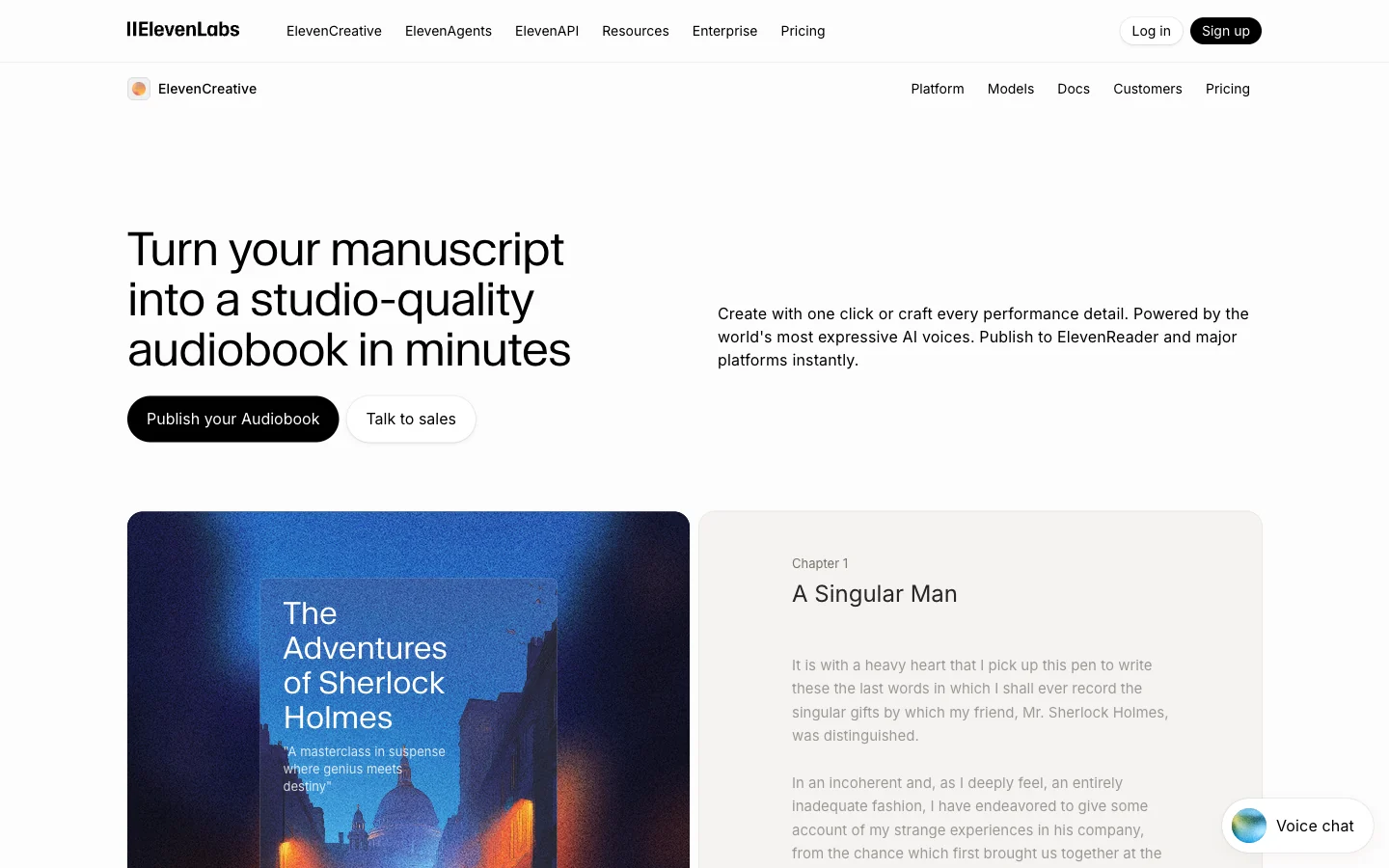
AI voice has crossed a real threshold. Tools like ElevenLabs now produce long-form narration that handles pacing and emotion well enough that casual listeners often don't clock it as synthetic, and their output can hit the 192 kbps quality bar that retail platforms expect. You can produce a full audiobook for under $100 and in a fraction of the time a human read takes.
Two honest caveats for coaches. First, authenticity. If your whole pitch is a personal relationship, an AI voice reading your personal story can feel hollow, and some of your most engaged buyers will notice. Second, ethics and disclosure. Voice cloning raises real consent and transparency questions, and regulation is tightening: commercial use of AI voices increasingly comes with disclosure expectations. If you clone your own voice, you sidestep the consent issue, but you still owe listeners honesty about what they're hearing.
Best for: coaches who want audio reach fast and cheap, reference-style books, or a first audiobook to test demand before investing in a full human production.
The verdict on narration, for a coach specifically
Record it yourself if you possibly can. Your voice is the asset, and audio is the one format where that asset travels. Use AI as the pragmatic fallback or the speed play. Hire a pro only when neither of the first two works. This is the opposite of the advice you'd give a novelist, and that's the point: a coaching book is a book that fuels your business, not a product you're selling for the audio royalties.
What is KDP Virtual Voice and how does it turn your ebook into an audiobook?
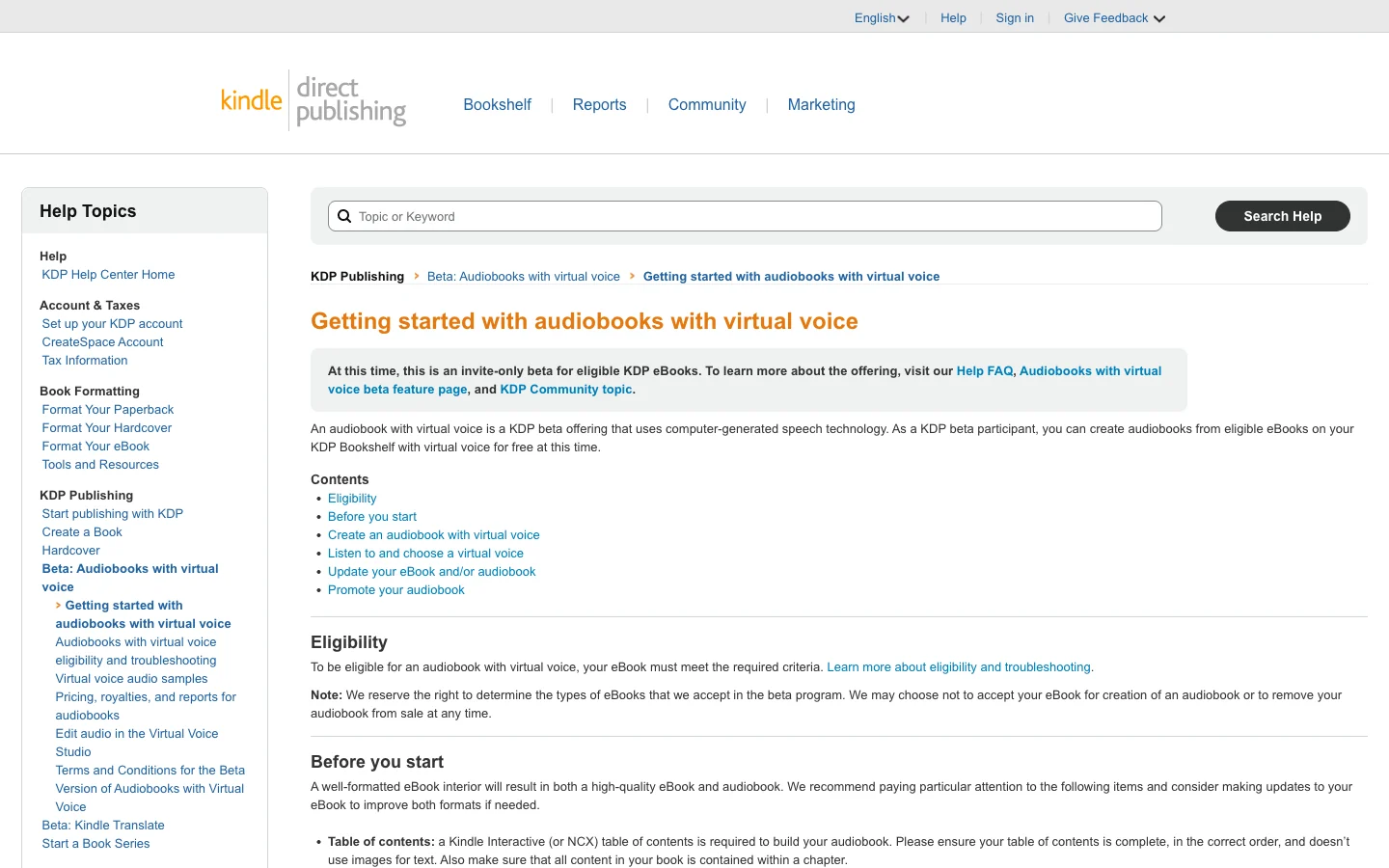
KDP Virtual Voice is the feature most coaches haven't heard of and should. KDP Virtual Voice is Amazon's AI-narration feature that turns an eligible Kindle ebook into an audiobook using computer-generated speech, directly inside Kindle Direct Publishing. If you already self-published your ebook on KDP, this is the shortest path to audio that exists.
How it works
According to the KDP Virtual Voice help pages, once your ebook is live, Amazon runs an eligibility check. If it qualifies, you open the Virtual Voice Studio, pick a synthetic voice, preview and edit the narration (fixing pronunciations, pacing, where the audio breaks), and publish. The audiobook goes live within about 72 hours, distributed where Audible titles sell: the Audible app, Amazon, Alexa, and more. Amazon offers roughly 80 voices across several languages, including American English, British English, Australian English, Latin American and Castilian Spanish, French, and Italian.
What it costs and pays
Creating a Virtual Voice audiobook is free during the beta. You set a list price between $3.99 and $14.99, and KDP pays a 40% royalty on sales through its audiobook channels. No narrator fee, no studio, no per-finished-hour bill. That is a genuinely different economic model from ACX's human path.
The catch: it's still beta and invite-only
The honest limitation: as of 2026, Virtual Voice is an invite-only beta for eligible ebooks. Not every book qualifies, and Amazon reserves the right to decide which ebook types are accepted and to pull audiobooks from sale. To get access, make sure you're subscribed to KDP's product-announcement emails. If you're not in the beta yet, ACX or an AI tool like ElevenLabs is your route.
Virtual Voice pairs naturally with the rest of the KDP workflow. If you're new to the platform, start with what Amazon KDP is, a no-fluff guide for experts, then self-publish your coaching book on KDP before you flip on the audio.
ACX vs Apple Books vs Spotify: which platform should a coach publish on?
Platform is component two of the framework, and it's where exclusivity quietly decides your reach. Here's the honest comparison of the four real paths in 2026.
ACX (Audible and Amazon): the biggest audience, with a royalty shift
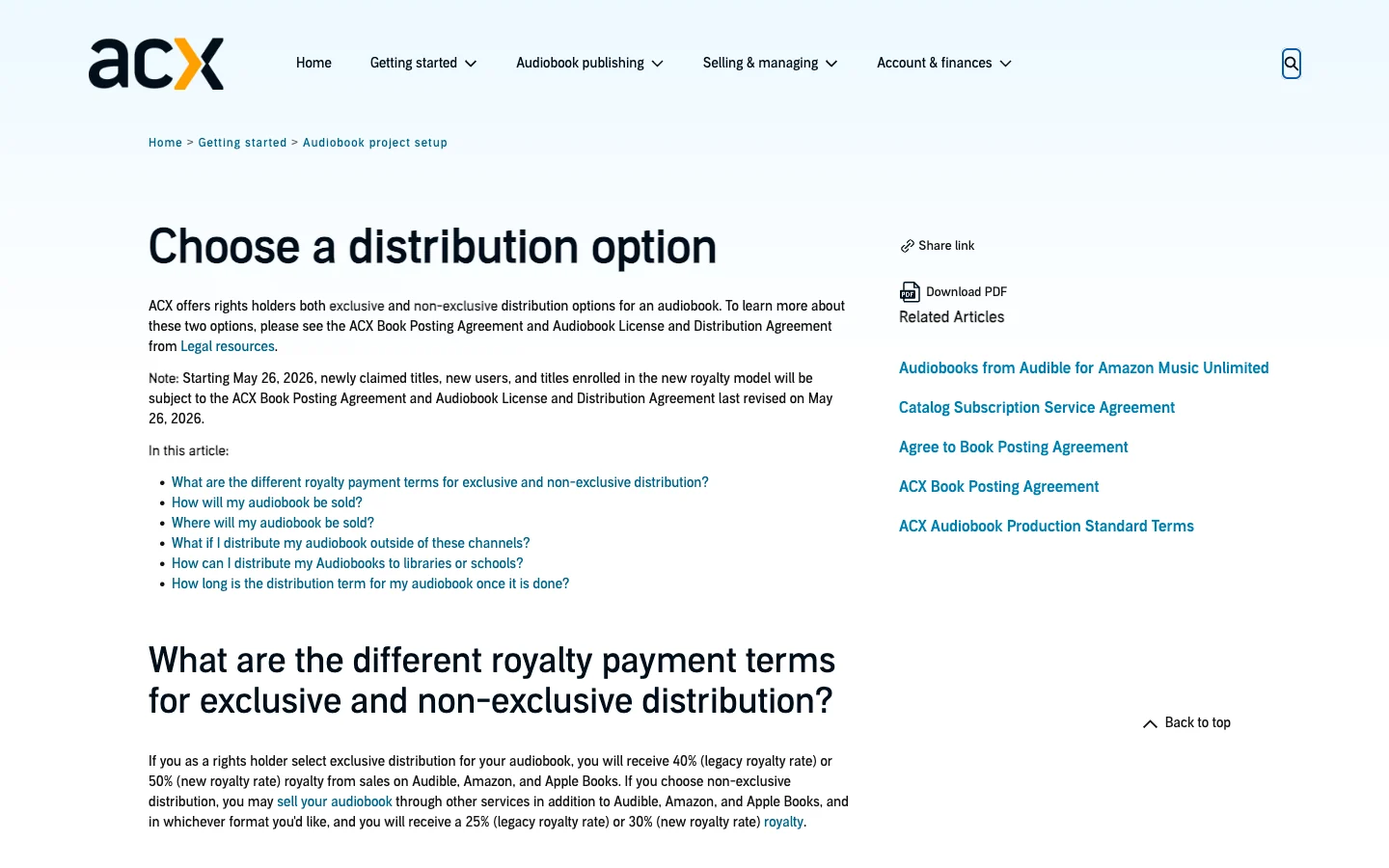
ACX is the dominant path because it feeds Audible, the largest audiobook store. The big 2026 news is a royalty change. Under the legacy model, exclusive titles earned 40% and non-exclusive earned 25%. ACX is moving to a new model: 50% for exclusive distribution, 30% for non-exclusive. Creators can enroll existing titles starting May 26, 2026, and the legacy model is being discontinued by the end of 2026, so this is the rate environment you're publishing into now.
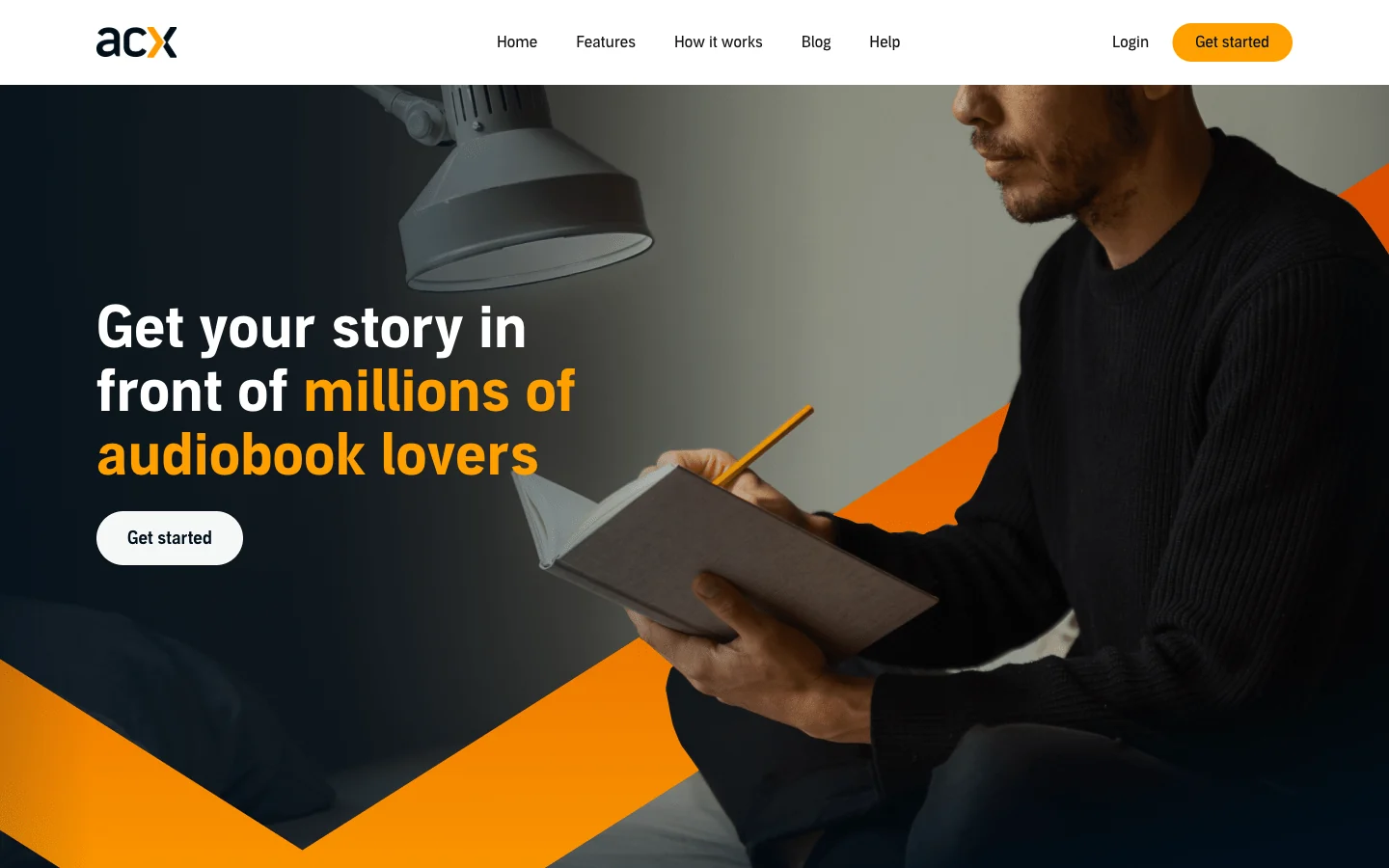
Exclusivity is the real lever. Go exclusive and your audiobook lives only on Audible, Amazon, and Apple Books, at the higher 50% rate. Go non-exclusive at 30% and you can also sell on Spotify, Kobo, libraries, and elsewhere. Both options lock you into a seven-year distribution term. One hard rule for coaches who want to narrate with AI: ACX's standard requirements are written for human narration, and AI or text-to-speech is not permitted without authorization. If you want a fully AI audiobook, KDP Virtual Voice or another platform is the cleaner route.
Apple Books digital narration: free AI voices, with a rights tradeoff
Apple Books for Authors offers digital narration: AI voices, free to produce, available for categories including nonfiction and self-development (which covers most coaching books). You access it through a distributor like Draft2Digital, Ingram CoreSource, or PublishDrive. The catch worth knowing: you keep your ebook rights, but the rights to the Apple-narrated audiobook sit with Apple, including a window to keep distributing it after you pull the ebook. Free is free, but read what you're trading.
Spotify (Voices by INaudio): the fast-growing wide channel
Spotify reshaped its author program in 2025. Findaway Voices was retired and split into Spotify for Authors (direct uploads, with analytics) and Voices by INaudio (wide distribution to Spotify, Apple Books, Kobo, Barnes & Noble, and libraries like OverDrive and Libby). INaudio pays an 80/20 split in the author's favor on net. Spotify's audiobook push reaches listeners Audible never will, which makes non-exclusive a more interesting choice in 2026 than it was two years ago.
KDP Virtual Voice: the AI shortcut inside Amazon
Covered above. It's a platform too, not just a narration method: it publishes into Amazon's audiobook ecosystem at 40% with zero production cost, if your ebook is in the beta.
A note on exclusivity for a credibility book
Get concrete about what exclusivity costs a coach, because the higher number is seductive. Exclusive on ACX pays 50% but confines your audiobook to Audible, Amazon, and Apple Books. Non-exclusive pays 30% but lets you also sell on Spotify, Kobo, Barnes & Noble, Google Play, and library systems like OverDrive and Libby. Run the math on what you're actually optimizing. If you sold 500 audiobooks at a $10 list price, the difference between 50% and 30% is roughly a thousand dollars. For a coach, one inbound retainer from a listener who found you through a library or Spotify is worth many multiples of that. The royalty rate is the wrong variable to maximize when the book exists to generate clients, not audio income. That single reframe flips most coaches from exclusive to wide.
The platform comparison table
| Platform | Narration | Royalty | Exclusivity | Coach note |
|---|---|---|---|---|
| ACX (Audible) | Human only (AI needs authorization) | 50% exclusive / 30% non-exclusive (new model) | 7-year term; exclusive or non-exclusive | Biggest reach; record yourself or hire a pro |
| Apple Books digital narration | AI voices | Via distributor terms | Apple holds AI-audiobook rights | Free, but you give up audiobook rights |
| Spotify / Voices by INaudio | Your own file (human or AI) | 80/20 author-favorable (INaudio) | Wide / non-exclusive | Growing fast; pairs with ACX non-exclusive |
| KDP Virtual Voice | Amazon AI voice | 40% | Beta, Amazon's terms | Fastest AI path if your ebook is eligible |
The strategic move for most coaches: publish a human-narrated (ideally self-narrated) audiobook non-exclusively on ACX at 30%, then go wide through INaudio to catch Spotify and Apple. You trade ten royalty points for a much larger surface area, and for a credibility book where you're not chasing audio royalties, reach beats rate.
What are the real ACX production specs, and how do you meet them?
Component three: the technical bar. If a human narrates (you or a pro), ACX checks the audio against hard specs and rejects files that miss. This section is the unglamorous one that saves you a rejection. Every number here is from ACX's published audio submission requirements.
The audio specs, exactly
ACX requires each file to meet all of these:
- RMS (average loudness): between -23 dB and -18 dB. Most narrators aim for around -20 dB as a safe midpoint.
- Peak level: no sample louder than -3 dB, to leave headroom and avoid distortion.
- Noise floor: quieter than -60 dB RMS. This is the silent-room test, and it's where home recordings fail most often.
- Format: MP3 at 192 kbps or higher, constant bit rate (CBR), 44.1 kHz sample rate.
- Channel: mono or stereo, but consistent across every file. Don't mix.
- File length: under 120 minutes per file.
The structural requirements
Beyond the numbers, ACX wants the files structured a specific way:
- Room tone: a short stretch of recorded silence (roughly 1 to 5 seconds) at the start and end of each file, so the QC system can measure your noise floor and transitions don't cut abruptly.
- Opening credits: title, author name, and narrator name at the start.
- Closing credits: a "You have been listening to..." line plus "The End."
- One section per file with the section header read aloud ("Chapter 1").
- A retail sample of five minutes or less, usually your opening.
How coaches actually hit these
You don't need a recording studio. You need a quiet room (a closet of hanging clothes is a real, free trick for killing reverb), a decent USB microphone, and software like Audacity or Descript to record and master to the spec. The noise floor is the part that trips people up, so record in the quietest space you have and at the quietest time of day. If meeting these specs sounds like more than you signed up for, that's a strong nudge toward AI narration or KDP Virtual Voice, where the platform handles the technical bar for you.
A few practical habits separate a clean first submission from a rejection loop. Record at a consistent distance from the microphone so your loudness doesn't drift between sessions; even a few inches changes your RMS. Use a pop filter or angle the mic slightly off-axis to kill plosives, the bursts of air on "p" and "b" sounds that ACX flags. Batch your recording by energy level, not by chapter order, so your delivery stays even. And do a five-minute test file first: record it, master it, run it through your software's loudness meter, and confirm it lands inside the window before you record the whole book. Discovering at chapter 12 that your noise floor is too high means re-recording chapter 1. The test file is fifteen minutes that saves you a weekend.
If you go the AI route instead, the technical work mostly disappears. ElevenLabs, Apple Books digital narration, and KDP Virtual Voice all output files that already meet retail loudness and format standards, which is a real part of their appeal. The work shifts from mastering audio to editing pronunciation: making sure the AI says your proprietary framework names, acronyms, and any unusual proper nouns the way you intend. That's an afternoon of cleanup, not a weekend in a closet.
From manuscript to audiobook: a coach's step-by-step checklist
Here's the whole thing as a sequence. The order matters, because step zero (a finished manuscript) is the one most coaches underestimate, and it's the one that isn't an audio task at all.
Step 0: finish the manuscript (this is the real work)
You cannot narrate a book you haven't written. This is the bottleneck, and it's where Built&Written fits. You paste your existing content (LinkedIn posts, notes, a podcast transcript you've already transcribed), and BW assembles it into a structured, print-ready manuscript with Voice DNA keeping the text in your voice. The output is a finished book, exported as PDF and ePub. That is the input the entire rest of this checklist depends on. To be exact about the handoff: BW gives you the manuscript; it does not produce the audio. If you're starting from interviews, turning a podcast into a book is the same move.
Step 1: publish the ebook and print book first
Get the ebook live on KDP before you think about audio. It's the prerequisite for KDP Virtual Voice eligibility, and it gives ACX and other platforms a linked product. If you're unclear on formats, the difference between an ebook and a print book and formatting a book for Kindle cover the groundwork.
Step 2: make the narrator decision
You, a pro, or AI. Re-read the narration section. For most coaches: you, if you can carry a natural read.
Step 3: pick the platform and exclusivity
ACX (and exclusive vs non-exclusive), Apple, Spotify/INaudio, or KDP Virtual Voice. Decide before you record, because it affects format and rights.
Step 4: record or generate the audio
If human: record to the ACX specs above, one chapter per file, with room tone and credits. If AI: generate in your chosen tool or flip on KDP Virtual Voice and edit pronunciations in the studio.
Step 5: master, upload, and submit
Master to the loudness and peak targets, export as 192 kbps CBR MP3, upload, and submit. ACX review can take a few weeks; KDP Virtual Voice and platform-native tools are faster, often within 72 hours.
Step 6: market it like the asset it is
An audiobook is a lead magnet for your practice. Promote it the way you'd promote the book: clips on LinkedIn, the first chapter as a sample, the link in your email signature. The same playbook in how to market a business book on a tiny budget applies, with audio's advantage that a 60-second narrated clip is native to every social feed.
The verdict: how should a coach turn a book into an audiobook in 2026?
Run The Coaching Audiobook Decision and the answer for most coaches is clear.
Narrator: narrate it yourself if you can carry a listenable read for the length of the book. Your voice is the authority asset, and audio is the format that carries it into your buyer's commute. AI narration (ElevenLabs, or platform-native Virtual Voice) is the legitimate fallback when you can't, or when you want a fast, cheap first audiobook to test demand. Hire a professional only when neither works.
Platform: for reach, ACX is still the front door to Audible, now at 50% exclusive or 30% non-exclusive under the new model. For a credibility book, go non-exclusive and add Spotify and Apple through INaudio, because surface area beats ten royalty points. If your ebook is in the KDP Virtual Voice beta and you want the AI shortcut, take it: free production, 40% royalty, live in 72 hours.
Specs: if a human narrates, meet ACX's bar (-23 to -18 dB RMS, peaks under -3 dB, noise floor under -60 dB, 192 kbps CBR MP3, room tone, credits). If that's a hurdle, it's a signal to use AI or a platform-native tool that handles it for you.
ROI: the audiobook is a credibility asset, not a royalty play. Optimize for the version your buyer will actually hear and remember.
And the line we've held the whole way: the audiobook starts with a finished manuscript, and that is the part Built&Written handles. We write and assemble the book in your voice. You take that manuscript to ACX, KDP Virtual Voice, a narrator, or an AI tool for the audio. Two jobs, done in order. For the full picture of getting to that finished book, the coach's guide to AI book writing and publishing is the pillar, and how to self-publish a book as an entrepreneur in 2026 covers the route to print.
Key takeaways
- The Coaching Audiobook Decision has four parts: narrator, platform, production specs, and coach ROI. Decide the narrator first; it changes everything downstream.
- Record it yourself when you can. For a coach, your voice is the authority asset. Mel Robbins narrating The 5 Second Rule is the model. AI narration is the fast, cheap fallback, not the default.
- ACX royalties changed in 2026: the new model pays 50% exclusive / 30% non-exclusive, replacing the legacy 40% / 25%, with a seven-year term. ACX requires human narration unless you get AI authorization.
- KDP Virtual Voice is the AI shortcut: free to create, 40% royalty, $3.99 to $14.99 list price, live in ~72 hours, but invite-only beta on eligible Kindle ebooks.
- Go wide for a credibility book. Non-exclusive on ACX plus Spotify and Apple via INaudio (80/20 split) beats locking into exclusive, because reach matters more than rate.
- The specs are real. Human narration must hit -23 to -18 dB RMS, peaks under -3 dB, noise floor under -60 dB, 192 kbps CBR MP3, with room tone and credits.
- Built&Written does not make audiobooks. It writes and assembles the manuscript in your voice with Voice DNA. The audio is a separate, downstream step. Finish the book first; then choose your audio path.
Sources and references
- Audio Publishers Association: US audiobook sales reach $2.22 billion (Publishing Perspectives)
- ACX: Audible's new royalty model
- ACX Help: Choose a distribution option (exclusive vs non-exclusive)
- ACX: audiobook production and home
- Amazon KDP: Getting started with audiobooks with virtual voice
- Amazon KDP: Audiobooks with virtual voice eligibility and troubleshooting
- Apple Books for Authors: Digital narration for audiobooks
- Audible
- ElevenLabs: how to make an audiobook with AI
- Reedsy: ElevenLabs AI audiobooks honest review
- Publishing.co.uk: Findaway Voices / Spotify indie author guide 2026
- Amazon KDP Content Guidelines
Frequently asked questions
For a coach, usually yes. Your voice is part of your authority, and an audiobook in your own voice acts as a sample of what working with you sounds like. Mel Robbins narrating The 5 Second Rule is the proof: listeners credit her narration as the reason the message lands. The requirement is that you can sound natural across hours of recording and meet the technical specs. If you can't, AI narration or a professional is a reasonable fallback.
It ranges from near zero to thousands. If you narrate it yourself at home, the cost is a microphone and your time. AI narration through a tool like ElevenLabs can produce a full audiobook for under $100. Hiring a professional narrator on ACX through pay-for-production starts at the $250-per-finished-hour SAG-AFTRA minimum and climbs from there, so a typical book runs into the low-to-mid four figures. Royalty share costs nothing upfront but gives the narrator 50% of royalties for seven years.
KDP Virtual Voice is Amazon's AI-narration feature that converts an eligible Kindle ebook into an audiobook using computer-generated speech, directly inside Kindle Direct Publishing. It's free to create during its beta, lets you set a list price between $3.99 and $14.99, pays a 40% royalty, and publishes within about 72 hours. The limitation is that it's invite-only and only works on eligible ebooks, so not every book qualifies yet.
Yes, on the right platform. AI narration is allowed and built in on KDP Virtual Voice and Apple Books digital narration, and you can generate audio with tools like ElevenLabs and distribute it widely through Spotify's Voices by INaudio. The exception is ACX, which requires human narration unless you get specific authorization for AI. Disclose AI narration to listeners; commercial AI-voice use increasingly carries transparency expectations.
Under ACX's new royalty model in 2026, you earn 50% for exclusive distribution (Audible, Amazon, and Apple Books only) or 30% for non-exclusive (so you can also sell on Spotify, Kobo, and elsewhere). These replace the legacy rates of 40% and 25%, which are being phased out by the end of 2026. Both options run on a seven-year distribution term. If you use a royalty-share narrator, your share is split 50/50 with them on top of that.
Effectively, yes. KDP Virtual Voice requires a live, eligible Kindle ebook to run its eligibility check, and ACX and other platforms expect a linked print or ebook edition. Publishing the ebook first also lets you test the book's reception before investing time or money in audio. Get the ebook and ideally the print edition live, then layer the audiobook on top.
No. Built&Written writes and assembles your manuscript in your own voice using Voice DNA and exports a print-ready PDF and ePub. It does not produce, narrate, or distribute audiobooks. Once your manuscript is finished in Built&Written, you take it to ACX, KDP Virtual Voice, a professional narrator, or an AI tool to produce the audio. The book and the audiobook are two separate jobs, and Built&Written handles the first one.
For most coaches, non-exclusive. You earn 30% instead of 50%, but you can also distribute on Spotify, Apple Books, Kobo, and libraries through a wide distributor like Voices by INaudio. Since a coaching book is a credibility asset rather than a royalty product, the wider reach into more of your buyer's listening apps is worth more than the extra ten royalty points.
Sources & References
- https://publishingperspectives.com/2025/06/audio-publishers-association-us-audiobook-sales-reach-2-22-billion/
- https://www.acx.com/mp/blog/audible-new-royalty-model
- https://help.acx.com/s/article/choose-a-distribution-option
- https://www.acx.com/
- https://kdp.amazon.com/en_US/help/topic/GFAQU3LUEHCRB8KD
- https://kdp.amazon.com/en_US/help/topic/GJSXT4GZLP4PL62B
- https://authors.apple.com/support/4519-digital-narration-audiobooks
- https://www.audible.com/
- https://elevenlabs.io/blog/how-to-make-an-audiobook
- https://reedsy.com/blog/elevenlabs-review/
- https://publishing.co.uk/guides/findaway-voices/
- https://kdp.amazon.com/help/topic/G201834180
About the author

Mykhailo Druz
More in informational
Ready to write your book?
Turn your expertise into a professional book with Built&Written.