


Can You Use Client Stories in Your Coaching Book?
Can You Use Client Stories in Your Coaching Book?
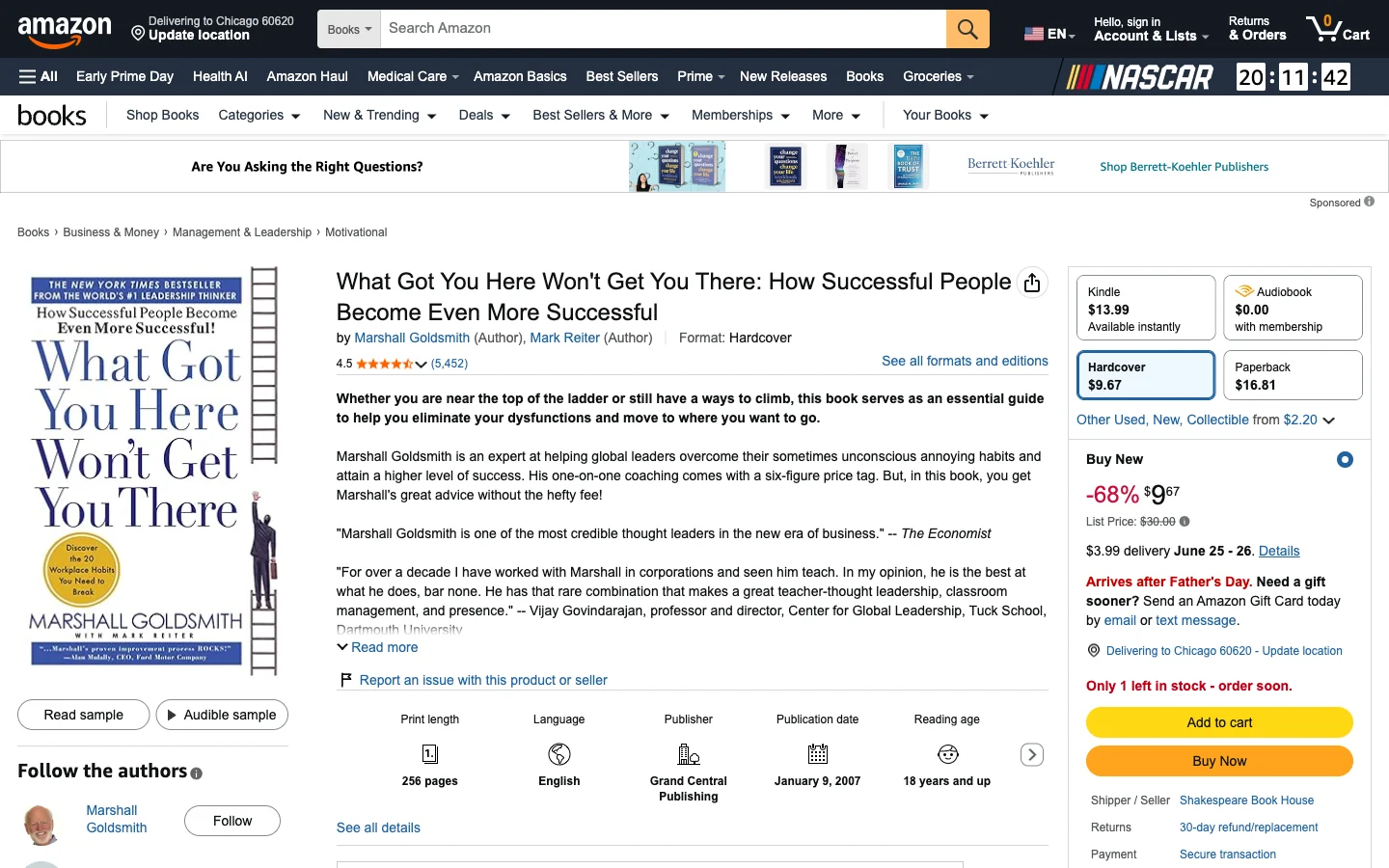
In 2007, Marshall Goldsmith published What Got You Here Won't Get You There. The book is built almost entirely out of his executive coaching work: the arrogant CEO, the leader who has to win every argument, the brilliant manager nobody can stand. These are real people. Goldsmith has coached more than eighty CEOs at the top of the corporate world. And yet not one of them can be identified from the page. The anecdotes are disguised. Names are changed, details are merged, the stories are sanded down until the lesson survives and the person disappears.
That book sold over a million copies and made Goldsmith one of the most cited executive coaches alive. The engine under it was client stories he had no permission to print verbatim, and never needed to.
Every coach reading this in 2026 is sitting where Goldsmith sat the day he opened a blank document. You know the best material in your book is your clients' stories. The turnaround that proves your method works. The breakthrough on call number four. The objection you have heard two hundred times and finally know how to answer. And right behind that knowledge sits the fear: can I actually use this? Will a client recognize themselves? Could they sue me? Am I breaking the confidentiality I promised them?
The short version: yes, you can use client stories, and you can do it without betraying anyone or exposing yourself. But "yes" comes with a method, not a shrug. This article gives you that method. It is called the Client Story Consent Test, and it runs on four checks: Identifiability, Consent, Composite-and-anonymize, and the coaching-ethics line. Run every story through all four before it goes in the manuscript.
One note before we start. This is general information, not legal advice. Defamation, privacy, and publicity law vary by state and by country, and your situation has facts this article cannot see. For anything you are genuinely unsure about, consult an attorney licensed where you practice. That caveat is not a throwaway. It is the fourth load-bearing wall of doing this right.
Key takeaway: Yes, coaches can use client stories in a book. The safe default is to anonymize and build composite characters: change identifying details, or merge several clients into one. Get written consent when a client is identifiable. Confidentiality is a professional duty under the ICF Code of Ethics, not only a legal risk. This is general information, not legal advice.
TL;DR: the Client Story Consent Test at a glance
| Check | The question it asks | The safe default |
|---|---|---|
| Identifiability | Could a reader, or the client, recognize who this is? | Assume yes until you have actively broken the trail |
| Consent | Do you have written permission to tell this story? | Get a release for any identifiable or sensitive story |
| Composite + anonymize | Can you merge and disguise instead of expose? | This is the standard nonfiction technique. Use it by default |
| Coaching-ethics line | Does this honor the confidentiality you promised? | When in doubt, the duty to the client wins |
Run all four. A story that passes Identifiability and the ethics line might still need Consent. A story you have consent for might still read better as a composite. The checks are not a ladder you climb once. They are four gates, and the story has to clear each one.
Methodology note. The legal framing in this article draws on three public, non-paywalled sources written for authors: the Authors Alliance guide Writing About Real People, the Authors Guild resource on libel, defamation, and rights of privacy and publicity, and editor Jane Friedman's guidance on avoiding memoir lawsuits. The ethics framing draws on the published ICF Code of Ethics. None of this is a substitute for a lawyer reading your manuscript.
Why most coaching books fail the Client Story Consent Test before they start
Here is the pattern. A coach finally sits down to write the book everyone has told them to write. They open with their best case study, because it is the most persuasive thing they own. They use the client's real first name, the real industry, the real city, the real number the client did in revenue, and the genuinely embarrassing thing the client admitted on call number two.
It is a great story. It is also a lawsuit waiting for a bad day, and a breach of the confidentiality the coach promised when the engagement started. The story fails three of the four checks at once, and the coach has no idea, because nobody told them there were checks.
The failure is almost never malice. It is the gap between two instincts that both feel correct: "this story proves my method" and "this story is true, so I am allowed to print it." The first instinct is right. The second one is the trap.
Truth is not a blanket permission slip
Coaches assume that because something happened, they can write it down. That is half right. Truth is a strong defense against defamation, because defamation requires a false statement of fact. If it is true, it is generally not defamatory.
But defamation is not the only door someone can walk through. The Authors Guild lays out the others plainly. There is invasion of privacy, specifically public disclosure of private facts: publicizing true but sensitive personal information that a reasonable person would find highly offensive. There is false light, which is close to defamation but covers false impressions rather than false statements. And there is the right of publicity, which protects a person's name and likeness from commercial use. Truth defeats one of these. It does nothing against the others. A true story about a client's private struggle can still be an invasion of privacy.
Confidentiality is a promise the page does not cancel
The second blind spot is professional, not legal. If you are an ICF-credentialed coach, you signed up to a confidentiality standard. The book does not get a carve-out because it is good marketing. We will come back to exactly what the ICF Code requires, because it is more specific than most coaches remember.
The fix is a process, not a vibe
The reason coaches get this wrong is that they treat it as a feeling: "this feels fine" or "this feels risky." Feelings are unreliable here. A process is not. The Client Story Consent Test turns a vague dread into four answerable questions. Once you have a process, the dread goes away, and you stop leaving your best material on the cutting room floor out of fear. This connects directly to how you turn your expertise into a book that sells: your client work is the expertise, and the stories are how you prove it.
The Client Story Consent Test: the four checks that make a story safe
This is the spine of the article and the framework to anchor on. Four checks. Run a story through all of them, in order, and you will know whether it can go in the book as-is, needs a release, needs anonymizing, or needs to stay out.
The Client Story Consent Test. A story does not pass because it clears one gate. It passes when it clears all four: Identifiability, Consent, Composite-and-anonymize, and the coaching-ethics line. Most coaching anecdotes fail at Identifiability, get rescued by Composite-and-anonymize, and only the named-and-flattering ones need to live on Consent.
Check 1: Identifiability
The first question is the one that determines everything downstream. Could a reader, or the client themselves, figure out who this is?
Identifiability is not binary, and it is not just the name. A coach who works with three orthodontists in Phoenix cannot write "an orthodontist in Phoenix" and call it anonymous. The client's spouse will recognize the story. The client will recognize the story. That is the test that matters: not whether a stranger could identify the person, but whether someone who knows them could, and whether the person could identify themselves.
Jane Friedman puts the trap exactly: "If someone is in fact easily identified in your memoir, they can still sue successfully for libel or invasion of privacy even if you've changed their name and a few details." Changing the name is necessary. It is nowhere near sufficient. The combination of details is what identifies a person. Industry plus city plus company size plus a distinctive personal fact will out someone even with a fake name attached.
So the default posture on Check 1 is: assume the client is identifiable until you have actively dismantled the trail. The dismantling is Check 3. But you cannot do Check 3 honestly until you have been honest here about how identifiable the raw story really is.
Check 2: Consent
If a story is identifiable and you want to keep it identifiable, you need consent. Written consent. The clean path, the one every author-focused legal source agrees on, is a release.
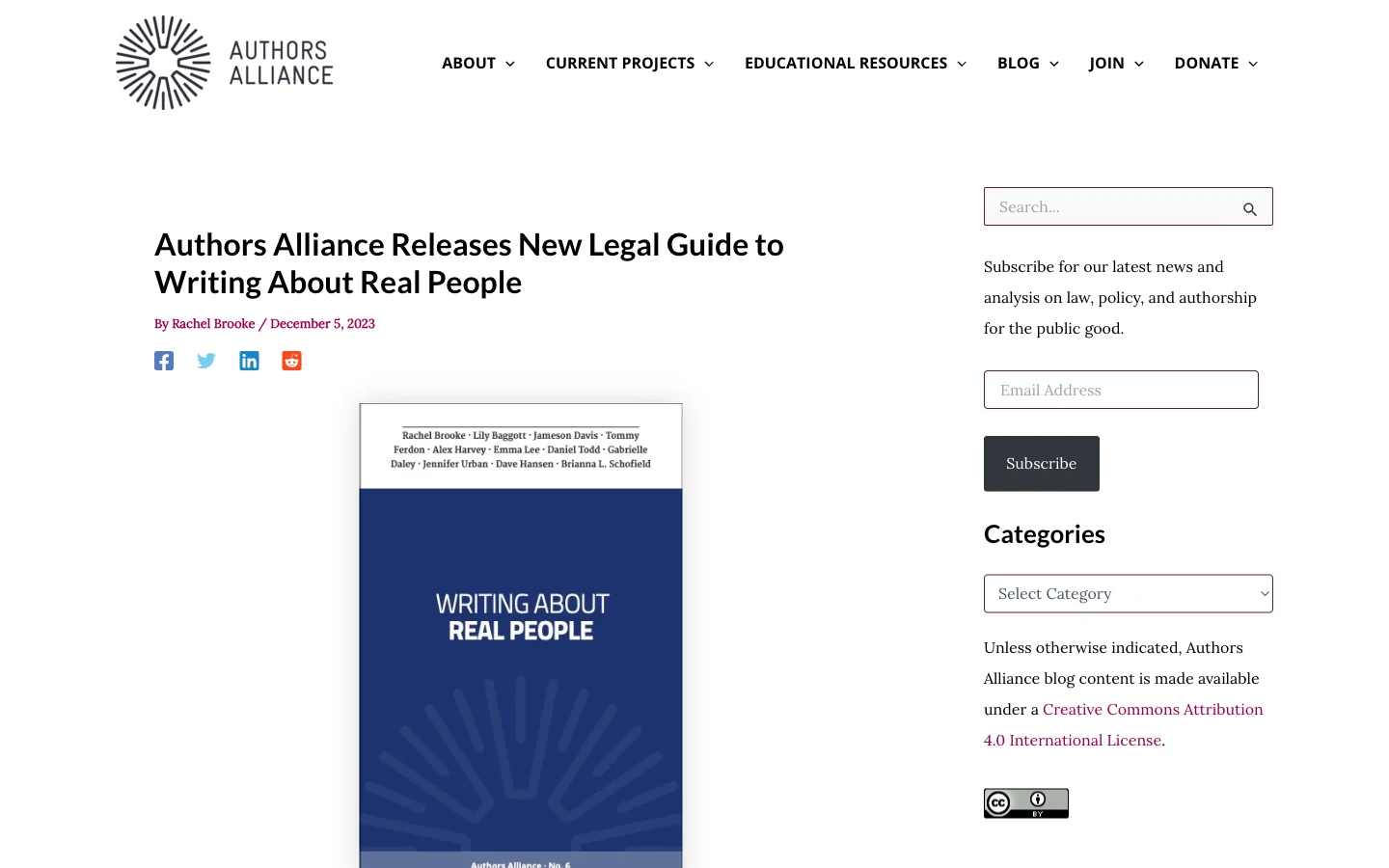
The Authors Guild states it directly: "One way to avoid claims is to obtain releases from any real people featured in a work granting permission to the author." A release is a short signed document in which the client agrees that you can tell their story in your book. It is the single most protective thing you can do for yourself, because a person who has signed a release granting permission has a very hard time later claiming you violated their privacy by doing the thing they granted permission for.
What to ask for in a release:
- Permission to describe the coaching engagement and its results in a published book.
- Permission to use the client's name, or a specified pseudonym, your choice in the document.
- Acknowledgment that the book will be sold commercially.
- The scope: this book, future editions, and promotional excerpts.
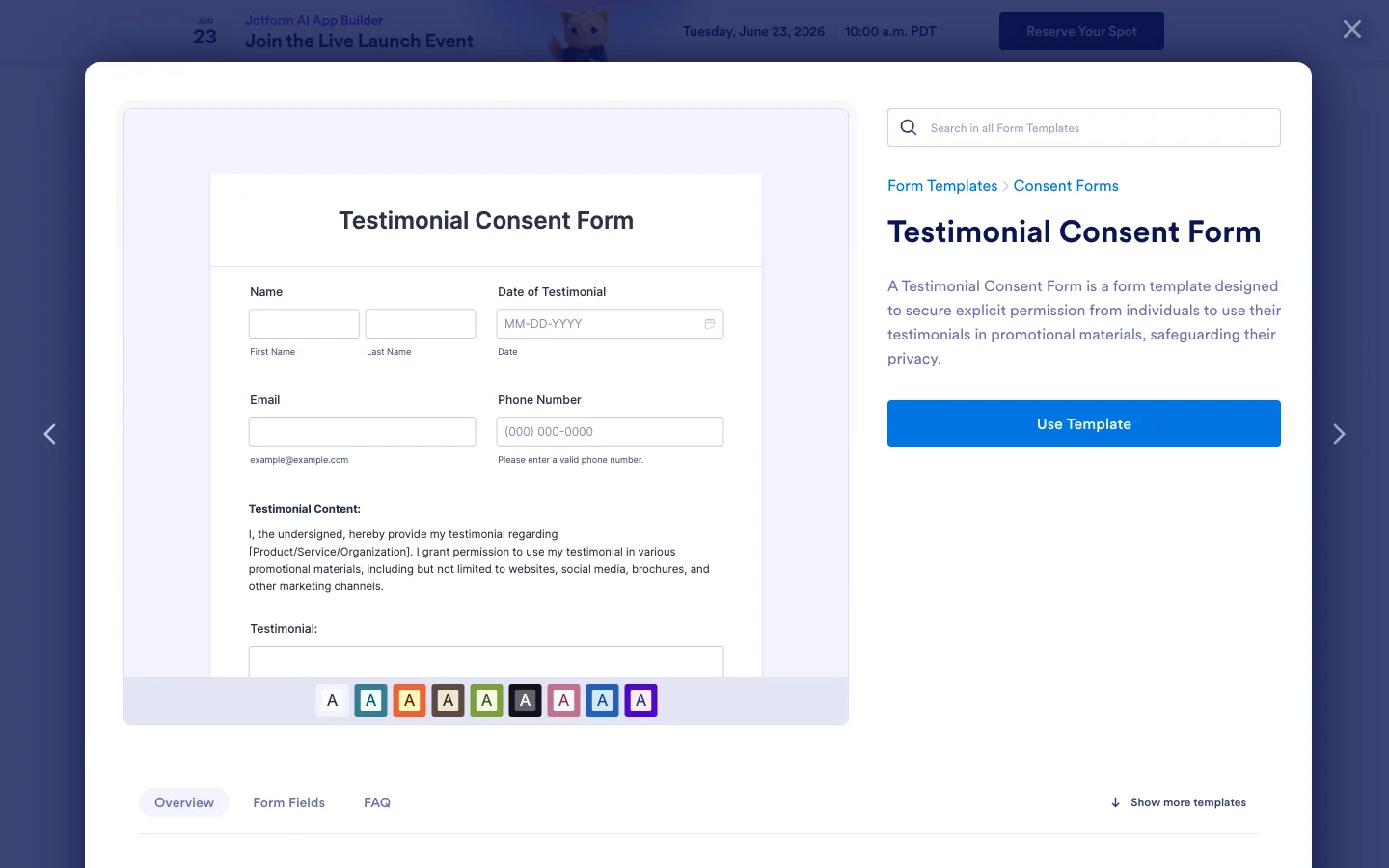
When you genuinely do not need the name, consent becomes a courtesy rather than a shield, because you are about to anonymize anyway. But for a flattering, named, on-the-record success story, the kind that doubles as a testimonial, a signed release is non-negotiable. A client testimonial or release form is a standard business document, and there are templates built specifically for coaches. Get it signed before the book ships, not after a client emails you about chapter four.
Check 3: Composite and anonymize
This is the default. For most coaching stories, you do not get consent, you get distance. You change the identifying details, or you merge several clients into one, until the person on the page is no longer any specific person you coached.
This is not a dodge. It is the standard, respected technique of nonfiction and memoir, used by serious authors for exactly this reason. Friedman describes it plainly: "Changing names and identifying details, or creating composite characters, can be helpful if a situation belongs in your story but outing someone isn't essential." That last clause is the whole point. In a coaching book, the situation belongs in your story. Outing the individual almost never does. The reader does not care whether the founder was in SaaS or logistics. They care about the pattern your method solved.
A composite character merges two or more real people into one figure. You take the avoidance from one client, the breakthrough from another, the timeline from a third, and you build a single illustrative person who carries the lesson without being any of them. Done well, a composite is more useful than a single real case, because you can shape it to teach exactly the point the chapter needs.
Two cautions. First, in a memoir, composites can raise truth-in-nonfiction questions, so some authors add a brief author's note disclosing that some characters are composites and details have been changed. In a how-to coaching book, this is even cleaner: a one-line note up front ("Client examples throughout are composites with identifying details changed to protect confidentiality") covers you and signals integrity to the reader. Second, anonymizing has a failure mode, and it is Check 1 again. If you change the name but leave the unmistakable details, you have anonymized nothing. Disguise the combination, not just the label. Use the same care you would use writing any chapter of the book: the craft is in the specifics.
Check 4: The coaching-ethics line
The first three checks keep you out of court. The fourth keeps you a coach worth hiring.
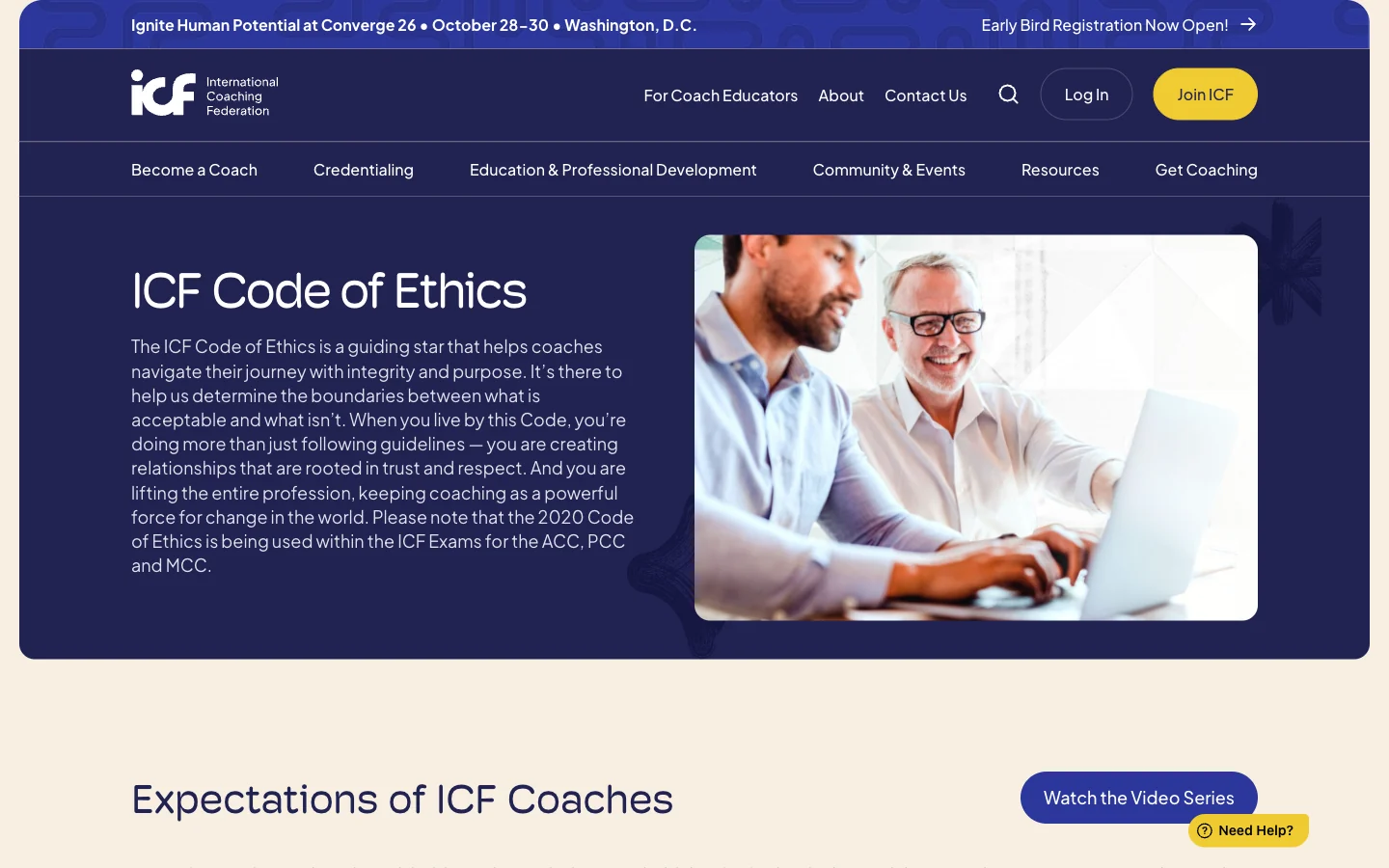
Confidentiality in coaching is not a marketing inconvenience. It is a professional duty, and for ICF members it is written down. The ICF Code of Ethics defines confidentiality as "the protection of any information obtained in or around the coaching relationship unless there is a legal reason or requirement, a threat of harm, or written consent to release is given by the client." Standard 2.1 of that Code requires the coach to "maintain the strictest level of confidentiality with all parties involved, regardless of the role I am fulfilling."
Read that definition again, because it does your work for you. It names exactly one route to sharing client information by your own choice: written consent. That is Check 2. The Code and the law point at the same instrument. When you do not have consent, the ethical move and the safe legal move are identical: do not make the client identifiable. That is Check 3.
The ethics line is the tiebreaker. When a story passes the legal checks but something still feels off, when you could technically run it but the client trusted you with it in a vulnerable moment, the duty to the client wins. You can always build a composite that teaches the same lesson. You cannot rebuild a reputation as a coach who put a client's confession in a book to sell copies. This is the line that separates a credibility asset from a liability, and credibility is the entire reason coaches write books in the first place, as covered in how to start writing a book as a coach that sells.
Consent vs composite: which protects you better in 2026?
This is the question coaches actually ask, usually phrased as "do I just need to get everyone to sign something?" The answer is that consent and composite protect you against different threats, and the smart move is knowing which one each story needs rather than defaulting to one for everything.
What consent protects
A signed release is a permission record. It is strongest against the claim "you told my story without asking." It is the right tool when you want to keep the story identifiable: a named success, a testimonial-grade result, a client who is proud of the work and happy to be associated with it. Consent lets you keep the real name, the real company, the real numbers. That specificity is persuasive, and you bought the right to use it.
What consent does not do: it does not let you defame a third party who never signed, and it does not cover people who appear in the story but are not the client. If your client's story involves their difficult boss, the client's release says nothing about the boss.
What composite protects
A composite protects by removing the target. There is no specific person to be defamed, no specific private fact disclosed, because the character on the page is an assembly. You do not need anyone's signature because you are not telling anyone's actual story. This is the right tool for the bulk of a coaching book: the recurring patterns, the cautionary tales, the "I have seen this fifty times" archetypes that are not about one person at all.
What a composite does not do: it does not save a lazy disguise. If your "composite" is ninety percent one real client with a different name, it is not a composite, it is a thin disguise, and it fails Check 1. A real composite genuinely blends.
The decision in one table
| Situation | Use consent | Use composite |
|---|---|---|
| Named success story, client is proud | Yes, get a release | Optional |
| Sensitive or embarrassing material | Only with explicit release | Strongly preferred |
| Recurring pattern across many clients | Not needed | Yes, this is the natural fit |
| Client is identifiable and the story is flattering | Release | Or anonymize if name adds nothing |
| Client is identifiable and the story is unflattering | Risky even with release, get legal review | Anonymize, and consider cutting |
| Third parties in the story who did not sign | Their release too, or | Disguise them as well |
Most coaching books end up roughly eighty percent composite, twenty percent consented-and-named. The named stories are your showcase testimonials. The composites are your teaching. You need both, and you need to stop treating them as the same decision. This is also why a coaching book generates leads better than a LinkedIn feed: the consented success stories function as embedded social proof, and the composites demonstrate range.
How do you anonymize a client story without gutting it?
Anonymizing badly produces two failures. Either you leave too much in and the client is still identifiable, or you scrub so hard the story loses the specificity that made it persuasive. The craft is changing the identifying details while protecting the load-bearing ones.
Identify the load-bearing detail first
Every story has one detail that carries the lesson and several that merely locate the person. In a story about a founder who could not delegate, the load-bearing detail is the delegation failure and what fixed it. The locating details are the industry, the city, the company name, the founder's gender, the revenue figure, the year. The locating details can all change. The load-bearing detail cannot, or you have a different story.
So the first move is not deleting. It is sorting. Which details are the point, and which are just the address?
Change the locating details, in clusters
Do not change one detail and feel safe. Change the cluster. If the real client is a male SaaS founder in Austin doing eight million in revenue, do not just rename him. Move the industry, move the city, adjust the scale, change the gender if it does not affect the lesson. The goal is that the specific human cannot be reconstructed by someone who knows them. Friedman's warning is the standard to beat: easily identified people can sue even after a name change and "a few details." You are aiming past "a few details."
Build the composite when one story is not enough cover
When a single client is too recognizable even after detail changes, merge. Pull the same type of problem from two or three clients and build one figure. This is often necessary for your most distinctive clients, the ones whose story is so specific that any honest disguise still points back to them. The composite breaks the one-to-one link entirely.
Disclose once, then stop apologizing
Put a single line at the front of the book: client examples are composites or have had identifying details changed to protect confidentiality. Then write with full confidence. You do not need to hedge every anecdote with "a client of mine, who shall remain nameless." Disclose the practice once, and let the stories breathe. This is the same principle as writing a memoir as an entrepreneur, where the author's note does the disclosure work so the narrative does not have to.
Keep your own voice while you do it
Anonymizing is rewriting, and rewriting is where a lot of coaches accidentally launder their own voice into generic business prose. The story should still sound like you telling it. This is where Voice DNA earns its place: Built&Written learns your characteristic phrasing from your existing writing, so when you reshape a client story into a composite, the result reads in your voice rather than in default AI voice. The details change. The teller does not. More on that in voice-matching AI writing that sounds like you.
Can a client actually sue you, and what would they sue for?
Yes, in principle, a client can sue. Anyone can file. The real questions are what they would claim and whether it would go anywhere, and understanding the categories tells you exactly what to avoid. This is general information about the categories, not a prediction about your case, and not legal advice.
Defamation and libel
Defamation is a false statement of fact, published, that damages someone's reputation. Libel is the written form. The key word is false. Per the Authors Guild, truth is a defense. If what you wrote about the client is accurate, a defamation claim is weak. The risk lives in the places where you embellished, misremembered, or sharpened a story for effect and crossed from true into false. Friedman's advice maps here: research your facts, and flag your own uncertain memories rather than presenting them as certain.
Invasion of privacy: public disclosure of private facts
This is the one coaches underrate. Public disclosure of private facts covers true information that is private and that a reasonable person would find highly offensive to see published. Truth is not a defense here, because the information being true is the entire problem. A client's marriage falling apart during your engagement, their mental health, their addiction, a financial collapse: all true, all private, all dangerous to print with the person identifiable. The Authors Alliance guide treats this as one of the three core risk categories for exactly this reason.
False light and right of publicity
False light is publishing something that creates a false impression of a person, even when no single statement is technically a lie, in a way a reasonable person would find highly offensive. The right of publicity protects against commercial use of a person's name and likeness. Books generally get First Amendment protection as expressive works, so the publicity risk for a normal coaching anecdote is low, but it climbs if you are essentially using a recognizable person to endorse and sell your services without their okay.
The through-line: the safe path collapses all of these
Notice what defeats every one of these claims. An unidentifiable person cannot be defamed in any way that lands, cannot have their private facts disclosed, cannot be placed in a false light, cannot have their publicity rights used. Anonymize properly and the entire list mostly evaporates. Get a release and you have consent on the record. The two tools from the Consent Test are not coincidentally the two tools that neutralize the lawsuit categories. For anything genuinely high-stakes, an identifiable unflattering story, a named public figure, a story involving a third party, get a manuscript read by an attorney. The Authors Guild and Friedman both recommend legal vetting for passages of concern. That recommendation is cheap insurance against an expensive mistake.
From draft to safe manuscript: a coach's checklist for client stories
Here is the operational version. Run every client story in your manuscript through this before you export the final file.
Step 1: Inventory every client story
Go through the draft and tag every passage that describes a real client, even a one-line aside. Coaches consistently undercount these. The big case study is obvious. The throwaway "I had a client who..." in chapter six is the one that gets you. List them all.
Step 2: Score each on Identifiability
For each story, answer one question honestly: could someone who knows this client identify them, and could the client identify themselves? If yes, this story needs either consent or anonymizing. No exceptions because the story is too good. The good ones are exactly the recognizable ones.
Step 3: Sort into consent, composite, or cut
- Identifiable and you want it named and it is flattering: get a release.
- Identifiable and you do not need it named: anonymize or composite.
- Sensitive or unflattering: composite, or cut, and get legal eyes if it stays.
- Recurring pattern, not one person: build a composite.
Step 4: Anonymize the cluster, not the name
For everything in the composite bucket, change the cluster of locating details, build composites where one client is too distinctive, and protect the load-bearing detail. Re-run Check 1 on the rewritten version. If you can still identify the person, you are not done.
Step 5: Collect releases in writing
For every consent-bucket story, get a signed release before the book is published. Use a real template. Store the signed forms. This is administrative, not creative, and it is the step coaches skip and regret.
Step 6: Add the disclosure note and assemble
Put the one-line composite disclosure at the front. Then assemble the manuscript. This is where a tool earns its keep: Built&Written ingests your existing material, the LinkedIn posts and notes and session reflections where these stories already live, and helps assemble them into a structured book in your voice, so the anonymizing happens as a deliberate editing pass rather than a frantic find-and-replace the week before launch. When you are ready to publish, the same flow handles the KDP self-publishing export. And copyright on the finished book is its own topic, covered in the copyright playbook for self-published books.
Step 7: Get legal review on the flagged passages
Anything you flagged as high-stakes, identifiable plus unflattering, a real named person, a third party who did not consent, send to an attorney licensed where you practice. This is the line where general information stops and your specific facts begin. Pay for the hour. It is the cheapest part of writing a book.
The verdict: yes, use the stories, and run the test
Coaches do not write books to sell books. They write books to convert a cold prospect into a client who already trusts the method before the first call. The proof that the method works is your client stories. Cutting them out of fear produces a bloodless book that proves nothing. That is the worse mistake than the legal one, because a safe book nobody believes is a wasted book.
So the verdict is unambiguous: use the stories. Just run the Client Story Consent Test first. Check Identifiability and assume the client is recognizable until you have broken the trail. Get written Consent for the named, flattering, on-the-record successes. Composite and anonymize everything else, which will be most of it, using the standard nonfiction technique that authors from Goldsmith forward have relied on for decades. And hold the coaching-ethics line: when a story is legal but the confidentiality you promised says no, the client wins, and you build a composite that teaches the same thing.
Marshall Goldsmith built a million-copy career on client stories nobody could trace. The constraint did not weaken his book. It made it. Yours works the same way. The discipline of disguise is not the price of writing about clients. It is the craft of doing it well. The complete picture of building that book lives in the coach's guide to AI book writing and publishing.
One last time, because it matters: this is general information, not legal advice. For your specific situation, talk to a lawyer.
Key takeaways
- You can use client stories in your coaching book. The fear is real, the prohibition is not. Cutting your client stories out of caution produces a book that proves nothing.
- Run the Client Story Consent Test on every story: Identifiability, Consent, Composite-and-anonymize, and the coaching-ethics line. Four gates, not one. A story has to clear all four.
- Truth is not a permission slip. It defends against defamation but not against invasion of privacy, false light, or right of publicity. A true story can still be a privacy violation.
- Consent and composite protect against different threats. Use a written release for named, flattering, on-the-record successes. Use composites and anonymizing for everything else, which is most of the book.
- Anonymize the cluster, not just the name. Changing a name and "a few details" does not work if the person is still easily identified. Change the combination of locating details, or build a composite.
- Confidentiality is a professional duty. The ICF Code of Ethics names written consent as the only client-information route by your own choice, and requires the strictest level of confidentiality. The ethics line is the tiebreaker.
- Get legal review on the high-stakes passages. This is general information, not legal advice. For an identifiable unflattering story or a real named person, pay an attorney for the hour.
Sources and references
- ICF Code of Ethics, International Coaching Federation
- ICF Ethical Standards overview, International Coaching Federation
- Writing About Real People, Authors Alliance legal guide (PDF)
- Defamation and Personality Rights, Authors Alliance
- Writing About Real People: Libel, Defamation, Rights of Privacy and Publicity, The Authors Guild
- How Can I Avoid Lawsuits When Writing Memoir? Jane Friedman
- What Got You Here Won't Get You There by Marshall Goldsmith (Amazon)
- Marshall Goldsmith biography, Thinkers50
- Testimonial Consent Form template, Jotform
- Built&Written
Frequently asked questions
It depends on whether the client is identifiable. If you anonymize the story so that no one, including the client, could recognize who it is, you generally do not need a signed release, because you are not telling any specific person's story. If you keep the client identifiable, especially with their name, you should get written consent. The Authors Guild names releases as a primary way to avoid claims, and the ICF Code of Ethics names written consent as the route to sharing client information. When in doubt, either anonymize fully or get the release in writing.
Change the cluster of locating details, not just the name. Identify the one detail that carries the lesson and protect it, then change everything that merely locates the person: industry, city, company size, gender where it does not matter, specific numbers, dates. If the client is still recognizable after that, build a composite by merging two or three clients into one figure. Jane Friedman's warning is the bar to clear: an easily identified person can sue even after a name change and a few altered details, so change enough that the specific human cannot be reconstructed.
Anyone can file a claim, so yes, in principle. The realistic categories are defamation (a false damaging statement, defeated by truth), public disclosure of private facts (true but private and highly offensive information, not defeated by truth), false light, and right of publicity. The reliable defense is to make the client unidentifiable, which removes the target for most of these, or to get a signed release, which puts consent on the record. For an identifiable and unflattering story, get a lawyer to read it. This is general information, not legal advice.
A composite character is a single figure built by merging two or more real people. You take the avoidance pattern from one client, the breakthrough from another, and the timeline from a third, and combine them into one illustrative person who carries the lesson without being any actual individual. It is a standard, respected nonfiction technique, recommended by editor Jane Friedman for situations where a story belongs in the book but identifying a specific person does not. In a how-to coaching book, composites are usually the bulk of your client examples.
Yes, with a signed release. A named, flattering testimonial is the one case where you want to keep the client fully identifiable, because the specificity is the persuasive power. That makes written consent essential rather than optional. Use a client testimonial or release form, the kind built for coaches, and get it signed before the book is published. The release should grant permission to use the client's name and story in a commercially sold book, including future editions and promotional excerpts.
You are not legally required to in a how-to or business book the way truth-in-nonfiction norms press on memoir, but a one-line disclosure at the front is good practice and good for trust. Something like 'Client examples throughout are composites or have had identifying details changed to protect confidentiality' covers you and signals integrity to the reader. Disclose once, then write with full confidence rather than hedging every anecdote.
Yes, within its confidentiality standard. The ICF Code defines confidentiality as protecting information from the coaching relationship unless there is a legal requirement, a threat of harm, or written consent from the client. Standard 2.1 requires the strictest level of confidentiality. So the Code does not forbid client stories. It conditions them: get written consent, or do not make the client identifiable. That lines up exactly with the legal advice, which is convenient, because it means one disciplined process satisfies both the ethics and the law.
You can, and some coaches do, but you lose the thing that makes the book convincing. Invented examples read as invented, and a savvy reader feels it. The better move is to anonymize and composite real client work, which keeps the texture of true experience while removing the identifiable person. You get the persuasive specificity of real outcomes without exposing anyone. A composite built from real clients beats a fictional example precisely because the underlying patterns are real.
Sources & References
- ICF Code of Ethics, International Coaching Federation
- ICF Ethical Standards overview, International Coaching Federation
- Writing About Real People, Authors Alliance legal guide (PDF)
- Defamation and Personality Rights, Authors Alliance
- Writing About Real People: Libel, Defamation, Rights of Privacy and Publicity, The Authors Guild
- How Can I Avoid Lawsuits When Writing Memoir? Jane Friedman
- What Got You Here Won't Get You There by Marshall Goldsmith (Amazon)
- Marshall Goldsmith biography, Thinkers50
- Testimonial Consent Form template, Jotform
- Built&Written
About the author

Khrystyna Balushka
More in informational
Ready to write your book?
Turn your expertise into a professional book with Built&Written.