

Most Business Books Shouldn't Exist. Yours Might
Most business books fail because they repeat advice available in a hundred other books, not something only you could say. A book worth writing passes three tests: a specific promise a reader can't get elsewhere, real proof behind it, and one specific reader who needs it from you. Three yeses is a book; fewer than two is still an idea.
Key takeaways
- Most business books fail for one reason: they repeat advice a reader could get from a thousand other books in your category, not something only you could say.
- More than 3.5 million new self-published titles hit Amazon in 2025 alone. Volume was never the real test, see the full data on the AI book flood for that side of the problem.
- A book that passes the test proves a specific method, cites specific results, and speaks to one specific reader, three things a LinkedIn feed can't do.
- Wren already helps founders, coaches, and consultants turn material that passes this test into a finished manuscript, not another generic one.
- Failing the test isn't a reason to give up on a book. It's a reason to change what you're writing about.
Somewhere on Amazon right now, a founder is publishing a business book that says almost nothing a reader couldn't get from a hundred other books already on the shelf. It has a cover and a title. It will not bring a single client. That's the honest version of "should I write a book": the real question was never whether you can finish one. It's whether this specific book has a reason to exist. That's exactly why Built&Written exists. Wren, its AI book-writing platform, is built for founders, coaches, and consultants whose book does have a reason, so it gets written instead of stalling as a someday project. Here's the three-question test that tells you which side of that line you're on.
About Built&Written: Built&Written builds Wren, and founders, coaches, and consultants already use it to turn material that passes this test, real client work, a real method, a specific reader, into a finished, voice-matched manuscript. See the current plans. This test is about the book itself, not whether you're personally ready to write it, that's a different question entirely.
1. Why most business books fail before they're even bad
Most business books aren't badly written. They're unnecessary. Open ten books in any "leadership" or "scale your business" category and you'll find the same five ideas restated with a different case study stapled on: hire slow, communicate clearly, know your numbers. None of it is wrong. None of it is yours either. More than 3.5 million new self-published titles reached Amazon in 2025 alone, and that flood has its own problems worth reading separately. A generic book was unnecessary in a market of ten thousand competitors, and it's still unnecessary in a market of ten million. That's the gap Wren exists to close.
The problem, and how Wren solves it: Wren already starts from your material, not a category template. Chapters get built from your calls, posts, and client work, so the book reads like something only you could have written. See what makes a business book that actually works.
2. The three-question test for whether your book should exist
Forget whether you have time or discipline, that's a different test entirely. This one is about the book itself, and it comes down to three questions. First, do you have a specific promise a reader can't get elsewhere: a proprietary method, a contrarian result, a number nobody else has? Second, do you have real proof behind it, actual client outcomes, not theory borrowed from a podcast? Third, is there one specific reader who needs this from you, not a vague "entrepreneurs everywhere"? Two yeses is a maybe. Three is a book worth writing. Fewer than two means you have an idea, not a book yet.
The problem, and how Wren solves it: Wren already runs a version of this test before a single chapter gets drafted. The material you upload decides whether the manuscript ends up with a specific promise or a generic one. If it passes, Wren turns it into a manuscript without an interviewer extracting it from you first.
3. What a passing book does that nothing else can
A book that passes the test does a specific job. It sits on a prospect's desk after the meeting, gets forwarded to a partner who wasn't in the room, and keeps making your case weeks later. That's the mechanism behind using a book for lead generation and author credibility that drives revenue, and it only works because the book said something a LinkedIn post couldn't. A generic book gets skimmed once, if that, and forgotten.
The problem, and how Wren solves it: Wren already turns a passing idea into that kind of asset. It runs on a voice-matching system that keeps your specific proof and voice intact, instead of smoothing them into something generic.
4. How Wren turns a passing idea into a finished book
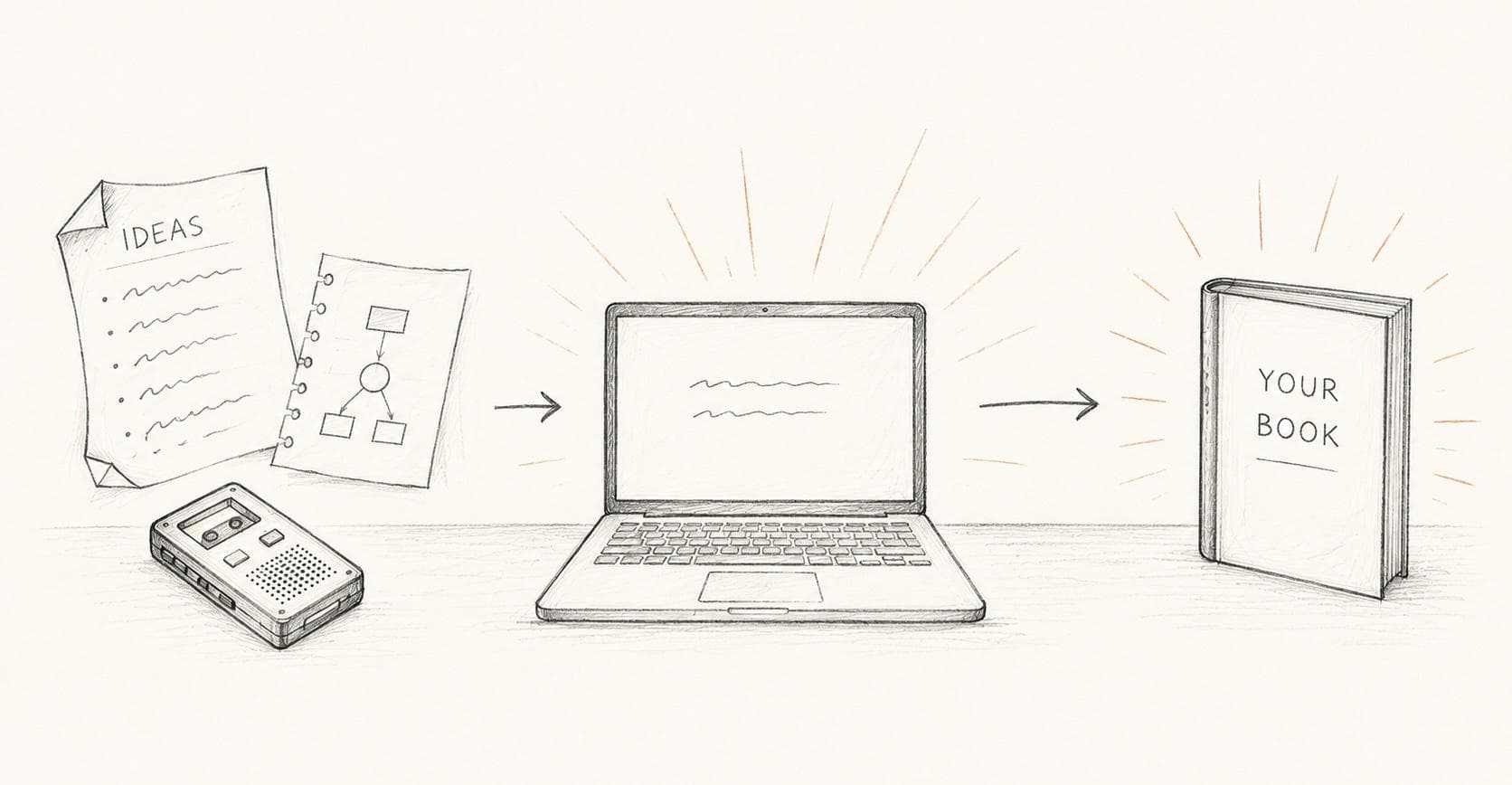
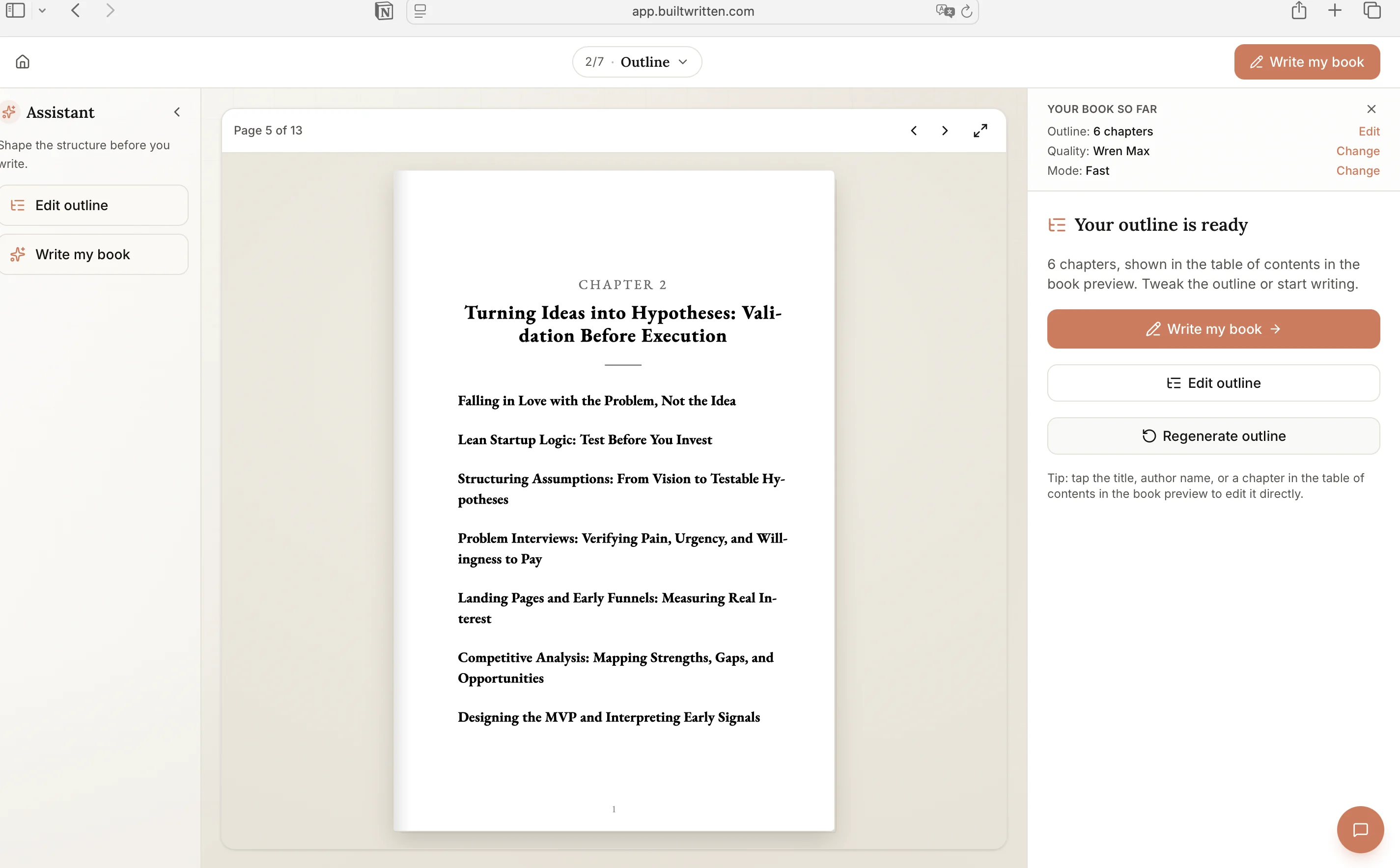
Once your idea clears the test, the path is short. Upload the material you already have: client notes, workshop transcripts, LinkedIn posts, call recordings. Wren structures it into chapters, drafts in your voice, and hands you a manuscript to edit instead of a blank page to fill. From there, self-publishing on Amazon KDP is the last step, not a separate project. Founders who start with material that already passed the test typically publish in weeks, not the year most people spend circling a someday book.
What you end up with: A finished, voice-matched manuscript built from proof you already had, not a first draft you'd need to rewrite from scratch. That's what separates a book that actually sells and gets read from one that just exists.
Most business books fail the same test: no specific promise, no real proof, no reader who needed it from that exact person. Run your idea through the three questions before you run it through a ghostwriter or a blank document. If it passes, Wren is built for exactly what happens next.
Final thoughts
The real choice was never whether to write a book. It's whether the book you're about to write is one only you could have written, or one any competent writer in your category could produce with a different case study stapled on. Most people never ask the second question.
Founders, coaches, and consultants already use Wren to skip that mistake. The manuscript starts from your own notes and calls instead of a category template, and the authority it builds comes from proof a competitor can't copy.
If your book passed the test above, the only thing standing between you and a finished manuscript is time you don't have to spend rebuilding a structure from scratch. Let Wren turn what you already know into the book that should exist.
Frequently asked questions
They repeat advice already available in dozens of other books in the same category, with no specific proof or specific reader behind it.
Run it through three questions: a specific promise, real proof behind it, and one specific reader who needs it from you. Two yeses is a maybe, three is a book worth writing.
Yes, if the book passes the test above. Volume isn't the real competition, and the data on the AI book flood shows readers already filter for proof over polish.
This test checks the book, whether the idea has a reason to exist. A readiness check is a separate question entirely: time, process, and whether you finish things. Both can apply at once.
Not if you already have the material. A ghostwriter mostly gets paid to extract what you already know, at a real cost worth knowing upfront.
Sources & References
About the author

Michael Pavlovskyi
Ready to write your book?
Turn your expertise into a professional book with Built&Written.