
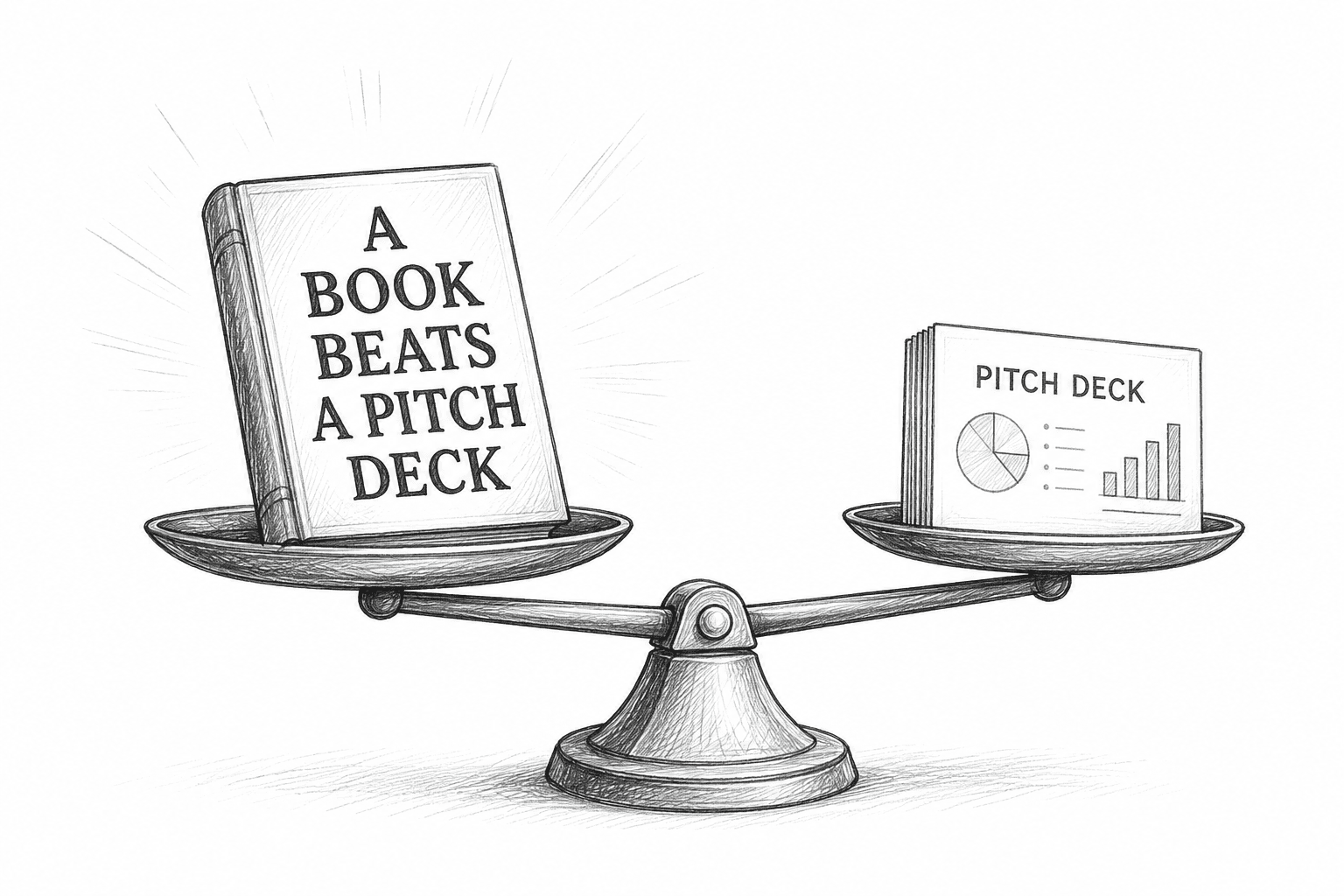

A Book Beats a Pitch Deck
Buyers complete about 61% of their decision before they ever ask for your pitch deck, reviewing an average of 11.4 pieces of content on their own. A deck persuades someone already in the room; a book gets found and vets you before the room is booked, then keeps working long after the deal closes.
Key takeaways
- By the time a buyer contacts you directly, they've typically already completed 61% of their decision on their own. (6sense, 2025)
- B2B buyers review an average of 11.4 pieces of content, and 55% of hidden decision-makers use thought leadership to vet a provider, before they ever request your deck. (Edelman & LinkedIn, 2025)
- Even opened, a sales deck gets read start to finish only 22% of the time, rising to 32% under 10 slides. (Storydoc, 2026)
- Wren, Built&Written's AI platform, turns your notes, calls, and case studies into that book: idea, voice, structure, and finish, ready for KDP the day it's done.
A pitch deck gets two minutes once a meeting is booked. If you're a consultant, coach, or founder trying to win a client, most of your prospects have already decided before that meeting exists. They've typically completed 61% of their decision researching on their own, according to 6sense's 2025 Buyer Experience Report. That's exactly why Built&Written exists. Wren, our AI platform, writes the book that shows up during that research window, not just the deck opened after the decision is basically made. Your deck persuades someone already in the room. Your book gets found before the room is booked.
About Built&Written: This is about the sales deck you send a prospect to win a client or a contract, not the one used to raise money from investors. Built&Written already works with consultants, coaches, and founders who need a finished book. Wren already handles what you have no time for: shaping the idea, finding your voice, building the structure, and finishing something a prospect actually wants to read.
1. The pitch deck arrives after the decision is already made
Most of your prospects do the bulk of their evaluation alone, long before your deck lands in an inbox. They review an average of 11.4 pieces of content, and 55% of hidden decision-makers use thought leadership specifically to vet a provider, per the 2025 Edelman-LinkedIn B2B Thought Leadership Impact Report. Your deck can't be one of those 11.4 pieces. It doesn't exist yet, and no one outside the deal gets to read it. So if your expertise isn't published anywhere a prospect can find on their own, you're giving them fewer ways to evaluate you before they ever book a call with you.
The problem, and how Wren solves it: Wren already writes the book that shows up during that research phase: something a search engine can index, a prospect can find at 11pm, and forward without a sales call. Why a book is the business card that never gets thrown away covers the SEO case.
2. Even opened, most sales decks don't get finished
A sales deck that does get sent still has to survive being read. Storydoc's 2026 analysis of 1.3 million presentation sessions found mid-funnel sales decks opened 81% of the time, but read start to finish only 22% of the time, 32% under 10 slides. If a prospect closes your deck by slide three, you've effectively said nothing to them.
The problem, and how Wren solves it: Wren already builds in a Reader lens and hook analysis while your chapter is drafted, so the writing that gets read holds attention past the first page. Voice matching AI writing that sounds like you covers how.
3. You probably already have the material
You're not short on material. A decade of case studies and workshop notes is plenty for a book. What stops most consultants and founders is that writing looks like a three-month project on top of a full client calendar. Fear of writing a book is not about time and how to write a book when you don't feel like an expert say the same thing. The blank page stops people, not the schedule.
The problem, and how Wren solves it: Wren already turns your notes and client-call transcripts into a real manuscript, written in your own voice, at a fraction of a ghostwriter's cost. How to write a book that attracts high-paying clients covers what to put in it.
4. What Wren actually builds from your material
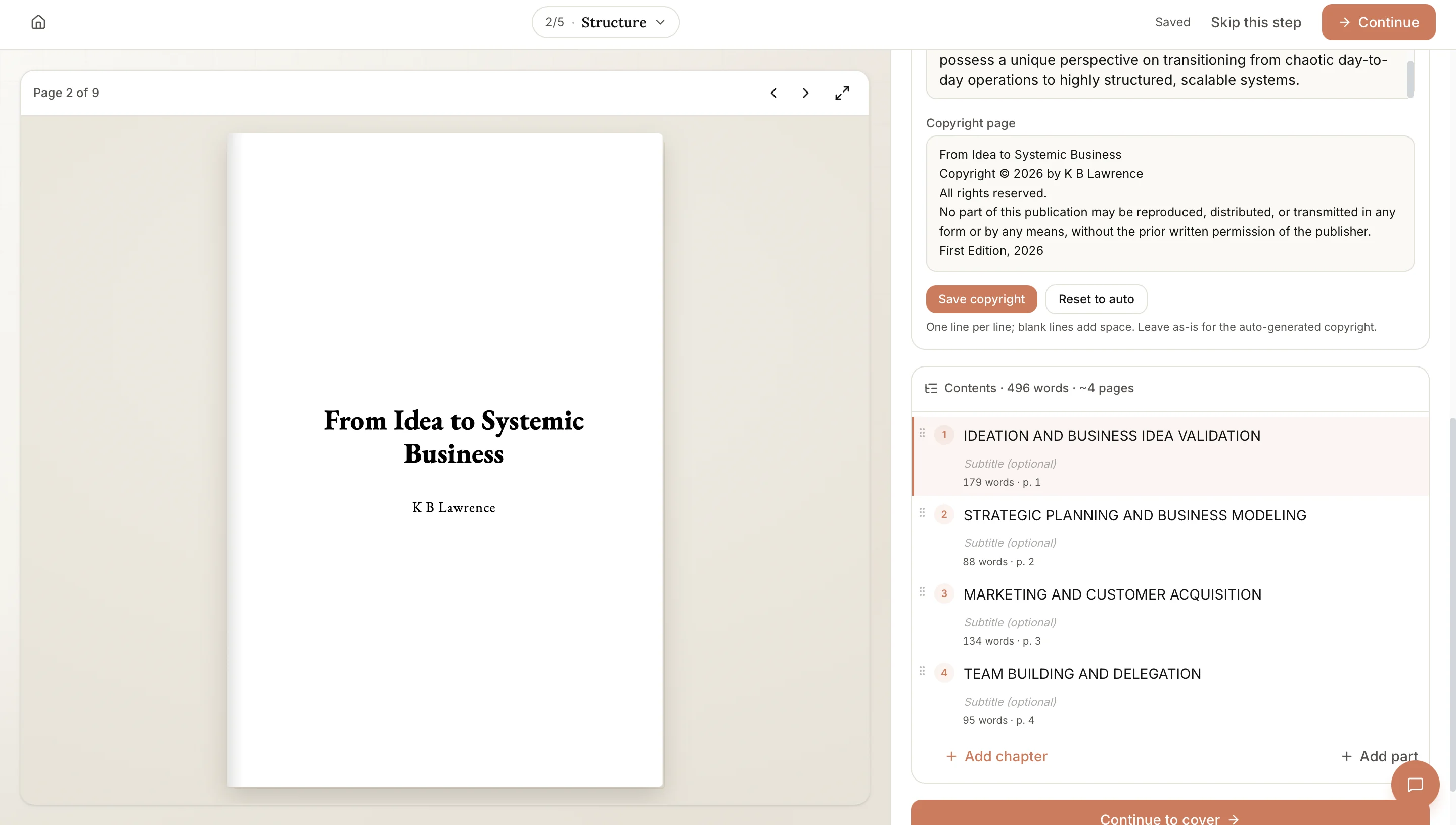
Here's what that process looks like, step by step, not a black box. You bring the raw material: client notes, call transcripts, proposals, case studies. Wren shapes that into an idea, matches the writing to your own voice, and builds the chapter structure shown below before a single page gets drafted. While you write, the same Reader lens and hook analysis from above keep each chapter holding attention. When the manuscript is finished, Wren formats it, trim size, margins, cover, and exports a KDP-ready file.
What you end up with: A finished, formatted book built from material you already have, not a blank page you fill alone or five separate freelancers you have to manage. Pricing covers the plans, and how to self-publish a book as an entrepreneur in 2026 covers what happens after Wren hands you the file.
5. Where the deck still has to do its job
Your book doesn't get you into the room, and it doesn't close the specific ask. Scope, price, and the proposal still belong on a deck built for that one prospect. What changes is everything around that meeting: you walk in already vetted, and you stay findable long after that one deal is decided.
The problem, and how Wren solves it: Wren already finishes that book, formatted and ready for Amazon KDP the day it's done, so it keeps working in searches and referrals long before your next deck gets built. How to use a book for lead generation that converts covers how.
A pitch deck and a book do different jobs. Your deck earns one meeting today. Your book gets found weeks before that meeting is booked, and it's still working months after the deck is deleted.
Final thoughts
Your pitch deck is built for the prospect who already knows your name. Your book is built for the prospect who doesn't. The question isn't whether a book can replace your deck. It can't. The question is whether your deck should be the first thing a prospect sees.
Built&Written already helps consultants, coaches, and founders turn client work into that first impression: a finished book that does the vetting your deck never gets the chance to do. Author credibility in business that drives revenue covers the fuller case.
You already have the expertise. Wren just means you don't have to spend three months turning it into a manuscript by yourself.
Frequently asked questions
No. A deck still closes the specific ask, the scope, and the price on a call already booked. A book does a different job: getting found and vetted before that call happens.
Wren shapes your material into an idea, matches your voice, builds the chapter structure, drafts the manuscript with a Reader lens and hook analysis, then formats and exports a KDP-ready file, all in one platform.
No. That's a narrower, founder-specific case covered in why entrepreneurs choose books over pitch decks. This is about the sales deck a consultant, coach, or founder uses to win a client, not a fundraising round.
Faster than a from-scratch manuscript, with a structured outline ready within minutes. Pricing covers the plans, and business book ideas for entrepreneurs that sell covers what to write about.
Sources & References
About the author

Mykhailo Druz
More in Lead Generation
Ready to write your book?
Turn your expertise into a professional book with Built&Written.