

Why Entrepreneurs Choose Books Over Pitch Decks
- Investors spend 1 minute 56 seconds on the average pitch deck, start to finish. That's down 24% since 2021. (DocSend, 2026)
- 31% of investors stop reading a deck within 10 seconds, and only 22% of decks get read in full. (Storydoc, 2026)
- 85% of dealmakers now use AI to screen decks before a person opens one. (Affinity, 2026)
- Wren, Built&Written's AI platform, writes the book that works after the deck is closed: no ghostwriter, no blank page, ready for KDP the day it's done.
The average pitch deck, the kind used for a startup's first funding round, gets 1 minute 56 seconds of an investor's attention, start to finish. That's down 24% since 2021, according to DocSend's investor behavior data. Entrepreneurs respond by tightening the deck further: fewer words, a sharper slide, a better logo. That doesn't fix the real problem. What matters is what an investor finds about an entrepreneur before the deck even opens. Wren, Built&Written's AI platform, writes that: a real book built from an entrepreneur's own notes and calls, still there long after the deck is closed.
Built&Written already works with entrepreneurs, coaches, and consultants who need a finished book. This piece speaks to entrepreneurs actively raising outside money, since that's who deals with a pitch deck. Coaches and consultants use Wren for the same finished book, just without the fundraising angle. Wren, our AI platform, already handles the parts an entrepreneur has no time for: shaping the idea, finding the voice, building the structure, and finishing something people actually want to read.
1. The two-minute deck problem no redesign fixes
Entrepreneurs keep polishing the deck. That doesn't fix the real problem. Storydoc found 31% of investors stop reading within the first 10 seconds, and only 22% of decks get read in full. Per Affinity's 2026 survey of 300 dealmakers, 85% already use AI to screen decks before a person opens one. A deck still needs its two minutes. Wren covers everything outside that window.
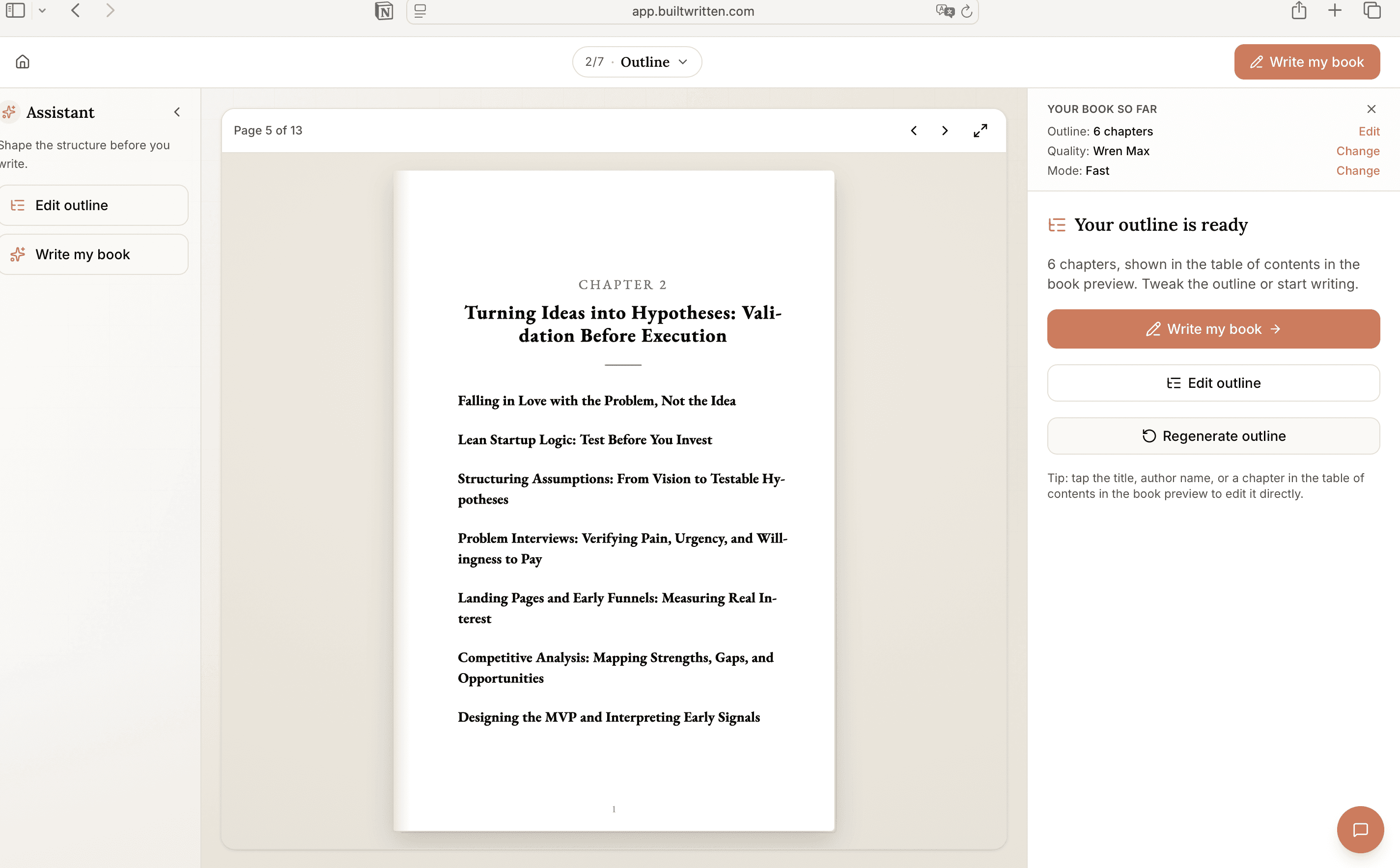
Wren already builds that second asset, fast. It shapes the idea from an entrepreneur's raw notes, then turns out a working outline in minutes, the kind shown above. That's faster than redesigning a deck, and cheaper than a ghostwriter. Is it worth writing a business book: real ROI math covers the numbers.
2. What investors check before the meeting is booked
Most investors search an entrepreneur's name before opening the deck. A single post helps for a week. A book stays online and shows up in search, months after the deck is forgotten. PitchBook data, cited in the same 2026 guide, found entrepreneurs with a public track record raise their round 2.3 times faster. That's the gap a deck can't close, the same case covered in thought leadership for entrepreneurs: why your book wins.
Wren already writes that findable book, built to rank in search and hold up to a background check, not sit as a generic bio page. Why a book is the business card that never gets thrown away covers the SEO case.
3. The part that actually stops most entrepreneurs: writing it
Nobody skips a book for lack of a story. Entrepreneurs skip it because writing looks like three months they don't have mid-raise, while trying to close a funding round. Some just doubt the story is worth a book. Fear of writing a book is not about time, scared to write a book? turn fear into a framework, and how to write a book when you don't feel like an expert all say the same thing: the blank page stops people, not the schedule.
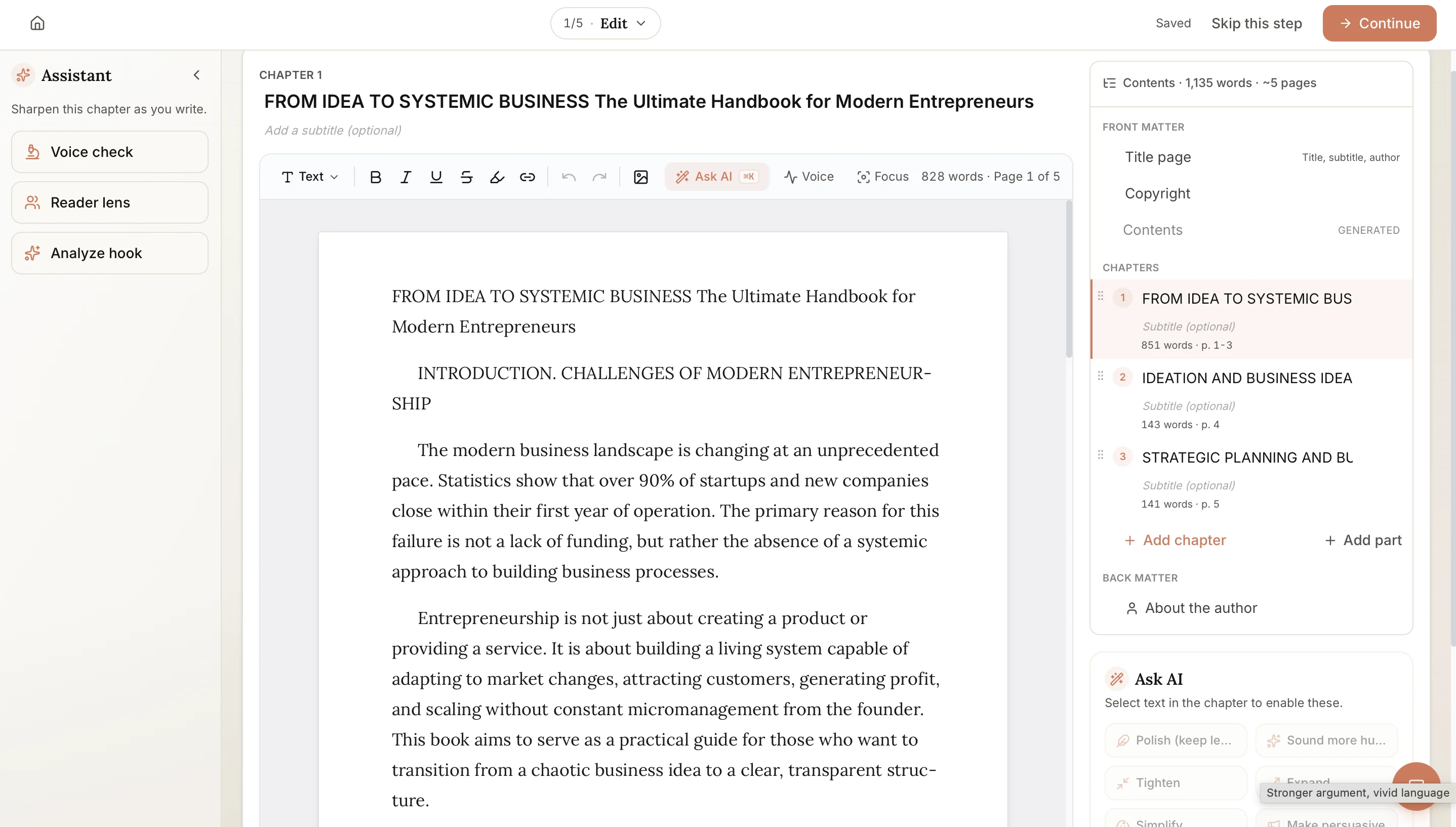
Wren already turns an entrepreneur's notes and call transcripts into a real manuscript, written in their own voice, at a fraction of a ghostwriter's cost. An editor checks tone and hook while they write. Voice matching AI writing that sounds like you covers how.
4. Where the book stops and the deck still has to do its job
A book doesn't get an entrepreneur into the room, and it doesn't replace the ask. Model, traction, meaning proof customers already want it, and the raise itself still belong on the deck. What changes is everything around the meeting. An entrepreneur with a published book walks in already vetted, and stays findable long after the raise ends.
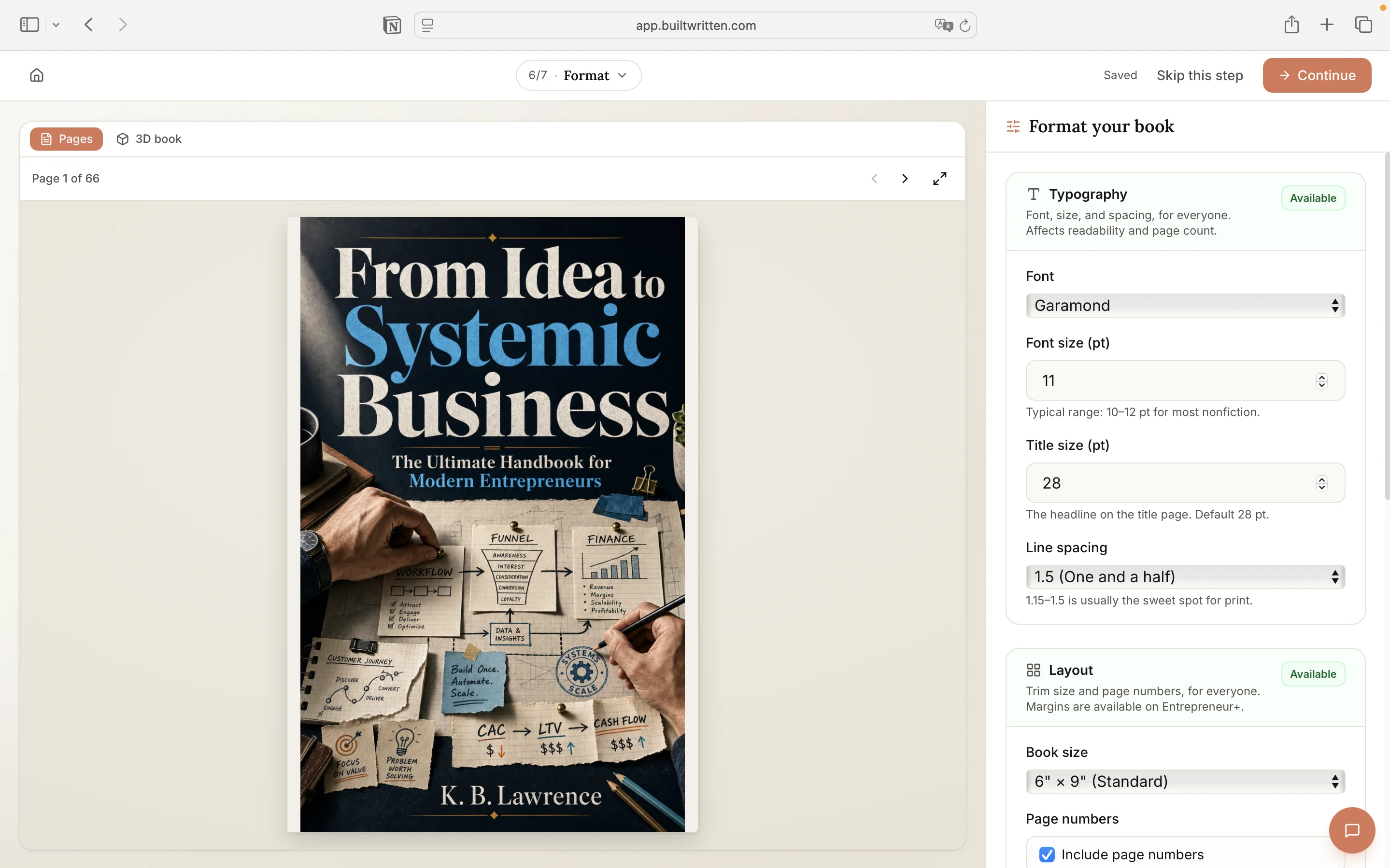
Wren already finishes that book, formatted and ready for Amazon KDP the day it's done. Entrepreneurs use it for leads, speaking invitations, warmer investor intros, and authority that outlasts any single raise. How to use a book for lead generation that converts covers how.
A pitch deck and a book do different jobs. A deck earns two more minutes today. A book earns trust three months from now, from an investor, a customer, or a future hire. A deck gives an entrepreneur one two-minute shot. A book gives more than one.
Final thoughts
Most entrepreneurs' books never get written, not for lack of material. The idea never gets shaped. The voice never gets found. The draft never gets finished. Wren already closes all three gaps.
Built&Written already helps entrepreneurs, coaches, and consultants turn notes into finished books. Those books bring real credibility, warmer introductions, and speaking invitations. See why entrepreneurs should write a book now for the fuller case.
Keep the deck. Add the book. One works this week. The other keeps working after. Let Wren take an entrepreneur from idea to finished book.
Frequently asked questions
No. A deck still gets an entrepreneur into the room and closes the ask. A book does a different job: staying findable and vetted before and after that meeting. Is it worth writing a business book: real ROI math covers the case, or browse more on Writer's Corner.
No. Entrepreneurs, coaches, and consultants all use Wren to turn expertise into a finished book. Pitch decks are just one entrepreneur's version of this problem, tied to fundraising specifically.
Some read the whole thing. Most at least check that one exists before a first call. Author credibility in business that drives revenue covers what that check looks for.
Before is ideal, since a published book is already working by the first meeting. During a raise works too. Wren builds from notes and calls an entrepreneur already has, so it doesn't compete for time.
Yes. Wren works from whatever an entrepreneur already has, including a deck and call transcripts, so a raise's worth of writing becomes the starting material instead of a blank page.
Most are draft generators. Wren already covers idea, voice, structure, and finish in one pass, built from an entrepreneur's real material. YouBooks review: fast AI book drafts for founders covers how one alternative compares.
Faster than a from-scratch manuscript, with a structured outline ready within minutes. Pricing covers the plans, and how to self-publish a book as an entrepreneur in 2026 covers what happens next.
Sources & References
About the author

Michael Pavlovskyi
More in Lead Generation
Ready to write your book?
Turn your expertise into a professional book with Built&Written.