comparison: How Much Does Business Book Ghostwriting Cost in 2025?
Back to Blog

How Much Does Business Book Ghostwriting Cost in 2025?

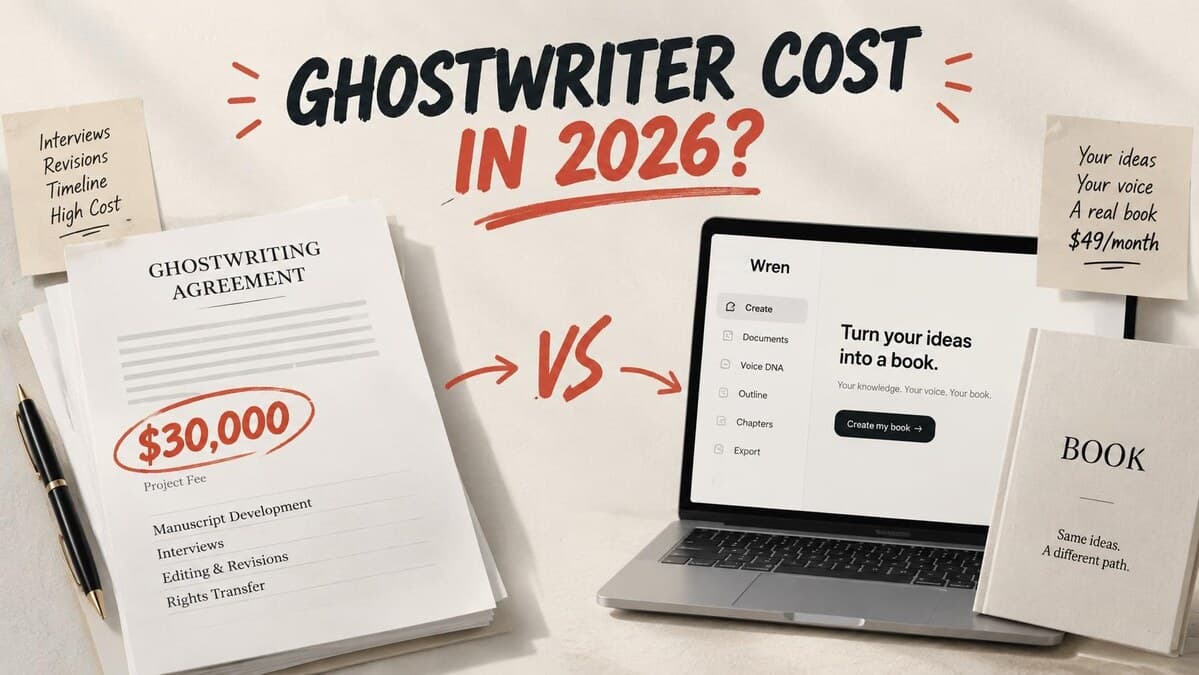
In 2014, Tucker Max and Zach Obront launched a company called Book in a Box. They had watched executives and founders pay ghostwriting firms five and six figures, wait a year or more, and walk away with a manuscript that read like a stranger wrote it. The product they built (now called Scribe Media) was a bet that the assembly of a book could be productized. They were right about the demand. They were also a living proof of the problem: a finished business book is worth a lot, and the traditional way to get one written for you costs more than most coaches spend on a car.

Every coach, consultant, and founder pricing a book in 2025 is staring at the same number Tucker Max saw in 2014. The quote comes back at $30,000. Or $56,000. Or $135,000. And the question underneath the sticker shock is the real one: is that what a business book actually costs, or is that what one specific way of getting a book costs?

This article answers the first question with real, current numbers, then takes apart the second. The ghostwriting cost for a business book is not one figure. It is a ladder, and where you land on it depends on choices most people make by accident.

Key takeaway: In 2025, business book ghostwriting costs between $8,000 and $150,000+, with most professional business and nonfiction projects landing at $25,000 to $80,000. Managed firms like Scribe Media run $29,000 to $135,000. The Business Book Ghostwriting Cost Ladder sorts every option into five rungs by price and what you actually get. For coaches who own their expertise and their voice, the assembly layer (the part you are really paying for) now costs a $15/month subscription instead of a down payment on a house.

TL;DR: what business book ghostwriting costs in 2025

Rung Who Price (full business book) What you get
1. Budget Offshore freelancers, gig platforms $2,000 to $8,000 A draft. Often not in your voice. High variance.
2. Mid-market Solo professional freelancers $8,000 to $25,000 A competent shorter book, light research.
3. Professional Established business ghostwriters $25,000 to $75,000 50,000 to 80,000 words, interviews, polished.
4. Managed firm Scribe Media, Gotham, boutiques $29,000 to $60,000 Done-for-you process, project management.
5. Elite Bestselling and celebrity ghostwriters $75,000 to $150,000+ Name talent, marketing, the full machine.

The numbers above are triangulated from Scribe Media's published pricing, Reedsy's ghostwriting marketplace data, and Ghostwriters & Co's 2025 rate guide. They are current as of 2025 and they are not cheap on any rung.

How we priced this: We pulled published package pricing directly from managed firms, per-word and per-project ranges from ghostwriting marketplaces and rate guides, and cross-checked against what coaches we have talked to actually paid. Where a single source gave a range, we report the range. We do not quote a number we could not find in a real listing or a real invoice. The goal is the figure a coach would actually see on a proposal in 2025, not a marketing-friendly average.

Why business book ghostwriting costs what it costs

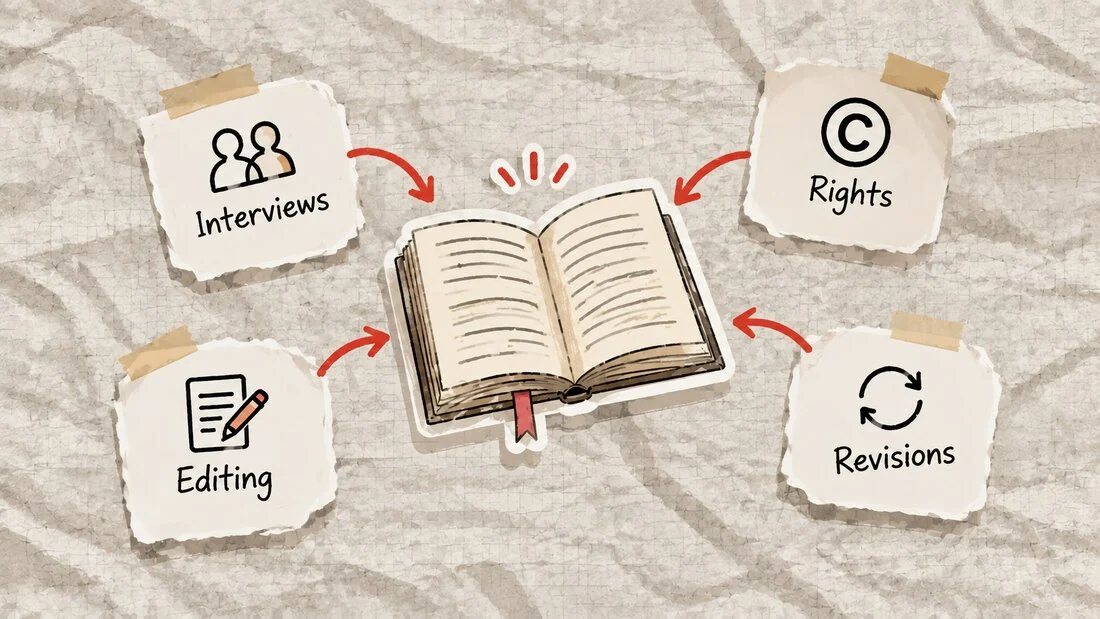
A business book is not a long blog post. The reason ghostwriting runs into the tens of thousands is that a real ghostwriter is doing four jobs at once, and each one takes time you are paying for by the hour.

The first job is extraction. A good ghostwriter interviews you for hours, sometimes dozens of hours, pulling the framework out of your head. You know your method. You have never said it out loud in a structured way. That gap is where most of the early cost goes. According to Ghostwriters & Co, a full book commonly runs 200 to 500 hours of work, and at professional hourly rates of $50 to $200+, the math alone explains the price before anyone writes a sentence.

The second job is structure. A nonfiction business book lives and dies on its architecture: the through-line, the chapter order, the framework that makes the whole thing feel like one argument instead of a pile of LinkedIn posts. This is genuinely hard, and it is the part amateur drafts get wrong.

The third job is drafting in your voice. This is the expensive, fragile part. A ghostwriter has to disappear and let you sound like you. Tucker Max built an entire company on the observation that this is exactly where high-priced ghostwriting most often fails. You pay $50,000 and the book sounds like a competent generalist, not like the coach your clients already trust.

The fourth job is revision. Drafts come back. You hate chapter three. The writer rewrites it. Every round costs money or burns goodwill, and the contract usually caps how many rounds you get.

Stack those four jobs and the price makes sense. The honest framing, which most coaches never hear, is that you are not buying words. You are buying someone else's time to extract, structure, voice, and revise a body of knowledge you already own. Once you see that, the question shifts. If you already own the knowledge and the voice, how much of that bill is for things only a human can do, and how much is for assembly a tool can now handle? That is the question this article keeps coming back to, and it is the same one behind ghostwriting vs writing it yourself.

There is also a credibility premium baked into the price. A ghostwriter who has placed books with real authors, run real interviews, and shipped manuscripts that sold can charge more because the risk to you is lower. You are partly paying an insurance premium against getting a bad book. That premium is rational. It is also exactly the kind of cost that collapses when the risky, variable part of the process (does this draft sound like me?) gets handled by a tool you can test in an afternoon instead of a writer you commit to for a year.

The three ways ghostwriters charge, and which one favors you

Before you can compare quotes, you have to understand that not every quote is built the same way. Business book ghostwriters price their work three different ways, and the model they use changes both your total and your risk.

Per-word pricing. This is the most common model for book-length work. Business and nonfiction ghostwriters charge roughly $0.50 to $3.00+ per word, according to 2025 marketplace data. A 60,000-word business book at $1.00 per word is $60,000. At $0.50 it is $30,000. At $2.00 it is $120,000. Per-word pricing is transparent, but it quietly punishes you for length, which is why some ghostwriters nudge toward longer books than your topic needs. A tight 40,000-word book that says everything is usually a better business asset than a padded 80,000-word one, and you do not want a pricing model that rewards padding.

Hourly pricing. Less common for full books, but used by some senior writers and consultants. Rates run $50 to $200+ per hour, and a full book of 200 to 500+ hours lands at $15,000 to $100,000+. Hourly is the riskiest model for you, because you are exposed to every slow week and every redo. Avoid it unless there is a clear cap in the contract.

Flat project fee. A single number for the whole book, often paid in milestones. This is what the managed firms use: $29,000, $44,000, $56,000, $135,000. Flat fees are the easiest to budget and the safest against scope creep, which is part of why firms charge a premium for them. The deposit, usually 50%, is non-negotiable and non-refundable in most contracts.

The takeaway for a coach: flat fees are easiest to plan around, per-word is the most honest signal of what writers actually charge, and hourly is the one to be careful with. Whatever the model, the total for a real business book starts in the tens of thousands. That is the floor every human option shares, and it is the floor the assembly question is built to challenge.

Scribe Media pricing page showing four ghostwriting and publishing packages from $29,000 to $135,000 in 2025
Scribe Media publishes its prices, which is rare and useful. Four tiers, $29,000 to $135,000. This is the number that sends most coaches looking for another way to get a book written.

The Business Book Ghostwriting Cost Ladder

Here is the framework. Every way to get a business book ghostwritten in 2025 sits on one of five rungs. The rungs are defined by price, but the thing that actually separates them is risk and what you have to bring yourself.

Rung 1: Budget ($2,000 to $8,000)

This is the gig-platform tier. Offshore freelancers, very junior writers, people charging $0.05 to $0.15 per word. You can technically get a book-length manuscript for the price of a nice laptop. The catch is variance. Some are fine. Many produce generic, lightly-researched text that does not sound remotely like you, and a business book that does not sound like you is worse than no book, because it actively damages the authority you wrote it to build. Coaches buy a book for credibility, not royalties, and a flat, voiceless draft fails the only job that matters.

Rung 2: Mid-market ($8,000 to $25,000)

Solo professional freelancers with a few books behind them. Reedsy's marketplace and similar platforms cluster a lot of competent nonfiction work in this band, especially for shorter books in the 30,000 to 50,000 word range. You get a real writer who will interview you, structure the book, and deliver a clean draft. What you usually do not get is deep subject-matter research or heavy marketing support. For a coach with a clear method and a tight scope, this rung delivers a real book. It still costs more than most coaches expect, and it still takes months.

Rung 3: Professional ($25,000 to $75,000)

This is the heart of the market for serious business books. Established ghostwriters who specialize in business, leadership, and personal development charge in this band for a full 50,000 to 80,000 word manuscript. Ghostwriters & Co puts nonfiction squarely at $30,000 to $80,000, noting that business and specialty topics command the higher end because of the research and interview load. At this rung you get real extraction, strong structure, and a writer who can hold your voice across a whole book. This is the rung most coaches imagine when they hear the word ghostwriter, and the price is why most of them stop there.

Rung 4: Managed firm ($29,000 to $60,000)

This is the productized tier that Tucker Max helped invent. Firms like Scribe Media and Gotham Ghostwriters wrap the writer in a process: a project manager, a defined timeline, editing, design, and in some cases publishing. Scribe's published 2025 pricing runs from Scribe Publishing at $29,000 (for people who already have a manuscript) up through Guided Author at $44,000 and Scribe Professional at $56,000. You are paying for reliability and a system, not just a writer. For a busy founder who wants a hands-off process and can absorb the cost, the managed firm removes the project-management burden. The price reflects that.

Rung 5: Elite ($75,000 to $150,000+)

Name-brand ghostwriters, the people behind books you have heard of, plus celebrity and executive memoir work. Scribe's Elite package sits at $135,000, and the broader market tops out past $150,000 for bestselling talent with a marketing budget attached. Autobiographies and high-profile business memoirs land here routinely. If you are a public figure with a seven-figure platform, this rung can pay for itself. For a coach building authority in a niche, it is almost never the right spend.

Reedsy blog page explaining ghostwriting rates and how to find a ghostwriter for hire in 2026
The Reedsy Blog is one of the more trusted independent publishing resources. Its ghostwriting rate guides are where you see what real working writers charge on rung 2 and rung 3, before a firm marks it up.

What you actually get at each price

Price is the easy part. The harder question is what lands in your inbox when the project is done, because the gap between rungs is not just polish. It is scope.

On the budget and mid-market rungs, you typically get a manuscript and not much else. No cover. No interior formatting. No publishing help. You hand off a Word document and the rest of the journey to a finished, KDP-ready book is yours to figure out. That matters, because a manuscript is maybe 60% of the distance to a book a coach can actually hold up on a stage.

On the professional rung, you get a much more finished manuscript and usually a writer who will stay with you through revisions. Formatting, cover, and publishing are still often separate line items or your problem.

On the managed-firm rung, the scope widens to the whole production. Scribe Media's higher tiers include editing, cover design, and publishing support. That is genuinely a lot of value bundled, and it is a real reason the price is what it is. You are not just buying writing. You are buying a finished, designed, published artifact and a team that drove it there.

The thing to notice is that a large slice of what the firms charge for, formatting, structure, cover, the KDP listing, is assembly. It is mechanical, repeatable production work. It is exactly the kind of work that used to require a human and now does not. That is the wedge.

The part of the bill that is genuinely human

Be honest about this, because pretending otherwise gets coaches to make bad decisions. Some of what a ghostwriter does is irreplaceable for some people. If you cannot articulate your own method, if you freeze when you sit down to explain what you do, a skilled human interviewer pulling it out of you over ten hours is worth real money. If you have no content at all, no posts, no talks, no notes, you are paying someone to manufacture raw material, and that is a legitimate, expensive service.

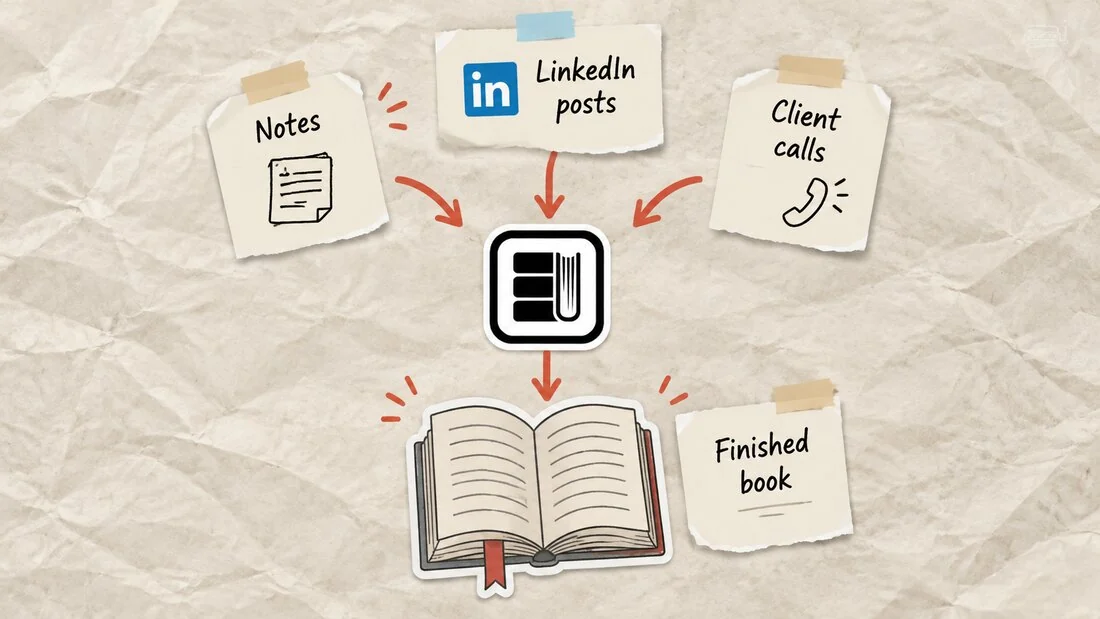
But most coaches are not in that position. Most coaches have years of LinkedIn posts, talks, client frameworks, and notes sitting in a dozen places. They have the raw material and the voice. What they lack is the assembly, the structure, and the time. And that specific combination is no longer a $50,000 problem.

International Coaching Federation homepage, the credentialing body for the coaching profession
The [International Coaching Federation](https://coachingfederation.org/) credentials the profession, but a book is the credibility asset clients actually see. That is why coaches buy books for authority, and why a voiceless ghostwritten draft is a bad trade at any price.

The hidden costs nobody puts in the quote

The sticker price is not the final price. Every coach who has actually hired a ghostwriter learns this, usually halfway through. Build these into your math before you sign anything.

Revision caps. Most contracts include two or three rounds of revisions. Beyond that, you pay per round, and the per-round rate is not small. If you are particular about your voice, and you should be, you can blow through the included rounds fast.

Kill fees and deposits. Ghostwriting contracts front-load payment. A 50% deposit is standard, and if the project falls apart at chapter four because the voice is not working, you are often out the deposit and the time. The financial risk sits with you, not the writer.

Timeline cost. A professional business book takes six to twelve months to ghostwrite. For a coach, that is six to twelve months of not having the book that was supposed to be raising your rates and booking your calendar. The opportunity cost is real and almost never priced into the conversation. If the book is a lead engine, every month it does not exist is a month of leads it did not generate. We did the ROI math on a business book separately, and the timeline is the variable people underweight.

The voice tax. This is the one that stings. You pay the full price, the book is structurally fine, and it still does not sound like you. Now you are editing a $50,000 manuscript line by line to put your fingerprints back on it, which is work you paid specifically to avoid. Tucker Max named this problem in 2014 and it has not gone away.

Ghostwriters and Co rate guide page showing 2025 book ghostwriting costs of $30,000 to $80,000 for nonfiction
Independent rate guides confirm the band: nonfiction and business books cluster at $30,000 to $80,000, with research-heavy specialty topics pushing higher. The hidden costs sit on top of these numbers, not inside them.

Five real options, priced side by side

Put the ghostwriting ladder next to the alternatives and the decision gets clearer. Here is the full field for a coach who wants a finished business book in 2025.

Option Real 2025 cost Time to draft Sounds like you? Finished book?
Managed firm (Scribe, Gotham) $29,000 to $135,000 6 to 12 months Sometimes Yes, fully produced
Professional freelancer $25,000 to $75,000 4 to 9 months Usually Manuscript, not always full production
Mid-market freelancer $8,000 to $25,000 3 to 6 months Maybe Manuscript only
Pure DIY (you write it) Your time, months 6 to 18 months Yes Only if you finish
AI assembly (Built&Written) $15/month Days, not months Yes, via Voice DNA Yes, KDP-ready export

The managed firms: reliability you pay a premium for

Scribe Media and Gotham Ghostwriters are the safe, expensive choice. You will get a book. It will be produced and published. The process is real and the people are good. You are paying $29,000 to $135,000 for someone else to own the project and absorb the coordination. For a founder whose hourly value is genuinely higher than the cost, this can be rational. For most coaches, it is the down payment on a house, spent on a marketing asset. The one thing the firms sell that is genuinely hard to replicate is accountability: a team that will not let the project die in your drafts folder. If you have a history of starting books and abandoning them, that accountability is part of what you are buying, and for some people it is worth the premium. For most, a cheaper tool plus a real deadline does the same job.

Professional freelancers: the honest middle

A great independent ghostwriter at $25,000 to $75,000 is, for many serious authors, the best version of paying for a ghostwriter. You get talent and a personal relationship without the agency markup. The risk is that you are the project manager now, and the voice match is on you to enforce. Reedsy is the most reputable place to find this tier.

Pure DIY: free, slow, often unfinished

Writing it entirely yourself costs no money and an enormous amount of time, and the completion rate is brutal. Most coaches who decide to write it themselves are still not done a year later. The cost is not dollars. It is the book that never ships. And for a coach, an unshipped book is the most expensive option on this entire list, because it is a year of lost authority, lost speaking invitations, and lost inbound clients that the finished book was supposed to generate. The dollars saved are dwarfed by the opportunity cost of the asset that never existed.

There is also a quiet pattern worth naming: many coaches default to DIY not because it is the best fit but because the ghostwriting quotes scared them off and they did not know a middle option existed. That is the gap the hybrid model and AI assembly fill. The choice was never just "pay $50,000" or "grind alone for two years." It only looked that way because the assembly layer had no cheap version until recently.

AI assembly: the new rung that broke the ladder

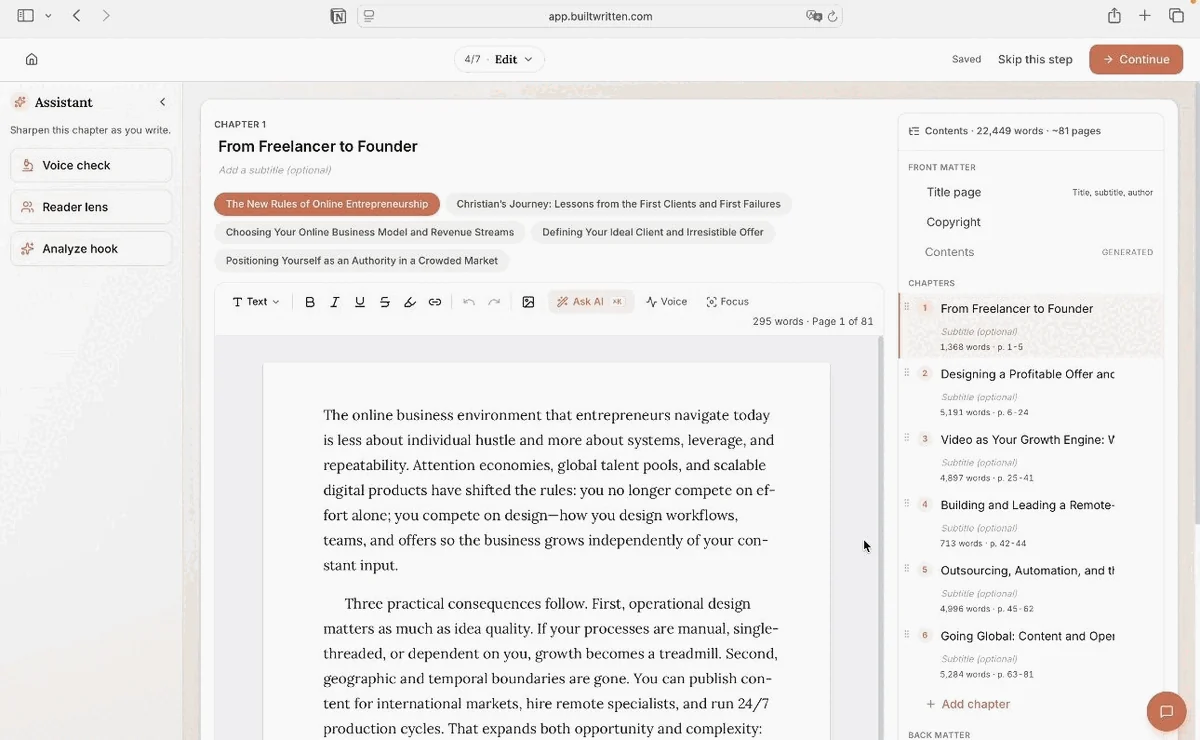
This is the option that did not exist when Tucker Max priced his market in 2014. Tools like Built&Written take the content you already have, your pasted LinkedIn posts, your uploaded notes, your pasted podcast transcripts, and assemble them into a structured, KDP-ready manuscript. The named differentiator is Voice DNA: you feed it samples of your writing and it preserves your voice across the book, which is the exact failure point that makes expensive ghostwriting disappointing. It exports a print-ready PDF and ePub, and it generates the Amazon KDP listing for you. The price is $15/month, with a free trial and no credit card required.

It is not magic and it is not a human interviewer. If you have nothing written down, it has nothing to assemble. But if you have years of content and your own voice, it does the assembly, structure, formatting, and KDP prep, which is the bulk of what the firms charge tens of thousands for.

Built&Written pricing page showing a $15 per month subscription for AI book assembly
The same assembly layer the firms charge $29,000 and up for, priced as a $15/month subscription. The trade is honest: you bring the raw material and the voice, the tool does the production.

The hybrid model: an AI draft plus a human editor

The most underused option in 2025 is not on the traditional ladder at all. It is a hybrid: use an AI assembly tool to produce the structured first draft from your own content, then hire a human editor or developmental editor to sharpen it. This splits the bill in a way that maps to who is actually best at each job.

The machine does the assembly: structure, chapter order, formatting, KDP prep, and a voice-matched first draft from material you already own. That is the part that used to cost $20,000 to $40,000 inside a firm's quote. A human then does the part humans are genuinely better at: catching the argument that does not land, the example that falls flat, the chapter that should be cut. A developmental edit or a strong copyedit for a business book typically runs $1,500 to $8,000 depending on depth, a fraction of a full ghostwriting fee.

Total cost of the hybrid: the $15/month tool plus a one-time editing fee, often landing under $5,000 all-in. Compare that to $29,000 at the cheapest managed tier. You keep your voice because the draft was built from your voice, not a stranger's interpretation of it. You keep control of the timeline because the slow, expensive drafting step is now fast. And you still get a human's judgment on the things that actually need it.

This is the model we think most coaches should run, and it is why the best AI book tools are not really competing with ghostwriters on quality. They are competing on which part of the job you pay a human to do. Pay the human for judgment. Stop paying the human for assembly.

The verdict: who should actually pay for a ghostwriter

Here is the decision, stated plainly. No hedging.

Pay for an elite or managed firm ($75,000+) if you are a public figure with a large platform, the book is a memoir or requires heavy original reporting, and your time is genuinely worth more than the fee. The book will pay for itself through speaking, deals, and reach. This is a small group.

Pay for a professional freelancer ($25,000 to $75,000) if you cannot articulate your own method without help, you have little usable content to start from, and you have the budget and the patience for a six-to-nine-month process. A skilled human interviewer earns this money by pulling the book out of a head that cannot get it out alone.

Use AI assembly ($15/month) if you already have the raw material (posts, talks, notes, transcripts) and you know your own voice. This is most coaches and consultants. You are not paying a ghostwriter to manufacture your expertise. You are paying for assembly, and assembly no longer costs $50,000. Pair it with a clear sense of what ghostwriting actually is so you know exactly what you are and are not giving up.

The honest line: ghostwriting is not a scam, and the high prices are mostly real work. But a large share of that work is assembly that a tool now does for the price of two coffees a month. The coaches who keep paying $50,000 are, in most cases, paying a human to do something they could do themselves with the right tool, plus a voice match the tool actually does better.

Built&Written homepage describing turning existing content into a print-ready KDP-ready book in five minutes
The pitch is narrow and honest: your content already exists, the tool assembles it. That is the part of the ghostwriting bill that just collapsed in price.

Key takeaways

  • Business book ghostwriting in 2025 costs $8,000 to $150,000+. Most serious business and nonfiction projects land at $25,000 to $80,000.
  • The Business Book Ghostwriting Cost Ladder has five rungs: Budget ($2K to $8K), Mid-market ($8K to $25K), Professional ($25K to $75K), Managed firm ($29K to $60K), and Elite ($75K to $150K+).
  • Managed firms like Scribe Media publish real prices: $29,000 to $135,000 across four tiers.
  • A large share of the ghostwriting bill is assembly (structure, formatting, cover, KDP prep), not the irreplaceable human work of extraction and voice.
  • Hidden costs (revision caps, deposits, six-to-twelve-month timelines, and the voice tax) sit on top of the sticker price.
  • For coaches who already have content and their own voice, AI assembly tools like Built&Written do the assembly layer for $15/month while preserving voice via Voice DNA.
  • Coaches buy a book for authority, not royalties. Spend on the rung that gets you a finished book that sounds like you, not the most expensive one.

Frequently asked questions

How much does it cost to ghostwrite a business book in 2025?
Between $8,000 and $150,000+. Most professional business and nonfiction books land at $25,000 to $80,000. Managed firms like Scribe Media charge $29,000 to $135,000 depending on the tier. The wide range reflects writer experience, research depth, book length, and whether publishing and design are included.

Why is business book ghostwriting so expensive?
A full book commonly takes 200 to 500 hours of work across four jobs: interviewing you to extract your method, structuring the book, drafting in your voice, and revising. At professional rates of $50 to $200+ per hour, the math reaches tens of thousands before design or publishing. Business and specialty nonfiction cost more because of the research and interview load.

Is a $5,000 ghostwriter worth it for a business book?
Usually not for a credibility book. Budget-tier writers produce high-variance work that often does not sound like you, and a business book that does not sound like you damages the authority you wrote it to build. If you have your own content and voice, an AI assembly tool at $15/month is a more reliable way to get a voice-accurate draft than a $5,000 freelancer.

What is the cheapest way to get a real business book written?
If you already have content (posts, talks, notes, transcripts), AI assembly tools like Built&Written produce a structured, KDP-ready manuscript for $15/month while preserving your voice. Pure DIY is free but slow and often never finished. Among human options, mid-market freelancers at $8,000 to $25,000 are the floor for competent work.

Do ghostwriters make the book sound like me?
Sometimes. Voice match is the single hardest and most frequently failed part of ghostwriting, even at high prices. It is why Scribe Media was founded in the first place. Tools that use voice-matching (like Built&Written's Voice DNA, trained on samples of your own writing) often hold your voice more consistently than a human writing in an unfamiliar register.

How long does ghostwriting a business book take?
A professional ghostwritten business book typically takes six to twelve months from kickoff to finished manuscript. That timeline is a hidden cost: for a coach, it is six to twelve months without the book that was supposed to raise rates and book calls. AI assembly compresses the drafting step to days, though you still control editing and review.

Can I just write it myself instead?
You can, and it costs no money. The problem is completion: most coaches who start writing alone are not finished a year later. If the issue is time and assembly rather than expertise, a tool that structures your existing content gets you to a finished book faster than willpower does.

Are AI-assembled business books allowed on Amazon KDP?
Yes. As of 2025, Amazon KDP requires you to disclose AI-assisted content when you publish, but it does not prohibit it. A book assembled from your own expertise, with your own voice, and reviewed by you is exactly the kind of authored work KDP is built to distribute. Disclosure is a checkbox, not a barrier, and it does not affect how your book ranks or sells.

How do I make sure a business book actually sounds like me?
This is the part to protect at any price. With a human ghostwriter, insist on a paid sample chapter before you commit the full fee, and budget for revision rounds, because voice is where the rounds get spent. With an AI tool, the mechanism is direct: feed it 3,000 to 5,000 words of your own writing so the voice model trains on you specifically. Either way, the cheapest insurance against a flat, generic book is testing the voice early, before you have spent the budget.

Is ghostwriting worth it for a coaching book?
It depends entirely on what you are missing. If you lack the ability to articulate your method or have no content to start from, a human ghostwriter earns the fee. If you have years of posts, talks, and notes and simply lack time and structure, you are paying tens of thousands for assembly you could do for $15/month. Coaches buy books for authority, so the real test is not price, it is whether the finished book sounds credibly like you.

Sources & References

Frequently asked questions

  • How much does it cost to ghostwrite a business book in 2025?

    Between $8,000 and $150,000+. Most professional business and nonfiction books land at $25,000 to $80,000. Managed firms like Scribe Media charge $29,000 to $135,000 depending on the tier. The wide range reflects writer experience, research depth, book length, and whether publishing and design are included.

  • Why is business book ghostwriting so expensive?

    A full book commonly takes 200 to 500 hours across four jobs: interviewing you to extract your method, structuring the book, drafting in your voice, and revising. At professional rates of $50 to $200+ per hour, the math reaches tens of thousands before design or publishing. Business and specialty nonfiction cost more because of the research and interview load.

  • Is a $5,000 ghostwriter worth it for a business book?

    Usually not for a credibility book. Budget-tier writers produce high-variance work that often does not sound like you, and a business book that does not sound like you damages the authority you wrote it to build. If you have your own content and voice, an AI assembly tool at $15/month is a more reliable way to get a voice-accurate draft than a $5,000 freelancer.

  • What is the cheapest way to get a real business book written?

    If you already have content (posts, talks, notes, transcripts), AI assembly tools like Built&Written produce a structured, KDP-ready manuscript for $15/month while preserving your voice. Pure DIY is free but slow and often never finished. Among human options, mid-market freelancers at $8,000 to $25,000 are the floor for competent work.

  • Do ghostwriters make the book sound like me?

    Sometimes. Voice match is the single hardest and most frequently failed part of ghostwriting, even at high prices. It is why Scribe Media was founded in the first place. Tools that use voice-matching, like Built&Written's Voice DNA trained on samples of your own writing, often hold your voice more consistently than a human writing in an unfamiliar register.

  • How long does ghostwriting a business book take?

    A professional ghostwritten business book typically takes six to twelve months from kickoff to finished manuscript. That timeline is a hidden cost: for a coach, it is six to twelve months without the book that was supposed to raise rates and book calls. AI assembly compresses the drafting step to days, though you still control editing and review.

  • Can I just write it myself instead?

    You can, and it costs no money. The problem is completion: most coaches who start writing alone are not finished a year later. If the issue is time and assembly rather than expertise, a tool that structures your existing content gets you to a finished book faster than willpower does.

  • Are AI-assembled business books allowed on Amazon KDP?

    Yes. As of 2025, Amazon KDP requires you to disclose AI-assisted content when you publish, but it does not prohibit it. A book assembled from your own expertise, with your own voice, and reviewed by you is exactly the kind of authored work KDP is built to distribute. Disclosure is a checkbox, not a barrier.

  • How do I make sure a business book actually sounds like me?

    With a human ghostwriter, insist on a paid sample chapter before you commit the full fee, and budget for revision rounds, because voice is where the rounds get spent. With an AI tool, feed it 3,000 to 5,000 words of your own writing so the voice model trains on you. Either way, test the voice early, before you have spent the budget.

  • Is ghostwriting worth it for a coaching book?

    It depends on what you are missing. If you lack the ability to articulate your method or have no content to start from, a human ghostwriter earns the fee. If you have years of posts, talks, and notes and simply lack time and structure, you are paying tens of thousands for assembly you could do for $15/month. Coaches buy books for authority, so the real test is whether the finished book sounds credibly like you.

Sources & References

  1. Scribe Media Pricing
  2. Reedsy: Ghostwriting Rates
  3. Ghostwriters & Co: Cost to Hire a Ghostwriter (2025)
  4. Gotham Ghostwriters
  5. Amazon Kindle Direct Publishing
  6. International Coaching Federation
  7. Built&Written
  8. Built&Written Pricing

Ready to write your book?

Turn your expertise into a professional book with Built&Written.

Build my book