

Spines vs Self-Publishing for Entrepreneurs: Which Wins in 2026?
In 2011, Andy Weir was a software engineer posting a science fiction story one chapter at a time on his own website, for free. Readers kept asking for a version they could load onto a Kindle. So he put The Martian on Amazon KDP for 99 cents, the lowest price the platform allows. It sold tens of thousands of copies inside a few months and climbed the Amazon bestseller charts. Only then did Crown Publishing buy the print rights, and a Ridley Scott film followed in 2015. Weir kept full control until an offer worth taking showed up.
Every entrepreneur weighing a publishing decision in 2026 is standing where Weir stood. You have content. You have an audience that wants it in book form. And you have a choice: hand the whole process to a paid service, or keep control and publish it yourself.
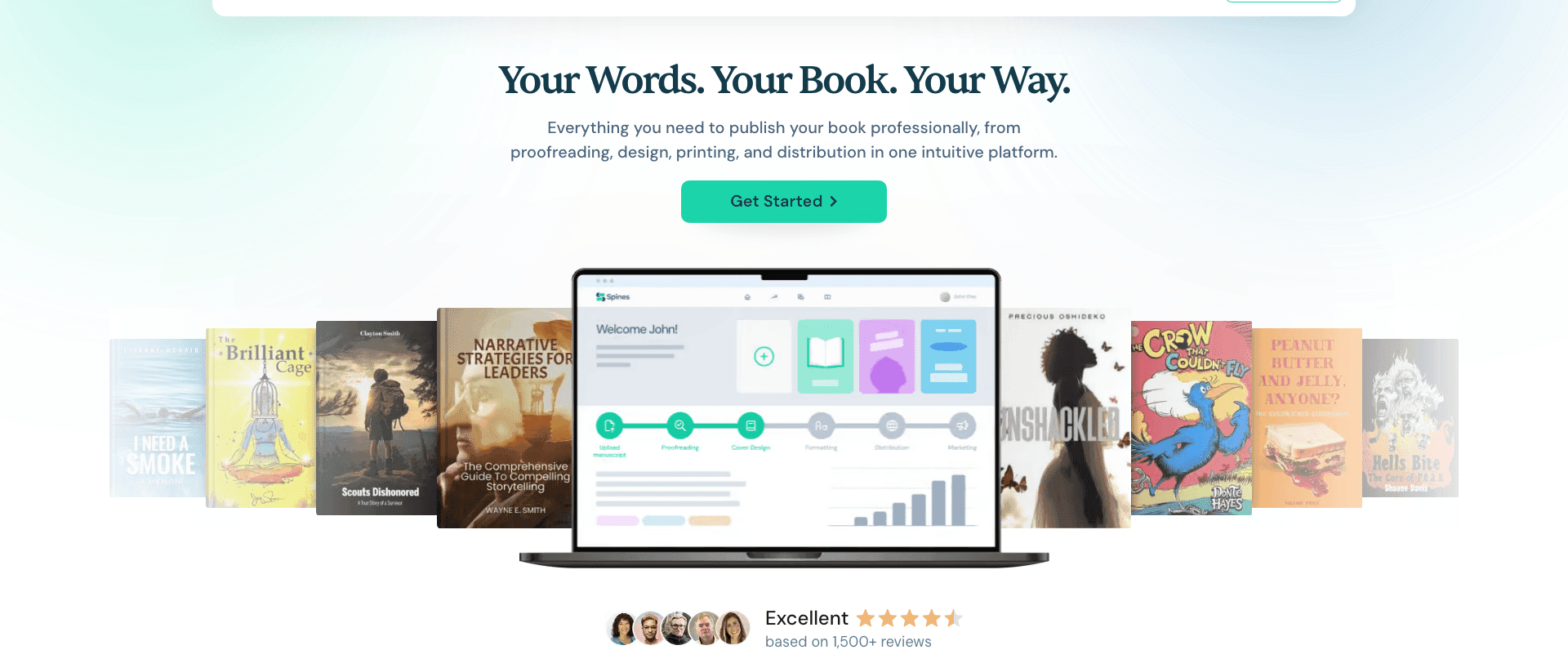
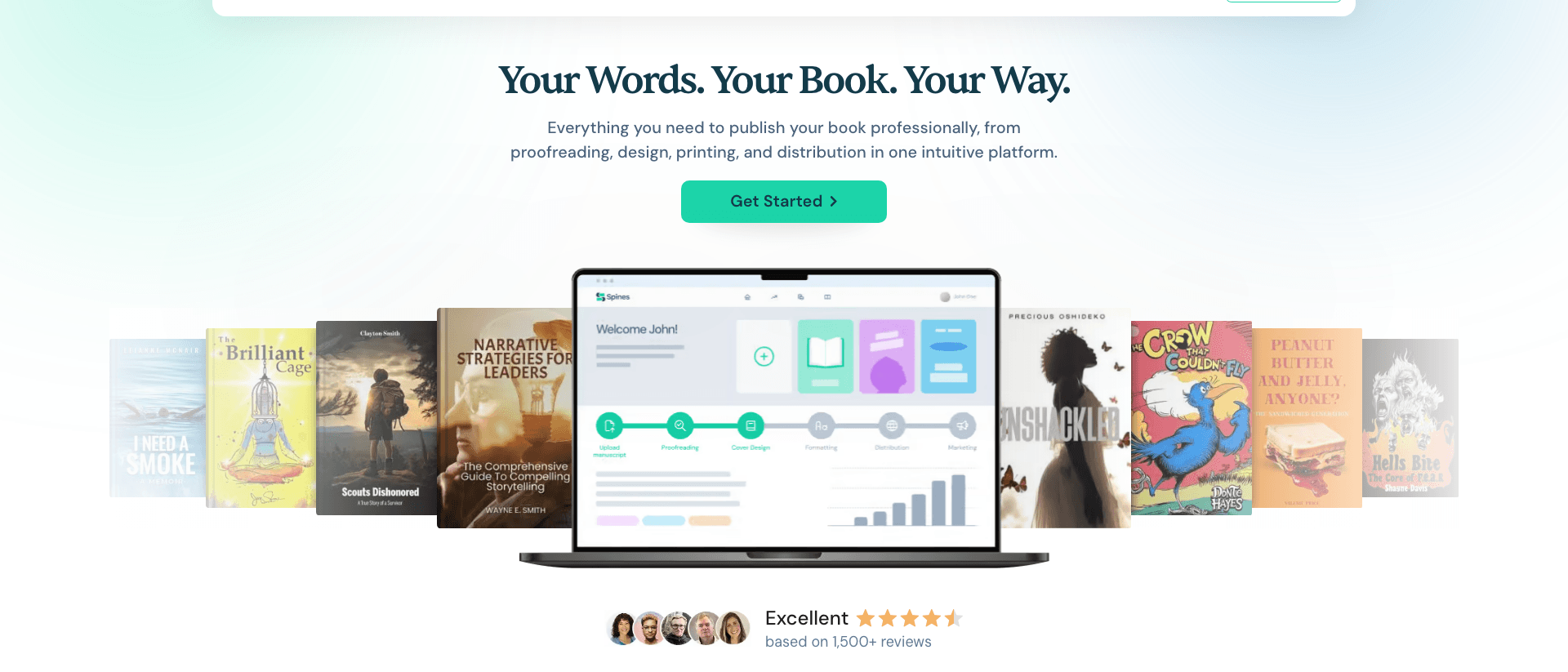
A new category of service has made that choice louder. Spines is an AI-assisted publishing company that promises to take your manuscript and put a finished book on Amazon in two to four weeks. It raised $22.5 million in funding (eWeek) and it is aimed squarely at people who do not want to deal with formatting, covers, or distribution. For a busy founder or coach, that sounds like exactly the problem solved.
This article runs the real comparison. Spines versus self-publishing, scored on what actually matters to an entrepreneur using a book as an authority asset, not a hobby.
Key takeaway: For entrepreneurs in 2026, self-publishing beats Spines for most authority books. Spines charges from about $4,450 to nearly $10,000 upfront depending on tier and book length, and keeps 30% of your royalties for as long as your book stays on its platform. Self-publishing on Amazon KDP costs nothing upfront and you keep 100% of your rights. The Author Equity Test scores both options across five factors: upfront cost, royalty ownership, rights control, speed to shelf, and authority signal.
Why most entrepreneurs misjudge the Spines vs self-publishing decision
The mistake is treating this like a writing decision. It is a business decision.
When a coach or founder says "I do not have time to publish a book," what they usually mean is "I do not want to learn book formatting, hire a cover designer, and figure out Amazon's upload screens." That is fair. Those tasks are tedious and none of them are why you started a coaching practice or a company.
So a service like Spines looks like the obvious answer. Pay a fee, skip the tedium, get a book. But that frame hides the two numbers that decide whether the deal is good: what you pay upfront, and what you give up forever.
Spines charges an upfront package fee that scales with manuscript length and tier, from about $4,450 on the entry tier up to roughly $9,820 for the top tier, based on a detailed review by selfpublishing.com and the current Spines pricing page. On top of the fee, Spines keeps 30% of your net royalties for as long as your book is distributed through the platform. You receive 70%.
Self-publishing on Amazon KDP has no upfront fee. You keep your rights, and Amazon pays you a royalty of 70% on most ebooks priced between $2.99 and $9.99, or roughly 60% minus printing cost on paperbacks. There is no third party taking a recurring cut. The work is yours to do or to delegate piece by piece.
A coaching book is rarely a revenue play. Coaches buy a book for credibility. The book turns a cold prospect into a warm inbound lead, and a $3,000 client into a $30,000 retainer. That math is the reason the ownership question matters more than the convenience question. If the book works as a lead engine, a 30% royalty cut for the life of the book is a tax on your own marketing asset.
This is the same tension we covered in our breakdown of traditional publishing vs self-publishing for entrepreneurs. Spines sits in a newer middle lane: faster than a traditional house, more hands-off than pure self-publishing, and priced in between. The question is whether that middle lane is worth what it costs.
What "self-publishing" actually means in 2026
Self-publishing is publishing a book yourself, without a publishing house or a paid done-for-you service taking ownership of the process. You hold the rights. You set the price. You keep the royalties Amazon pays.
It used to mean doing everything by hand: wrestling with Word templates, paying a freelancer for a cover, learning trim sizes and gutters. That reputation is why services like Spines exist. But the tooling has changed. The tedious parts are now software problems, and software is cheap. We unpack the full picture in what is self-publishing in 2025 for entrepreneurs.
Self-publishing wins for entrepreneurs who want to own their authority asset
Here is the verdict up front, because the rest of this article earns it: for most entrepreneurs, coaches, and consultants, self-publishing is the better choice. You keep your rights, you keep your royalties, and the cost gap pays for itself on the first handful of inbound clients.
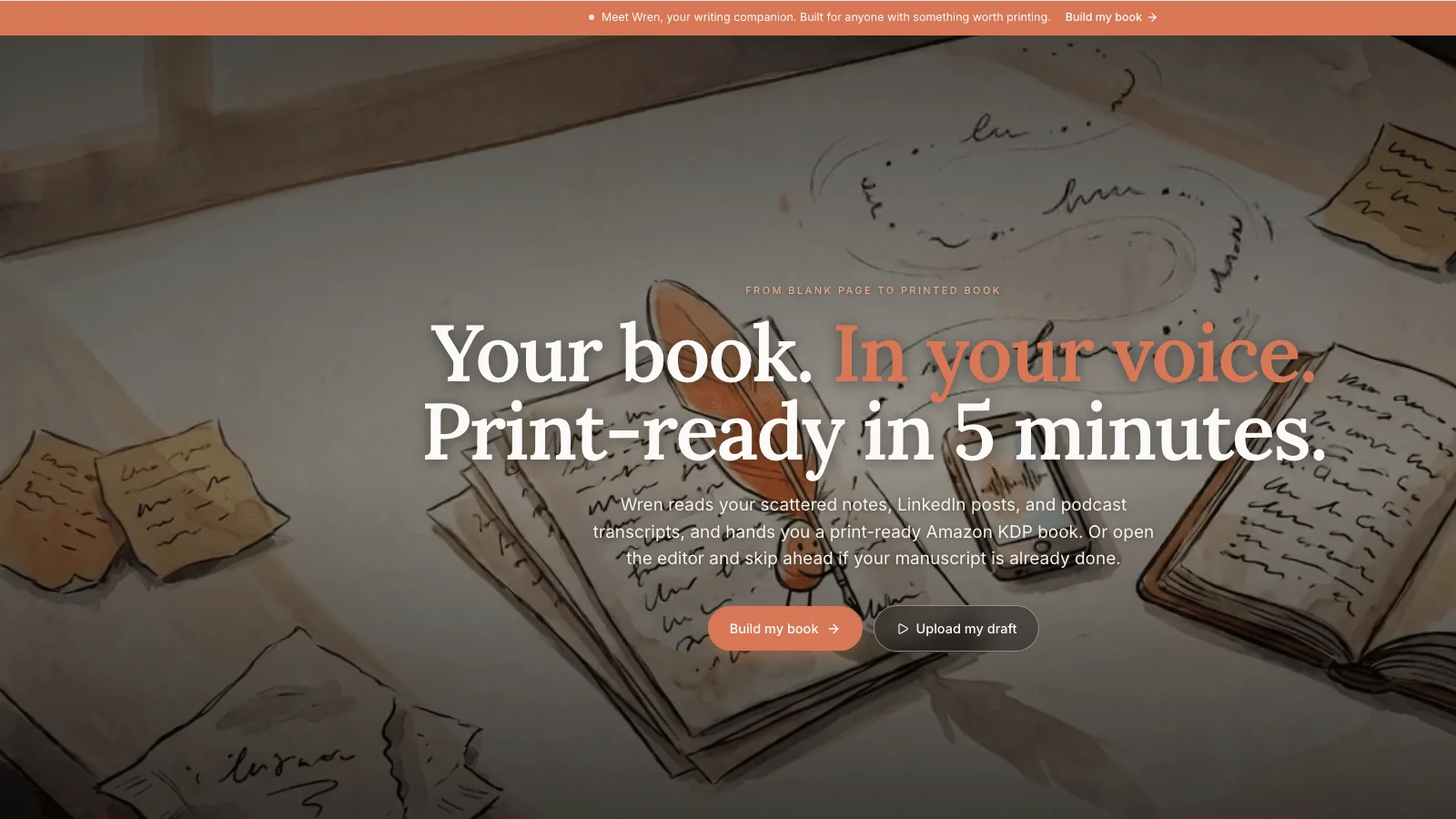
The objection has always been time. That is the gap a tool closes. Built&Written takes the content you already have (LinkedIn posts, notes, podcast transcripts, voice memos) and assembles it into a print-ready, KDP-ready book through a guided process. You paste or upload your material, the AI proposes a chapter structure you can edit, and the platform handles KDP-compliant interior formatting, spine math, and PDF and ePub export.
The piece that matters most for an authority book is Voice DNA. You feed it a few thousand words of your own writing, and it preserves your voice across the manuscript instead of producing the flat, generic prose that makes AI books all read the same. For a coach whose entire value is their distinct point of view, that is the difference between a book that sounds like you and a book that sounds like nobody.
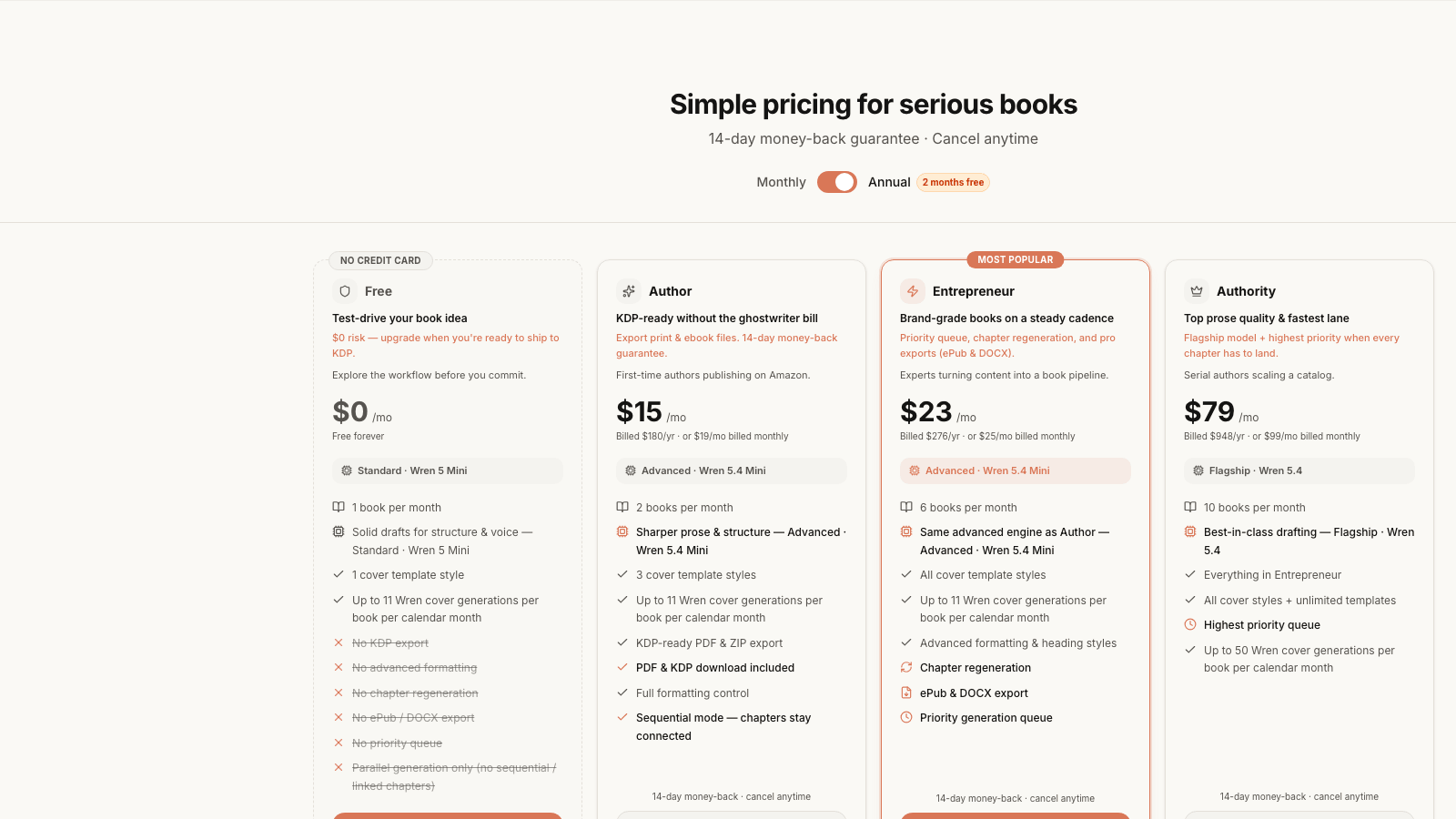
Built&Written costs from $19 per month. Compare that to a Spines package that runs from about $4,450 to nearly $10,000, plus 30% of royalties forever. The tool gives you the convenience that Spines sells, without surrendering the ownership.
This is not a knock on Spines as a company. The convenience is genuine, and for one specific author it can be the right call. We will name that exception in the verdict. But for the entrepreneur using a book to build authority and pull in clients, owning the asset wins.
If you want the full tool landscape before deciding, our tested roundup of the best AI book writing tools for coaches scores the options side by side.
Why ownership pays for itself on the first client
The reason the cost gap is not even close has nothing to do with book sales. It has to do with what the book does for the rest of your business.
A coach or consultant does not get rich on royalties. According to the International Coaching Federation, coaching is a relationship-driven, trust-led business, and that is exactly what a book builds. A prospect who reads your book arrives at the discovery call already convinced you know the subject. The book did the qualifying and the persuading before you said a word. That is why a book can turn a $3,000 cold-outreach client into a $30,000 inbound retainer: it changes who shows up and what they already believe about you.
Now put that next to the publishing decision. If one book brings in a single $30,000 retainer over its life, the difference between spending $200 to self-publish and $5,000-plus to go through a service is a rounding error against the return. The number that is not a rounding error is the 30% royalty cut and the loss of control, because those touch the asset you are using to generate those retainers for years. You want to be able to update the book, re-title it, run a free promotion to seed reviews, or hand out a thousand copies at a conference without a third party in the loop. Ownership is what makes the book a flexible marketing asset instead of a fixed product you bought once.
That is the entrepreneur's frame the whole comparison should run through. The book is not the product. The clients are. Own the asset that brings them in.
How does Spines compare to self-publishing on cost, royalties, and control?
This is where the Author Equity Test does its work. The Author Equity Test scores any publishing path across five factors that determine how much of your book's value you actually keep: upfront cost, royalty ownership, rights control, speed to shelf, and authority signal.
Run Spines and self-publishing through all five.
| Factor | Spines | Self-publishing (KDP + Built&Written) |
|---|---|---|
| Upfront cost | About $4,450 to $9,820 per book (scales with length and tier) | $0 to KDP, from $19/month for assembly tooling |
| Royalty ownership | Spines keeps 30% of net, for the life of distribution | You keep 100% of what Amazon pays |
| Rights control | Distributed through Spines; you manage closely to retain control | You hold all rights, set price, change anything anytime |
| Speed to shelf | 2 to 4 weeks (claimed) | Days to weeks, depending on your pace |
| Authority signal | AI-assisted, human PM oversight on higher tiers | Your voice, your name, your imprint |
Upfront cost: the gap is wide
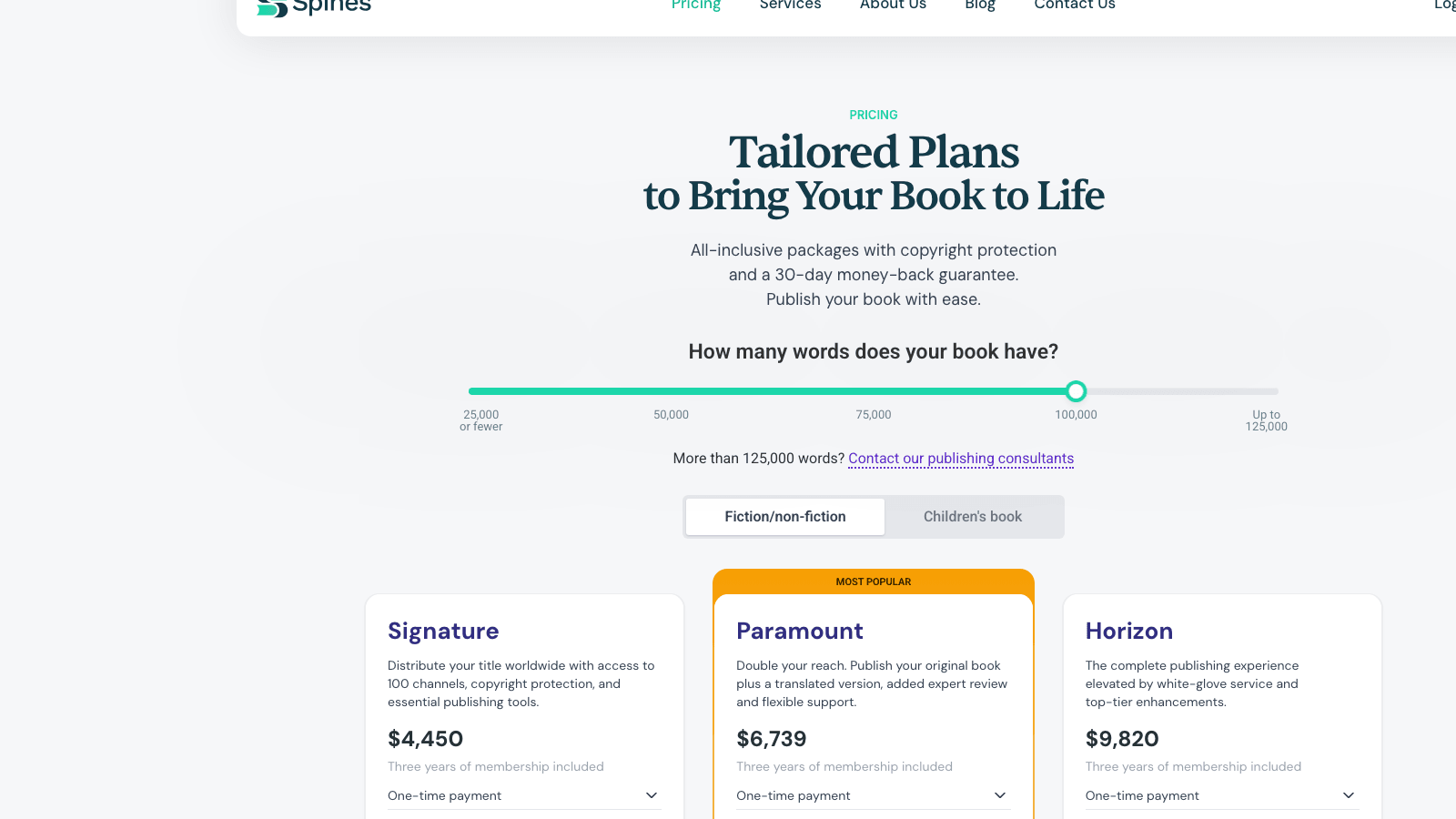
Spines prices by manuscript length and tier. The live Spines pricing page shows that a 100,000-word book carries three tiers: Signature at $4,450 (worldwide distribution across 100-plus channels, copyright protection, and core publishing tools), Paramount at $6,739 (adds a translated edition, expert review, and flexible support), and Horizon at $9,820 (white-glove service and top-tier add-ons). The entry-level Essential tier that a review by selfpublishing.com once listed around $1,498 no longer appears on Spines' own pricing page, which leaves Signature as the cheapest full nonfiction package Spines sells. Either way, the entry point is well over four thousand dollars and the top end approaches ten thousand.
Self-publishing has no equivalent line item. Amazon KDP is free to publish. Your only required spend is whatever you choose for tooling and optional help. A $19-a-month assembly tool plus, say, a $100 cover from a freelancer if you want a human touch, and you are under $200 for a result that competes with the Spines Signature tier on output.
Royalty ownership: the cost that never stops
The upfront fee is the number people see. The 30% royalty cut is the number that matters more over time.
Say your book sells modestly, as most authority books do: a few hundred copies a year, mostly to prospects and event attendees. The royalties are small in absolute terms. But Spines takes 30% of them, indefinitely, while you handle all the marketing that drives those sales. You are paying a platform a recurring share of revenue for a job (distribution) that Amazon already does for free when you publish directly.
Self-publishing keeps the full royalty in your pocket. If you want to understand exactly how the payout works, we ran the real numbers in how book royalties work on Amazon KDP. The short version: Amazon takes its cut, and the rest is yours, with no second hand reaching in.
Here is the math made concrete. Suppose your authority book sells 300 copies a year, a realistic number for a coach who hands it to prospects and sells a few at events. At a $4 average royalty, that is $1,200 a year in royalties. Spines takes 30%, or $360 a year, for as long as the book stays on its platform. Over five years that is $1,800 in royalties handed over, on top of the upfront package fee, for distribution Amazon performs for free when you publish directly. Add the entry Signature package (now $4,450) and the five-year cost of going through Spines on that single modest-selling book lands above $6,000. The self-published version of the same book costs from $19 a month for the assembly tool during production, then nothing, and keeps the full $6,000 in royalties.
That gap is the whole argument. The upfront fee is visible and the royalty cut is quiet, and the quiet number is the one that compounds against you.
Rights and control: read the fine print
When your book is distributed through a third party, your control depends on the terms. As of August 2026, Spines holds a genuine 4.6 out of 5 rating on Trustpilot across 923 reviews, and it replies to about 80% of its negative reviews. Reviewers consistently praise the dedicated account manager; the recurring complaints are slower communication and long production waits, with one reviewer citing a nine-week wait just for manuscript analysis. The selfpublishing.com review noted one author who struggled to get a refund under the money-back guarantee, and another who said the "done-for-you" service still required constant communication.
That is the risk of any service model: your outcome depends on someone else's responsiveness. Self-publishing puts the control entirely with you. You can change your cover this afternoon, drop your price for a launch, or pull the book and republish it elsewhere. Nobody's queue is between you and your own book.
Speed to shelf: closer than it looks
Spines markets a 2-to-4-week turnaround, cutting what it frames as an 18-month traditional timeline down to under three weeks. That speed is real and it is the strongest part of the pitch.
But self-publishing is not slow anymore. The old timeline assumed you were writing from scratch and formatting by hand. If your content already exists, assembling and formatting a draft with a tool like Built&Written takes a single guided session, and KDP review typically clears a title within 72 hours. The speed gap that justified a service fee has mostly closed.
Authority signal: whose book is it
This is the factor coaches underrate. A book is an authority asset, which means it has to sound like the authority. A service that runs your manuscript through generic AI editing can flatten the exact voice that makes you worth hiring. We wrote about why that matters in voice matching AI writing that sounds like you. Owning the process means owning the voice.
Think about what a prospect actually does with your book. They read a chapter or two, and in those pages they decide whether you sound like someone worth $30,000 of their attention. Your voice is the proof. If the book reads like every other AI-assembled nonfiction title on Amazon, the proof is gone, and no amount of clean formatting buys it back. This is why a voice-preserving approach is not a nice-to-have for an authority book. It is the product. When you control the assembly, you control whether the reader hears you or hears a machine. When you hand the manuscript to a high-volume pipeline, you are trusting that pipeline to protect the one thing the book exists to demonstrate.
What does the publishing world think about AI publishers like Spines?
This matters for an entrepreneur because your book carries your name, and the company behind it carries a reputation. The reaction to Spines from inside publishing has been sharp, and the reasons are worth understanding before you attach your name to the model.
In late 2024, Spines announced it planned to publish up to 8,000 books in 2025 using AI, with packages priced (at the time) between $1,200 and $5,000. The announcement drew immediate criticism from authors and publishers. The Week covered it as part of a broader story about the rise of AI book publishers and the questions they raise.
Anna Ganley, CEO of the UK's Society of Authors, urged writers to be cautious of contracts that require them to pay for publication. She said the model is "very unlikely to deliver on what an author is hoping they might achieve," and that reliance on AI systems raises "concerns about the lack of originality and quality of the service being offered." The independent publisher Canongate condemned the approach as automating book production "with the least possible attention, care or craft." Critics across the industry described the volume-publishing model as closer to a vanity press than a publisher.
You do not have to agree with every word of that criticism to take the useful signal from it. Two specific risks are real for an authority book.
Risk one: generic output dilutes your authority
A book that exists to build your credibility has one job: it has to sound like you and carry your actual expertise. A high-volume pipeline optimized to publish thousands of titles a year is structurally pointed the other way. The concern Ganley named, lack of originality and quality, is exactly the failure mode that ruins an authority book. A prospect who reads three flat, voiceless chapters does not think "impressive author." They think "this is AI filler," and the credibility you paid for evaporates.
This is the difference between AI that replaces your voice and AI that preserves it. A volume publisher runs your manuscript through a generic pipeline. A voice-preserving assembly tool conditions on your own writing so the output keeps your cadence. We made the full case in voice matching AI writing that sounds like you, and it is the single most important thing to protect in a coaching or founder book.
Risk two: pay-to-publish is a model to enter with eyes open
Ganley's caution about paying for publication is not a claim that every paid service is a scam. It is a reminder that when you pay upfront and a third party also takes a cut of the back end, the incentives are not fully aligned with your book's success. The service gets paid whether your book sells one copy or a thousand.
Self-publishing flips that. Nobody gets paid from your book except you and Amazon's flat cut. The tooling you use (an assembly platform, a freelance cover designer) is paid once or on a flat subscription, with no claim on your royalties. The alignment is clean. This is the same structural point we drew out comparing the high-end service route in our Scribe Media review: the more a publishing model depends on extracting from authors, the more carefully an entrepreneur should read the terms.
None of this means Spines cannot produce a finished book. It can. The point is narrower and more useful: the criticism from the publishing world maps almost exactly onto the two things an authority book cannot afford to get wrong, voice and ownership. Both are things self-publishing lets you keep.
What's the best workflow to self-publish an authority book without a service like Spines?
The reason entrepreneurs reach for Spines is the workflow feels intimidating. It is not, once you break it into stages. Here is the path that competes with a done-for-you service while keeping every dollar and right with you.
Stage 1: Gather the content you already have
You are not writing a book from a blank page. You have years of LinkedIn posts, client notes, talk transcripts, and voice memos. Pull them into one place. This is the raw material, and most coaches already have far more than a book needs.
Stage 2: Assemble and structure
Paste or upload that material into Built&Written. The AI proposes a chapter outline based on your content, which you then edit until the structure matches the argument you want to make. This is the step that used to take months of staring at an outline. It now takes a session.
Stage 3: Preserve your voice
Feed the Voice DNA feature a few thousand words of your characteristic writing. Every generated and assembled chapter then carries your cadence instead of a default AI tone. For an authority book, skip this and you have wasted the whole exercise.
Stage 4: Format for KDP
The platform applies KDP-compliant interior formatting: trim size, margins, gutters that scale with page count, running headers, and chapter openers. Then it exports a print-ready PDF and an ePub for Kindle. This is the part Spines charges hundreds of dollars to handle. The tool does it as part of the $19-a-month plan.
Stage 5: Design a cover
Built&Written's integrated cover designer generates front, back, and spine as a single cover PDF with the spine width calculated from your page count and paper type. If you want a human designer instead, a freelancer on a marketplace typically charges under $100 for a clean nonfiction cover. Either way you are far below a Spines package.
Stage 6: Publish on KDP yourself
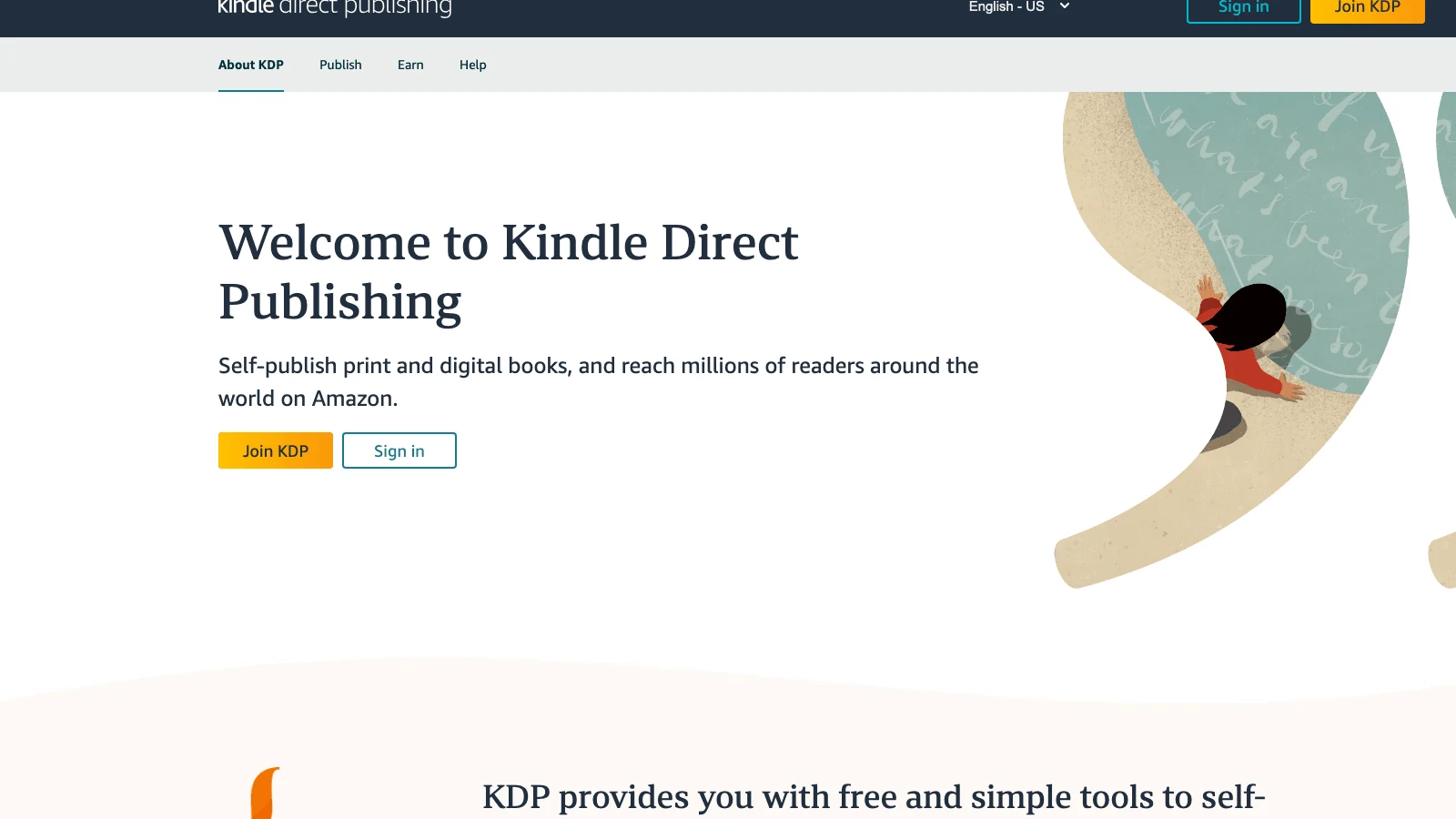
You upload the manuscript PDF and cover PDF to your own Amazon KDP account, set your price, and submit. KDP review usually clears within 72 hours. Built&Written's KDP Launch Co-pilot generates the listing copy (title, subtitle, description, keywords, categories) so the Amazon page is not the bottleneck. For a full walkthrough, see how to self-publish a book as an entrepreneur in 2026.
That is six stages, and none of them require you to learn typesetting or stare at a blank document. It is the convenience Spines sells, structured so you keep the ownership.
Will Amazon KDP reject an AI-assisted book in 2026?
This question stops a lot of entrepreneurs, and it cuts both ways: Spines uses AI heavily, and so does the self-publishing workflow above. So it is worth answering directly.
No. Amazon KDP does not reject AI-assisted books. KDP's current policy requires you to disclose AI-generated content during the publishing process, but it does not prohibit AI-assisted or AI-generated work. You can read the rules in the KDP content guidelines and the specific AI content policy.
The distinction Amazon draws is between "AI-generated" (the AI created the content) and "AI-assisted" (you created it and used AI as a tool for editing or refinement). A book assembled from your own LinkedIn posts and notes, with your voice preserved, is your content. You disclose what applies and you publish.
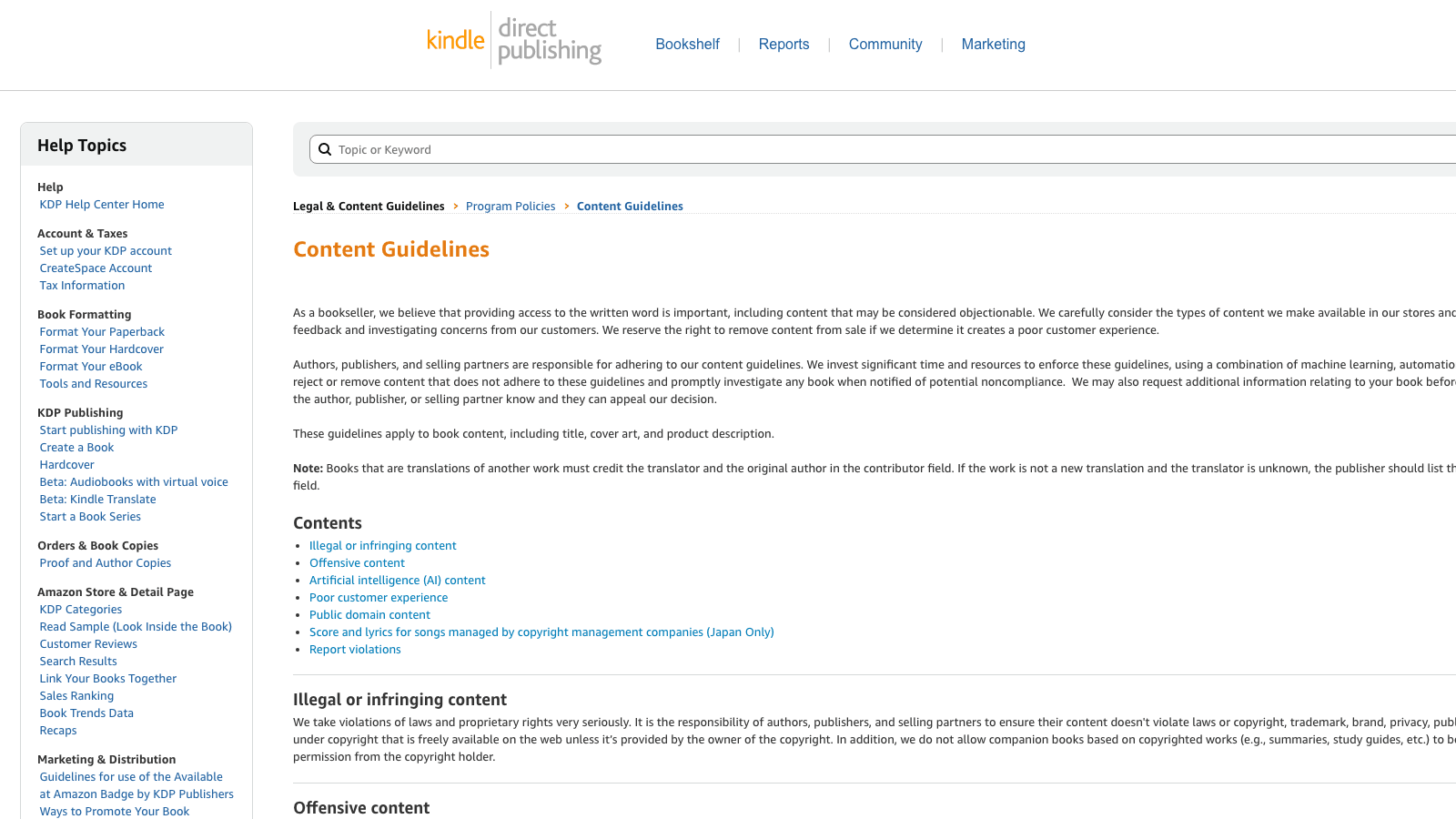
What Amazon does enforce is quality and originality. Low-effort, duplicated, or spammy content gets removed regardless of how it was made. That is another argument for owning the process: a book that genuinely carries your expertise and your voice is exactly the kind of original content KDP wants, and exactly the kind a generic done-for-you pipeline can miss. For the full ground rules on the platform, our no-fluff guide to Amazon KDP covers what experts need to know.
From manuscript to shelf: an entrepreneur's self-publishing checklist
Use this as the decision and execution checklist before you spend a dollar on any service.
- Confirm the book's job. Is it a lead engine, a credibility piece, or a revenue product? For 90% of coaches and founders, it is the first two, which means ownership beats convenience.
- Inventory your existing content. Count your LinkedIn posts, talks, and notes. If you have more than a few thousand words of your own thinking, you have a book's worth of raw material.
- Pick your assembly tool. A $19-a-month tool that handles structure, voice, formatting, and export removes the work that made self-publishing intimidating.
- Protect your voice. Whatever path you choose, make sure the final manuscript sounds like you, not like generic AI prose.
- Get a real cover. Use an integrated cover designer or spend under $100 on a freelancer. A weak cover undercuts the authority the book is supposed to build. See business book cover design for what taking-you-seriously looks like.
- Publish on your own KDP account. Keep the account, the rights, and the royalties in your name.
- Disclose AI use where it applies. Follow KDP's policy, publish clean, and move on.
- Compare total cost honestly. Add the Spines upfront fee plus 30% of expected lifetime royalties, and compare it to from $19 a month plus your time. Run that math before signing anything.
If your honest answer to the first item is that you want zero involvement and you have budget to spend, a service may fit. For everyone else, the checklist points to self-publishing.
The verdict: Spines or self-publishing for entrepreneurs in 2026?
Self-publishing wins for the entrepreneur using a book as an authority asset. You keep your rights, you keep 100% of your royalties, and a modern assembly tool removes the work that used to justify paying a service. The Author Equity Test scores it ahead on four of five factors, losing only a narrow speed edge that has mostly closed.
Spines is a real company with a real product, founded by Yehuda Niv (who also founded Niv Publishing in Israel) and backed by serious funding. The convenience it sells is not fake. For a comparison of services in this lane, Reedsy published a useful Reedsy vs Spines breakdown.
Here is the one exception, as promised. Spines can make sense for an author who has the budget, wants genuinely zero involvement, and treats the book as a one-time project rather than an ongoing marketing asset. If you will never touch the book again after launch, never run a price promotion, never iterate the cover, and you would rather pay $3,000 to never think about it, the recurring royalty cut matters less and the done-for-you model fits. That is a narrow profile, and it is rarely an entrepreneur building authority.
For the coach who wants their book to keep pulling in clients for years, owning the asset is the whole point. The same logic applies to the high-end ghostwriting route, which we covered in is ghostwriting worth it for entrepreneurs today and the real cost of business book ghostwriting. Convenience is worth paying for. Ownership is worth keeping.
The decision comes down to a single question you can answer honestly in about ten seconds. Will this book keep working for your business after launch day? If yes (and for an authority book the answer is almost always yes), then you want to own it, update it, and keep every dollar it earns, which points to self-publishing. If the book is a one-and-done artifact you will never touch again and you have cash you would rather not think about, a service can carry the load. Most entrepreneurs reading this are in the first group. They are building a marketing asset, not checking a box. The tooling has finally caught up to that intent: the work that once justified paying thousands is now a $19 monthly subscription and an afternoon of guided assembly. Spend the money you would have given a service on the things that actually move a book, like a strong cover and a real launch, and keep the asset in your own name.
Key takeaways
- Spines charges from about $4,450 to $9,820 upfront per book (depending on tier and manuscript length) and keeps 30% of your net royalties for as long as the book is distributed through its platform.
- Self-publishing on Amazon KDP costs nothing upfront, and you keep 100% of what Amazon pays plus full control of your rights, price, and cover.
- The Author Equity Test scores both paths on upfront cost, royalty ownership, rights control, speed to shelf, and authority signal. Self-publishing wins four of five.
- The historic reason to pay a service was the work. A $19-a-month assembly tool like Built&Written, with Voice DNA to preserve your voice, removes most of it.
- Amazon KDP accepts AI-assisted books with disclosure. AI is not the deciding factor; ownership is.
- Spines fits a narrow profile: budget available, zero desired involvement, book treated as a one-time project. That is rarely the entrepreneur building authority.
Frequently asked questions
Is Spines a scam?
No. Spines is a funded, operating company that delivers published books. The criticism in reviews is about cost and inconsistent customer service, not fraud. The fair concern for entrepreneurs is the value of paying anywhere from about $4,450 to nearly $10,000 plus a 30% lifetime royalty cut for distribution you can get directly from Amazon for free.
How much does Spines cost compared to self-publishing?
Spines prices by tier and manuscript length. Its cheapest full nonfiction package is now the Signature tier at $4,450, and the top Horizon tier runs $9,820, plus 30% of your net royalties ongoing. Self-publishing on Amazon KDP is free to publish, and assembly tooling like Built&Written runs from $19 per month. The total-cost gap over a book's life is usually thousands of dollars.
Does Spines own my book if I publish with them?
You retain authorship, but your book is distributed through the Spines platform and Spines keeps 30% of net royalties for as long as it stays there. Self-publishing keeps distribution in your own Amazon KDP account with no third-party royalty share. Read any service agreement carefully before signing.
Can I self-publish if I am not a writer?
Yes. Most entrepreneurs already have the content (LinkedIn posts, talks, notes, transcripts), just not in book form. An assembly tool structures that material into chapters, preserves your voice, and formats it for KDP. The skill you need is having expertise worth sharing, not being a writer.
Will using AI to write my book get it rejected by Amazon?
No. Amazon KDP allows AI-assisted and AI-generated books as long as you disclose AI-generated content during publishing. It enforces quality and originality, not a ban on AI. A book built from your own material and voice is original content KDP accepts.
How long does self-publishing actually take in 2026?
If your content already exists, assembling and formatting a draft takes a single guided session, and KDP review typically clears a title within about 72 hours. The multi-week or multi-month timelines that justified paying a service assumed writing from scratch and formatting by hand.
Should a coach use Spines or self-publish?
For almost every coach, self-publish. A coaching book is a lead-generation and credibility asset, so keeping 100% of royalties and full control of voice and price matters more than offloading the work. The narrow exception is a coach with budget who wants zero involvement and treats the book as a one-time project.
What is the difference between Spines and a vanity press?
A vanity press charges authors to publish their books, usually with little quality screening, and the author bears the cost regardless of sales. Critics have placed Spines near that model because it charges upfront fees and publishes at high volume. Spines would argue its AI tooling and project management add real production value. The practical takeaway for an entrepreneur is the same either way: read the contract, understand the 30% royalty cut, and compare the total cost against self-publishing before you sign.
Does self-publishing look less professional than a service like Spines?
No, if the work is good. Amazon does not label books by how they were produced, and readers cannot tell whether you used a service or published directly. What readers notice is the cover, the interior formatting, and the writing. A clean cover, KDP-compliant formatting, and prose in your real voice read as professional regardless of path. A flat, generic book reads as low-effort no matter who produced it. Quality is the signal, not the publisher's logo.
Can I switch from Spines to self-publishing later?
Often, but it depends on the agreement you signed and how rights and distribution are handled. Moving a live book means unpublishing it, reclaiming or recreating the files, and republishing under your own account, which can interrupt sales and reviews. Starting with self-publishing avoids the switching cost entirely, since you own the account and files from day one. If you are early in the decision, that is one more reason to keep control from the start.
Sources & References
- Spines official site
- Spines pricing page
- selfpublishing.com: Complete Review of Spines Publishing Platform
- eWeek: AI Book Publishing Startup Spines Raises $22.5 Million
- Trustpilot: Spines customer reviews
- Reedsy vs Spines comparison
- Amazon KDP
- Amazon KDP Content Guidelines
- Amazon KDP AI Content Policy
- Built&Written
- International Coaching Federation
Frequently asked questions
No. Spines is a funded, operating company that delivers published books. The criticism in reviews is about cost and inconsistent customer service, not fraud. The fair concern for entrepreneurs is the value of paying anywhere from about $4,450 to nearly $10,000 plus a 30% lifetime royalty cut for distribution you can get directly from Amazon for free.
Spines prices by tier and manuscript length. Its cheapest full nonfiction package is now the Signature tier at $4,450, and the top Horizon tier runs $9,820, plus 30% of your net royalties ongoing. Self-publishing on Amazon KDP is free to publish, and assembly tooling like Built&Written runs from $19 per month. The total-cost gap over a book's life is usually thousands of dollars.
You retain authorship, but your book is distributed through the Spines platform and Spines keeps 30% of net royalties for as long as it stays there. Self-publishing keeps distribution in your own Amazon KDP account with no third-party royalty share. Read any service agreement carefully before signing.
Yes. Most entrepreneurs already have the content (LinkedIn posts, talks, notes, transcripts), just not in book form. An assembly tool structures that material into chapters, preserves your voice, and formats it for KDP. The skill you need is having expertise worth sharing, not being a writer.
No. Amazon KDP allows AI-assisted and AI-generated books as long as you disclose AI-generated content during publishing. It enforces quality and originality, not a ban on AI. A book built from your own material and voice is original content KDP accepts.
If your content already exists, assembling and formatting a draft takes a single guided session, and KDP review typically clears a title within about 72 hours. The multi-week or multi-month timelines that justified paying a service assumed writing from scratch and formatting by hand.
For almost every coach, self-publish. A coaching book is a lead-generation and credibility asset, so keeping 100% of royalties and full control of voice and price matters more than offloading the work. The narrow exception is a coach with budget who wants zero involvement and treats the book as a one-time project.
A vanity press charges authors to publish their books, usually with little quality screening, and the author bears the cost regardless of sales. Critics have placed Spines near that model because it charges upfront fees and publishes at high volume. Spines would argue its AI tooling and project management add real production value. The practical takeaway for an entrepreneur is the same either way: read the contract, understand the 30% royalty cut, and compare the total cost against self-publishing before you sign.
No, if the work is good. Amazon does not label books by how they were produced, and readers cannot tell whether you used a service or published directly. What readers notice is the cover, the interior formatting, and the writing. A clean cover, KDP-compliant formatting, and prose in your real voice read as professional regardless of path.
Often, but it depends on the agreement you signed and how rights and distribution are handled. Moving a live book means unpublishing it, reclaiming or recreating the files, and republishing under your own account, which can interrupt sales and reviews. Starting with self-publishing avoids the switching cost entirely, since you own the account and files from day one.
Sources & References
- Spines official site
- Spines pricing page
- selfpublishing.com: Complete Review of Spines Publishing Platform
- eWeek: AI Book Publishing Startup Spines Raises $22.5 Million
- Trustpilot: Spines customer reviews
- Reedsy vs Spines comparison
- The Week: Spines and the rise of AI book publishers
- Amazon Kindle Direct Publishing
- Amazon KDP Content Guidelines
- Amazon KDP AI Content Policy
- Built&Written
- International Coaching Federation
About the author

Mykhailo Druz
More in comparison
Ready to write your book?
Turn your expertise into a professional book with Built&Written.