


5 Reasons People Stop Reading Your Book (And How to Fix Them)
A business book nobody finishes doesn't convert. It doesn't turn readers into leads, investors, or referrals, the entire reason you're writing one. Below are the five reasons readers put a business book down, and exactly how to fix each one before you publish.
People stop reading your business book in five predictable places: an opening that asks for trust before earning it, chapters that don't build toward one argument, a voice that sounds like every other business book, jargon with no concrete proof, and chapters that end with no clear takeaway. Two are visible on the page. The outline problems are the ones authors catch too late.
- 52% of adults didn't finish a single book last year, but only 23% never opened one. Most abandoned books were started, not ignored.
- Even bestsellers bleed readers early: Lean In has a Hawking Index of just 12.3%, meaning most readers stopped around the one-eighth mark.
- The five problems below split into on-page issues (weak opening, jargon, no payoff) and outline issues (no throughline, borrowed voice), and the outline issues are the ones authors catch too late.
- Wren fixes all five before a single chapter drafts: trained voice, locked outline, proof-backed claims.
1. The opening doesn't earn the next page
Readers decide whether to keep reading in the first few pages, not the first few chapters. Open with a credentials list, an industry overview, or "in this book you will learn," and you're asking for trust before you've earned it.
Even bestsellers lose readers here. Piketty's Capital in the Twenty-First Century has a Hawking Index of just 2.4%; Kahneman's Thinking, Fast and Slow sits at 6.8%. Both books are packed with substance. Both open too slowly to keep readers past the first chapter.
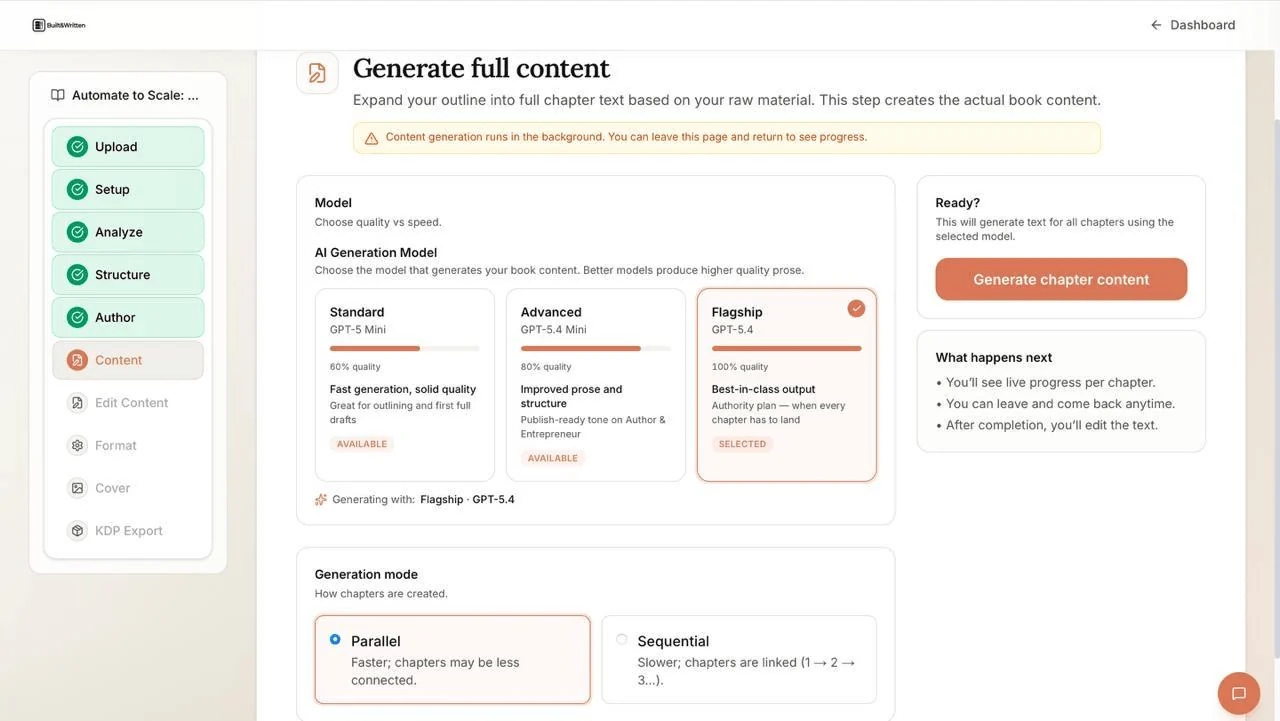
It analyzes top-performing hooks in your niche and generates multiple dynamic, high-stakes opening options built from your own case studies. No blank page, no generic "in this book you'll learn."
2. The chapters don't add up to one argument
A business book isn't a container for everything you know. It's one argument, built chapter by chapter. A table of contents that reads like a list of related topics instead of a sequence is the tell. Readers who lose the thread by chapter four aren't confused by your writing; they're confused about why chapter four exists.
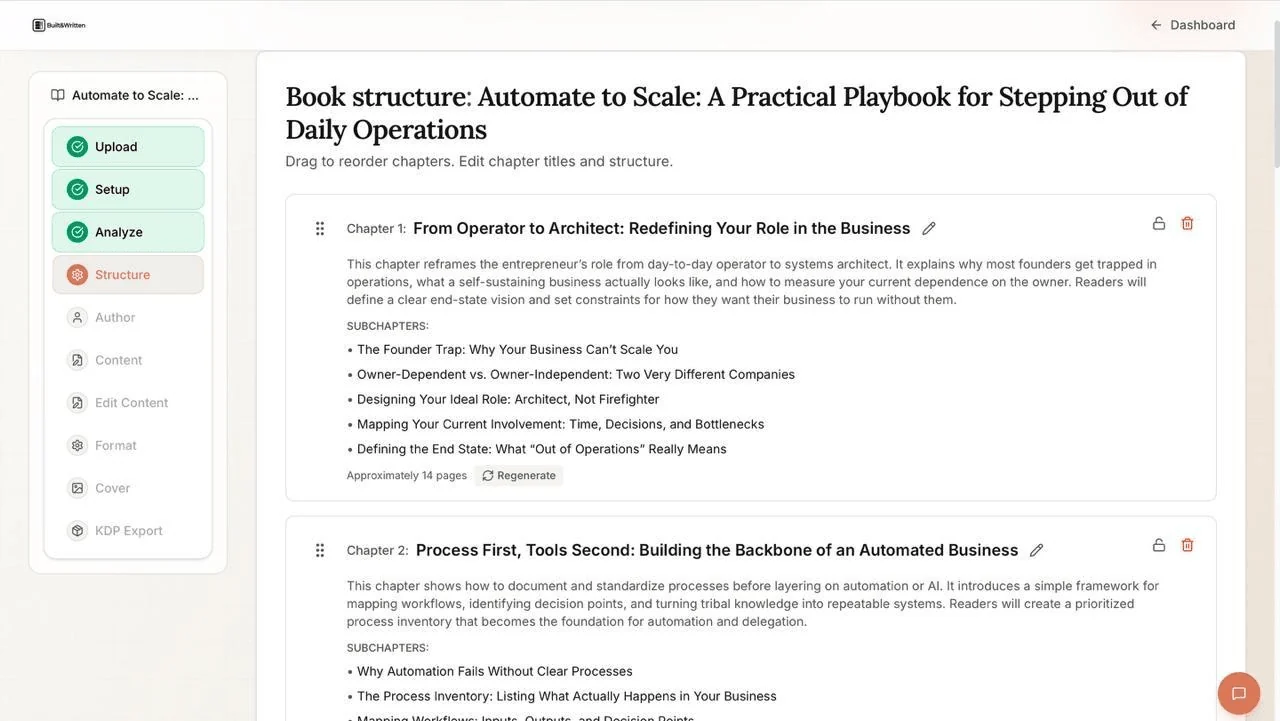
You don't have to guess the architecture. Wren locks in your core claim first, then structures a bulletproof outline before a single chapter gets drafted, so every chapter builds on the last instead of just sitting next to it. Learn more in our guide: Google Docs Book Outline Template for Coaches.
3. It reads like every other business book
Business readers have read a lot of business books. The ones that march through a framework, a case study, three principles, and a call to action, in that order, blend together. A book that sounds like it could've been written by anyone gets abandoned by everyone.
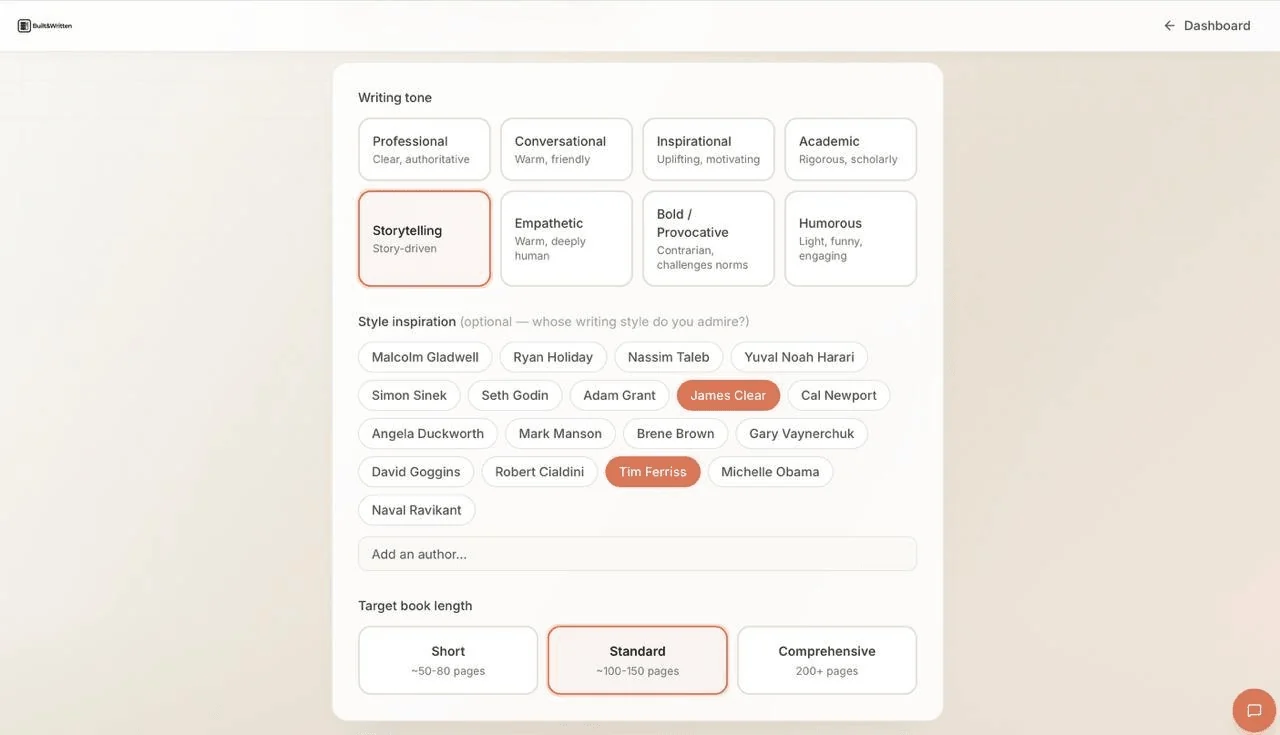
Generic AI tools spit out average, robotic text. Wren works differently: it trains directly on your personal notes, LinkedIn posts, or call records, capturing your authentic tone so the final draft sounds exactly like you, not like a chatbot's best guess at a business book. Discover the tech behind it: How AI Helps Entrepreneurs Write Books Without Losing Their Voice.
4. Jargon and abstraction crowd out proof
"Leverage synergies to optimize your value proposition" tells a reader nothing they can picture. Abstract claims with no example underneath read as padding. A reader who feels talked at, instead of shown something real, stops trusting the rest of the book.
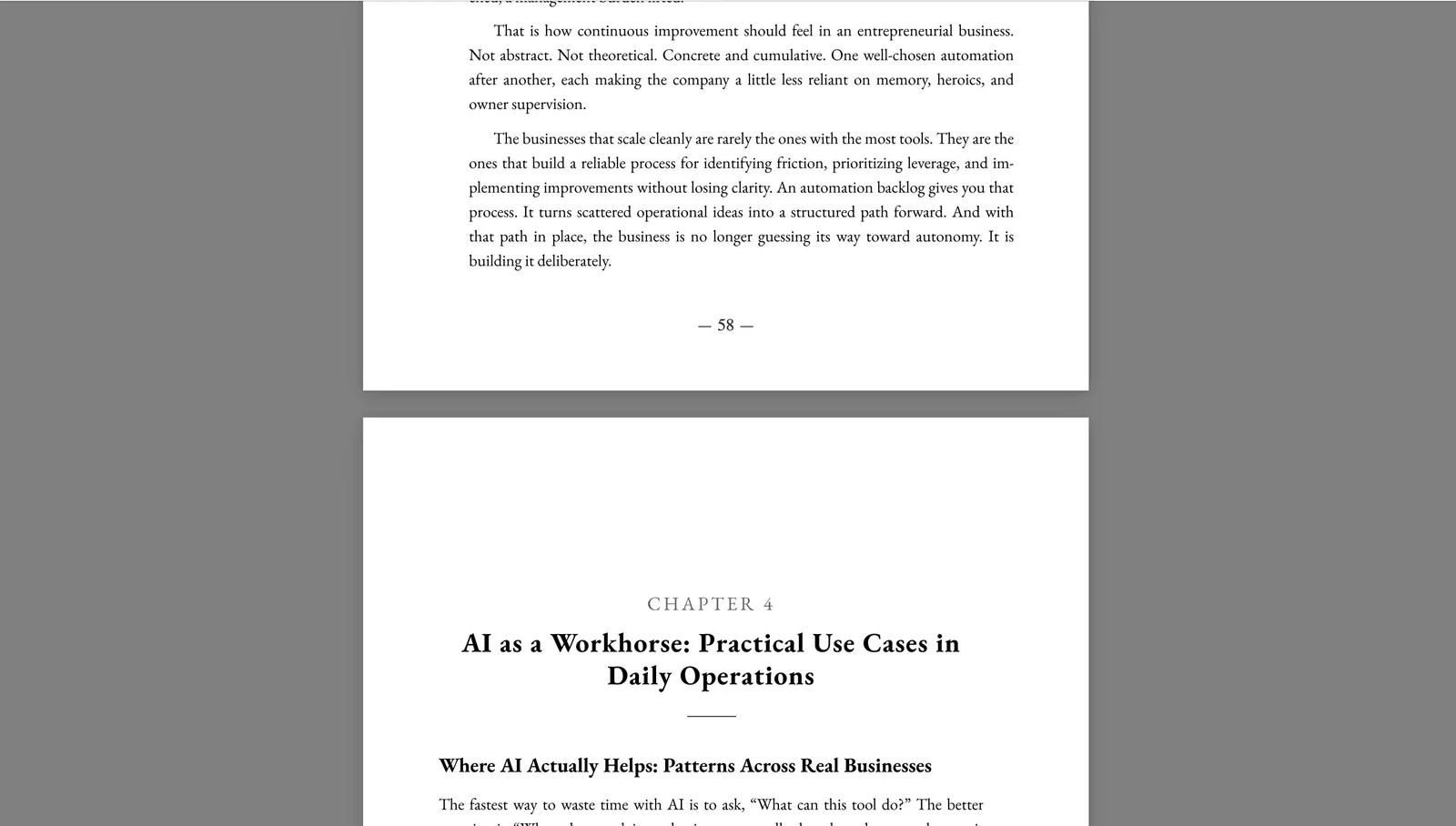
Wren flags abstract claims your source material doesn't back up and prompts you for the specific client, number, or story to attach to it, so every chapter runs on proof pulled from your own experience, not filler. Read more: How to Turn Your Expertise Into a Book Without a Ghostwriter.
5. There's no clear "so what"
Fiction readers keep going to find out what happens. Business readers keep going to find out what to do. A chapter with no clear takeaway leaves them wondering if the next one is worth their time either.
Wren closes every chapter with a clear takeaway built from your own material, the one thing a reader should do differently, so no chapter ends on information without a next step.
The five reasons at a glance
| Reason | What it looks like | How Wren fixes it |
|---|---|---|
| Weak opening | Credentials or overview before any stakes | Generates high-stakes openings from your own case studies |
| No throughline | Chapters organized by topic, not argument | Locks one core claim into the outline before drafting |
| Generic voice | Reads like it could be anyone's book | Trains on your notes and posts to match your real voice |
| Jargon over proof | Abstract claims with no concrete example | Flags claims and prompts for a real example to back them |
| No "so what" | Chapter ends without a next step | Closes every chapter with a concrete takeaway |
Frequently asked questions
Readers decide whether to continue in the first few pages, not the first few chapters, so a slow opening loses them before the argument starts. Even substantive bestsellers show it: Piketty's Capital in the Twenty-First Century has a Hawking Index of just 2.4% and Kahneman's Thinking, Fast and Slow sits at 6.8%, meaning most readers stopped near the beginning.
The Hawking Index is an informal measure of how far into a book readers actually get, estimated from where a book's most-highlighted passages fall. A low percentage means readers quit early. Lean In scores 12.3%, Thinking, Fast and Slow 6.8%, and Capital in the Twenty-First Century 2.4%, so even famous books lose most readers well before the end.
Open with stakes, not credentials. A list of your qualifications, an industry overview, or an "in this book you will learn" preview asks for trust before you have earned it. Lead with a concrete case study or a real problem the reader recognizes, so the first page gives them a reason to turn to the second.
Most business books march through the same sequence: a framework, a case study, three principles, and a call to action. A book built that way blends into every other one, and a book that could have been written by anyone gets abandoned by everyone. Writing in your own documented voice, drawn from your notes and posts, is what makes it distinct.
Treat the book as a single argument built chapter by chapter, not a container for everything you know. Lock your core claim first, then sequence the outline so each chapter builds on the last instead of sitting beside it. A table of contents that reads like a list of related topics is the sign the throughline is missing.
One clear takeaway: the single thing the reader should do differently. Business readers keep going to find out what to do, so a chapter that ends on information with no next step leaves them wondering whether the next chapter is worth their time. Closing every chapter with a concrete action keeps them moving forward.
Sources & References
About the author

Khrystyna Balushka
More in pain-point
Ready to write your book?
Turn your expertise into a professional book with Built&Written.