


6 Signs Your Writing Sounds Like AI (And How to Fix Each One)
- 52% of readers disengage the moment they suspect a piece of writing is AI-generated, even after rating the same text highly moments earlier. (Bynder)
- Only 13% of consumers say they fully trust AI-generated brand content, despite 60% using AI tools weekly. (Klaviyo)
- AI leans on the same ~50 words and phrases, including "delve," "moreover," "leverage," and "tapestry," at rates 50 to 269 times higher than human writers. (GPTZero, 3.3M documents)
- Some signs are easy to spot, like word choice. Others are structural, like sentence rhythm and hedging, and those are the ones writers miss because each sentence reads fine on its own.
- Wren checks a draft for all six before you ever see the page.
A business book, LinkedIn post, or newsletter that reads like a template does not just fail to impress. It loses the reader's trust. The 52% number above is the proof: people disengage the moment they suspect they are not reading human writing. The six signs below explain why, and how to edit each one out before anyone else reads it.
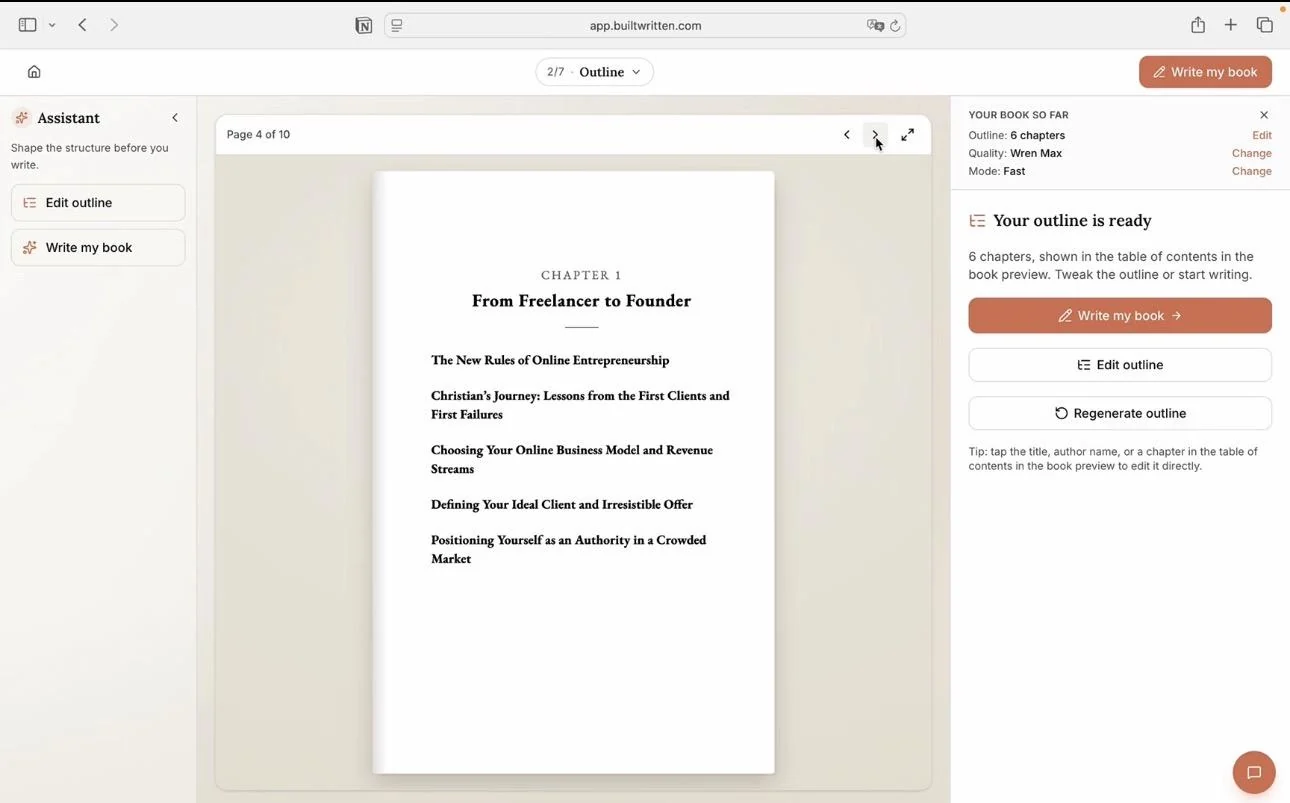
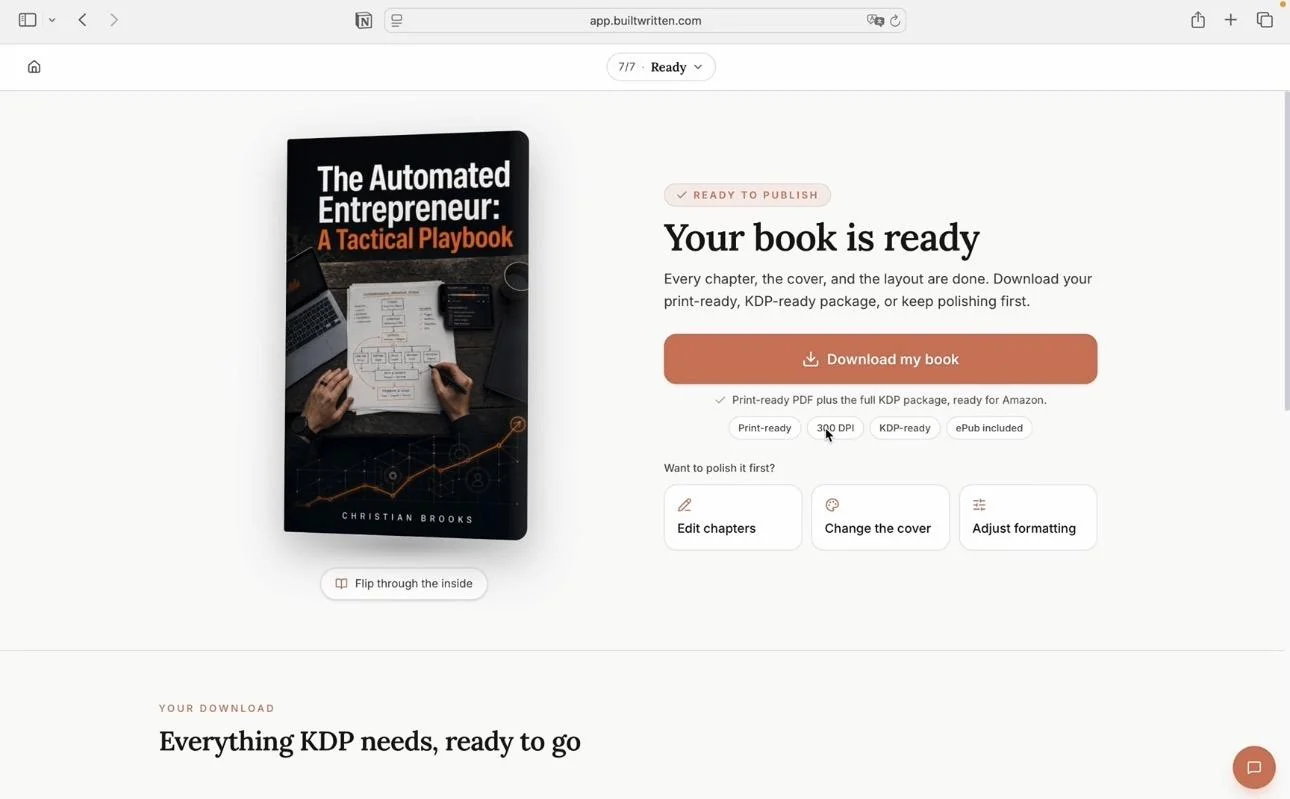
Wren is an AI book-writing platform built for founders and coaches who want a finished business book without a six-month draft grind. It generates chapters from your notes, calls, and outline, then checks every chapter against the same six signs covered below: sentence rhythm, word choice, hedging, proof, structure, and voice. What follows is exactly what it looks for.
1. Every sentence runs the same length
Read an AI-generated paragraph and most sentences fall between 15 and 25 words, with almost no exceptions. Human writing swings between short, punchy sentences and longer ones in the same paragraph, one of the quality gaps we break down in AI Writing vs Human Writing Quality. Wren checks this pattern, known as sentence rhythm, across every paragraph it generates.
Wren flags any paragraph where sentence length stays flat and rewrites it with a mix of short and long sentences before the chapter is marked done.
2. The vocabulary sounds like a corporate memo
Words like leverage, delve, moreover, robust, and tapestry rarely come up in real conversation, but AI reaches for them constantly. One analysis of 15 million research abstracts found that use of the word "delve" jumped 654% in the years after ChatGPT's release. Wren checks generated drafts against this list and swaps the overused word for the one you would actually say. That keeps a founder's own voice intact instead of the generic tone we go deeper on in How AI Helps Entrepreneurs Write Books Without Losing Their Voice.
Wren catches AI-favored vocabulary automatically and replaces it with plainer alternatives, so a reader never hits a word that gives the writing away.
3. Every claim gets hedged into meaninglessness
"It can be argued that," "there are pros and cons to both approaches," and "many experts believe" let AI avoid taking a position. The result sounds balanced and says almost nothing. A reader who wanted your actual opinion gets a summary of everyone else's instead.
Wren flags hedge phrases, prompts you for the position you would actually defend, and rewrites the sentence around that stance instead of the qualifier.
4. Claims float without a real example attached
"Many clients have seen strong results" tells a reader nothing they can picture. A real number, name, or story is what makes a claim land, the same proof-check we explain in Can You Use Client Stories in Your Coaching Book?
Wren flags any claim your source material does not back up and prompts you for the specific client, number, or story behind it. A chapter does not ship without one.
5. Every paragraph follows the same shape
Topic sentence, three supporting points, tidy conclusion, every paragraph, every time, reads as a template. Real writing wanders, circles back, and varies pace from one paragraph to the next.
Wren checks paragraph structure chapter-wide, not paragraph by paragraph, and varies the shape across the chapter instead of repeating the same pattern on every page.
6. Anyone in your field could have written it
If a competitor's name could go on the piece and no one would notice, the writing has style but no voice. Voice is the specific experience and opinion only you have. It is the one sign a style check alone cannot fully solve, since it needs your own material to pull from.
Wren solves this earlier in the process than the other five. It trains on your own notes, calls, and posts before drafting starts, the approach we cover in Voice Matching AI Writing That Sounds Like You.
Vocabulary is the easiest of the six to catch. Sentence rhythm, hedging, missing proof, and paragraph structure take a closer read but share the same fix: catch the pattern, then vary it. Voice is the only one that needs your own material from the start. Wren checks all six on every chapter it generates, so most of this work happens before you open the draft.
Final thoughts
AI writing is not the problem. Publishing an AI draft without an edit pass is. The six signs above separate a chapter that builds reader trust from one that quietly loses it, and catching them takes minutes once you know what to look for.
Founders, coaches, and first-time authors already use Wren to skip that manual check. Every chapter comes from your own source material, then runs through the same six checks in this article before it reaches you. Writers who edit for these signs consistently see stronger reader engagement than those who publish an unedited first draft. Instead of spending months manually editing an AI draft, founders use Wren to get a publish-ready chapter that already sounds like their own voice.
Frequently asked questions
No. Readers rated AI-generated text as highly as human writing right up until they learned it was AI-generated. The issue is publishing a first draft without an edit pass, not using AI to write one.
There is no fixed number, but two or three signs in the same paragraph is usually the tipping point. One instance of "delve" will not sink a piece. Several stacked together read as generic even to a reader who cannot say why.
It helps with word choice, but it rarely fixes sentence rhythm or hedging, since those patterns come from how the model generates text, not the words it picks. A dedicated check catches more.
Training happens before the draft is written. This check happens after. Wren does both: it trains on your notes and posts, then runs every chapter through these six checks before you see it. See Voice Matching AI Writing That Sounds Like You for the training side.
Sources & References
About the author

Khrystyna Balushka
More in pain-point
Ready to write your book?
Turn your expertise into a professional book with Built&Written.