

Dibbly Create Review: Can It Write a Real Book in 2026?
Can Dibbly Create write a real book in 2026? Yes, with real caveats. It is a polished general-purpose AI writing and publishing platform: research, drafting, formatting, cover design, and KDP-ready export in one workspace, with a free tier and a Pro plan around $22.97 per month. For a busy entrepreneur who wants an authority book that sounds like them, built from content they already have, it falls short on three of the five checks that decide the outcome: source-first ingest, voice fidelity, and cost predictability.
Why does that outcome matter so much? In 2012, Hal Elrod self-published The Miracle Morning. No agent. No publisher. No marketing budget. The book went on to sell millions of copies across dozens of languages and built an entire business around him. The book was the asset. Everything else, the courses, the podcast, the speaking, hung off it.
Every entrepreneur reading this in 2026 has the same raw material Hal had. The expertise is real. The stories are real. The frameworks already work on clients. What is missing is the 200 pages, sitting in order, in your voice, ready to upload to Amazon.
So you do what everyone does now. You open an AI book tool and hope it writes the thing for you. Dibbly Create is one of the most polished options in that category, and the question this review answers is narrow and practical: can it actually help a busy entrepreneur produce a real book, the kind a prospect respects, or does it just generate a lot of words you then have to rescue?
Key takeaway: Dibbly Create is a capable general-purpose AI writing and publishing platform. For an entrepreneur who wants an authority book that sounds like them, built from content they already have, its blank-page guided flow, token metering, and generic AI voice add friction that a content-first tool removes.
Why most entrepreneurs stall before page one
The hard part of an entrepreneur's book was never the typing. It is the gap between knowing your material cold and seeing it laid out as a finished manuscript. You can explain your framework on a sales call without notes. You can answer any client objection in your sleep. Then you sit down to write the book and the page is blank, the structure is unclear, and the calendar is full of client work that pays this month.
That gap is why the AI book category exists. The promise is seductive: describe your idea, let the machine draft it, ship a book. Most tools deliver on the first half and quietly skip the second. They generate text. They do not produce a book a serious buyer would respect.
For an entrepreneur, that distinction is everything. Coaches, consultants, and founders do not write books to earn royalties. They write books to change how prospects see them. A book turns a $3,000 cold-outreach client into a $30,000 inbound retainer, because the prospect arrives already convinced. We have made that argument in detail in how AI helps entrepreneurs write books, and it shapes every judgment in this review. A "real book" here means a finished, formatted, KDP-ready volume that reads like you wrote it and makes someone trust you before the first call. Not a 40-page pile of AI filler.
The downside is sharper than people expect. A mediocre book does not just fail to help. It actively hurts. A prospect who picks up your book, feels the generic AI cadence, and spots the padding does not think "decent effort." They think "this is what the work is like too." The book was supposed to raise your status and it lowered it. That asymmetry is why the bar for an entrepreneur's book is so much higher than for a hobby novel. A novelist's weak first draft costs them an afternoon. Your weak book costs you the exact credibility you spent money and weeks to build. So when we test a tool, we are not asking whether it can produce a book. We are asking whether it can produce a book you would actually want a $30,000 prospect to read.
There is a second cost that does not show up in any pricing page: abandonment. The single most common outcome of an entrepreneur's book project is not a bad book. It is no book. The draft stalls at 30 percent, the tool gets confusing or expensive, the client work surges, and the file sits untouched for a year. Any honest tool review has to weigh how likely a tool is to get you to the finish line, not just how impressive the demo looks. Friction, surprise costs, and generic output are not minor annoyances. They are the specific forces that leave books unfinished, and they are exactly what the framework later in this review is built to measure.
Hold any tool to that standard and the questions change. You stop asking "can it generate words" (everything can) and start asking "does the output sound like me," "can I publish it without a second tool," and "what does this actually cost when I finish a whole book." That is the lens for the rest of this Dibbly Create review.
What Dibbly Create actually is, and who built it
Dibbly Create is an AI-powered writing and self-publishing platform built around an assistant the company calls KIP, "your AI publishing assistant." You research, outline, draft, edit, format, and design a cover inside one workspace, with KIP available at every step. Dibbly Inc. says more than 60,000 authors and publishers use it.
The company history matters more than most reviews admit. Dibbly grew out of The Urban Writers, a ghostwriting and freelance-services marketplace founded in 2018 by Marco and Natasha Moutinho, which moved into software around 2020. That heritage shows. Dibbly is still, at its core, a content-production business that also sells you software. You can hire human ghostwriters, editors, and cover designers through the same brand, and the AI tool sits alongside that marketplace rather than replacing it.
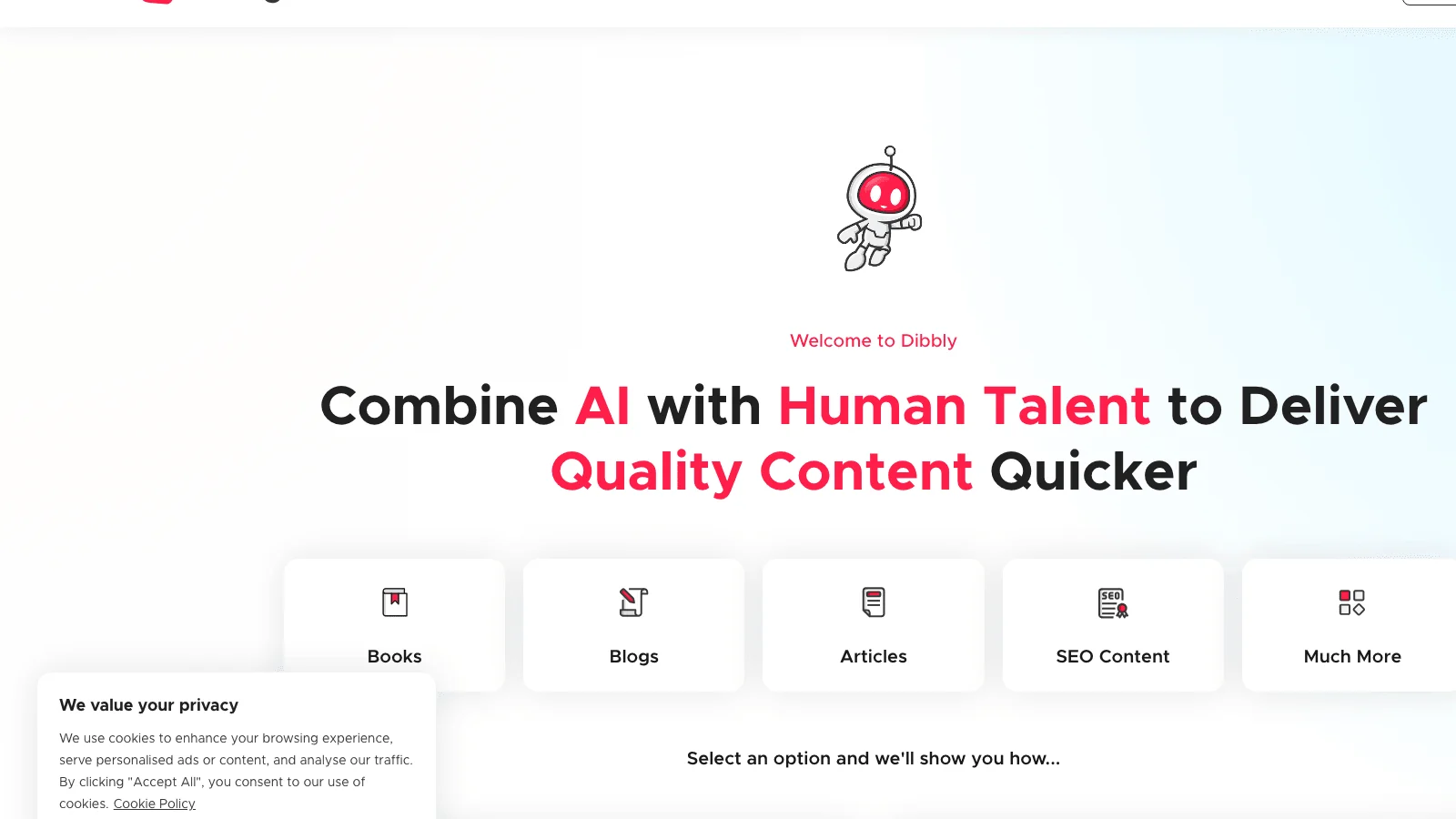
What KIP can do
Dibbly Create is feature-rich, and credit where it is due, the surface area is impressive. The tools break into a few groups.
ChatKIP is a conversational assistant for research, editing, and project questions, the familiar chat box reframed around book work. KIP Generate is a menu of specialized generators: a Content Writer, an Outline Generator, Research, a Summarizer, a Title Generator, a Description Generator, a Biographer, and an Image Generator. Inline KIP lives inside the editor and runs on a "/" command, with shortcuts to Rewrite, fix Grammar, Continue Writing, Change POV, and Simplify or Enrich a passage. There is also a Fact Checker that verifies claims against web sources, which is a genuinely useful addition for nonfiction.
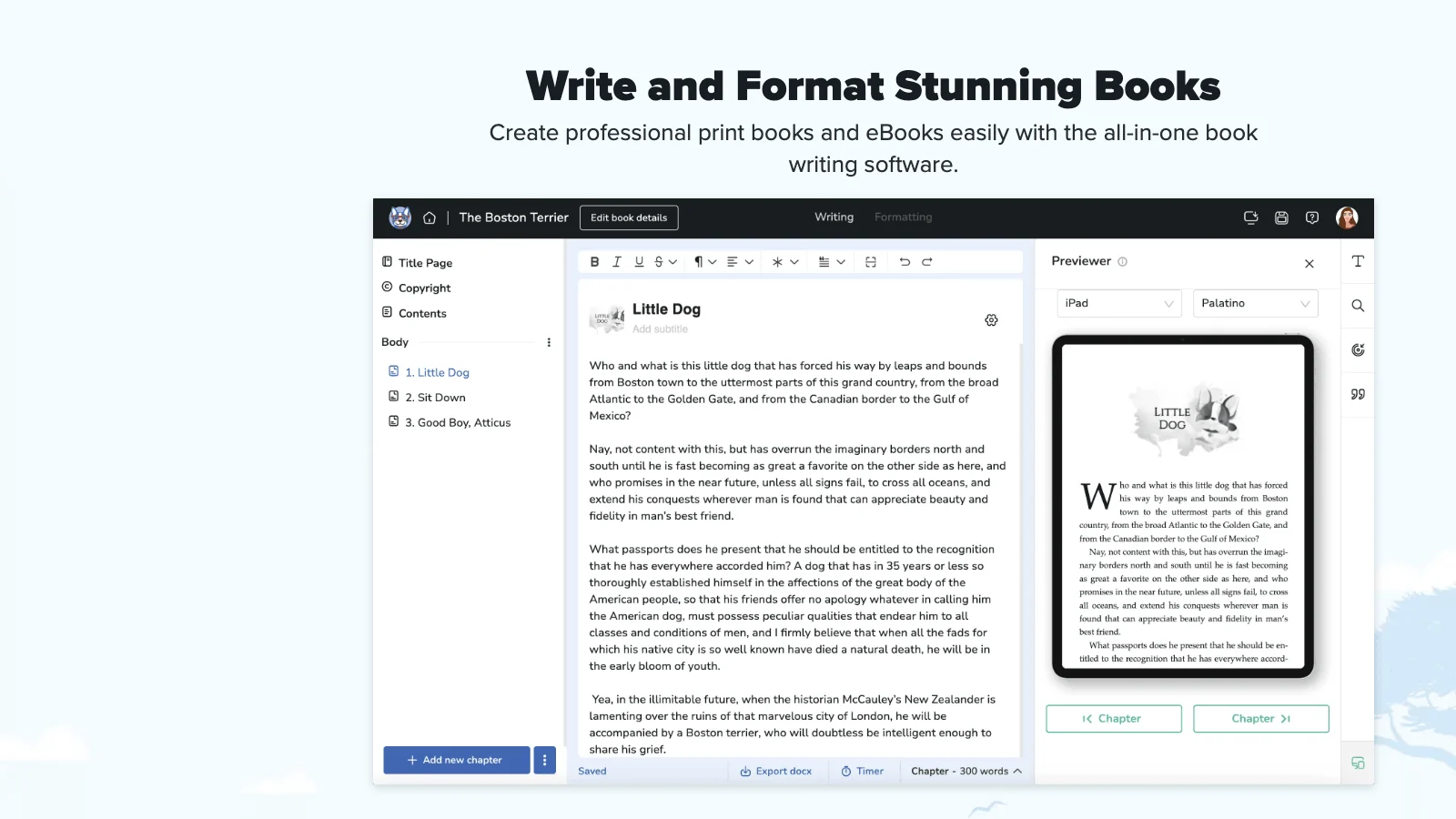
The flagship for book authors is the Guided Book Flow, a structured path that walks you from an idea to a first-draft manuscript of up to roughly 30,000 words. It is non-fiction only and gated behind the paid plan. On the production side, the Book Layout Studio handles formatting and pagination, and a Design Studio (still in beta) generates covers, marketing graphics, and interior images. Exports come out as DOCX, print-ready PDF, and ePub, and the files are meant to drop into both Amazon KDP and IngramSpark.
Worth pausing on the Fact Checker, because it is one of Dibbly's genuinely smart touches for nonfiction. AI models invent statistics and misattribute quotes constantly, and an authority book that cites a fake study is worse than no book at all. A tool that verifies claims against live web sources before they reach your manuscript is solving a real problem that most AI writers ignore. If you do draft with Dibbly, use it on every factual claim. The collaboration layer is the other standout: real-time editing, permissions, inline comments, suggestion mode, and version history are publisher-grade features that very few solo-author tools bother to build. None of that helps a single founder writing alone, but if you have a small team or an assistant, it is a real advantage.
The freelance marketplace under the hood
One thing other reviews underplay: Dibbly is not only software. Because it grew out of a ghostwriting business, you can hire humans through the same platform. Ghostwriters, editors, and cover designers are available for the parts you do not want to do yourself, and Dibbly's own materials lean on managed, "done-for-you" book bundles. That is genuinely useful if your real plan is to outsource the book and use the AI as a head start for the freelancer. It is also a tell about where Dibbly's center of gravity sits. The company makes money when content gets produced, by AI or by humans, across books, blogs, and SEO articles. That is a different business than a tool whose entire reason to exist is getting one founder's authority book finished and out the door.
Who it is built for
Read that feature list back and a pattern appears. Dibbly Create is a generalist. It serves fiction and nonfiction, books and blog posts and SEO content, solo authors and publishing teams with real-time collaboration and version history. That breadth is a strength if you run a content operation. It is a cost if you are one founder trying to ship one book, because none of the workflow is shaped around your specific job: taking expertise you already have and turning it into a credibility asset. If you want the wider field, we keep a running comparison in the best AI book writing tools for coaches and a hands-on roundup in our tested AI book writing tools for KDP.
The Real Book Test: five checks before you trust any AI book tool
Tool reviews drown in feature lists. Features are easy to list and useless for deciding. What an entrepreneur needs is a scoring rubric tied to the actual outcome, a finished book that wins clients. So here is the framework we use to evaluate every AI book tool in this cluster, including this one. Call it the Real Book Test. Five checks. A tool that fails three of them will not get you to a book you are proud to hand a prospect.
| # | Check | The question it answers | Why it decides the outcome |
|---|---|---|---|
| 1 | Source-first ingest | Does it start from content you already have, or a blank page? | Your book already half-exists in posts, talks, and notes. Re-typing it from scratch is the slowest path. |
| 2 | Voice fidelity | Does the draft sound like you, or like generic AI? | A book that does not sound like you destroys the trust it was meant to build. |
| 3 | KDP readiness | Can you go from draft to a print-ready PDF and cover in one place? | Every extra tool in the chain is another week the book does not exist. |
| 4 | Cost predictability | Is the price flat, or metered so it can run out mid-draft? | Surprise costs and hard stops kill momentum on a project that is already easy to abandon. |
| 5 | Time to a finished book | Days of prompting, or minutes to a structured draft? | A busy founder ships what is fast. Friction is what leaves books unfinished. |
The Real Book Test is deliberately biased toward the entrepreneur's reality, not the hobbyist novelist's. A fiction writer with unlimited evenings can happily prompt a tool for weeks. A consultant with a full client roster cannot. We built Built&Written around exactly these five checks, so I am not pretending this rubric is neutral. It is honest, which is more useful. Score Dibbly Create on each and you get a clear answer instead of a feeling.
Notice what the test refuses to reward: raw feature count. Most tool comparisons treat a longer feature list as a better product, which is how buyers end up paying for twenty generators they never open. The Real Book Test inverts that. A tool could have one feature and pass all five checks, or forty features and fail three, and the second tool is the worse choice for your book. Every check maps to a real failure mode that kills entrepreneur book projects: starting from scratch, sounding generic, needing a second tool to publish, running out of budget, and taking so long the project dies. Pass the five and the book gets finished and gets respected. Fail them and no amount of clever features saves you.
How Dibbly Create scores on the Real Book Test
Here is where the polish meets the job. I will take the five checks in order and stay honest about what Dibbly does well, because it does several things well.
Check 1: source-first ingest
This is the first real gap. Dibbly Create is built around generation. You sit in front of KIP and ask it to research, outline, and write. The Guided Book Flow starts from your idea and the model's output, not from a folder of your existing posts and talks. You can paste material in and ask KIP to summarize or rework it, and the Summarizer and document-upload features help. But the center of gravity is "the AI writes," not "your content gets assembled." For an entrepreneur whose book already exists in scattered form, that is backwards. The fastest path is to start from what you have written, which is the entire premise of turning LinkedIn posts and notes into a book without a ghostwriter. Dibbly can do it, but it does not lead with it. Partial pass.
Check 2: voice fidelity
This is the check Dibbly struggles with most, and it is not a small one. Independent reviewers are blunt about it. Kindlepreneur's hands-on Dibbly Create review describes the writing as feeling "robotic," with repetitive sentence structures, and notes that the AI "lacks memory across sections," so chapter four does not remember the voice or argument of chapter two. That is the core problem with general AI drafting. It produces competent, average prose that sounds like every other AI book. For a novelist, average prose is a starting point to edit. For an entrepreneur, average prose is fatal, because the entire point of the book is to sound like you.
The "lacks memory across sections" point deserves a concrete picture, because it is the most underrated flaw in AI book tools. Imagine you are a leadership coach with a signature move: you open every framework with a short, blunt story from a real client session, then name the principle. By chapter three, a memoryless model has forgotten that rhythm. One chapter opens with a definition, the next with a rhetorical question, the next with a bulleted list. Each section is fine alone. Read end to end, the book has no spine, no recognizable author behind it. A reader cannot say what makes it yours, which means it does nothing for your brand. The fix is not better editing after the fact. The fix is a tool that holds your voice and structure across the whole manuscript from the first chapter. We dig into why this matters and how to fix it in voice matching: AI writing that sounds like you. Dibbly has rewrite and "enrich" tools to polish passages, but polishing generic text is not the same as generating text in your voice from the start. Weak.
Check 3: KDP readiness
Here Dibbly earns real marks. The Book Layout Studio formats your manuscript, the Design Studio generates covers, and you export DOCX, print-ready PDF, and ePub aimed at KDP and IngramSpark. That is a genuine all-in-one promise, and most of the chain lives in one place. The caveat, again from independent testing, is that the formatting is not flawless. Reviewers report glitches, especially when uploading the exported files into KDP, and describe the layout control as serviceable rather than precise. It will not give you the typographic control of Atticus or the polish of Vellum. For a clean, simple interior it is fine. For anything particular, expect cleanup. Solid pass, with caveats.
Check 4: cost predictability
This is where the token economy bites. Dibbly Create runs on credits. Every generation, every research call, every rewrite spends tokens, and reviewers consistently flag two problems: it is easy to run out unexpectedly, and there is limited transparency on what each action costs before you spend it. The free plan gives you a fixed monthly token budget, enough to test, not enough to finish a book. So a real project pushes you to the paid plan, and even there, heavy use can drain your monthly allotment. Metered pricing on a project that is already psychologically easy to abandon is exactly the wrong incentive. Hit a token wall mid-chapter and many people simply stop.
The psychology is the real problem, more than the dollars. Metered tools quietly punish iteration. You generate a chapter, it reads robotic, and you know a rewrite would help, but the rewrite costs tokens, so you talk yourself into shipping the worse version. Multiply that across a whole manuscript and the token meter does not just cost money, it lowers the quality of every decision you make, because the cheapest move is always to settle. A flat-priced tool removes that pressure entirely. You regenerate until it is right because regenerating is free. For a book whose entire value is being good enough to impress a buyer, "regenerate until it is right" is not a luxury. It is the job. Weak for a full book.
Check 5: time to a finished book
Dibbly is faster than a blank document, no question. The Guided Book Flow gives you structure, and the generators move quickly. But "fast" here still means days of prompting, generating, reading, regenerating, and cleaning up robotic prose, then wrestling the export into KDP. That is faster than writing alone and slower than the category's best. The 30,000-word cap on the guided flow also matters: a substantial business or coaching book often runs longer, so you are stitching and extending past the guided path.
The deeper issue is that prompting is itself a skill, and it is not your skill. An entrepreneur's edge is the expertise, not the ability to coax good output from a chat box. Tools that center prompting quietly hand you a second job: learning to write prompts well enough to get usable prose. Some people enjoy that. Most founders do not, and the ones who do not produce worse books on prompt-first tools, not because their ideas are worse, but because their prompting is. A tool that starts from your existing writing sidesteps the whole skill gap, because your raw material already carries the substance and the voice. That is the difference between "fast for someone who likes AI tools" and "fast for a busy expert who just wants the book." Middle of the pack.
Tally it up. Dibbly Create passes cleanly on one check (KDP readiness), partially on two (ingest, time), and weakly on two (voice, cost). That is a respectable score for a generalist tool. It is not the profile of a tool built for an entrepreneur's authority book.
Dibbly Create pricing and the hidden cost of tokens
Let me be specific about money, because vague pricing is how token tools get you.
As of 2026, Dibbly's published plans are a Free tier and a Pro tier. The Free plan includes roughly 20,000 tokens per month, 10 projects, and 1GB of storage, enough to try KIP and produce a little content, not enough to finish a book. The Pro plan runs about $22.97 per month (billed monthly, with two months free if you pay annually) and raises the allowance to over a million tokens per month, unlimited projects, and 25GB of storage. There is a 7-day free Pro trial. Different sources list slightly different numbers because Dibbly adjusts the plans, so treat these as current-not-permanent and confirm on Dibbly's own pricing before you buy.
The headline price is reasonable. The real question is the token math. A million tokens sounds like a lot until you account for research, multiple outline attempts, full chapter drafts, rewrites, "enrich" passes, fact checks, and image generations, each spending from the same bucket. Independent reviewers warn that token burn is unpredictable and the per-action cost is not obvious in advance. For one short book in a focused month, Pro is likely enough. For someone drafting, regenerating, and polishing, the allowance is a ceiling you can hit, and hitting it stops the work.
Walk through a realistic month. A 30,000-word nonfiction draft is not 30,000 words of token spend, it is far more, because the model reads context and generates options at every step. You research a topic (tokens), generate an outline, then a second outline because the first was generic (tokens), draft ten chapters (tokens), reread chapter three and decide it sounds robotic so you rewrite it twice (tokens), run the fact checker across your claims (tokens), and generate a few cover concepts and interior images (tokens). The serious writer, the one who actually cares whether the book is good, is exactly the user who burns the budget fastest, because caring means iterating. That is the quiet trap of metered creative tools: they are cheapest for the people doing the laziest work and most expensive for the people trying to make something worth reading. None of this makes Dibbly a bad deal. It makes it a deal you have to watch, and "watch your meter" is a strange instruction for a book you are trying to finish.
Compare that to how the rest of the category prices the same job.
| Tool | Pricing model | Headline price | Built around |
|---|---|---|---|
| Dibbly Create | Subscription, token-metered | Free tier; Pro about $22.97/mo | Generalist AI content + publishing |
| Built&Written | Subscription, flat | Free tier; paid plans from $19/mo | Entrepreneurs turning existing content into an authority book |
| Atticus | One-time license | $147 once | Formatting and writing, no token meter |
| Sudowrite | Subscription | Tiered monthly/annual | Fiction-first AI writing |
| Squibler | Subscription | Tiered monthly/annual | AI drafting, fiction and nonfiction |
The pattern is clear. Token-metered tools optimize for usage. Flat tools optimize for finishing. If you are the kind of founder who will not start a project that might surprise you with a bill or a hard stop, that single factor can decide the tool before you compare a single feature. We walk through the full pricing landscape in our AI book writing software comparison for nonfiction.
A note on fiction-first tools
While we are comparing, one quick filter saves a lot of wasted trials. Some of the best-known AI writing tools are built for novelists, not for your methodology book.
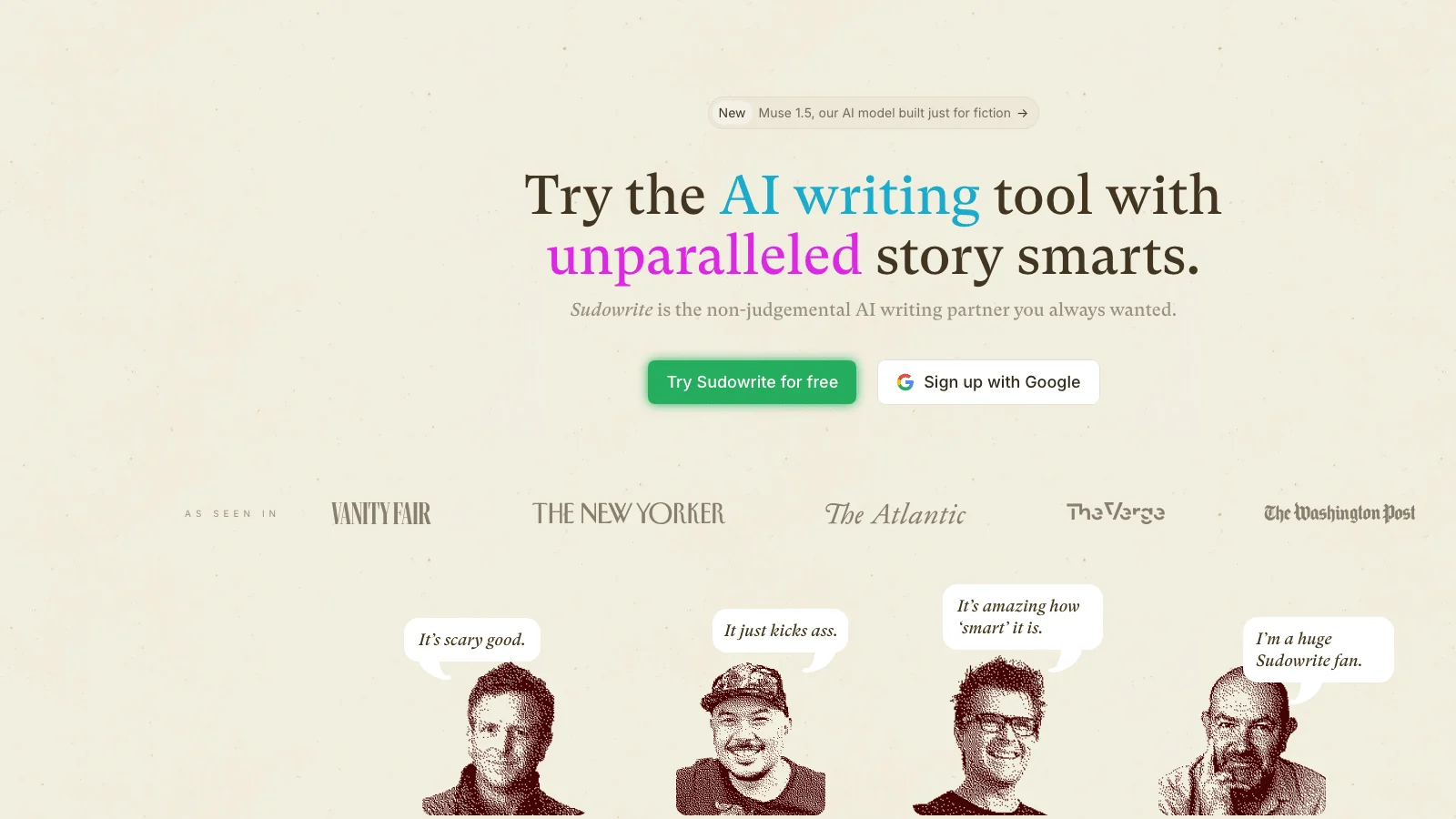
Sudowrite says it plainly on the homepage. Its newest model is "built just for fiction." Squibler spans both but leans creative. Dibbly Create, to its credit, handles nonfiction seriously, and that is a real advantage over the fiction crowd. The point of the Real Book Test is to keep going past "handles nonfiction" to "handles my nonfiction, in my voice, to a finished file." For a side-by-side of the AI drafting tools specifically, see Built&Written vs Sudowrite vs Squibler for coaches.
The verdict: when Dibbly Create makes sense, and when it does not
No hedging. Here is who should use Dibbly Create and who should look elsewhere.
Use Dibbly Create if you run a content operation, not just one book. If you produce blog posts, SEO articles, and multiple titles, value real-time collaboration with a team, want a fact checker built in, and like having a marketplace of human ghostwriters and designers one click away, Dibbly's breadth is a real asset. It is also a reasonable pick if you are comfortable editing AI prose into your own voice and you want the research, drafting, formatting, and cover steps under one roof. The free tier and 7-day Pro trial make it cheap to find out.
Look elsewhere if you are a coach, consultant, or founder whose single goal is one authority book that sounds like you, built from content you already have, finished without babysitting a token meter. On the Real Book Test, that profile runs straight into Dibbly's three weak checks: it does not lead with source-first ingest, its default voice reads generic, and its token pricing can stop you mid-draft.
Two quick scenarios make the line concrete. Picture a self-publishing operator who runs a small KDP catalog, ships several titles a year, and has a virtual assistant who helps format and list them. For that person, Dibbly's breadth, collaboration, fact checking, and freelancer marketplace are a real fit, and the token meter is just a cost of doing volume. Now picture an executive coach with eight years of LinkedIn posts, a folder of talk transcripts, and exactly one book in them: the framework she already teaches at $400 an hour. She does not need a content factory. She needs her existing material assembled, in her voice, into something she can hand a prospect, and she needs it done before her next launch, not after a month of prompting. Same software, opposite verdict. The Real Book Test is just the formal version of asking which of those two people you are.
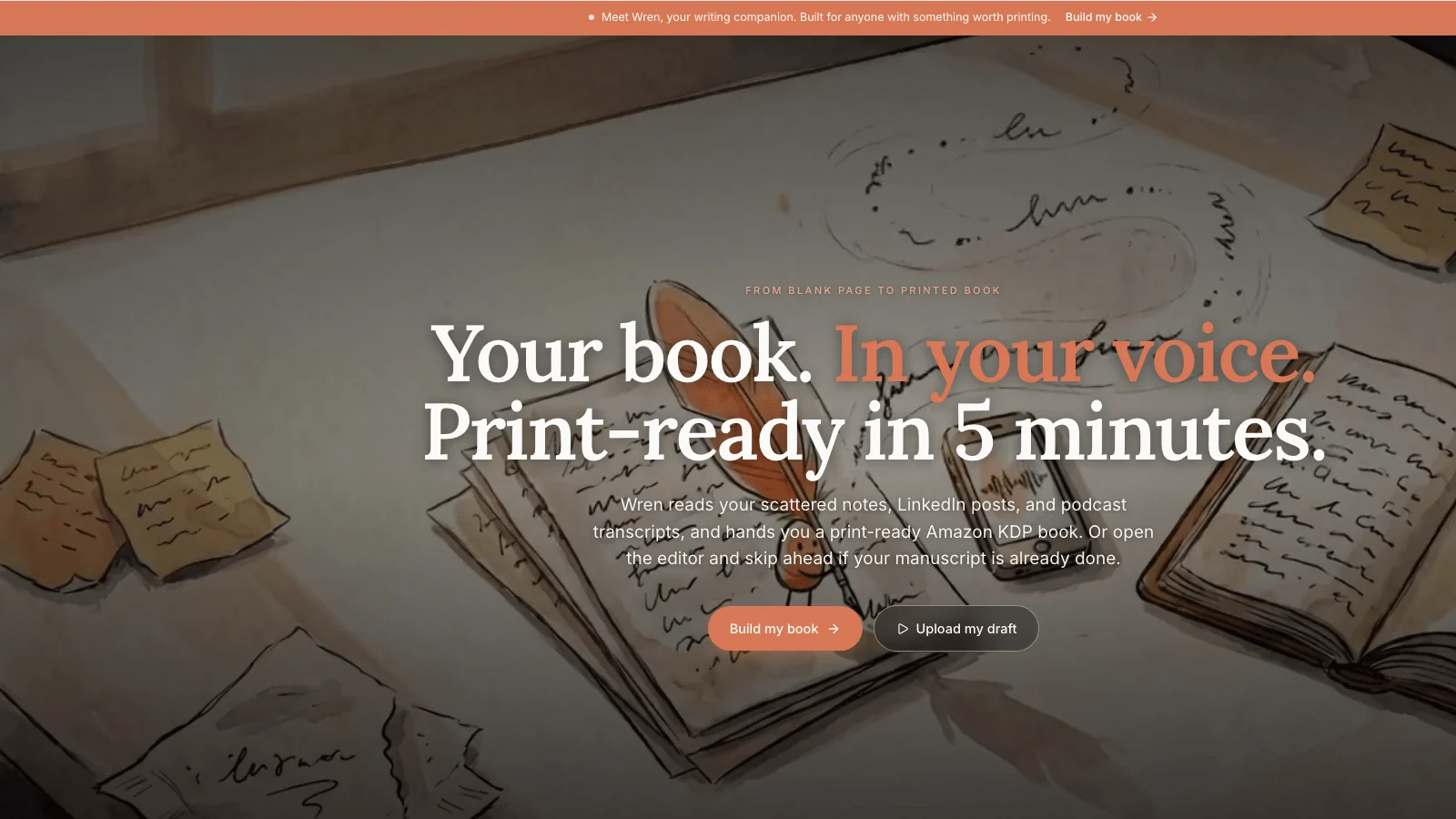
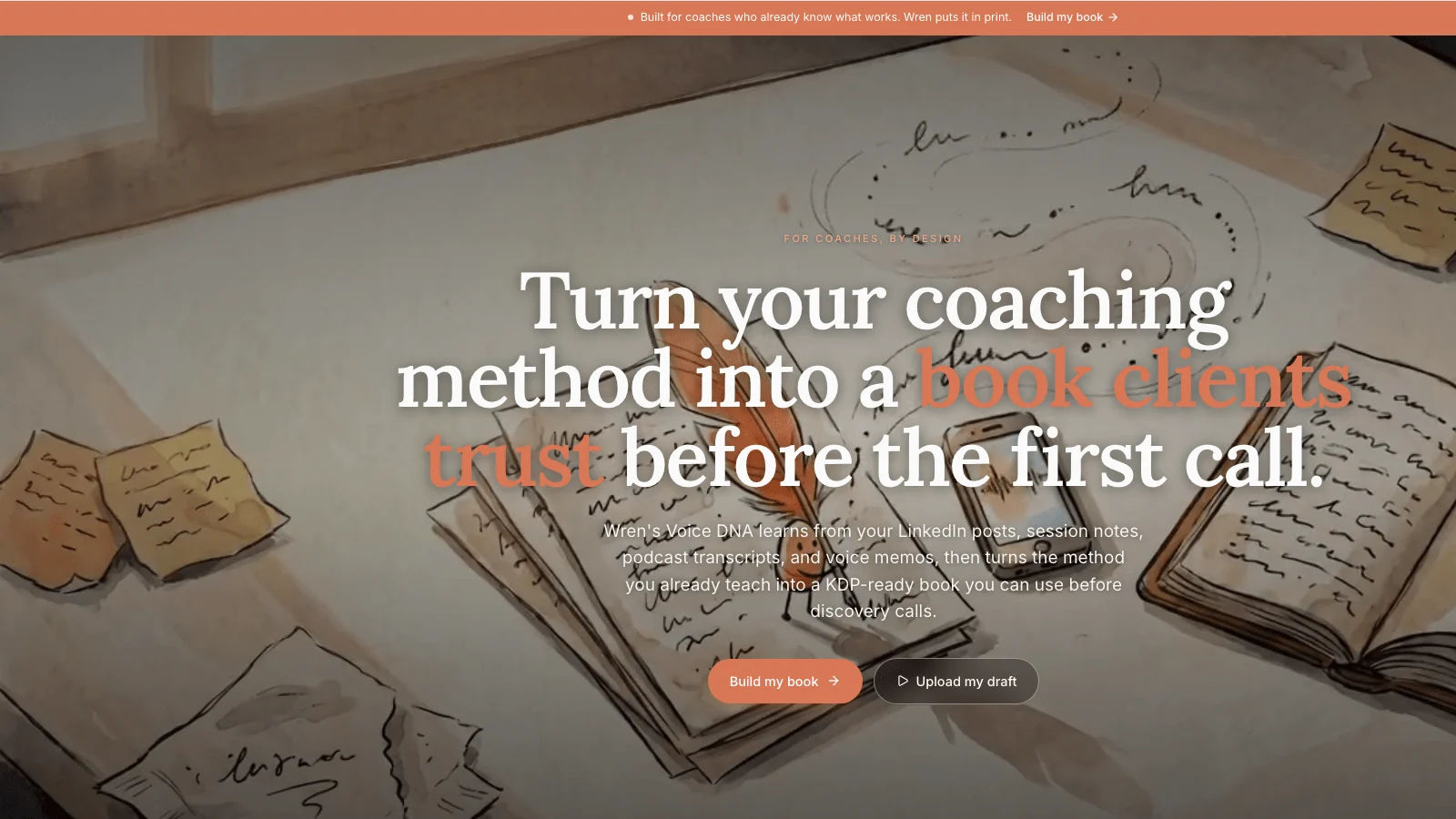
That second profile is exactly who Built&Written is for. The difference is positioning, not a feature war. Dibbly is a general content platform that also makes books. Built&Written does one job: it takes what you already have, your LinkedIn posts, notes, podcast transcripts, voice memos, pasted or uploaded directly, and assembles a 200-page, KDP-ready book in your voice in minutes. The named feature is Voice DNA, which learns your writing from samples you provide so the book reads like you instead of like AI. Formatting, spine math, cover, and a complete KDP listing come out the other end. There is a free tier, paid plans start at $19 per month, and the price is flat, so no token wall stops you at chapter seven. We put the two philosophies head to head in Atticus vs Built&Written for coaches, and the same logic separates Built&Written from Dibbly.
The honest summary: Dibbly Create is a good tool that is not aimed at you specifically. If you want a content factory, it is a strong one. If you want one real book that does a marketing job, pick the tool built for that, and try a few free before you commit. When you have a draft and a cover, the next step is publishing it cleanly, which we cover in how to self-publish a coaching book on Amazon KDP.
Key takeaways
- Dibbly Create is a polished generalist. Built on KIP and grown out of The Urban Writers ghostwriting marketplace, it does research, drafting, formatting, covers, and collaboration for fiction, nonfiction, and web content. Its breadth is the appeal.
- Score it on the Real Book Test, not its feature list. Source-first ingest, voice fidelity, KDP readiness, cost predictability, and time to a finished book. Dibbly passes cleanly on KDP readiness, partially on ingest and speed, weakly on voice and cost.
- The voice gap is the real risk for entrepreneurs. Independent reviewers call the AI prose robotic and note it lacks memory across sections. A book that sounds generic cannot build the trust it exists to build.
- The token meter is the second risk. Free is for testing; Pro runs about $22.97 per month and is still metered, so heavy drafting can hit a wall. Flat pricing removes that failure mode.
- Match the tool to the job. Dibbly Create for a content operation. A content-first, voice-preserving, flat-priced tool like Built&Written for one entrepreneur shipping one authority book from material they already have.
Sources & References
Frequently asked questions
Dibbly Create is an AI-powered writing and self-publishing platform built around an assistant called KIP. It helps you research, outline, draft, edit, format, and design a cover for a book inside one workspace, and exports DOCX, print-ready PDF, and ePub files for Amazon KDP and IngramSpark. It handles both fiction and nonfiction, plus blog posts and SEO content, which makes it a generalist content tool rather than a book-only one.
Yes, with limits. Unlike fiction-first tools such as Sudowrite, Dibbly takes nonfiction seriously, and its Guided Book Flow is non-fiction only. It produces drafts of up to roughly 30,000 words on that path, which is on the short side for a full business book, so longer projects need stitching and extending. The bigger limit is voice: the default AI prose reads generic, which matters more for an authority book than for a hobby project.
Dibbly Create offers a Free tier with about 20,000 tokens per month, 10 projects, and 1GB of storage, and a Pro tier around $22.97 per month (with two months free on annual billing) that raises the allowance to over a million tokens, unlimited projects, and 25GB. There is a 7-day free Pro trial. The catch is that it is token-metered, so research, drafts, rewrites, and image generation all spend from the same monthly budget, and heavy use can run out. Confirm current numbers on Dibbly's site before buying.
Yes. Amazon KDP allows AI-assisted books and asks you to disclose AI use when you publish, per its content guidelines and AI content policy. Using Dibbly Create, Built&Written, or any AI tool does not get a book rejected on its own. What gets books rejected or ignored is low quality, so the editing you do after the draft matters more than which tool produced it.
Not by default. Independent reviews describe its AI prose as robotic and repetitive, and note that it does not retain voice or context well across sections. You can use its rewrite and enrich tools to polish passages, but that is editing generic text rather than generating text in your voice. Tools built around voice preservation, like Built&Written's Voice DNA, take the opposite approach and learn your writing from samples first. We explain the difference in voice matching for AI writing.
Pick Dibbly Create if you run a broader content operation and want one platform for books, articles, and SEO content, with collaboration and a freelancer marketplace attached. Pick Built&Written if your single goal is one authority book that sounds like you, assembled from content you already have, with flat pricing and a KDP-ready output. The deciding factors are voice fidelity, cost predictability, and whether the tool starts from your existing content or a blank page.
Start from what you already have instead of a blank page. Gather your best LinkedIn posts, talk notes, and podcast transcripts, group them by theme, and use a content-first tool to assemble and structure them rather than generate from scratch. That preserves your voice and skips the slowest step. Our walkthrough on turning expertise into a book without a ghostwriter lays out the full sequence.
Sources & References
About the author

Mykhailo Druz
More in comparison
Ready to write your book?
Turn your expertise into a professional book with Built&Written.