

Hybrid Publishing Costs Real Money. What Do You Get for It?
Key takeaways
- What is hybrid publishing? You pay the publishing costs and earn a higher royalty, and the publisher still chooses which books it takes.
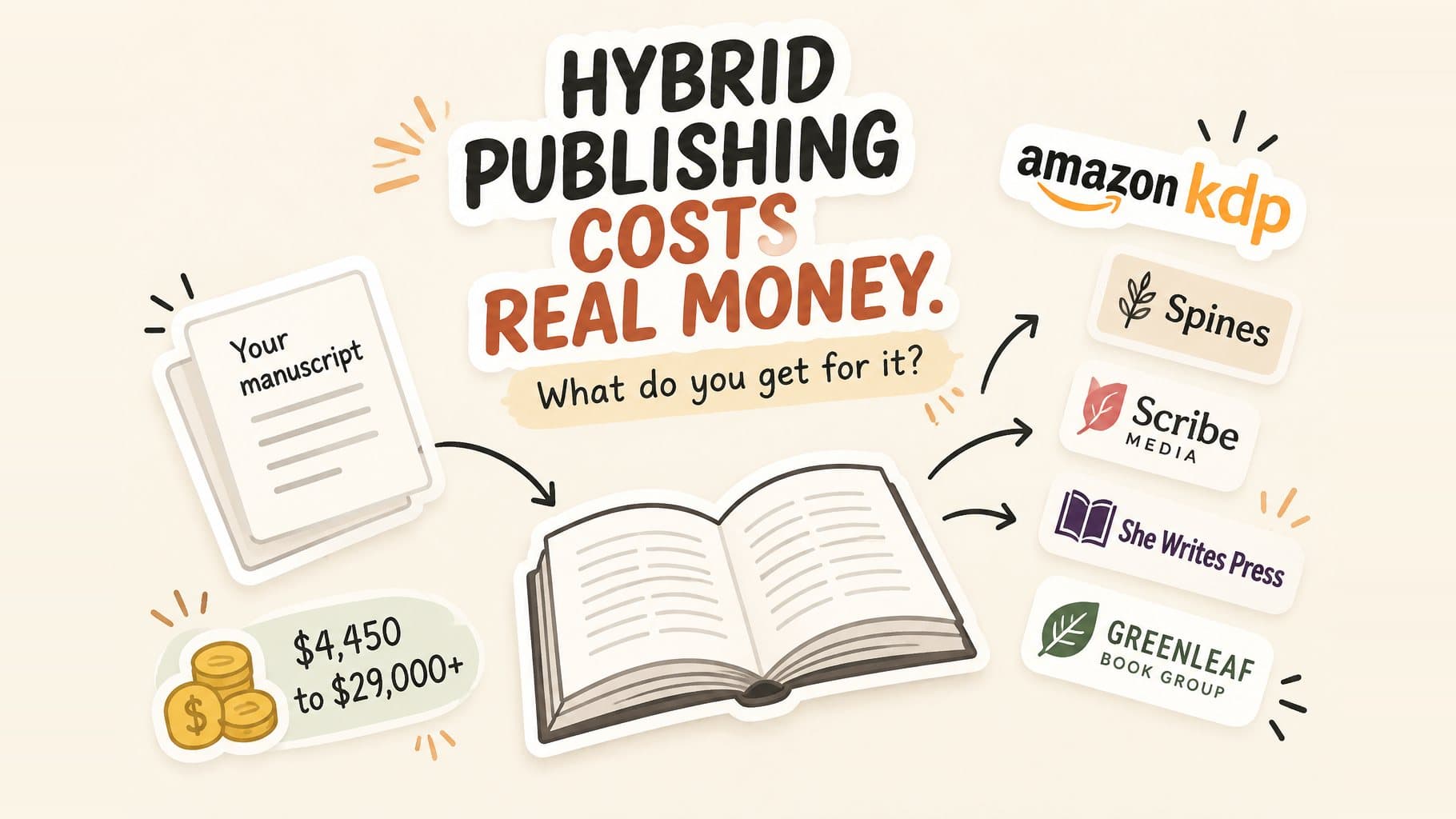
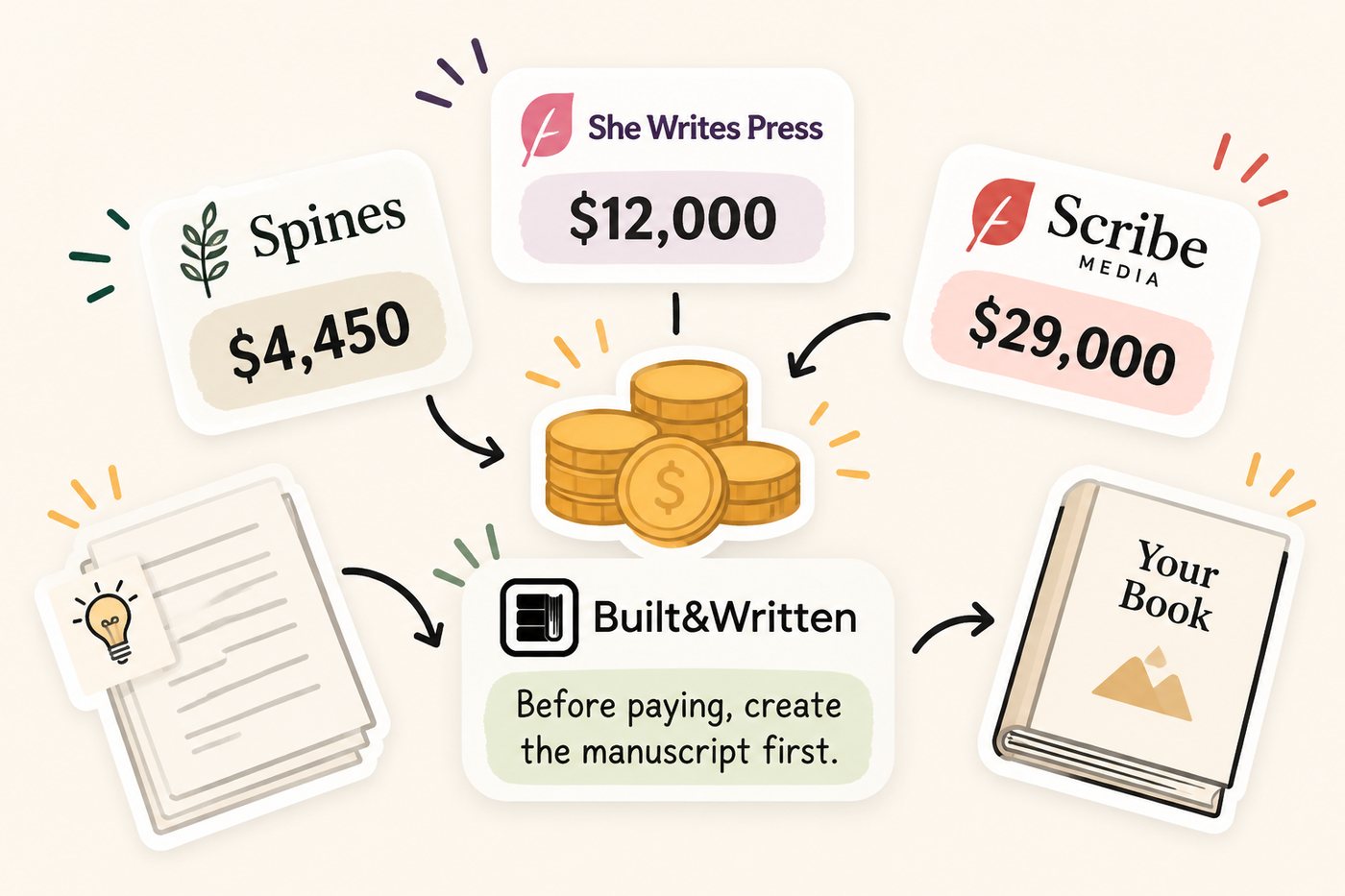
- How much does it cost? Published prices run from $4,450 (Spines) to $29,000 (Scribe Publishing), with $12,000 at She Writes Press.
- What comes first? The manuscript. Hybrid packages publish a book you've already written; writing help costs extra, often a lot extra.
Most founders and consultants think the hard part of a book is finding a publisher. It isn't. The hard part is the book itself: structuring what you know, shaping it into chapters, and turning years of experience into one coherent manuscript.
Before you pay anyone to publish, create the manuscript. You already have the material: LinkedIn posts, talk recordings, notes, and the expertise behind them. What you don't have is a book. Built&Written turns that material into a structured nonfiction manuscript in your voice, ready to publish yourself on KDP or to hand to a publisher. It doesn't replace the publisher. It builds the thing people go to a publisher with.
1. What Is Hybrid Publishing?
Hybrid publishing is a model where the author pays the production costs, earns a higher royalty than a traditional deal, and the publisher still decides which books it publishes. That last part is what separates it from simply buying a service.
The industry has its own yardstick. The Independent Book Publishers Association publishes 11 hybrid publisher criteria, updated in 2022. Four of them separate a real hybrid from a paid upload fastest:
- "Vet submissions." It turns books down. Greenleaf Book Group says it accepts fewer than 10% of submissions.
- "Publish under its own imprint(s) and ISBNs." Its name goes on the spine.
- "Demonstrate respectable sales." It earns from readers, not only from author fees.
- "Pay authors a higher-than-standard royalty." You take the financial risk, so you earn more per copy.
2. How Do Hybrid, Vanity, and Self-Publishing Compare?
Every model answers three questions differently: who pays, who owns the rights, and who chooses the books. Here they are side by side, with self-publishing through tools plus KDP as the first row.
| Model | Who pays | Who owns rights | Who selects books | Upfront cost | Best for |
|---|---|---|---|---|---|
| Tools + KDP (Built&Written) | You, for software | You | You | A monthly plan; KDP is free | Business books sold on Amazon to win clients |
| Hybrid publisher (meets IBPA criteria) | You | Per contract, often you | The publisher | $12,000 to $29,000+ at the selective end | Bookstore presence plus a managed team |
| Assisted self-publishing | You | You | No one | About $4,000 and up | Production handled, no curation |
| Vanity model | You | Per contract; read it closely | No one | Varies | Nobody. Avoid the model |
| Traditional | The publisher | The publisher, licensed | The publisher | $0 | Authors with a platform who can wait for a deal |
Cost ranges from published prices on each company's site, September 30, 2026.
Greenleaf's own guide to publishing options puts traditional royalties at 5% to 7% of cover price on paperbacks and hybrid royalties at 20% to 35% through retailers.
'Vanity' describes a model, not any one company: publishing almost anything an author pays for and earning mainly from those fees. For the wider choice, see self-publishing vs traditional publishing for entrepreneurs.
3. How Much Does Hybrid Publishing Cost?
Published prices for hybrid and assisted publishing run from about $4,000 to $29,000 for the publishing package alone. All prices come from each company's own site, checked September 30, 2026.
| Company | Upfront cost (own site) | Your royalty | What you get |
|---|---|---|---|
| Amazon KDP (baseline) | $0 | 60% of list minus print cost (paperback, $9.99+); 70% on ebooks at $2.99 to $12.99 | Amazon listing; you supply finished files |
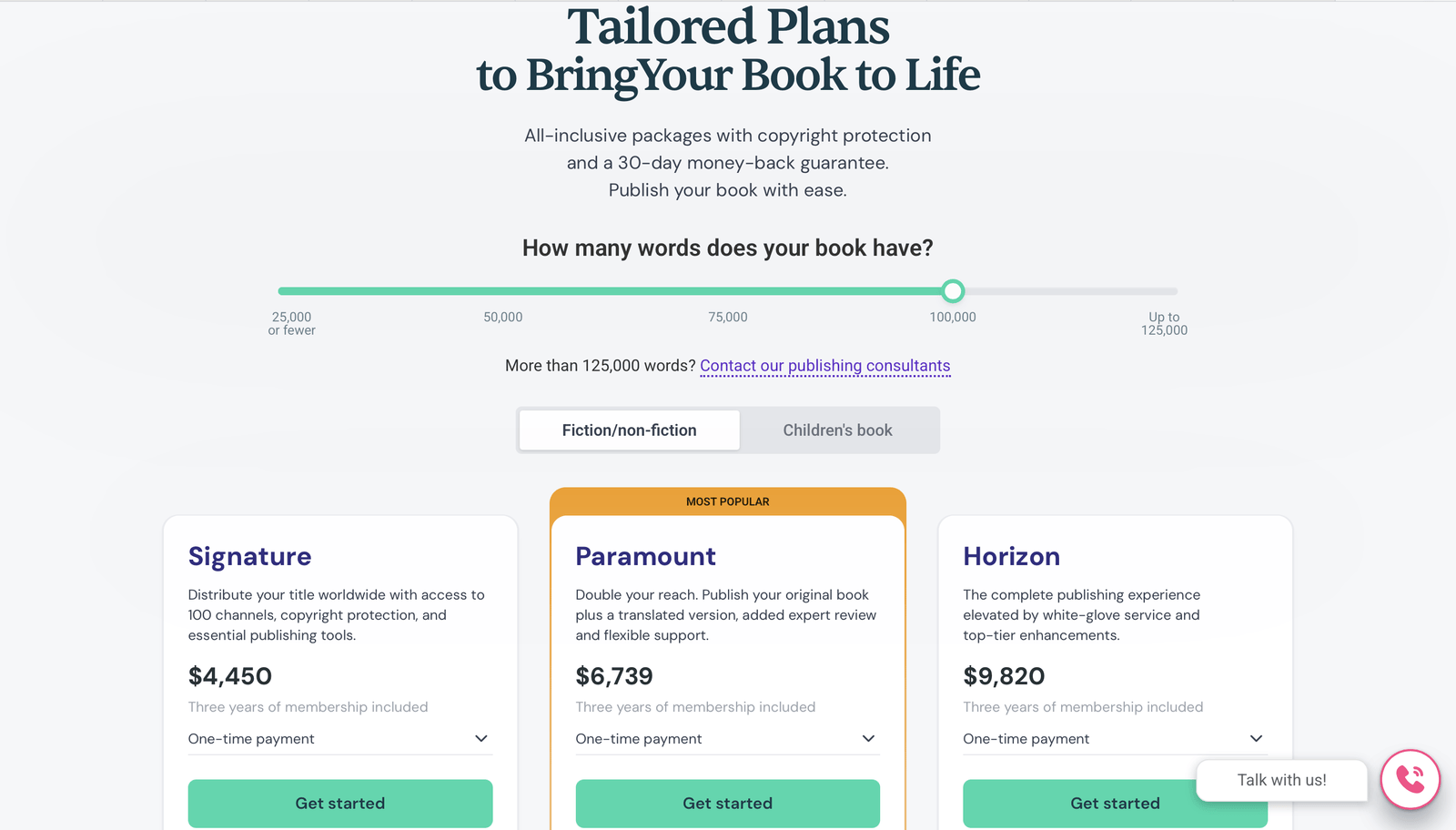
| Spines | $4,450 / $6,739 / $9,820, one-time | 70% of net royalties | Production, distribution to 100 channels, three years of membership |
| Gatekeeper Press | $4,000 Signature package ($3,500 member rate) | "100% Royalties" | Production and distribution setup; calls itself a "publishing service provider" |
| She Writes Press | $12,000 package | About 60% of net on print, 70% on ebooks | Editing, cover, national distribution through Simon & Schuster |
| Scribe Media | $29,000 Scribe Publishing, up to 50,000 words | Not listed on its pricing page | Editing, design, publishing under its imprints |
| Greenleaf Book Group | Not published; quote after acceptance | "100% of direct sales revenue"; retail rate per contract | Publisher and distributor with a commissioned sales force |
Prices and terms from each company's own pages, September 30, 2026.
Before you sign, get five answers in writing. Which rights does the publisher hold, and for how long? What is the royalty a percentage of? Who pays for printed copies? Does a sales team pitch stores, or does the book only sit in a catalog? Who owns the ISBN and files when you leave?
For Scribe's writing tiers see our Scribe Media pricing breakdown (its publishing tier has since risen); for Spines' reviews, see Spines vs self-publishing.
The math on one line: A 200-page paperback at $14.99 earns about $5.59 per Amazon sale on KDP. A $4,450 package equals the royalty on about 796 copies. A $29,000 package equals about 5,188 copies.
4. When Does Hybrid Publishing Make Sense?
Hybrid publishing makes sense for a business that wants a bookstore presence, has the budget, and wants editors and designers managed for it. A founder planning a speaking tour may want the book in indie stores and airports. That takes a distributor with a sales force, which selective hybrids have and no software does.
It also beats waiting for a traditional deal: six-figure nonfiction deals fell 41% year over year in Q2 2026, as we covered in Book Deals Are Down 41%. For most business books, though, buyers check you out on Amazon, and KDP gets you there for free.
5. Why Do You Need the Manuscript Before the Publisher?
Whichever route you choose, the first step is the same: a finished, strong manuscript. Hybrid publishers publish books. They don't write them.
Look at how the packages are priced. Spines' pricing page opens by asking how many words your book has. Scribe's $29,000 publishing tier covers up to 50,000 words you've already written; if you need the writing done, its tiers run from $44,000 to $135,000. Greenleaf reviews each submission for content quality before it quotes. The publisher's value starts where your manuscript ends.
That's where most experts get stuck. The knowledge is there, spread across LinkedIn posts, workshop notes, and recorded talks. What's missing is the structure that turns it into chapters. Paying someone to write it is the expensive answer; Is Ghostwriting Worth It for Entrepreneurs? runs those numbers.
6. How Built&Written Turns Your Material Into a Manuscript
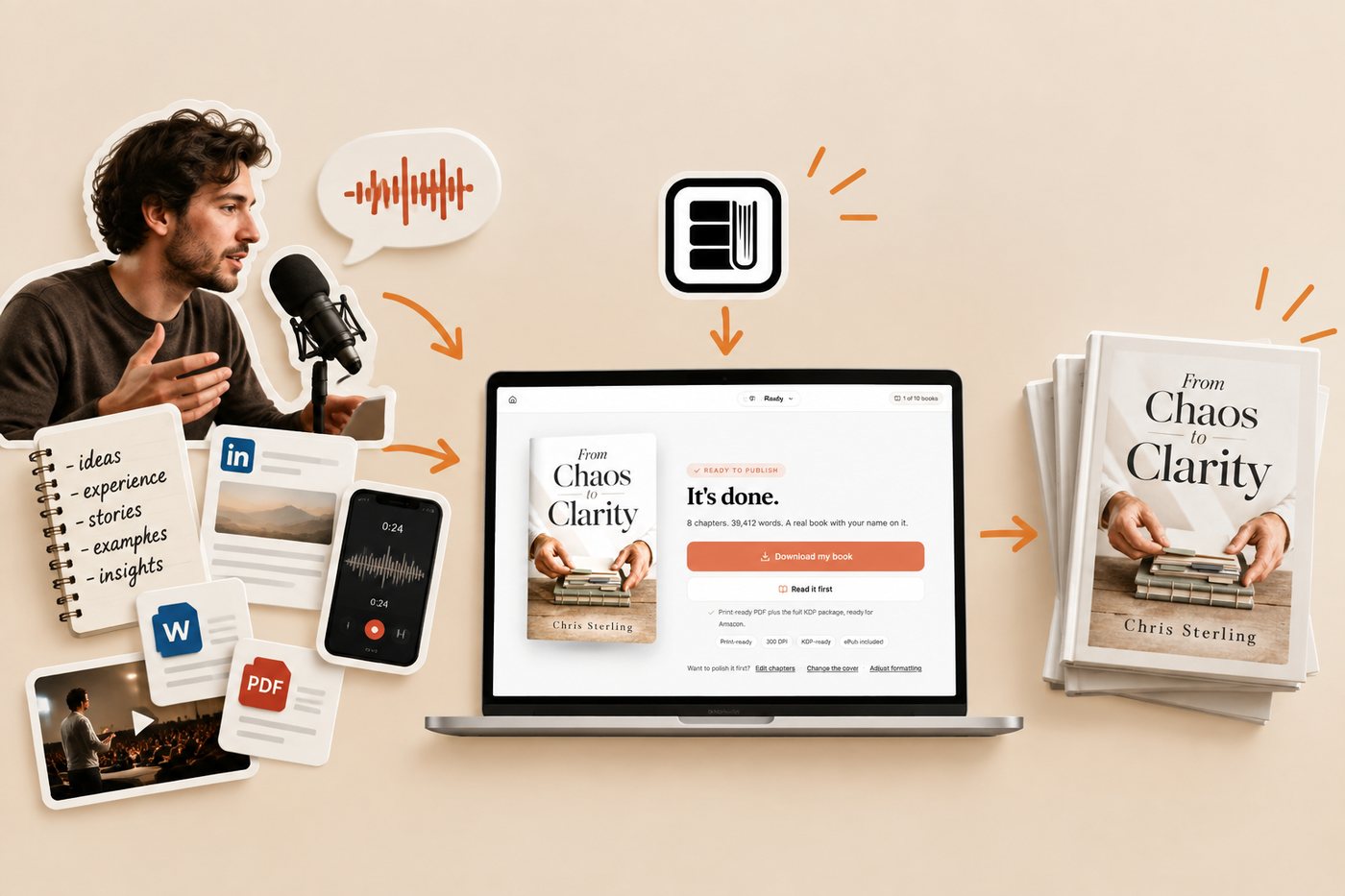
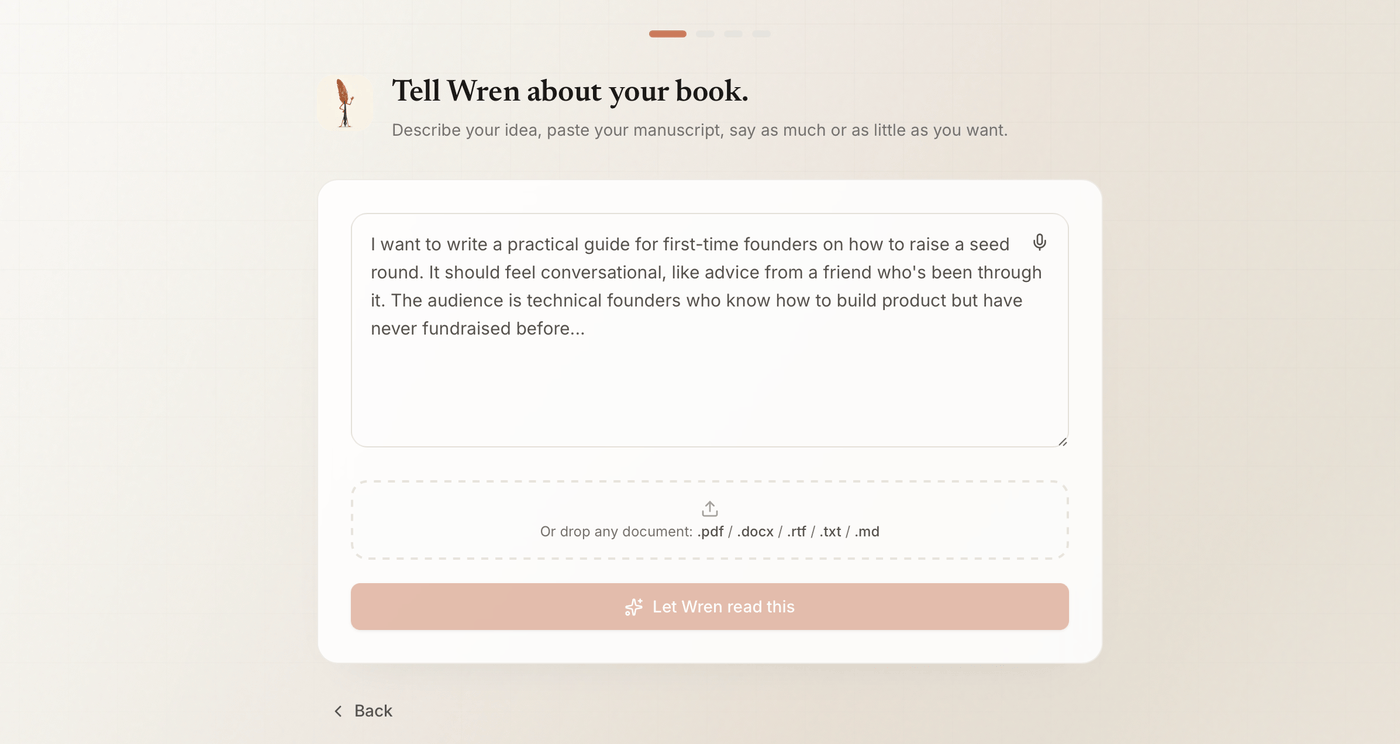
Built&Written starts from what you already have. You describe the book, paste your notes, or drop in documents: posts, transcripts, a half-finished draft. Wren, its writing assistant, reads the material and builds an outline, so your ideas land in chapters instead of a pile.
Then it drafts each chapter in your voice with Voice DNA, trained on your own writing samples, and you edit in the chapter editor instead of a blank document. Hours of sorting and structuring become a review job.
When the manuscript is done, you choose the route. Publish it yourself: Wren fixes KDP-safe margins in one click, generates a full KDP wrap cover with the spine sized to your page count, and exports the print PDF and ePub for KDP. Or hand the DOCX export to a hybrid publisher and arrive with the one thing every package on this page assumes you already have. Plans are on the pricing page.
It doesn't do human editing, printing, or bookstore sales. If you need those, a hybrid publisher is the right second step. Built&Written is the first.
Final thoughts
Hybrid publishing is a real option with real value, if you need bookstores and a managed team and the contract holds up. But no publishing route writes your book. Start with the manuscript, then pick the route that fits it.
Frequently asked questions
A model where the author pays the publishing costs and earns a higher royalty, while the publisher still selects its books and publishes them under its own imprint. The IBPA's 11 hybrid publisher criteria are the industry's own definition.
On September 30, 2026, published prices ran from $4,450 (Spines) to $12,000 (She Writes Press) and $29,000 (Scribe Publishing). Greenleaf quotes each book after acceptance. Writing help costs extra.
No. A hybrid publisher turns books down, uses its own imprint, and earns from sales to readers. The vanity model publishes almost anything an author pays for and earns mainly from author fees.
Usually not in the publishing package. Scribe's $29,000 publishing tier covers a manuscript you've already written; writing help is a separate, pricier tier. Plan to arrive with the manuscript.
Yes. Built&Written turns your posts, notes, and transcripts into a manuscript in your voice and exports DOCX, PDF, and ePub files. Hand the DOCX to any publisher, or publish on KDP yourself.
Sources & References
About the author

Khrystyna Balushka
More in Self-Publishing
Ready to write your book?
Turn your expertise into a professional book with Built&Written.