
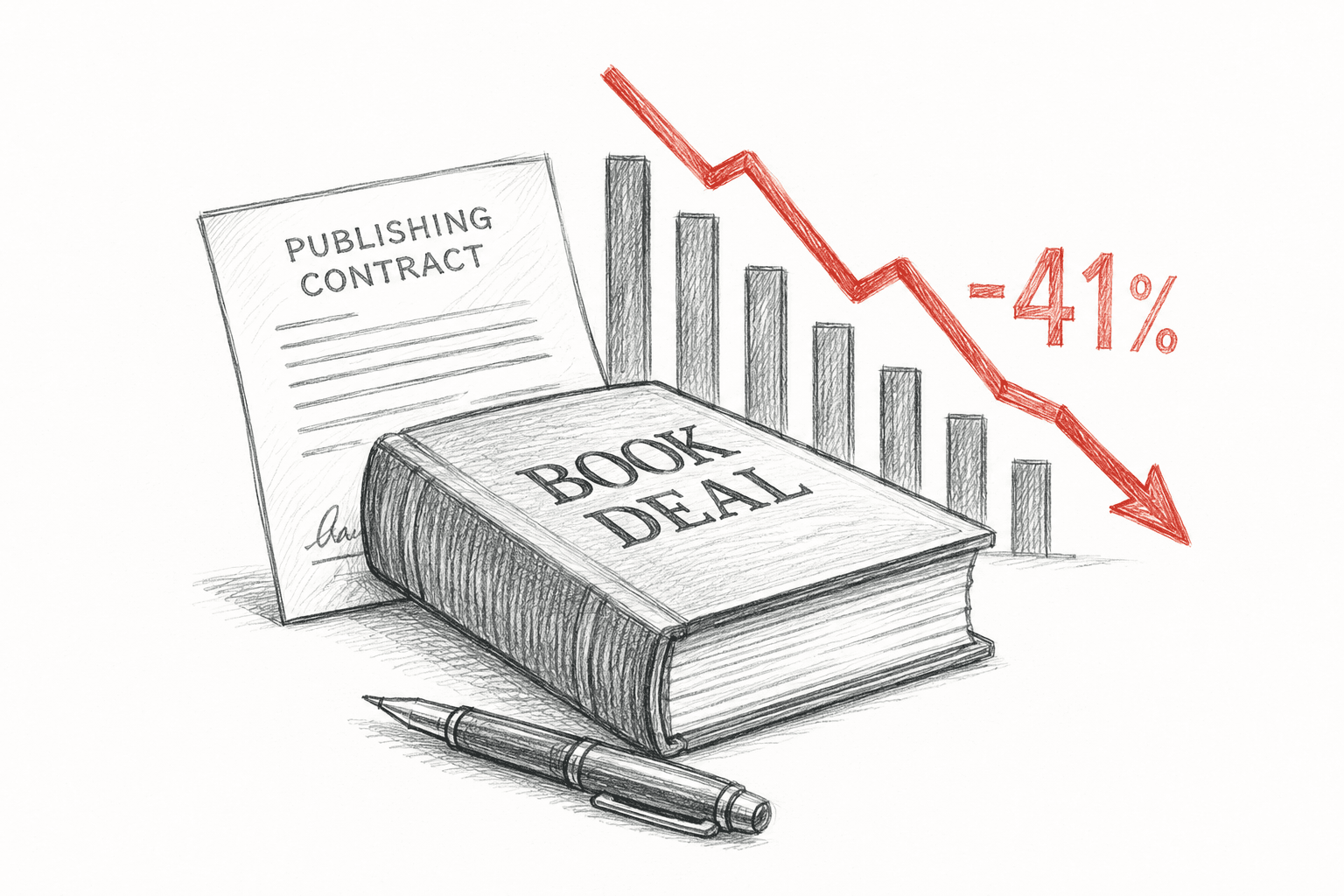

Book Deals Are Down 41%. Don't Wait for a Publisher
- Six-figure nonfiction deals fell 41% year over year in Q2 2026, per Publishers Lunch analyst Michael Cader, with Penguin Random House and HarperCollins driving the pullback. Adult fiction stayed strong. (Publishers Lunch, July 2026)
- The contraction is narrow, not a market collapse. Overall Q2 dealmaking was down a modest 1.8%, and core categories were up 2%. It's concentrated in unproven nonfiction, the category most entrepreneur business books fall into.
- Even before this pullback, 85% of new nonfiction titles sold fewer than 2,000 copies in their first year, and first-time business-book advances typically ran $5,000 to $50,000. (Circana BookScan, 2023)
- Traditional publishing already ran 18 to 30 months from serious effort to launch. Self-publishing runs 6 to 10 months, and that gap gets more expensive every quarter a query sits unanswered.
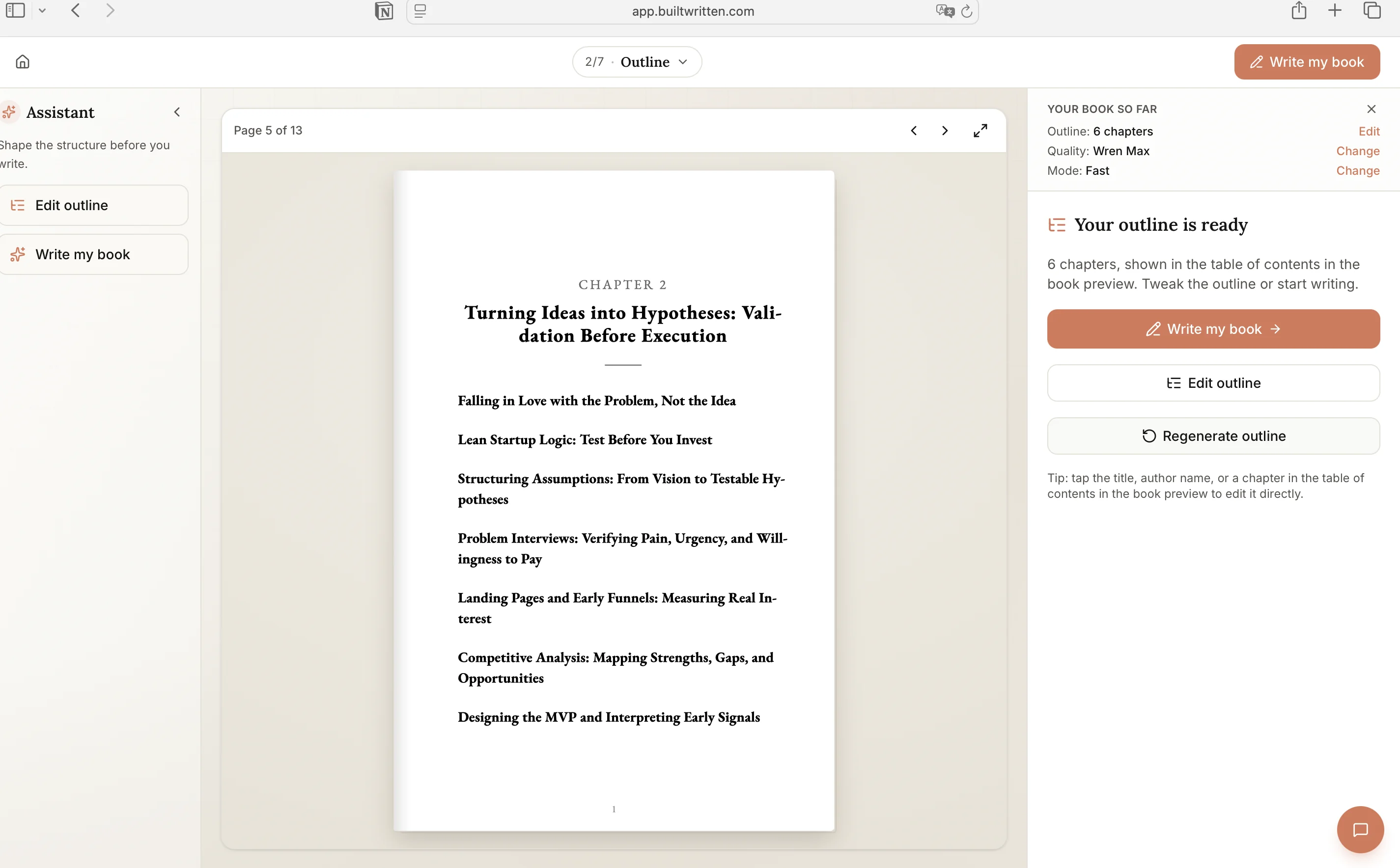
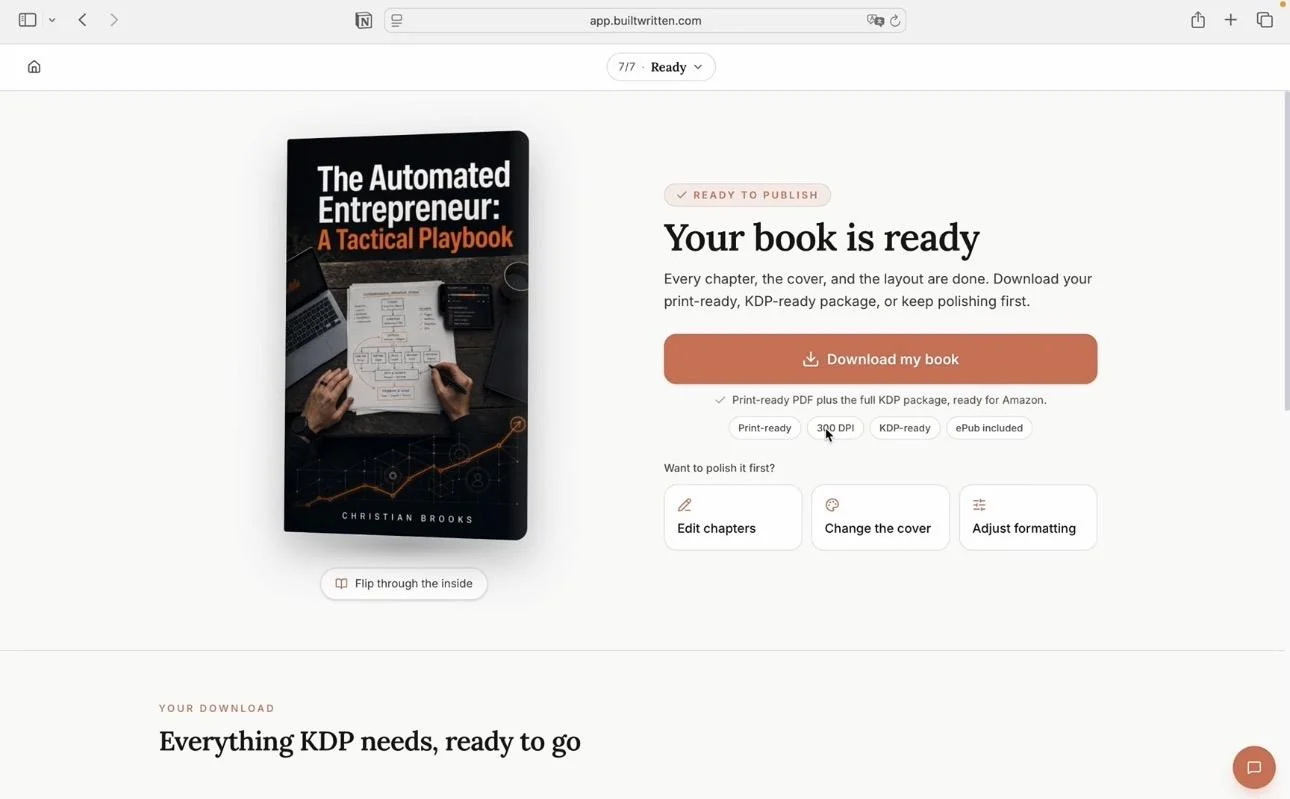
- Wren, Built&Written's AI platform, already helps founders and coaches turn notes and client calls into finished, self-published books, no agent, no submission window, no publisher's quarter to wait on.
Publishers Lunch just put a number on something agents have been saying quietly for months: publishers are pulling back on nonfiction. Six-figure nonfiction deals fell 41% year over year in Q2 2026, with Penguin Random House and HarperCollins leading the retreat. This is exactly why Built&Written exists. Founders and coaches already use Wren to skip that wait entirely and publish a finished business book on their own schedule, no agent, no acquisitions committee, no publisher's quarter to sit through. If your manuscript is stuck in submissions, or your notes never became a book, this quarter's numbers are describing your situation directly.
Built&Written is the company behind Wren, an AI platform that turns a founder's or coach's notes and calls into a finished, self-published business book written in their own voice, no ghostwriter, no query letter. Wren already helps founders turn scattered notes into books that bring real clients, speaking invitations, and authority. See what ghostwriting actually costs and how to get a literary agent as an entrepreneur for why the traditional route was already a long shot before this quarter. For the full cost breakdown, see ghostwriting vs. self-writing a book for founders, and for what a traditional deal actually requires before an editor even reads a word, see what a book proposal actually involves.
1. What Publishers Lunch actually reported
The number comes from Publishers Lunch's Q2 2026 dealmaking report. Overall deal volume was down a modest 1.8%, and core categories were up 2%. Adult fiction hit a five-year high for the period. The cut lands unevenly: it's concentrated in six-figure nonfiction deals, down 41% year over year, with Penguin Random House and HarperCollins pulling back hardest. Big publishers are protecting proven categories and betting less on unproven voices, exactly the profile of most founder and coach business books. The prestige of a Big Five logo was already overrated for that kind of book anyway, as why traditional publishing isn't always prestigious lays out. That's the whole reason Wren exists: to get that book finished and working without waiting for a publisher's yes.
A pullback in one publisher's acquisitions budget can stall a manuscript for a year with no explanation. Wren never asks a founder to wait on someone else's quarter. It turns notes and calls into a finished, professional manuscript on the founder's own timeline, not a Big Five imprint's.
2. Why nonfiction is the category getting cut first
Publishers cut where the numbers already looked shaky. Per Circana BookScan's 2023 report, 85% of new nonfiction titles sell fewer than 2,000 copies in their first year, and first-time business-book advances typically ran $5,000 to $50,000, even in a strong market. The real ROI math on a business book puts those numbers in perspective. An editor defending a budget to an acquisitions committee cuts the first-time author with no platform first. Wren skips that filter completely: a founder's book doesn't need an editor's approval, just a finished manuscript and a reader who's already a prospect or a client. The economics already favored that path, since Amazon KDP pays up to 70% in royalties against the 10% to 15% most traditional nonfiction deals offer. How book royalties actually work on Amazon KDP breaks down what that means per sale, and the full comparison is in self-publishing vs traditional publishing for entrepreneurs.
Wren was never built to survive an acquisitions committee's spreadsheet. It's built for the reader who actually decides whether a book works: a prospect, a referral partner, an event organizer, not an editor guessing at bookstore demand.
3. The real cost is the calendar, not the rejection
Traditional publishing already ran 18 to 30 months from a serious proposal to shelves: querying agents, waiting on submissions, then a publisher's production schedule. Self-publishing runs 6 to 10 months from commitment to launch. That gap was already expensive for a founder using a book to drive leads or pricing power, and a 41% drop in six-figure deals stretches it further, since agents are pitching into a tighter buyer pool. Every month in submission is a month not generating what's covered in how to use a book for lead generation that converts. Wren closes that gap directly: founders go from notes to a finished manuscript in weeks, not another publishing cycle, using the same kind of process laid out in how to write a book from notes in 5 clear stages. For founders sitting on a stalled draft, how to finish writing a book as a busy founder covers the rest.
Wren compresses the part of the timeline a founder actually controls: turning notes and calls into a finished manuscript. That takes weeks, not another quarter spent watching a publisher's dealmaking numbers.
4. This is exactly the profile getting squeezed out
Read the pattern again: nonfiction down sharply, fiction strong, cuts concentrated at the Big Five. Publishers are protecting categories with a track record and betting less on unproven voices, exactly the profile of most founder and coach manuscripts. It's a comment on what a publisher's spreadsheet rewards, a case laid out fully in is traditional publishing dead in 2026 and traditional publishing vs self-publishing in 2026. A book is still the strongest thought-leadership asset available to a founder, and how to establish credibility in your industry fast shows that credibility was never the publisher's to grant. Wren was built for founders in exactly this position: real expertise, no existing platform, a business that can't wait a year and a half on someone else's yes.
Wren already helps founders and coaches turn what they know into finished books that bring real clients, speaking invitations, and inbound leads. That's covered in why entrepreneurs should write a book now and how to get more consulting clients with a book. No acquisitions committee has to say yes first.
5. What to actually do this week
If a manuscript is already finished, stop treating a query response as the next milestone. Self-publish it instead. Wren is already how founders and coaches make that move: notes and client calls become a finished manuscript, no agent required. The full roadmap is in how to write a book without a publisher in 2025 and the step-by-step version in how to self-publish a book as an entrepreneur in 2026. If the book hasn't started yet, this guide for founders who don't know how to start covers the first move, and what self-publishing actually means for entrepreneurs covers the rest.
Wren turns existing notes and client calls into a finished manuscript, then hands off into the Amazon KDP process. Founders who move this quarter are already working by the time a traditional deal would clear submissions.
None of this means the book market collapsed. Fiction is strong, core categories grew, and the contraction is specific: six-figure nonfiction deals, down 41% year over year, concentrated at the two biggest publishers. For a founder or consultant, that specificity is the point. The category getting squeezed is the one most entrepreneur manuscripts fall into, and the benefits of being a published author never depended on who published it. Wren already exists for exactly that founder: a finished book on your own timeline, without waiting on someone else's spreadsheet.
Final thoughts
Waiting for a traditional deal was already a slow, expensive bet for most founders. This quarter's numbers make it a longer one: six-figure nonfiction deals down 41%, concentrated in the exact category most entrepreneur and coach manuscripts compete in.
Built&Written built Wren for founders in exactly this spot: real expertise, no existing platform, a business that can't spend another year and a half finding out if an editor's budget has room. Wren already helps founders and coaches turn notes and client calls into finished books that bring real clients, speaking invitations, and authority, the same pattern 10 entrepreneurs whose books built their business shows again and again. That's the same outcome covered in author credibility in business that drives revenue and why a book is the business card that never gets thrown away.
That's the real difference: waiting on a publisher's yes, versus building the asset yourself from what you already know. Don't wait for next quarter's dealmaking numbers to decide whether your expertise counts. Let Wren turn it into a finished book now.
Frequently asked questions
Publishers Lunch analyst Michael Cader reported six-figure nonfiction deals fell 41% year over year in Q2 2026, driven largely by Penguin Random House and HarperCollins pulling back. Adult fiction stayed strong, so the contraction is specific to nonfiction.
It means the odds got longer at a moment most entrepreneur business books were already a hard sell. See how to get a literary agent as an entrepreneur for why self-publishing was already faster for most founders.
Self-publishing typically runs 6 to 10 months from commitment to launch, versus 18 to 30 months for a traditional deal. See self-publishing vs traditional publishing for entrepreneurs.
For most business readers, yes. Buyers judge a founder's book on clarity and proof, not the logo on the spine. See author credibility in business that drives revenue for the fuller case.
A ghostwriter still takes months and a real budget, and the manuscript isn't finished until they're done. Wren works directly from a founder's own notes and calls, so the process stays in their hands. See what ghostwriting actually costs and ghostwriting vs self-writing a book for founders for the full comparison.
Start the self-publishing pipeline instead of waiting on query responses. How to write a book without a publisher in 2025 walks through positioning, production, and Amazon KDP step by step. If the draft has been stalled for a while, how to finish writing a book as a busy founder covers getting it across the line.
Yes, for most founders the return on a business book was never tied to a traditional deal in the first place. See the real ROI math on writing a business book and what is a business book, and do you need one for how to think through it.
Sources & References
About the author

Khrystyna Balushka
More in Self-Publishing
Ready to write your book?
Turn your expertise into a professional book with Built&Written.