


How to Turn Your Coaching Program Into an Amazon KDP Book (Step by Step)
- Writing from a blank page typically takes a nonfiction author 4 to 8 months. Starting from an existing coaching program compresses that, because the "what do I say" problem is already solved.
- Modules are built to be worked through with support; chapters are built to be read alone. Copy-pasting one into the other is why most course-to-book projects stall.
- Amazon KDP pays 70% royalties on ebooks priced $2.99-$9.99 minus a small delivery fee, or 35% with no fee and no price ceiling. The tier you pick changes your math.
- Wren is built to convert existing coaching material (modules, calls, worksheets, client stories) into a structured, publishable manuscript.
A program guides someone through the work with you there. A book has to make its case alone, start to finish. Treating them as the same document is why most course-to-book projects stall by chapter three. Here is the six-step process for converting an existing program into a published Amazon KDP book that still leaves a reason to buy the program.
1. Audit what you already have
A book does not start from a blank page, it starts from an audit. A typical coaching program already contains module outlines, call recordings, worksheets, and client stories, material a from-scratch author does not have. Most of the 4-8 months a nonfiction author spends on a first draft goes into deciding what to say, not typing it. Your program has already answered that, module by module.
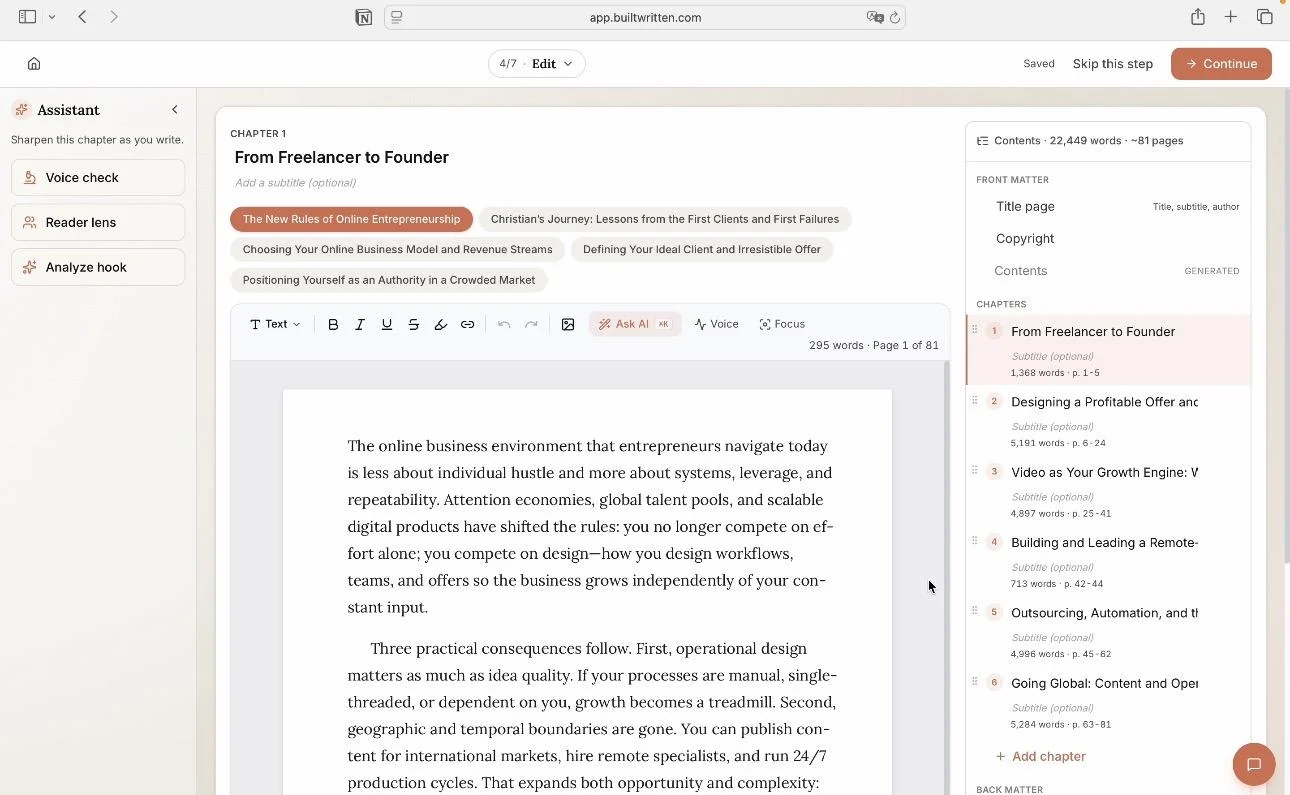
Sort the material into three groups: stories and proof, exercises that stay in the paid program, and structural notes for the outline. Wren does this automatically. Upload your modules, call transcripts, and notes, and it sorts them into book proof (a client result, a number, a story) versus program-only material (a worksheet, a step-by-step exercise). For more on this process, see content repurposing from course to bestseller.
2. Find the one argument your program is making
A program can hold six frameworks side by side because a client only needs the one relevant that week. A book cannot: readers move through it start to finish, and a table of contents that reads like a list of modules instead of one argument is a common reason readers quit, covered in 5 Reasons People Stop Reading Your Book.
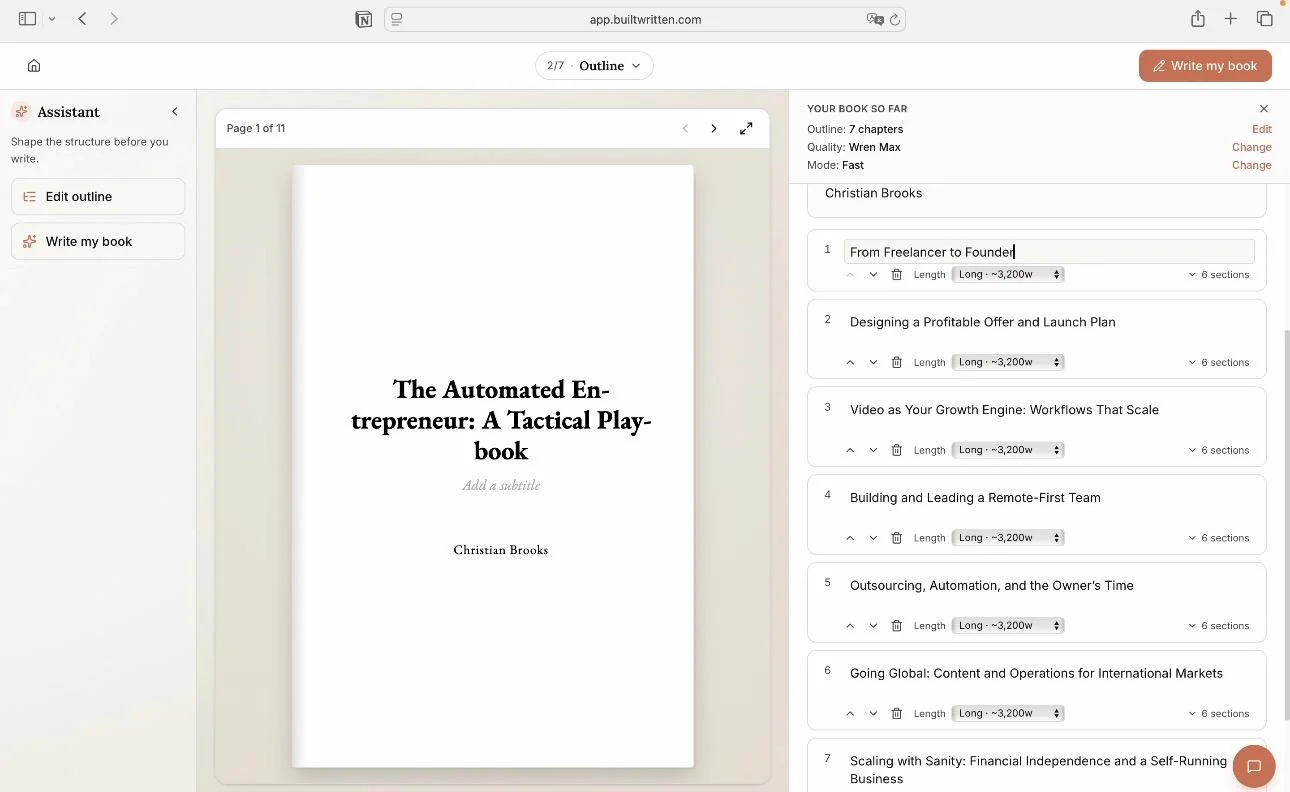
Before building a chapter list, write down the one claim the book has to prove. Wren locks that claim first, then builds the chapter sequence around it, the same process covered in our book outline guide for coaches. A chapter earns its place by advancing the argument, not by matching Module 4.
3. Map modules to chapters, don't just rename them
Renaming Module 1 to Chapter 1 rarely works. Programs are sequenced by what a client does first: onboarding, mindset, goal-setting. Books are sequenced by what a reader needs to believe first. Those orders are usually different, so expect modules to split, merge, or move: one module covering three ideas might become three chapters, and three related modules might collapse into one.
Wren re-sequences your material around the book's argument instead of forcing a 1:1 conversion, so a module built for doing gets re-cut into chapters built for reading.
4. Replace exercises with proof
A worksheet works in a program because a coach is there to walk someone through it. On the page alone, it reads as an assignment, and a reader handed homework instead of proof stops trusting the chapter.
Swap every exercise for a story: the specific client, conversation, or number that changed. If you plan to name or describe real clients, check Can You Use Client Stories in Your Coaching Book? for consent and anonymization rules. Wren flags claims your material doesn't back up and asks for the specific client, result, or story to attach before it drafts the chapter.
5. Price it like a book, not the program
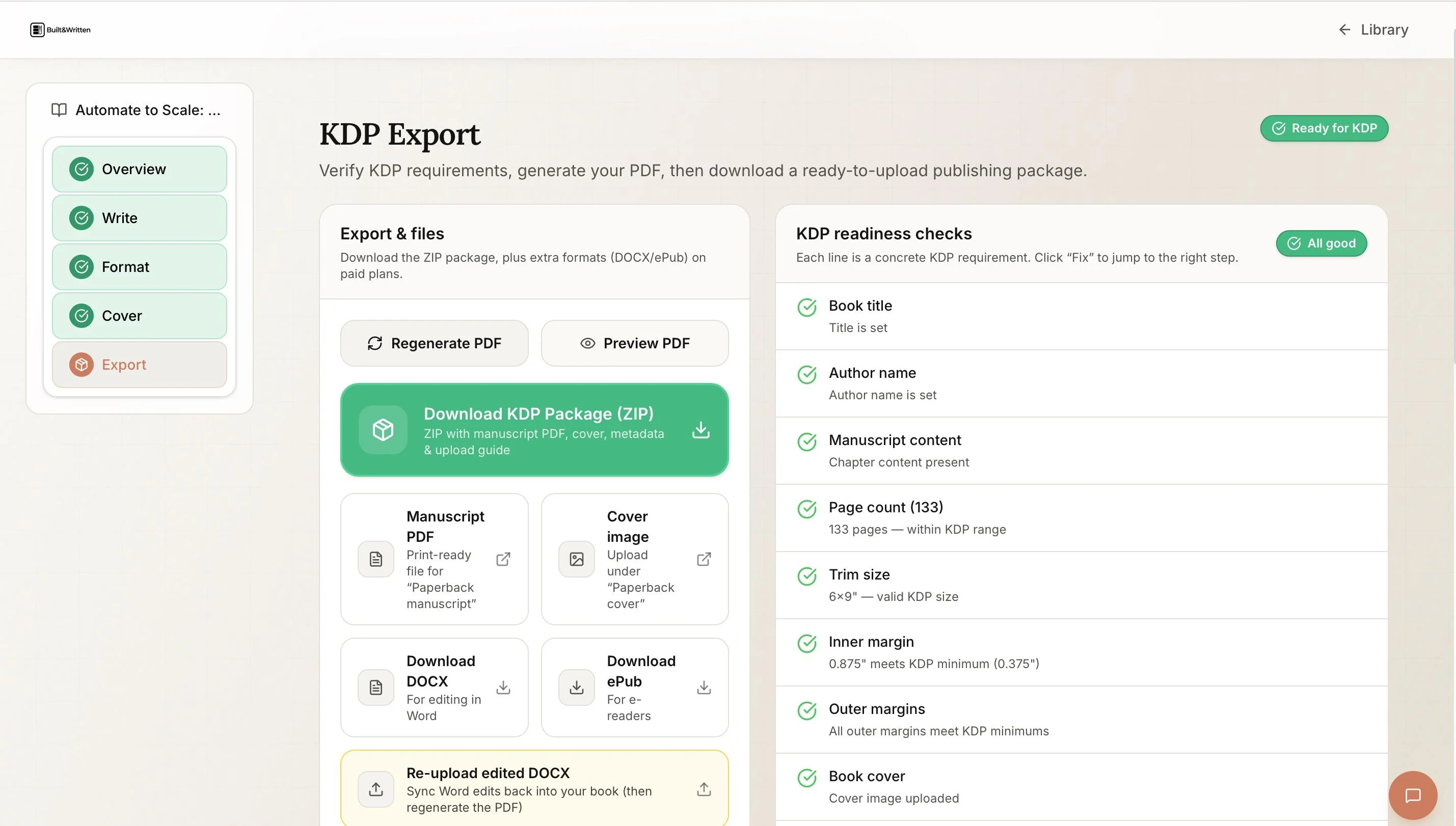
A $2,000 coaching program and a $9.99 ebook aren't competing for the same buyer decision. On Amazon KDP, price and royalty rate are linked: the 70% tier covers ebooks priced $2.99-$9.99 minus a small delivery fee, and the 35% tier has no delivery fee but covers any price from $0.99 to $200, per Amazon's own royalty terms. Most coaching ebooks price into the 70% tier. Paperback royalties use a separate formula based on list price minus printing cost. Run your own numbers with the free KDP royalty calculator before you publish.
6. Publish it as the front door, not the whole house
Finishing a book that gives away the entire program is a common way coaches undercut themselves. Keep the exercises, live feedback, and accountability inside the program. Use the book to prove the argument and show the transformation is real, the same structure mapped out in How a Self-Published Book Generates Coaching Leads and Turn Your Signature Coaching Framework Into Sales.
Wren closes every chapter with a takeaway and, where relevant, a next step toward the program, without turning the book into a sales pitch.
The six steps at a glance
| Step | What it involves | How Wren helps |
|---|---|---|
| 1. Audit your material | Sort modules, transcripts, worksheets into story, proof, exercise | Ingests your existing content and flags what's usable as book proof |
| 2. Find the one argument | State the book's core claim before outlining | Locks the core claim first, then builds the outline around it |
| 3. Map modules to chapters | Re-sequence by reader logic, not program order | Re-cuts material into chapters instead of forcing a 1:1 rename |
| 4. Replace exercises with proof | Swap worksheets for specific client stories and numbers | Flags unproven claims and prompts for a real example |
| 5. Price it like a book | Choose the 70% or 35% KDP royalty tier deliberately | Walks through royalty tier and pricing at export |
| 6. Publish as the front door | Keep the program as the "how," the book as the "why" | Closes chapters with a takeaway that points to the next step |
Authors with an existing coaching program don't need to start from scratch. They need a structured conversion process: one argument, chapters mapped from modules, proof instead of exercises, and pricing that fits the book's job, not the program's. Wren is built specifically for that conversion, turning modules, client stories, and results into a professional, publishable Amazon KDP book.
Frequently asked questions
Only if you skip step 6. Keep exercises and implementation support inside the program, and use stories and proof in the book. See how a coaching book generates leads for the funnel structure that keeps both offers intact.
Less than it feels like. A book proves an argument; a program delivers a transformation. The exercises, live feedback, and accountability stay in the program.
For most coaching ebooks priced $2.99-$9.99, the 70% tier earns more per sale even after the delivery fee. See the full royalty breakdown for paperback math and edge cases.
If the program exists, modules, calls, worksheets, client results, you're restructuring, not writing from scratch. For the upload and formatting steps once your manuscript is ready, see the KDP walkthrough for coaches.
Sources & References
About the author

Khrystyna Balushka
More in Lead Generation
Ready to write your book?
Turn your expertise into a professional book with Built&Written.