

How to Get Your First 25 Amazon Reviews Before Launch Day
How to Get Your First 25 Amazon Reviews Before Launch Day
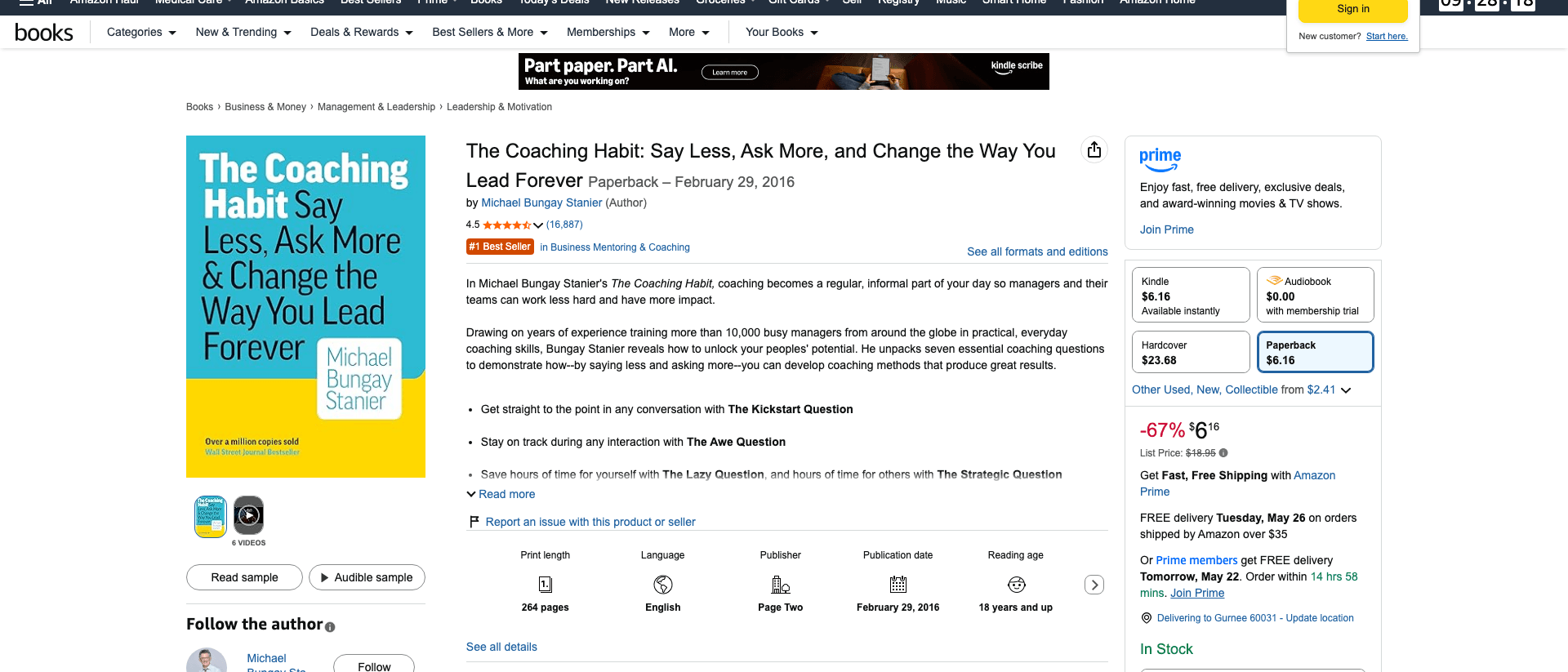
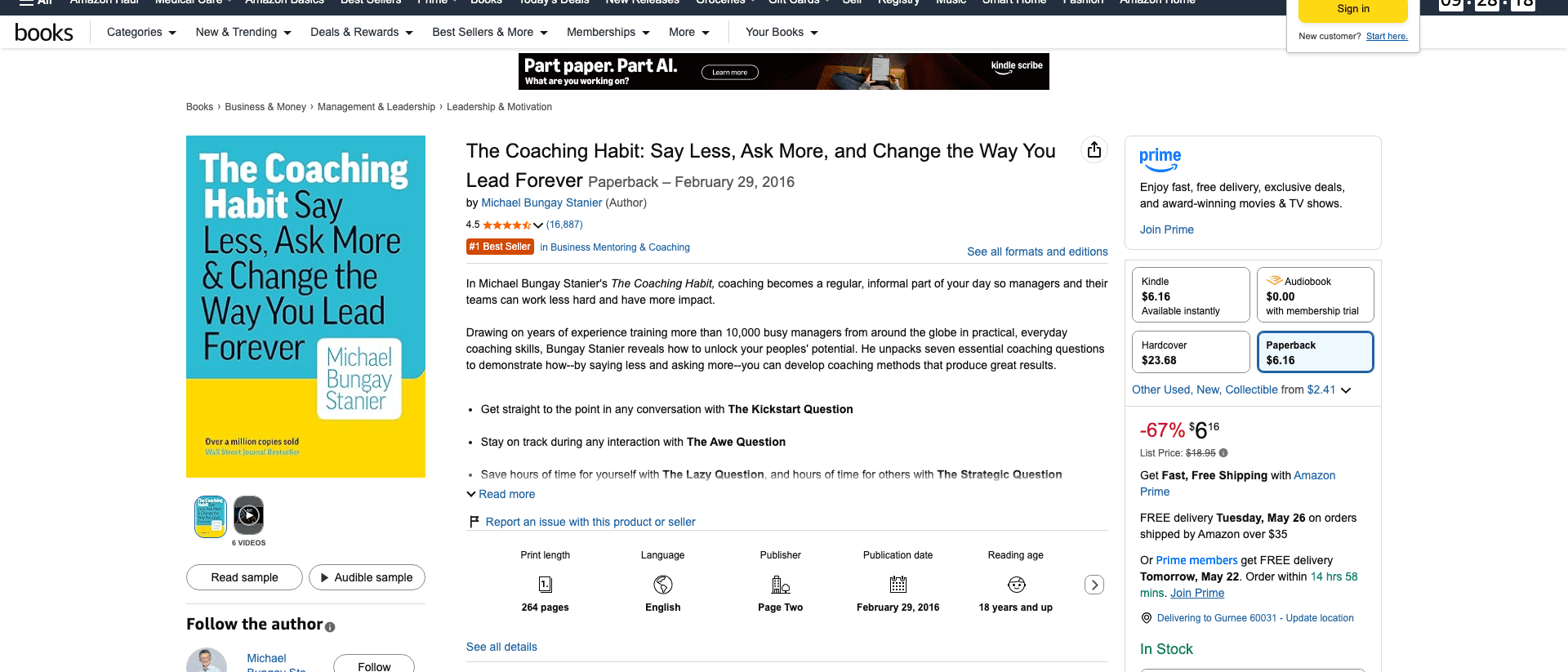
In December 2016, Michael Bungay Stanier published The Coaching Habit. He had spent two years quietly building an early-reader list of coaches, HR leaders, and people who had bought his older work. When the book hit Amazon, he had pre-promised reviews already drafted in those readers' notes apps, waiting for launch day. By the end of week one, he had over 80 reviews. By the end of the month, several hundred. The book now sits at more than 18,000 ratings and is the best-selling coaching book on Amazon.
Most coaches do the opposite. They publish on Tuesday, text three friends on Wednesday, and refresh the product page on Sunday wondering why there are only two reviews. Then they wait. Six months later, the book still has nine reviews, the Amazon algorithm has decided it is dead, and the coach quietly stops mentioning it.
The gap between Michael Bungay Stanier and the average self-published coach is not talent. It is a launch list and a window. If you are a coach in 2026, your book needs 25 reviews in the first 30 days or Amazon's algorithm will bury it under the 1.4 million other titles published every year. The 25 number is not arbitrary. It is the threshold at which Amazon starts trusting the social proof enough to show your book to cold buyers who searched a keyword. Below it, you are invisible.
This article is the system to hit 25 reviews. It is not a list of tricks. It is the four-stage protocol we have watched dozens of coaches use to launch a book that actually keeps selling after week one. Some of it is uncomfortable. None of it violates Amazon's review policy.
Key takeaway: For coaches launching on Amazon KDP in 2026, hitting 25 reviews in the first 30 days is the algorithmic gate that decides whether your book gets organic visibility or dies. The 25-Reviewer Launch Stack runs in four stages: build the ARC list 8 weeks before launch, distribute advance copies 4 weeks out, sequence asks across the 72-hour window after launch, and run a triage protocol if you stall. Built&Written generates the manuscript and KDP package so you can run this stack while the book is in the editor, not after.
Why 25 reviews is the number that actually matters
Amazon does not publish its ranking algorithm. But the patterns are stable enough that authors, indie publishers, and KDP consultants have reverse-engineered the breakpoints. Below 10 reviews, your book is treated as new and unverified. Between 10 and 25, you start appearing in some "also-bought" sidebars but the search algorithm is cautious. At 25, you cross a confidence threshold and the algorithm starts feeding you to cold buyers in your category. At 50, the snowball begins because new buyers are now generating reviews themselves.
The math is brutal once you understand it. Industry estimates suggest that on average, between 1 in 50 and 1 in 100 readers leaves a review on Amazon for a non-fiction book. So if you want 25 organic reviews, you need somewhere between 1,250 and 2,500 readers to find your book first. For a brand-new coaching book with no algorithmic visibility, generating 1,250 organic readers in 30 days is not realistic.
That is why every coach who has launched a book that actually sells has manufactured the first 25 reviews from a curated list of people they identified before launch. This is not a hack. Amazon's own KDP help center explicitly permits authors to share advance reader copies and request honest reviews, as long as you do not offer payment, free product in exchange for a guaranteed positive review, or anything that crosses the line into compensation. The Federal Trade Commission's review guidelines say the same thing. The line is between "I gave you a free copy, please share your honest opinion" (allowed) and "I will pay you $20 to leave a 5-star review" (forbidden).
So the question becomes: how do you find, recruit, and sequence enough advance readers to hit 25 honest reviews in the launch window? That is what the rest of this article answers.
If you are still drafting your manuscript and have not started thinking about reviews, that is fine. The earlier you start building the list the better. If you want to compress the writing side so you can spend more weeks on the launch side, Built&Written assembles a KDP-ready manuscript from content you have already written. The output is a print-ready PDF and ePub plus a complete Amazon KDP listing in days, not months, which frees up your calendar to run the review stack.
Why coaches struggle with this even though their network is huge
Coaches read this article and assume they will be fine. They have 8,000 LinkedIn followers, a 2,000-person email list, two podcasts they appear on regularly, and a quarterly newsletter. Surely 25 reviews from that base is trivial.
It is not. Three reasons.
First, LinkedIn followers are not Amazon reviewers. They liked your post about hiring. They have never opened your email about a new product. Asking 8,000 LinkedIn followers to buy your book on day one will get you maybe 40 buyers and maybe 4 reviews. The conversion rate from a passive social audience to an actual Amazon reviewer is brutal because there are four separate friction points: see the post, click through, buy the book, finish enough to review, actually go back to Amazon to leave the review. Each step loses 60 to 80 percent of the audience.
Second, your warm network gives less than you think. Coaching clients are happy you wrote a book. They will tell you "I bought it!" and mean it. About a third of them actually buy. About half of those actually finish. About a quarter of those actually leave a review. So a 50-person client list, fully activated, gives you maybe 2 reviews. You need a structured system that goes wider than current clients.
Third, you do not have a list of "advance readers" because coaches rarely build one. Authors build them deliberately over years. Coaches usually realize they need one three weeks before launch and then panic-text fifteen people.
The fix is to treat the first 25 reviewers as a project that runs in parallel with the manuscript, not as a thing you do after the book is live. Start at least 8 weeks before launch. If you are working from a content base you already have and the manuscript takes you 2 weeks instead of 6 months, that 8-week runway is plenty. If you are still drafting from scratch, the launch list should be built in the same calendar weeks you are writing.
The 25-Reviewer Launch Stack
Here is the stack in one place. Each stage has a clear deliverable and a clear week-out timeline. The rest of the article unpacks each stage.
Stage 1: Identify your 50 best candidates. 8 weeks before launch. Output is a spreadsheet with 50 names, emails, and the specific reason each person is a candidate. The reason matters because it dictates how you ask.
Stage 2: Build and distribute the ARC. 4 weeks before launch. Output is an Advance Reader Copy (ARC) of the finished manuscript in PDF and ePub form, plus a simple cover letter and instructions for posting a review on launch day. Distribute to at least 35 of the 50 candidates.
Stage 3: Sequence the launch-week asks. 72 hours before, during, and after launch. Output is the actual sequence of emails, DMs, and follow-ups that produce 25 confirmed reviews by day 30.
Stage 4: Run the diagnostic if you stall. If you are at 8 reviews on day 14, the stall is fixable but only if you diagnose the right step. Output is the right rescue play for the right bottleneck.
The whole stack assumes you have a KDP-ready manuscript and an Amazon listing ready before week 4. If you do not, you will be juggling the writing while the launch-list work falls behind. This is the most common reason coaches miss the 25-review target. They are still polishing chapter 7 in week 3.
If you want to compress the manuscript side, Built&Written's KDP Launch Co-pilot generates a print-ready PDF, ePub, cover, and the full Amazon KDP listing (title, subtitle, description, keywords, categories) from content you have already written, including LinkedIn posts, podcast transcripts you have transcribed externally, and notes. The point is not to skip the writing. The point is to free up 6 weeks of calendar for the launch list. We have watched coaches who used the time to build a 60-person ARC list end up with 40-plus reviews in the first 30 days, well above the 25-review minimum.
Stage 1: Identify your 50 best candidates 8 weeks before launch
The 50-person list is not a brain dump of everyone who likes you. It is a structured roster across five categories. Each category has a different ask rate, a different conversion rate, and a different role on launch day.
Category A: Current and recent coaching clients. Aim for 12 names. These are people who have paid you in the last 18 months. They have the highest trust and the highest motivation to support you, but they are also the busiest. The conversion rate from "I will read it" to "I left a review" is around 30 percent if you nurture them. Pick the 12 most likely to actually finish a book and leave a review, not the 12 highest-paying.
Category B: Past clients and warm graduates. Aim for 10 names. These are people who paid you between 18 months and 5 years ago. Their conversion is lower (20 percent), but they are emotionally tied to whether your career succeeds and will often write the most detailed reviews because they have a specific outcome story to anchor the review on. The reviews you get from this group are often the highest-quality reviews on the entire page.
Category C: Peer coaches and colleagues. Aim for 10 names. These are other coaches in your network, ICF certified or not, who run adjacent or non-competing practices. Their conversion is around 40 percent because they understand the launch-week stakes and want to support each other. Their reviews carry weight with Amazon's algorithm because the reviewer profiles often have other coaching-book reviews on them, which Amazon reads as topical authority.
Category D: Podcast hosts and content collaborators. Aim for 8 names. These are hosts who have featured you, peers who have collaborated on content, and reciprocal-promotion partners. Their conversion is around 25 percent and their reviews are often shorter, but they tend to write reviews that include your name and credentials, which helps Amazon's keyword indexing.
Category E: Top 50 newsletter subscribers, LinkedIn DMs, and superfans. Aim for 10 names. These are people who comment on every LinkedIn post, reply to every newsletter, or have DM'd you about coaching but never bought. Their conversion is the lowest (15 percent), but they show up because you finally gave them a way to say thank you publicly.
That is 50 names. Build the list in a spreadsheet with seven columns: name, email, category, the specific reason they are on the list, the angle of your ask, whether they have Amazon Prime, and the date you contacted them. Yes, Amazon Prime matters. We come back to that in Stage 3.
The "specific reason" column is non-negotiable. If you cannot fill it in for a candidate ("Sarah hired me in 2024 for executive coaching, finished the engagement satisfied, mentioned in our final session that she'd been talking up the work to her HR team"), they are not on the list. You are looking for evidence that they will actually open the email and act on it. Generic "she likes my LinkedIn posts" is not enough. The list is small because it is curated. A 50-person targeted list outperforms a 500-person generic list every time.
Once the list is built, the work is to keep them warm during the 4 weeks while you finalize the manuscript. The simplest way is a "behind the scenes" newsletter sent to the list only, 3 emails total over those 4 weeks. Email 1: "I'm publishing a book on [date]. Here is why you are on the early-reader list." Email 2: "Here is a 1-page sneak peek of chapter 3 and the framework I developed for it." Email 3: "Your ARC is coming in 7 days. Here is what I'm asking from you."
If you have never thought of yourself as a marketer, this list-building feels uncomfortable. That is okay. The discomfort is doing the math: a coaching book that hits 25 reviews and ranks for category keywords on Amazon converts to 2-3 inbound leads per month for the next 18 months. At a $30,000 retainer per landed coaching engagement, the math is clear. Be uncomfortable for 8 weeks.
Stage 2: Build and distribute the ARC 4 weeks before launch
The ARC is your finished manuscript in PDF and ePub form, sent to the 50 candidates 4 weeks before launch day. The "advance" framing matters because it signals to the reader that they are getting something before the public, which raises the perceived obligation to actually read and review.
You need three artifacts.
Artifact 1: The ARC files. PDF for desktop readers and ePub for Kindle readers. The PDF should be the actual interior layout that will go to KDP, not a Word export. If your book has KDP-compliant interior formatting (proper margins, page numbers, chapter openers), the ARC reader sees what a real book reader will see. This matters because it tells the reviewer this is a finished product, not a draft. Coaches who send Word-doc ARCs see lower reviewer engagement because the document feels unfinished.
If you do not have a tool that exports KDP-ready PDF and ePub side-by-side, this is one of the slowest manual steps. Built&Written's export produces both formats from the same manuscript in one step. Tools like Atticus and Vellum also handle this; if you are deciding between options, our book formatting software comparison walks through trade-offs.
Artifact 2: The cover letter. A one-page note that goes with the ARC. Three paragraphs. Paragraph one: a personal sentence about why they are on the list. Paragraph two: what you are asking ("read the book, post an honest review on Amazon launch day"). Paragraph three: the launch date and a specific subject line they should look for on launch morning so the email does not get lost.
The cover letter is not the place to pitch them on the book's value. They are already on the list because they trust you. The cover letter is logistics.
Artifact 3: The reviewer instructions. A separate one-page PDF that goes inside the ARC zip, titled "How to post your review on launch day." This is operational. It includes the exact Amazon URL where the review will eventually live, the steps to leave a review on Amazon (which has changed three times since 2023 and is non-obvious to people who do not buy books on Amazon often), the rules about not mentioning that you got a free copy in exchange for a review (which is allowed by Amazon as long as you disclose, but Amazon's automated systems sometimes flag "I received a free advance copy" language, so many authors now ask reviewers to skip the disclosure if they want, since the FTC says verbal disclosure is enough in a personal relationship), and a few sample sentences they can riff from if they get stuck.
The sample sentences matter. The single biggest reason an advance reader does not post a review is "I don't know what to say." Solve that with a one-paragraph template that anchors on a specific chapter or framework. They will use it as a starting point and write their own thing.
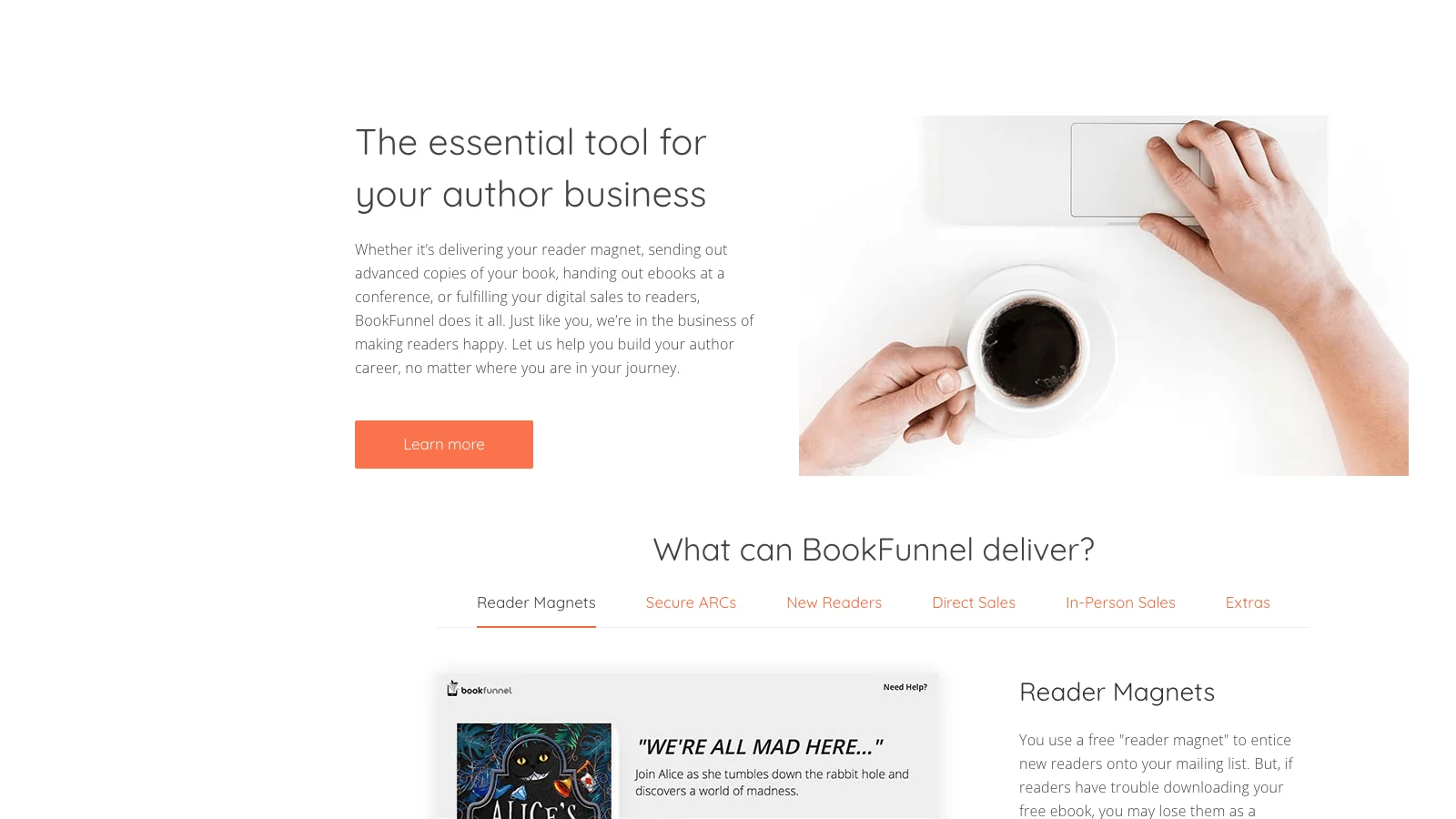
A note on platforms. You can run the ARC distribution yourself via email, which is what most coaches do. Or you can use a dedicated ARC platform like Booksprout or BookFunnel, both of which handle the file delivery and the review-reminder sequence for you. For a 50-person list, doing it manually is fine and gives you a personal touch. For a 200-person list, the platforms save you time.
Send the ARC 28 days before launch. Send a follow-up "checking in" email at 14 days before launch. Send the reviewer instructions reminder at 3 days before launch. Send the "launch is live, here is the URL" email on launch morning at 8am in your timezone. This sequence is what produces 25 reviews. Skipping any of those touchpoints drops the conversion rate to 15 percent.
Stage 3: The launch-week reviewer mechanic (the 72-hour window)
Launch week is where most coaches lose the 25-review goal. The book goes live, they post on LinkedIn, they email their list once, and they assume the system will run itself. It does not.
The 72-hour window after launch is when Amazon's algorithm assigns your book its initial category ranking. Reviews that come in during this window are weighted more heavily than reviews that come in on day 18. So you want as much of the 25 to happen in the first 3 days as possible.
Here is the hour-by-hour mechanic.
Launch day, 6am: Amazon goes live. Confirm the book is live by searching the title and the primary keyword. Sometimes the live-go is delayed by a few hours.
Launch day, 8am: Send the launch email to the 50-person ARC list. Subject line should match what you told them to look for. Body: "It's live. Here is the Amazon URL. Here is the review URL. Thank you for being on the early-reader list." Include the direct review URL (Amazon's URL pattern is https://www.amazon.com/review/create-review/?asin=YOUR_ASIN), which skips the product page and drops them directly into the review form. The fewer clicks, the higher the conversion.
Launch day, 10am: Post on LinkedIn. This is for the broader network, not the ARC list. The post should not say "buy my book." It should tell a 200-word story about the launch ("Two years ago, I sat down to write this because..."), include the Amazon link, and end with a specific ask: "If you've read an advance copy, this is the day to post your review."
Launch day, 12pm: Personal DMs to the 12 Category A names (current and recent clients). Not a bulk DM. A specific, 2-sentence message: "It's live today. If you want to leave a review, here is the direct link." These convert at 70 percent because of the personal touch.
Launch day, 4pm: Check the review count. You should have 6-10 reviews by end of day one. If you have 3 or fewer, the launch email did not deliver to spam-protected inboxes and you need to resend with a different subject line.
Day 2, 9am: Follow up with the Category B (past clients) and Category D (podcast hosts) lists. Single email, similar to the launch email. Different subject line. These groups skew toward "I'll get to it later" so you need to bring them back.
Day 3, 9am: Personal DMs to Category C (peer coaches). Most peer coaches will already have reviewed by day 3 if they are going to. The ones who haven't probably need a personal nudge. Send a 1-sentence DM.
Day 5: Check the review count. You should be at 15-20. If you are above 20, you will hit 25 on the back of momentum. If you are below 15, you need to trigger the diagnostic protocol (Stage 4).
Day 7-14: Slow drip. Reviews in this window come from people who bought from your LinkedIn post but were not on the ARC list. The cadence is one DM per day to a Category E person (newsletter superfans, LinkedIn commenters) who you noticed engaged with the launch post.
Day 21: Final push. A second LinkedIn post, framed as "thank you to the 22 reviewers" (specific number creates social proof), with a soft ask for any remaining advance readers who have not posted yet.
That is the mechanic. If you run it, you will hit 25 reviews by day 28 unless something is broken in the system. If it is broken, Stage 4 tells you what to fix.
A note on Amazon Prime. Reviews from accounts that have Amazon Prime are weighted slightly higher in some category ranking signals because Amazon treats them as more "active" customers. This is why the ARC list spreadsheet has a column for it. When you're building the 50-person list, prioritize candidates who you know have Prime. For most US-based coach clients in 2026, this is 75 to 85 percent of them, so the prioritization is more about edge-case decisions than a hard filter.
If you want a deeper read on how the listing itself impacts whether reviews convert into ranking gains, our walkthrough on how to write a book description for Amazon covers the description-and-keyword side that complements the review work.
What Amazon actually allows (and the rules that get reviews removed)
This is the section coaches usually skip. Then six months later, they wake up to find that Amazon has removed 8 of their 25 reviews, and they cannot figure out why. The cleanup is uglier than the prevention.
Here is what Amazon allows.
Allowed: Sharing free advance copies and asking for honest reviews. The cover-letter language matters. "Please share your honest opinion" is fine. "Please leave a 5-star review" is not.
Allowed: Asking friends, family, and clients to review. As long as they were not paid and were not promised anything in exchange beyond the free book itself.
Allowed: Cross-promotion with other authors. "I reviewed your book, you review mine" is technically a gray area. The text of Amazon's policy says you cannot "offer a review of another product in exchange for a review," but the enforcement is inconsistent. Most authors in our research said they avoid explicit quid-pro-quo and instead just genuinely promote each other's work.
Allowed: Hosting a launch team or "street team." As long as the team members are not paid and the asks are for honest opinions only.
Here is what Amazon does not allow.
Not allowed: Paying for reviews. Even $5 gift cards. Even "I'll send you a free coaching session if you review my book." Amazon's automated systems are not very good at catching this, but their human review team is, and once flagged, your reviews start getting purged retroactively.
Not allowed: Reviews from people Amazon thinks have a personal or financial relationship with the author. This is the rule that catches coaches off guard. Amazon's algorithm sometimes flags reviews from accounts that have repeatedly interacted with the author's other products (other books, courses, services purchased via Amazon-linked accounts). Reviews from your spouse, business partner, and direct employees are particularly likely to get removed. Reviews from coaching clients are fine because Amazon does not know about that relationship.
Not allowed: Reciprocal reviews where you and another author explicitly swap. As above, enforcement is inconsistent, but the policy is clear.
Not allowed: Generic "review swap" groups, especially the Facebook groups that promise "we'll review yours if you review ours." Amazon's algorithm has gotten quite good at detecting these patterns because the reviewer accounts cluster: 50 reviews on 50 different books by 50 different authors, all within a 2-week window. When that pattern is detected, all the reviews from the cluster get removed.
The cleanup, if it happens, is: any review identified as policy-violating is removed without warning. The reviewer's account may be flagged for future scrutiny. If a pattern emerges across multiple of your reviews, your author account may be flagged, which slows down future review processing and in extreme cases can result in temporary account suspension.
Avoid all of the above by sticking to one rule. Anyone you give a free ARC to was given it because you have a real relationship with them and you trust them to write an honest opinion. If you cannot defend the relationship to an Amazon reviewer auditor, do not send them an ARC.
You can read the official guidelines at the Amazon Community Guidelines and the Amazon KDP Help review pages. Both are short. Both are worth reading once before you launch.
What to do if you stall at 8 or 12 reviews on day 14
You ran the system. You sent the ARCs. You did the launch-day email. You did the LinkedIn post. It is day 14 and you are at 11 reviews and the line is flat.
Do not panic. Diagnose.
There are five common stall causes. Each has a specific rescue play.
Stall cause 1: Your ARC list was too small. If you had 30 candidates instead of 50, and the conversion rate is in the 20 to 30 percent range, you are mathematically capped at 6 to 9 reviews from that source alone. The rescue is to expand the list. Look at your last 30 LinkedIn comments. Look at your newsletter open list (the people who have opened the last 5 newsletters). Look at the contact list of every podcast you have been on. Send a "I just published a book and I'd love to send you a free copy" email to 30 more people right now. Conversion rate at this stage is lower (10 to 15 percent) because the launch energy is gone, but it can still produce 3-5 more reviews.
Stall cause 2: Your ARC readers did not finish the book. This is the most common cause. They started, got distracted, and forgot. The rescue is a re-engagement email with a hook back into the book. "I noticed you opened the ARC three weeks ago but haven't posted a review yet. No pressure. If you want to come back to it, the part I'd most love your reaction on is chapter [X], specifically the [framework name] section." This gets 30 percent of stuck readers re-engaged.
Stall cause 3: Reviews are being posted but not appearing. Amazon's review-posting system has a 24-72 hour delay during which reviews are in a queue. Sometimes reviews get flagged automatically and held for human review, which can take 5-7 days. Sometimes reviews from new Amazon accounts (people who created an Amazon account recently) get held longer. Check the actual count on the product page versus what your readers tell you they posted. If there's a gap, the reviews are in the queue and you just need to wait. Do not have your readers re-post; that triggers the spam detection.
Stall cause 4: Your Amazon listing is not converting traffic. People are clicking through from your LinkedIn post, but the listing itself (title, subtitle, description, cover) is not converting. They land on the page and bounce. The rescue is a listing audit. If the cover looks amateurish (the most common issue), a professional cover redesign can lift conversion 30-50 percent. If the description is weak, rewrite it using the formula in our how to write a book description for Amazon guide. Once the listing converts, the buyers turn into reviewers downstream.
Stall cause 5: Your category and keywords are mismatched. Your book might be a personal-development-for-coaches book that you accidentally listed under "Business & Money > Industries > Professional, Career & Resumes" instead of "Self-Help > Self-Esteem" or "Health, Fitness & Dieting > Mental Health." The wrong category means the buyers who would actually want your book never see it. Fix the categories via KDP (you can change them at any time), then re-run a small LinkedIn ad ($50/day for 5 days) targeting the right audience. New buyers from the corrected targeting are more likely to leave reviews because they are the actual reader you wrote for.
If you have run all five rescue plays and you are still stuck at 12 reviews on day 30, the issue is upstream of the launch. It is the manuscript, the positioning, or the cover. That is a separate problem and outside the scope of this article. But by then you will know which one it is.

How Built&Written fits into this stack
You can run the 25-Reviewer Launch Stack with any writing tool. The system is tool-agnostic. But the math gets easier the faster you can put a finished manuscript in the hands of advance readers.
Most coaches we work with were planning to write the manuscript over 4 to 6 months. They had the content (LinkedIn posts, podcast transcripts they transcribed externally via Otter, course materials, client session notes), but the assembly was the bottleneck. By the time the manuscript was done, they had two weeks before their target launch date and no ARC list.
Built&Written collapses the manuscript side. You paste your existing content into the editor, or you upload a docx or txt of your notes, or you import from a URL. Voice DNA learns your writing samples (5 to 50 pages of your characteristic prose), and the AI assembles a chapter-by-chapter draft that sounds like you wrote it. The output is a print-ready PDF, an ePub for Kindle, a cover designed via the integrated cover designer with correct spine math, and the KDP Launch Co-pilot generates the full Amazon listing including title, subtitle, description, keywords, and categories. Plus a pre-filled LinkedIn announcement post for launch day.
The whole package is downloadable as a ZIP you upload to KDP yourself. Pricing is from $19 a month, with a free tier. We do not auto-post to LinkedIn (you copy and post), we do not integrate with LinkedIn for content ingest (you paste from LinkedIn), and we do not upload to KDP for you (you upload the ZIP).
What this gives you is calendar. If the manuscript-to-export part of the project compresses from 4 months to 4 weeks, you have 4 extra months to build the 50-person ARC list, run the warm-up sequence, and execute the launch-week mechanic. That is the part that drives 25 reviews. If you want to see what it looks like end-to-end, our coach-to-author KDP walkthrough maps the full path from content to live Amazon listing.
The single most useful piece of advice we give coaches: start the ARC list the day you start the manuscript. Not the day you finish it. Every week of overlap between writing and list-building compounds in your favor on launch day.
Sources & References
- Amazon KDP Help: Customer Reviews
- Amazon Community Guidelines
- The Coaching Habit on Amazon
- Booksprout: ARC delivery platform
- BookFunnel: Author tools for distributing advance copies
- Built&Written: KDP-ready manuscript and Amazon listing assembly
- Federal Trade Commission: Endorsement Guides
- International Coaching Federation
- Atticus: Book formatting software
- Vellum: Book formatting software
Frequently asked questions
Yes. Amazon's policy explicitly allows authors to ask friends, family, and clients for honest reviews. The line is between asking ("Please share your honest opinion") and incentivizing ("I'll give you a discount on your next session if you review"). The first is fine. The second is not. In practice, coaching clients are some of your best reviewers because they have a specific result story to anchor a review on. Just do not promise them anything in exchange.
Plan for 30 days of intentional review-building. The 72-hour window after launch is the most algorithmically important, but real coaches who hit 25 reviews are typically generating reviews at a steady pace through day 28 from the slow-drip of Category E (newsletter superfans) and bounce-back readers from earlier categories. By day 30, you have either crossed 25 or you have triggered one of the Stage 4 rescue plays.
Build with whoever you have, then expand outward. A 20-person list of high-conversion candidates (current clients, peer coaches, podcast hosts) is better than a 100-person list of strangers. The list size matters less than the relationship density. With 20 high-quality candidates at 30 percent conversion, you are at 6 reviews from the ARC. You then need to make up the remaining 19 from launch-day social posts, your newsletter, and the slow drip. It is harder, but possible.
Not in the first 30 days. Paid ads bring buyers, not reviewers, and the conversion rate from buyer to reviewer is 1-2 percent. To buy 25 reviews via Amazon Ads, you would need to drive 1,250 to 2,500 buyers, which at a typical KDP cost-per-click of $0.40 to $1.50 and a 5 percent conversion rate to purchase costs $400 to $1,500 in ad spend per 25 reviews. The ARC system costs $0 and gets you the same 25 reviews. Run paid ads in months 2-12 for ongoing visibility, not for the launch-week review push.
A finished, edited manuscript. Not a draft. Sending an ARC with typos and inconsistent formatting tells your advance readers that you are not serious, and the reviews you get back will reflect that. If you would not pay $15 for the book on Amazon, do not send it as an ARC. If you are running tight on time, the right move is to delay the launch by 2-3 weeks, not to send a half-finished ARC. The launch date is flexible. Your reputation is not.
Yes, but Amazon is the priority for non-fiction. Goodreads reviews matter more for fiction. For a coaching or business book, the Amazon review count drives algorithmic visibility, which drives sales, which drives more reviews. Goodreads is a secondary channel. If you have spare cycles, run a smaller Goodreads version of the stack with maybe 10 advance readers from your fiction-reading network. But do not dilute the Amazon push to do it.
You can still run a modified version of Stages 1-3, even if your launch window has closed. The 72-hour algorithmic weight is gone, but Amazon still factors review velocity. Building a fresh 25-person ARC-style list (people you haven't asked yet) and running them through Stages 2 and 3 over a 4-week window can lift you from 11 to 25 reviews and re-trigger some category visibility. The lift is smaller than a fresh launch, but the system is not single-use.
Yes. Built&Written exports a print-ready PDF and ePub from the same manuscript in one step. Both are formatted for KDP (correct trim sizes, margins, gutters that scale with page count) and ready to send to advance readers. The cover PDF is generated by the integrated cover designer with correct spine math based on page count and paper type. The KDP Launch Co-pilot also generates a complete Amazon listing including title, subtitle, description, keywords, and categories.
Sources & References
- Amazon KDP Help: Customer Reviews
- Amazon Community Guidelines
- The Coaching Habit on Amazon
- Booksprout: ARC delivery platform
- BookFunnel: Author tools for distributing advance copies
- Built&Written: KDP-ready manuscript and Amazon listing assembly
- Federal Trade Commission: Endorsement Guides
- International Coaching Federation
- Atticus: Book formatting software
- Vellum: Book formatting software
About the author

Mykhailo Druz
More in KDP Publishing
Ready to write your book?
Turn your expertise into a professional book with Built&Written.