


How Long Does It Take to Write a Business Book? A 2026 Timeline

The direct answer: writing a business book takes 9 to 18 months on the traditional path, and 8 to 14 weeks with AI assembly if your source content already exists. For calibration, look at Atomic Habits. James Clear signed his book deal years before the book shipped in October 2018, and he has talked openly in interviews about the multi-year arc. Every chapter reads compressed because it took years of writing, cutting, and rewriting to get there. That is what a traditionally-paced business book looks like in real life.
Now consider the coach reading this in 2026. You have a book idea you have been circling for two years. You have a folder of LinkedIn posts that already sound like book chapters. You have podcast guest appearances, client session notes, a Substack you started and abandoned, three Google Docs labeled "book outline v1" through "v3". You do not have three years. You have a Q4 pipeline that needs to be warmed up and you would like the book to be in your hands before next year's sales conversations start.
So how long does it actually take to write a business book in 2026? Not the Clear answer. The coach answer. The one that accounts for the fact that you are running a business while you write, that your content already exists in fragments across five platforms, and that the tools available in 2026 are not the tools James Clear had in 2014.
This article is the honest schedule. It covers the five phases every nonfiction book passes through, what each phase actually costs in calendar weeks, and where AI assembly tools (the category Built and Written sits in) bend the timeline. Read it before you commit a date to your launch calendar.
Key takeaway: For coaches in 2026, the realistic timeline to write and publish a business book is 9 to 18 months on the traditional path, 8 to 14 weeks on the AI-assembled path if you already have source content. The bottleneck is no longer drafting. It is editing, production, and launch runway.
The Realistic Business Book Timeline (RBT) runs in 5 phases: Plan, Draft, Edit, Produce, Launch. Built and Written collapses Phase 2, the historical bottleneck, to under a week for coaches with existing source material like LinkedIn posts, podcast transcripts, and client notes. The other 4 phases are gated by editing and launch quality, not by raw word production.
Why most coaches think the timeline is shorter than it actually is
Open any "write your book in 30 days" landing page and you will see the same pitch: outline in a weekend, write 1,667 words a day for 30 days, hit your 50,000-word target by the end of the month. NaNoWriMo proved this works for novelists. A small army of self-help authors have repackaged it for nonfiction. And every January, hundreds of coaches commit to the timeline, write for 11 days, and quietly stop.
The 30-day pitch is not a lie. The math works. The reason most coaches do not finish is not the writing speed. It is everything that surrounds the writing. The book has to be edited, beta-read, restructured at least once, formatted for KDP, given a cover, given a back cover, given metadata, given an Amazon listing, given a launch sequence, given pre-orders, given a back-cover ISBN, and given a publication date that does not collide with the rest of your business. That ecosystem is what the 30-day pitch silently ignores.
A useful contrast: traditional publishing puts a business book on an 18 to 24 month timeline from signed contract to bookstore. That schedule holds even for experienced, full-time authors with established platforms. They are not slow writers. They are pragmatic writers who understand that the writing itself is one phase out of five.
For coaches, the calendar pressure cuts a different way. If you start a book in January, here is what realistic looks like in 2026:
- Traditional path: launch in Q3 or Q4 2026 (9 to 12 months), with significant evenings and weekends invested
- AI-assembled path with existing content: launch in spring 2026 (8 to 14 weeks), with one focused weekend block and a 6-week editing-plus-launch tail
- Ghostwriter path: launch in late 2026 or Q1 2027 (12 to 18 months), with $15,000 to $50,000 in cost. Scribe Media publishes their pricing publicly and the numbers have not gone down in the last two years
If you have been quoted "3 months to a book" by an agency that wanted a deposit, treat it as marketing rounding. The schedule below is the unromantic version.
The Realistic Business Book Timeline (RBT)
Every nonfiction business book passes through 5 phases. Skipping a phase does not save time. It moves the cost to launch, where it is more expensive to fix.
| Phase | What happens | Coach calendar (traditional) | Coach calendar (AI-assembled) |
|---|---|---|---|
| 1. Plan | Pick the topic, define the reader, lock the structure | 2 to 4 weeks | 1 to 2 weeks |
| 2. Draft | Produce the first complete manuscript | 3 to 7 months | 2 to 14 days |
| 3. Edit | Self-edit, beta readers, optional developmental edit | 4 to 8 weeks | 2 to 6 weeks |
| 4. Produce | Cover, interior formatting, KDP files | 1 to 2 weeks | 1 to 2 weeks |
| 5. Launch | Pre-order setup, review run-up, launch day | 2 to 4 weeks | 2 to 4 weeks |
Total traditional: 9 to 18 months. Total AI-assembled: 8 to 14 weeks (60 to 100 days).
Two observations about the table that matter for planning purposes.
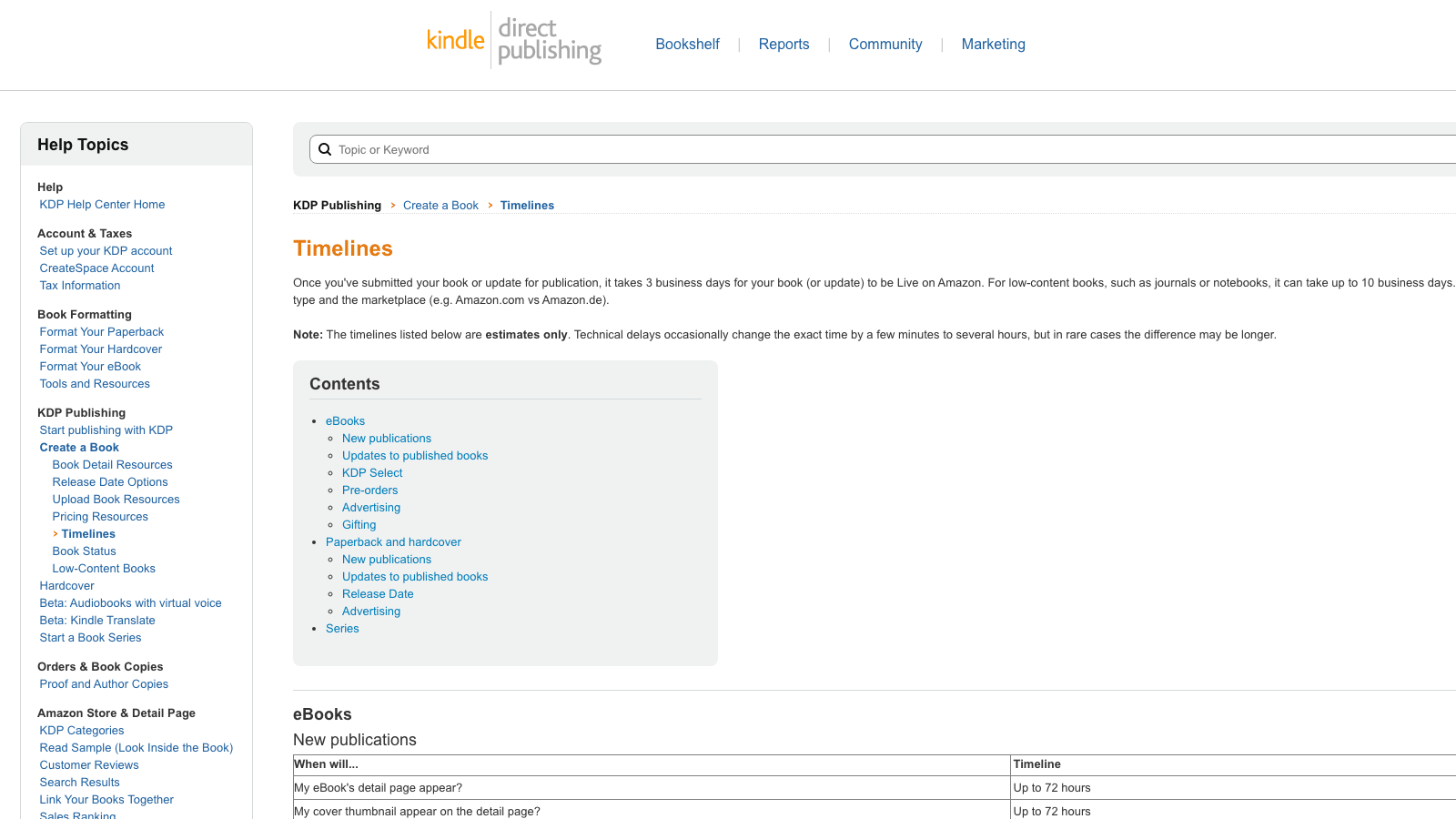
The first: Phase 4 (Produce) and Phase 5 (Launch) are the same in both columns. AI does not compress them. The interior of your book still needs spine math, gutter math, header rules, copyright page, table of contents, and back matter. The launch still needs reviews, an Amazon listing, and a calendar runway. If you assumed AI cuts the back half of the schedule, it does not. The KDP review process alone takes up to 72 hours for new ebooks and "Read Sample" features take 7 to 10 business days to populate.
The second: Phase 3 (Edit) is partially compressed by AI, not fully. AI can do a structural pass and a style pass. It cannot replace beta readers from your actual audience, and it should not. Your beta readers are the people most likely to leave the first 25 Amazon reviews. Skipping them to save 4 weeks costs you the first 25 reviews Amazon's algorithm needs.
So the real compression is concentrated in Phase 2. Drafting is where AI does the heavy lift, because for a coach with existing content, drafting is no longer "write a book". It is "assemble the book that is already implied by what you have written and said". That is a different problem and it takes a different amount of time.
The Realistic Business Book Timeline is the schedule you can actually commit to in front of your spouse, your operations manager, and your Q4 pipeline. The phases below are what each one looks like in practice.
One more calibration before we walk through them. The single number that matters most for predicting whether you actually finish is not your weekly word target. It is the number of hours per week you can reliably block. A coach who blocks 4 protected hours a week and shows up consistently finishes the book. A coach who plans 15 hours per week but blocks none of them does not. We have watched both patterns play out across hundreds of coach customers and the predictor is always the same. Schedule the hours before you commit to the launch date. If you cannot find 4 protected hours per week for the next 9 months on a traditional path, take Path A (AI-assembled) seriously. Not because it is easier. Because the calendar math is honest about your real availability.
Phase by phase: what each one actually costs
This is the granular walkthrough. Use it to plug real dates into your calendar instead of accepting a marketing-flat "3 months".
Phase 1: Plan (1 to 4 weeks)
Pick a topic that earns you clients, not just royalties. We have a full piece on choosing a book topic that earns clients, and the short version is: the topic should answer one specific question for one specific reader, and that question should map directly to your highest-margin service.
Lock these five before drafting starts:
- The single sentence that describes who the book is for
- The promise the reader gets in the first 10 pages
- The structure (three proven nonfiction structures cover most coaching books: Problem-Method-Result, Five-Pillar, Walkthrough)
- The working title and subtitle
- The 8 to 12 chapter headlines
Traditional path: 2 to 4 weeks because most coaches use this phase to also do market research, interview past clients, and read 3 to 5 competing books. AI-assembled path: 1 to 2 weeks because the source material in your archive already implies the structure. The AI's job in Phase 1 is to propose a structure and let you pick.
Phase 2: Draft (the phase that defines the timeline)
This is the phase that breaks 9 out of 10 first-time business book authors. The reason is not difficulty of writing. It is calendar competition. You promised yourself an hour a day. Two months in, three client crises and a school break later, the hour is gone.
Traditional path: 3 to 7 months. A 200-page business book is roughly 50,000 to 60,000 words. At 500 words per hour (a realistic pace for coaches who are not full-time writers), that is 100 to 120 hours of writing. At 5 hours per week, that is 20 to 24 weeks. Add restructuring passes and you land at 24 to 28 weeks.
AI-assembled path: 2 to 14 days. With AI assembly tools, the question shifts from "what do I want to write?" to "what have I already said?" If you have 18 months of LinkedIn posts, you have 30,000 to 80,000 words of usable material. Built and Written ingests pasted content and produces an outlined draft preserving the author's voice through a feature called Voice DNA. The first complete draft is in your hands the same day you start.
This is the moment the coach reading this article either feels relief or feels suspicion. Both are reasonable. The relief is justified because the math works. The suspicion is justified because most coaches have been pitched "AI writes your book" by tools that produce a 40,000-word manuscript that sounds like a Wikipedia article. The difference between a Voice-DNA-driven assembly and a generic AI book generator is not subtle. It is the difference between recognizable prose and noise.
Phase 3: Edit (4 to 8 weeks, partially compressible)
There are three layers of editing every business book needs:
- Structural edit. Does the book deliver the promise on the cover? Does each chapter belong? This is usually one focused weekend.
- Style edit. Sentence rhythm, voice consistency, removing repetition. This is 1 to 2 weeks of evening passes.
- Beta readers. 5 to 10 readers from your target audience reading the manuscript and giving you specific feedback. 2 to 4 weeks of calendar time, because real beta readers are busy people.
AI compresses (1) and (2). It cannot replace (3). The reason: beta readers also become your first reviewers. If you skip beta readers to save 4 weeks, you launch without the first 25 Amazon reviews that Amazon's algorithm uses to decide whether to surface your book.
Phase 4: Produce (1 to 2 weeks)
Interior layout, cover design, KDP file preparation. Three artifacts you need:
- Cover. Front, back, spine, with correct spine math based on page count and paper type. We have a piece on business book cover design that covers what coaches need to be taken seriously.
- Interior PDF. Trim size selected (6x9 is the standard for business books), margins set, gutters scaled, running headers, chapter openers, table of contents auto-generated. Atticus and Vellum are the two best-known formatting tools. Built and Written's integrated formatter handles this in the same flow that produced the draft.
- ePub. For Kindle and other reading apps. Exported from the same source file as the interior PDF.
Time is fixed in this phase regardless of how you wrote the book. It still takes a week or two. Our book formatting software roundup walks through what fits coaches.
Phase 5: Launch (2 to 4 weeks)
Pre-order setup, ARC (advance reader copy) distribution, Amazon listing copy, email sequence to your list, LinkedIn launch sequence, and the launch day push. The launching a book that fuels your business piece breaks this down in detail.
The minimum runway is 2 weeks. The realistic runway is 4 weeks because pre-order momentum is what gets you ranked in Amazon's "Hot New Releases" category. Cutting Phase 5 to save calendar time is the most common mistake coaches make. Do not do it. The book exists to fuel your business, and the launch is what makes that connection happen.
Where most coaches lose months they did not have to lose
This is the section you came here for. The five most common stalls and what causes each one.
Stall 1: The blank-page paralysis at the start of Phase 2. A coach has 30 hours blocked out across the next 6 weeks. They sit down. They open Google Docs. They write "Chapter 1: The Real Problem". They write nothing else. Three weeks later they have moved one Saturday into "next month". The cause is not laziness. It is that drafting from a blank page in 2026 is genuinely harder than drafting in 2014 because the writer is now competing with their own AI tools' suggestion that this should be easier. The fix is to never start from a blank page. Open your existing archive (LinkedIn, Substack, podcasts, notes) and let the structure emerge from what is already there. This is the LinkedIn-posts-to-coaching-book pattern we wrote about previously, and it is the single biggest unlock in the realistic timeline.
Stall 2: Re-outlining mid-draft. You are 30,000 words in. You read it back. You decide the structure is wrong. You start over. This costs 4 to 6 weeks every time, and most first-time authors do it at least once. The fix is to lock the outline before drafting and to use a structured approach (see the three proven nonfiction structures piece). Locking the outline does not mean it is unchangeable. It means the changes are small (move a chapter, add a sub-section) rather than total.
Stall 3: The cover decision. A coach spends 2 weeks designing the cover themselves, hates it, then spends another 3 weeks talking to designers on Fiverr, then 2 more weeks revising. Total: 7 weeks for a cover that should have taken 1. The fix is to set a fixed budget and a fixed deadline for the cover, hire a professional designer (or use Built and Written's integrated cover designer which handles spine math automatically), and accept the third draft. We have a coach-focused cover design piece that covers what to look for.
Stall 4: Waiting for the perfect launch window. "I'll launch after the holidays." "I'll launch after the conference." "I'll launch when my mastermind ends." Six months disappear waiting for a moment that does not actually exist. The fix is to pick a launch date 8 weeks out and commit. Coaches who launch in "imperfect" windows still get the credibility and lead-gen benefit. Coaches who wait for perfect rarely launch at all.
Stall 5: The KDP back-and-forth. First file upload gets rejected for margin issues. Second upload gets flagged for a cover spine that is 2mm off. Third upload finally passes but you discover the "Read Sample" feature takes 7 to 10 business days to populate. Total: 3 weeks of administrative back-and-forth. The fix is to use a tool that exports KDP-compliant files on the first try. The Amazon KDP help system itself confirms the publication timeline is up to 72 hours for ebooks and 7 to 10 business days for paperback "Read Sample" features. Build that into your calendar from day one.
If you avoid all five stalls, the traditional path runs 9 months and the AI-assembled path runs 8 weeks. If you hit two of them, both paths add 6 to 10 weeks.
Tool placement: what to use in each phase
This is the tool map for a coach who wants to compress the timeline without compromising the book.
Phase 1 (Plan): structure proposers, not blank docs
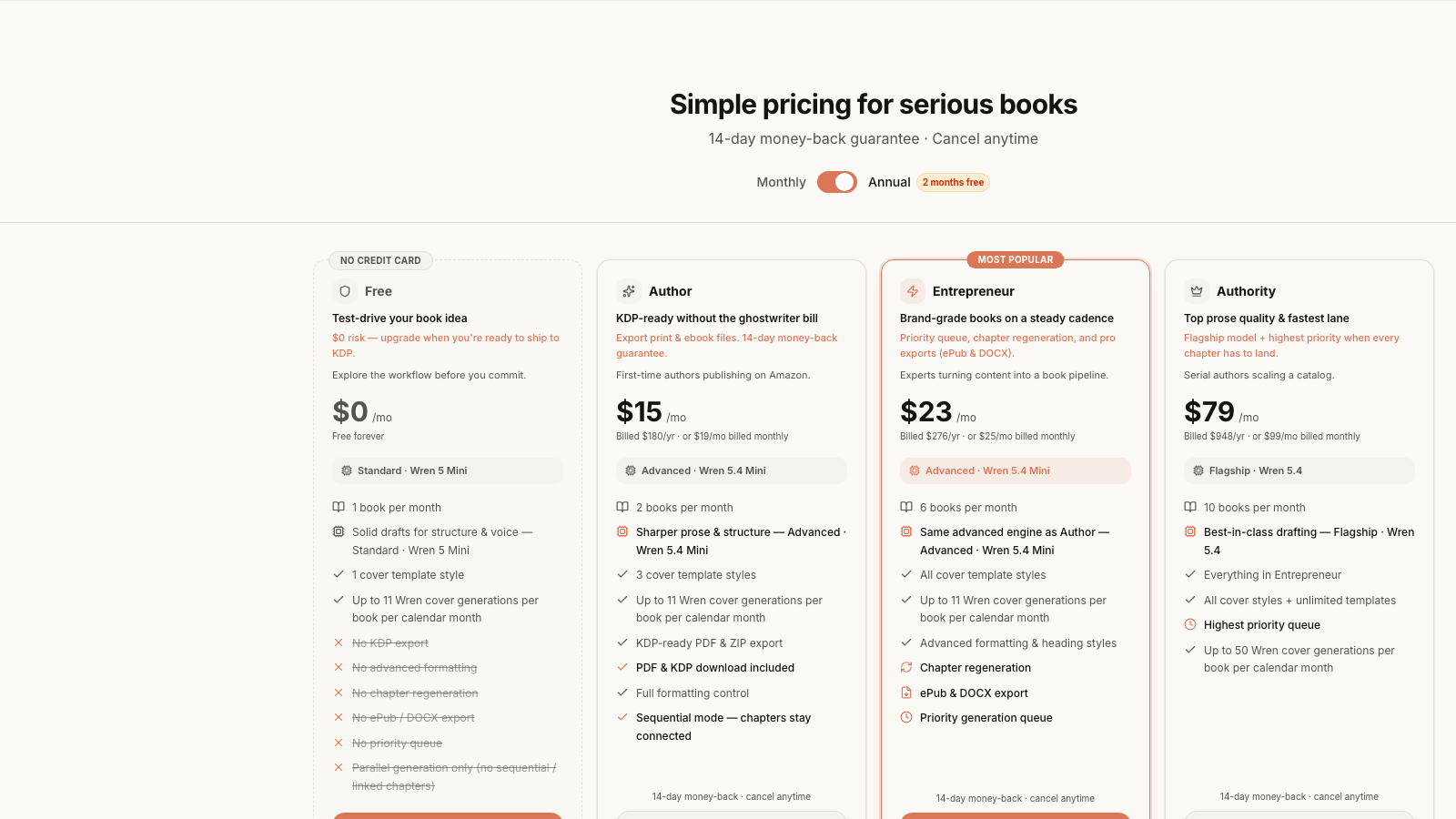
The traditional answer here is Scrivener for outlining and Google Docs for brainstorming. These work. They are also slow because they start blank. For coaches with existing content, the better Phase 1 tool is one that proposes a structure based on what you already have. Built and Written does this by ingesting your pasted content and proposing an outline. You edit the outline before drafting starts. Time saved: 1 to 2 weeks.
Phase 2 (Draft): the phase that defines the timeline
This is where the choice of tool matters most.
- Generic AI writers (ChatGPT, Claude.ai by themselves). Produce drafts that need heavy rewriting. Voice is generic. Suitable for short pieces, less suitable for a 60,000-word coherent manuscript.
- Sudowrite. Built for fiction writers. Strong story development tools. Less ideal for business books because the prompts and feedback loops assume narrative structure.
- Squibler. AI-assisted book writing platform with templates. Reasonable middle ground for nonfiction with general topic categories.
- Built and Written. Voice DNA preserves the author's recognizable voice from samples. Designed for content-to-book assembly. Produces a 200+ page draft from pasted content in minutes. Includes structure proposal, chapter generation, and chapter editing.
- Ghostwriting services (Scribe Media, Lioncrest). The traditional answer. Slow (12 to 18 months) and expensive (the Scribe Media pricing page lists packages from low five figures into the high five figures). High quality. Used by coaches who can pay to outsource the entire phase.
For a coach with existing content who wants the timeline compressed without losing their voice, AI assembly with voice preservation is the right category. The honest read on the alternatives: ghostwriting works if you have the budget, generic AI writers do not produce launch-ready manuscripts, and outlining tools (Scrivener) do not actually solve the drafting bottleneck.
Phase 3 (Edit): hybrid AI plus human
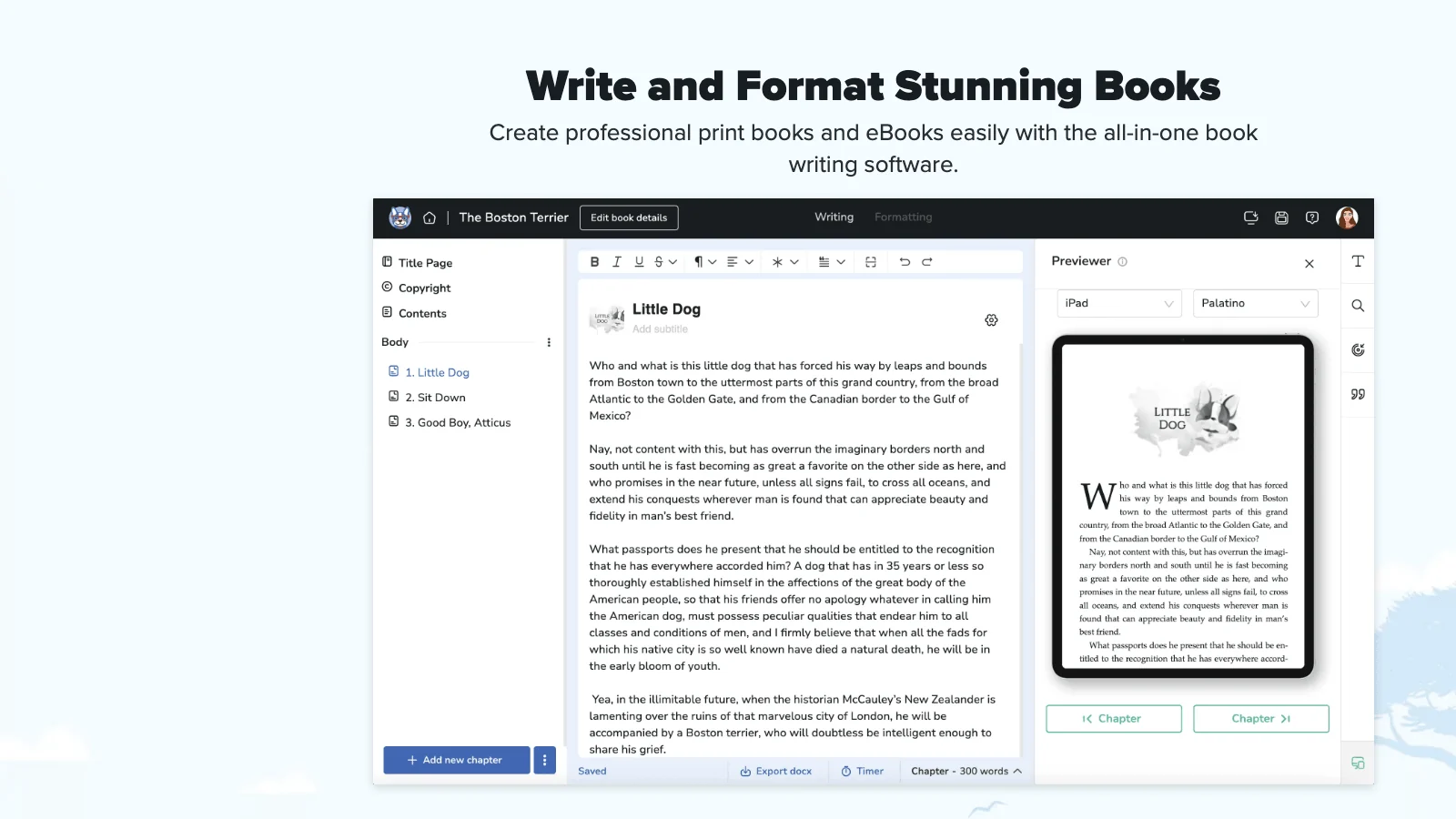
The fastest editing stack in 2026:
- AI structural pass. Use the same AI tool that drafted the book to flag pacing issues, repeated arguments, and weak transitions. 2 to 4 hours.
- AI style pass. Same tool, focused on sentence rhythm and voice consistency. 2 to 4 hours.
- Beta readers. 5 to 10 humans from your audience, 2 to 4 weeks of calendar time.
- Final author pass. You, reading the final manuscript aloud. 1 weekend.
The hybrid stack cuts the traditional 8-week editing phase to 4 to 6 weeks without losing the parts that matter (beta readers, author voice). Skipping any of the 4 steps creates a manuscript that reads finished but is not.
Phase 4 (Produce): formatters and cover designers
Atticus ($147 one-time, see our Atticus walkthrough for coaches) and Vellum ($199 to $249, Mac-only) are the dedicated formatters. Both produce KDP-ready PDFs and ePub. Built and Written's integrated formatter handles the same task in the same workflow that produced the draft, with KDP-compliant trim sizes, margins, gutters, and chapter openers built in. The right choice depends on whether you want a separate tool or an end-to-end flow.
For cover design, three options:
- Built and Written's integrated cover designer. Generates front, back, and spine with correct math. Useful if you want a single workflow.
- Fiverr or 99designs. A professional cover from a freelance designer typically lands in the $100 to $500 range for business books.
- Designed yourself. Only do this if you have actual design skills. A bad cover costs you sales for the life of the book.
Phase 5 (Launch): the part no AI tool fully handles
Launch is the phase where AI tools help on the margins but the work is yours. Pre-order setup, ARC distribution, Amazon listing copy, your launch email sequence, LinkedIn launch posts. The launch playbook covers the specifics.
Built and Written's KDP Launch Co-pilot generates the Amazon listing (title, subtitle, description, keywords, categories) and a pre-filled LinkedIn announcement post for launch day. You still post it. You still email your list. You still ask for the first 25 reviews. The tool removes the blank-page friction of writing the listing and launch copy.
For coaches who want one more layer of production polish, transcribing podcast guest appearances via Otter.ai or Descript and feeding them into the assembly tool extends the book's substance and gives you launch-day social material at the same time.
The verdict: which timeline path is right for you
Three paths exist. Pick based on your starting condition.
Path A: AI-assembled (8 to 14 weeks). You have existing content: LinkedIn posts, podcast transcripts, client notes, an abandoned blog, training material. You want the book in your hands this quarter or next. Your voice matters and you do not want a ghostwriter sounding nothing like you. The realistic schedule is 8 to 14 weeks, with the draft taking under a week, editing taking 4 to 6 weeks, production taking 1 to 2 weeks, and launch taking 2 to 4 weeks. This is the path Built and Written is built for. Pricing is from $19/month, see Built and Written pricing.
Path B: Traditional self-write (9 to 18 months). You want to write the book from scratch. You either do not have existing content to assemble, or you specifically want the writing process to be the work. You are realistic about the calendar cost and you have the discipline to write 4 to 5 hours per week for the next 9 months. Tools: Scrivener or Google Docs for drafting, Atticus or Vellum for production, your own launch playbook for Phase 5.
Path C: Ghostwriting (12 to 18 months, $15K to $50K+). You have the budget and want the entire process outsourced. You are willing to spend 12 to 18 months in interview-and-review cycles. The Scribe Media pricing page is the public reference point. This path makes sense for executives who genuinely cannot allocate the hours, less sense for working coaches whose voice is the differentiator.
If you are a coach reading this in 2026 and you already have a year of LinkedIn posts plus podcast appearances plus client notes, Path A is the rational choice. The book exists in your archive. The schedule is gated by editing and launch, not by raw word production. The traditional 9 to 18 month timeline is preserved as an option for coaches who want it, not as the default.
For executives whose book is meant to open boardroom doors rather than fill a sales pipeline, the executive book playbook handles a separate set of considerations. The timeline math is similar but the positioning is different.
Key takeaways
- The Realistic Business Book Timeline (RBT) runs in 5 phases: Plan, Draft, Edit, Produce, Launch.
- Traditional path: 9 to 18 months from idea to launch.
- AI-assembled path with existing content: 8 to 14 weeks.
- Phase 2 (Draft) is the phase AI compresses most. Phases 4 and 5 are roughly fixed regardless of path.
- The 5 most common stalls are blank-page paralysis, mid-draft re-outlining, cover decision delay, waiting for the perfect launch window, and KDP back-and-forth.
- Built and Written's role: collapses Phase 2 from months to days for coaches with existing source material, preserves the author's voice via Voice DNA, and integrates Phase 4 production and Phase 5 launch artifacts into the same flow. from $19/month.
- Ghostwriting works (Scribe Media, similar agencies) but costs $15,000 to $50,000+ and takes 12 to 18 months.
- The book exists to fuel your business. The fastest path that produces a book you are proud to put your name on is the right path. The slowest path that produces a generic book is the wrong path.
Sources & References
Frequently asked questions
The traditional 9 to 18 month timeline is the honest answer. You will spend Phase 1 (planning) on actual market research and chapter outlining because there is no archive to draw from, and you will spend Phase 2 (drafting) producing 50,000 to 60,000 net new words. AI tools help with structure proposal and editing, but the writing itself takes 3 to 7 months of disciplined hours.
Yes, but the question hides three sub-questions. Can you produce a 50,000-word draft in 30 days? Possibly, if you have existing content and a clear outline. Can you produce a finished, edited, formatted, KDP-ready, launch-ready book in 30 days? Almost never. The 30-day pitch typically ignores Phase 3 (editing) and Phase 5 (launch), which is where most of the calendar actually lives.
On the traditional path: 4 to 5 hours per week sustained for 9 months. That is 45 minutes a day if daily, or two 2-hour blocks if weekly. On the AI-assembled path: one focused weekend (Saturday and Sunday, 6 hours each day) to produce the draft, then 4 to 8 hours per week for 4 to 6 weeks of editing and beta-reader management.
A ghostwriter does not actually speed up the calendar. Most ghostwriting engagements run 12 to 18 months because they include interview cycles, draft reviews, and revision rounds. The ghostwriter removes your writing hours from the schedule, not the schedule itself. If your goal is calendar compression, AI assembly with your existing content is faster. If your goal is hours offloading and you have the budget, ghostwriting works.
No. A fast book that preserves your voice and earns clients is better than a slow book that sounds like everyone else's. The traditional 18-month book is not automatically higher quality. The relevant quality test is whether the book delivers a specific promise to a specific reader in a recognizable voice. Speed does not corrupt that test. Generic prose does.
Pick a new one 4 weeks out and ship. The cost of missing a launch deadline is not the missed date. It is the projects waiting for the book that go cold while you keep editing. Coaches who launch in imperfect windows still get the credibility and lead-gen benefit of having a published book. Coaches who wait for perfect rarely launch.
The draft itself, for a coach with existing content, takes hours not weeks. The full timeline from idea to KDP-live is 8 to 14 weeks because editing, beta readers, production, and launch runway are not AI-compressible. If you have read a pitch claiming "AI writes your book in 5 minutes" and assumed that meant published-in-5-minutes, the pitch was about the draft, not the launch. Built and Written's homepage says "5 minutes to draft", which is accurate for the draft phase only. Phases 3 through 5 add the remaining 7 to 13 weeks.
No, by a wide margin. No one audits this number precisely, but editors and book coaches consistently report that most first-time nonfiction authors abandon the project within the first year. The most common abandonment point is Phase 2 between weeks 6 and 12, when the calendar cost compounds and the finish line still feels distant. The most reliable predictor of finishing is starting with existing source material rather than a blank page.
The International Coach Federation does not publish a credential-related timeline for writing a book. The decision to write is independent of ICF credentialing. The relevant guidance for coaches is the International Coaching Federation's stance on continued education and thought leadership, which positions published books as one of several professional development paths but does not gate credentials on publishing.
Built and Written is from $19 per month, so a 14-week project costs roughly $62 plus the cost of beta reader thank-yous and cover design (if not using the integrated designer). Scribe Media and similar ghostwriting services start in the low five figures and go past $50,000 for high-tier packages. The cost ratio is roughly 100x to 1000x in favor of the AI-assembled path, with the trade-off being that you participate in the writing rather than outsource it entirely.
Sources & References
About the author

Michael Pavlovskyi
More in informational
Ready to write your book?
Turn your expertise into a professional book with Built&Written.