

How to Write an Executive Book That Opens Doors in 2026
To write an executive book that opens doors, run the sequence: name the four doors you want the book to open (board seats, advisory work, fractional CXO roles, paid speaking), codify your operating frameworks in the six months before or after your exit while the context is still fresh, keep the book near 200 pages, and ship it print-on-demand so it is working within 90 days instead of 18 months. Everything below is the working detail.
When Bob Iger handed off the Disney CEO seat in February 2020, The Ride of a Lifetime had been on shelves since September 2019. The book became a New York Times bestseller and kept his operating record in public circulation through his two years as executive chairman and beyond. When Disney called him back as CEO in November 2022, the book was not the reason. But in the years between the two CEO runs, it did the work a farewell memo could not: it kept Iger positioned as an operator with a documented method, not a retired name.
That is what an executive book is for in 2026. Not bookstore sales. Not Forbes coverage. Not a memoir on the shelf next to other former CEOs. It is the artifact that converts an old title (CFO at X, CMO at Y, CTO at Z) into ongoing earned authority (board seat, fractional CXO retainer, advisor slot, paid keynote). The book is the credential you carry once your business card stops working.
This guide is for the executive who knows the exit is coming in the next eighteen months, or who left in the last twelve, and who wants the book to actually do the door-opening work. Not for the executive who wants a souvenir.
Key takeaway: An executive book converts an old title (CFO at X, CMO at Y) into ongoing earned authority: board seats, advisory retainers, fractional CXO work, paid keynotes. The playbook runs in four stages: name the doors you want, codify your frameworks while the context is still loaded, ship a 200-page print-on-demand book sized for an executive reader, then run the book as pipeline. Built&Written compresses the assembly step to about 5 minutes per chapter.
The exit window: why an executive book matters most in the 6 months before and after you leave
There is a real expiration date on the context you carry as an executive, and most people miss it.
The day you walk out, you lose four things at once. You lose the org chart in your head (who actually decides what at your old company). You lose the running numbers (your division's revenue, headcount, the three KPIs you stared at every Monday). You lose the language (the internal acronyms, the in-jokes, the framing that signals you were really there). And you lose the steady stream of pattern matches that come from being in the seat (the weekly leadership meetings that re-anchored you on what was hard).
A book written eighteen months after you leave is missing all four. It reads like a retired executive remembering. A book written in the six months before or after the transition reads like an operator still in the work. There is a noticeable difference on the page. Readers feel it. So do the people you want to call you with door-opening opportunities.
This is the operating context decay problem. The fix is not to write faster. The fix is to extract faster.
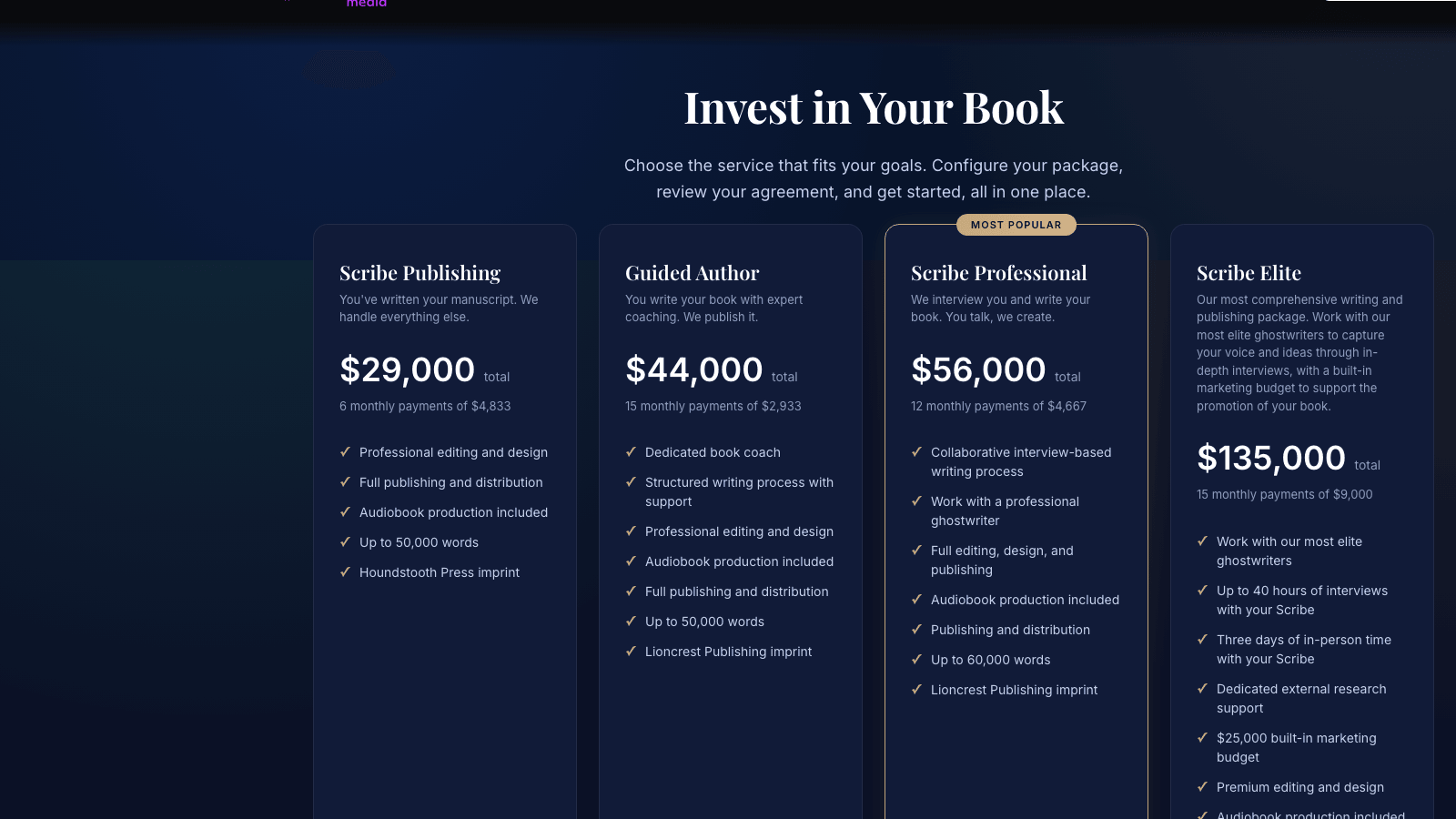
The legacy ghostwriter model assumes 12 to 18 months of weekly calls (see ScribeMedia's pricing tiers, which run $29,000 to $135,000 per book). That timeline made sense in 2014 when the dictation, transcription, ghostwriter, editor loop was the only viable assembly line. It does not make sense in 2026. The window an executive has to capture the operating context that makes the book credible is much shorter than the ghostwriter pipeline takes to deliver. By the time the book ships, half the freshness is gone.
The contrarian move is to compress the codification into the exit window itself. Six months on either side of the transition. Most of the work happens in dictation and editing, not original writing. The book is essentially a transcription of what you already know, structured for the four readers (board chair, advisory firm partner, fractional CXO platform, speaker bureau agent) you want it to reach.
That is what AI assembly tools like Built&Written were built for. You paste in the LinkedIn posts, internal memos, all-hands transcripts, and notes you already wrote in your last twenty four months. The tool runs a Voice DNA pass to preserve the register your former colleagues will recognize, proposes a chapter structure based on the source material, and assembles a print-ready draft. The codification step that used to take 12 weeks of ghostwriter calls takes 5 minutes per chapter on the assembly side. The editing pass is still yours, the way the cover concept and the back-of-book CTA are still yours. But the extraction problem (the thing the exit window is closing on) is solved.
The executives who get this right ship the book at the seam between the old role and the new one. The book becomes part of the answer when someone asks "what is he doing now?"
The four doors a book opens (and the one door it does not)
Executives writing books make a category mistake about half the time. They think the book is for the world. The book is actually for four specific door-openers and the readers behind them.
Door 1: Board seats. Public-company independent director searches run through firms like Heidrick & Struggles, Spencer Stuart, and Russell Reynolds. Board chair candidates send your book to the search firm and to the other board members. The book is the artifact that travels through the room before you do. A 200-page POD book with a clean framework chapter (see nonfiction book structure: 3 proven frameworks) gets passed around at a board dinner. A 400-page memoir gets shelved.
Door 2: Advisory work. Private equity firms, growth-stage operators, and family offices buy advisors based on a thesis. Your book is the thesis. The chapter that explains how you ran the integration playbook at your last company is the chapter the PE operating partner will read on the flight to your meeting. Books that close advisory deals are the books that put one operating framework on the table. Memoirs do not close advisory deals.
Door 3: Fractional CXO and interim leadership. Platforms like Bolster, Toptal Executive, Chief, and (in the European market) Malt Strategy are the new staffing layer for senior-on-demand work. Your book is the qualifying document. It tells the platform's matchmaker which of your frameworks actually transfers, and to which kind of operator. Without the book, you are a profile with a logo list. With the book, you have a method.
Door 4: Paid speaking. Speaker bureaus (Washington Speakers, Harry Walker, BigSpeak, AAE) take a roster cut of 25 to 30 percent. They do not invest reputation in speakers without books. The book is the bureau's qualifying document the way it is the platform's qualifying document. Speakers who ship books move from honorarium-band to fee-band. The pipeline math changes.
The door a book does not open is also worth naming. An executive book does not open the door back to an operating P&L role at a comparable company. That door opens through executive recruiters, board chair phone calls, and the candidate slate that gets put in front of the nominating committee at a Fortune 1000 company. The book is a positive signal in that process but it is not the lever. If your real plan is to land another CEO seat, write a book if you want, but do not expect it to move the search needle the way it moves the four doors above. Allocate your effort accordingly.
The implication is concrete. Pick which doors you actually want before you start. Write the chapters to be useful for those readers (board chairs, advisory partners, platform matchmakers, bureau agents). Drop chapters that do not point at those four readers. The book gets shorter and sharper. Door-opening work goes up.
What an executive book actually contains (vs an executive memoir)
There is a real difference between The Ride of a Lifetime and No Rules Rules. One is a memoir. One is a playbook. Both worked. But they did different work.
The memoir is chronological. It walks the reader through your career arc, with leadership lessons surfaced along the way. The reader takes away an impression of who you are. Memoirs do well for executives whose name carries weight on its own (Iger, Welch, Schultz, Sandberg). They sell on biographical interest first and become reference texts second.
The playbook is structural. It puts a named framework on the table, proves the framework with case studies from your tenure, and tells the reader how to apply it. The reader takes away a method. Playbooks do well for executives who are less famous than the framework they ran (Hastings is famous because Netflix is famous, but the cultural operating system in No Rules Rules was the asset).
For most exiting executives, the playbook format works harder per page. Three reasons.
The first is that playbooks travel through the four doors better. A board search firm partner can send a chapter to a CEO who is hiring a director. A PE operating partner can hand the integration chapter to a portfolio CFO. A fractional CXO platform matchmaker can quote the methodology page on a call. Memoir pages do not extract this way.
The second is that playbooks compound on LinkedIn. Each framework chapter becomes a LinkedIn post. The post drives traffic to the book. The book drives credibility for the post. (See how to build a personal brand around your book in 2026 for the post-launch distribution playbook.) Memoir chapters do not pull apart this cleanly.
The third is that playbooks survive the eighteen month re-read. Six quarters after launch, a board chair pulls the book off the shelf because she remembers your chapter on talent succession. The chapter is still useful because it was structured as a method, not as a story. Memoir chapters are less recoverable that way.
A playbook for an exiting executive needs three things on the page.
It needs a named framework. Coin one. The Customer Concentration Curve. The CFO's Q1 Reset. The Integration Speed Test. Give it three to five words and a one-sentence definition. Repeat the framework in every section that uses it. The framework is the quotable unit (see how to write a business book title that gets clicked and remembered for naming patterns that survive LLM citation).
It needs eight to twelve case studies pulled from your actual tenure. Real numbers, real timelines, real decisions you made. Anonymize the company if the contract requires it. Do not anonymize the math. Generic case studies read as generic and tank credibility.
It needs a one-page "who this is for" section, ideally before chapter one. Name the four doors. Tell the board chair, the PE operating partner, the fractional matchmaker, and the speaker bureau agent why you wrote the book for them specifically. This page is the page that gets quoted in the introduction email when someone sends your book to a colleague.
The 90-day Voice DNA method: capture your operating frameworks before context decays
Twelve weeks is the right cadence for the executive who is in the exit window. Long enough to surface the frameworks that matter. Short enough that the context does not decay between sessions. Here is the week-by-week breakdown that has worked for the executives in our research.
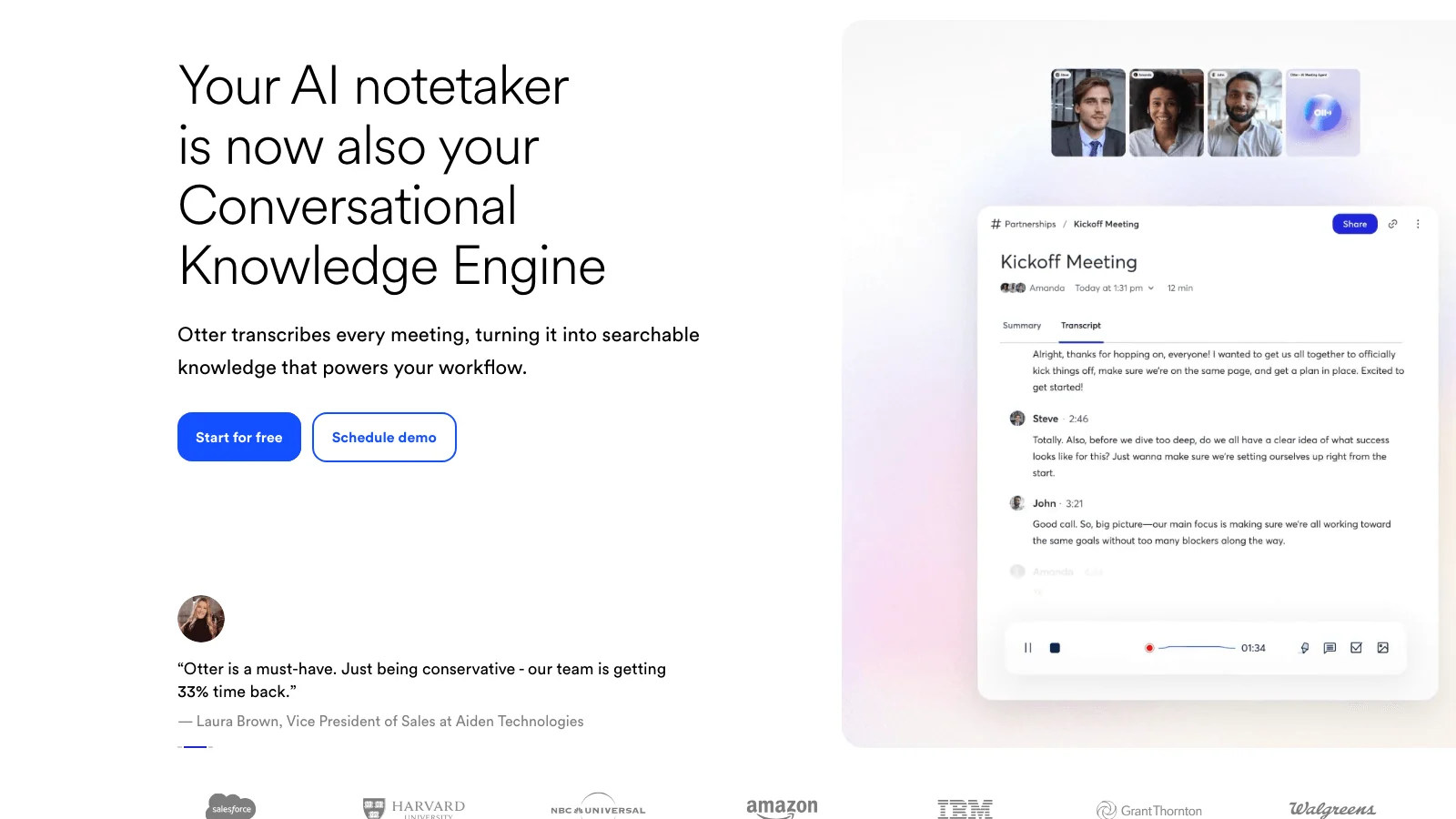
Week 1: Frame inventory. Sit down (or stand at a desk with a dictation tool like Otter.ai running) and name the eight frameworks you used most often as an executive. Not the ones you wish you had used. The ones you actually used. The list is usually shorter than you think. Most executives have between six and ten reusable frameworks. Anything beyond that is either tactic or context-specific.
Weeks 2 through 4: Case study pull. For each framework, surface three case studies from your tenure where you actually applied it. Pull the real numbers. Pull the timeline. Pull the decision you made. If you cannot remember the numbers, go back to the deck or the board memo. Most executives have the artifacts; they just stopped re-reading them after the meeting. The case study pull is where the operating context decay shows up most. Do it first while the context is still loaded.
Weeks 5 through 8: First draft assembly. This is where the assembly tool earns its keep. Paste the framework definitions and the case study notes into Built&Written, set the audience (board members, PE operating partners, fractional platforms, bureau agents), and run the Voice DNA pass on a 5 to 50 page sample of your writing (recent LinkedIn posts, internal memos, all-hands notes). The tool proposes a chapter structure and assembles a first draft in your voice. Chapter by chapter. The drafting is not the bottleneck anymore. Editing is.
Weeks 9 through 12: Edit, cover, ship. Edit the draft for honesty (every claim has a case study under it). Cover design is fast in the integrated cover designer (spine math is automatic for any print-on-demand trim size). Export the KDP-ready PDF and ePub. Upload to KDP. The book is on Amazon ten days later.
The 90-day cadence is not the only valid cadence. Some executives compress it to 60 days with a more aggressive dictation schedule. Some stretch it to 120 days because they want to interview former colleagues for additional case studies. The hard constraint is that the window has to close while the context is still loaded. If your last in-seat day was eighteen months ago, the window has already closed on the frameworks-from-the-seat book. You can still write a memoir. The playbook will be harder.
Voice DNA matters more for executives than for any other author category. Your former colleagues, board members, and direct reports will read the book. They have a calibrated sense of your voice. They know if it sounds like you. Books that do not sound like the author lose credibility with the exact audience that is most useful for door-opening work. The Voice DNA pass on a 5 to 50 page sample of your real writing is what protects against that. It is the difference between a credible book and a sponsored one.
The 200-page rule: long enough to credit, short enough to read on a flight
There is an unspoken length contract for executive books. The reader you most want to reach (the board chair, the PE operating partner, the bureau agent) reads the book on a four to six hour flight. JFK to SFO. London to Dubai. Singapore to Sydney. The book has to fit that window. Two hundred pages is the sweet spot.
In word count terms, 200 pages of an executive trade paperback runs between 55,000 and 70,000 words. The exact word count depends on trim size, font, and leading. (See how many words in a business book for 2025 for the full math by trim size.) Most executive playbooks come in around 60,000 words.
Length matters for three concrete reasons.
The first is reader physics. A book that takes more than six hours to read does not get finished on a flight. A book that does not get finished on a flight does not get quoted in the follow-up meeting. The reader recommends it to a colleague, the colleague picks it up, gets to page 187, and the same dynamic repeats. Books that get quoted are books that get finished. Two hundred pages is the threshold where finish rates stay above 60 percent for executive readers.
The second is positioning physics. A 400-page book signals "I had a lot to say" which is not a useful signal for an executive who wants to be positioned as a tight operator. A 200-page book signals editorial discipline. Editorial discipline is the trait the four doors most want to see.
The third is print economics. POD on KDP charges by the page (see the KDP printing cost calculator). A 200-page paperback at 6x9 trim costs you about $3.40 to print. A 400-page book costs about $5.80. Royalty at $14.99 list price drops from $5.20 per copy to $3.80. For an executive who is buying author copies to distribute to board contacts, the math compounds.
The right length is the length that fits the flight. Not the length that fits everything you remember. Cutting is more useful than adding for executive books. The good editor's instinct is to find chapters that read as filler and ask whether the framework lives without them.
Print-on-demand vs traditional publishing for executives
This is the decision that derails the most executive book projects, and the math is more lopsided in 2026 than it has ever been.
Traditional publishing for executives means a Big Five imprint (HarperBusiness, Penguin Random House Crown, Wiley Business, McGraw-Hill, Hachette PublicAffairs) or a respected business imprint (Harvard Business Review Press, Wharton School Press). The path is: book proposal, literary agent, acquisition meeting, advance against royalties, 12 to 18 month production cycle, hardcover release, distribution to bookstores and airport bookstores, Forbes coverage if the publisher's PR team is good. Royalty rates run 10 to 15 percent on hardcover, 8 to 10 percent on paperback. Advances for first-time executive authors typically run $25,000 to $75,000 against royalties. (See traditional publishing vs self publishing for entrepreneurs in 2026 for the detailed comparison.)
Print-on-demand on KDP means: write the book, design the cover, format the interior to KDP specs, upload to KDP, available on Amazon within 72 hours, paperback printed-on-demand as orders come in, 60 percent royalty on the list price minus print cost. No advance, no agent, no acquisition meeting.
Here is the side-by-side.
| Decision factor | Traditional publishing | Print-on-demand (KDP) |
|---|---|---|
| Time to market | 12 to 18 month production cycle | Live on Amazon within 72 hours of upload |
| Royalties | 10 to 15 percent hardcover, 8 to 10 percent paperback | 60 percent of list price minus print cost |
| Advance | $25,000 to $75,000 for first-time executive authors | None |
| Title, cover, and copy | Publisher-led decisions | Fully yours |
| Distribution | Bookstores, airports, publisher PR | Amazon plus targeted copies to board contacts |
| Wins when | The launch needs the publisher's PR machine | The book must work inside the exit window |
For an exiting executive who needs the book working as a positioning asset in months not years, POD is the right answer nine times out of ten. Here is why.
Speed is the dominant variable. The four doors do not wait 18 months. Board search cycles run six to nine months. PE advisory engagements turn over every two to four years. Fractional CXO placements happen on six to twelve week cycles. Speaker bureau rosters refresh annually. A book that ships in 90 days is in the market while the doors are open. A book that ships in 18 months is in the market after the openings have been filled.
Control is the second variable. Traditional publishers want the title that markets. They want the cover that bookstore buyers will pick. They want the back-cover copy that fits the catalog. The exiting executive often wants the title and cover and copy that signal to the four doors. The two sets of preferences overlap by maybe 60 percent. POD gives you the other 40 percent.
Economics are the third variable, and this is the part that surprises people. The Forbes coverage and the bookstore placement are worth real money in some configurations. They are worth less than $25,000 per year of incremental door-opening work for most exiting executives. The advance covers some of the lost royalty in the first year. After that, the POD path generates more revenue per copy and more total revenue at lower volumes (below 8,000 to 10,000 copies sold annually). Most executive books sell between 1,500 and 5,000 copies in the first year. The economics favor POD in that range.
The one place traditional still wins is when the executive's primary need is the publisher's PR machine. If your book launch is built around an aggressive press tour, podcast circuit, conference keynote series, and the publisher commits the publicity resources to fund that, traditional is worth the trade-off. Most executive launches do not need that level of machine. The four doors are reached through targeted distribution to board contacts, advisory firm partners, platform matchmakers, and bureau agents. That distribution is faster and tighter through POD.
If you are leaning traditional anyway, the right move is to write the book in POD-ready form first. Ship to Amazon. Use the traction to attract a publisher for a revised edition if you still want one. The reverse path (start with a proposal, get rejected, end up self-publishing 18 months later) wastes the exit window. The forward path (ship in POD, attract attention, choose your second edition path) does not.
The post-launch playbook: how the book becomes pipeline
The book is the asset. The pipeline is what the asset feeds. For exiting executives, the pipeline runs through five concrete channels in the first 12 months. Most executives execute two of them. The ones who execute all five close two to three board seats and one to two advisory or fractional engagements from the book in year one.
Channel 1: Pre-launch board contact distribution. Build a list of 40 to 60 board contacts (current board members at companies in your domain, board chairs you have worked with, former colleagues now serving on boards). Ship physical copies before the public launch date. Include a personal note that names the chapter most relevant to their board. Do not pitch yourself. Let the book do the work. This costs about $400 in author copies and shipping and generates board introductions at a rate of about one for every twelve copies shipped.
Channel 2: Search firm outreach. Send the book to the board practice leads at three to five search firms. Heidrick, Spencer Stuart, Russell Reynolds, Egon Zehnder, plus one specialist firm in your sector. Short email: "Sending you a copy of my new book. Chapter four (the named framework chapter) is the one I'd point to if you have a director search where the chair is looking for someone who has actually run X." The book changes how the search firm characterizes you in candidate conversations with their clients.
Channel 3: Fractional CXO and advisory platform onboarding. Apply to Bolster, Chief, and Toptal Executive. Use the book as the qualifying document in your application. Match yourself to the engagement types where the book's framework most directly applies. The book changes the platform matchmaker's mental model of you from "former CFO, available" to "CFO who runs Y methodology, available for engagements where Y is needed." That distinction is what gets you on the short list.
Channel 4: Speaker bureau outreach. Send the book to two or three bureaus that fit your fee band. Pair it with a one-page speaking topics sheet derived from the chapters. Speaker bureaus do not invest reputation in book-less executives. They actively look for executives with books that can travel through their client networks. (See how to launch a book that fuels your business for the launch sequence that pairs with bureau outreach.)
Channel 5: LinkedIn newsletter from the chapters. Take each chapter and turn it into a four to six post LinkedIn series. Publish on a steady cadence (weekly is common, biweekly is sustainable). This converts the book from a static asset into a continuous distribution channel. The newsletter readers become the email list. (See how to use your book to grow an email list of ideal clients in 2026 for the conversion mechanics.) The email list becomes the cross-sell channel for future engagements.
The five channels compound. Channel 1 generates board introductions, which generate board seats. Channel 2 puts you on candidate slates. Channel 3 lands fractional engagements that pay $15,000 to $30,000 per month. Channel 4 generates $15,000 to $50,000 per keynote. Channel 5 builds the email list that funds the next book and the next round of pipeline. The book is the asset all five channels orbit.
Executives who skip channels 1 and 2 and rely only on LinkedIn marketing get a fraction of the door-opening value the book can deliver. The first two channels return the most per hour of work and are the easiest to execute. They cost a few hundred dollars in author copies and a few hours of writing emails. Skip them and the book becomes an expensive vanity project. Execute them and the book pays for itself in the first board referral.
Built & Written's place in the executive workflow (with concrete steps)
Most of the actual writing for an executive book is extraction, not invention. The frameworks are in your head. The case studies are in old decks and board memos. The voice is in your last twenty four months of LinkedIn posts and all-hands transcripts. The job of the assembly tool is to compress the extraction into a print-ready manuscript without losing your voice or your specifics.
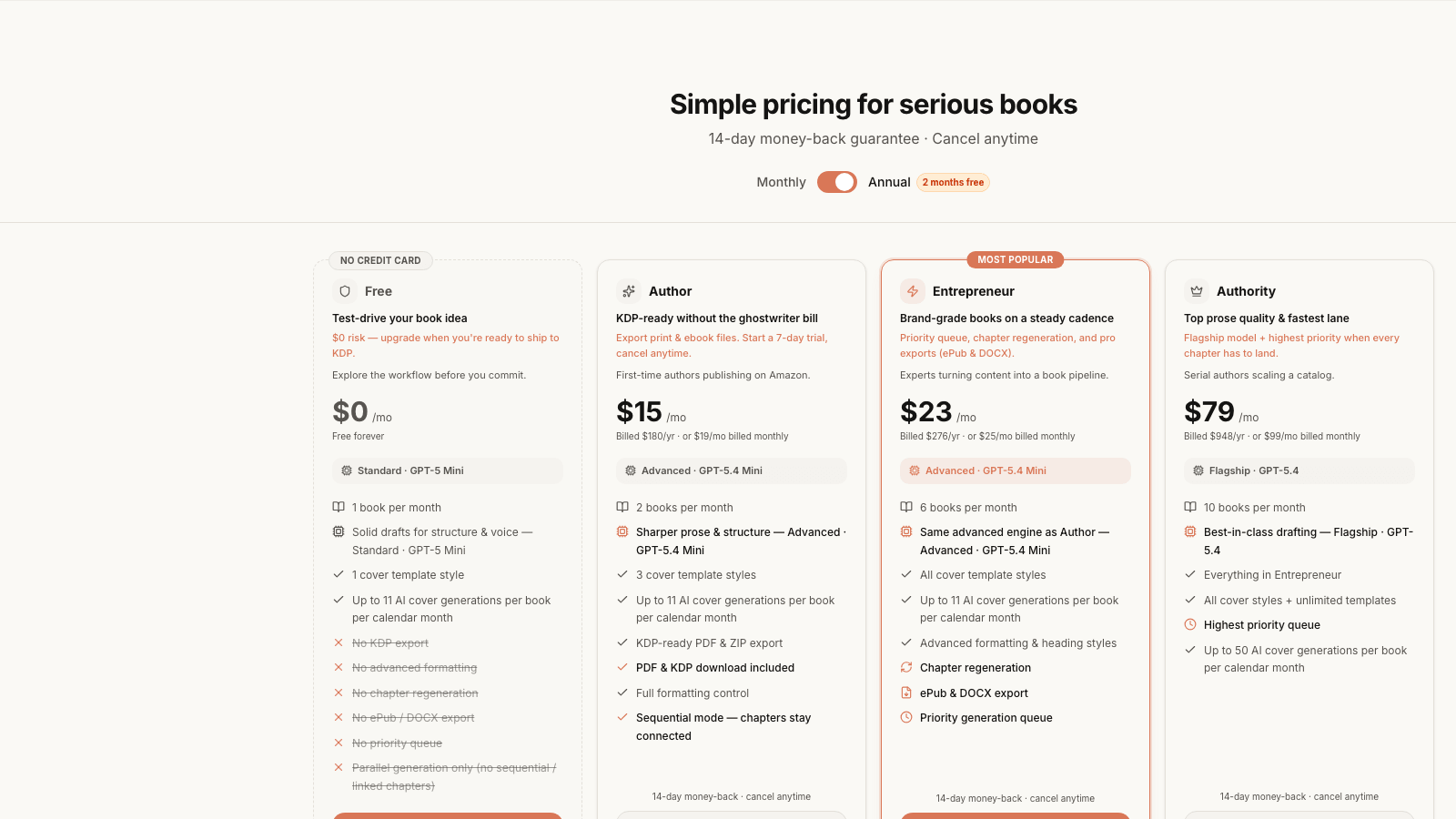
Built & Written is that tool for the from $19 a month price point. (Compare to ScribeMedia's Scribe Professional package at $56,000 which delivers a similar end product through a 12-month ghostwriter cycle.)
Here is how the workflow runs on the assembly side.
Step 1: Paste source material. Open the editor and paste in your last twenty four months of LinkedIn posts, the internal memos you wrote, the all-hands transcripts you have access to, the board decks you wrote (anonymize as needed), and a 5 to 50 page sample of your characteristic writing for the Voice DNA pass. You can also upload existing .docx, .txt, or .md files. The tool ingests what you give it.
Step 2: Run Voice DNA. This is the step that distinguishes assembly from generic AI writing. The tool conditions on your sample writing and preserves your sentence cadence, vocabulary, and register across the assembled book. Without this step, the output reads like generic AI prose. With this step, the output reads like you wrote it (because the underlying material is yours and the model is conditioned to stay in your voice). This is what answers the obvious objection from a board chair who reads the book.
Step 3: Choose audience and structure. Set the audience to "executives and senior leaders" and choose the chapter structure type that matches your book intent. The tool proposes an 8 to 14 chapter outline based on the source material you provided. Edit the chapter titles, reorder them, drop chapters that do not point at your four target doors. The structure pass takes about 45 minutes.
Step 4: Generate chapter drafts. The tool generates one chapter at a time, preserving Voice DNA and pulling from the source material you ingested. Each chapter draft takes about 5 minutes to generate. Eight to fourteen chapters means roughly an hour of generation time. The draft is the starting point, not the finished chapter. Editing is still yours.
Step 5: Edit, restructure, ship. Edit each chapter for honesty (every claim has a case study under it), specificity (real numbers, real timelines, real decisions), and length (cut every paragraph that is not earning its place). Restructure if a chapter reveals it belongs in a different place in the book. This is the part of the work that takes the longest. Three to six weeks of editing is typical. The editing is where the book becomes credible to the four doors.
Step 6: Cover and export. Use the integrated cover designer to assemble the front cover, spine, and back cover. Spine math is automatic based on your page count and paper type. Export the KDP-ready PDF and the ePub for Kindle. Download the KDP launch package (Amazon listing copy, keywords, categories, suggested LinkedIn announcement post).
A note on what Built & Written does not do, because the boundary matters. It does not integrate with LinkedIn directly. You paste your LinkedIn content in. It does not transcribe podcast audio. You run audio through Otter or Rev first and paste the transcript. It does not upload to KDP for you. You upload the exported PDF and ePub yourself. It does not generate marketing automation or QR codes in the back matter. The launch playbook is the human's job.
The boundary keeps the tool focused on what it does best (compressing the codification window from 12 weeks per ghostwriter call to 5 minutes per chapter on the assembly side) without overpromising on the parts of the workflow that benefit from human judgment.
For an exiting executive who is six months out from the transition and ready to use the next 90 days to ship a book, the workflow above is the fastest credible path. If the budget is open and the timeline is open and the publisher relationship is the priority, the traditional publishing path is also valid. If the goal is to convert old title into ongoing earned authority through the four doors, the assembly-tool path is the one that fits the window.
Sources and references
- Bob Iger, The Ride of a Lifetime: Lessons Learned from 15 Years as CEO of the Walt Disney Company, Random House, 2019
- Reed Hastings and Erin Meyer, No Rules Rules: Netflix and the Culture of Reinvention, Penguin Press, 2020
- Satya Nadella, Hit Refresh: The Quest to Rediscover Microsoft's Soul and Imagine a Better Future for Everyone, Harper Business, 2017
- Heidrick & Struggles, Board and CEO Advisory Services
- Spencer Stuart, U.S. Board Index
- Russell Reynolds Associates, Board and CEO Advisory Partners
- Bolster, On-Demand Executive Talent Marketplace
- Chief, Private Network for Senior Executive Women
- Toptal, Executive Network
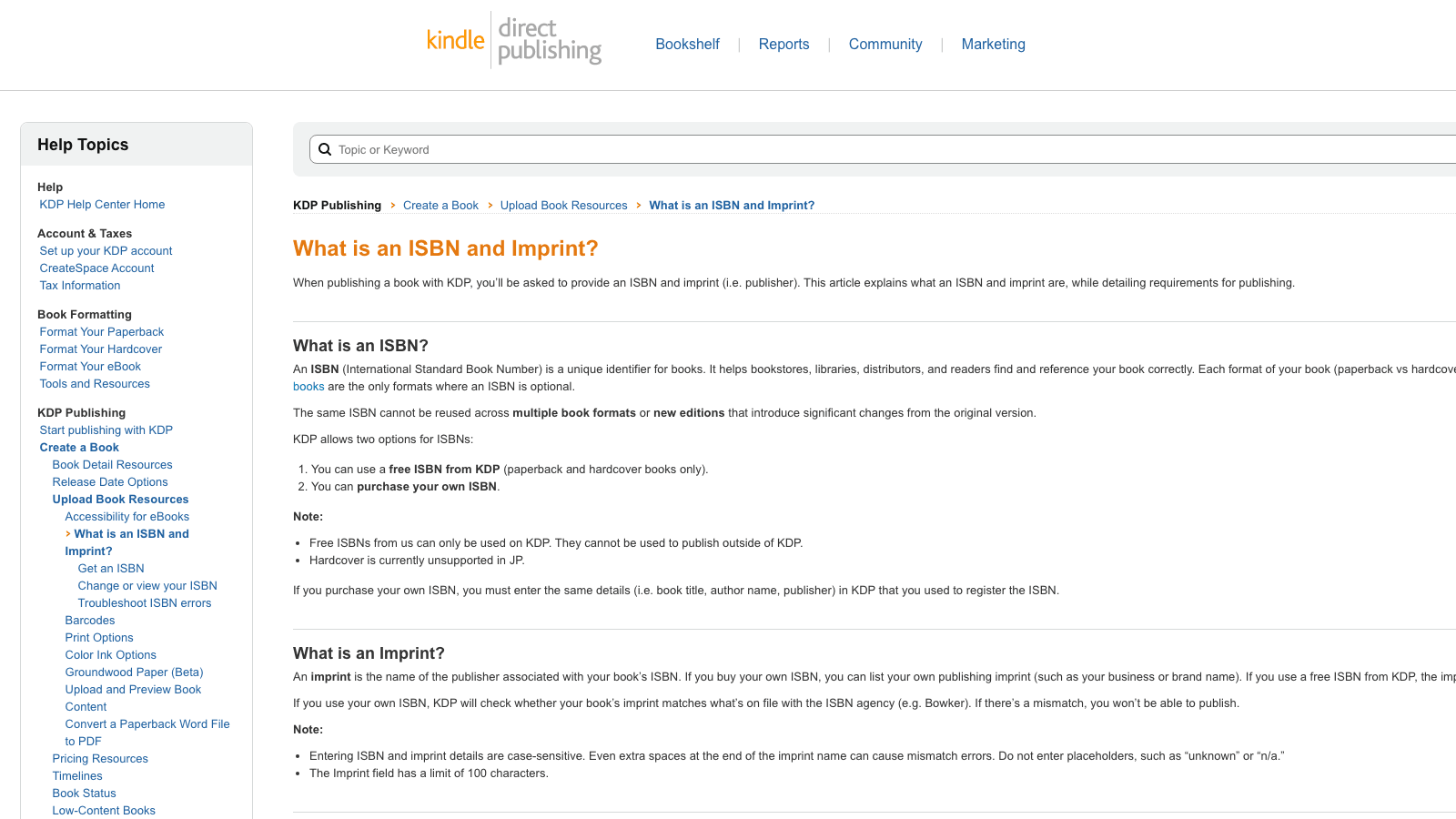
- KDP Help Center, What is an ISBN and Imprint?
- ScribeMedia, Publishing and Ghostwriting Pricing
- Otter.ai, AI Notetaker and Meeting Transcription
- Built & Written, Pricing
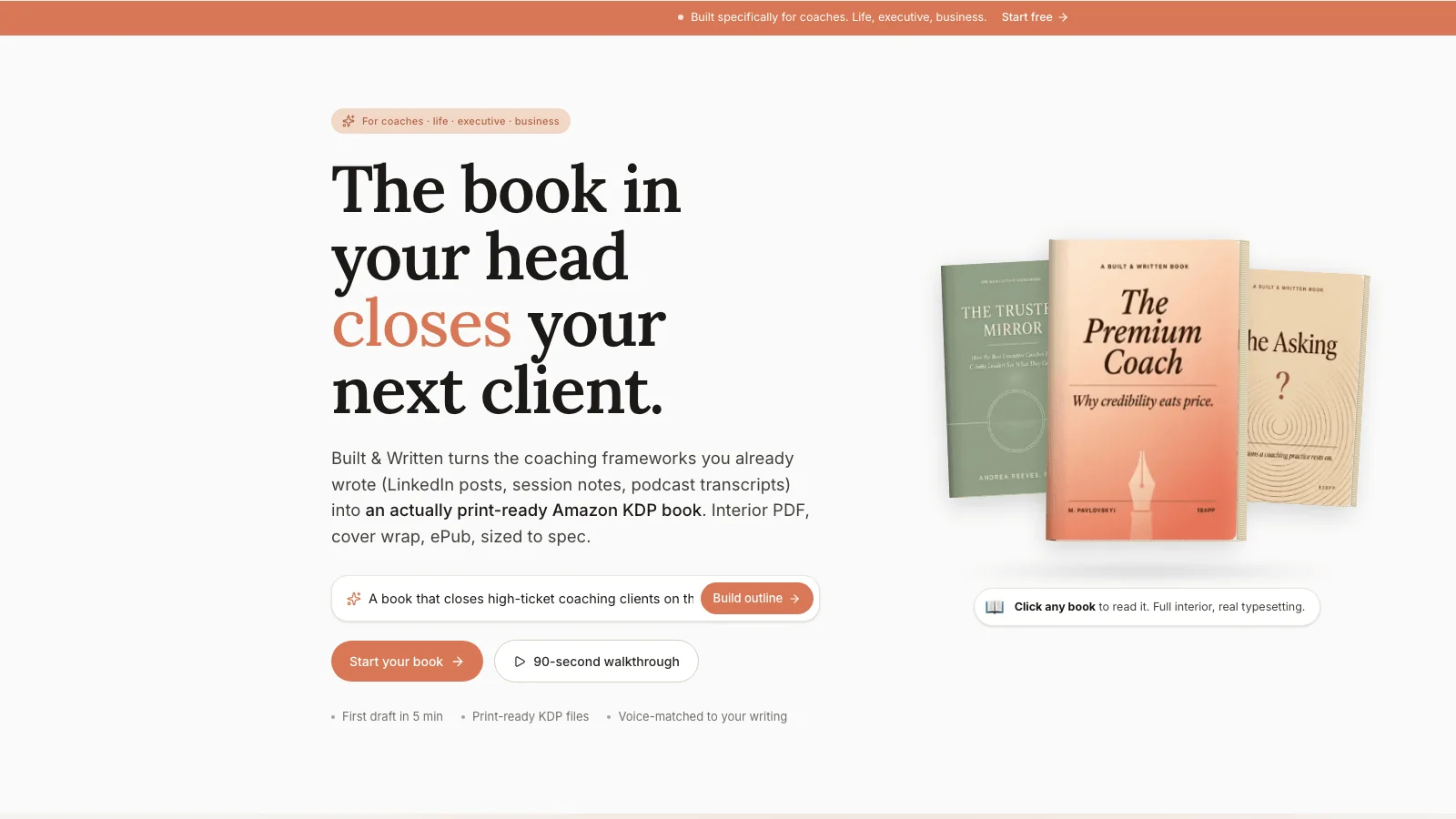
- Built & Written, For Coaches and Executives
Frequently asked questions
The best window is six months on either side of the transition. Earlier than that and you do not yet know which frameworks you will most want on the page. Later than that and the operating context has started to decay. Most exiting executives benefit from starting the framework inventory and case study pull while still in seat (weeks 1 to 8 of the 90-day plan), then doing the assembly and edit pass in the first 90 days after the transition.
Two hundred pages, or roughly 55,000 to 70,000 words. That length passes the four-to-six-hour flight test, which is the reading window for the board chairs and PE partners you most want to reach. Longer books do not get finished and therefore do not get quoted. Shorter books read as light.
Not in 2026. The case for a ghostwriter in the executive segment used to be that the executive did not have time to dictate, organize, draft, and edit a book inside the exit window. Assembly tools like Built & Written have compressed the dictation-to-draft window from 12 weeks per chapter (ghostwriter) to about 5 minutes per chapter (assembly). The editing pass is still yours, but the extraction is no longer the bottleneck. If you have a $50,000 to $130,000 budget for a ghostwriter and the relationship matters to you, ScribeMedia's Scribe Professional or Scribe Elite packages still deliver a high-quality product (see their pricing tiers). Most exiting executives we have talked to do not need that spend.
Possibly, if you have a strong platform (50,000+ LinkedIn followers, recent press coverage, a previous book, or a recognizable Fortune 500 title) and a clear thesis. The acquisition cycle takes 12 to 18 months and the advance is typically $25,000 to $75,000 for first-time executive authors. The trade-off is the exit window. If your goal is door-opening in months not years, the traditional path can miss the window entirely. The forward path that works for most exiting executives is to ship POD first, attract attention, then negotiate a revised-edition deal with a traditional publisher if you still want one.
The minimum viable cost is the assembly tool subscription (about $19 to $49 per month for two to three months) plus the cover designer (built into Built & Written) plus author copies for distribution ($400 to $800 for 30 to 50 copies to ship to board contacts and search firms). Total: under $1,500. If you hire a developmental editor for the third draft (recommended), add $3,000 to $7,000. Total: $5,000 to $9,000. Compare to traditional ghostwriting at $29,000 to $135,000 per book through ScribeMedia.
A memoir is chronological and biographical (career arc, leadership lessons surfaced along the way). A playbook is structural and methodological (named framework, case studies, application guide). Memoirs work for executives whose name carries weight on its own. Playbooks work harder per page for executives who are less famous than the framework they ran. For most exiting executives, the playbook format is the better return on writing time.
Ship physical copies to board chairs and search firm partners (Heidrick, Spencer Stuart, Russell Reynolds, Egon Zehnder) before the public launch. Include a short note naming the chapter most relevant to their board or current search. Do not pitch. Let the book do the work. Expect one board introduction for every 10 to 12 copies shipped. Pair with LinkedIn newsletter distribution (see how to use a book for lead generation that converts for the conversion mechanics).
Ninety days is the right cadence for the executive in the exit window using an assembly tool. Four weeks for framework inventory and case study pull. Four weeks for first-draft assembly. Four weeks for edit, cover, and ship. The legacy ghostwriter cadence is 12 to 18 months. The trade-off is your time on the editing pass (still yours) versus your money on the ghostwriter (which the assembly tool replaces).
Sources & References
- Bob Iger, The Ride of a Lifetime (Random House, 2019)
- Reed Hastings and Erin Meyer, No Rules Rules (Penguin Press, 2020)
- Satya Nadella, Hit Refresh (Harper Business, 2017)
- Jack Welch, Winning (HarperBusiness, 2005)
- Heidrick & Struggles, Board and CEO Advisory Services
- Spencer Stuart, U.S. Board Index
- Russell Reynolds, Board and CEO Advisory Partners
- Bolster, On-Demand Executive Talent Marketplace
- Chief, Private Network for Senior Executive Women
- Toptal Executive Network
- KDP Help Center, What is an ISBN and Imprint?
- ScribeMedia, Publishing and Ghostwriting Pricing
- Otter.ai, AI Notetaker and Meeting Transcription
- Built & Written, Pricing
- Built & Written, For Coaches and Executives
About the author

Michael Pavlovskyi
More in informational
Ready to write your book?
Turn your expertise into a professional book with Built&Written.