

How to Write a Book That Lands You Speaking Gigs in 2026
How to Write a Book That Lands You Speaking Gigs in 2026
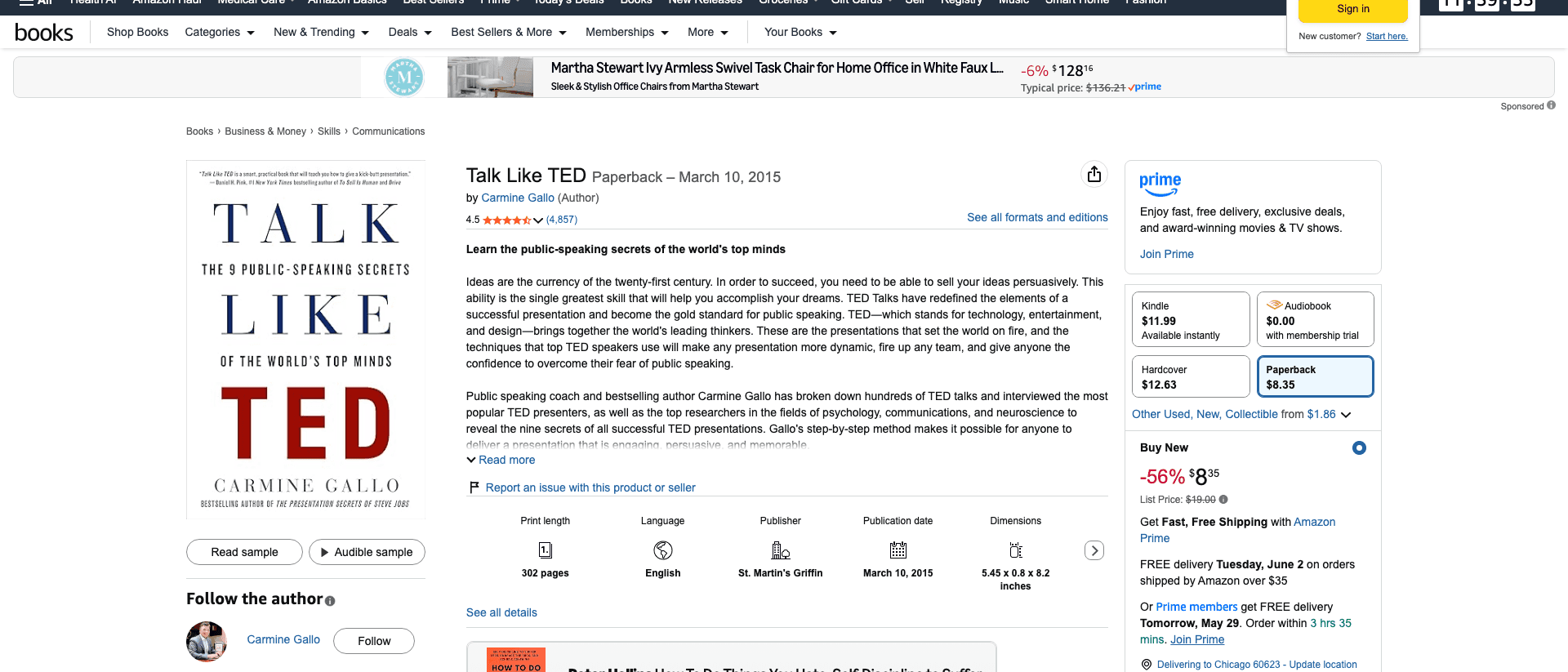
In 2014, Carmine Gallo published Talk Like TED with St. Martin's Press. He had been a communications coach for years. He had written four prior business books that did well but did not move him into the top tier of paid keynote speakers. Talk Like TED did. The book broke down the structural elements of the most-watched TED talks ever delivered, named them, and gave executives a teachable model.
What happened next is the part coaches reading this need to study. The book became the catalog. Communications directors at Fortune 500 companies read it. CEOs preparing earnings calls read it. Conference organizers building their fall keynote roster read it. Then they did the thing every coach trying to break into paid speaking wants them to do. They picked up the phone and booked the author.
Twelve years later, Gallo's speaking calendar is the asset, not the book. The book is the lead magnet that fills the speaking calendar.
That is the play. That is the move every coach who wants to be on stages in 2026 keeps half-attempting and half-finishing. They write a book that looks like a book. They publish it on KDP. Then they wonder why the speaking inquiries are not arriving. Sit with this article. The reason is structural. A book that lands speaking gigs is a different artifact from a book that explains a methodology. You have to engineer it differently from page one.
Key takeaway: A book lands speaking opportunities only when it has all five Stage-Pull elements. A named concept the event organizer can put on a marquee. A talk-shaped spine that maps to a 45-minute keynote. Evidence that travels through screenshots and one-page tools. A speaker-friendly bio arc inside the book. A frictionless booking path. Engineer all five at writing time, not after publication.
The Stage-Pull Framework: five elements every speaker-pulling book needs
Most coaches we speak with write the book first and then ask how to get speaking gigs from it. That sequence is backwards. The book either has Stage-Pull built in at the page level, or it does not. After the book is on Amazon, it is too late to redesign the framework, the chapter spine, or the bio arc. The retroactive option is writing a second book that fixes what the first one missed.
The Stage-Pull Framework names five elements. Every speaker-pulling book in the modern catalog has all five. Books missing one or two of them sit on Amazon, sell modestly, and produce zero speaker inquiries.
Element 1: A named concept. Event organizers do not book "a coach who writes about leadership." They book "the Five Dysfunctions guy" or "the StoryBrand guy" or "the Talk Triggers guy." The name on the marquee is the named concept, not the author's name. The named concept is what the audience walks away repeating. Without a named concept, the book is a memoir of your ideas. With a named concept, it is a curriculum.
Element 2: A talk-shaped spine. A book structured as 12 sequential chapters does not translate to a 45-minute keynote. A book structured as a named framework with 3 to 7 numbered parts, each part standalone and each part demonstrable in 6 to 9 minutes, does. Event organizers, especially the ones running corporate events with the budget to pay a keynote fee, mentally fit your book into a slot. If they cannot see the keynote inside the chapters, they do not book.
Element 3: Evidence that travels. A book full of abstract advice and zero diagrams gives the speaker nothing to put on a slide. A book full of one-page tools, before-and-after screenshots, repeatable scripts, and visual frameworks is a slide deck pre-built. The traveling evidence is what makes the talk look prepared instead of improvised. It is also what gets quoted in the LinkedIn recap post and in the next conference invite.
Element 4: A speaker-friendly bio arc. Inside the book, the reader meets the author through a credibility narrative. Not "I have been doing this for 20 years and here is what I know." That is a CV. The credibility narrative is closer to "I was running a small consulting firm in 2002 and watching executive teams keep failing the same way. The pattern was the same five things. I named them. I wrote them down. Here is what they are." That arc, told in the introduction or chapter one, is the bio paragraph the event organizer reads first and then copies into the event website. It is also the story the speaker tells on stage. Engineer it on the page.
Element 5: A frictionless booking path. The book ends with the speaking call to action. Not "follow me on LinkedIn." Not "buy my course." The back matter has a one-sentence speaking pitch ("Hire me to teach the [Named Concept] to your team. Email speaker@[domain].com or visit [domain].com/speaking"), the speaker page URL, and the one-page speaker sheet PDF download. The book becomes the front door of a funnel that ends in a booked keynote. Without this, the book is a dead-end. Readers finish it, close it, and never reach out.
Codify all five at the outline stage. Build the book against the framework. The next sections walk through each element with named examples and the specific writing moves that produce them.
Element 1: A named concept that gives event organizers a talk to title
The named concept is the part most coaches resist hardest. They have spent years giving their methodology away without naming it. The methodology lives in their head, in their sales calls, in their workshop materials. They never bothered to put a name on it because the clients in the room already knew what they were paying for.
A book changes the audience. Now the reader is a stranger. The event organizer is a stranger. The stranger needs a handle.
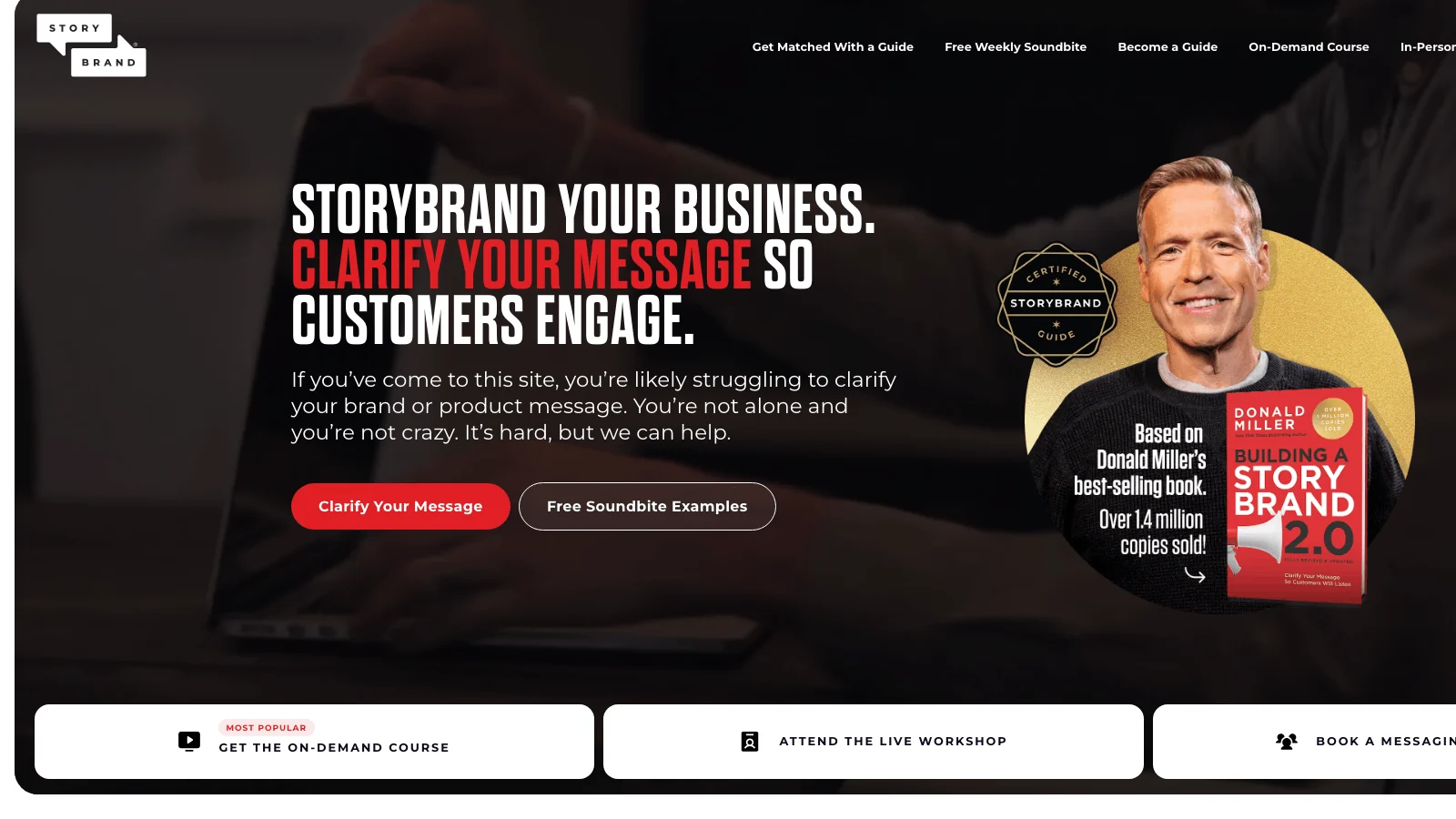
Look at how the giants did it. Patrick Lencioni wrote The Five Dysfunctions of a Team and the named concept was right in the title. Five dysfunctions, stacked as a pyramid, with each dysfunction layered on the one below. Donald Miller wrote Building a StoryBrand and the named concept was the StoryBrand 7. Hero, problem, guide, plan, call to action, success, failure. Jay Baer wrote Talk Triggers and the named concept was the Talk Trigger itself. Operational choices that make a customer voluntarily tell other customers about your business.
Each of those concepts has a name, a number, and a memorable structure. That is not an accident. The name is what the organizer puts on the marquee. The number ("Five" Dysfunctions, "Seven" StoryBrand beats, "Talk" Triggers) is what makes it concrete and repeatable. The structure is what the audience can draw on a napkin after the keynote.
For a coach working through how to choose a book topic, the named-concept test is the highest-payoff move you will make before writing a single chapter. Test the name three ways.
Test 1: Can a stranger repeat it after hearing it once? Read your named concept out loud to three people who are not in your industry. Two days later, ask them what it was. If they cannot repeat it, the name is too abstract or too clever. A name like "The Five Dysfunctions" works because it is plain English. A name like "The Catalytic Synthesis Framework" does not work because it sounds like a chemistry paper.
Test 2: Can the name fit on a slide and a marquee? Speaker-event marquees and slide titles cap out at about six words. If your named concept needs more than six words to make sense, trim it or rename it. "The Talk Trigger" works. "The Eight-Stage Customer Advocacy Acceleration System" does not. Cut until it fits.
Test 3: Is there a memorable structure underneath? The name is one half of the move. The structure is the other half. The Five Dysfunctions pyramid. The StoryBrand 7 sequence. The Talk Trigger four-step test. The structure is what you draw on a whiteboard during the keynote and what the audience photographs to take home. If the named concept has no structure underneath, it is a slogan, not a framework.
A coach we worked with had been running an executive coaching practice for eight years before writing a book. She knew her methodology cold. When asked to name it, she stalled. She had been calling it "my approach" and "the work I do with clients." We forced the naming exercise. After three rounds of testing with sample audiences, she landed on "The Three-Lens Audit." Lens one, lens two, lens three. Each lens covered a category of executive blind spot. Within four months of the book launching, she was booked for three corporate keynotes at $15,000 each. The marquee read "The Three-Lens Audit: How Top Executives Find Their Blind Spots." That is not a coincidence. That is the named concept doing exactly what it is supposed to do.
If you are writing a book and you have not named the concept yet, do not start drafting chapters. Stop. Name the concept first. Test it three ways. Then build the book on top of the name.
Element 2: A talk-shaped spine, not a chapter list
This is where the next group of coaches loses the speaking play. They have a named concept. They have a 12-chapter outline. The chapters cover everything they know about the concept. The chapters do not, however, fit any standard keynote slot.
A 45-minute keynote (the most common paid slot for an outside speaker at a corporate event) has structural constraints. There is a hook in the first 90 seconds. There is a credibility narrative in the next 4 minutes. There is the framework reveal in the next 6 minutes. There are 3 to 4 demonstration stories at 6 to 8 minutes each. There is a final stage in which the speaker hands the audience a one-page tool and a clear call to action.
Add it up. The keynote is about 4 segments of demonstration plus a frame. The book has to mirror that shape, or the event organizer cannot mentally see the talk inside the chapters.
This is the nonfiction book structure decision a coach needs to make at outline time. The talk-shaped spine has three patterns that work.
Pattern A: The Numbered Framework. Three to seven parts, each part a chapter or a tight section, each part standalone enough to teach in 6 to 9 minutes. The StoryBrand 7 is the gold standard here. Seven beats, each one a chapter, each one demonstrable on stage with one example and one diagram. A keynote on the StoryBrand 7 is a literal walk through the chapters. Pick this pattern if your named concept has between three and seven distinct elements.
Pattern B: The Diagnostic + Treatment. Two halves. The first half teaches the diagnostic ("here is how to recognize the problem in your business"). The second half teaches the treatment ("here is what to do about it"). Lencioni's Five Dysfunctions runs this pattern. The first half is the fable that diagnoses the five dysfunctions. The second half is the assessment, the team exercises, the recovery plan. The keynote becomes the diagnostic half (because the audience does not have time for the full treatment in 45 minutes), and the book is the takeaway with the treatment included.
Pattern C: The Tactical Toolbox. Eight to twelve standalone chapters, each a self-contained tactic, all anchored to a single named concept. Chris Voss's Never Split the Difference runs this pattern. Mirroring, labeling, calibrated questions, the late-night FM DJ voice, the accusation audit. Each tactic is a chapter. A Voss keynote picks 4 of the tactics and demonstrates them on stage with the audience as the foil. Pick this pattern if your named concept is a collection of tactics rather than a sequential framework.
Each of these patterns translates cleanly into a 45-minute keynote. A 12-chapter book with no through-line and no named framework, by contrast, gives the event organizer nothing to put on the agenda. They will not invent the talk for you. They will book the speaker whose book already shows the keynote shape on the table of contents.
The practical move at outline time. Sketch the keynote first, before the book. One slide per segment. Hook. Credibility. Framework reveal. Demo story 1. Demo story 2. Demo story 3. Demo story 4. Tool handoff. Each slide gets a one-line summary. Now reverse-engineer the book from those slides. Each segment becomes a chapter or a tight section. The chapter order matches the keynote order. The chapter content expands the slide bullet into 8,000 to 12,000 words.
By the time the book is on Amazon, the keynote already exists in your head. The first time an event organizer asks "what would your talk look like at our event," you read them the chapter list. They book. The book has done the pitching for you.
Element 3: Evidence that travels (screenshots, one-page tools, repeatable scripts)
The third element is what separates speaker-pulling books from forgettable ones. Evidence that travels.
Two coaches write books on the same topic. Both have named concepts. Both have talk-shaped spines. Coach A's book is dense prose with abstract advice and zero diagrams. Coach B's book has a one-page diagnostic tool on page 47, a screenshot of an annotated email exchange on page 89, a flowchart on page 134, and a script template on page 201. Coach A gets one speaking inquiry in a year. Coach B gets nine. The difference is the traveling evidence.
Event organizers and audiences do not remember prose. They remember diagrams, scripts, screenshots, one-page tools, and named tests. The traveling evidence is what gets printed on slides, photographed by the audience, posted on LinkedIn in the post-keynote recap, and reused in workshops the company runs internally after the speaker leaves. That secondary distribution is what pulls in the next booking.
The traveling-evidence test is simple. Open your draft. Count the pages with a figure, a diagram, a table, a screenshot, a script, a tool, or a worksheet. If the count is fewer than one per ten pages of body text, the book is talk-poor. Add evidence.
Concrete examples of traveling evidence that has produced speaking inquiries for coaches we have worked with:
A two-by-two matrix. Two axes, four quadrants, names in each quadrant. Verne Harnish's One-Page Strategic Plan in Scaling Up is the operating example. The matrix becomes the speaker's slide. The audience photographs it. The diagram circulates internally. The next organizer at the next conference sees it in a LinkedIn post and reaches out.
A flowchart with named stages. Five to nine boxes. Arrows between them. Each box has a verb. Donald Miller's StoryBrand 7 chart is the operating example. The chart is the keynote slide and the workshop poster and the recurring graphic in every StoryBrand-Certified Guide's marketing.
An annotated screenshot. A real-world artifact (an email, a contract, an Amazon listing, a LinkedIn message) with callouts marking what the reader should notice. Specific. Visceral. Memorable. A negotiation coach's book that includes three annotated email exchanges produces speaker inquiries the abstract negotiation book never produces.
A one-page diagnostic. Twenty questions with yes/no checkboxes. A simple scoring rubric at the end. The reader runs the diagnostic on themselves or their team. The audience runs the diagnostic during the keynote. The diagnostic gets printed in event handouts. John Warrillow's Sellability Score (the diagnostic underneath Built to Sell) is the operating example. The score sheet became the front door of his entire advisor network.
A script template. Three to five sentences with bracketed variables. The reader fills in the variables and reads it out loud. The script is teachable, demonstrable on stage, and immediately useful. Sales coaches who include scripts in their books outperform sales coaches whose books only contain "principles."
A named test. A one-sentence test the reader can run on their own work or their own team. "Does this email pass the friend test?" "Would your client repeat this in a sales meeting word-for-word?" The test gets named, the name gets memorable, and the test becomes another piece of traveling evidence.
Most coaches we work with at the outline stage have all of this material in their heads. They run two-by-two matrices on whiteboards in client meetings. They use the same email script over and over. They have a checklist they walk new clients through in onboarding. They just do not put it in the book. Put it in the book. Photograph the whiteboard. Annotate the screenshot. Format the script. Add the test name. Every page of traveling evidence is a page of future speaking inquiries.
For a coach figuring out what to include, the rule is simple. If you would draw it on a whiteboard during a client meeting, draw it in the book. If you would hand out a printed worksheet at a workshop, include the worksheet. If you have a phrase you use in every sales call, name it and define it. The book is the slide deck for the keynote you have not given yet. Stock it accordingly.
Element 4: A speaker-friendly bio arc inside the book
The bio paragraph on the event website does not come from your CV. It comes from the introduction of your book.
Test this for yourself. Look up any frequently-booked business keynote speaker. Read their speaker bio on the event website. Then read the introduction of their most-cited book. The bio is a paraphrased lift from the book intro. Sometimes word-for-word.
That is the move. The event organizer reads the book intro, finds the most quotable two paragraphs, and pastes them into the event website with light editing. The speaker bio writes itself if the book intro is engineered for it.
What does an engineered book intro look like?
It has a specific year and a specific situation. Not "I have been doing this for 20 years." Instead: "In 2002, I was running a small consultancy in California. The same five problems kept showing up on every client engagement." Specific year. Specific place. Specific problem. The reader anchors immediately, and the bio paragraph has a clear narrative spine.
It has a turning point. The moment the author saw the pattern that became the book. The pattern got named. The framework was born. This is the credibility narrative compressed into one paragraph.
It has a confident claim about what the book delivers. Not "in this book, I share some thoughts on leadership." Instead: "This book teaches the Three-Lens Audit, the diagnostic I have used with 47 executives to surface the blind spots they could not see on their own." The confident claim becomes the bio's positioning statement.
It has the practical reader-takeaway. What they will learn, in one sentence, and what they will be able to do after reading. This becomes the "what attendees will take home" bullet on the event website.
Lencioni's introduction to The Five Dysfunctions of a Team does all four. He opens with the consulting practice. He names the recurring pattern. He introduces the pyramid. He explains why a fable was the right format. The event speaker bio on every Lencioni keynote page lifts the same arc. Date, context, framework, takeaway.
A coach writing a book should treat the introduction as the highest-payoff real estate on the page. Not a place to "thank everyone who made this possible." Not a place to wax philosophical about the importance of the topic. The introduction is the speaker bio in long form. Write it that way.
The corollary. If you have a co-author or a forward written by someone with bigger credentials, do not let them eat the intro. Many books have a forward by a famous executive, an editor's note, and an acknowledgements section in the front matter, all of which push the author's voice to page 30. By page 30, the event organizer has stopped reading. Put the author's credibility narrative on page 3. Use a foreword if you have one, but compress it. The book intro is your stage.
Connected reading. The expert positioning strategy article handles the full positioning logic underneath this. The intro to your book is the application of that strategy in the most visible part of the artifact.
Element 5: A frictionless way to book the author (the speaker funnel)
The fifth Stage-Pull element is the one most coaches forget. The book ends, and there is no call to action that funnels the reader toward booking the author for a stage.
Reader experience without the speaker funnel. The reader finishes the last chapter. They put the book down. They feel inspired. Two weeks later, the inspiration has faded. They never reach out. The book did the credibility work, and the author never got the call.
Reader experience with the speaker funnel. The reader finishes the last chapter. They hit the back matter. The back matter has a clear, three-line speaker pitch. A speaker page URL. A speaker sheet PDF download. A one-sentence email template the reader can use to introduce the speaker to their company's event planner. The reader is a department head at a 400-person company. Their company has an annual offsite. The book is exactly the topic the offsite needs. The reader forwards the speaker page to the head of HR. The HR director sends an inquiry the next morning.
That is the funnel. Engineer it.
What the back matter of a speaker-pulling book contains:
- A one-paragraph speaker pitch. Not a brag. A clear "what I do on stage, who I do it for, what audiences walk away with."
- A speaker page URL. A page on your domain at /speaking or /keynote. Lists past clients, past stages, the talk titles, a 90-second sizzle reel if you have one, and a contact form.
- A speaker sheet PDF. One page. Photo, bio, talk titles, past clients, contact info. The reader downloads it and forwards it to their event planner. The event planner shares it in a procurement email. The procurement system tags you as an active candidate.
- A direct email. speaker@[yourdomain].com or your assistant's email if you have one. The reader does not have to search for how to reach you.
- A short list of past stages. If you have spoken at named events (industry conferences, corporate offsites, association annual meetings), list them. Three to six is enough. The list signals you are an active speaker, not a person hoping to become one.
This is the same logic as the book as the business card that never gets thrown away play, but pointed specifically at the speaker conversion. The book is the artifact. The back matter is the conversion mechanism.
A coach reading this should audit the back matter of their draft. Open the file. Go to the last 10 pages. If you cannot find a speaker pitch, a speaker page URL, a contact path, and a downloadable speaker sheet, the back matter is failing. Add the funnel. Re-export the manuscript. The book is now a different artifact.
The friction also matters in the body of the book. Throughout the chapters, when relevant, refer to the keynote version of the framework. "When I teach this on stage, I run the audience through a 90-second version of the diagnostic." That kind of reference plants the seed. The reader starts to picture the author on stage. By the back matter, the leap to booking is small.
The Speaker Booking Pipeline: how to turn the book into 12 paid keynotes a year
The five Stage-Pull elements engineered into the book are necessary but not sufficient. The book on the shelf does not book itself. The mechanism that pulls inquiries into the funnel and converts them into paid keynotes is the Speaker Booking Pipeline. Most coaches do not run a pipeline. They wait for inquiries. The waiting is what produces zero to two keynotes per year. Running the pipeline is what produces eight to fifteen per year.
The pipeline has six stages. Each one is operational, repeatable, and on a calendar.
Stage 1: Book distribution to high-density rooms. Every quarter, the speaker ships 50 to 100 copies of the book to specific high-density rooms. Heads of HR at companies in your target industry. Chiefs of staff at growth-stage startups. Conference organizers at the named events in your niche. Event-planner agencies. Corporate offsite consultants. The book arrives unsolicited with a personal note. The note is one paragraph. The note ends with a single sentence: "If you ever run an offsite or annual meeting on this topic, I would be glad to be considered." That is the seed.
Stage 2: Speaker page and SEO discovery. Your /speaking page on your site is engineered to rank for "keynote speaker [topic]" and "[your named concept] speaker." Three pages of content. A page on the topic. A page with the speaker reel. A page with the speaker contact form. Schema markup. Three to four organic inquiries per month at steady state.
Stage 3: Existing-network speaker outreach. Once a quarter, you send a short note to every past client, every existing newsletter subscriber, and every podcast guest. Not asking them to book you. Asking them to forward your speaker sheet to anyone in their network who is planning a conference. Forwarding a PDF is low friction. Two to four of those forwards convert per quarter.
Stage 4: Industry conference proposals. Most industry conferences have a public call for speakers eight to twelve months before the event. The book gives you the credibility to win the speaker slot. The proposal template is short. Talk title (the named concept). 200-word abstract (the answer block from the book). Speaker bio (the engineered intro from the book). Past stages. The proposal gets submitted to 12 to 20 conferences a year. Two to five convert to paid speaking slots or honorarium-plus-expenses slots.
Stage 5: Podcast and content distribution. The book is the entry ticket to podcast appearances. Each podcast appearance is a 45-minute audio keynote in front of someone else's audience. Podcast hosts who like the appearance recommend the speaker to their own conference circuit. Three to five podcast bookings a quarter produce one to two speaker referrals.
Stage 6: Repeat client offsites. Once a company books the speaker for a keynote and the keynote lands, the same speaker often gets re-booked for a follow-up workshop or a sister-company event 6 to 18 months later. The book travels through the organization. New executives read it. The pipeline self-renews from within the company. This is the highest-margin source of bookings because it requires zero new prospecting.
A coach we work with started this pipeline in 2024 after publishing her first book through Built and Written. By the second half of 2026, she has 14 paid speaking engagements on her calendar at an average fee of $11,000 per engagement. That is $154,000 in keynote revenue, plus the upstream pull on retainers, plus the speaker-circuit network effect that compounds in year two and year three. The book was the engine. The pipeline was the operating system.
The how to launch a book that fuels your business play handles the publication-week version of this pipeline. The book launch is the moment to seed all six stages simultaneously. The book is at peak attention. Capitalize on it.
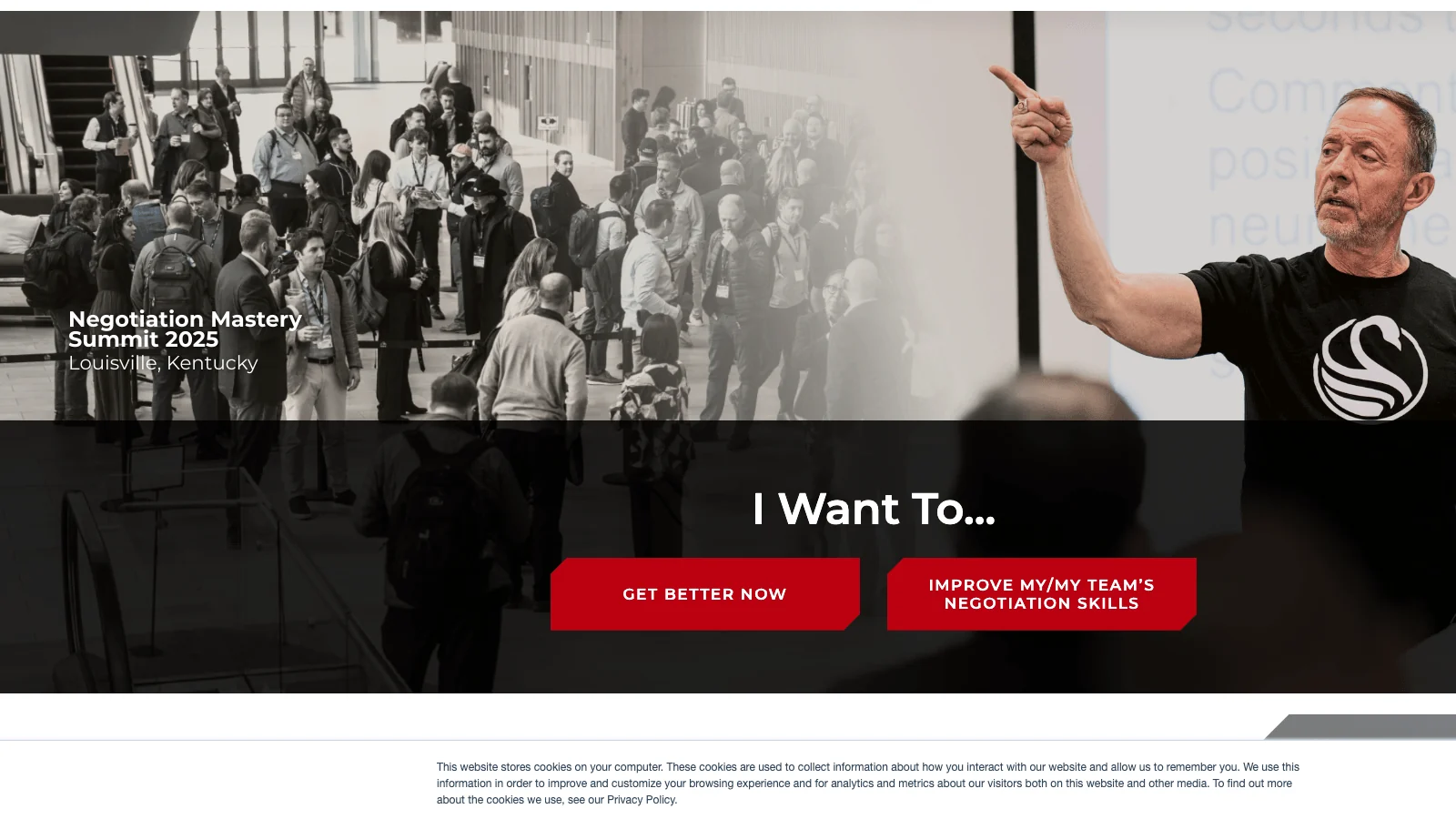
The Voss pipeline is worth studying. He published Never Split the Difference in 2016. By 2026, The Black Swan Group employs former hostage negotiators who deliver keynotes and training based on the methodology in the book. A booked keynote produces follow-on training contracts, follow-on certification engagements, and a constant stream of audience members buying the book to share. The pipeline is so well-run that the book is now one revenue line among many, all anchored to the same named concept and the same speaker-friendly bio arc.
Most coaches will not build a firm the size of Black Swan. They do not need to. The structure of the pipeline scales down. One author, one book, one named concept, one /speaking page, one inbox. Run the same six-stage pipeline at one-tenth the volume and produce eight to twelve paid keynotes a year. That alone changes the economics of a coaching practice.
How to write your speaker-pulling book in 2026 (with Built and Written)
The traditional path. Pick a topic. Spend nine months to two years writing the manuscript. Pay a developmental editor $5,000 to $15,000 to help structure the book. Pay a copy editor another $2,000 to $5,000. Pay a designer for the cover. Format the interior. Upload to KDP. Pray.
The cost: anywhere from $8,000 to $80,000 depending on whether you use a ghostwriter and which agencies you hire. The time: nine months to two years from blank page to Amazon listing. The risk: most coaches give up before chapter four.
That is the path that has kept most of the speaker-eligible coaches out of the speaker market for the last twenty years. They have the expertise. They have the named concept. They could be on stages. They never finish the book.
The 2026 path is different. The coach already has the content. The LinkedIn posts they have been writing for three years. The podcast transcripts from every interview they have ever recorded. The voice memos they record after every client call. The newsletter archive. The long-form emails to top clients. All of it is the raw material of the book.
Built and Written pulls all of it in. The coach pastes posts, uploads transcripts, imports URLs from their own articles, dictates fresh material into the voice-to-text feature. The AI assembles the material into a structured manuscript. The coach edits the structure to match the Stage-Pull Framework: a named concept on the cover, a talk-shaped spine in the chapter list, traveling evidence in the figures and tools, a speaker-friendly bio arc in the intro, a speaker funnel in the back matter. The Voice DNA feature conditions the model on the coach's existing writing samples so the output reads in the coach's voice, not in generic AI register.
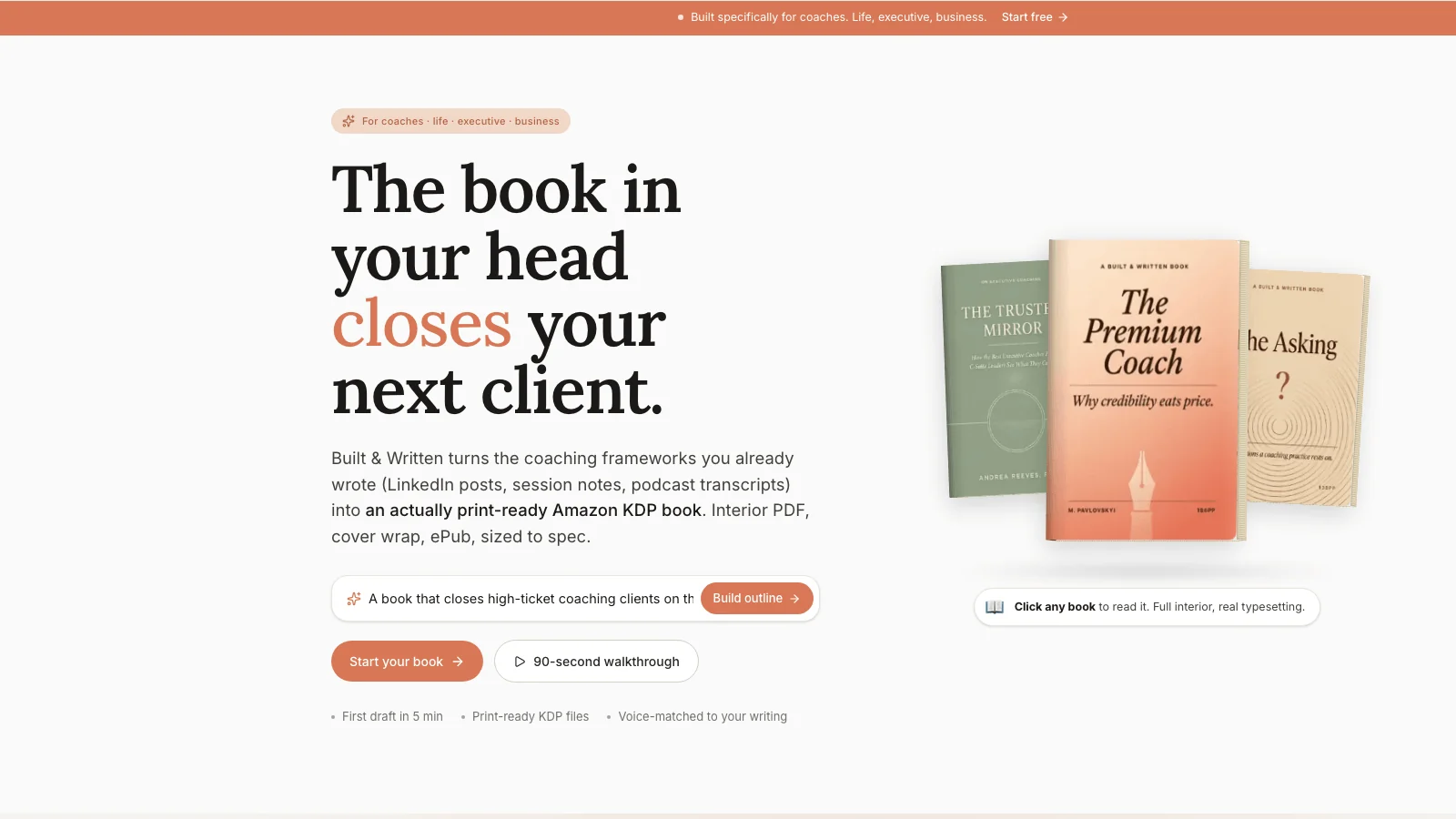
The integrated cover designer handles the cover with spine math calculated from page count. The KDP Launch Co-pilot generates the complete Amazon listing, the LinkedIn announcement copy, and the metadata package. The output is a print-ready PDF, an ePub, and the KDP submission ZIP. The coach orders author copies, lists the book on KDP, and starts running the Speaker Booking Pipeline from day one.
The pricing: from $19 per month, with a free tier. Compare that to the $25,000 to $80,000 ghostwriter range. Compare it to the $15,000 to $50,000 book-agency range (Scribe Media and similar tiers). The math is uncomfortable for the legacy publishing-services market because the math is real. A coach in 2026 who wants to be on stages does not need to spend $50,000 to find out whether the book will deliver. They can spend $15 and find out in a week.
The Voice DNA matters specifically for the speaker funnel. A book that sounds like generic AI output does not pull speaking inquiries because event organizers can hear the difference between an author and an AI. The Voice DNA preserves the coach's voice across the manuscript. The book reads as the coach wrote it. The keynote pitch the event organizer pulls from the book sounds like the same person who wrote the book. The audience hears the same voice on stage. The credibility loop stays closed.
Tactical steps for a coach starting this week.
Step 1. Open builtwritten.com. Start on the free tier.
Step 2. Paste in 5 to 50 pages of your existing writing samples for the Voice DNA feature. LinkedIn posts, blog posts, long-form emails. The model conditions on these.
Step 3. Define your named concept and your talk-shaped spine in the wizard. Three to seven parts. Each part standalone. Each part demonstrable on stage in 6 to 9 minutes.
Step 4. Import your existing content. LinkedIn posts, podcast transcripts (transcribe externally with Otter, Descript, or Rev and paste in), voice memos converted to text, newsletter archives, client-call notes. Build the corpus.
Step 5. Let the AI assemble the manuscript. Review the chapter structure. Edit the spine to match the keynote shape you sketched.
Step 6. Add traveling evidence. One-page tools, two-by-two matrices, annotated screenshots, script templates, named tests. The figures, the diagrams, and the callouts. The book has to be visible at a glance.
Step 7. Write the introduction as the speaker bio in long form. Year, situation, turning point, framework, takeaway.
Step 8. Write the back matter as the speaker funnel. One-paragraph pitch. Speaker page URL. Speaker sheet PDF link. Direct email. Past stages list.
Step 9. Export the KDP package. List on Amazon KDP. Order author copies.
Step 10. Start the Speaker Booking Pipeline the same week the book lists. Ship 50 to 100 copies into high-density rooms. Submit the first 10 conference proposals. Forward the speaker sheet to your existing network.
The Built and Written for coaches page walks through the coach-specific use case. The International Coaching Federation member coaches are the exact audience this approach was built for. A coach with published author benefits on their LinkedIn bio plus a personal brand around the book gets a different read from event organizers than a coach without. The book is the gating credential. Once it exists, the speaking conversation changes.
The 10 entrepreneurs whose books built their business article goes deeper on the broader pattern. Speaking is one slice of the full Codify-Distribute-Compound loop. Coaches who want a tighter walkthrough of the topic-selection move can read how to choose a book topic. Coaches who want the title-engineering side can read how to write a business book title that gets clicked. Coaches who want the broader play on how to get speaking gigs as an entrepreneur using a book can read the companion article that focuses on the booking side rather than the writing side.
The National Speakers Association is worth knowing about. Membership signals you are a professional speaker, not a hobbyist. Joining requires a track record (paid speaking history, references, a website). A book is the lever that produces that track record fastest. Once the book has produced the first three to five paid keynotes, the NSA membership becomes accessible. The membership produces referrals back into the pipeline. The pipeline compounds.
Honestly, the gap between a coach who is "thinking about writing a book" and a coach who is "on stages getting paid for keynotes" used to be a multi-year, $50,000 chasm. In 2026, with the right named concept, the right talk-shaped spine, and a $15-per-month subscription to assemble the manuscript, the gap closes in a season. Build the book. Engineer the five Stage-Pull elements. Run the six-stage pipeline. The stages fill up.
The verdict. A book is the most durable speaker-lead-magnet money can buy in 2026. Most coaches who want to be on stages are working on the speaking side (pitching events, sending decks, posting on LinkedIn) when they should be working on the book side. Fix the book. The stages follow.
Sources & References
- Talk Like TED by Carmine Gallo on Amazon
- TED official site
- The Five Dysfunctions of a Team on Amazon
- The Table Group (Patrick Lencioni)
- Building a StoryBrand on Amazon
- StoryBrand (Donald Miller)
- Never Split the Difference on Amazon
- The Black Swan Group (Chris Voss)
- Talk Triggers on Amazon (Jay Baer)
- Convince and Convert (Jay Baer)
- Tim Ferriss official site
- National Speakers Association
- Built and Written homepage
- Built and Written for coaches
- Amazon KDP help center
- International Coaching Federation
Frequently asked questions
Yes, if the book is engineered for it. A book with a named concept, a talk-shaped spine, traveling evidence, a speaker-friendly bio arc, and a frictionless booking funnel will pull speaking inquiries. A book that is just a personal essay or a methodology dump will not. The mechanic is not "writing a book" in the abstract. It is engineering a specific kind of book. The Stage-Pull Framework in this article names the five elements. Build for all five.
A typical business book that produces speaker bookings runs between 180 and 280 pages, which is about 50,000 to 75,000 words. Shorter than 150 pages reads as a long-form article and signals 'not yet a real author.' Longer than 320 pages signals 'academic' and slows the read. Event organizers want a book that fits in a carry-on, gets read on a flight, and produces a quotable framework. The 200-page mark is the safe target.
A strong named framework. Tim Ferriss got rejected by 27 publishers before The 4-Hour Workweek came out. Mike Michalowicz self-published Profit First in 2014 before Portfolio acquired the revised edition in 2017. Jay Baer self-published before going traditional. Event organizers do not check the publisher imprint. They check the named framework, the speaker's stage presence, and the past-client list. A self-published book with a tight framework outperforms a traditionally-published book with no framework every time.
The fee follows the audience size, the budget bracket of the event, and the speaker's positioning. A first-year speaker with a fresh book typically lands between $3,000 and $7,500 for a corporate audience. A speaker with a tight named framework, a strong track record, and an active pipeline lands between $10,000 and $25,000 per keynote in years two to four. The top tier (Lencioni, Ferriss, Voss) sits at $50,000 to $100,000+. Start at the bracket you can credibly hold based on the track record and raise it every 6 to 12 months as the booked-engagement count grows.
Yes, and you should. The voice is the asset. A ghostwritten book sounds like a ghostwritten book to anyone paying attention. Audiences and event organizers can hear the gap between the author on stage and the author on the page. Built and Written's Voice DNA feature conditions the AI on 5 to 50 pages of the author's existing writing samples, then preserves that voice across the assembled manuscript. The output reads as the author wrote it. The book and the keynote sound like the same person.
A how-to of your methodology, anchored to a named concept, with a credibility narrative inside the introduction. Pure memoir does not produce speaking inquiries unless you are already famous. A methodology book with a named framework and a strong intro arc produces inquiries from the first month on Amazon. The credibility narrative belongs in the introduction, not in the body. Use the body to teach the framework.
The first inquiries arrive within 30 to 90 days of the book listing on Amazon, if the book has the five Stage-Pull elements and the speaker pipeline is running from week one. Coaches we have worked with using Built and Written have moved from 'blank page' to 'first $10,000 keynote booked' in under eight months. The historical timeline was three to five years. The shrinkage comes from removing the manuscript-writing bottleneck and starting the pipeline at launch instead of at year two.
Stop and name one before you start drafting chapters. The questions you keep answering on sales calls. The same three frameworks you draw on every whiteboard. The recurring observation you make at every panel. Those are the named-concept candidates. Test the name three ways: can a stranger repeat it, does it fit on a marquee, does it have a memorable structure underneath. The naming exercise is the highest-payoff hour you will spend on the book.
Sources & References
- Talk Like TED by Carmine Gallo on Amazon
- TED official site
- The Five Dysfunctions of a Team on Amazon
- The Table Group (Patrick Lencioni)
- Building a StoryBrand on Amazon
- StoryBrand (Donald Miller)
- Never Split the Difference on Amazon
- The Black Swan Group (Chris Voss)
- Talk Triggers on Amazon (Jay Baer)
- Convince and Convert (Jay Baer)
- Tim Ferriss official site
- National Speakers Association
- Built and Written homepage
- Built and Written for coaches
- Amazon KDP help center
- International Coaching Federation
About the author

Michael Pavlovskyi
More in informational
Ready to write your book?
Turn your expertise into a professional book with Built&Written.