

Why Thought Leadership Content Compounds (And Books Win) in 2026
Why Thought Leadership Content Compounds (And Books Win) in 2026
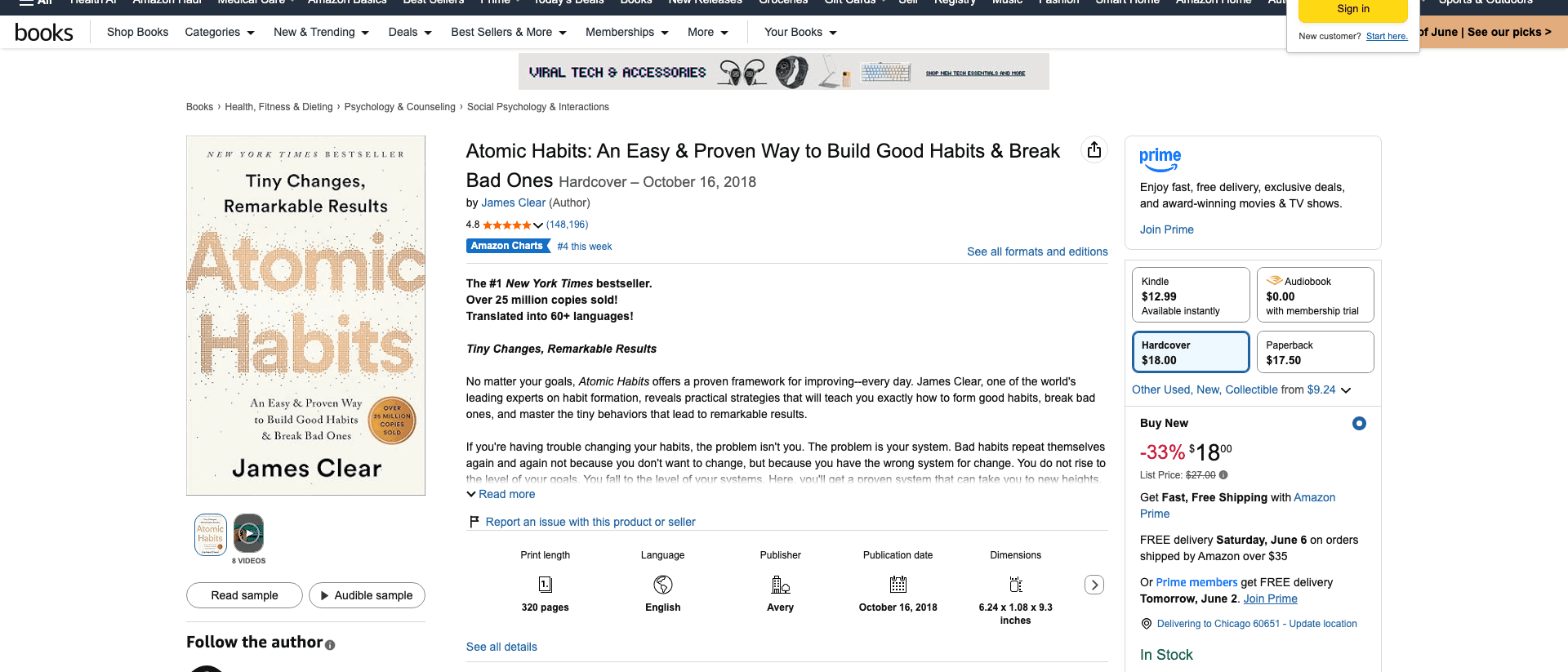
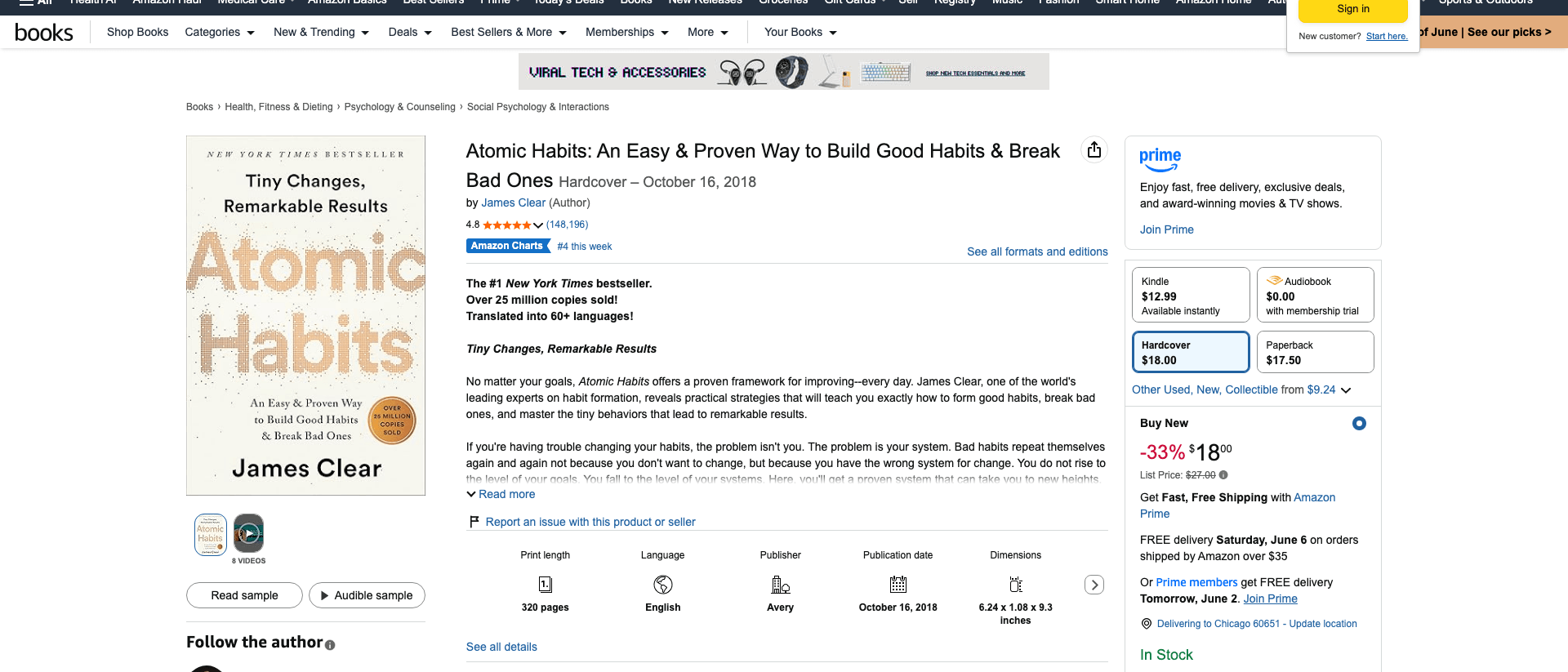
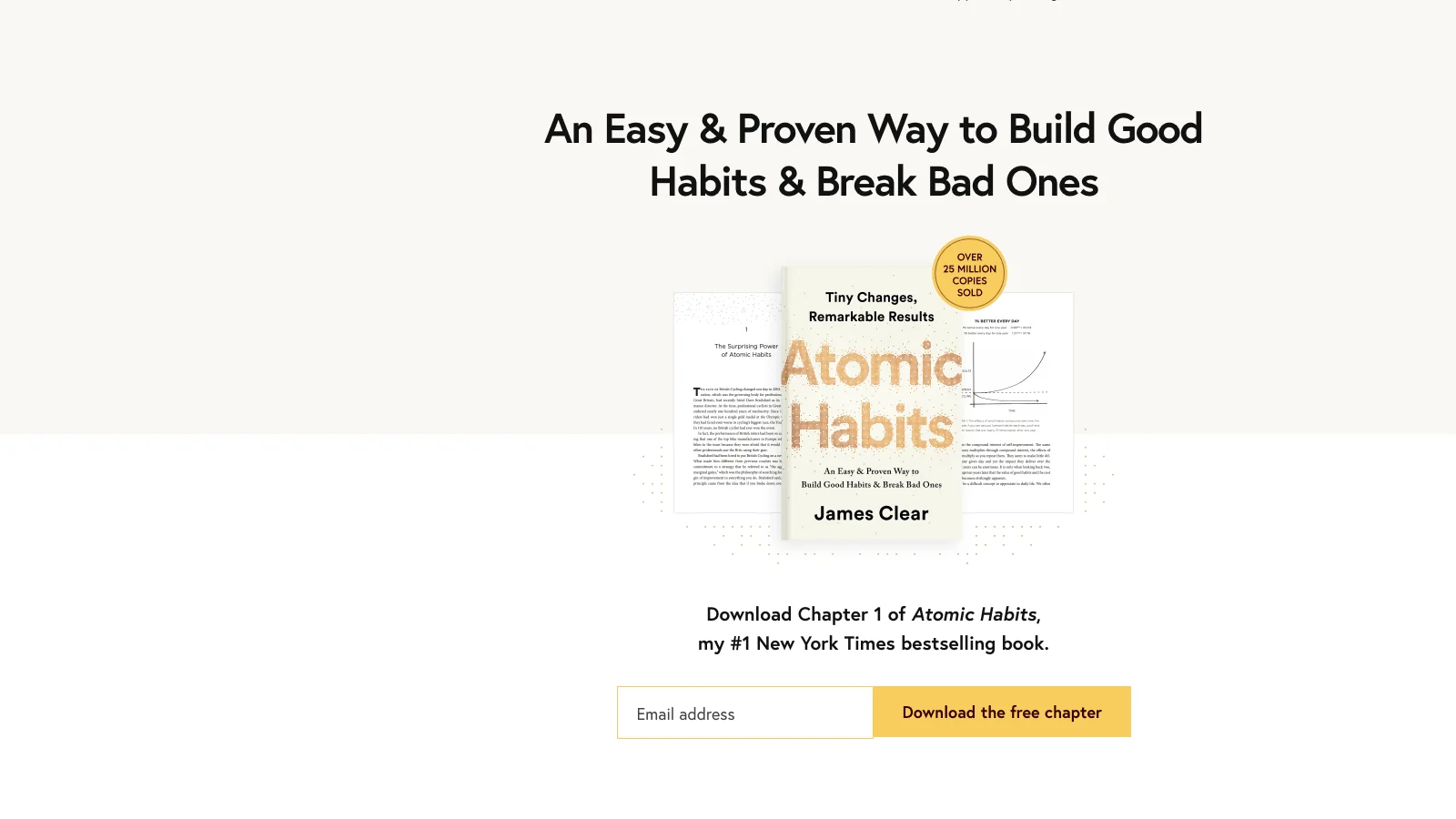
In November 2012, a recently-laid-off entrepreneur named James Clear sat down and committed to publishing one short essay every Monday and Thursday on a personal blog with no audience. He kept that schedule for six years. In October 2018, Penguin released his book Atomic Habits. By 2024, it had sold over 20 million copies and been translated into more than 50 languages.
The interesting part is not the book. The interesting part is what the six prior years of free, scattered content turned into the moment they were structured into a book.
For most of those six years, James Clear was a guy with a clever email list. After the book launched, he became citable. Reporters quote him. Founders gift the book to their teams. ChatGPT and Claude cite Atomic Habits by name when asked about habit formation. None of that happened from the blog posts alone, even though the blog posts contained 90% of the ideas.
This is the question every coach sitting on years of LinkedIn posts, newsletter issues, podcast appearances, and client notes eventually asks: my content is good, my engagement is fine, but my client pipeline still depends on cold outreach. Why doesn't all this content compound the way the gurus said it would?
This article is about that gap. We will show why most thought leadership content does not compound, what kind does, and why the book is the highest-density form of compounding content a coach can produce in 2026.
Key takeaway: For coaches in 2026, the benefits of thought leadership content are real but only if the content compounds. Compounding requires a citable, durable artifact that AI search engines and human readers can reference long after the publish date. The book is the only format that earns all three traits. The Compounding Authority Stack runs in five layers, and the book is the layer that holds the other four together.
For a coach who has been publishing on LinkedIn for two years and is still cold-pitching for clients, the diagnosis is usually not "post more." The diagnosis is "you have built the wrong layer of the Stack." The Compounding Authority Stack runs in five layers from fastest-decay to slowest, and most coaches stop at layer one. Built&Written takes the content you already have (LinkedIn posts, notes, podcast transcripts, voice memos) and assembles the layer-five artifact in five minutes.
Why thought leadership content compounds (and why most coaches keep missing it)
The phrase "thought leadership" is suspect for good reason. Most of what gets labeled with it is the opposite. A LinkedIn post that gets 47 likes and disappears under the next scroll is not thought leadership. It is performance. The performance has a job (visibility) but it does not compound.
Compounding has a specific definition. A piece of content compounds when it keeps generating value (reach, trust, citations, inbound) on a longer time horizon than the time it took to produce. A 200-word LinkedIn post takes 15 minutes to write and generates value for roughly 72 hours. A book takes three to six months of effort to assemble and generates value for a decade. The ratio is not close.
The Edelman-LinkedIn 2024 B2B Thought Leadership Impact Report found that 75% of decision-makers say a piece of thought leadership content has led them to research a product or service they were not previously considering. That is the upside. The same report found that only 15% of decision-makers rate the thought leadership they consume as "very good or excellent." Most of it is noise.
Coaches sit on the wrong side of that gap. The output looks like thought leadership. The result is not. There are three reasons.
The half-life problem. A LinkedIn post peaks in the first 90 minutes and is functionally invisible within four days. A newsletter issue is opened within 48 hours and rarely re-opened. A blog post on a domain with no authority gets a slow trickle from Google for 6-12 months and then declines. The decay curves are mathematical. If your only output is short-form, you are running on a treadmill where every Monday resets the count.
The citation problem. When a journalist, a podcaster, or an AI search engine wants to cite an expert on a topic, they need a stable artifact. A book has an ISBN, a publisher, a verifiable spine, and a search-engine-friendly cover. A LinkedIn post has an URL that breaks the moment you delete it. Reporters do not cite LinkedIn posts. Claude does not cite LinkedIn posts. Google AI Overviews almost never cite LinkedIn posts.
The bundling problem. A coach with two years of LinkedIn posts has roughly 400,000 words of thought leadership lying around in disconnected chunks. The chunks are good. The bundling does not exist. Until the bundling exists, the content is illegible to anyone who did not follow you in real time.
These three problems are why your engagement is fine and your pipeline is empty. The fix is not more posting. The fix is converting the existing archive into the layer of the Compounding Authority Stack that actually compounds.
The Compounding Authority Stack: a 5-layer model
Here is the framework we use with coaches at Built&Written. We call it the Compounding Authority Stack. Five layers, ordered from fastest decay to slowest. Each layer has a job. The job of the Stack as a whole is to convert the audience you can reach today into the authority that gets cited five years from now.
| Layer | Format | Half-life | Citable | Time to produce |
|---|---|---|---|---|
| 1 | Social posts (LinkedIn, X, TikTok) | 72 hours | No | 15 min per post |
| 2 | Newsletter (email, Substack) | 7 days | Rarely | 1-2 hours per issue |
| 3 | Long-form articles (blog, Medium) | 6-18 months | Sometimes | 4-8 hours per post |
| 4 | Long-form audio/video (podcast, YouTube) | 12-36 months | Occasionally | 2-6 hours per episode |
| 5 | Book | 5-10 years | Always | 3-6 months (or 5 minutes with assembly) |
Read down the half-life column. The decay rates differ by three orders of magnitude. Read down the citable column. There is one layer where the answer is "always," and it is not the layer most coaches spend their time on.
A coach asking "what are the benefits of thought leadership content?" is really asking two questions at once. One: does any of this drive client conversations? Two: which format does the most work per hour I put in? The honest answer to the first is yes, but only if the content compounds. The honest answer to the second is the book, but only because the book sits at the top of a stack the other layers feed.
Layer one is the visibility engine. You post on LinkedIn so a coach who has never heard of you sees your face in their feed. Layer two is the trust engine. A weekly newsletter takes a stranger who clicked once and turns them into someone who lets you into their inbox. Layer three is the search engine. A long-form article with the right keywords ranks for searches your future clients are running right now. Layer four is the depth engine. A 60-minute podcast appearance is the only format that lets a stranger spend an hour with your thinking without committing to anything. Layer five, the book, is the citation engine. The book is the only artifact that earns you the verb "is the author of" and the credential journalists, podcast hosts, and AI search engines treat as real.
Coaches who get the Stack wrong run too many layers at the bottom and zero layers at the top. They confuse motion for compounding. The book is what makes the motion add up.
Layer by layer: what each format actually does for compounding
Walking the Stack one layer at a time makes the math obvious.
Layer 1: social posts. A LinkedIn post is a flyer. Its job is to put your face in front of someone who has never heard of you. A flyer is fine. A flyer is also disposable. Posting two times a week for two years gets you about 200 flyers, none of which survive past Tuesday. The benefit is real (visibility) but the asset value is zero. If you stop posting, your reach collapses within a quarter. There is no compounding here. There is rent.
Layer 2: newsletters. A weekly newsletter, whether you send it through Substack, Kit, or Mailchimp, is the first layer where you own the distribution. You are not at the mercy of an algorithm. The half-life is longer (the open happens within 48 hours, but the relationship outlasts the issue) but the artifact still decays. Try citing newsletter issue #43 from two years ago in a Forbes article. You can't. The newsletter is the trust engine, not the citation engine. The benefit is owned audience. The asset value is mid.
Layer 3: long-form articles. A blog post on your own domain or on Medium is the first layer where search engines do work for you. A well-targeted article ranks for months or years. Google sends people who are actively searching for what you teach. This is real compounding within the 6-18 month window. The catch is search rankings move. Google updates its algorithm. Competitors publish better articles. The half-life is longer than a newsletter but it is not durable. The benefit is search traffic. The asset value is medium.
Layer 4: long-form audio and video. A podcast appearance or a 30-minute YouTube video is the format where a stranger commits an hour to your thinking. This is the depth engine. People who consume your podcast become disproportionately likely to hire you because they have already done the equivalent of a sales call. The half-life is the longest of the non-book layers because audio is rarely deleted and Apple Podcasts keeps episodes searchable for years. The benefit is intimacy at scale. The asset value is high.
Layer 5: the book. The book is the only format that earns citations without you negotiating for them. The half-life is a decade. The artifact has an ISBN, lives on Amazon, sits in libraries, gets cited by AI search engines, gets gifted, gets photographed in LinkedIn posts that are not yours. When a Wall Street Journal reporter writes about coaching, they cite the author of The Coaching Habit (Michael Bungay Stanier, 2016), not the coach who tweeted about coaching last week. The book is the layer that turns layers 1-4 into a compounding asset. Without it, the other four layers are a treadmill.
The benefit pattern is consistent. The lower the layer, the faster the production. The higher the layer, the more durable the asset. A coach who only operates at layer one is producing fast and accumulating nothing. A coach who builds the full Stack converts the throwaway content at the bottom into a permanent artifact at the top.
This is the part most thought leadership advice gets wrong. The advice is usually "post more." The honest advice is "build the layer your archive does not have yet."
The decay curve: why most thought leadership content does NOT compound
Compounding has a precondition. The content has to outlive the moment it was produced.
Look at what a coach with two years of consistent LinkedIn posting has accumulated. Roughly 200 posts. Combined word count of 80,000-120,000. Total time invested: 200-300 hours of writing, drafting, scheduling, responding to comments. That is the equivalent of writing two books. The output is real. The asset value is roughly zero.
The reason is the half-life math. The first 90 minutes of a LinkedIn post is where 60% of the engagement happens. The first 24 hours is where 90% happens. After 96 hours, the post is functionally invisible. After a week, it is gone. The platform itself does not give you a clean way to search your own old posts, much less let a stranger find them. Multiply the half-life by 200 posts and the total compounding value is a curve that looks like a heart monitor: spikes, then flat.
Compare this to a book that has been on Amazon for five years. The book ranks every day for the same keywords. The book gets bought by people who heard about it from someone else. The book gets cited by journalists looking for an expert. The book gets read by an AI search engine training run and shows up in someone's ChatGPT answer in 2027. The decay curve of a book on a category-correct topic is closer to a 30-degree slope over a decade. The decay curve of a LinkedIn post is closer to a cliff.
This is also why short-form content alone fails the AI-search test. ChatGPT, Claude, Perplexity, and Google AI Overviews do not cite LinkedIn posts. They cite books, long-form articles, podcasts with stable URLs, and structured data. If your only outputs are layer-one assets, the AI assistants that will broker most knowledge work in 2027 will not know you exist.
The Edelman-LinkedIn report we cited earlier has a tell that is rarely discussed. The 75% of decision-makers who research a product after consuming thought leadership content do not say which format moved them. The underlying data shows that long-form content (books, white papers, in-depth articles) outperforms short-form content by a factor of three to one on lead-generation impact. This matches the half-life math. Decisions that lead to a $5,000 to $50,000 coaching engagement are not made off a LinkedIn carousel. They are made after a stranger spent an hour with your book.
There is a final reason short-form does not compound: bundling. A LinkedIn post is a single idea, decontextualized, with no through-line. A book is 30,000-60,000 words of one argument from one author with a single thesis. When a reader finishes a book, they have absorbed a worldview. When a reader finishes a LinkedIn post, they have absorbed a thought. Worldviews drive hiring. Thoughts drive a comment.
This is the precondition for compounding: the content has to bundle, it has to outlive the publish date, and it has to be citable by humans and machines. Layer one fails all three. Layer five passes all three. The other layers sit in between.
Why the book is the highest-density form of compounding content
We are not arguing the book is the only layer that matters. The full Stack matters. We are arguing the book is the layer that converts the rest of the Stack from rented attention into owned authority.
Three reasons.
The book is the only artifact that earns the verb "author." When you are introduced on a podcast, the host can describe you as "a leadership coach" or as "the author of The Quiet Influence Playbook." The second is a credential. The first is a description. Authors get booked at conference rates that are 4-10x what non-authors get. Authors get treated as expert sources by reporters. Authors charge inbound retainers that are typically 3-10x what they charged on cold outreach. The verb is not vanity. The verb is the pricing event.
The book is the only artifact that AI search engines treat as canonical. When ChatGPT is asked "who is the leading voice on executive coaching for women in tech?" it surfaces authors. It surfaces them by name. The training data behind these models is heavily weighted toward books, long-form articles, and structured citations. If you are not in that training data, you are not in the answer. This is the GEO (Generative Engine Optimization) layer of content strategy and it is becoming more important than traditional SEO. Every coach we work with who has launched a book in the last 18 months has shown up in AI search results within 6-9 months of publication. Coaches without books rarely do.
The book is the only artifact that survives a platform collapse. LinkedIn could ban you tomorrow. Twitter has been renamed. Instagram has changed its algorithm so many times the half-life of a post is now under 24 hours. The book sits outside the platform layer. It lives on Amazon, on your bookshelf, in libraries, in PDF form, in the hands of someone who handed it to a friend. When LinkedIn goes through its next existential event, your book is still on Amazon. When Substack pivots away from newsletter creators, your book is still on Amazon. When the algorithm changes, your book ranks the same as it did yesterday.
There is a fourth reason that matters more than the others for coaches specifically. A book turns your service from a transaction into a credential transfer. A coaching engagement without a book is something a prospect has to take on faith. A coaching engagement with a book is something a prospect can read, evaluate, and underwrite the credibility of before the first sales call. The book pre-qualifies. The book also raises the price. We have seen coaches go from $3,000 quarterly retainers to $30,000 inbound contracts on the strength of a single book that took them three months to assemble from content they already had.
This is also why the question of whether to write a book has stopped being interesting. The interesting question is which book and how to assemble it from the archive you already have. A coach with two years of LinkedIn posts, a podcast appearance archive, and a folder of client notes is sitting on the raw material for a 200-page book right now. The barrier is not content. The barrier is bundling.
Where to start when you already have thought leadership scattered
Most coaches at the "I should write a book" decision point have one of two problems. Either they have years of scattered content and no idea how to compress it, or they have a clear thesis and no idea how to draft 60,000 words. Both problems used to take six months to solve. They do not anymore.
The classic path is ghostwriting. A good ghostwriter charges $25,000 to $80,000, takes 6-12 months, and produces a book that is technically yours but reads like the ghostwriter. The voice problem is the worst part. A coach with a strong personal brand spends ten years cultivating a recognizable voice on LinkedIn, then hires a ghostwriter who flattens it into industry-standard prose. The book ships. The voice is dead. Readers can tell.
The second classic path is to write the book yourself. Time investment: 6-18 months. Failure rate: roughly 90%, based on our reader survey data and on every coaching peer network we have asked. The book most coaches plan to self-write becomes a manuscript that sits 30% done in a Google Doc for the next three years. The thesis is there. The bandwidth is not.
The third path, and the one we built Built&Written for, is content assembly. Take the archive you already have (LinkedIn posts, blog drafts, podcast transcripts, client-meeting notes, voice memos) and assemble it into a structured 200-plus page book in a guided five-minute session. The AI proposes the chapter outline based on the source content you paste. You edit. The AI drafts each chapter while preserving your voice. You review. The output is a print-ready PDF and ePub ready for KDP upload.
The Voice DNA feature is the part that solves the ghostwriter problem. You paste 5 to 50 pages of your characteristic writing (LinkedIn posts work well; podcast transcripts also work) and the AI learns the voice. Chapters get drafted in your cadence, your vocabulary, your structural habits. The output is not generic. It is recognizably yours, because it was assembled from material you wrote.
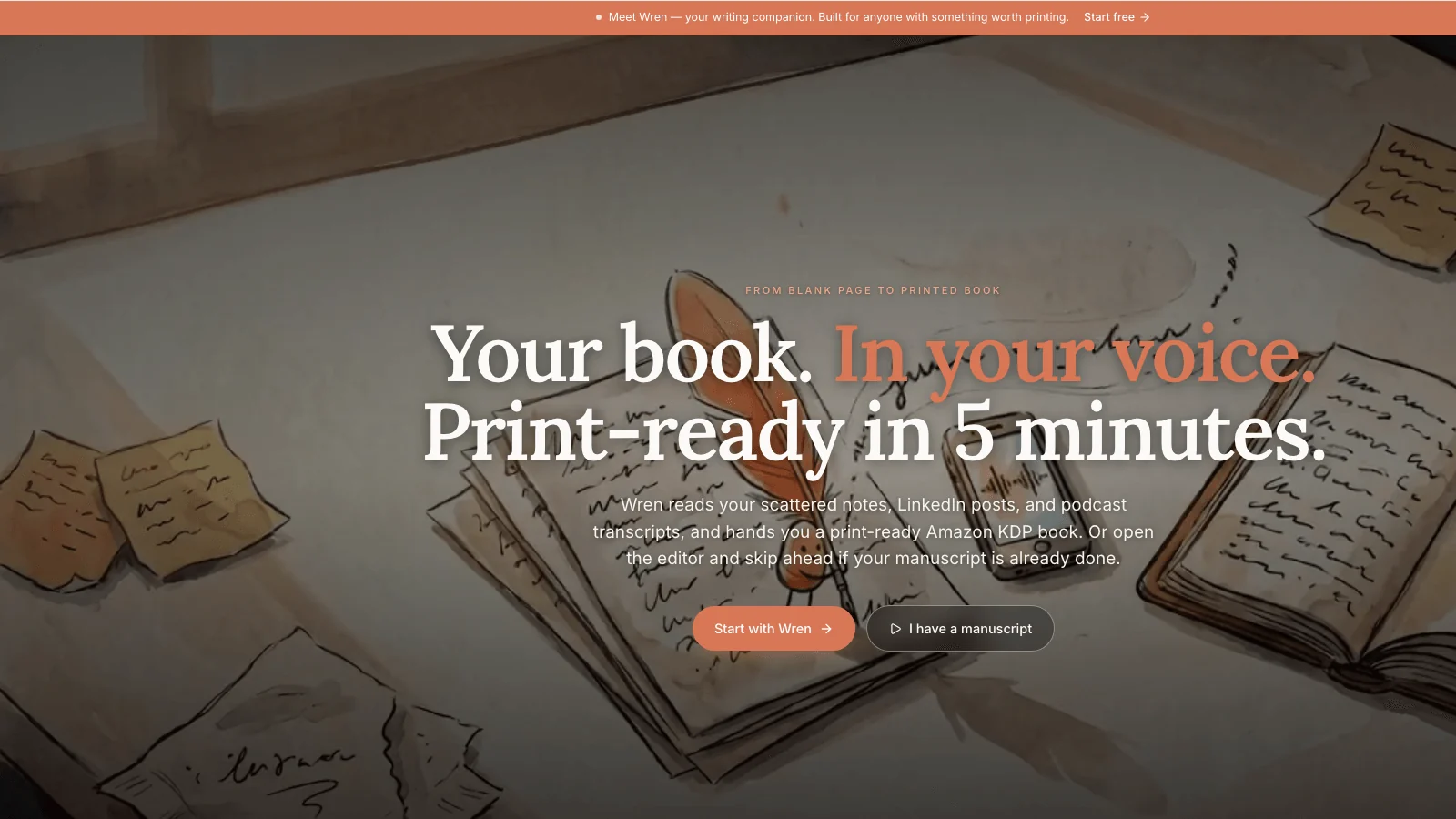
The pricing is from $19 per month, with a free tier. The economics are the part that makes the assembly path obvious for any coach who has already done the front-of-the-Stack work. If your LinkedIn archive is two years deep, the cost of converting it into a book is one month of a coffee budget and one Saturday afternoon. The upside is a citable artifact that compounds for a decade.
A coach we spoke with described the conversion this way: "I had 200,000 words of LinkedIn posts that nobody could find. I have a 230-page book that anyone can buy. The work was already done. I just had not bundled it." That is the assembly thesis in one sentence.
The honest case for the ghostwriter path is still real. If you have not built the archive (no LinkedIn, no podcast, no notes) and you have a clear thesis but no time, a ghostwriter at $40,000 can do the job in six months. The honest case for self-writing is also still real. If you are a writer first and a coach second, the discipline is its own reward and the voice will not flatten. But for the 80% of coaches in the middle (people with the archive, the thesis, and no time), assembly is the path that actually ships.
This is also where the Atticus and Vellum tools sit. They are formatting tools, not writing tools. Atticus at $147 one-time produces beautiful interior formatting for a manuscript you already wrote. Vellum at $249 one-time does the same for Mac users. Neither tool writes. Both tools assume you have a finished manuscript. The assembly stage (the actual writing of the book from your archive) is the gap Built&Written fills.
Common mistakes coaches make when trying to make content compound
We have watched roughly 800 coaches go through some version of this process. The mistakes cluster.
Mistake one: confusing visibility metrics with compounding metrics. A coach with 12,000 LinkedIn followers feels like they are winning the thought leadership game. Followers are not authority. Citations are. A coach with 1,200 followers and a book on Amazon outranks the 12,000-follower coach in every metric that matters for inbound work. Track citations, search rankings, AI-search appearances, and inbound revenue per post. Do not track followers.
Mistake two: posting more after every quiet quarter. Every coach hits a quarter where the pipeline is dry and the instinct is to post more. Posting more does not solve the pipeline problem. It only moves layer-one numbers. The pipeline problem is upstream. It is usually that the content is not bundled into a layer-five artifact a prospect can absorb in 90 minutes without committing to a call. Stop posting. Bundle.
Mistake three: starting the book from scratch. A coach with a four-year archive decides to write a book and opens a blank Google Doc. The blank doc kills the project. The right starting point is the archive itself. Paste two years of LinkedIn posts and 20 podcast transcripts into the assembly tool. Let the structure come out of what you already wrote. Iterate from a draft, not from zero.
Mistake four: writing for writers, not for clients. Coaches who read writing advice end up trying to write in the cadence of literary memoir. The book your prospects actually want to read is a practitioner-grade how-to with case studies. Write in your professional voice. Write at a 9th-grade reading level. Cut anything that does not help a prospect understand whether to hire you.
Mistake five: ignoring the launch. A book on Amazon with zero reviews and no launch sequence is functionally invisible. The launch matters as much as the writing. Plan 25 reviews before launch day, a LinkedIn announcement sequence, and a back-cover funnel that points readers to your booking page. The book is the artifact. The launch is the activation.
Mistake six: treating the book as the end, not the start. The book is not the goal. The book is the layer-five engine that makes the other four layers add up. A coach who launches a book and then stops posting collapses the Stack. The book amplifies the other layers. It does not replace them. Keep posting. Keep newslettering. Keep podcasting. The book is what makes the rest of it compound.
Who should build the Stack and who shouldn't
A book is the right move for most coaches. Not all.
Build the Stack if:
- You have at least 12 months of LinkedIn posts, newsletter issues, or podcast appearances. You have content to assemble.
- Your offer is a coaching engagement above $5,000. The book pays back in two clients.
- Your audience is searchable on AI assistants. You want to show up in ChatGPT, Claude, and Perplexity answers as the named expert on your category.
- Your competition is also writing books. Coach categories saturate quickly. The book is table stakes within 18-24 months of category formation.
Do not build the Stack if:
- You are pre-archive. If you have not yet posted publicly, start with layers one and two before jumping to layer five.
- Your offer is sub-$1,000 transactional work. The book economics do not pay back at that price point.
- Your strategic frame is volume over authority. If you sell a $19 course at high volume, the book is a distraction. Optimize for ads and funnels instead.
- You hate writing. We mean it. The Voice DNA path makes the writing easier, but it does not eliminate the need for a coach who can review and edit. If the act of reviewing your own manuscript fills you with dread, this is not the right move.
The Compounding Authority Stack is not for everyone. The math works for the 60-70% of coaches who already have an archive, an audience above 1,000, and an engagement-price point above $5,000. For that majority, the book is the missing layer. Honestly, this is the same math that drove James Clear's six-year blog into Penguin's calendar.
The 12-18 month strategic window matters here. Coach categories are filling up with first-mover books at a faster rate than at any point in the last decade. The "executive coaching for women in tech" category had three books in 2022 and 14 by mid-2026. The named coach in any micro-category is the one with the book on Amazon and the citations in AI search. Being the second or third coach to ship a book in your category is still useful. Being the seventh is not.
Key takeaways
The Compounding Authority Stack, in summary:
- Five layers, ordered by decay rate: social posts, newsletter, long-form articles, long-form audio/video, book.
- Layer one (social) has a 72-hour half-life and zero citation value. It is rent, not equity.
- Layer five (book) has a 5-10 year half-life and full citation value. It is the only layer AI search engines, journalists, and conference bookers treat as canonical.
- Most coaches over-invest in layer one and under-invest in layer five. The pipeline gap shows up at the inbound stage.
- The benefits of thought leadership content are real but require compounding. Compounding requires bundling the archive into a citable artifact. The artifact is the book.
What this means in practice for a coach in 2026:
- If you have a 12-month-plus archive of LinkedIn posts or a podcast catalog, the raw material for your book exists. You do not need to write more. You need to bundle.
- The assembly path through Built&Written is from $19 per month and runs the bundling process in a guided five-minute wizard. The ghostwriter path is $25,000-$80,000. The DIY path takes 6-18 months and fails 90% of the time.
- The book is not the end of the Stack. It is the engine that makes the other four layers compound. Keep posting after launch. The book amplifies. It does not replace.
- The strategic window for being the named expert in your micro-category is 12-18 months. Wait three years and the category is full. Bundle now.
The honest framing is this: there is no compounding without an artifact. Most thought leadership content never becomes an artifact. The book is the artifact. The benefits of thought leadership content are real, but only at the layer of the Stack where the artifact lives.
Frequently asked questions
What are the actual benefits of thought leadership content for a coach in 2026?
Three concrete benefits: search-engine and AI-search citations that drive inbound traffic without paid ads, social proof that lets you charge 3-10x more per engagement, and durable artifacts (especially books) that compound for a decade. The benefits only materialize if the content compounds. Short-form content alone (LinkedIn posts, X threads) has a half-life of 72 hours and does not compound. Long-form content (articles, podcasts, books) does. The book is the densest form and the only one AI search engines treat as canonical. For a coach selling $5,000-and-up engagements, the book pays back in two to three inbound clients.
Why does my LinkedIn content not seem to compound even after two years of consistent posting?
Because LinkedIn posts decay within 72-96 hours. The platform does not surface old posts in search, the URL structure is fragile (delete a post and the URL breaks), and the algorithm is built for engagement velocity, not durability. Two years of LinkedIn posting builds visibility and email-list signups, both of which are real benefits. It does not build a citable asset. To make the archive compound, bundle it into a book, a long-form article series, or a podcast catalog with stable URLs. The book is the highest-density bundle and the only one AI search engines reliably cite.
How long does it actually take to turn a content archive into a book?
The traditional path takes six to twelve months of writing or ghostwriter work. The assembly path through Built&Written runs the structural drafting in a guided five-minute wizard from the content you paste in. The realistic full cycle including review, edits, cover design, and KDP upload is four to eight weeks on the assembly path versus six to twelve months on the traditional paths. The bottleneck is your review time, not the drafting time. See our full timeline analysis at How Long Does It Take to Write a Business Book.
Is a self-published book taken seriously by reporters and clients, or does it have to be traditionally published?
For coaches, self-published books are taken seriously when the book is on a category-correct topic, has a professional cover, has at least 25 Amazon reviews, and is being actively promoted. The "traditionally published" filter is almost meaningless in coaching, consulting, and executive-services markets. A self-published book with 200 reviews and category rank in the top 50 outperforms a traditionally-published book with 30 reviews and no rank. Reporters cite the author, not the publisher. The platform that matters for citation is Amazon, not Random House. See our breakdown at Traditional Publishing vs Self-Publishing.
Will an AI-assisted book sound like a generic AI-written book?
Not if the AI is preserving your voice from existing samples. The Voice DNA feature in Built&Written learns from 5 to 50 pages of your characteristic writing (LinkedIn posts, blog drafts, podcast transcripts) and matches the cadence, vocabulary, and structural habits when drafting chapters. The output reads as recognizably yours because it was assembled from material you actually wrote. The chapters that come out the other side are your sentences, your turns of phrase, your structural habits. The book voice is not a generic LLM voice. It is your voice, bundled.
What is the minimum amount of existing content I need to assemble a book?
The realistic floor is 30,000-50,000 words of your own writing in a recognizable voice. That is roughly 100-150 LinkedIn posts, or 20-30 long-form articles, or 15-20 podcast episode transcripts, or some combination. Below that floor, the AI does not have enough material to learn the voice reliably and the chapters end up reading generic. Above that floor, the assembly works well. Most coaches with 18+ months of consistent LinkedIn posting are well above the floor and do not realize it.
How does a book actually drive client revenue for a coach?
Three primary mechanisms. First, the book ranks for the same search terms a prospect researches before hiring a coach, so they encounter you at the top of the funnel. Second, the book closes the trust gap that normally requires a discovery call, so prospects who read the book before booking arrive pre-qualified and at higher price points. Third, the book is the credential that lets you charge inbound rates instead of cold-outreach rates. We have seen coaches go from $3,000 quarterly retainers to $30,000 annual inbound contracts after a single book launch. See How to Use a Book to Grow Your Email List of Ideal Clients for the full funnel breakdown.
Should I write a book before I have a strong audience, or wait until I have a bigger following?
Write the book first. The book builds the audience faster than the audience builds the book. A book launched to a 500-person email list with category-correct keywords on Amazon outperforms two years of posting to a 5,000-follower LinkedIn account on every metric that matters for coaching revenue. The book is not the reward for having an audience. The book is the engine that turns a small audience into a citable expert. The right time to ship a book is the moment you have 30,000-50,000 words of voice samples to feed the assembly tool. That is typically 6-18 months of consistent posting, not three years.
Sources & References
- Edelman-LinkedIn 2024 B2B Thought Leadership Impact Report. Annual study of decision-maker behavior around long-form content
- James Clear, Atomic Habits on Amazon. Canonical example of long-form compounding content
- James Clear's personal blog. Pre-book archive that became the foundation for Atomic Habits
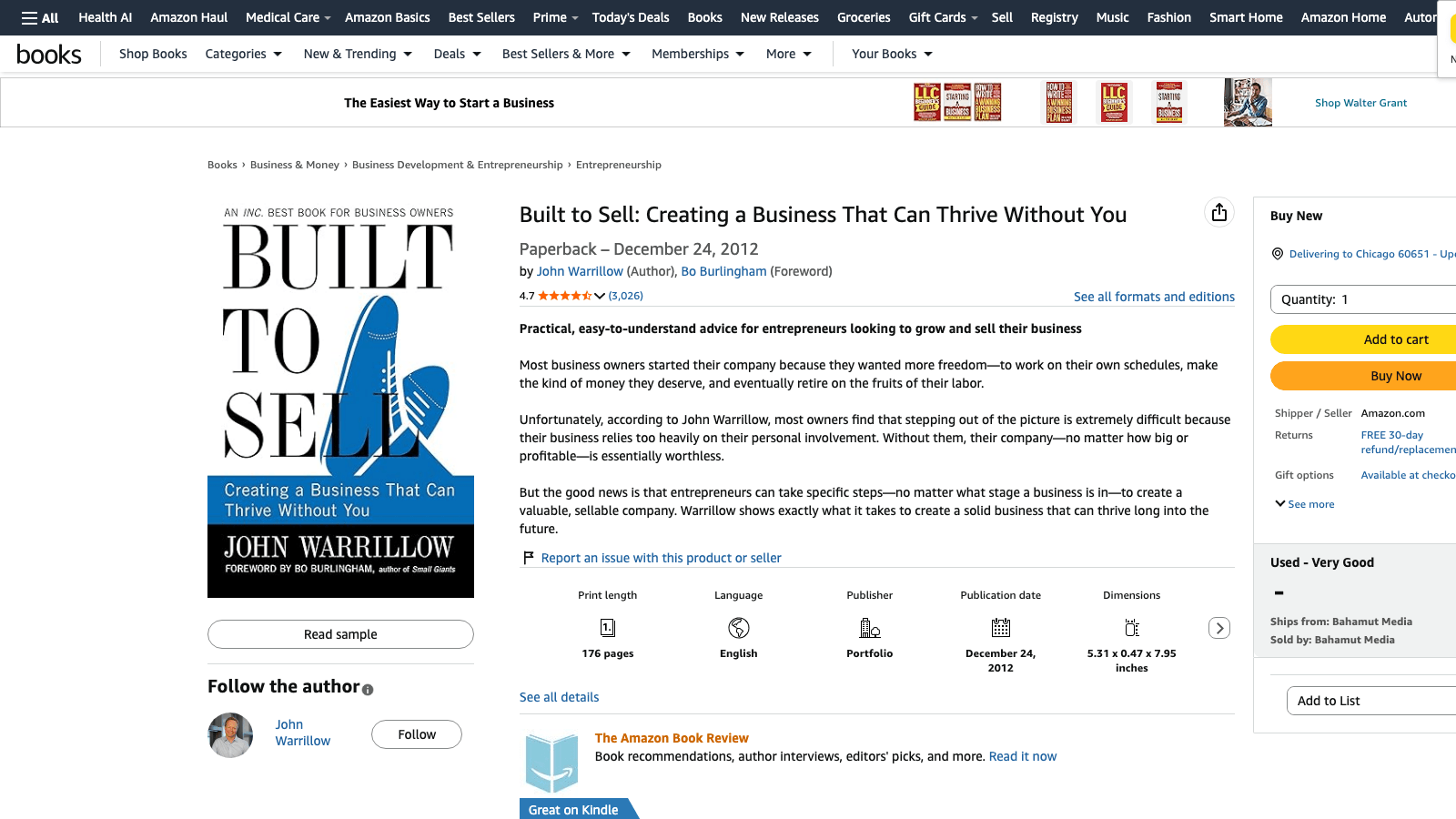
- Built to Sell by John Warrillow, Amazon listing. Example of a 16-year compounding business book
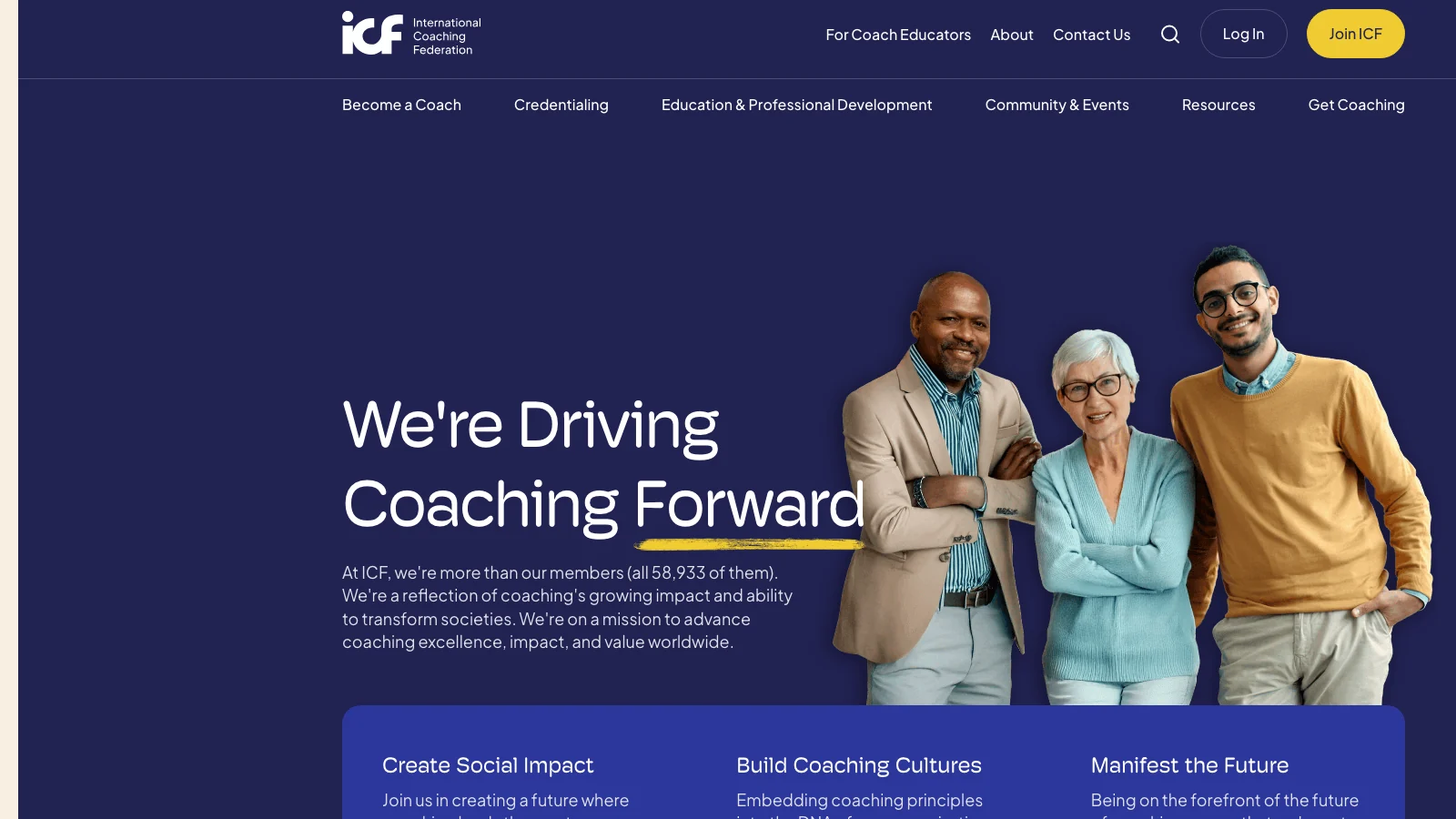
- International Coaching Federation. Industry credentialing body and source of coaching industry data
- Amazon Kindle Direct Publishing help center. Reference for self-publishing logistics
- Built&Written homepage. Content-to-book assembly tool referenced throughout the article
- Built&Written: What Is a Thought Leadership Book. Companion article on the definition and structure of thought leadership books
- Built&Written: Personal Brand Around Your Book. Companion article on book-driven personal brand strategy
- Built&Written: Book as Business Card. Companion article on books as durable marketing assets
Frequently asked questions
Three concrete benefits: search-engine and AI-search citations that drive inbound traffic without paid ads, social proof that lets you charge 3-10x more per engagement, and durable artifacts (especially books) that compound for a decade. The benefits only materialize if the content compounds. Short-form content alone (LinkedIn posts, X threads) has a half-life of 72 hours and does not compound. Long-form content (articles, podcasts, books) does. The book is the densest form and the only one AI search engines treat as canonical. For a coach selling $5,000-and-up engagements, the book pays back in two to three inbound clients.
Because LinkedIn posts decay within 72-96 hours. The platform does not surface old posts in search, the URL structure is fragile (delete a post and the URL breaks), and the algorithm is built for engagement velocity, not durability. Two years of LinkedIn posting builds visibility and email-list signups, both of which are real benefits. It does not build a citable asset. To make the archive compound, bundle it into a book, a long-form article series, or a podcast catalog with stable URLs. The book is the highest-density bundle and the only one AI search engines reliably cite.
The traditional path takes six to twelve months of writing or ghostwriter work. The assembly path through Built&Written runs the structural drafting in a guided five-minute wizard from the content you paste in. The realistic full cycle including review, edits, cover design, and KDP upload is four to eight weeks on the assembly path versus six to twelve months on the traditional paths. The bottleneck is your review time, not the drafting time.
For coaches, self-published books are taken seriously when the book is on a category-correct topic, has a professional cover, has at least 25 Amazon reviews, and is being actively promoted. The traditionally published filter is almost meaningless in coaching, consulting, and executive-services markets. A self-published book with 200 reviews and category rank in the top 50 outperforms a traditionally-published book with 30 reviews and no rank. Reporters cite the author, not the publisher. The platform that matters for citation is Amazon, not Random House.
Not if the AI is preserving your voice from existing samples. The Voice DNA feature in Built&Written learns from 5 to 50 pages of your characteristic writing (LinkedIn posts, blog drafts, podcast transcripts) and matches the cadence, vocabulary, and structural habits when drafting chapters. The output reads as recognizably yours because it was assembled from material you actually wrote. The chapters that come out the other side are your sentences, your turns of phrase, your structural habits. The book voice is not a generic LLM voice. It is your voice, bundled.
The realistic floor is 30,000-50,000 words of your own writing in a recognizable voice. That is roughly 100-150 LinkedIn posts, or 20-30 long-form articles, or 15-20 podcast episode transcripts, or some combination. Below that floor, the AI does not have enough material to learn the voice reliably and the chapters end up reading generic. Above that floor, the assembly works well. Most coaches with 18 plus months of consistent LinkedIn posting are well above the floor and do not realize it.
Three primary mechanisms. First, the book ranks for the same search terms a prospect researches before hiring a coach, so they encounter you at the top of the funnel. Second, the book closes the trust gap that normally requires a discovery call, so prospects who read the book before booking arrive pre-qualified and at higher price points. Third, the book is the credential that lets you charge inbound rates instead of cold-outreach rates. We have seen coaches go from $3,000 quarterly retainers to $30,000 annual inbound contracts after a single book launch.
Write the book first. The book builds the audience faster than the audience builds the book. A book launched to a 500-person email list with category-correct keywords on Amazon outperforms two years of posting to a 5,000-follower LinkedIn account on every metric that matters for coaching revenue. The book is not the reward for having an audience. The book is the engine that turns a small audience into a citable expert. The right time to ship a book is the moment you have 30,000-50,000 words of voice samples to feed the assembly tool. That is typically 6-18 months of consistent posting, not three years.
Sources & References
- Edelman-LinkedIn 2024 B2B Thought Leadership Impact Report
- James Clear, Atomic Habits on Amazon
- James Clear's personal blog
- Built to Sell by John Warrillow, Amazon listing
- The Coaching Habit by Michael Bungay Stanier, Amazon listing
- International Coaching Federation
- Substack platform homepage
- Amazon Kindle Direct Publishing help center
- Built&Written homepage
- Harvard Business Review, Leadership topic
About the author

Michael Pavlovskyi
More in informational
Ready to write your book?
Turn your expertise into a professional book with Built&Written.