

How to Write Your Life Story With an AI Biography Generator
Key takeaways
- What is an AI biography generator? A tool that turns your spoken or typed memories into written chapters, and sometimes into a printed book.
- What are the options? Built&Written turns your stories into a full book in your voice. Storyworth and Remento send weekly questions and print one keepsake book. ChatGPT can draft scenes for free.
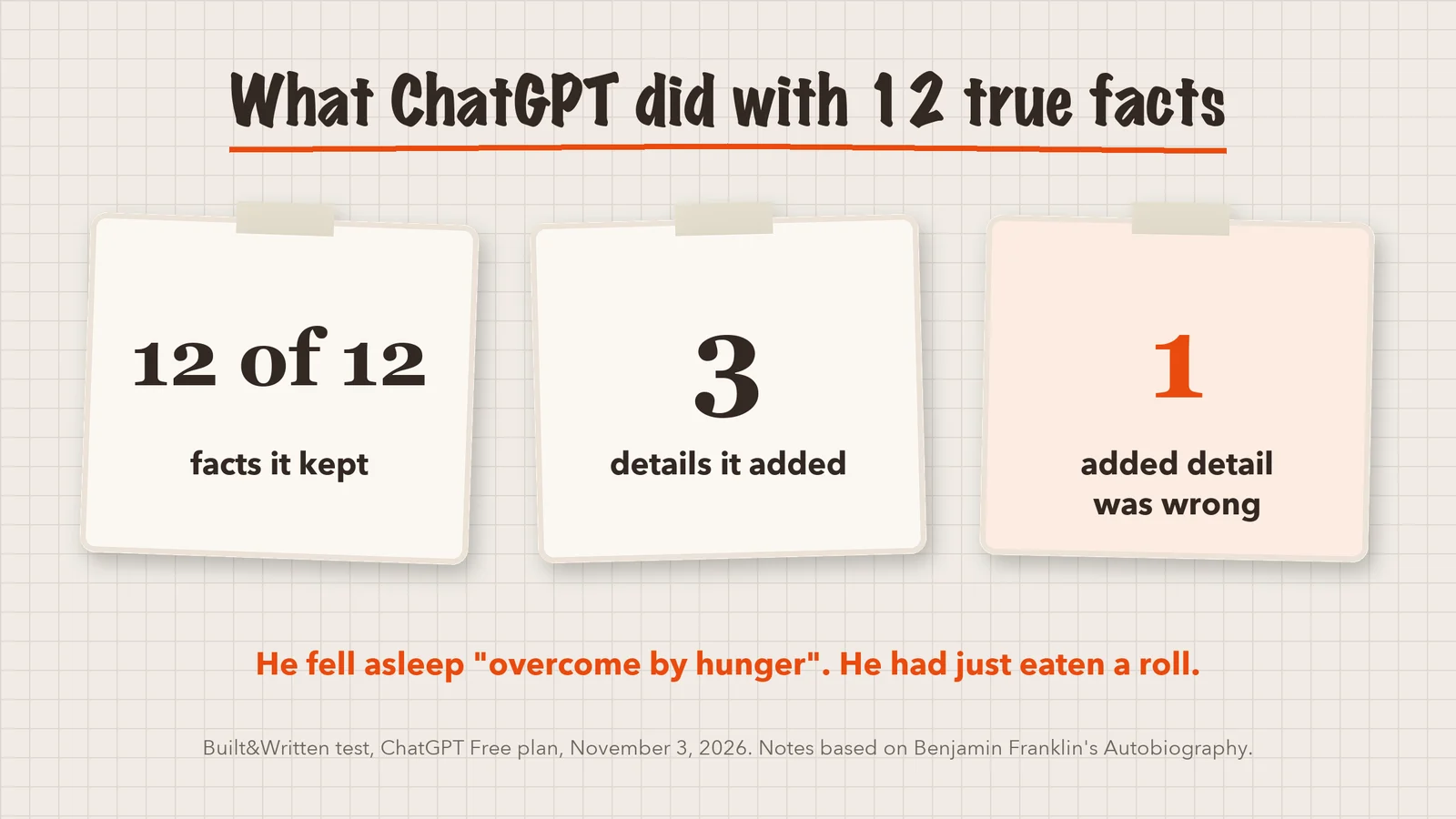
- Can you trust what it writes? Mostly. In our test it kept every fact and added 3 small details, and 1 of those was wrong. Read every scene.
- How do you start? Use what you already have, like old pages or letters. If you have nothing yet, answer one simple question a day.
What is an AI biography generator?
A biography is the story of a person's life. When you write it about yourself, it is called an autobiography or a memoir. An AI biography generator helps with the hardest part: turning loose memories into chapters that read well.
There are three kinds of tools:
- Book platforms take all your stories at once and turn them into a full book with chapters, a cover and print files. Built&Written works this way.
- Weekly question services send one question a week for a year. You answer by writing or talking, and they print the answers as a keepsake book. Storyworth and Remento are the best known.
- Chat tools like ChatGPT write a scene from the notes you paste in. They are free to try, and you put the book together yourself.
All three share one limit. AI does not know your life. Every true thing in the book has to come from you or from the person whose story it is.
How do you write your life story with AI, step by step?
- Collect your memories. Answer one question a day out loud and record it on your phone. Good questions are simple: "Who taught you to work?" or "Which small object holds a big story?"
- Turn the recordings into text. Most phones can type out what you say. Paste the text into one document, one story per page.
- Put the stories in order. Childhood, first job, family, the big turning points. Each story can become a chapter.
- Let the AI write the first draft. Give it the stories and ask for chapters in the first person, in your words.
- Check every scene. Read each chapter and fix names, dates and places. Cut anything that did not happen.
- Make the book. Add photos, choose a cover and print a copy. Amazon KDP (Kindle Direct Publishing, Amazon's service for self-published books) can print copies for your family even if you never sell the book.
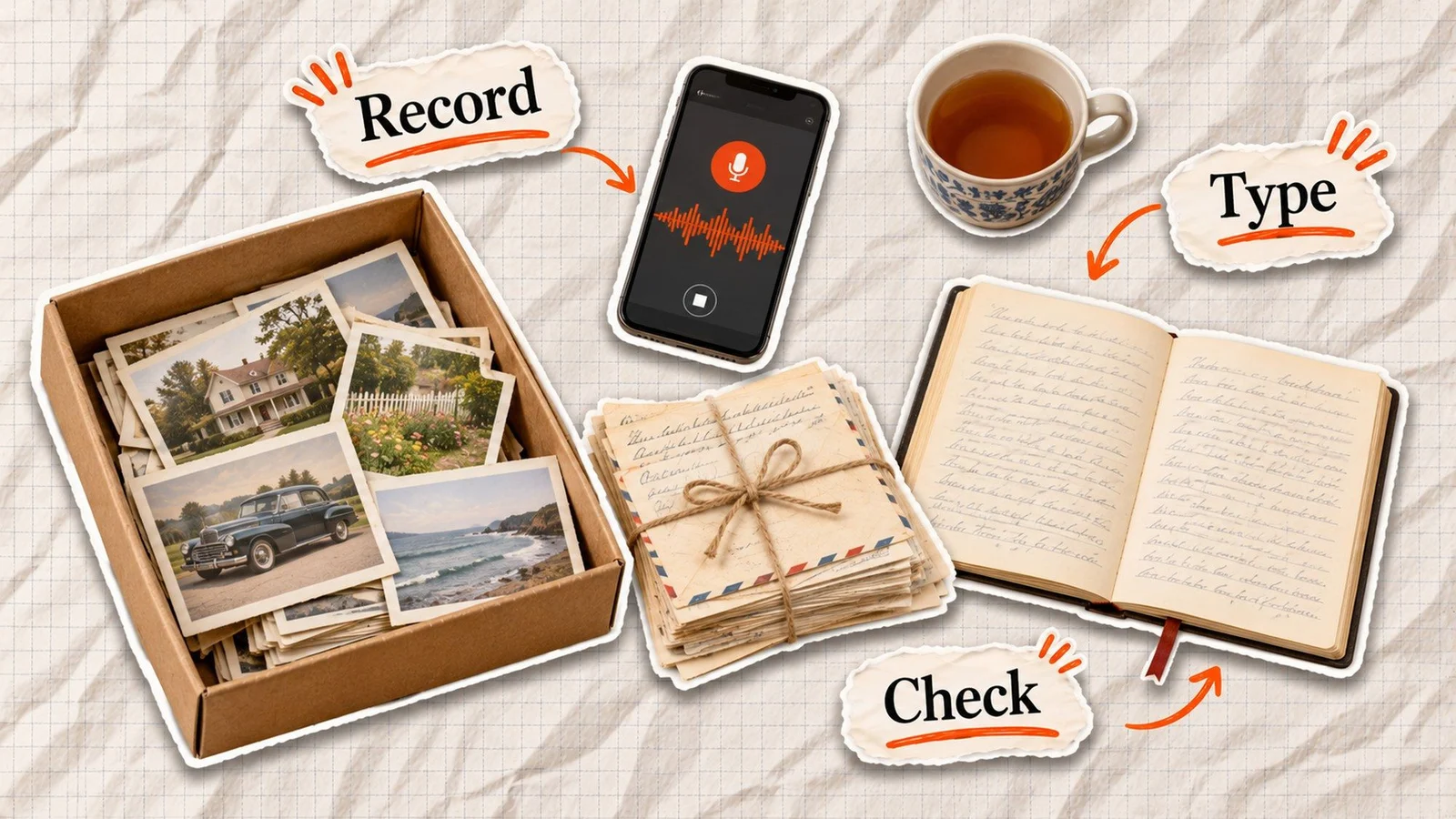
Steps 2 to 4 take the most time. A book platform can do them for you.
How to write your life story with Built&Written
About Built&Written
Built&Written is a platform that turns the stories you tell about your life into a finished book. It plans the chapters around your stories and writes them in your voice.
Memoir is the most common kind of book people write on Built&Written. In the 30 days to October 24, 2026, it was 38 of the 129 books written there, according to our AI memoir writer page.
How is it different from writing in ChatGPT?
A chat tool like ChatGPT writes one scene at a time. A book needs many scenes in the right order, in one voice. With a chat, you do that work yourself. You paste notes, copy the answer out, and keep track of every chapter.
Built&Written works with the whole book at once. You give it all your material. It plans the chapters, writes them in your voice, and makes a cover and print files. You get a book you can hold.
Start from what you already have
Many people already have part of their story on paper. It might be an old manuscript, a diary, letters or a family history someone typed years ago.
Here is an example. Your father typed 60 pages of memories in 2009 and never finished them. The pages jump between years, and some stories repeat. You upload the file to the platform as a PDF or a Word document. You can also paste in new stories you recorded with him this year. The platform reads it all, up to 50,000 words, and plans a new book in the order things happened. Then it writes the chapters in his voice, as a clearer and fuller version of what he started.
You can also talk instead of typing. The box where you start a book has a microphone button. Tap it and tell a story out loud, the way you would tell it at the table.
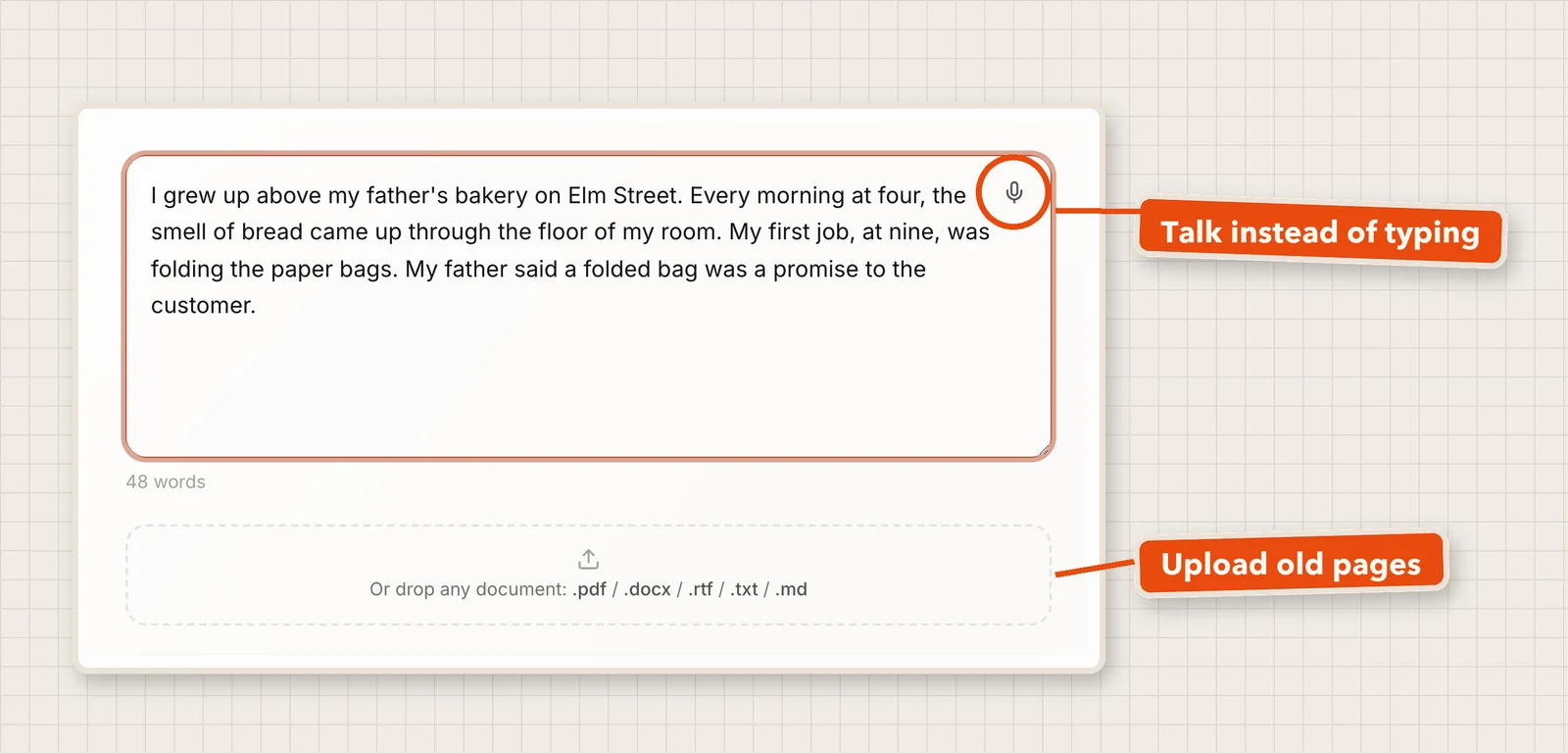
Text in the image:
Talk instead of typing. "Or drop any document: .pdf / .docx / .rtf / .txt / .md" Upload old pages.
If your book is already finished and you only want it laid out for print, you can upload it to be formatted instead. Then the platform keeps every word.
What if you don't know where to start?
Then start with questions.
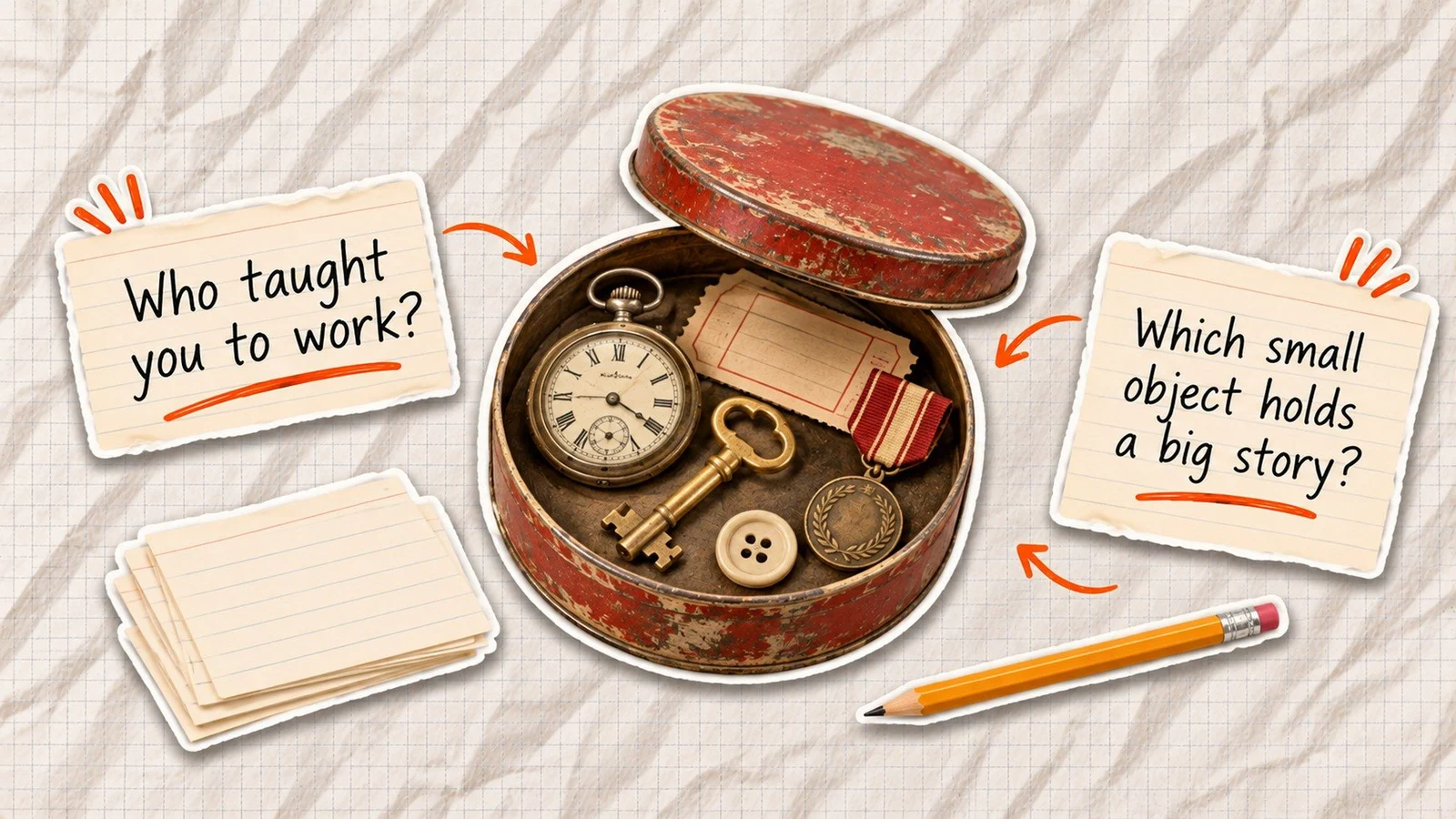
The page lists ten questions like "Who taught you to work?" and "Which small object holds a big story?". Ten answers are enough for a first draft.
You do not have to sort anything. Paste in the answers, and the platform puts them in order. Add something you once wrote, like a letter or an email, and Voice DNA learns how you sound from it. You see the chapter plan first, and you can rename, move or cut chapters before anything is written.
A real sample from our team
A retired school nurse told five stories to her granddaughter, who typed them up: 545 words in all. The platform wrote 7 chapters in 98 seconds.

Text in the image:
As she told it: "There was a man in room 4, a retired railroad man named Mr. Pruitt, who couldn't sleep..." Chapter 6: "I told him I had too much to do. I said it because I was young and because I thought busy meant useful..."
In that sample it kept every name, date and number from her stories. It also described a hospital chair and a light over a sink that she never mentioned. It repeated one line in nearly every section of a chapter too, so expect to cut some repeats.
You can place photos inside the chapters. When the book is ready, you download the print PDF and cover, and order copies for your family through Amazon KDP. Downloading the files needs a paid plan, as the plans page shows.
What happened when we tested ChatGPT on a real life story?
Whatever tool you use, step 5 matters most. To see why, we tested how much a plain chat tool adds on its own. On November 3, 2026, we used the free plan of ChatGPT and a real life story. It is a famous day from Benjamin Franklin's autobiography, which anyone can use freely. We rewrote the scene as 150 words of plain memory notes with 12 facts. He arrives in Philadelphia hungry, buys three big rolls, walks past his future wife's door and falls asleep in a Quaker meeting house.
Then we asked ChatGPT to turn the notes into a 200-word memoir scene. We compared every sentence with the notes and with Franklin's own words.
Text in the image:
What ChatGPT did with 12 true facts. 12 of 12: facts it kept. 3: details it added. 1: added detail was wrong. He fell asleep "overcome by hunger". He had just eaten a roll.
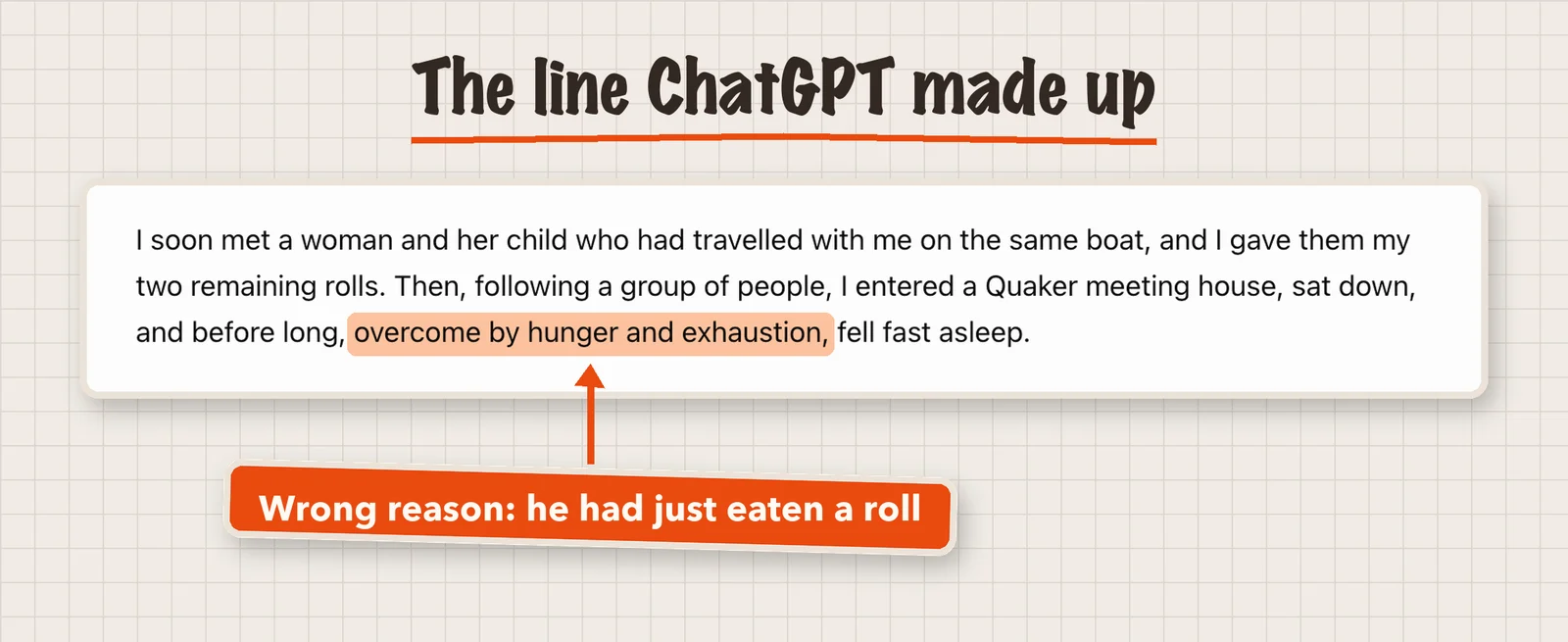
The scene came back in about 15 seconds and read well. All 12 facts were there. ChatGPT also added three things we never wrote. The boy "directed me to a baker's shop". There was "to my surprise". And he fell asleep "overcome by hunger and exhaustion".
The first two happen to be true. Franklin wrote both. The third is wrong. He had just eaten a roll, and his book says he was drowsy from hard work and no rest.
Text in the image:
The line ChatGPT made up. "I soon met a woman and her child who had travelled with me on the same boat, and I gave them my two remaining rolls. Then, following a group of people, I entered a Quaker meeting house, sat down, and before long, overcome by hunger and exhaustion, fell fast asleep." Wrong reason: he had just eaten a roll.
A wrong reason for falling asleep seems small. In your own life story, the same kind of guess could change why you left a job or why your parents moved. Your family will read it as fact.
Next we asked a different question in the same chat: "Don't write anything new yet. Ask me 5 short questions that would help me remember more true details about that day."
It asked what the city looked, sounded or smelled like when he arrived, how he felt with so little money, and what he remembered about the baker. Each answer is a true detail the AI no longer has to guess.
This is the better order. Answer questions first, so the AI has enough of your memories, and ask it to write after that. On Built&Written this order is built in: questions or your old pages first, then a chapter plan you approve, then the chapters.
Which AI biography generator should you pick?
Here are the four options side by side, checked on November 3, 2026:
| Tool | How you tell your story | What you get | Price |
|---|---|---|---|
| Built&Written | Upload old pages, or paste typed stories and phone transcripts | A full book in your voice, with a cover and print files | See the plans |
| Storyworth | Answer one question a week by email or text, for a year | One hardcover keepsake book | Starting at $69 |
| Remento | Talk into your phone each week for a year | One color hardcover, up to 380 pages, with QR codes that play your voice | $99 |
| ChatGPT | Paste notes into a chat | Scenes you copy into your own document | Free plan available |
Pick Built&Written if you want a full book from your stories or old pages. A weekly question service suits a slow gift project for a parent. ChatGPT is fine for trying one scene.
Final thoughts
An AI biography generator can turn a lifetime of stories into a book within days. It cannot know your life, so the true details have to come from you. Answer questions first, let the AI write second, and read every scene before anyone else does.
If you want a finished book your family can hold, Built&Written turns your stories and old pages into one:
- Start from what you have. Upload an old manuscript, a diary or letters, up to 50,000 words.
- Questions if the page is blank. Ten simple questions help you get the memories out.
- Your voice. Voice DNA learns from a letter or an email you wrote.
- Your facts kept. Names, dates and numbers come from you, and you check every scene.
- A real book. Chapters in order, photos, a cover, and print files you upload to KDP.
See how it works, or start on the AI memoir writer page.
Frequently asked questions
It can write the draft from the stories you give it. It cannot know your life, so everything true in the book comes from you. The more stories you give it, the more of the book is yours.
It can add small details. In our test, ChatGPT added 3 details to 12 facts, and 1 was wrong. Read every scene and cut what did not happen.
Yes. Give it the stories you know and the ones they told you. Record them answering simple questions, then paste the transcripts in.
Yes. On Built&Written you upload the old file, up to 50,000 words. The platform plans new chapters and writes a fuller version in your voice. You check every chapter before you print.
Collecting the stories takes the most time, often a few weeks of one answer a day. The draft itself is fast: in our sample, 545 words of stories became 7 chapters in 98 seconds. Then plan time to read and correct every chapter.
Sources & References
About the author

Khrystyna Balushka
More in AI Book Tools
Ready to write your book?
Turn your expertise into a professional book with Built&Written.