

Can an AI Marketing Plan Generator Plan Your Book Launch?
Partly. An AI marketing plan generator can draft a 30 day launch calendar, split your budget and suggest emails and posts. It can also miss or misstate Amazon's rules. For example, it may forget that an ad needs time for review, or that pre-orders work only for eBooks. We tried three of them on November 8, 2026: Template.net, ChatGPT and Venngage.
We gave all three the same prompt: plan a 30 day launch of a nonfiction book on Amazon KDP (Kindle Direct Publishing, Amazon's self-publishing service). Then we graded each plan on 12 checks, using KDP's own help pages. ChatGPT passed 10 of 12 checks, with one wrong fact. Template.net passed 4.5 of 12 and left the price, keywords and categories open. Venngage passed 1 of 12.
A quick word about us. Built&Written is a platform for writing and publishing nonfiction books. It prepares the book, the cover and the files for Amazon KDP, and it has free tools for the listing. We do not write marketing plans or run ads. We tested these generators because many authors ask whether a plan from AI is enough to launch a book.
Key takeaways
- Plans differ a lot. ChatGPT scored 10 of 12 checks, Template.net 4.5 and Venngage 1.
- A general chat gave the best plan. Template.net left key items open, and Venngage gave a general business calendar.
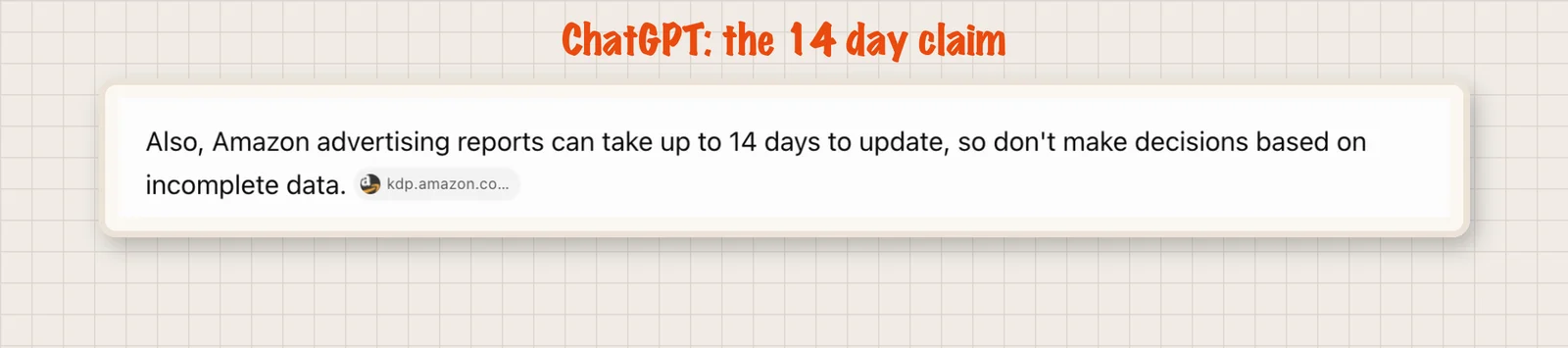
- Plans can state KDP facts wrong. ChatGPT said Amazon ad reports can take up to 14 days to update. KDP says up to 12 hours.
- Check the plan against KDP's pages. Pre-orders, ad review time and review rules all have exact limits.
Can an AI marketing plan generator plan a book launch?
It can plan the part you control: your email list, your social posts and your budget. The picture shows how the three plans did on 12 checks for a KDP launch.
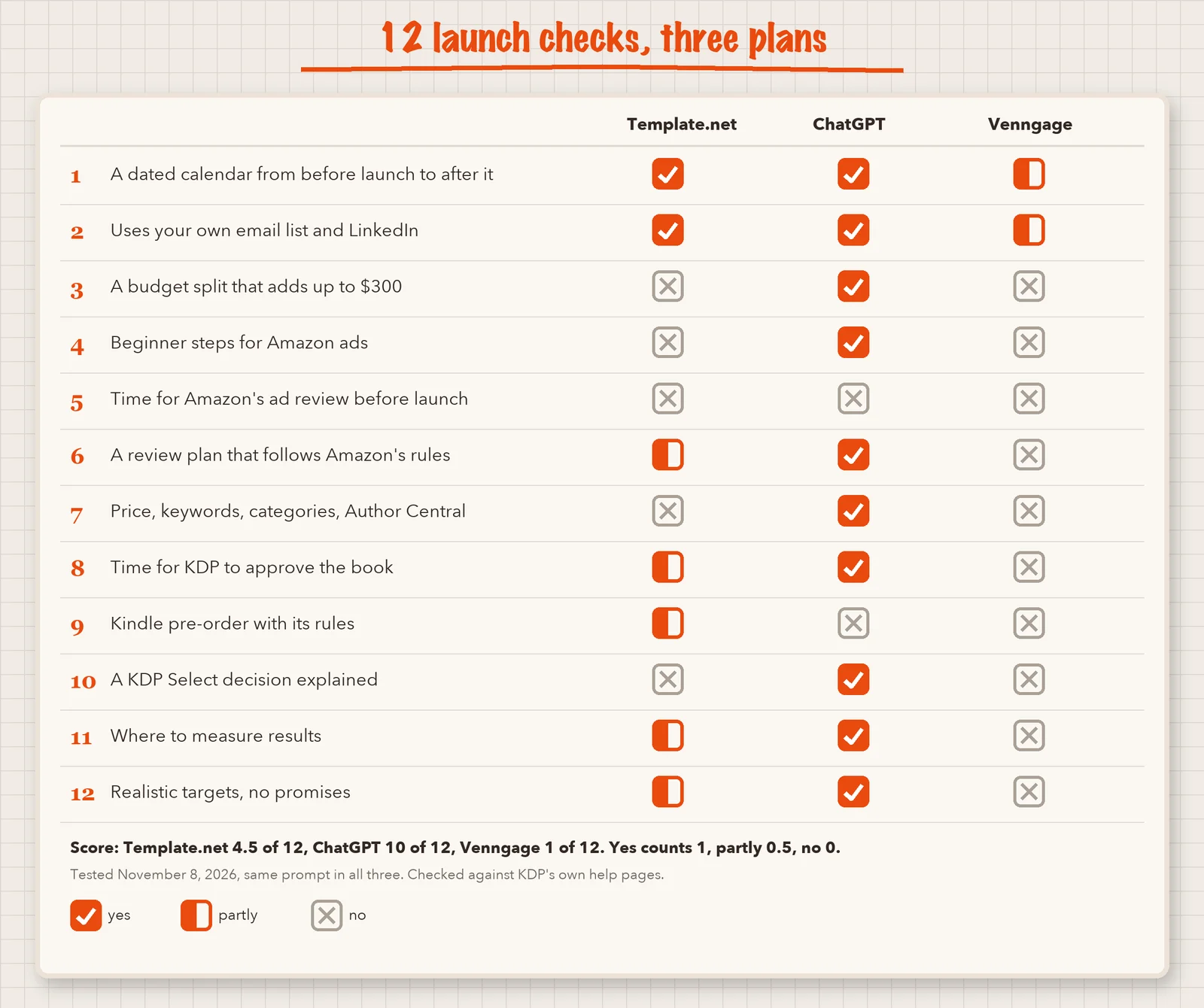
Template.net and ChatGPT did well on the calendar and on using your own audience. Venngage used them only in part. They did badly on the KDP parts. Template.net left the price, the keywords, the categories and the budget split as open items. ChatGPT covered them, but it left out time for Amazon's ad review and it said nothing about Kindle pre-orders. Venngage gave a calendar and little else.
How did we test the AI marketing plan generators?
We tried three tools: Template.net, ChatGPT (free plan) and Venngage. We used one prompt in each. It asked for a 30 day marketing plan for a 67 page business nonfiction book, in paperback and as a Kindle ebook (the digital version for Kindle readers). The launch date was December 1, 2026 and the budget was $300. The author has 300 email subscribers and 1,200 LinkedIn followers and has never run ads. These numbers are a test scenario, not a real author.
The book is a test book we never published. It came from public domain material, and KDP does not allow pre-orders for such eBooks. So we judged the plans as if the book were an original work.
We ran each tool once. We did not publish the book, so we judge the plans by what they say, not by sales.
We graded each plan on 12 checks. A check scores 1 for yes, 0.5 for partly and 0 for no. We took the KDP facts from KDP's help pages, read on November 8, 2026. The 12 checks were:
- A dated calendar from before launch to after it.
- It uses your own email list and LinkedIn audience.
- A budget split that adds up to $300.
- Beginner steps for Amazon ads.
- Time for Amazon's ad review before launch.
- A review plan that follows Amazon's rules.
- Price, keywords, categories and Author Central (Amazon's author profile page).
- Time for KDP to approve the book.
- A Kindle pre-order, with its rules.
- A KDP Select decision, explained.
- A place to measure results.
- Realistic targets, with no promises.
Here is how the scores add up. ChatGPT got a yes on 10 checks, so 10 of 12. Template.net got 2 yes and 5 partly, so 2 + 2.5 = 4.5. Venngage got 2 partly, so 1.
What did the AI plans get right?
Template.net and ChatGPT built a dated calendar and used the audience we described.
Template.net planned 10 actions between November 8 and December 8, five LinkedIn posts and five emails. One email on November 12 announced the date and a Kindle pre-order.
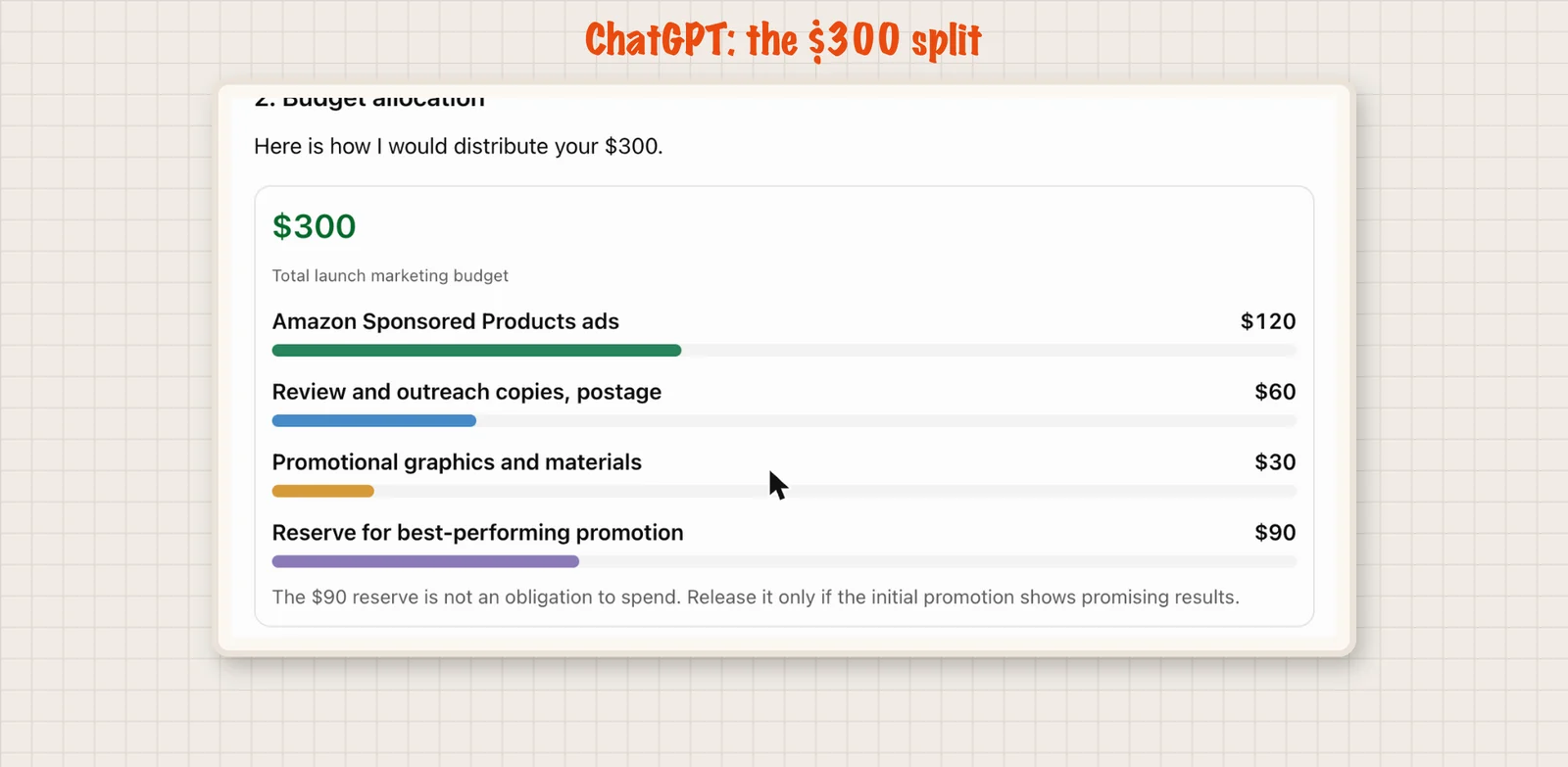
ChatGPT planned every day from November 17 to December 16. It also split the $300 into four parts that add up: $120 for Amazon ads, $60 for review copies, $30 for graphics and a $90 reserve (money kept for costs you did not plan). A split like this shows the author where each dollar goes.
ChatGPT also told us to give free copies to readers without asking for a review. That matches KDP's rule, and it keeps a beginner out of trouble.
What did the AI plans get wrong or leave out?
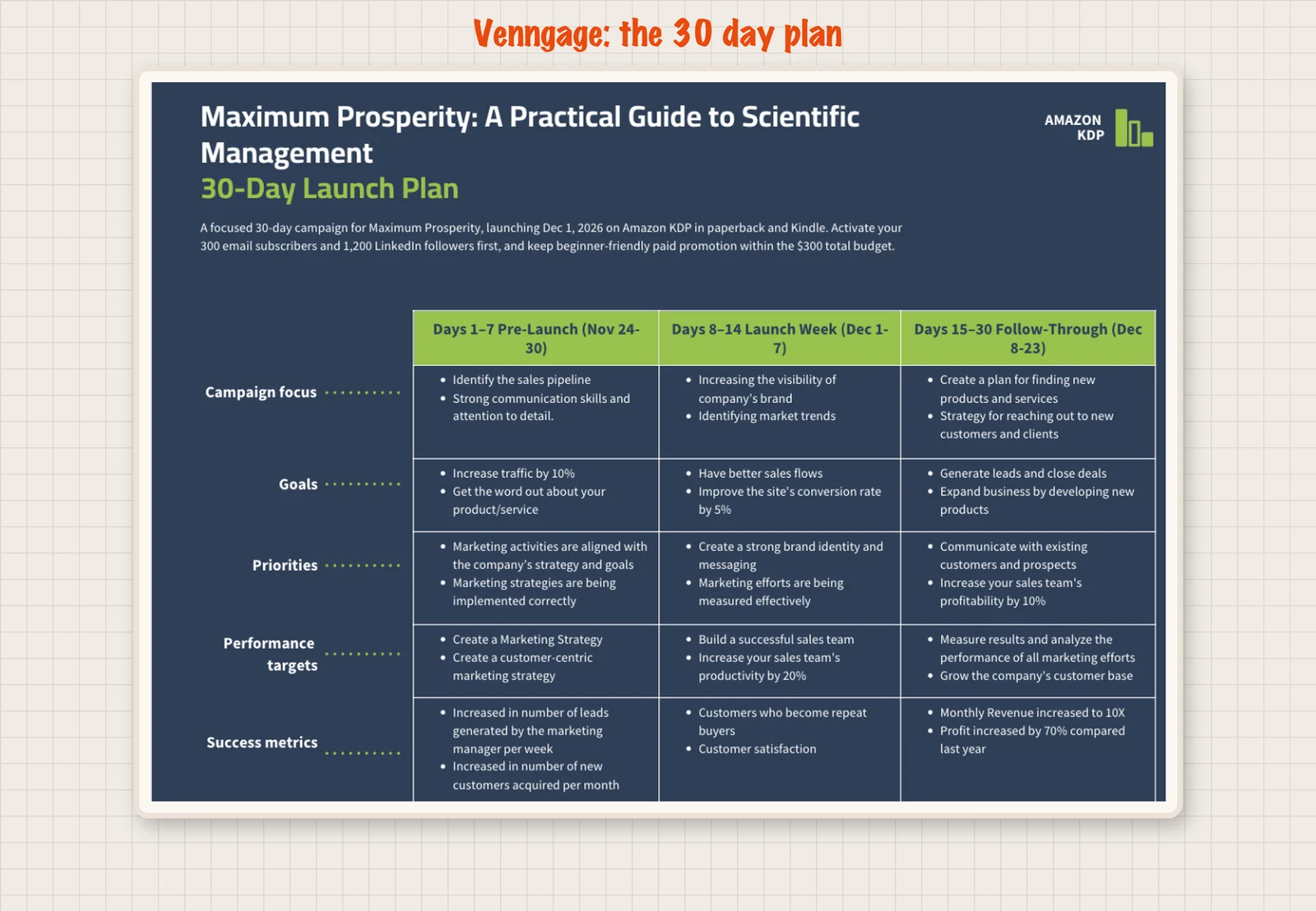
Venngage gave a 30 day calendar with three phases and date ranges: November 24 to 30, December 1 to 7 and December 8 to 23. It used our audience only in its first lines. After that it filled in a ready made business template and did not adapt it to a book. Its targets included "Increase your sales team's profitability by 10%", "Monthly Revenue increased to 10X" and "Profit increased by 70% compared last year". Our test author has no sales team, so these targets do not fit a book launch.
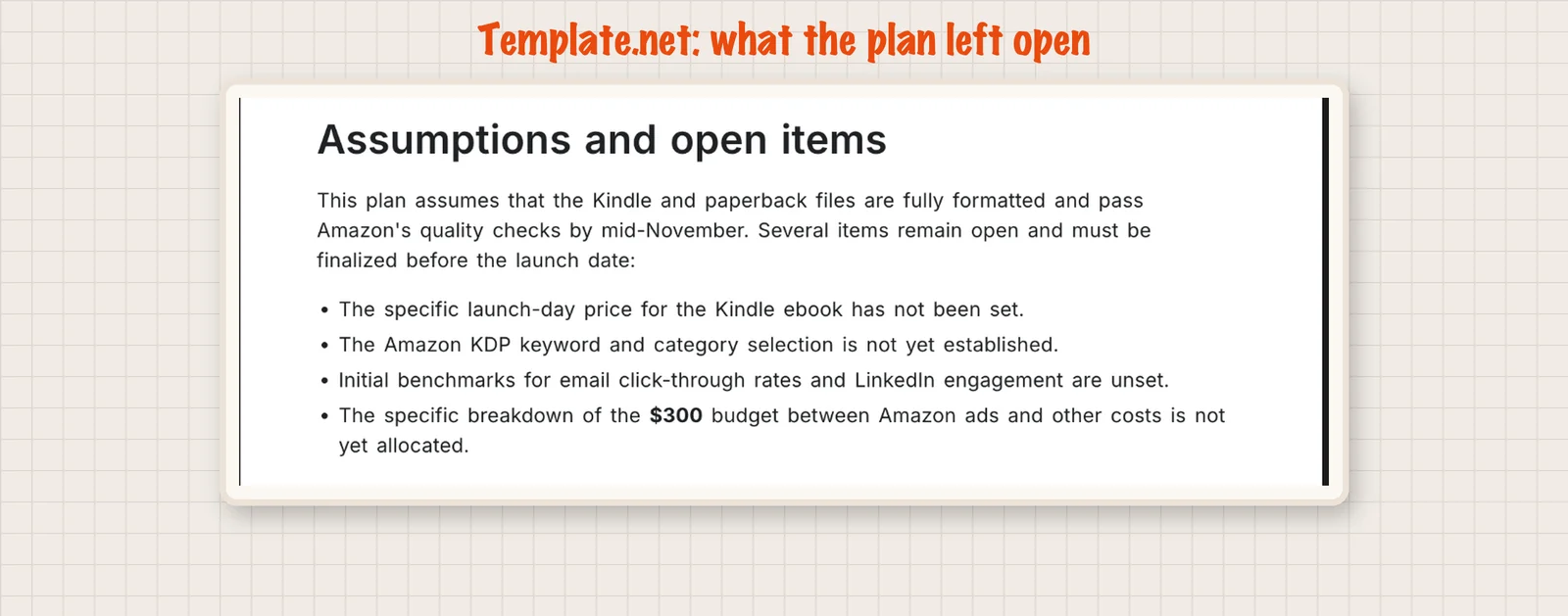
Template.net left four items open in its own words: the Kindle price, the keywords and categories, the click-through targets (how many people should click an ad) and the budget split. The plan said the $300 would pay for "Amazon KDP advertising fees" and software, and gave no split.
ChatGPT made one wrong claim. It said Amazon advertising reports can take up to 14 days to update, and it showed a kdp.amazon.com source next to the sentence.
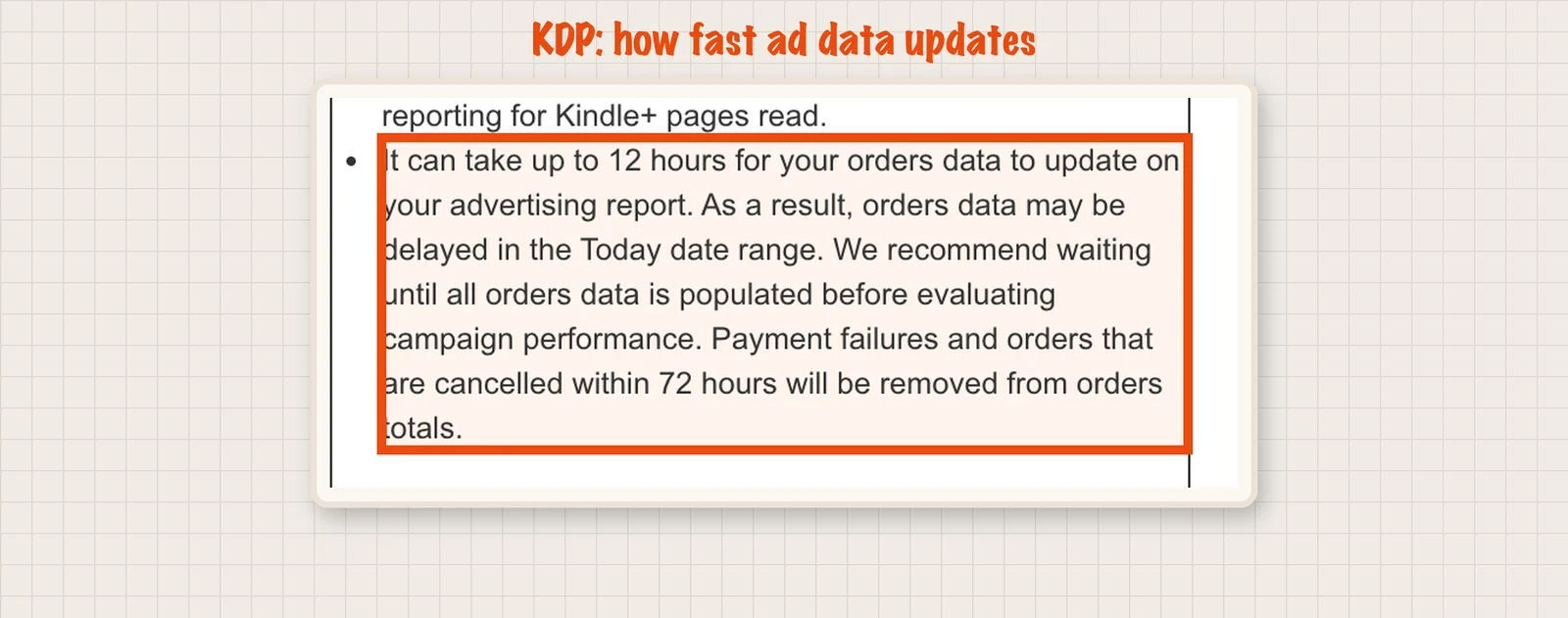
KDP's advertising page says it can take up to 12 hours for orders data to update. The 14 days is a different rule: it is the window in which Amazon credits a sale to an ad after a click.
This matters because an author who believes reports lag by 14 days may misread the results. They may think an ad does not work when the data is only hours old, or judge a campaign too early or too late.
Neither plan allowed time for Amazon's ad review. KDP says an ad goes through a review that usually takes 24 hours and can take up to 3 business days. ChatGPT told us to set up the campaign after the book was live and to run it from launch day.
What does a KDP book launch plan need?
These are the KDP facts a launch plan should respect. We read each one on KDP's help pages on November 8, 2026.
| Plan step | What KDP says |
|---|---|
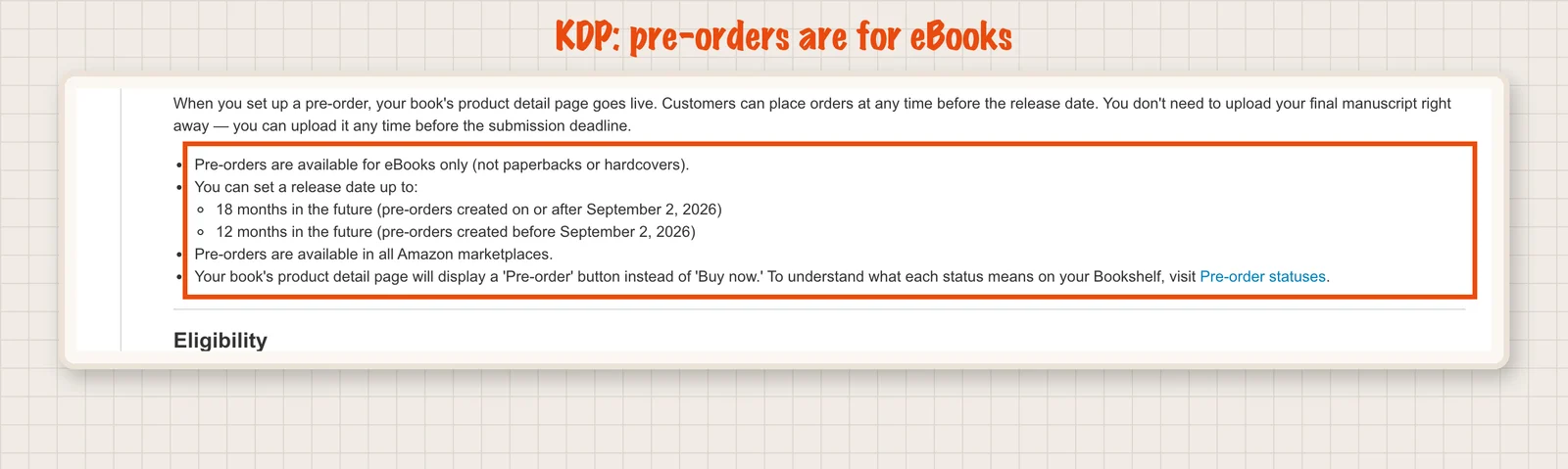
| Kindle pre-order | Pre-orders are for eBooks only, not paperbacks. Your final file is due at least 72 hours before release. You can set a date up to 18 months ahead. |
| Paperback release | You cannot pre-order a paperback, but you can schedule its release date. |
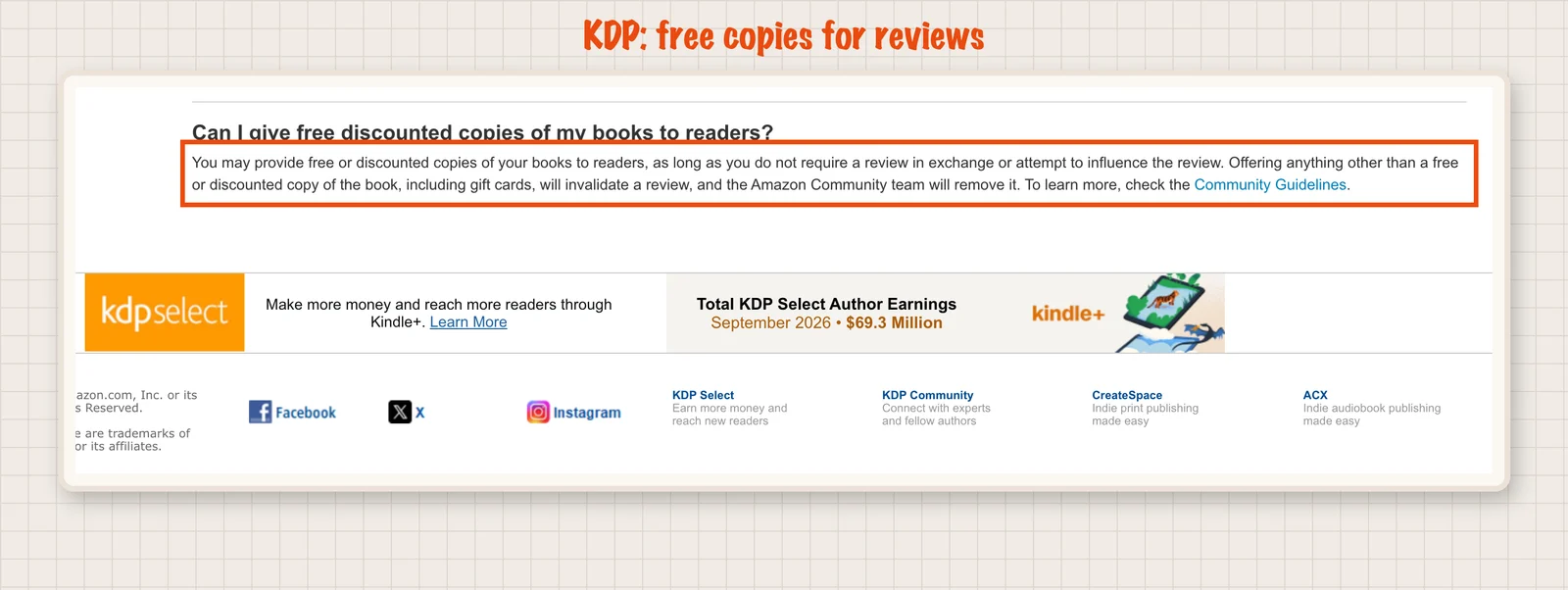
| Review copies | You may give free or discounted copies if you do not require a review or try to influence it. Anything else, such as a gift card, invalidates the review. |
| Amazon ads | You need an Amazon Ads account. KDP's Sponsored Products ads are pay per click. Adding a payment method places a temporary hold of about $50. |
| Ad review | An ad is reviewed before it runs. It usually takes 24 hours and can take up to 3 business days. |
| Ad reports | Orders data can take up to 12 hours to update. Sales are credited to an ad within 14 days of a click. |
| Categories | You can choose 3 categories when you create the book. |
| KDP Select (an Amazon program for Kindle eBooks) | During the 90 day enrollment, the Kindle eBook can only be sold through KDP and public libraries. Print and other formats can be sold elsewhere. |
Pre-orders. KDP lets you take pre-orders for a Kindle eBook, so readers can buy before the launch day. It does not allow them for paperbacks. If your plan says "pre-order the paperback", it is wrong. You can only schedule the paperback's release date.
Reviews. You may send free copies to readers. You may not ask for a review in return, or try to shape what they write. A gift card in exchange for a review makes the review invalid.
How do I check an AI launch plan before I use it?
- Give the tool real numbers. Name the book length, the formats (paperback, Kindle eBook or both), the launch date, the budget and how many people are in your email list and social following. Template.net and ChatGPT used what we gave them.
- Ask for a date on every action. "One week before launch" is not enough, so ask for the real day. Then add up the budget yourself.
- Check each KDP claim on KDP's help page. Look up pre-orders, ads, reviews and KDP Select. KDP Select is a 90 day program for Kindle eBooks: during it, the eBook is sold only on Amazon.
- Add time for approvals. Upload the book early. Create the ad before launch day, because KDP says an ad review usually takes 24 hours and can take up to 3 business days. Plan for the full 3 days.
- Keep your review plan simple. Our guide on getting your first Amazon reviews shows how to ask for them without breaking Amazon's rules.
- Compare it with a tool list. Our article on book marketing tools to use and skip shows which paid tools are worth the money.
What if my book is not ready for a launch plan yet?
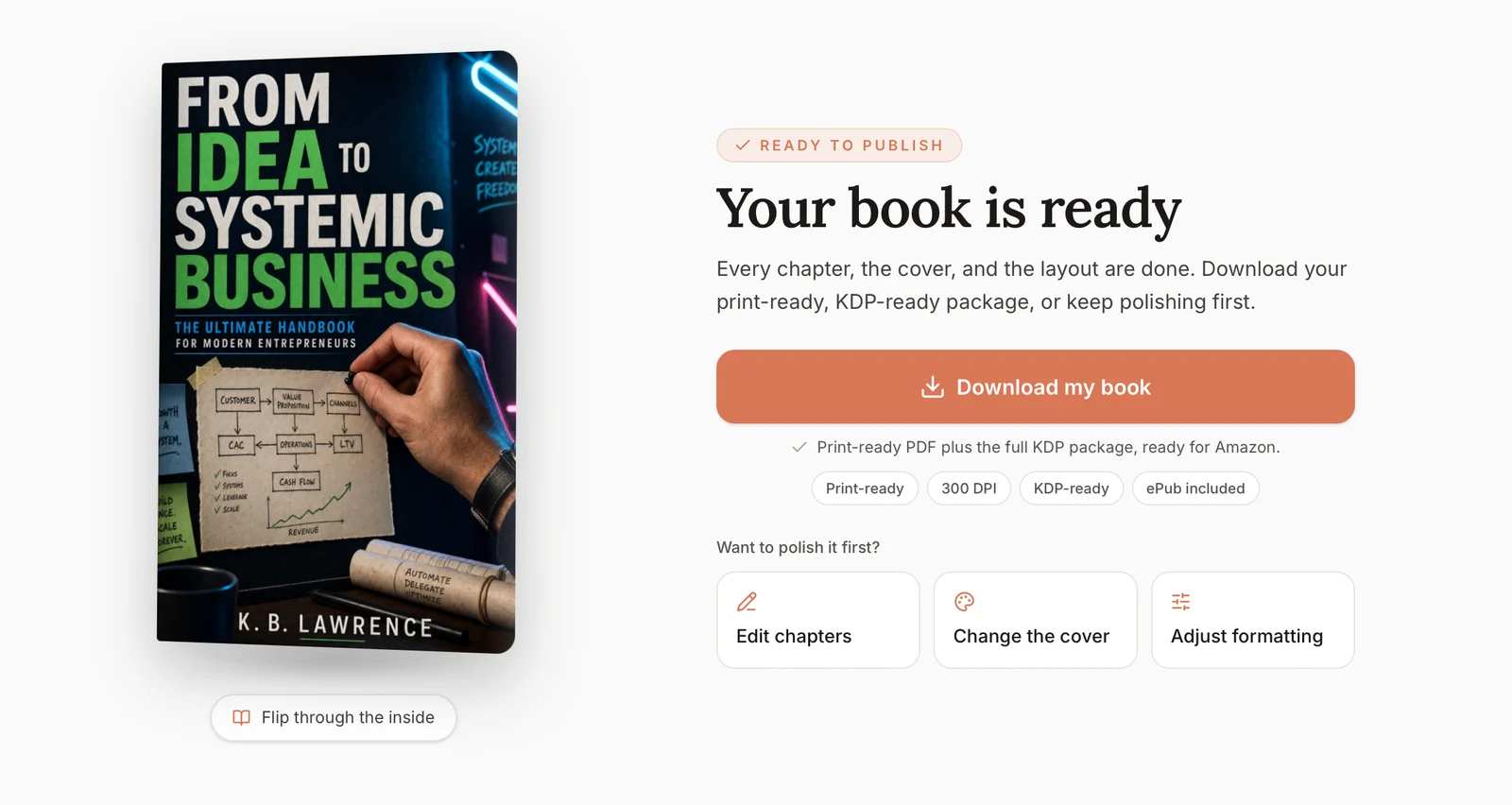
A launch plan promotes a book, so the book has to exist first. This is the step where Built&Written helps. It does not write marketing plans or run ads, and it does not promise sales. Authors usually come in one of two situations.
I have a finished manuscript. You can upload it, and the platform keeps your words. It builds the page layout and the cover, and it makes the files Amazon KDP asks for. It also helps you check that the book is ready to upload: that the title and author match, the page size and margins are right and the cover fits. You upload the files to KDP in your own account.
I have notes, old articles or talk transcripts, but no book. You upload what you have. The platform helps you sort the material, build the structure of the book and work on each chapter with AI. You do not start from a blank page, and you can edit everything. One rule to know: KDP asks you to report text that AI wrote. That is a reporting rule, not a ban.
All three plans left the price, the keywords and the book description to the author, or did not cover them. Built&Written has free tools for those jobs:
- KDP royalty calculator. Shows what you earn per copy, so you can choose a price.
- KDP keywords generator. Suggests the words readers may type into Amazon, and category paths for your book.
- Book description grader. Checks the text readers see before they decide to buy.
- Book blurb generator. Drafts that description text for your Amazon page.
Final thoughts
An AI plan saves you the blank page. It can build the calendar, the budget and the posts. It does not know the rules of your launch platform, so give it real numbers and check each KDP claim before you act.
Before you promote a book, you need the book itself. If you have a manuscript, notes, articles or transcripts, Built&Written can help you turn them into a finished book with the files KDP asks for.
- Start with what you already have. Upload your own manuscript, notes, articles or transcripts.
- Shape the book. Work on the structure and the chapters, or keep your finished text as it is.
- Get the KDP files. Layout, cover and checks are done for you, and you upload the files to KDP in your own account.
Frequently asked questions
Yes. In our test it wrote a 30 day plan with a calendar, a budget and a review plan. It also stated one KDP fact wrong, so check it against KDP's help pages.
Yes. [ChatGPT](https://chatgpt.com)'s free plan gave the most complete plan in our test. [Template.net](https://www.template.net) scored 4.5 and [Venngage](https://venngage.com) 1, because they left KDP details open or gave general business plans.
No. KDP allows pre-orders for eBooks only. You can schedule a release date for a paperback.
No. Ads are one choice, and KDP says you set your own budget for them.
Yes, if you do not require a review or try to influence it. KDP says anything else, such as a gift card, invalidates the review.
For a Kindle pre-order, KDP needs your final file at least 72 hours before release. Ads need time too, because an ad review can take up to 3 business days.
About the author

Khrystyna Balushka
More to read
Ready to write your book?
Turn your expertise into a professional book with Built&Written.