

The Best Books About AI for People Who Write Nonfiction
The best AI books for a nonfiction author teach you how to work with AI and how to catch its mistakes. Read Co-Intelligence first, and read AI Snake Oil before you publish anything an AI helped you write. Five more books cover how AI works, where it fails and where it is going.
You write nonfiction and want to use AI well, but you do not know which books to read. Most "best AI books" lists are written for engineers or investors. This one is for authors, and it tells you what each book is for and in what order to read them.
How we checked these books
We did not read seven books in a day, and this article does not pretend we did. What we did is smaller and checkable.
On November 19, 2026 we opened one primary page per book: a publisher page for six of them, and the award announcement for the seventh. We wrote down the title, the publisher, the date, the page count and the price shown on that page. Two pages did not show a date, and we say so instead of filling the gap from memory.
| Book | Page we opened | Date shown on that page |
|---|---|---|
| Co-Intelligence | Penguin Random House | April 2, 2024 |
| AI Snake Oil | Princeton University Press | September 24, 2024 |
| The Alignment Problem | W. W. Norton | None shown |
| Artificial Intelligence: A Guide for Thinking Humans | Penguin UK | None shown |
| The Coming Wave | Penguin Random House | April 1, 2025 (paperback) |
| Atlas of AI | Yale University Press | April 6, 2021 (ebook), August 16, 2022 (paperback) |
| Empire of AI | National Book Critics Circle | Award announced March 26, 2026 |
A book can have two dates, and some pages have none. If you cite a book, take the date from the copyright page of the edition you hold.
Which AI book should a nonfiction author read first?
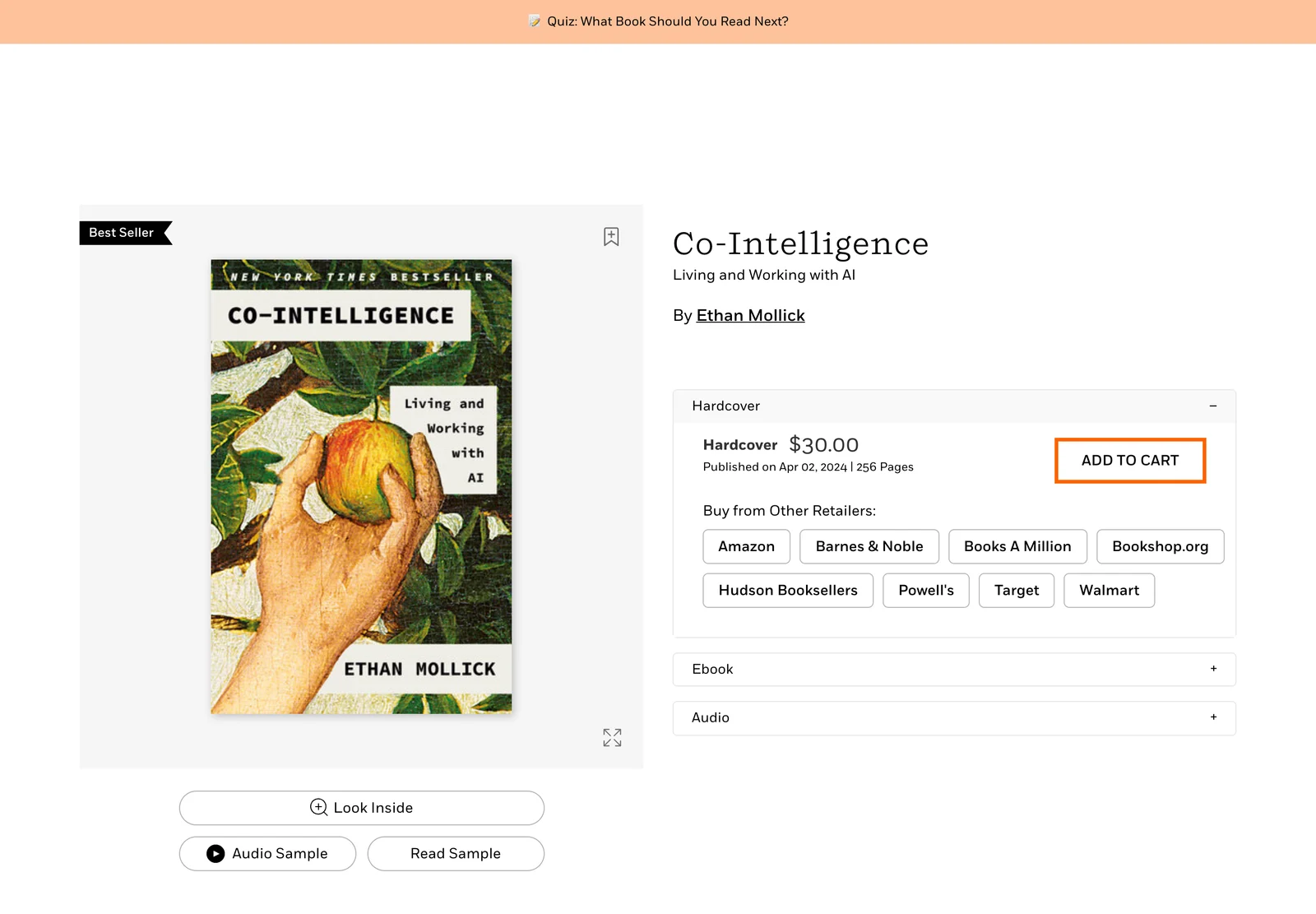
Start with Co-Intelligence by Ethan Mollick. It is a practical book about working with AI, written by a Wharton professor. The Penguin Random House page lists it at $30 in hardcover, 256 pages, published April 2, 2024, and shows its New York Times bestseller label.
Why it fits an author: it treats AI as something you work alongside. Every author faces that question at the first chapter. How much do you hand over, and how much stays yours?
To see how other authors answered that question, read what published authors actually use AI for and how business authors use AI.
Which book shows what AI can and cannot do?
AI Snake Oil by Arvind Narayanan and Sayash Kapoor. Princeton University Press lists it at $24.95 in hardcover, 360 pages, published September 24, 2024. The page says it will help you decide whether and how to use AI at work and at home.
Why it fits an author: nonfiction lives or dies on facts. A book that shows what AI can and cannot do works like a fact-checking tool. Read it next to our guide on writing a nonfiction book with AI without making up facts.
Which book explains what goes wrong inside AI systems?
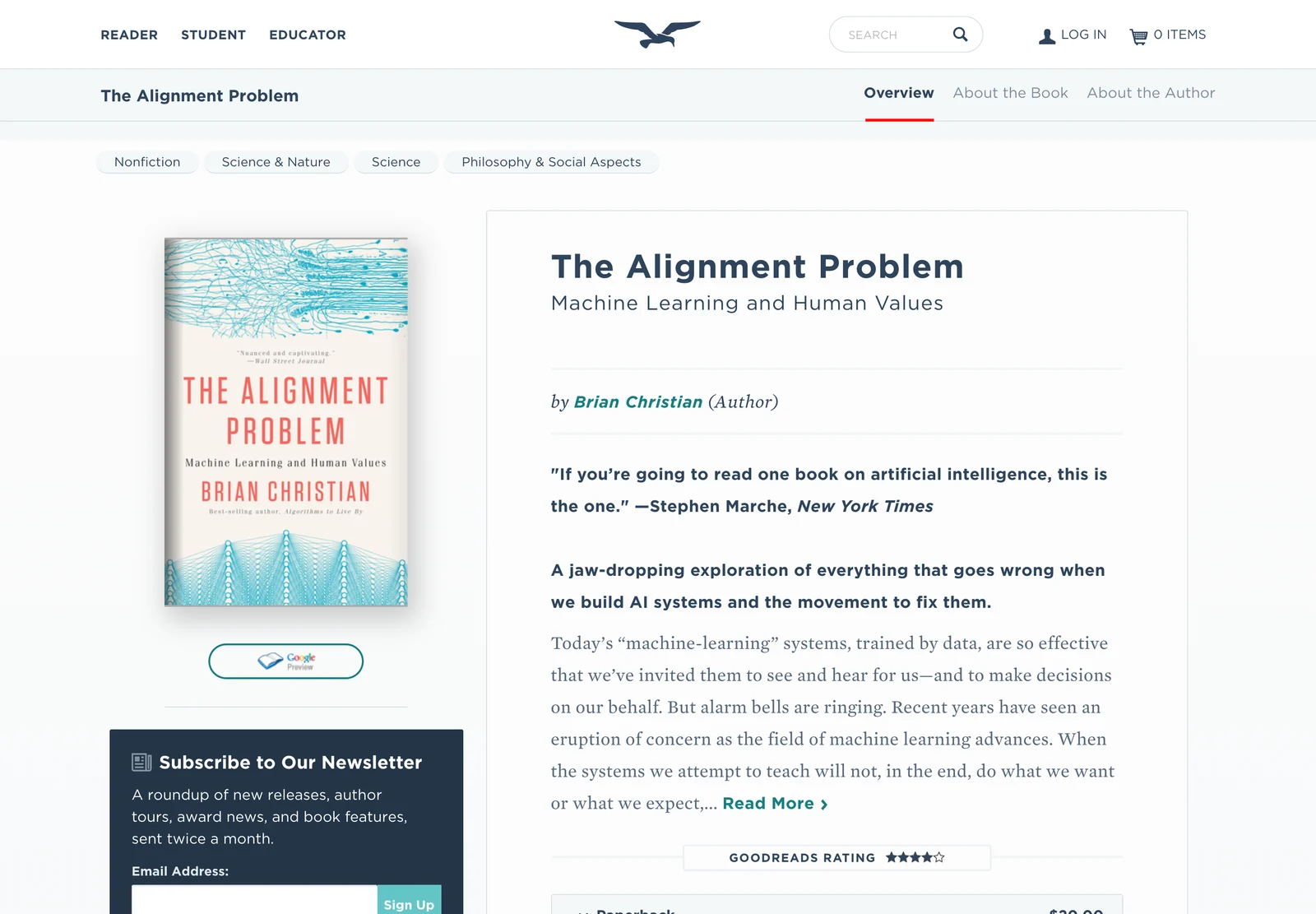
The Alignment Problem by Brian Christian. The W. W. Norton page lists a 496 page paperback at $20. It describes the book as an account of what goes wrong when people build machine learning systems, and of the people working to fix it.
Why it fits an author: if your book mentions AI bias or AI errors, this gives you named researchers and a history to point to. The Norton page shows no publication date, so check your copy before you cite it.
Which book explains how AI works in plain words?
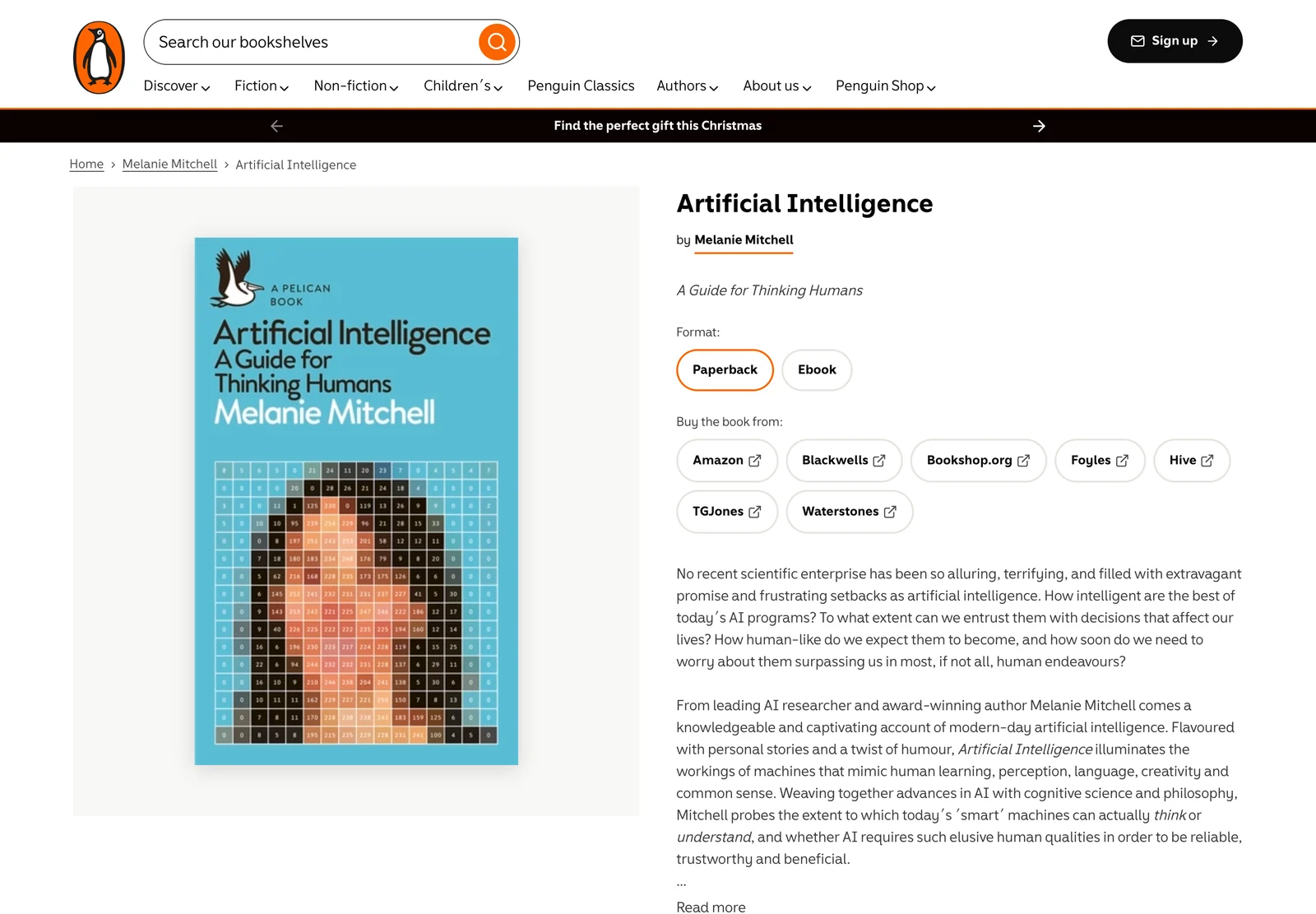
Artificial Intelligence: A Guide for Thinking Humans by Melanie Mitchell. The Penguin UK page, for the Pelican paperback, describes a researcher's account of how machines that mimic human learning, perception and language actually work. It asks how far today's smart machines can truly think or understand.
Why it fits an author: it gives you plain words for explaining AI to your own readers. The page we opened shows no date or price, so we give none.
Which book looks at where AI is heading?
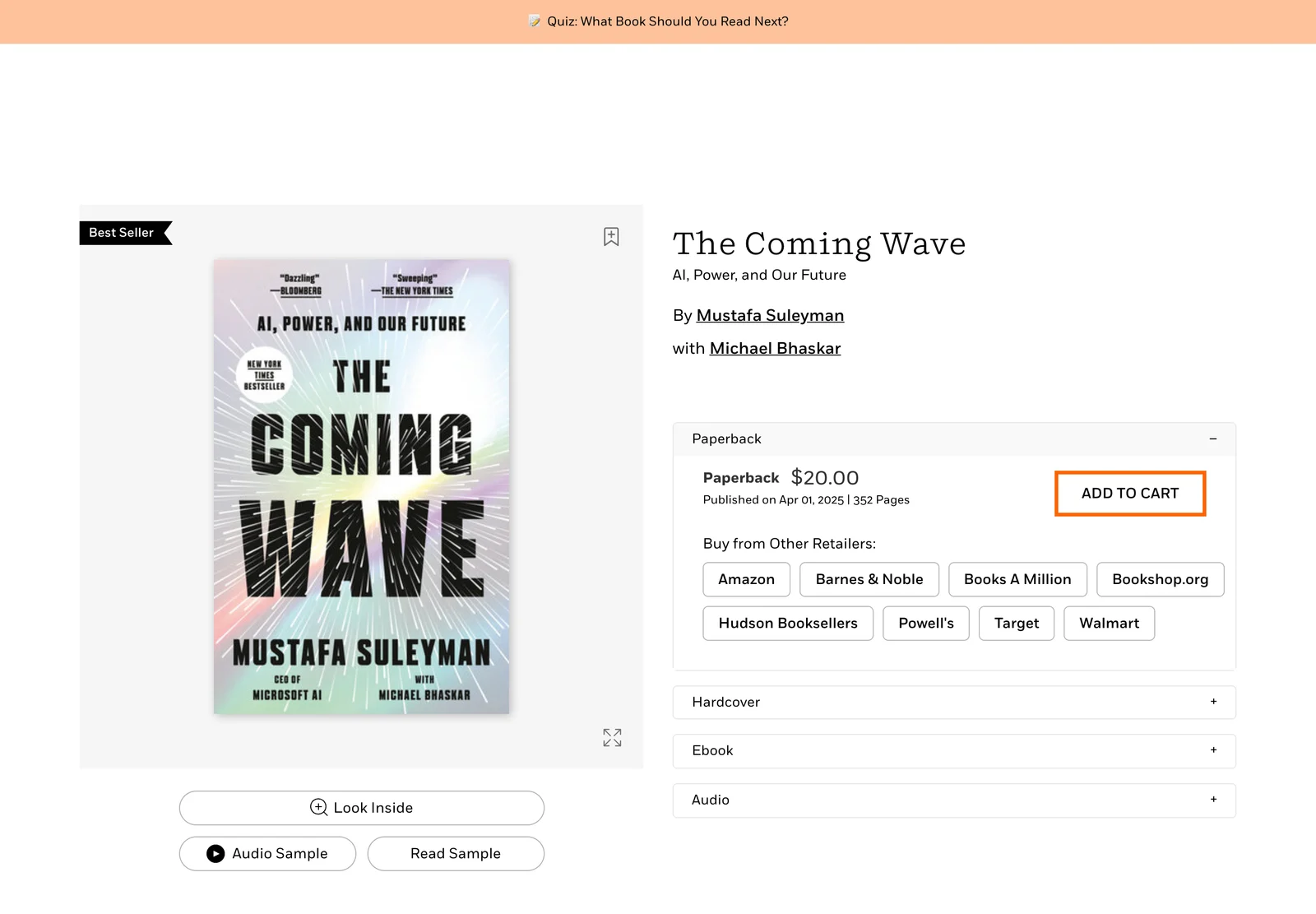
The Coming Wave by Mustafa Suleyman, written with Michael Bhaskar. The Penguin Random House page lists the paperback at $20, 352 pages, published April 1, 2025. It describes the author as the CEO of Microsoft AI and a co-founder of DeepMind, and says the coming decade will be shaped by a wave of fast spreading technologies.
Why it fits an author: it is a view from inside the industry, useful if your book needs a view of where the technology goes next. Treat it as one insider's argument, not neutral reporting.
Which book explains the cost behind the tools?
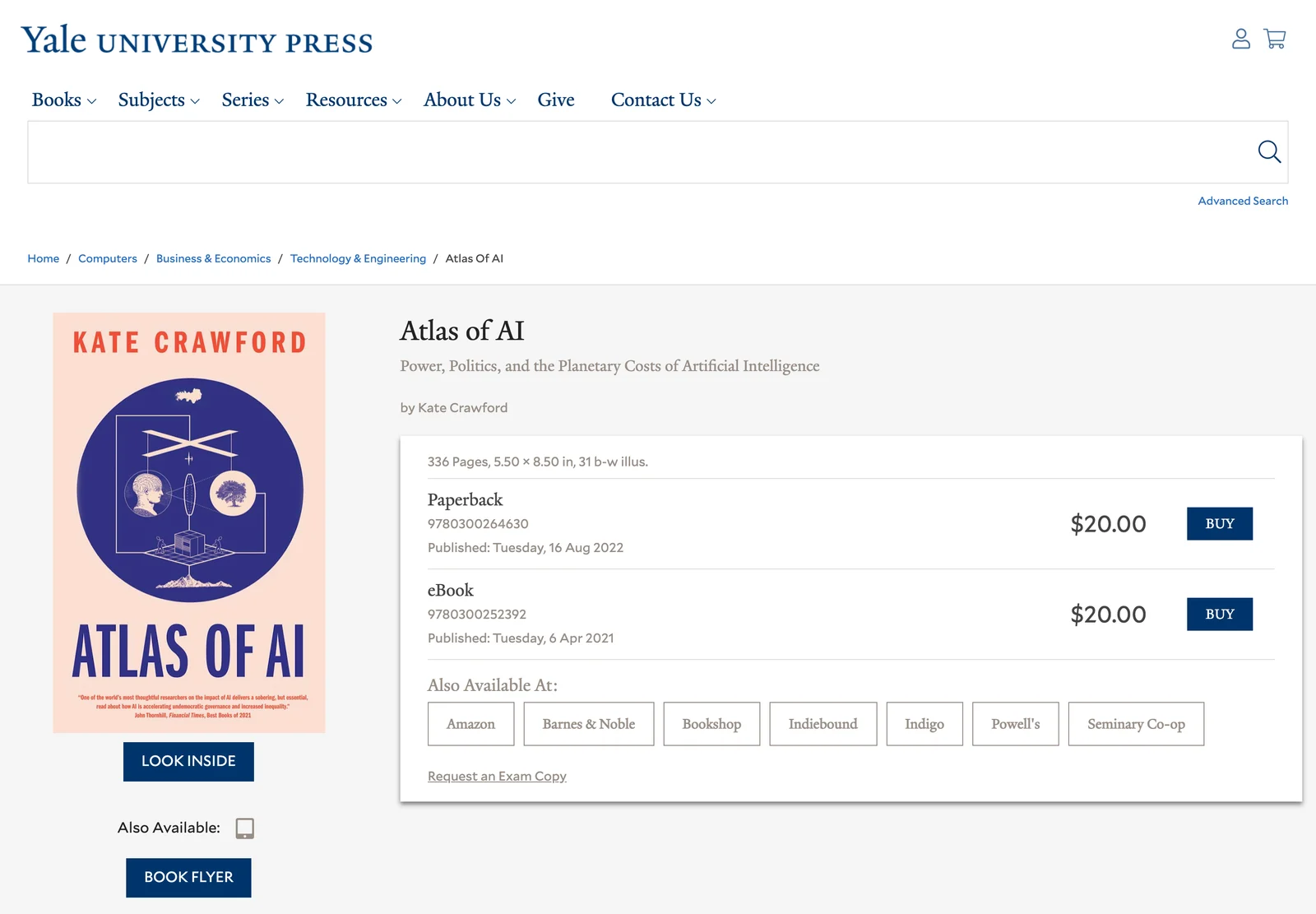
Atlas of AI by Kate Crawford, from Yale University Press. The page lists a 336 page paperback at $20, with the ebook also at $20.
It is the oldest book here, from 2021, so do not expect advice on today's writing tools. Read it for the bigger picture: what AI is built from and who pays for it. If your book touches technology, work or society, it gives you context you can cite.
Which book tells the story of the company behind ChatGPT?
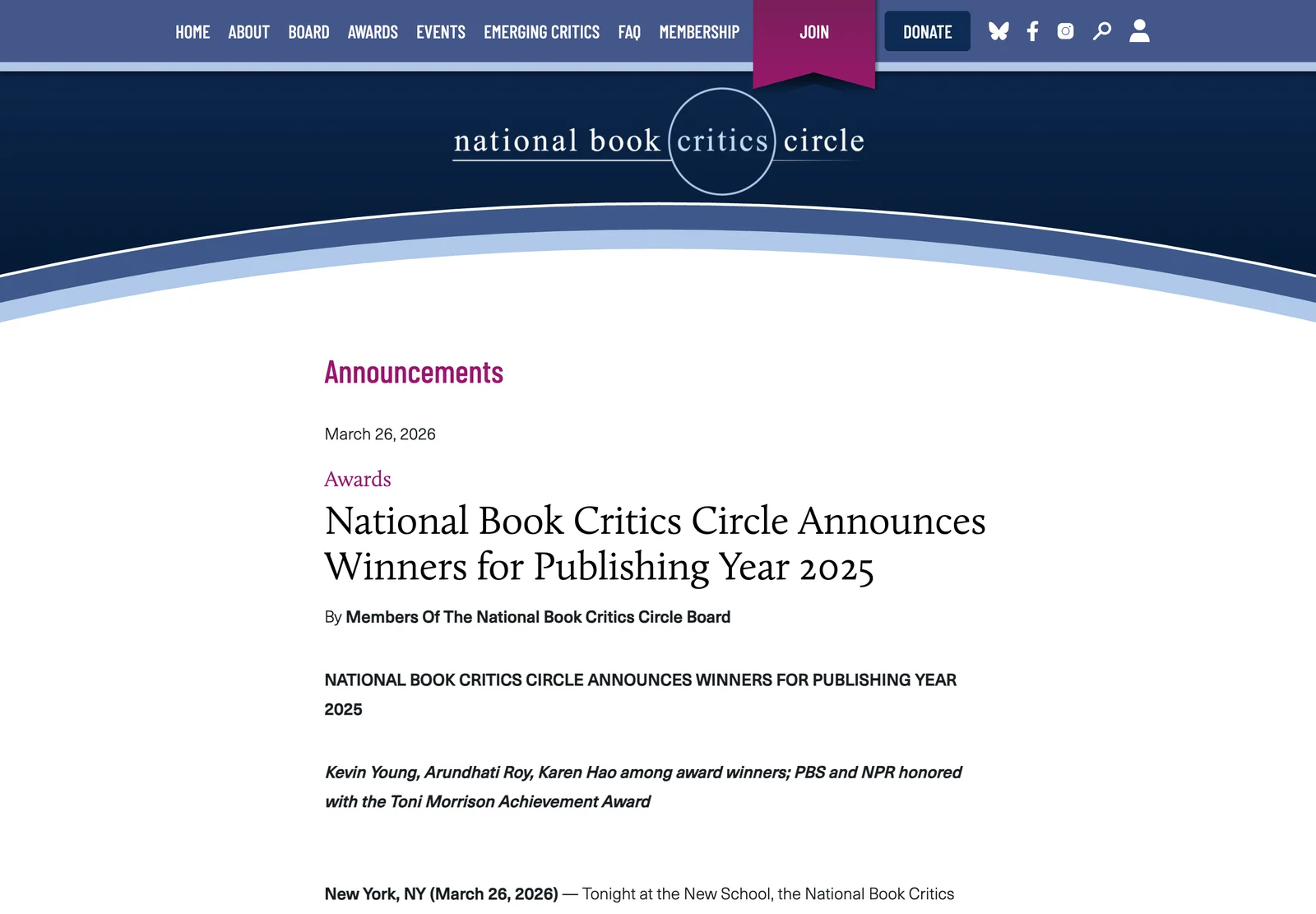
Empire of AI by Karen Hao. The National Book Critics Circle announced on March 26, 2026 that it won the nonfiction award for publishing year 2025. The book is published by Penguin Press.
Why it fits an author: it is a model of reported nonfiction on a fast moving subject. Read it to see how a journalist builds a long argument from many sources.
What to read in what order
- Co-Intelligence, to set your working habits with AI.
- AI Snake Oil, before you publish.
- Artificial Intelligence: A Guide for Thinking Humans, to find plain words for explaining AI.
- The Alignment Problem, if your book covers AI errors or bias.
- The Coming Wave, if your book looks ahead.
- Atlas of AI, if your subject touches technology or society.
- Empire of AI, as a model of long form reporting.
If you only have time for one, pick the first. For the books on the writing itself, see books on how to write a nonfiction book.
What if you already have the material for a book?
A book can teach you how to think about AI. It cannot write your chapters.
Many authors are stuck at this point. You have years of blog posts, notes, talk transcripts or emails. You know there is a book in there. But the pieces sit in many places, in no order, and a blank page is still the first thing you see when you try to start. You do not need more ideas. You need a way to turn what you have into chapters.
How does Built&Written turn your material into a book?
Built&Written is a platform for writing nonfiction books and preparing them for KDP. This is the path, step by step.
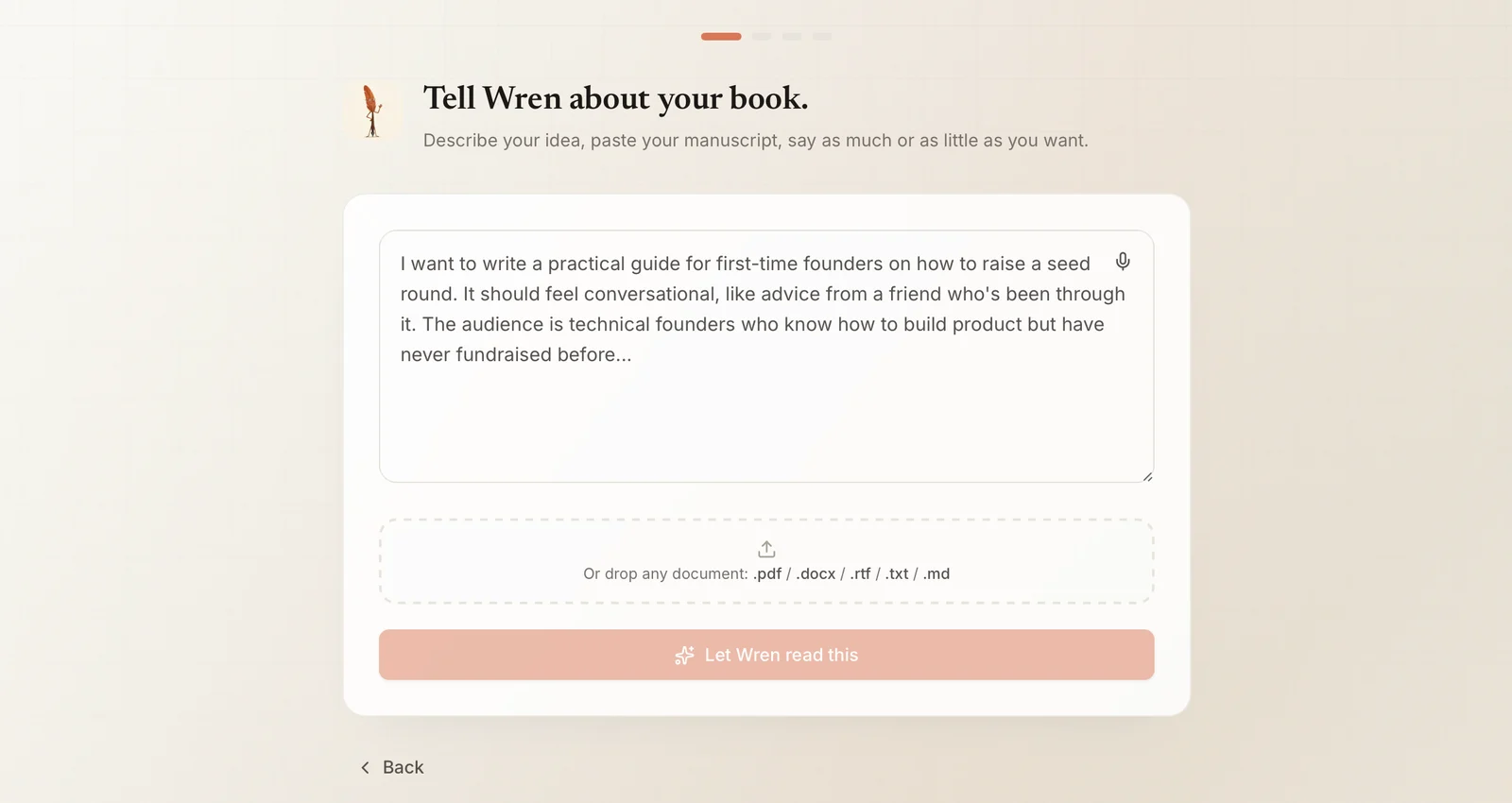
1. You bring your material. Paste your posts, notes or transcripts, or drop in a document. A .docx, .md or .txt file works best. A .pdf or .rtf also works, with less exact formatting. The platform does not turn audio into text, so paste a written transcript.
2. You get a structure. The platform proposes a chapter outline from your material. You can add chapters and change their order before you go on.
3. You work chapter by chapter. The platform writes one chapter at a time, so you read and change each one before the next. The chapter list shows the words and pages in every chapter. Tools such as Voice check sit beside the text. Ask AI can tighten, expand or simplify a passage you select.
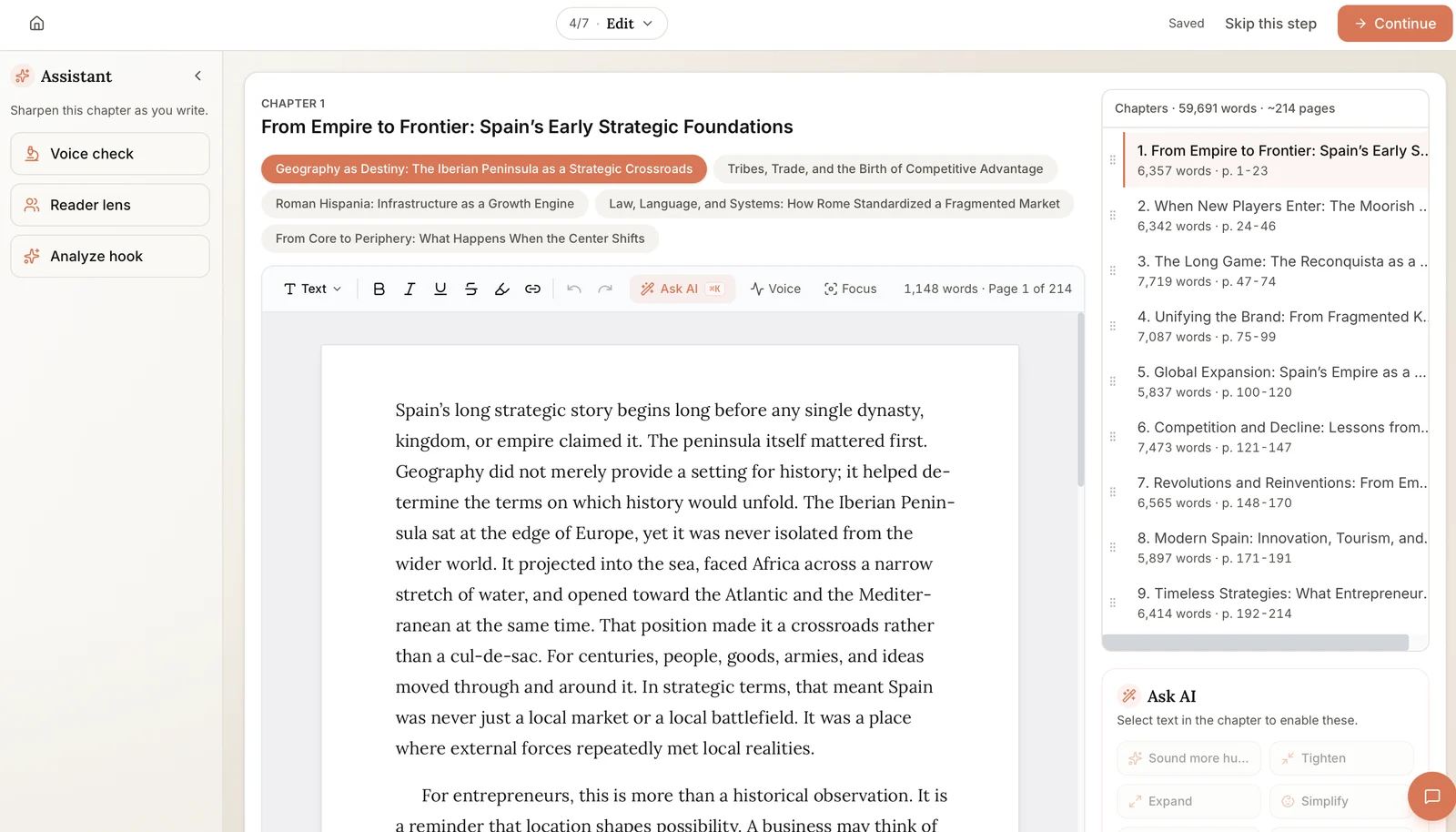
4. It keeps your voice. Voice DNA learns your voice from a few pages of your writing, about 300 to 1,000 words. Only about the first 1,300 words are read, so put your strongest pages first.
5. You export the files. When the chapters are done, you format the book for KDP, design the cover and download a print PDF and the KDP files. Downloading a book the platform wrote takes the Entrepreneur plan, $49/month. The Author plan, $19/month, exports your own manuscript. See the pricing page.
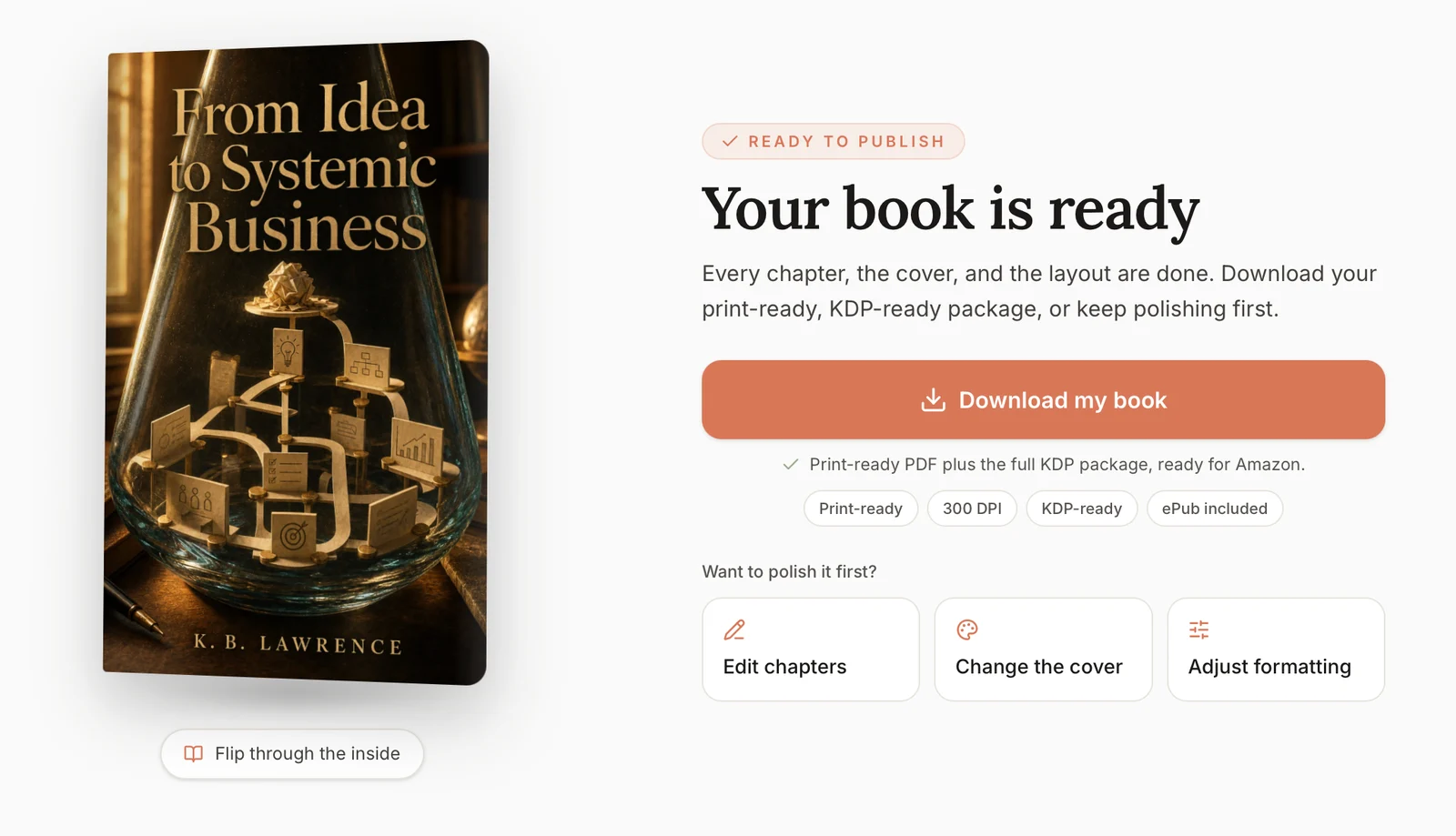
Our AI nonfiction book writer page shows the whole flow. If your material is mostly blog posts, read how to turn a blog into a book. To plan the chapters first, see our guide to structuring a nonfiction book.
How is this different from asking an AI to write a book?
Typing "write me a book" into a chat box starts from an instruction. Built&Written starts from your own material. The stories, numbers and ideas in the book come from what you paste in. The whole book has one outline and one Voice DNA, from the first chapter to the last. And you decide at every chapter what stays.
What stays your job
The platform is not a shortcut around the author. You check every fact, which is the habit AI Snake Oil teaches. You edit the manuscript until it sounds like you. The platform does not replace a human editor, and it does not upload your book to KDP. You export the files and upload them yourself.
Frequently asked questions
Start with Co-Intelligence by Ethan Mollick. It is about working with AI as a partner, which is the daily question for an author. Add AI Snake Oil by Arvind Narayanan and Sayash Kapoor before you publish, because it shows what AI can and cannot do and helps you catch claims that sound right but are not.
Empire of AI by Karen Hao is the newest here. The National Book Critics Circle announced its nonfiction award on March 26, 2026, for publishing year 2025. The Coming Wave paperback on the Penguin Random House page is dated April 1, 2025. Co-Intelligence and AI Snake Oil are from 2024, and Atlas of AI is from 2021.
Yes, with limits. Built&Written is a platform that turns your own posts, notes and transcripts into a structured nonfiction book, chapter by chapter, in your voice. You still check every fact yourself. It does not replace a human editor, and you upload the finished files to KDP yourself.
Publishers list a date per format. Yale University Press shows April 6, 2021 for the Atlas of AI ebook and August 16, 2022 for the paperback. The Norton and Penguin UK pages we opened showed no date. Take the date from the copyright page of the edition you hold.
On November 19, 2026 we opened one primary page per book, a publisher page or an award announcement, and wrote down the title, publisher, date, page count and price shown. We did not read the books for this article. Where a page showed no date, we say so.
Sources & References
About the author