
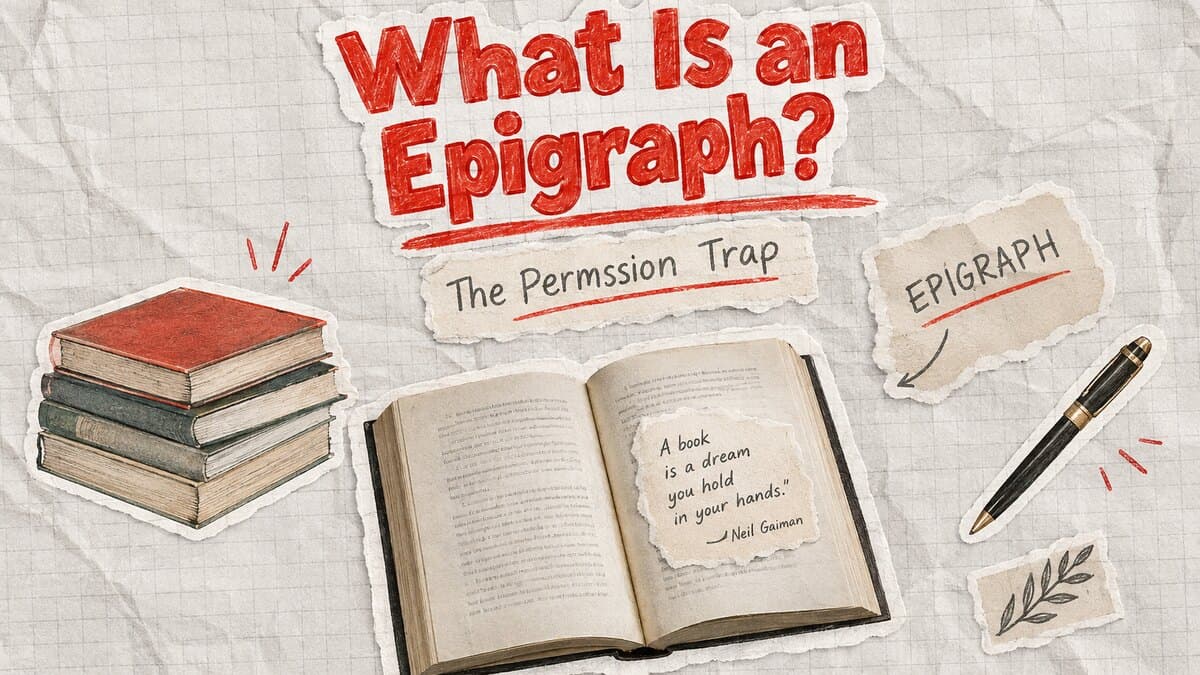

What Is an Epigraph? The Permission Trap Nobody Mentions
An epigraph is a short quote or line of text that a writer places at the very front of a book, before the story or the first chapter begins. Its job is simple: set the mood, or hint at what the book is really about, in a sentence or two. You've probably seen dozens of them without ever learning the word for it. Most authors add one without much thought, but there's one thing worth knowing before you pick yours: not every quote is free to use.
Key takeaways
- An epigraph is the short quote or line an author places at the very front of a book, before chapter one, to set the mood.
- A fact, a proverb, or your own words are always free to use.
- A quote from someone else's copyrighted book, poem, or song usually needs permission first, especially song lyrics.
- "Fair use" is not an automatic free pass. It's a legal argument a court decides case by case.
About Built&Written: Wren is Built&Written's writing tool. It turns an author's existing notes, posts, and ideas into a finished, print-ready book, so small details like where an epigraph goes, and how it's formatted, are already handled for you.
1. What an Epigraph Actually Is
An epigraph is just a short piece of text at the front of a book: a line, a couple of sentences, sometimes a few lines of a poem. It comes before the actual writing starts, and its only job is to set up what's coming. It doesn't explain anything on its own. It just points at the mood or the idea. A business book might open with one plain sentence, a saying nobody remembers the exact source of. A memoir might open with two lines from an old poem, credited to the poet by name. Both are epigraphs. A book works perfectly fine without one too. It's a small extra, not a requirement.
2. Where It Goes, and How to Format It
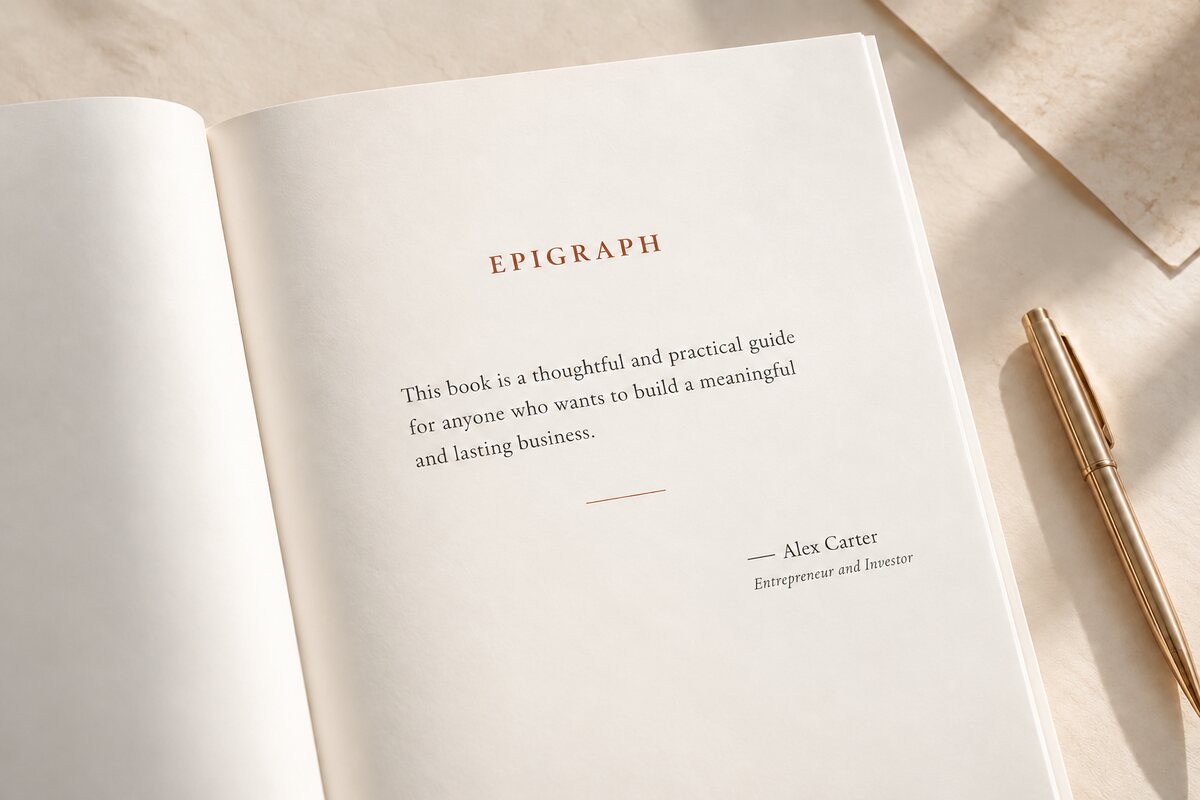
An epigraph sits near the very front of the book: after the title page and copyright page, and before the table of contents or the first chapter. It usually gets its own page, even though it's only a line or two long. The layout of a book's front matter follows its own conventions worth knowing too.
- Write the quote in italics, not quotation marks. Using both together looks over-done.
- Put the author's name on its own line below the quote.
- Skip the dash before the name. A simple line break is enough.
- If you're using a translation, credit the translator too.
- If nobody knows who said it, just write "Author unknown" or "Traditional."

3. Do You Need Permission to Use a Quote?
This is the part most formatting guides skip. An epigraph is only free to use if the words themselves are free to use, and most words aren't. A fact, a proverb, or a saying nobody specifically owns is always safe. Older works are usually safe too: in the U.S., most books and poems published before 1930 are in the public domain, meaning nobody holds the copyright anymore. Anything newer, a line from a recent novel or a stanza from a living poet, needs written permission from whoever owns the rights.
Song lyrics are the biggest trap. It feels harmless to quote one line from a favorite song, but music publishers are far stricter about this than book publishers are. Even a single line from a song still under copyright can require a paid license, and some publishers won't grant one at all. If it was ever sung, assume you need permission first.
A lot of people assume "fair use" gives them a free pass to quote a little bit of anything. It doesn't. Fair use is a legal argument, decided case by case in court, and it works against you when you're using a quote to decorate a book rather than to critique or teach from it. This isn't legal advice for your specific book. When you're unsure about a quote, ask the rights holder, or a lawyer, before you print it. The fuller playbook on copyright for self-published books covers registration and permissions in more depth, and the U.S. Copyright Office's own FAQ on copyright duration is the most reliable source for exactly when a work enters the public domain.
4. How to Credit the Source Correctly
Good credit answers three quick questions: who said it, where it's from, and whether it's an exact quote or your own paraphrase. For a book or poem, that's the author's name and the title. For a speech or interview, the speaker's name and where it happened. If nobody knows who said it, write "Traditional" or "Author unknown," both are normal to see on this page. Never present your own paraphrase as someone else's exact words. If you're not sure of the exact wording, either quote only the part you're confident about, or drop the quotation marks and treat it as your own line.
5. How to Choose the Right Epigraph
The best epigraph fits the book's actual argument, not just its mood. Write your first chapter first, then come back and check whether the quote still makes sense next to what you actually wrote. If nothing fits, or nothing safe to use fits, skip it. A book doesn't need one to feel finished. When in doubt, the safest choice is something old enough to be in the public domain, a plain proverb with no traceable author, or a line you wrote yourself that says exactly what you mean. If you're still shaping the book itself, picking a structure for the chapters that follow is worth doing before you lock in the epigraph, since the quote should fit the book you end up writing, not the one you planned.
6. From an Epigraph to a Finished Book
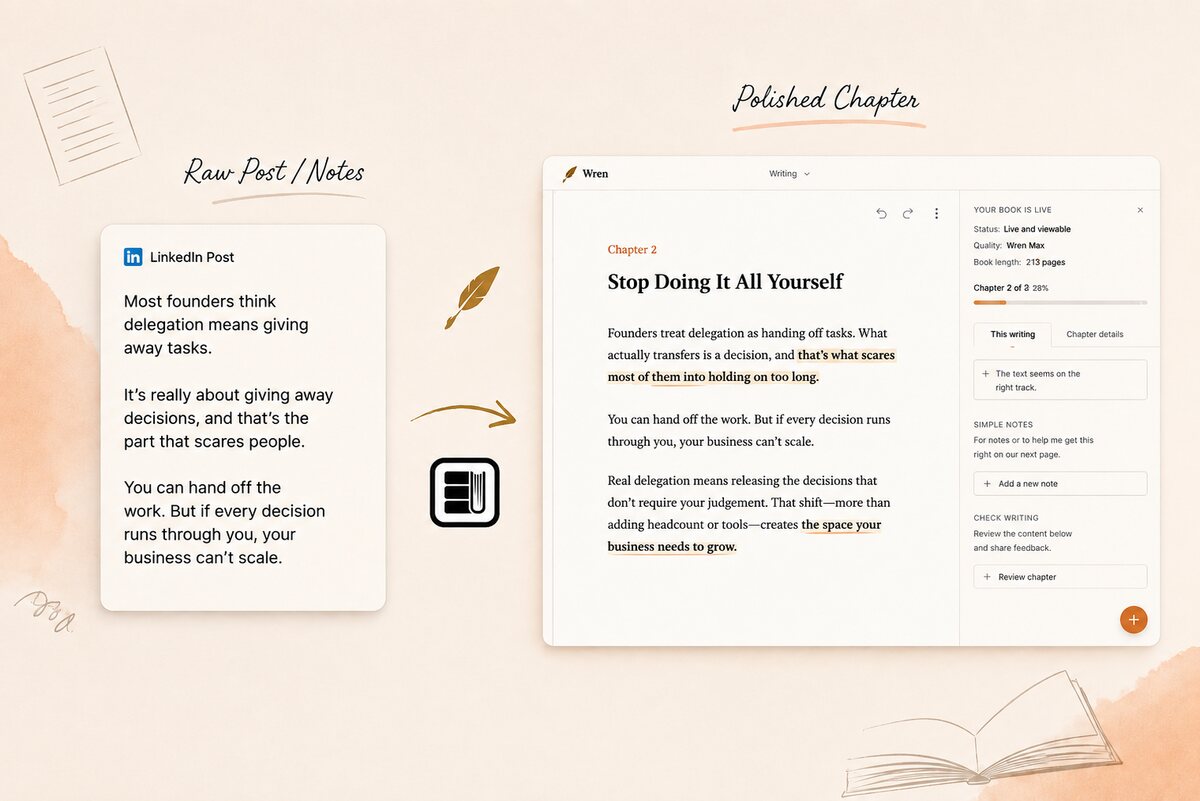
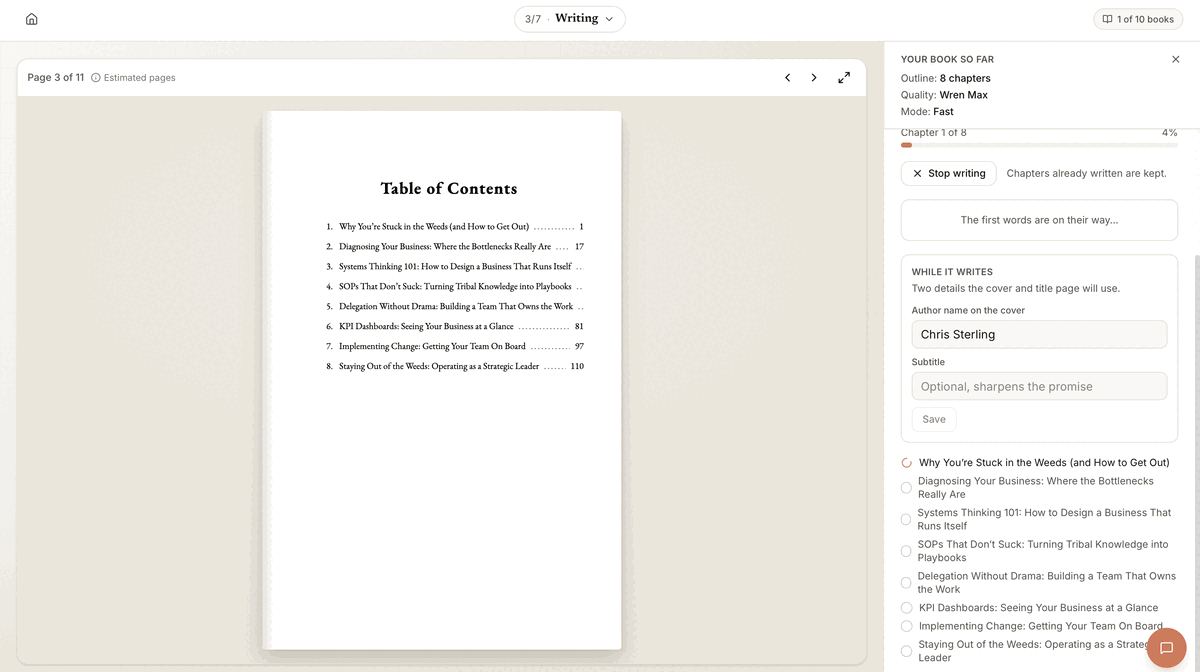
An epigraph is one very small page in a much bigger project. Most nonfiction authors get stuck on a bigger problem: turning years of notes, LinkedIn posts, or session transcripts into an actual manuscript. That's what Built&Written's Wren was built for. It reads what an author has already written, learns their voice, and turns it into a structured, chapter-by-chapter draft that still sounds like them.
Once the chapters exist, Wren also lays out the pages around them: the title page, the copyright page, and the space for an epigraph, formatted and ready to edit. When the manuscript is finished, it exports a file built for Amazon KDP, with the right margins, trim size, and file formats (PDF, ePub, and DOCX) already sorted out, the same file format Kindle itself expects at upload.
None of that replaces the writing itself. What it removes is the formatting guesswork, so the author can focus on getting the words right instead of the page margins.
An epigraph earns its spot by setting up the book before the first chapter does. Facts, proverbs, and your own words cost nothing to use there. A real quote from someone else's copyrighted work needs permission first, and song lyrics almost always do.
Final thoughts
Most authors treat the epigraph page as a quick decision near the end: pick a quote, drop it in, move on. The quote itself rarely matters as much as getting the source right, since that's the one detail that can turn a five-minute page into a real problem months later.
Frequently asked questions
What is an epigraph in a book?
A short quote or line of text placed at the very front of a book, usually right after the copyright page, to set the mood or hint at the book's argument before the reader starts chapter one.
What's the difference between an epigraph and an epigram?
An epigram is a short, witty, self-contained saying. An epigraph is where a book places a quotation, which can be an epigram, a line of poetry, a proverb, or a sentence from someone else's work. Every epigram could work as an epigraph. Not every epigraph is an epigram.
Can I use a quote from a book as an epigraph without asking permission?
Only if the work is in the public domain (in the U.S., generally published before 1930) or the quote is a fact or proverb with no identifiable author. A quote from a work still under copyright needs written permission, no matter how short it is.
Do I need permission to use song lyrics as an epigraph?
Almost always, yes. Music publishers enforce lyric quoting far more strictly than book publishers enforce prose quoting. Even one or two lines from a song still under copyright can require a paid license. Treat any lyric as needing permission before you print it.
Where does the epigraph go in a book?
In the front matter, after the title page and copyright page, and before the table of contents or the first chapter. It usually gets its own page, even though it's only a line or two long.
Frequently asked questions
A short quote or line of text placed at the very front of a book, usually right after the copyright page, to set the mood or hint at the book's argument before the reader starts chapter one.
An epigram is a short, witty, self-contained saying. An epigraph is where a book places a quotation, which can be an epigram, a line of poetry, a proverb, or a sentence from someone else's work. Every epigram could work as an epigraph. Not every epigraph is an epigram.
Only if the work is in the public domain (in the U.S., generally published before 1930) or the quote is a fact or proverb with no identifiable author. A quote from a work still under copyright needs written permission, no matter how short it is.
Almost always, yes. Music publishers enforce lyric quoting far more strictly than book publishers enforce prose quoting. Even one or two lines from a song still under copyright can require a paid license. Treat any lyric as needing permission before you print it.
In the front matter, after the title page and copyright page, and before the table of contents or the first chapter. It usually gets its own page, even though it's only a line or two long.
About the author
Khrystyna Balushka
More in Writing
Ready to write your book?
Turn your expertise into a professional book with Built&Written.