

Why LinkedIn's Best Writers Are Quietly Becoming Authors
LinkedIn's own data rewards long, framework-driven, expertise-dense writing, but posts and newsletters vanish within about a day. That is why a growing share of the platform's best writers now turn their existing archive into a published book, using the same voice and frameworks instead of starting over. Wren, Built&Written's AI platform, builds that book from the posts a writer already wrote.
Key takeaways
- 489 of LinkedIn's top 500 newsletters belong to individuals, not companies, and personal profiles now earn 8 times more engagement than company pages posting the same content. (ContentIn, 2026 LinkedIn content statistics)
- Long-form posts over 1,300 characters get 18% more engagement than short ones, and professionals with an active personal brand report 47% more inbound opportunities. (ContentIn, citing ConnectSafely and LinkedIn's 2025 Workplace Report)
- None of that writing survives the platform. A post's real reach window is measured in hours, and even a newsletter edition is still one more thing gone once the next one lands.
- A quiet, consistent pattern follows from this: the writers with the strongest LinkedIn followings increasingly have a book out or underway, using the same voice and material instead of starting over.
- Wren, Built&Written's AI platform, already turns a LinkedIn writer's existing archive, frameworks and voice included, into a finished, structured book instead of asking them to write the same ideas twice.
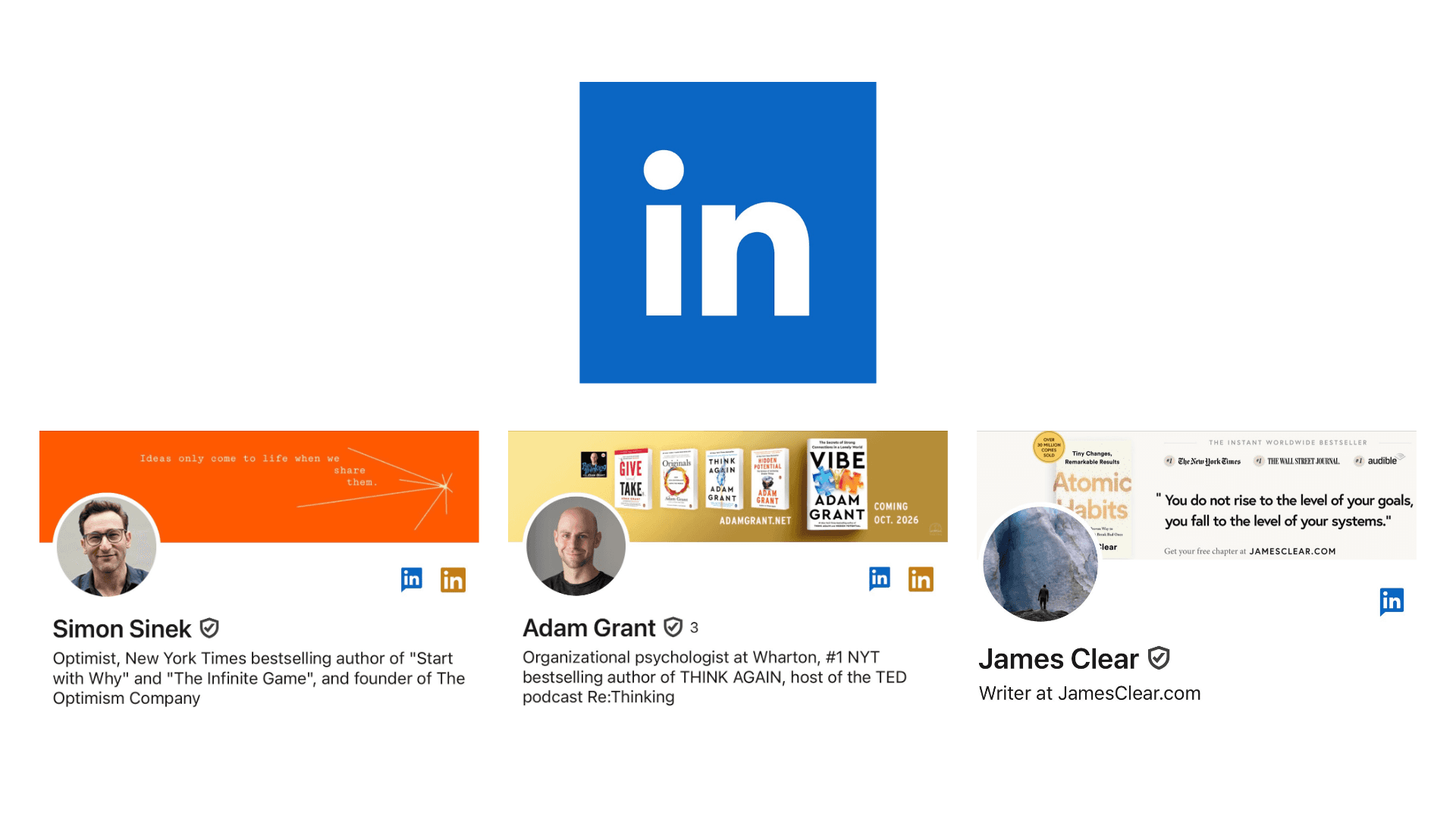
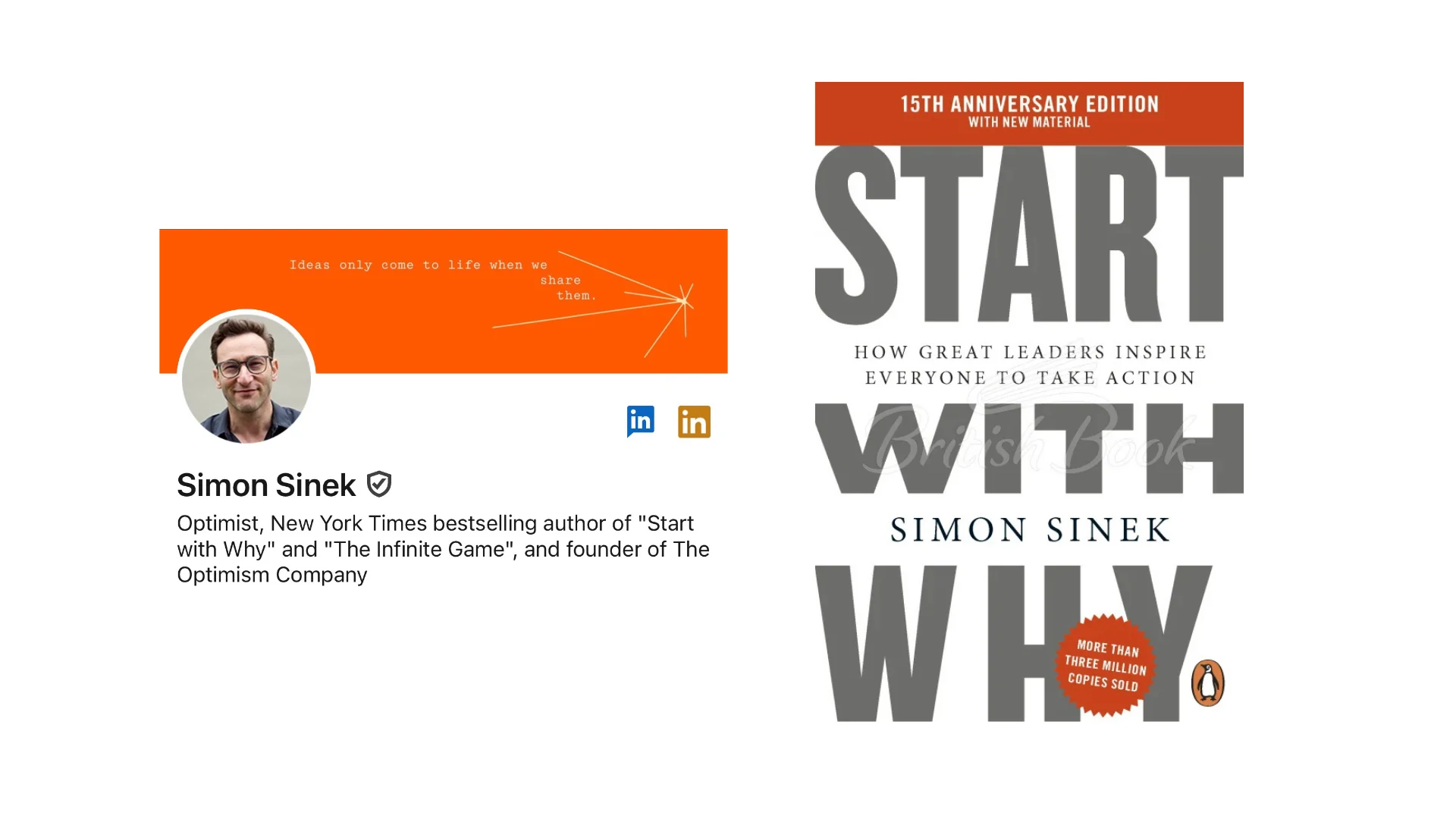
Scroll the profiles of the LinkedIn writers people actually stop for, the ones whose posts turn into real comment sections and real DMs, and a pattern shows up more often than it used to. Under the headline, next to the job title, a growing number now list something else: author. Most of what those same writers post disappears from the feed within a day, no matter how sharp it was. Wren, Built&Written's AI platform, solves that in minutes: it already turns a writer's existing posts into a structured book outline instead of letting the best material disappear with the feed.
About Built&Written: Built&Written built Wren to take a writer's existing material, LinkedIn posts and the arguments they keep returning to, and turn it into a finished, structured book in their own voice. Wren already does this for founders, coaches, and consultants who have been writing in public for a year or more and never got past the idea of a book, only the writing itself.
1. Why LinkedIn Already Rewards Book-Length Writing
The writers who win on LinkedIn right now are not the ones posting the most. They're the ones writing the most like an author. Personal profiles earn 8 times more engagement than company pages running identical content, and posts over 1,300 characters outperform short ones by 18%, according to ContentIn's 2026 LinkedIn content statistics report. Professionals with an active personal brand see 47% more inbound opportunities, per the same report, citing LinkedIn's own 2025 Workplace data. The platform is already telling its best writers to think in frameworks and arguments, not one-liners. A book is the next format that was always going to reward, not replace, that instinct.
The problem, and how Wren solves it: Wren already recognizes that shift in a writer's own material. It studies the long-form posts, the recurring frameworks, and the argument a writer keeps making in different words, then builds a book-length structure from exactly what was already working on the feed. Writers who do this already see the same material that earned comments and DMs on LinkedIn start earning readers and new leads once it's organized into a book.
2. Why LinkedIn Posts Disappear, and Books Don't
489 of LinkedIn's top 500 newsletters belong to individuals rather than companies, real evidence that readers follow writers, not brands, per ContentIn's report. Even so, a newsletter is still a LinkedIn property. It lives inside the platform's own notifications and disappears into the same feed the moment a new edition goes out. A post's real reach window closes within about a day. None of that writing has anywhere permanent to live once the algorithm moves on, the exact gap a book that becomes a durable authority asset covers from the reader's side.
The problem, and how Wren solves it: Wren already turns that same writing into a book that lives on Amazon, findable months after the post itself has scrolled out of anyone's feed. Is it worth writing a business book: real ROI math covers what that permanence is actually worth. Founders and coaches already use that same permanence to keep earning inbound interest long after a post stops showing up in anyone's feed.
3. How LinkedIn Writers Actually Turn Posts Into a Book
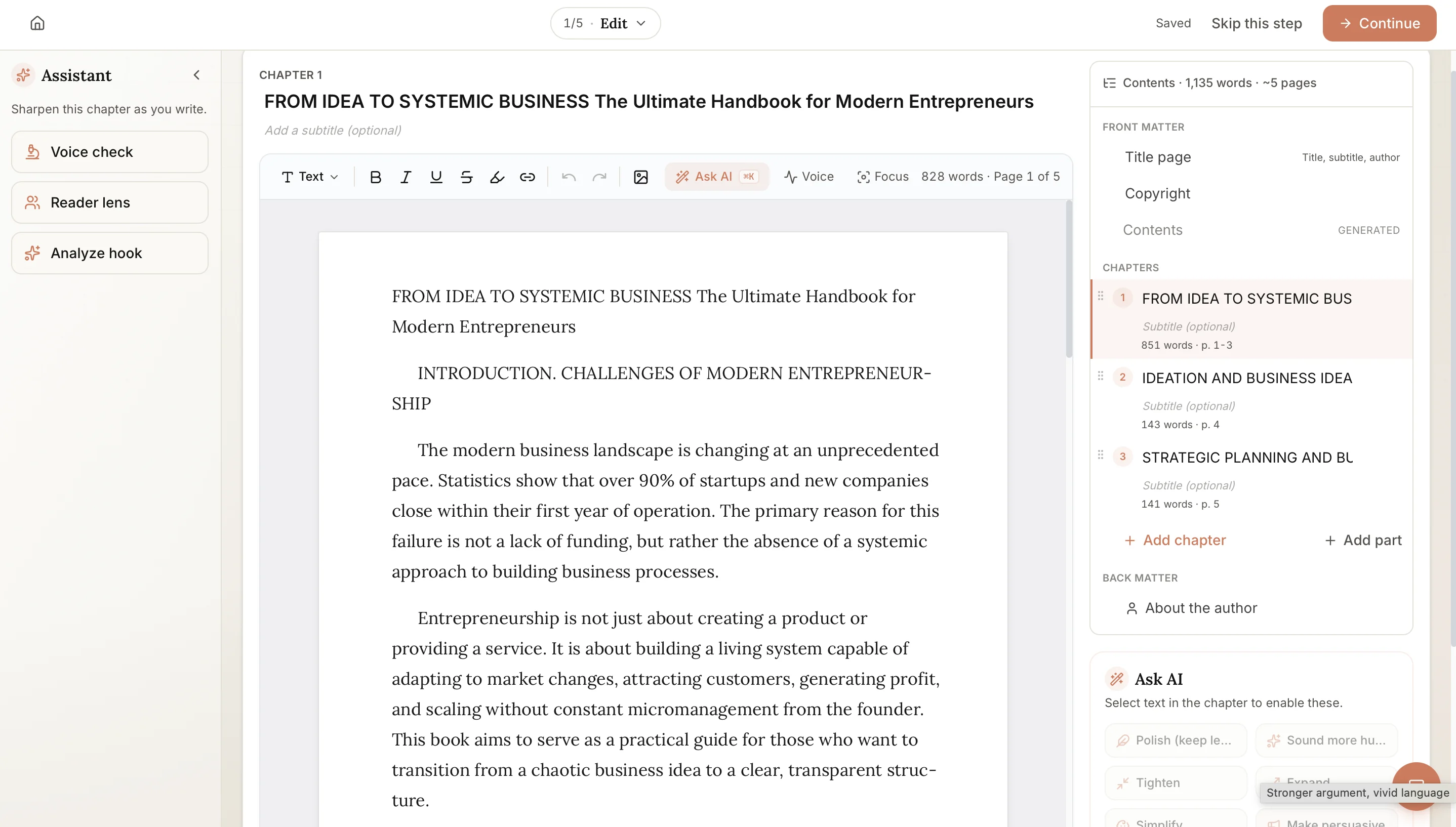
Ask most of these writers why they never finished a book, and the answer is rarely a shortage of ideas. A year or two of consistent posting is already a real archive: frameworks tested in public and a voice a reader already recognizes. What's missing is time and structure, not material. Turning a LinkedIn archive into a book covers the mechanics of that compression pass in detail.
That gap is exactly why the shift is happening quietly instead of all at once. Most writers don't realize how close they already are until something does the sorting for them.
The problem, and how Wren solves it: Wren already reads a writer's posts for the frameworks buried across them, then builds a real chapter structure instead of a chronological scroll. How to turn expertise into a book without a ghostwriter covers the same process from a founder's side. Writers already use that structure to turn a LinkedIn following into an actual reader base, not just a scroll of familiar names.
4. The AI Book Generator Behind the Shift
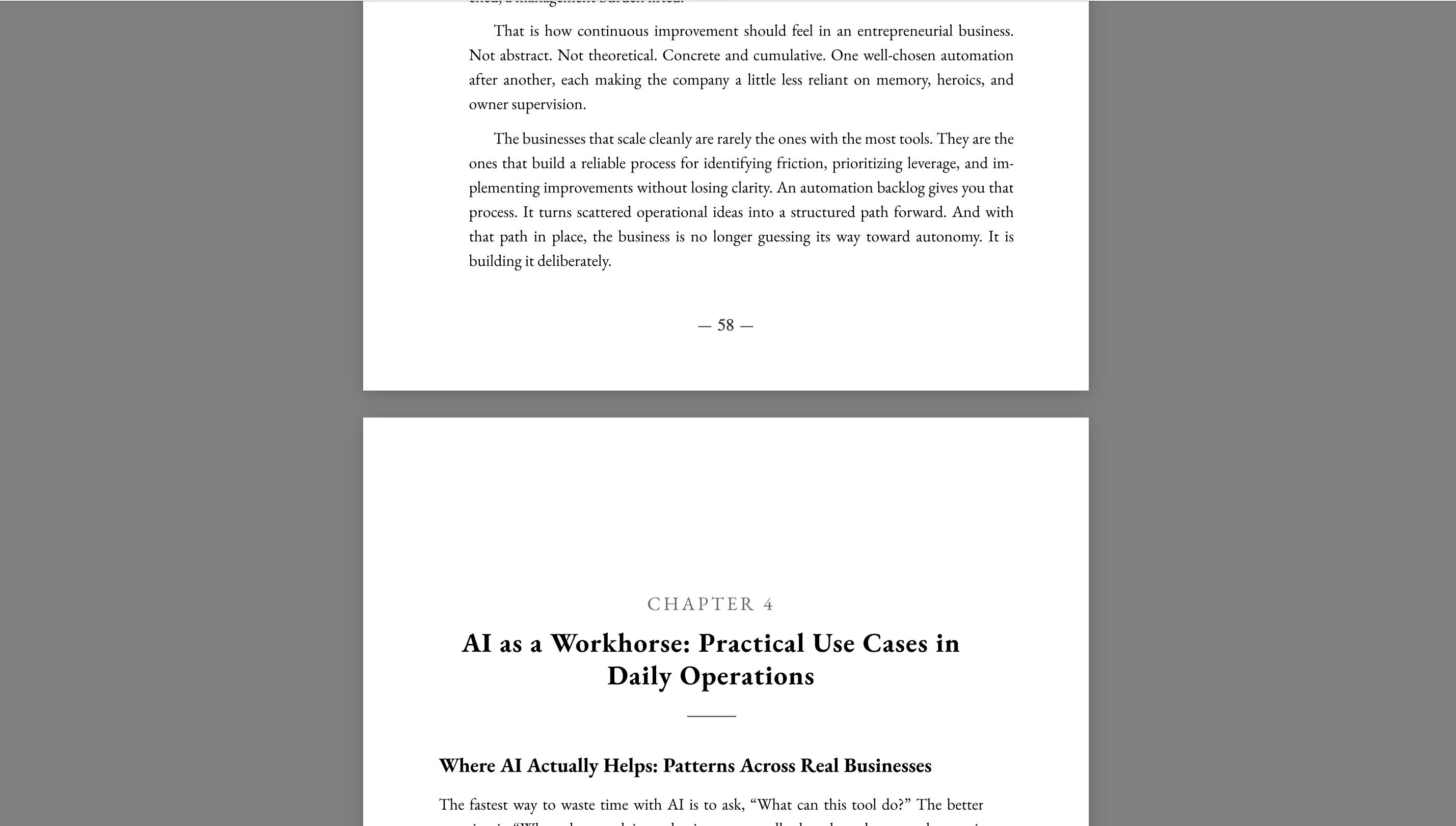
Two things changed at once. LinkedIn's best writers hit a ceiling on what a feed alone can do for them: real credibility with strangers who never saw the original post, the kind author credibility in business that drives revenue covers in more depth. And the excuse that used to stop them, that a book takes a year they don't have, stopped being true. An AI book generator built from material a writer already produced takes weeks, not the year most people still assume.
The problem, and how Wren solves it: Wren already closes that timeline gap. It drafts from a writer's existing posts, notes, and calls instead of a blank page, so the book that used to sit on a someday list gets finished in weeks. How writing a book leads to speaking opportunities covers one concrete result once it's out. Writers already use that speed to publish while the LinkedIn momentum that inspired the book is still fresh.
The pattern is simple once it's named: LinkedIn's own data already rewards the kind of long, structured, expertise-dense writing that a book is built from, but nothing on the platform makes that writing permanent. The writers noticing this first are the ones already publishing, using the archive they'd already built instead of starting over.
Final thoughts
Here's the actual tension underneath all of this. Being one of the writers people stop for on LinkedIn earns real attention, and that attention resets every single day, dependent on an algorithm that owes a post nothing after its first 24 hours.
Wren already turns that same writing, the frameworks a reader already trusts, into a finished book that keeps earning credibility long after the post itself is gone. Built&Written already helps founders, coaches, and consultants turn a year of public writing into a book that brings real clients, speaking invitations, and a level of authority a feed alone can't hold onto. See 10 entrepreneurs whose books built their business for what that compounds into.
If a real archive is already sitting in your post history, that's the actual asset worth finishing next, not another week of posts saying the same thing a new way.
Frequently asked questions
No. What matters is a real archive of consistent writing, not follower count.
All three. The same shift shows up from a consultant's side, and founders see it just as often.
No, and that is the part worth getting right. A stack of posts still reads like a stack of posts. The restructuring work is what actually makes it a book.
A newsletter still lives inside LinkedIn's own walls and resets with every edition. A book gets indexed by search and sits on Amazon independent of the platform.
Weeks, not the year most people assume, since Wren starts from material a writer already produced instead of a blank page.
Sources & References
About the author

Michael Pavlovskyi
More in Book Marketing
Ready to write your book?
Turn your expertise into a professional book with Built&Written.