
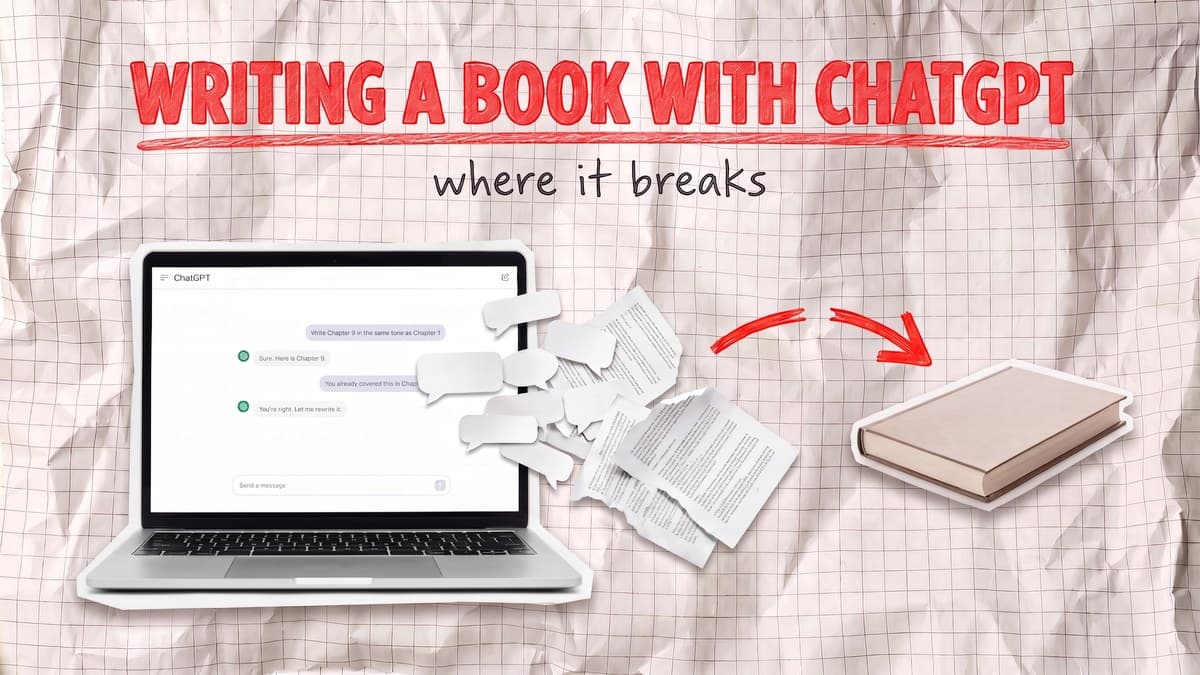

Writing a Book with ChatGPT: Where It Breaks
ChatGPT is genuinely good at drafting. The problem is not individual chapters. The problem is managing a whole book.
ChatGPT is very good at drafting individual chapters. The problems start when those chapters have to function as one book. Over a full manuscript, continuity gets harder to maintain, the voice begins to shift, the original structure can drift, and keeping track of what has already been said becomes increasingly difficult. Producing a document file is not the same thing as producing a publication-ready book. And a document file is not automatically a KDP-ready book. The issue is that writing 2,000 words and managing a 40,000-word book are two different jobs.
Key takeaways:
- ChatGPT is strong at drafting individual chapters. It can produce useful, coherent prose and often gives you a solid first draft quickly.
- Continuity becomes harder to maintain across a full book. Details, arguments, terminology, and examples can shift or repeat from chapter to chapter.
- Voice and structure can drift over time. A manuscript may start with a clear tone and outline, then gradually become less consistent as the word count grows.
- A finished chat is still not a finished book. Even if the prose is usable, you still need to turn it into a properly structured, formatted file that Amazon KDP will accept.
1. Continuity across chapters
ChatGPT can keep a single chapter coherent surprisingly well. Give it a clear brief, enough context, and a specific argument to make, and the result can be strong. The problem becomes easier to spot once the book starts depending on decisions made several chapters earlier.
ChatGPT Projects make this easier because they can keep files, instructions, chats, and project context together. But you are still responsible for making sure the model is working from the right version of the outline, the right chapter history, and the decisions that matter to the manuscript. Unless the relevant context is available and clearly surfaced, it may change terminology, explain the same idea again as if it were new, contradict an earlier distinction, or forget that an example has already been used.
Example:
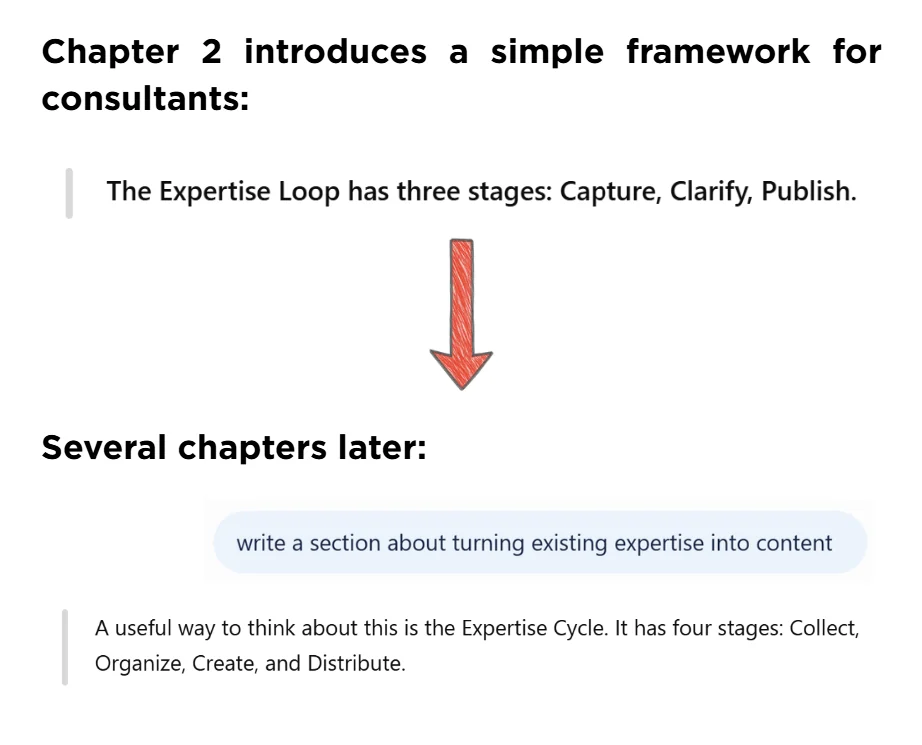
There is nothing obviously wrong with that paragraph on its own. It even sounds plausible. But inside the book, it creates a continuity problem. The name has changed, three stages have become four, and the framework now means something different. Writers using other AI tools report similar problems when they try to manage long AI writing projects as a single manuscript.
2. Voice consistency over a long manuscript
ChatGPT can imitate a tone well when the sample and instructions are right in front of it. For one chapter, that can be enough. Across a full book, the problem is keeping that voice stable.
A 40,000-word manuscript gives the model many chances to drift. One chapter may be direct and conversational, while another becomes more formal. Sentence length can change. Vocabulary can become more generic. The same author can suddenly sound more polished, more explanatory, or more promotional than they did earlier.
Example:
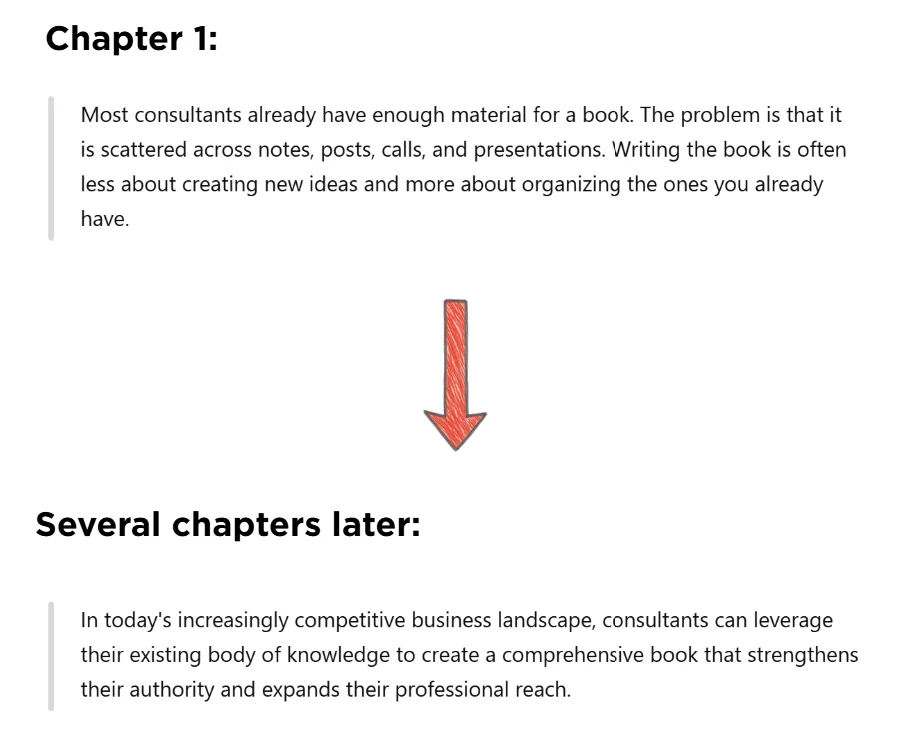
The second paragraph is not grammatically wrong. It communicates roughly the same kind of idea. But it no longer sounds like the same person: sentences are longer, the vocabulary is more formal, and phrases such as "competitive business landscape", "leverage", and "comprehensive" introduce a style that was absent from the earlier chapters.
3. Structural drift and repetition
A clear outline helps ChatGPT stay focused at the beginning of a book. The problem is that the structure can gradually loosen as more chapters are written.
Later chapters may start covering ideas that belong somewhere else. A point from Chapter 3 can reappear in Chapter 7 with slightly different wording. A chapter that was supposed to focus on one problem may expand into several related topics. The manuscript can still look organized chapter by chapter while becoming less organized as a whole.
Example:
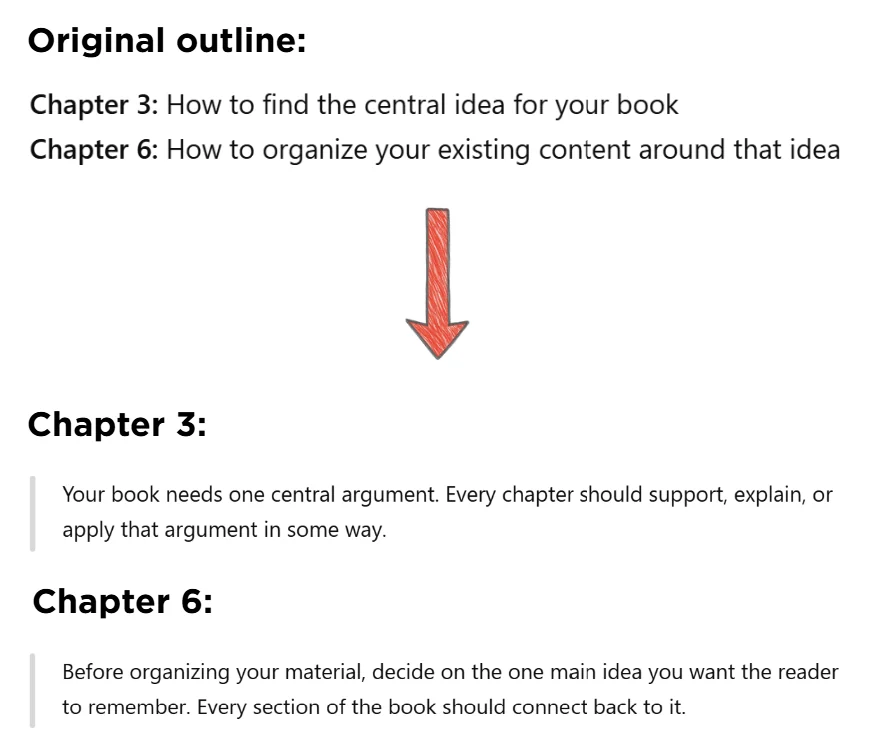
The second passage is reasonable. The problem is that the book has already made this point. If the same thing happens several times, the manuscript starts to feel padded.
4. How much manual context management ChatGPT requires
The longer the book gets, the more time you spend managing context rather than simply asking ChatGPT to write.
At the beginning, the process can feel straightforward. You give it the topic, the audience, the outline, and a few writing samples. Those inputs are also the basis of a more structured AI book-writing workflow. But as the manuscript grows, the amount of information ChatGPT needs to keep in mind grows with it. In fact, once the right context is supplied, it can usually produce a strong revision. The problem is that the user gradually becomes responsible for maintaining the book's memory.
Example:
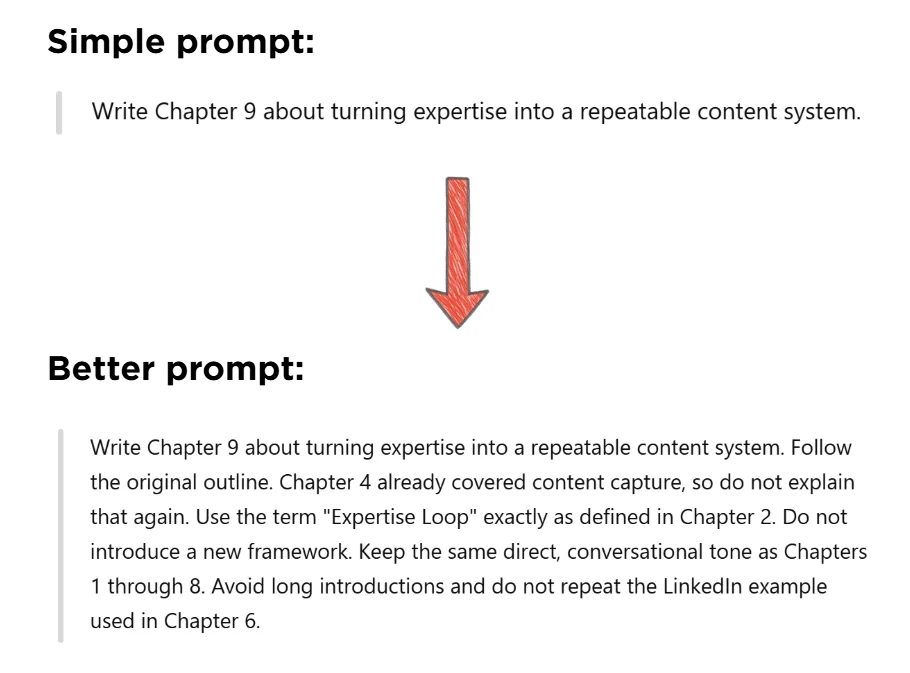
You are no longer just asking ChatGPT to write. You are carrying an increasingly large set of instructions from one chapter to the next so the book stays coherent.
5. What happens after the writing is finished
Even if ChatGPT produces every chapter successfully, you still do not have a finished book.
At the end of the drafting process, the manuscript exists as a collection of responses inside a conversation. Those responses still have to be gathered, put in the right order, checked for missing sections, and moved into a document where the actual book can be prepared.
That creates a different kind of gap. ChatGPT has helped with the writing, but the workflow does not end when the final chapter appears on screen.
Example:
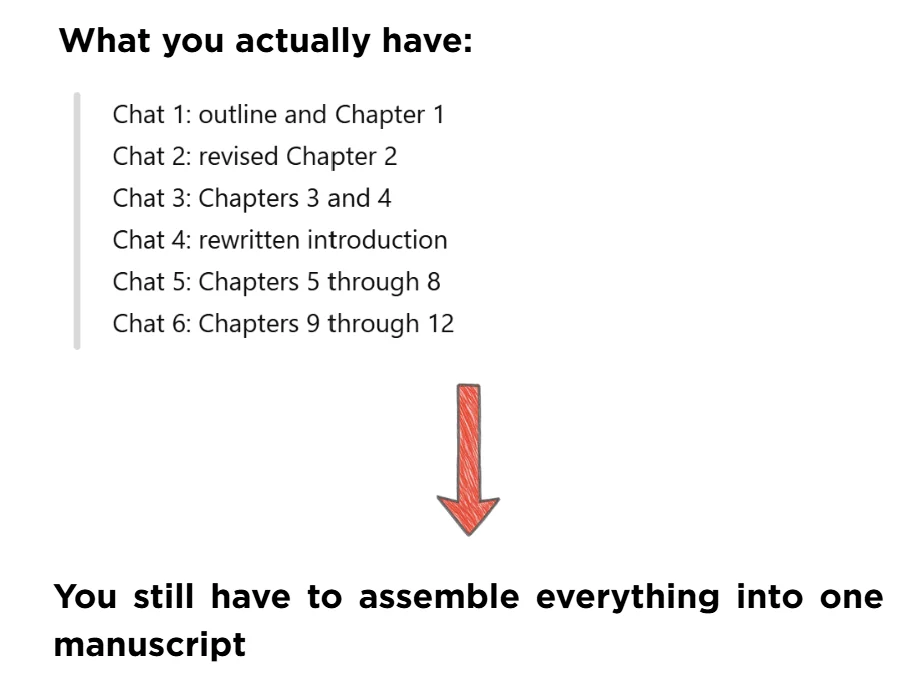
You have to make sure the latest version of each chapter is included, put the chapters in the correct order, standardize the headings, add the title page and other front matter, create the table of contents, check the chapter breaks, and prepare the final file for Amazon KDP.
Final thoughts
ChatGPT is very good at drafting individual chapters. The problems become more visible when those chapters have to function as one book. Over a full manuscript, continuity can drift, the voice can change, ideas can repeat, and the writer has to spend more time managing context and previous decisions. ChatGPT Projects can reduce some of that work by keeping files, instructions, and conversations together, but the user still has to manage the manuscript as a book. And when the writing is finished, a document still has to be prepared for publication.
About Built&Written: Wren by Built&Written is designed around that second job. Instead of treating every chapter as a separate prompt, Wren starts with your existing material and keeps the source content, outline, chapters, editing, cover creation, and export inside one book project. Voice DNA learns from your own writing to help keep the manuscript closer to your natural style, while the structured workflow makes it easier to keep chapters connected and follow the original outline. When the book is finished, Built&Written can export PDF, ePub, and DOCX files formatted for Amazon KDP, so the process does not end with a collection of chat responses. Built&Written is also coming to ChatGPT as an OpenAI app.
Frequently asked questions
Yes, but the main problems appear when the manuscript gets longer. Continuity, structure, voice, and context become harder to manage across many chapters.
Yes. ChatGPT can produce strong first drafts when the prompt, structure, and context are clear.
Because it does not always track the whole manuscript as one connected project. Similar points can reappear later with different wording.
It can imitate a voice well, but the style may drift over a long manuscript unless you keep reinforcing the same examples and instructions.
You still need to assemble the chapters, check the structure, standardize formatting, add front and back matter, and prepare a file suitable for Amazon KDP.
About the author

Polina Karlashchuk
More in AI Book Tools
Ready to write your book?
Turn your expertise into a professional book with Built&Written.