

Foreword vs Preface vs Introduction: Who Writes Which
A foreword is written by someone other than the author, almost always to lend credibility. A preface and an introduction are both written by the author: the preface explains why you wrote the book, the introduction explains what's actually in it. The three run in a fixed order in the front matter, foreword first, and each should read shorter than the chapters that follow it. Mixing up who writes which, or asking someone for a foreword before a manuscript exists to send them, is the most common front matter mistake in nonfiction publishing.
Key takeaways
- Only one of the three is written by someone else: the foreword. A preface and an introduction are always the author's own words.
- Front matter runs in a fixed order: table of contents, then foreword, then preface, then introduction, right before chapter one.
- A foreword runs 500 to 1,500 words, about one to three pages. Richard Branson's foreword to Franziska Iseli's "The Courage Map" runs to roughly that length.
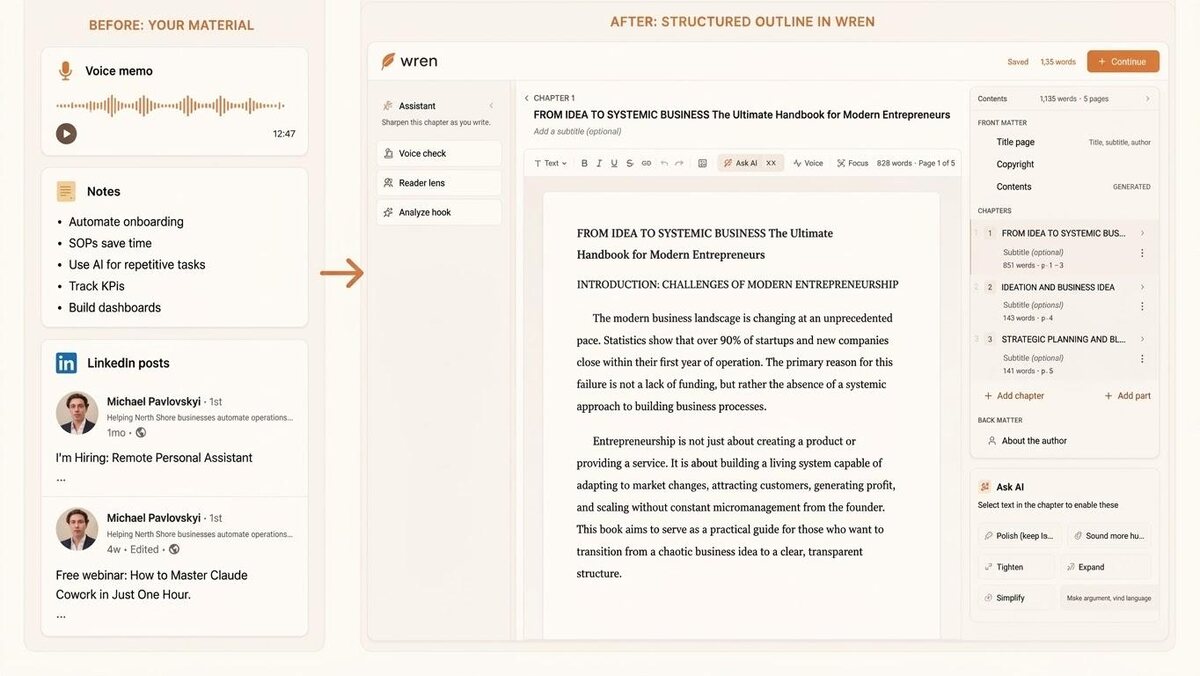
- Built&Written's Wren turns notes and material into a finished, voice-matched manuscript, the thing you need in hand before anyone will agree to write your foreword.
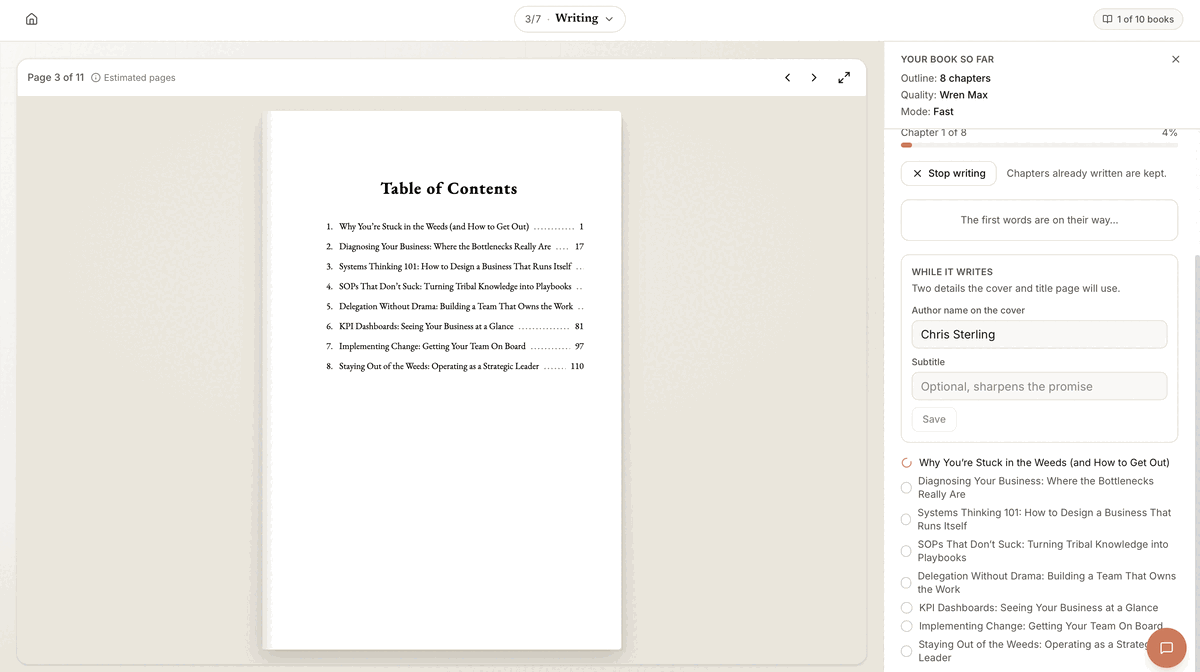
About Built&Written: Built&Written already helps founders and consultants turn existing notes, calls, and LinkedIn posts into a structured, voice-matched manuscript with Wren, front matter included: a copyright page and table of contents built automatically, and an introduction written in your own voice. See current plans if that's the part you're weighing.
1. What Is a Foreword, a Preface, and an Introduction? (The One Rule People Forget)
The rule that gets forgotten most: a foreword is written by someone other than the author. Everything else in the front matter, including the preface and the introduction, is yours.
A foreword is a short piece written by another person, almost always someone whose name carries weight with your specific readers: a mentor, an investor, a well-known client, a bigger name in your niche than your own. Its job is to vouch for you and the book before a reader has read a word you wrote yourself.
Richard Branson wrote the foreword to Franziska Iseli's business book "The Courage Map" for exactly this reason. His name told readers something about the book's credibility before Iseli said a word of her own.
A preface is written by you, and it covers the book's origin: why you wrote it, what prompted it, what the process looked like. It answers why this book exists, not what's in it.
An introduction is also yours, but it does a different job: it previews the actual argument and what a reader gets from staying with you for the chapters ahead. Most nonfiction books need an introduction. Far fewer need a preface, and plenty skip it entirely.
| Foreword | Preface | Introduction | |
| Written by | Someone else | The author | The author |
| Answers | "Why should I trust this book?" | "Why did you write it?" | "What's actually in it?" |
| Typical length | 500 to 1,500 words | 500 to 1,000 words | 1,000 to 3,000 words |
| Where it sits | First, right after the table of contents | Right after the foreword | Last, immediately before chapter 1 |
Order and rough word counts follow the convention Reedsy's parts-of-a-book guide lays out for trade nonfiction. For the full sequence of every page before and after the chapters, see our guide to the parts of a book.
2. Where Each One Goes in Your Front Matter, and Why the Order Matters
Front matter runs in a fixed sequence. After the title page, copyright page, and any dedication, the order is table of contents, foreword, preface, then introduction, immediately before chapter one. Get foreword and preface backward and an editor, or a sharp reader, will notice even if they can't immediately say why it feels off.
A prologue is a different device entirely, built for fiction and memoir: a short scene from inside the story, told before chapter one. It belongs to novels and memoirs, not business or how-to books. If you're tempted to open with a story before the introduction, that's what the introduction itself is for.
Wren builds the copyright page and table of contents automatically while it writes, so this sequence is already correct in the exported file. Once the front matter is locked, formatting the rest of the manuscript for Kindle runs on its own set of rules, and getting this order right the first time means one less thing to redo later.

3. How to Ask Someone to Write Your Foreword
A foreword only works once you have a finished, or nearly finished, manuscript to send. Ask before that point and you're putting someone in the position of endorsing a book they haven't read, which is an easy way to get a polite no.
Pick someone whose audience overlaps with your book's argument, not the biggest name you can reach. The investor who introduced you to your best client, or the mentor who watched you build the thing the book is about, usually beats a stranger with more followers.
Credibility only transfers when it connects to your subject.
Make it easy to say yes. Send a clean, close-to-final manuscript (at minimum the introduction and one chapter that represents the book well), and say specifically why you asked them and not someone else.
Give a word count and a deadline up front. 500 to 1,000 words is a reasonable ask.
The manuscript you send has to read as finished, not a working draft with tracked changes and placeholder chapter titles. Wren exports a KDP-ready PDF with the margins, spacing, and front matter already set to publishing standard, the kind of file you're not embarrassed to put in front of an investor or a mentor.
That leaves the formatting and consolidation to Wren, and leaves you with the one part no software can do for you: the expertise the book is actually about.
Tip: If they're too busy to write from a blank page, offer a shortcut instead: record a 15 to 20 minute conversation about the book. Then draft the foreword yourself from what they said and send it back for them to edit. IngramSpark's own guidance to authors makes the same point: editing a draft is a lighter lift than writing one from scratch, and it turns a hesitant maybe into a yes.
4. How Long Should Each One Be
Keep all three shorter than the chapters that follow them. A foreword runs 500 to 1,500 words, about one to three pages; going longer doesn't do the person who wrote it any favors, since a foreword that reads like a second introduction gets skimmed.
A preface is usually shorter, 500 to 1,000 words, since it only covers the book's origin, not its argument. An introduction has more room, typically 1,000 to 3,000 words, since it sets up the entire book, and some authors write it as chapter one in everything but name.
Voice matters here more than word count. An introduction has to sound like the same person who wrote chapter one through chapter twelve. A preface that reads like a different author took over is the fastest way to lose a reader's trust before the actual argument starts.
Wren's Voice DNA trains only on material you've already written or said: your notes, your calls, your posts. The introduction comes out sounding like you instead of a templated AI voice layered over your ideas. The tone matches from the front matter straight into page one instead of resetting, the way it can when an introduction gets drafted separately from the rest of the book.
A foreword is someone else's endorsement of your book. A preface and an introduction are both yours, covering the book's origin and its content. They run in that order, foreword first, and each should read shorter than the chapters that follow it.
Final thoughts
All three of these decisions assume a manuscript already exists to attach them to. For most people asking this question, the real bottleneck sits one step earlier than foreword or preface: a finished manuscript to send a potential foreword writer in the first place. Built&Written's Wren gets founders and consultants to that finished, voice-matched draft, with the copyright page, table of contents, and introduction already built in the right order, so there's something real to send once it's time to ask.
Once the front matter is settled, most of the editorial work is still ahead, in the chapters it introduces. Getting the interior layout right matters as much for a two-page preface as it does for chapter one.
Frequently asked questions
Does a nonfiction book need a foreword?
No. A foreword is optional and only helps when a genuinely relevant name is willing to write one. Plenty of well-regarded nonfiction books skip it and open straight into a preface or introduction.
Who signs a foreword?
The person who wrote it, not the author. Their name, and often a one-line credential like a title or company, appears at the end of the foreword itself, sometimes with a date.
Is it foreword or forward?
Foreword, spelled fore plus word, for the section at the front of a book. Forward is a direction. The two sound identical, which is why the misspelling shows up even in published book listings.
Can the introduction double as the preface?
Yes, and many nonfiction books do exactly that, folding the why-I-wrote-this note into the opening of the introduction instead of running two short sections back to back. What doesn't work is running a preface with no introduction when the book's argument still needs one.
Is a prologue the same thing as a preface or introduction?
No. A prologue is a fiction and memoir device, a short scene from inside the story, told before chapter one. Nonfiction books use a preface or introduction instead, not a prologue.
Frequently asked questions
No. A foreword is optional and only helps when a genuinely relevant name is willing to write one. Plenty of well-regarded nonfiction books skip it and open straight into a preface or introduction.
The person who wrote it, not the author. Their name, and often a one-line credential like a title or company, appears at the end of the foreword itself, sometimes with a date.
Foreword, spelled fore plus word, for the section at the front of a book. Forward is a direction. The two sound identical, which is why the misspelling shows up even in published book listings.
Yes, and many nonfiction books do exactly that, folding the why-I-wrote-this note into the opening of the introduction instead of running two short sections back to back. What doesn't work is running a preface with no introduction when the book's argument still needs one.
No. A prologue is a fiction and memoir device, a short scene from inside the story, told before chapter one. Nonfiction books use a preface or introduction instead, not a prologue.
About the author

Khrystyna Balushka
More in Writing
Ready to write your book?
Turn your expertise into a professional book with Built&Written.