

Does a Business Book Need a Prologue or an Epilogue?
Most business books do not need a prologue or an epilogue.
For practical nonfiction, an introduction usually does a better job of setting up the problem, explaining who the book is for, and showing readers what they will learn. A conclusion is usually the clearest place to bring the argument together and leave the reader with a final idea or next step.
A prologue or epilogue can still work well when the book has a strong narrative element. A founder might open with a moment that changed the company. A leadership book built around a real case could use an epilogue to show what happened afterward. In those cases, the sections add something that would feel awkward inside a standard introduction or conclusion.
What are a prologue and an epilogue, and does a business book need them?
A prologue is a short section that appears before the main body of the book. Its job is usually to give the reader context, introduce an important event, or tell a story that sets up what follows.
An epilogue appears after the main body. It usually shows what happened later, reflects on the outcome of the book’s central story, or gives readers a final perspective that sits outside the main chapters.
In simple terms, the order usually looks like this:
Front matter → Prologue → Main chapters → Epilogue → Back matter
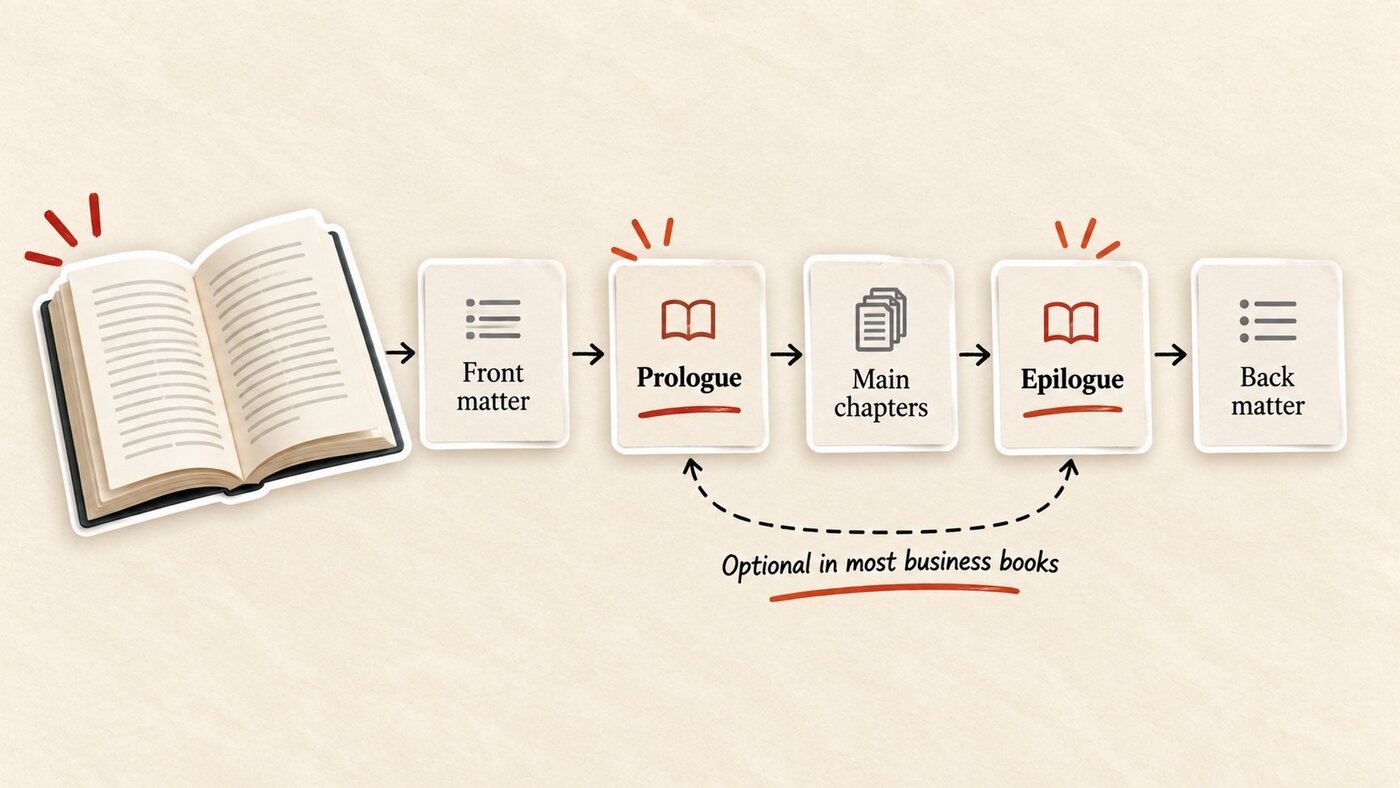
For a business book, neither section is required. In fact, many practical nonfiction books work better without them. If the book is mainly built around a framework, method, argument, or set of lessons, the introduction and conclusion usually cover everything the reader needs.
A prologue makes more sense when the author wants to open with a separate story that creates context for the rest of the book. For example, a founder might begin with the moment the company nearly failed before moving into the lessons that came from it.
An epilogue is more useful when the reader needs to know what happened after the main story ended. That can work particularly well in books built around a company turnaround, a long case study, or a personal business journey.
If you want to add a short quotation before the book begins rather than a full opening section, that is a different element entirely. That is an epigraph, not a prologue.
For most business authors, the simplest rule is this: use a prologue or epilogue only when it adds material that does not fit naturally into the introduction, chapters, or conclusion.
When should you use an introduction and conclusion instead?
For most business books, an introduction and conclusion are the safer default.
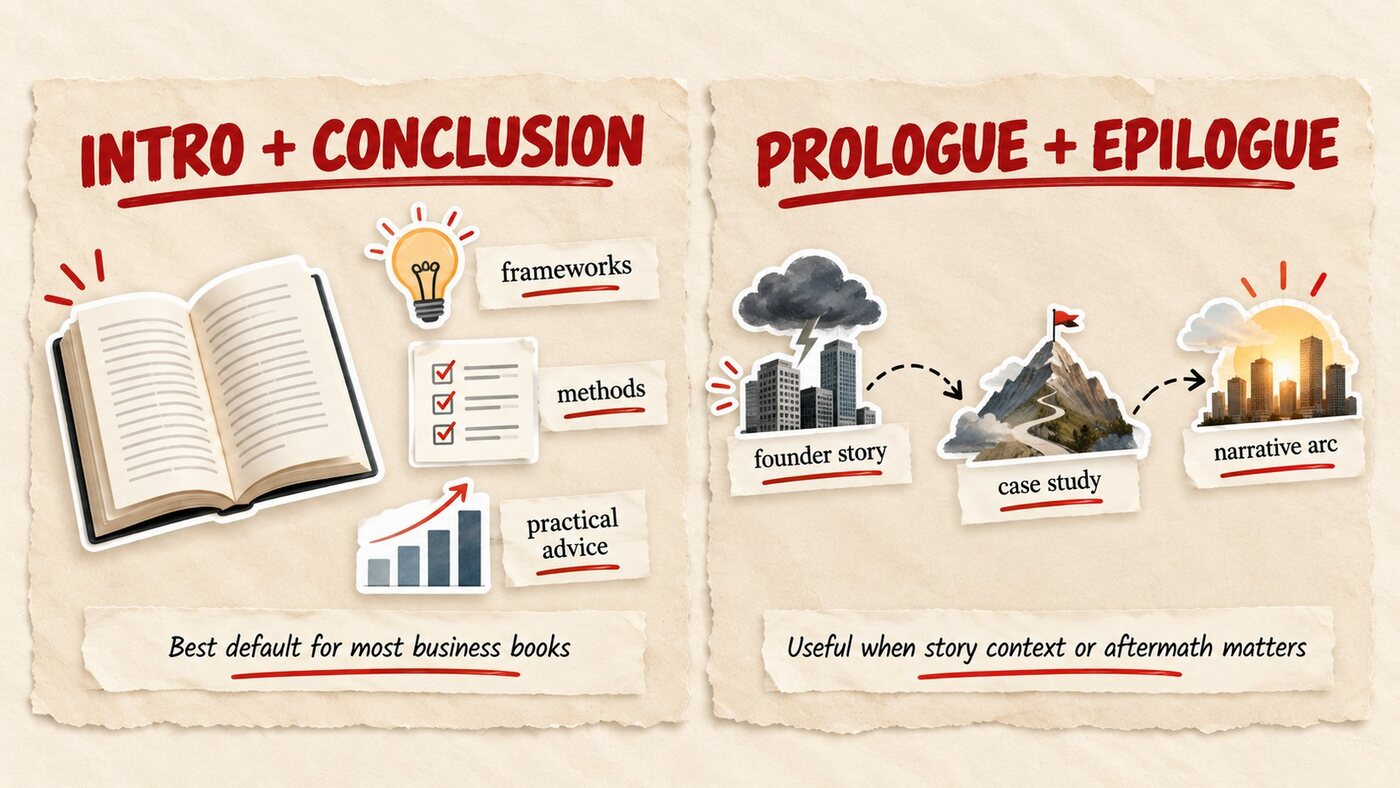
An introduction helps readers understand the problem the book is solving, why the topic matters, who the book is for, and what they can expect from the chapters ahead. A conclusion brings the main argument together and helps readers decide what to do with what they have learned.
That makes them especially useful for books built around expertise, frameworks, methods, leadership lessons, consulting ideas, or practical advice.
A prologue or epilogue becomes useful when the book needs something more narrative.
| If your book needs to... | Best fit |
|---|---|
| Explain the problem, audience, and promise of the book | Introduction |
| Tell readers how to use the book | Introduction |
| Open with a separate story that happened before the main argument begins | Prologue |
| Give background that would interrupt the main introduction | Prologue |
| Summarize the core argument and lessons | Conclusion |
| Give readers a final action, principle, or takeaway | Conclusion |
| Show what happened after the central story or case study ended | Epilogue |
| Revisit characters, a company, or a project after the main narrative | Epilogue |
For example, a book explaining a five-step management system probably does not need a prologue. The author can introduce the problem, explain the system, and move directly into the first chapter.
A book about rebuilding a company after a crisis may be different. A short prologue could open with the day the crisis began, while an epilogue could show where the company ended up several years later.
There is also an important difference between a prologue, preface, and introduction:
| Section | Main purpose | Usually about |
|---|---|---|
| Prologue | Set up a story or context before the main text | The events or world of the book |
| Preface | Explain why or how the book was written | The author and creation of the book |
| Introduction | Prepare the reader for the argument or subject | What the reader is about to learn |
A useful rule is simple: if the section is helping the reader understand the book, use an introduction or conclusion. If it is extending the book’s story beyond the main chapters, a prologue or epilogue may be the better fit.
How Prologues and Epilogues Are Structured
There is no official word count for a prologue or epilogue. The section should be long enough to do its job without becoming another full chapter.
Reedsy notes that there is no set length for a prologue, although it is usually shorter than a standard chapter. Its guidance for epilogues recommends keeping them no longer than a short chapter, roughly five to eight pages. These are useful publishing benchmarks rather than fixed rules, especially for nonfiction.
For a business book, brevity usually makes sense. If your prologue needs several chapters to establish the background, some of that material may belong in the main body. If an epilogue starts introducing a new argument, it may work better as a final chapter or conclusion.
How do they appear in the table of contents?
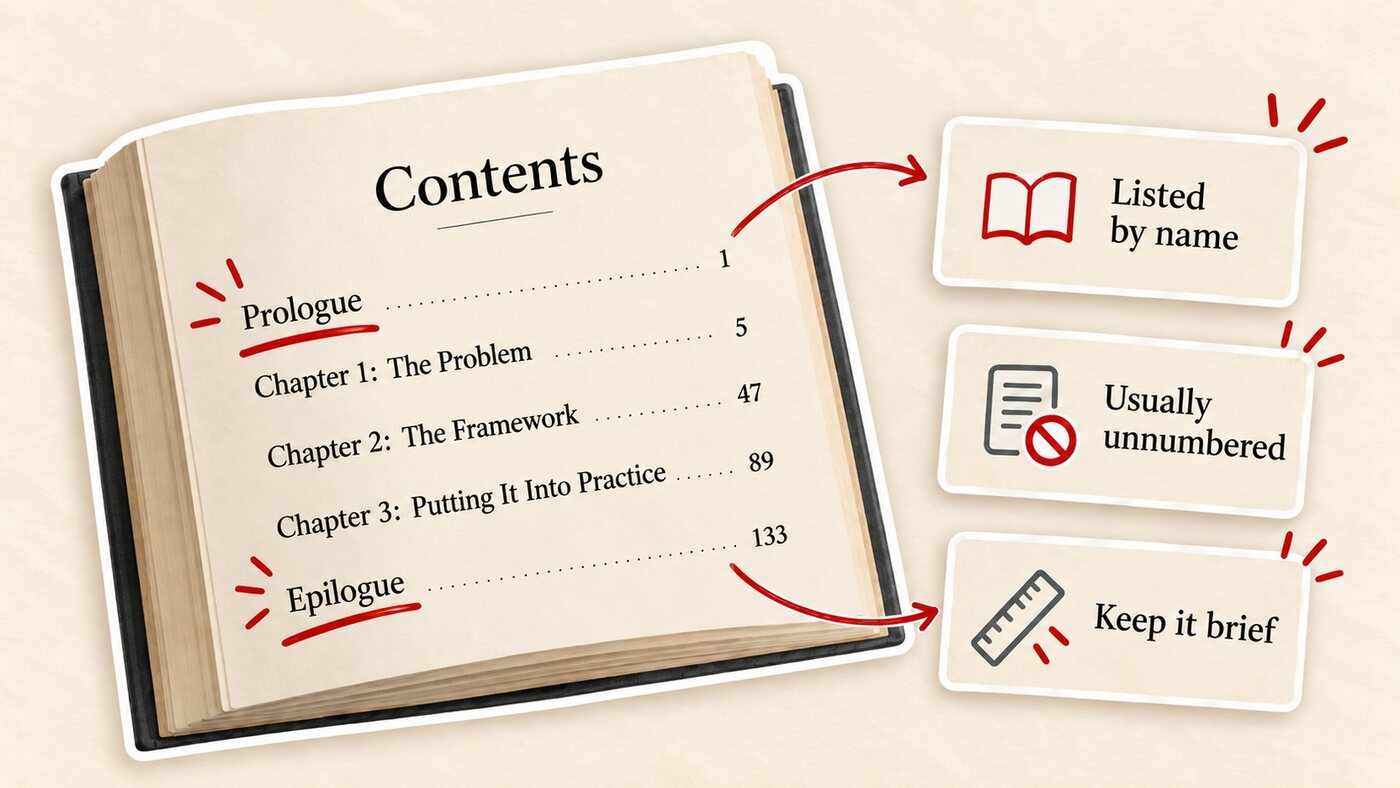
Prologues and epilogues are usually listed by their names rather than numbered as regular chapters. A contents page might therefore look like:
Prologue
Chapter 1: The Problem
Chapter 2: The Framework
Chapter 3: Putting It Into Practice
Epilogue
Amazon KDP does not require you to number a prologue as a chapter. In its paperback formatting instructions, KDP recommends applying Heading 1 to a prologue title if you want it included in an automatically generated table of contents. KDP also requires Kindle eBooks to contain a navigable table of contents.
Real examples from business books
John Carreyrou, Bad Blood
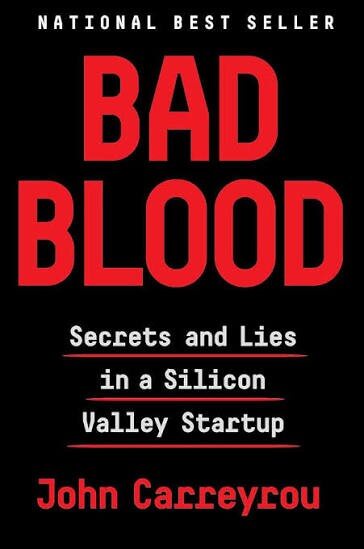
Bad Blood: Secrets and Lies in a Silicon Valley Startup is a clear example of a narrative business book using both sections. Its contents begin with an unnumbered Prologue on page 3, followed by the main chapters, and end with an Epilogue on page 294.
That structure fits the book because Carreyrou is telling the story of Theranos rather than simply presenting a business framework. The prologue can place the reader inside the story before the chronological account develops, while the epilogue gives the author room to address what happens after the central narrative.
Eric Ries, The Startup Way

Eric Ries takes a different approach in The Startup Way. The contents move through the main chapters and then include an Epilogue on page 347, without a separately labeled prologue.
This is a useful example for business authors because it shows that the two sections do not have to come as a pair. A book may have no need for a separate opening story but still benefit from an epilogue that looks beyond the main argument.
Jim Collins, Good to Great

Good to Great shows the opposite choice. Its contents move directly into “Good Is the Enemy of Great”, followed by the book's main research and framework chapters. There is no separately labeled prologue or epilogue in the contents.
That makes sense for a research-driven business book. The value comes from the argument, evidence, and framework, so adding separate narrative sections at the beginning or end is not necessary.
These examples point to the same practical rule: the format should follow the job of the book. Narrative business books have more reason to use a prologue or epilogue. Framework-driven books can often move directly into the argument and finish with their final chapter.
Frequently asked questions
A prologue is a section that appears before the main body of a book. It usually provides background, introduces an important event, or sets up a story before Chapter 1 begins.
An epilogue appears after the main body of the book. It often shows what happened after the central story ended or gives readers a final perspective on the events in the book.
Usually, no. Most business books can work well with an introduction, main chapters, and a conclusion. A prologue or epilogue is more useful when the book has a strong narrative, case-study, or biographical element.
A prologue belongs to the content or story of the book. A preface is usually written by the author to explain why the book was written, how it came together, or what readers should know about its creation.
Yes. A nonfiction book can include both when they serve different purposes. The prologue can set up the story or context, while the epilogue can show what happened afterward.
Usually, no. A prologue is normally unnumbered and appears before Chapter 1.
Usually, yes. If they are part of the book, they are commonly listed in the table of contents by name rather than numbered as regular chapters.
Sources & References
About the author

Polina Karlashchuk
More in Writing
Ready to write your book?
Turn your expertise into a professional book with Built&Written.