Knowing what a chapter is about doesn’t always make it easy to write. You might have pages of research, personal experiences, and useful ideas but still struggle to decide what comes first and how everything fits together.
A chapter template helps you solve that problem before you begin drafting. Instead of organizing your material as you write, you establish a sequence that guides the reader through the subject.
This guide provides a reusable chapter template, a fill-in-the-blank worksheet, and a worked example you can adapt to your manuscript.
What Is a Nonfiction Chapter Template?
A nonfiction chapter template is a reusable framework that defines the function of different parts of an individual chapter.
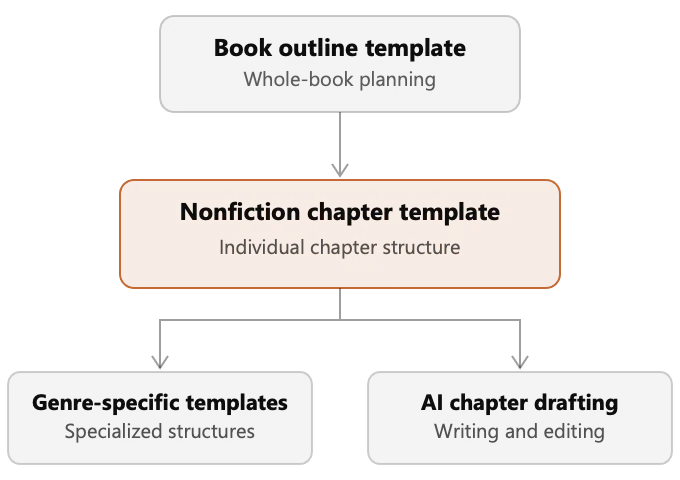
Unlike a book outline, which determines what each chapter covers and how chapters connect, a chapter template focuses on the content within a single chapter. A chapter outline identifies the specific points you want to cover, while a template provides a structure for arranging them.
If you have not decided which chapters your book needs yet, start with our book outline template.
Before using a chapter template, answer three questions:
- What is the central idea of this chapter?
- What does the reader already know about this subject?
- What should the reader understand or be able to do after reading it?
These answers establish the boundaries of your chapter. They help you determine which material belongs in it, what requires further explanation, and what can be left for another part of the book.
The Five-Part Nonfiction Chapter Template
The following structure gives each part of your chapter a specific function, from establishing interest to delivering a conclusion.
Hook → Idea → Story → Steps → Takeaway
1. Hook: Give the Reader a Reason to Keep Reading
The opening should establish why the chapter matters. Instead of starting with lengthy background information, introduce something that connects directly to the reader’s interests or challenges.
Effective chapter hooks can include:
- A question the reader wants answered.
- A recognizable problem or situation.
- A surprising, verified fact.
- A relevant personal experience.
- An observation that challenges a common assumption.
The hook should create interest without making promises the chapter cannot deliver.
2. Idea: Establish the Chapter’s Central Message
Introduce the main concept, argument, or lesson you want to communicate. Explain what it means, why it matters, and how it relates to the subject.
Define unfamiliar terminology and establish any context the reader needs before moving into more detailed explanations.
Consider whether someone unfamiliar with your subject could understand your argument at this point.
3. Story: Make the Idea Concrete
Show what your central idea looks like in practice. A relevant story or example can help readers understand an abstract concept and connect it to a recognizable situation.
Depending on your subject, you might use a personal experience, documented case study, historical example, or research finding.
The supporting material should serve a clear purpose. An interesting story that does not reinforce the chapter’s message can distract from it.
4. Steps: Show the Reader How It Works
Move from introducing the idea to developing or applying it. This is where you provide the practical or analytical substance of the chapter.
For instructional nonfiction, this might involve actionable steps, exercises, frameworks, or techniques. Arrange instructions in the order the reader needs to follow them, and explain any prerequisites or common obstacles.
For more analytical subjects, develop your argument through successive explanations that build on one another.
5. Takeaway: Give the Chapter a Meaningful Ending
Close the chapter by reinforcing its central message without repeating everything you have already explained.
A strong ending might offer a practical action, a question for reflection, a concise conclusion, or a natural transition into the next chapter.
Avoid introducing substantial new information in the final paragraphs. Give the reader an opportunity to process what they have learned before moving forward.
A Fill-in-the-Blank Chapter Template You Can Copy
Use the following worksheet to organize your material before drafting. You do not need complete sentences at this stage. Short notes and bullet points are enough.
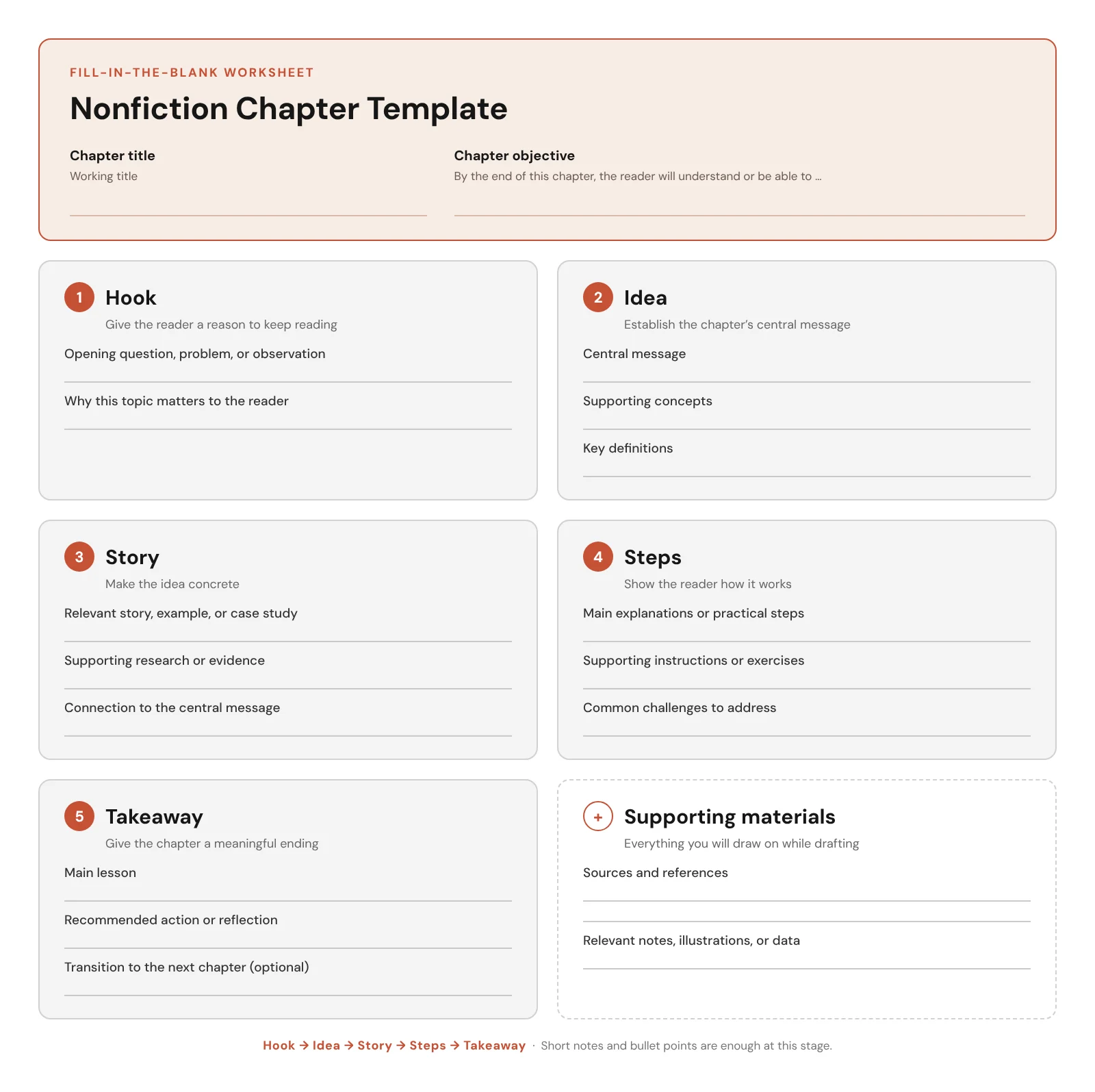
Nonfiction Chapter Template
Chapter title: [Working title]
Chapter objective: By the end of this chapter, the reader will understand or be able to [desired outcome].
1. Hook
- Opening question, problem, or observation:
- Why this topic matters to the reader:
2. Idea
- Central message:
- Supporting concepts:
- Key definitions:
3. Story
- Relevant story, example, or case study:
- Supporting research or evidence:
- Connection to the central message:
4. Steps
- Main explanations or practical steps:
- Supporting instructions or exercises:
- Common challenges to address:
5. Takeaway
- Main lesson:
- Recommended action or reflection:
- Transition to the next chapter (optional):
Supporting materials
- Sources and references:
- Relevant notes, illustrations, or data:
If you struggle to complete a field, identify what is missing before you begin drafting. You may need additional research, a more specific argument, or a better example.
You can leave individual fields empty if they are not relevant to your chapter.
A Nonfiction Chapter Outline Example
Consider this editorial demonstration using fictional planning notes created for this guide.
Before: unstructured notes
Morning writing; waiting for inspiration; 20 minutes; publishing advice; distractions; track progress; cover design; realistic goals; seven-day trial.
After: a structured chapter plan
Chapter title: How to Build a Sustainable Daily Writing Habit
Chapter objective: Help readers establish a writing routine they can maintain alongside their existing responsibilities.
| Chapter element | Example content |
|---|---|
| Hook | Introduce the problem of waiting for inspiration before sitting down to write. |
| Idea | Explain why a manageable writing routine can be more practical than relying on motivation alone. |
| Story | Present a hypothetical author who replaces occasional, lengthy writing sessions with 20 minutes of writing each morning. |
| Steps | Explain how to choose a regular writing time, set an achievable goal, minimize distractions, and track progress. |
| Takeaway | Encourage readers to choose a realistic daily writing target and test their routine over the next seven days. |
This completed template also reveals which material might not belong in the chapter. Advice about publishing, manuscript formatting, or book marketing would shift the focus away from developing a writing habit.
The author can now expand the practical steps into subsections, develop the hypothetical example, and identify any claims that require supporting research.
The result is a chapter plan with a defined beginning, development, and ending, rather than a collection of loosely connected writing tips.
How to Adapt the Template to Your Book
Adjust the function of each element rather than forcing every chapter into five labelled sections. In an instructional chapter, the steps may occupy most of the space. In a memoir, a scene may serve as both hook and story, while its meaning emerges through reflection rather than explicit instructions.
You can also distribute several short examples throughout an explanation instead of placing them together. For more specialized structures, see our book writing templates for nonfiction authors.
How Long Should Each Part of a Nonfiction Chapter Be?
There is no universal word count for a nonfiction chapter or its individual sections. The appropriate length depends on the complexity of the topic and the amount of material required to explain it.
For a 3,000-word instructional chapter, an illustrative word allocation might look like this:
| Chapter element | Suggested word count |
|---|---|
| Hook | 200 |
| Idea | 600 |
| Story | 600 |
| Steps | 1,400 |
| Takeaway | 200 |
| Total | 3,000 |
This distribution is a planning example, not an industry standard.
Use a preliminary word budget to identify potential imbalances before drafting. If your introduction occupies a substantial portion of the planned chapter, for example, consider whether some of that material belongs in the main explanation.
Adjust your word allocation as the draft develops. A complicated concept might require additional examples, while a straightforward explanation might take considerably fewer words than expected.
Common Mistakes When Structuring Nonfiction Chapters
Once you have drafted a chapter, check for structural problems that may not have been obvious during planning.
| Common mistake | How to fix it |
|---|---|
| Competing arguments | Summarize the chapter in one sentence. Identify passages that introduce a different argument. |
| Excessive background information | Move definitions and contextual details closer to where the reader needs them. |
| Abrupt transitions | Check whether each subsection follows logically from the previous one. |
| Unsupported conclusions | Identify claims that require additional evidence, examples, or reasoning. |
| Repetitive explanations | Combine passages that communicate the same information without adding new insight. |
| Uneven levels of detail | Expand difficult concepts and shorten explanations of familiar material. |
| Unresolved opening questions | Check whether the chapter delivers what its opening promises. |
Compare the finished draft with your completed chapter template. Look for missing material, unnecessary digressions, and changes in direction that occurred during writing.
The template can help you diagnose structural problems before you spend time polishing individual sentences. For AI-assisted manuscripts, our guide to editing AI-generated content covers a separate editing pass.
How to Use a Chapter Template With Built&Written
A completed chapter template can also serve as a brief for AI-assisted writing. Rather than providing AI with a chapter title alone, you give it specific material and a defined reader outcome.
When working with Built&Written, you can incorporate the template into your writing process:
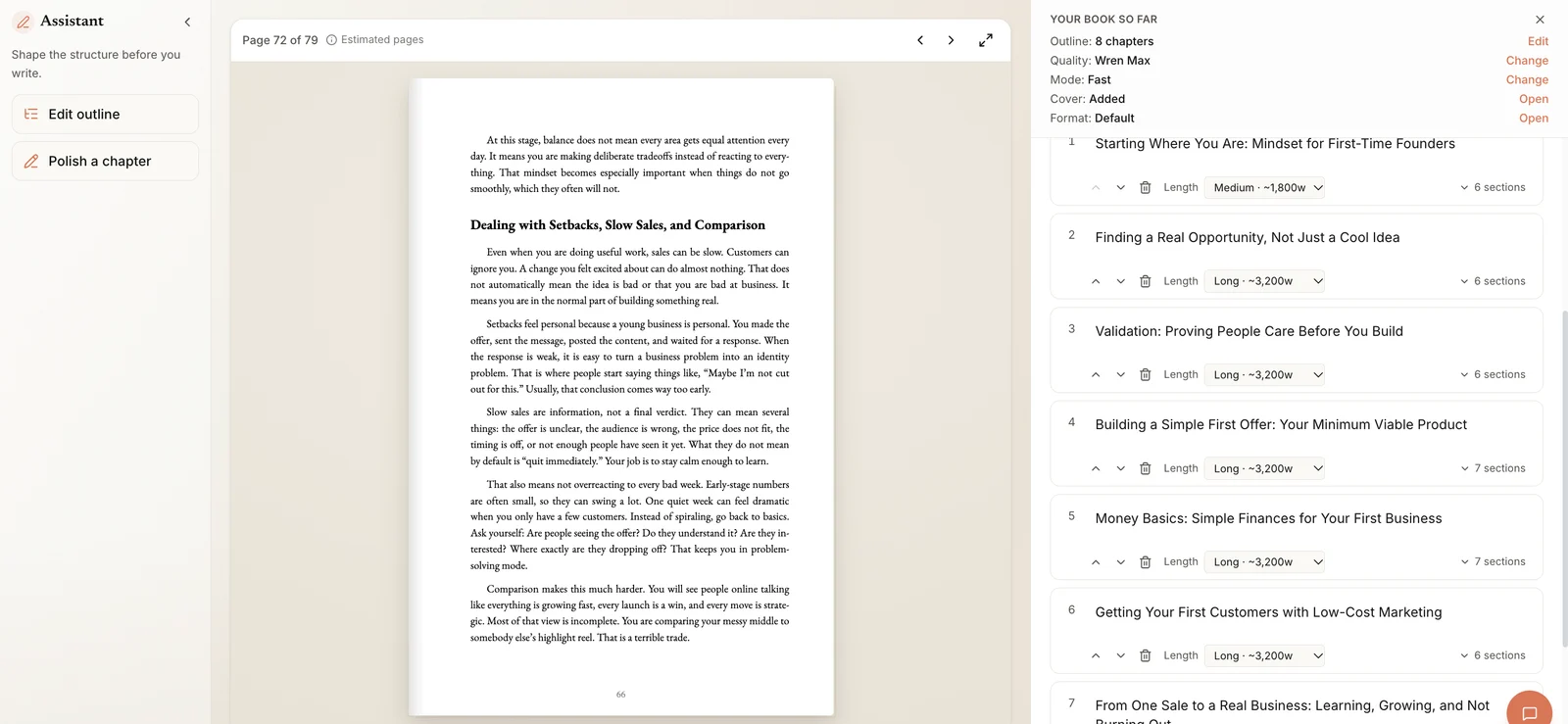
- Organize your chapter notes, research, and examples using the worksheet.
- Provide the relevant material to Wren, Built&Written’s AI writing companion.
- Review how the proposed manuscript structure accommodates your chapter topics.
- Use Voice DNA to help guide the writing style.
- Develop and refine individual chapters in the editor.
The template gives you a reference for evaluating AI-assisted drafts, particularly when a generated passage introduces an argument or example you did not intend to include.
Follow a source-first writing workflow to verify factual claims, and make editorial decisions yourself to ensure the finished chapter accurately represents your expertise.
Frequently asked questions
A practical nonfiction chapter structure includes a hook, central idea, supporting story or example, explanatory or actionable content, and a takeaway. The arrangement depends on the subject and genre.
Start with material that establishes the relevance of the chapter. A question, recognizable problem, personal experience, or verified fact can provide an effective opening.
Chapters can share an underlying framework without using identical openings, subsection arrangements, or conclusions. Structural consistency is particularly useful in instructional books.
There is no fixed chapter length. Write enough to develop the subject adequately, considering the audience’s existing knowledge and the complexity of the material.
No. Research findings, diagrams, worked examples, and historical evidence can provide concrete illustrations without requiring a traditional narrative.
A book outline organizes chapter topics and their sequence across the manuscript. A chapter template organizes the material within an individual chapter.
About the author